AITA for telling my best friend her nostril size is uneven and distracting?
Oh, the complexities of friendship! We've all been there, hovering on the edge of saying something we think is helpful but might actually be hurtful. Today's AITA story dives deep into one such moment, where a well-intentioned (or perhaps misguided) observation about a physical feature has sent shockwaves through a long-standing best friendship. Get ready to put on your judging hats, because this one is sure to spark some debate about honesty, sensitivity, and the unwritten rules of platonic love.
This isn't just about nostrils; it's about boundaries, self-esteem, and the delicate dance of communication between two people who care deeply about each other. Was our OP out of line for pointing out a perceived flaw, or were they simply trying to be open and honest? We'll explore the nuances of this sticky situation, considering the motivations, the impact, and what it truly means to be a supportive friend. Let's dig in!

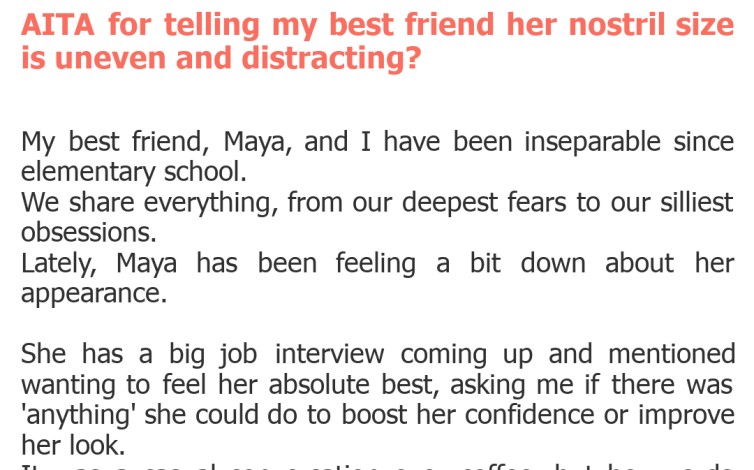
"AITA for telling my best friend her nostril size is uneven and distracting?"
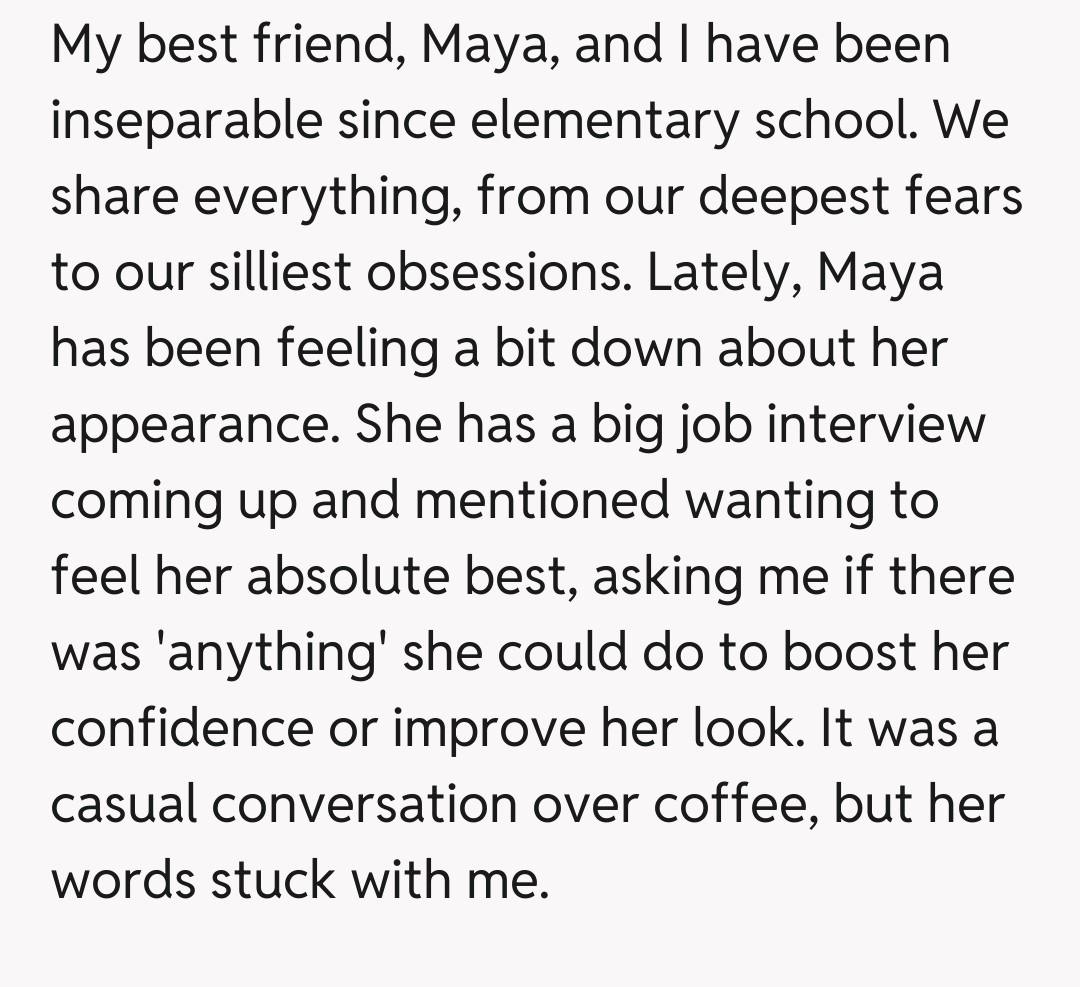
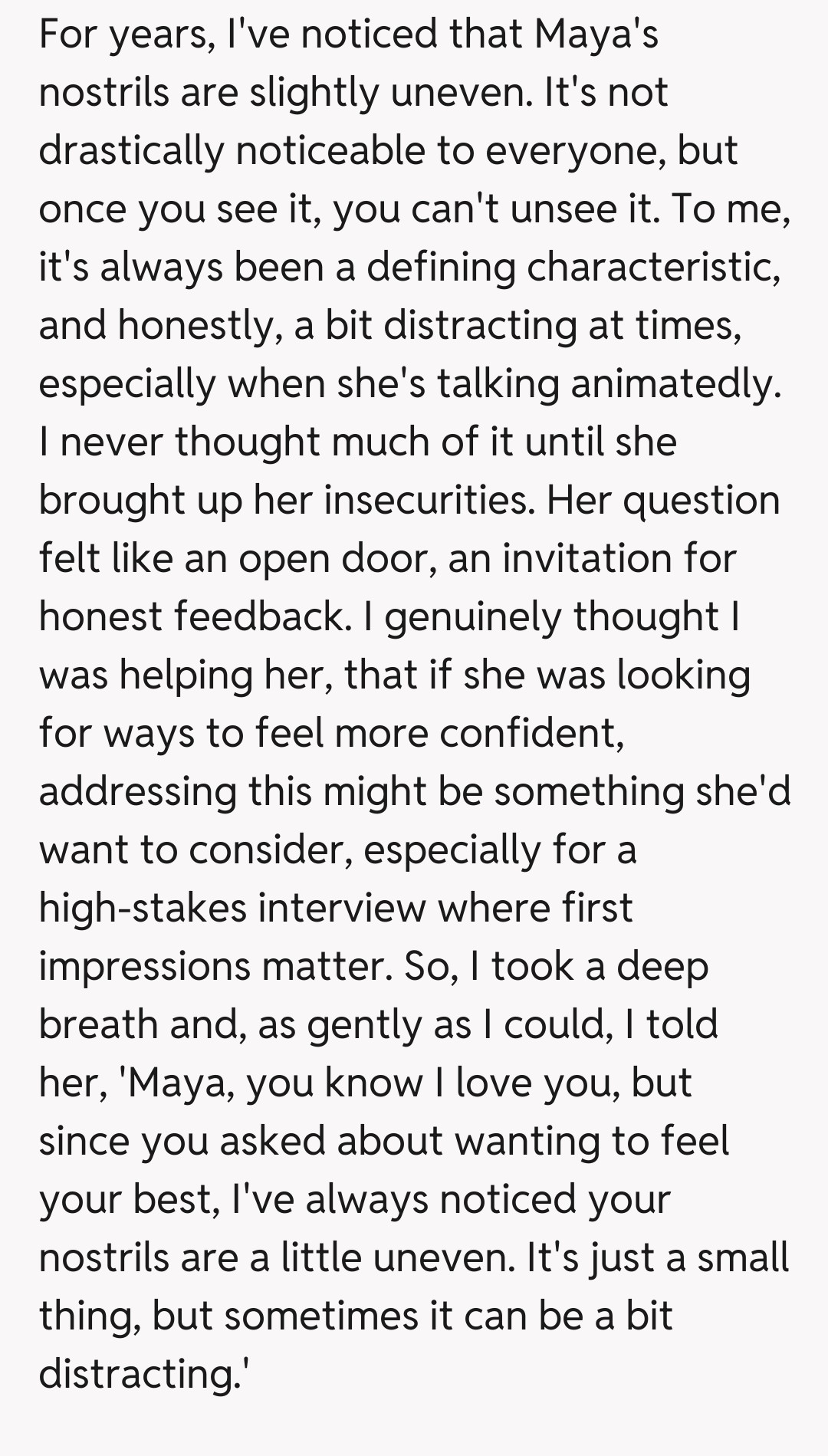
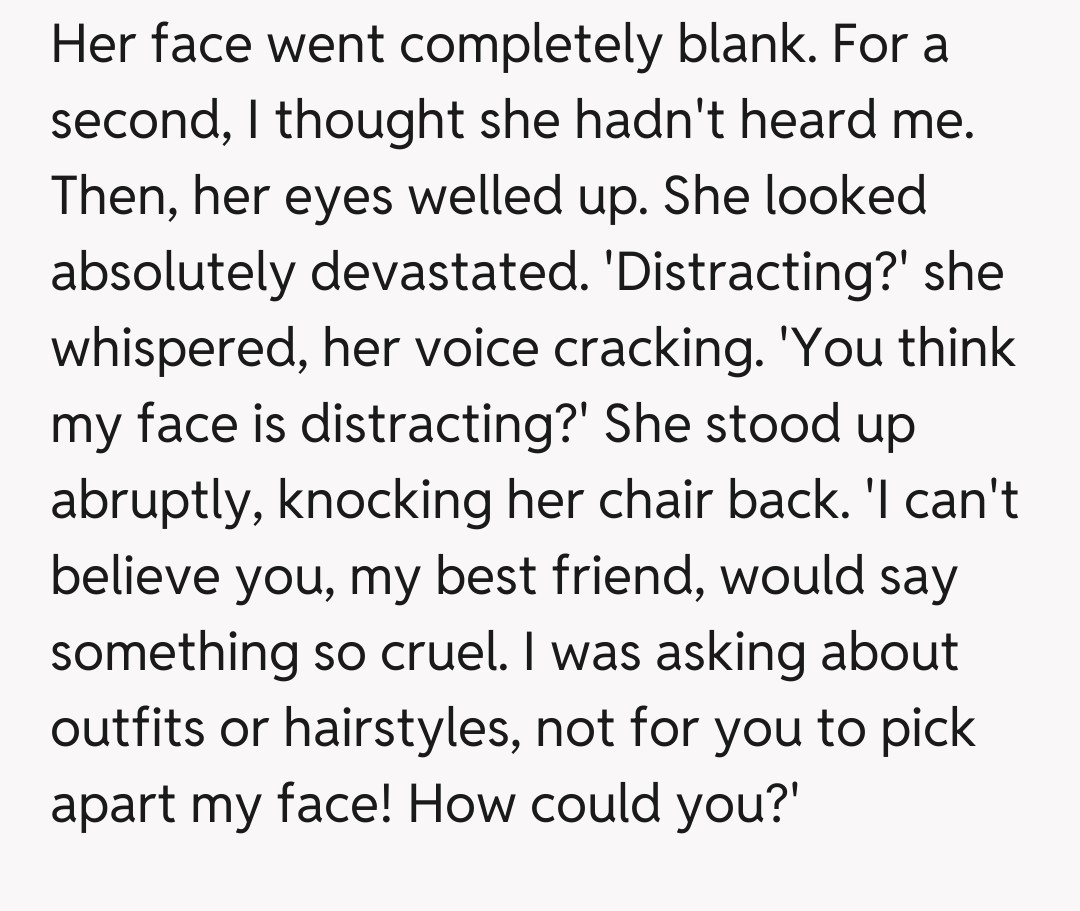
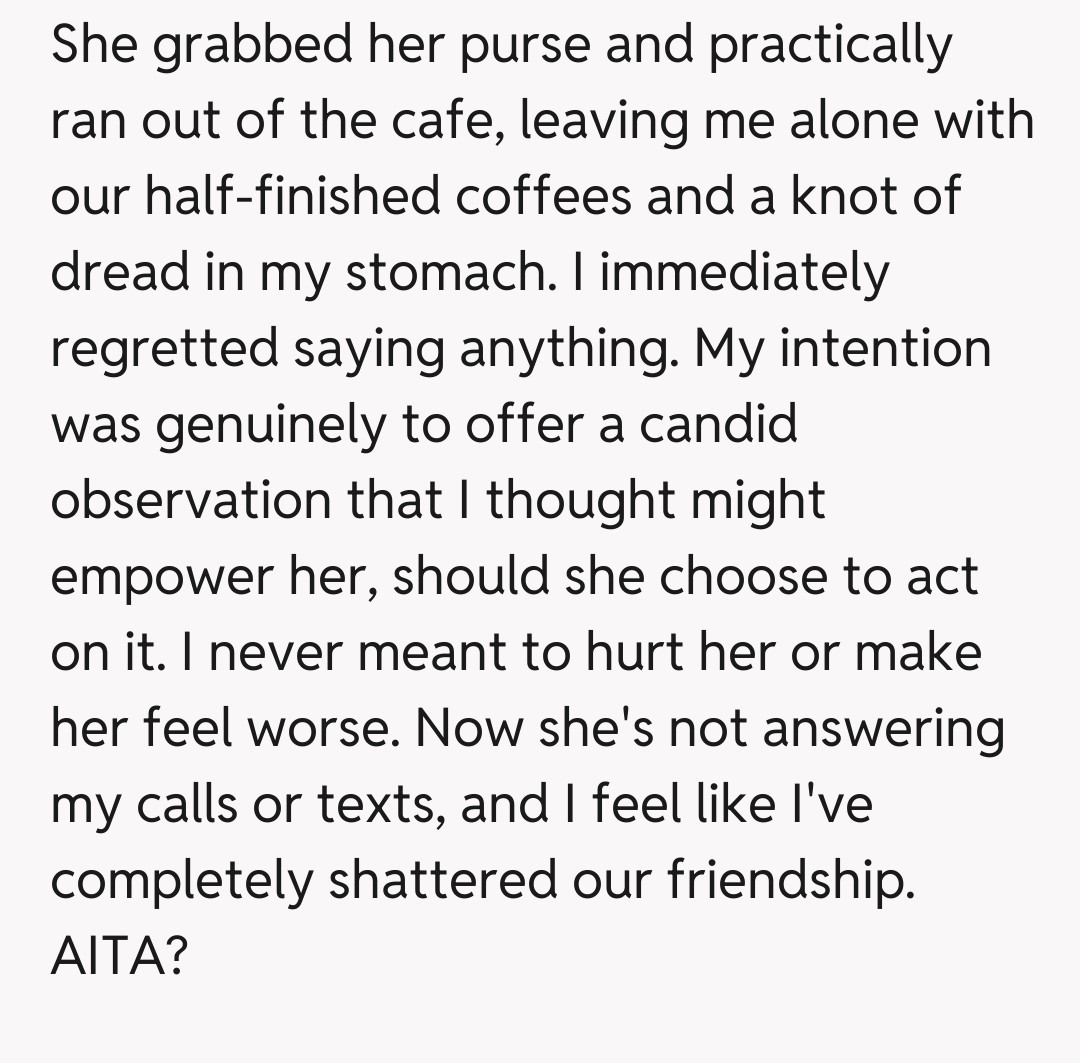
This is a classic case of good intentions possibly leading to incredibly hurtful outcomes. On one hand, the original poster (OP) felt they were responding directly to their best friend Maya's query about 'anything' she could do to boost her confidence. In a close friendship, there's an expectation of honesty, and OP might have genuinely believed they were providing a candid, albeit difficult, piece of feedback that Maya might appreciate or consider.
However, the crucial element here is the nature of the 'flaw' being pointed out. An uneven nostril size is not something easily changed in an hour, a day, or even a week before a job interview. It's a fundamental part of her facial structure, requiring significant medical intervention if one were truly bothered by it. This makes the comment less about practical advice and more about a subjective criticism of her natural appearance.
Furthermore, the context of Maya's vulnerability is paramount. She was already feeling insecure and was likely seeking reassurance or superficial tips like 'try a bold lipstick' or 'wear your hair up.' Introducing a deep-seated physical 'issue' that she was likely unaware of, or at least had never considered a problem, was a major blow to her self-esteem precisely when she needed it bolstered. The impact clearly outweighed any perceived helpfulness.
While honesty is a cornerstone of friendship, it must always be tempered with empathy and judgment. There's a fine line between constructive criticism about something changeable (like an outfit choice or a habit) and uninvited commentary on an immutable physical feature. OP might have meant well, but they failed to consider the emotional landscape Maya was navigating, resulting in significant pain and a damaged trust.
The Verdict Is In: Was OP Out of Line, or Just Being an Honest Friend?
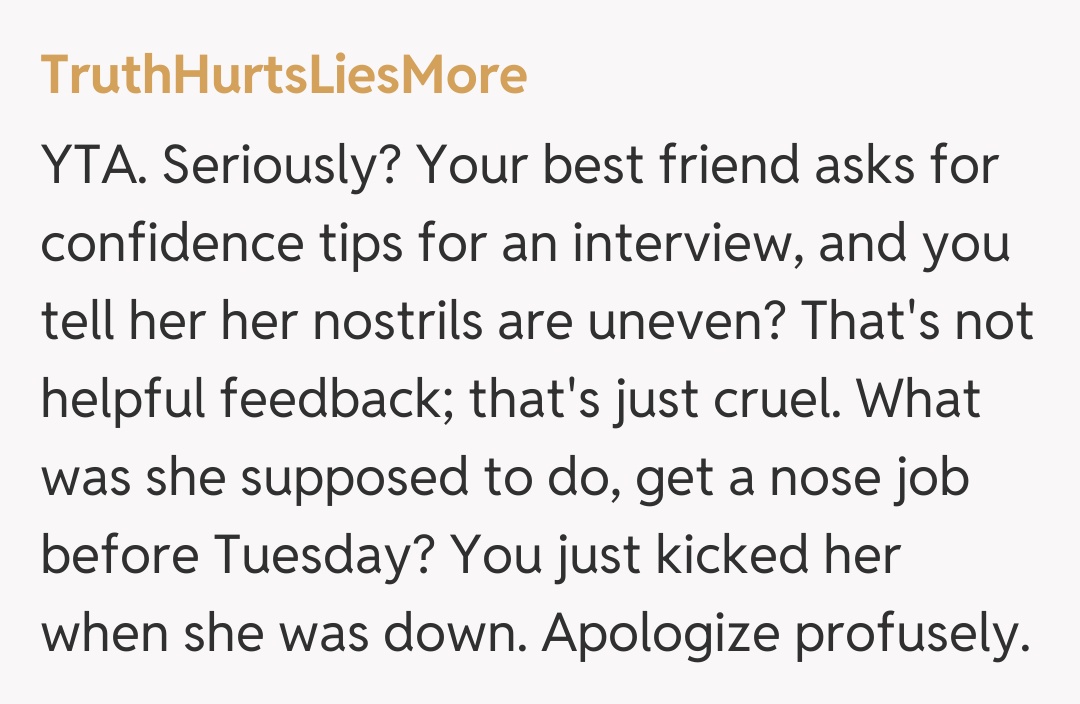
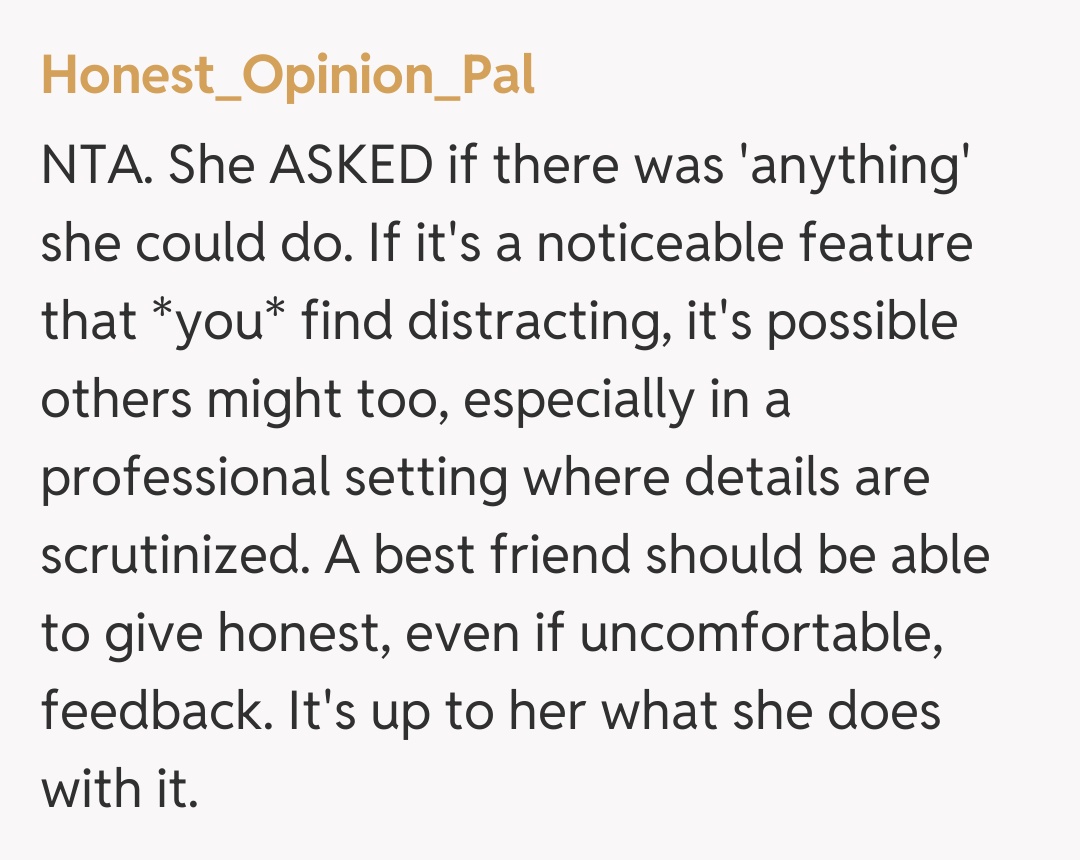
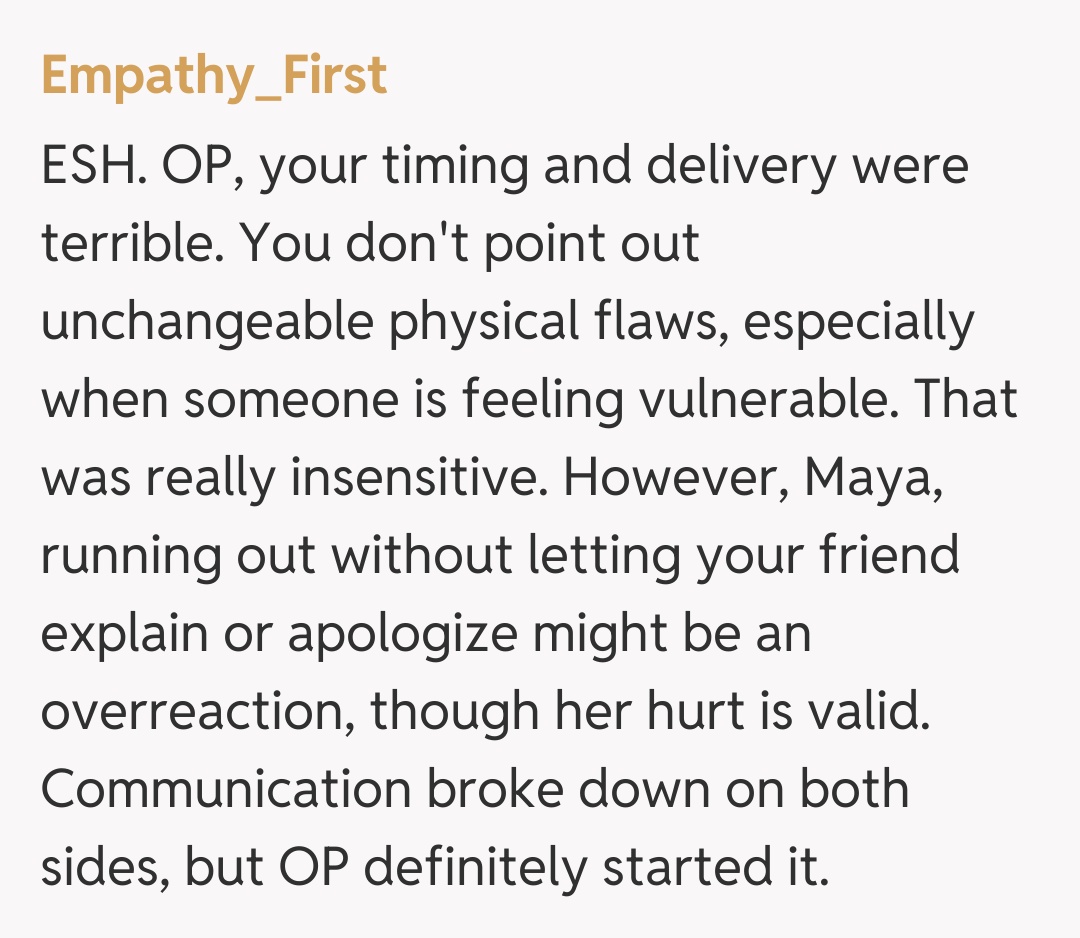
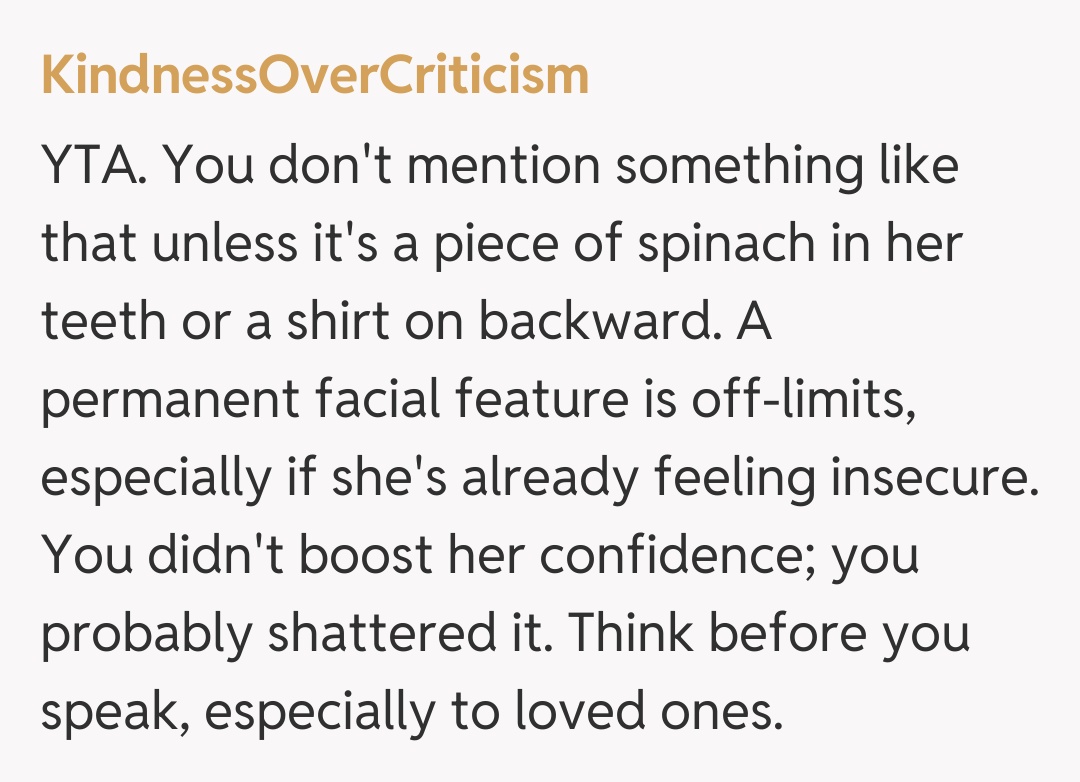
The internet has spoken, and the consensus seems to lean heavily towards 'You're the A******.' Many users pointed out the fundamental difference between offering helpful, actionable advice and simply criticizing an unchangeable physical feature. The timing was also a massive factor; bringing up such a sensitive topic when Maya was already feeling insecure was widely condemned as insensitive.
What stands out is the recurring theme that true friendship means protecting your friend's confidence, especially when they're vulnerable. While some argued that honesty is always best, the overwhelming majority agreed that some truths are better left unsaid, particularly when they serve no constructive purpose and only cause hurt. This story serves as a stark reminder that even with the best intentions, words have immense power.
This AITA story offers a crucial lesson in the art of communication within close relationships. While honesty is a vital component of friendship, it must be wielded with extreme care and consideration for the other person's feelings and current emotional state. Sometimes, the kindest thing we can do is bite our tongue, especially when the 'truth' serves no practical purpose other than to highlight an unchangeable characteristic. Our words have power, and knowing when to speak versus when to offer silent support is a skill we all continue to learn. Let's hope these two best friends can navigate this rocky patch and emerge with a stronger, more empathetic understanding of each other.