AITA for telling my best friend her jawline acne is why she looks tired all the time?
Oh, the delicate dance of friendship! We all want to be honest with our loved ones, but sometimes the truth can cut deeper than we intend. Today's AITA story tackles this very dilemma: when is it okay to point out something potentially sensitive about a friend's appearance, and when should we just keep our thoughts to ourselves? It's a minefield out there, and one wrong step can lead to a friendship crater.
Our Original Poster (OP) found herself in such a situation, believing she was acting out of care and concern. But as we often see, good intentions aren't always enough to soften the blow of an unvarnished truth. The internet is already buzzing with opinions on whether OP was a kind confidante or crossed a major line. Let's dive into the full story and see what you all think!

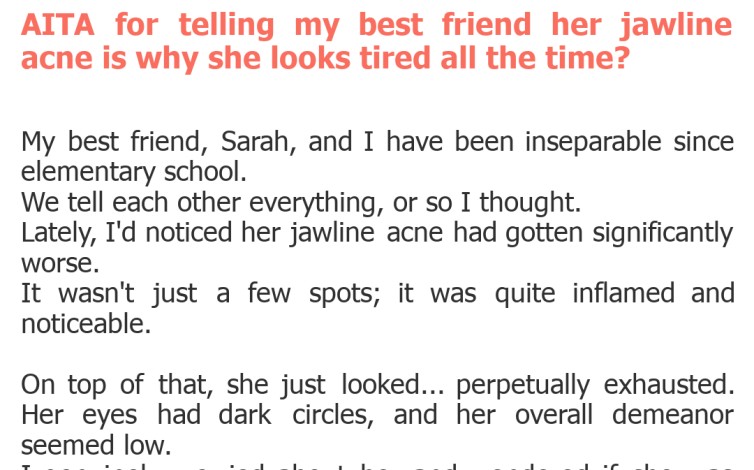
"AITA for telling my best friend her jawline acne is why she looks tired all the time?"
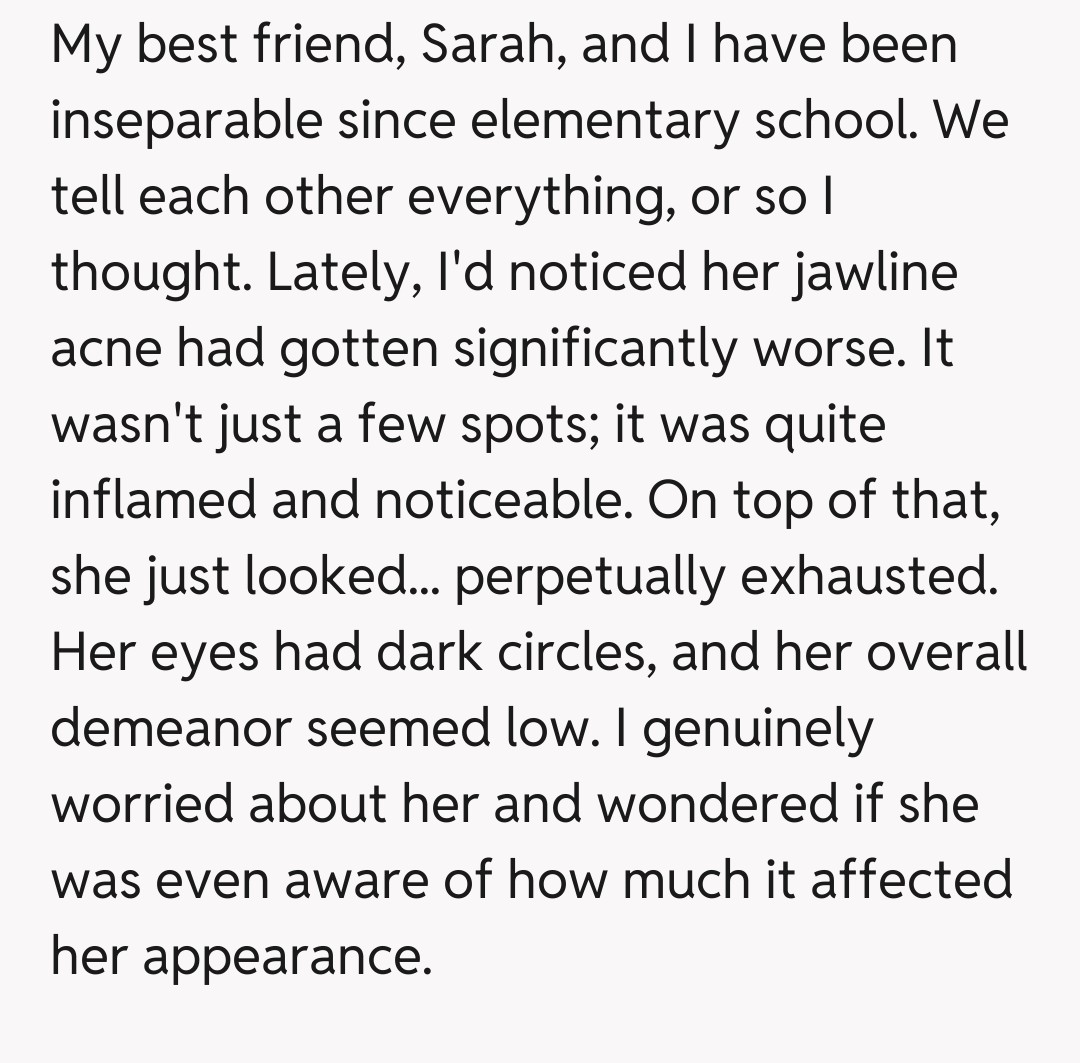
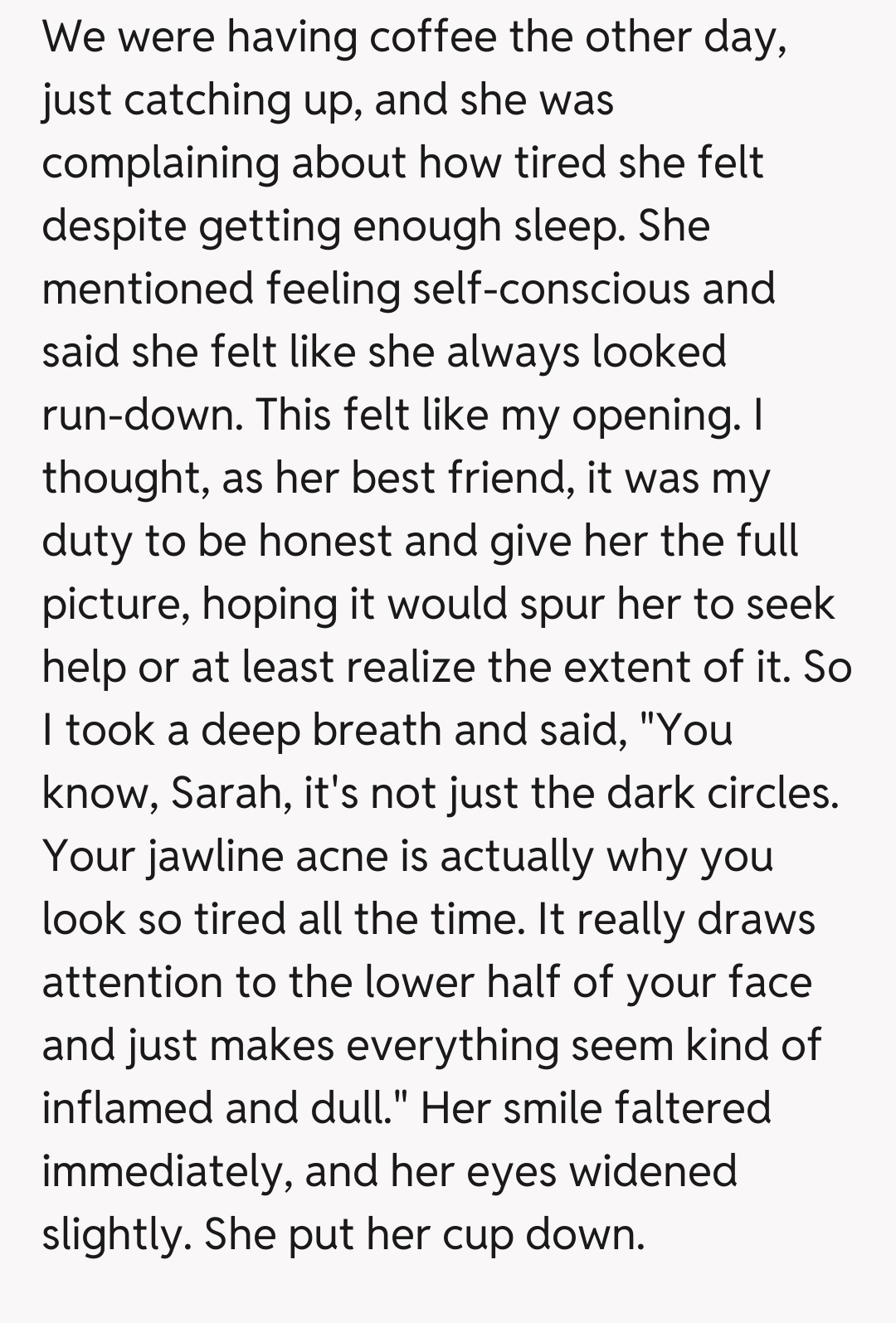
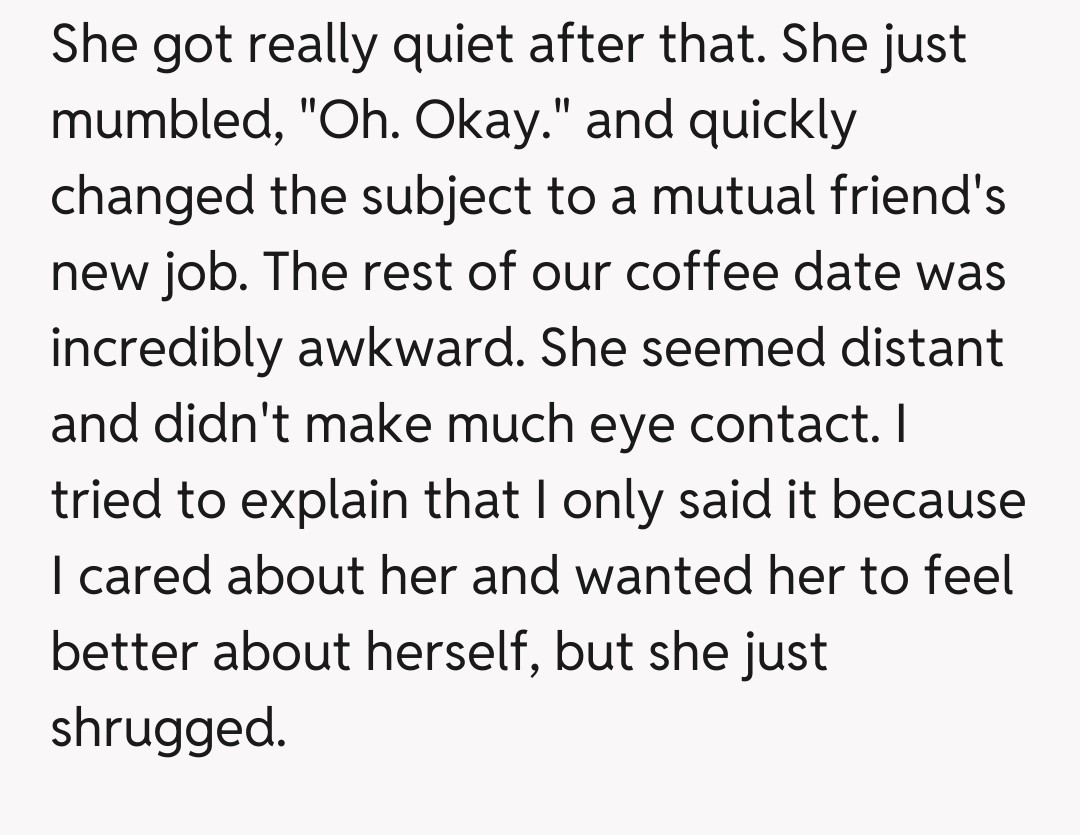
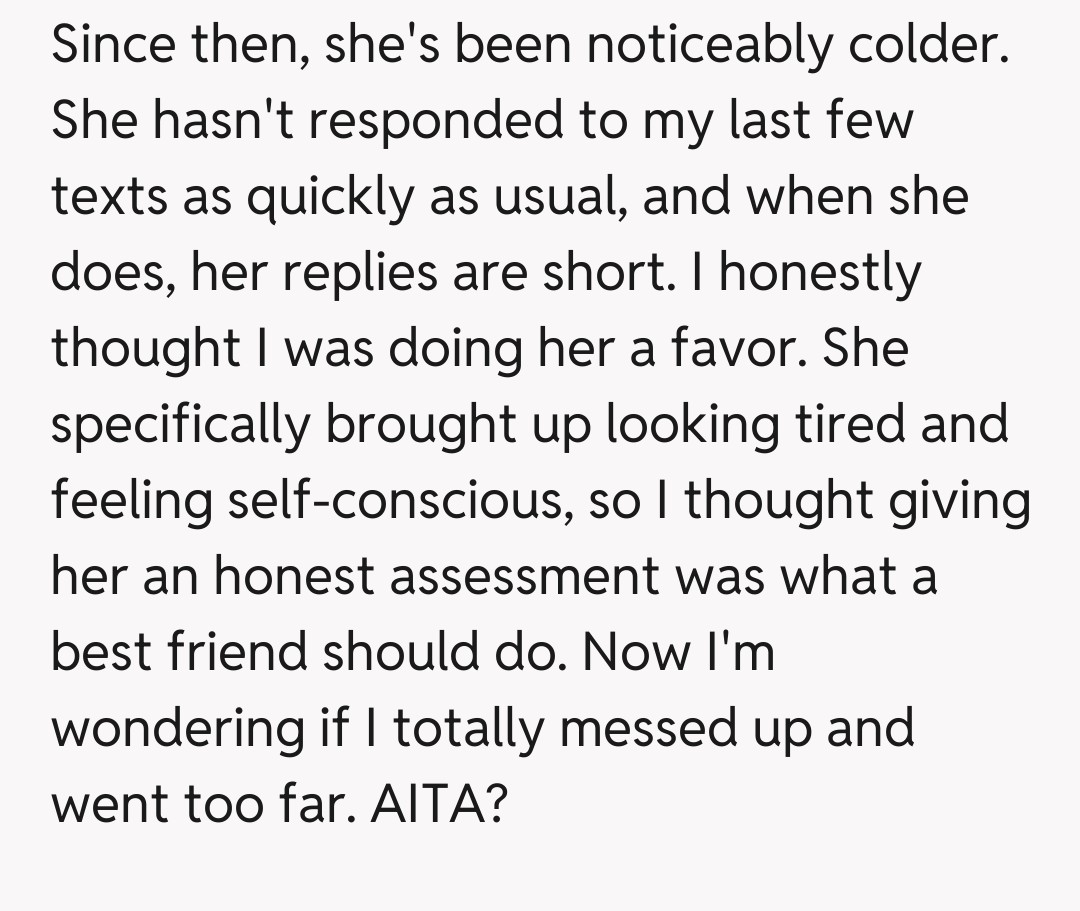
This story is a classic example of good intentions paving the road to a potentially strained friendship. OP believed she was offering helpful, honest feedback to her best friend, Sarah. When a friend expresses vulnerability about their appearance, it can feel like an invitation to offer solutions or observations. However, there's a crucial difference between being supportive and offering unsolicited, critical commentary, especially about a sensitive topic like acne.
Sarah's complaint about feeling tired and self-conscious likely stemmed from a desire for empathy and validation, not a request for a diagnosis of her appearance issues. While OP might have genuinely wanted to help Sarah identify the root cause of her perceived tiredness, linking it directly and bluntly to her acne, and suggesting it makes her "inflamed and dull," was incredibly direct and likely felt like an attack.
Friendships thrive on trust, respect, and emotional safety. While brutal honesty has its place in some relationships, it needs to be delivered with immense tact and consideration, or, more often, only when explicitly requested. Commenting on a physical attribute a person is already likely self-conscious about, even with good intent, rarely lands well and often feels like a judgment rather than an act of care.
OP's observation, though perhaps accurate in her mind, lacked empathy in its delivery. A more supportive approach might have been, "I've noticed you seem a bit down lately, and I'm worried about you. Is there anything I can do?" or, if she truly felt compelled to address the acne, "Have you considered seeing a dermatologist about your skin? Sometimes they can help with persistent issues." The direct link to "looking tired" and "dull" was the critical misstep here.
The Internet Weighs In: Was OP A Supportive Friend Or Totally Out of Line?
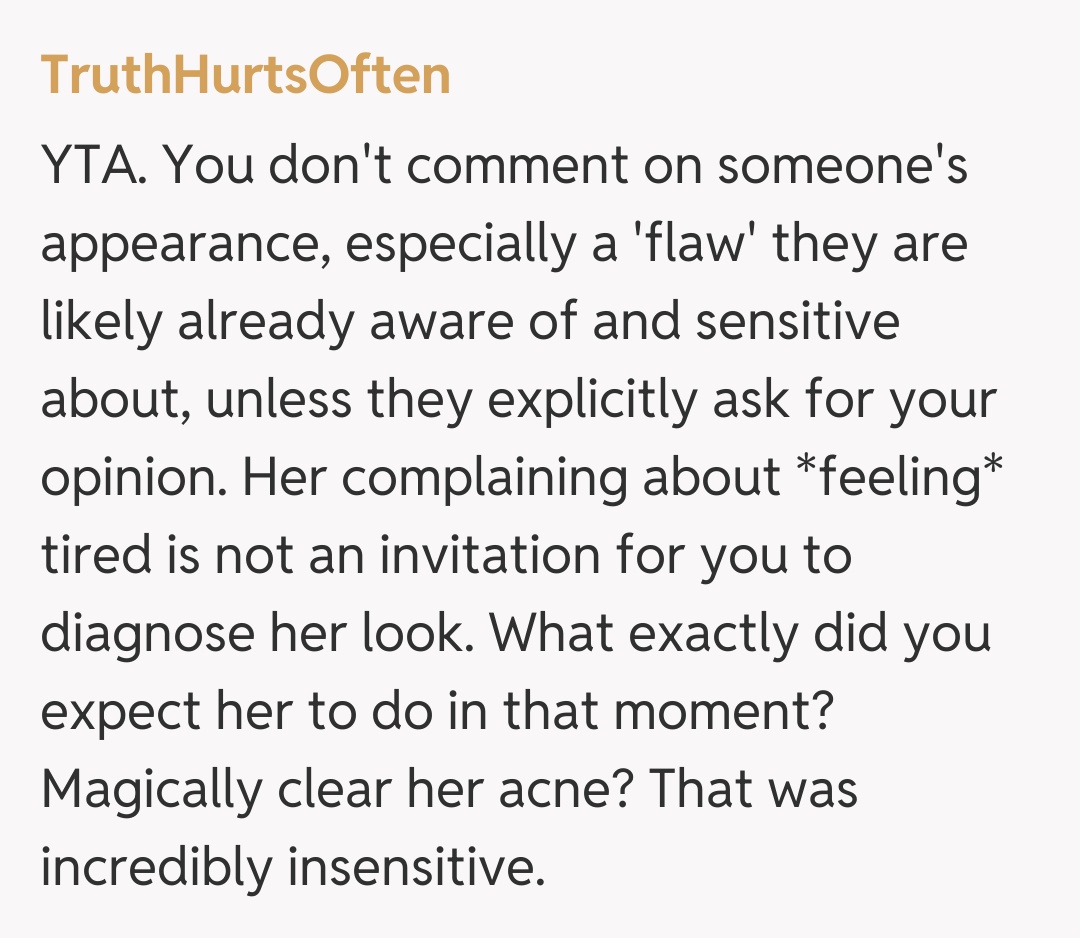
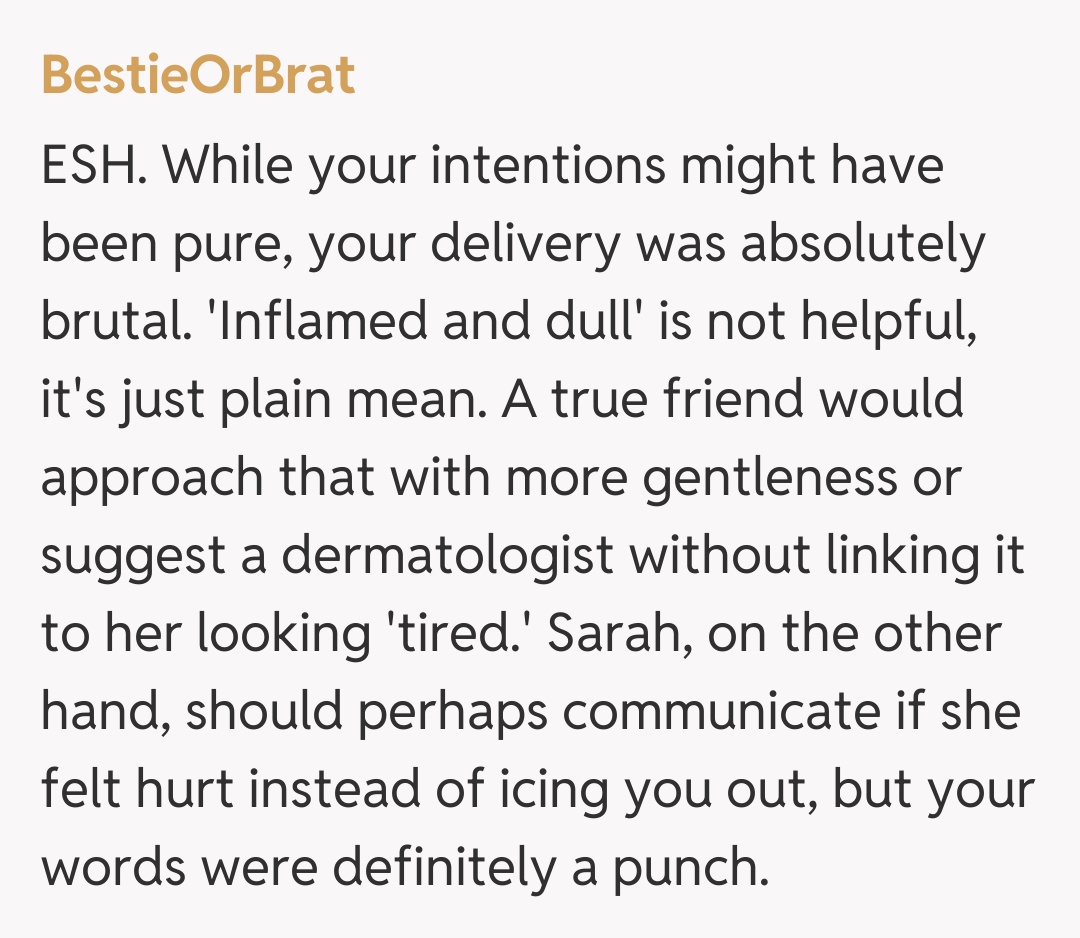
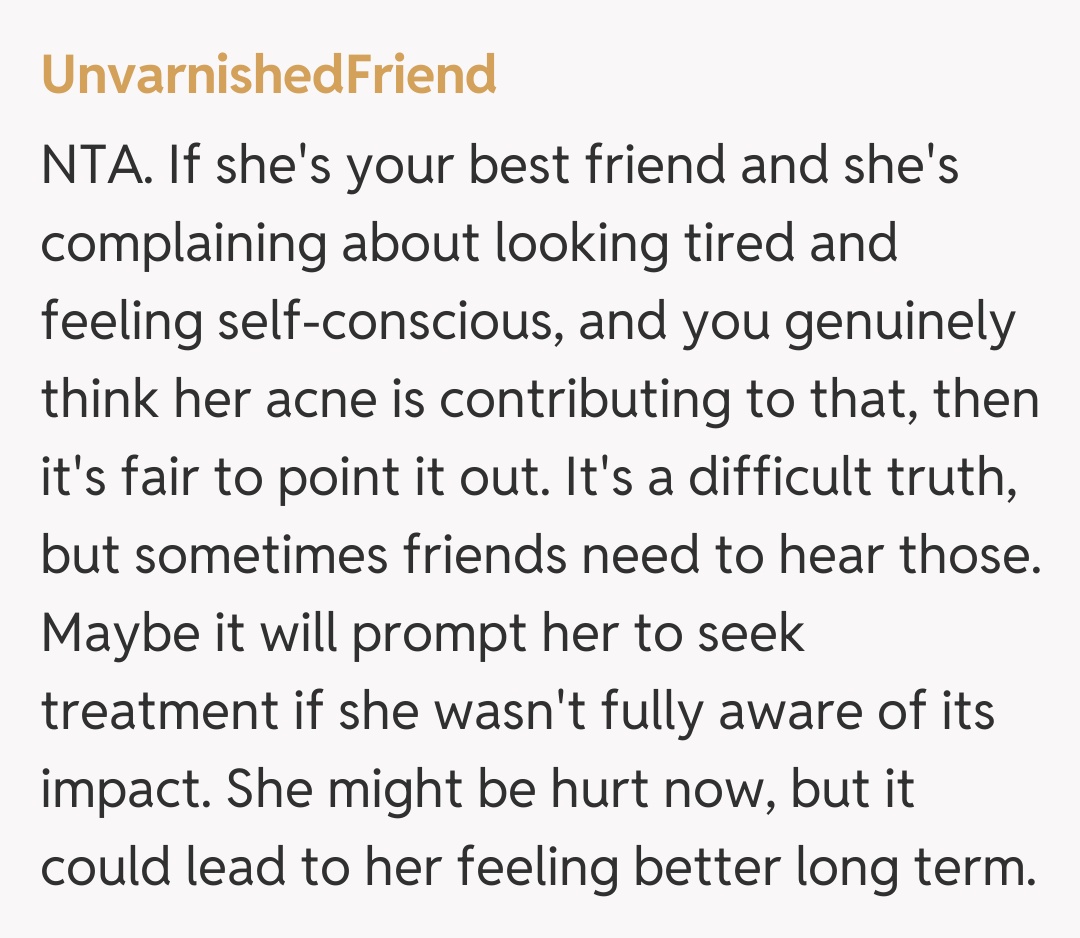
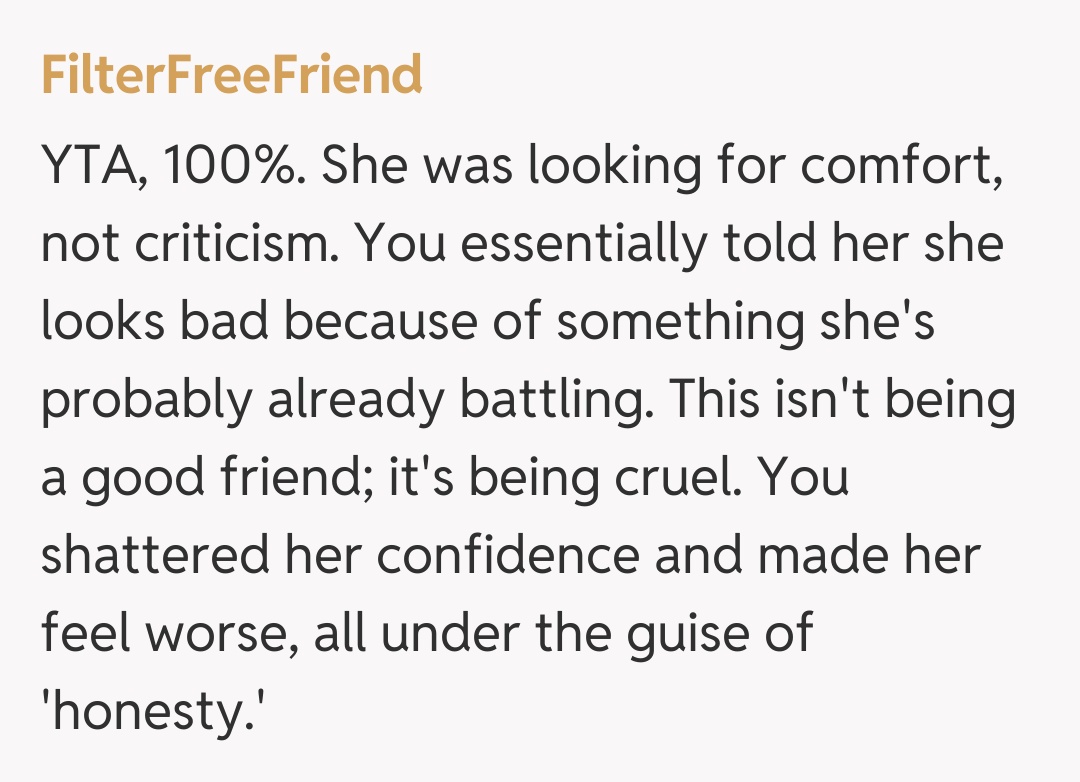
The comments section on this one is absolutely ablaze! The consensus is leaning heavily towards YTA, or at least a strong ESH for the delivery. Many users highlighted that while OP's intentions might have been good, the execution was completely off-base. "Never comment on someone's appearance unless asked, especially if it's something they can't immediately change or are already sensitive about," was a recurring theme.
However, there were a few NTA votes, primarily from those who believe true best friends should be able to tell each other anything, no matter how harsh. They argued that Sarah might genuinely benefit from the insight, even if it was difficult to hear. Yet, even these users often conceded that the phrasing could have been significantly softer. It seems the sting of the words overshadowed any potential helpfulness.
This story serves as a stark reminder that while honesty is a cornerstone of any strong friendship, empathy and tact are its crucial counterweights. Before delivering any 'hard truth,' especially about appearance, it's vital to consider the impact, the timing, and whether the advice is truly requested or helpful. Sometimes, the most supportive thing we can do for a friend isn't to point out their perceived flaws, but simply to listen, validate their feelings, and offer unconditional acceptance. Let's hope OP and Sarah can bridge this gap and rebuild their communication.