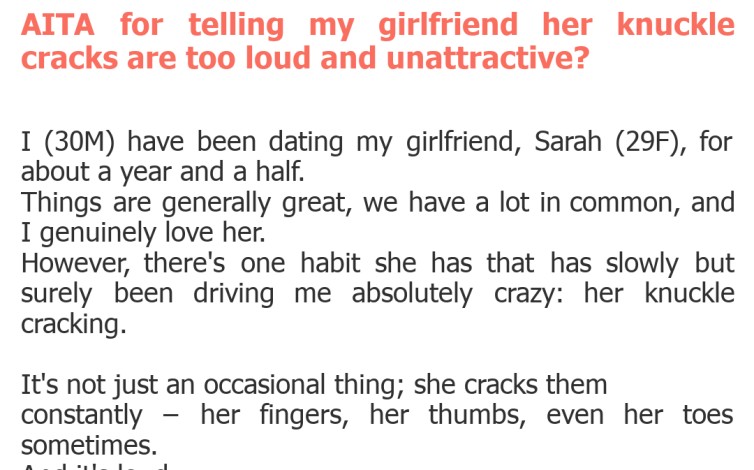
AITA for telling my girlfriend her knuckle cracks are too loud and unattractive?
Welcome back, dear readers, to another dive into the wild world of relationship dilemmas! Today's story brings us a classic tale of a seemingly small habit causing a surprisingly big rift. We've all been there, haven't we? That one little thing your partner does that grates on your nerves, making you wonder if you're being overly sensitive or if it's a legitimate issue.
Our Redditor, 'KnuckleCrackerConundrum,' found himself in just such a predicament, but his approach to addressing the issue has sparked quite the debate. Was he justified in his candidness, or did he cross a line into insensitivity? Get ready to weigh in on whether personal comfort outweighs a harmless bodily habit, and what it truly means to communicate gently.

"AITA for telling my girlfriend her knuckle cracks are too loud and unattractive?"
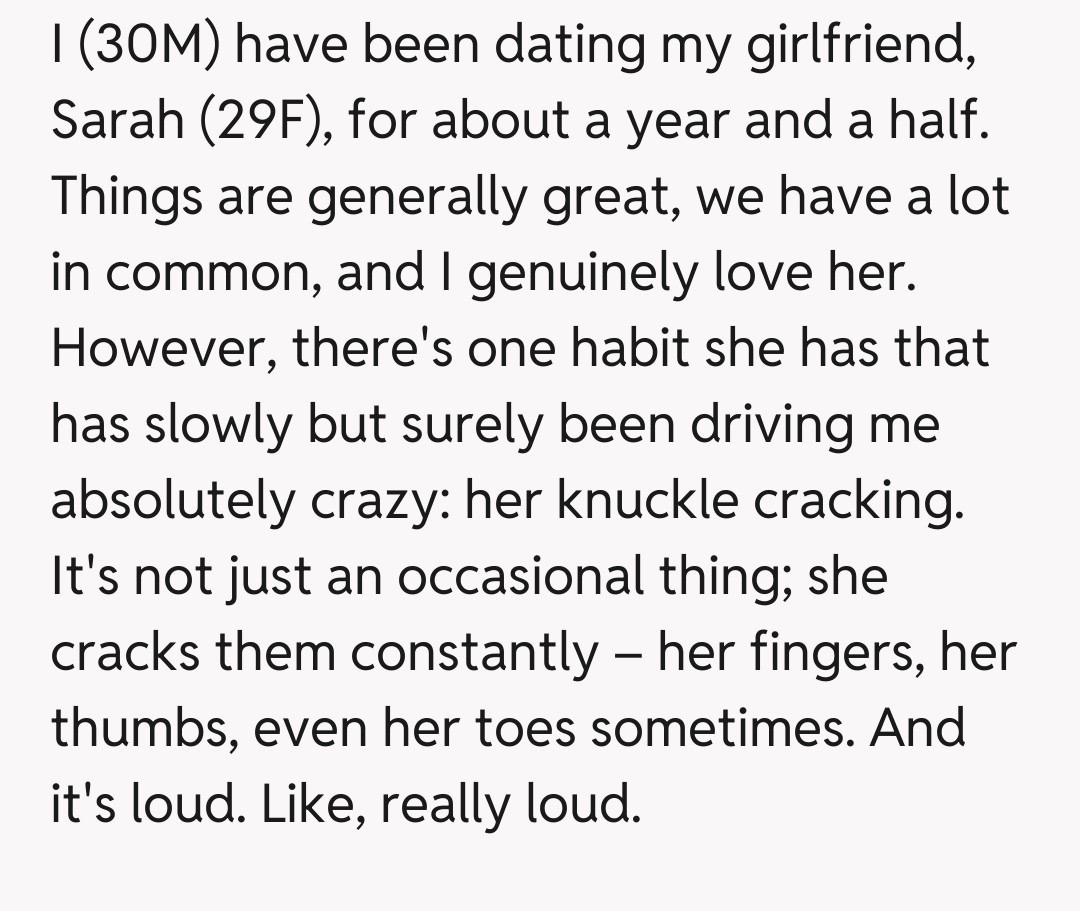
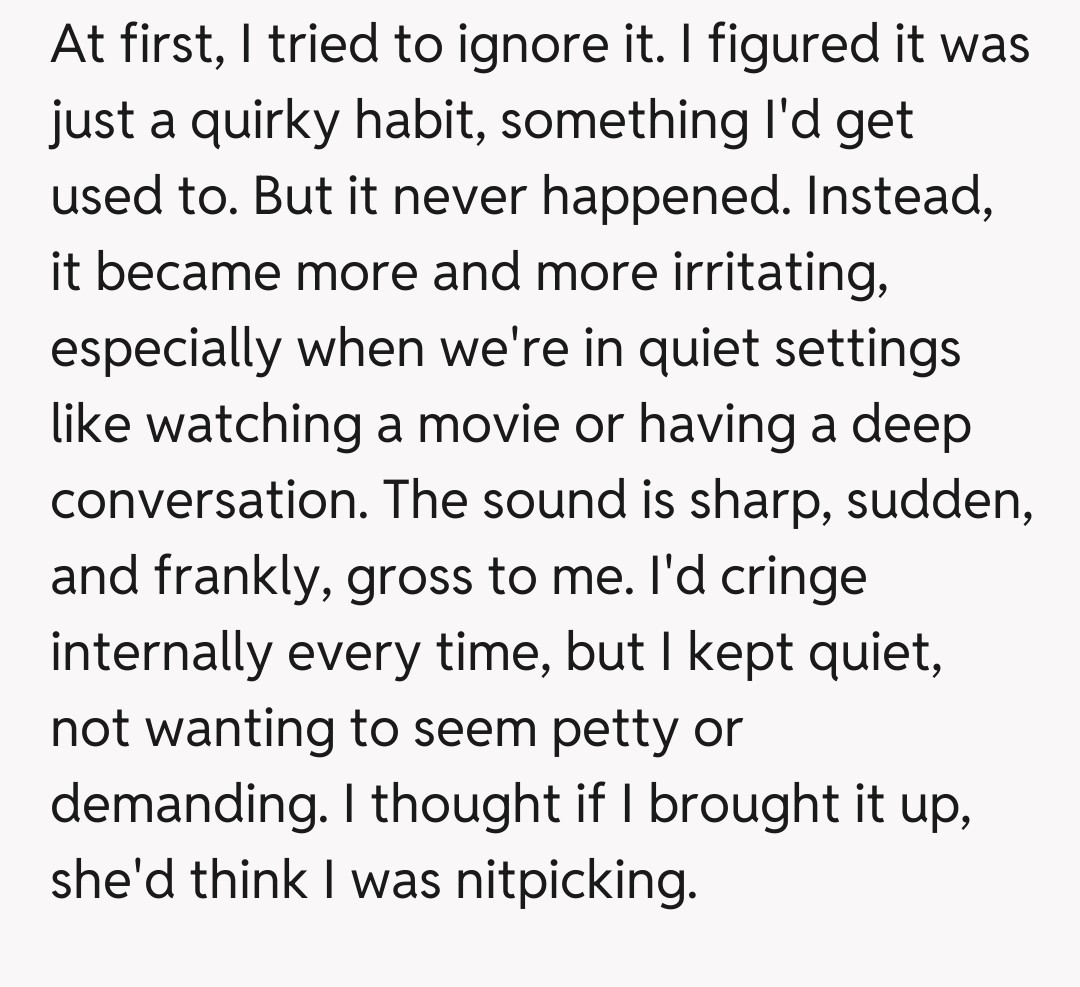
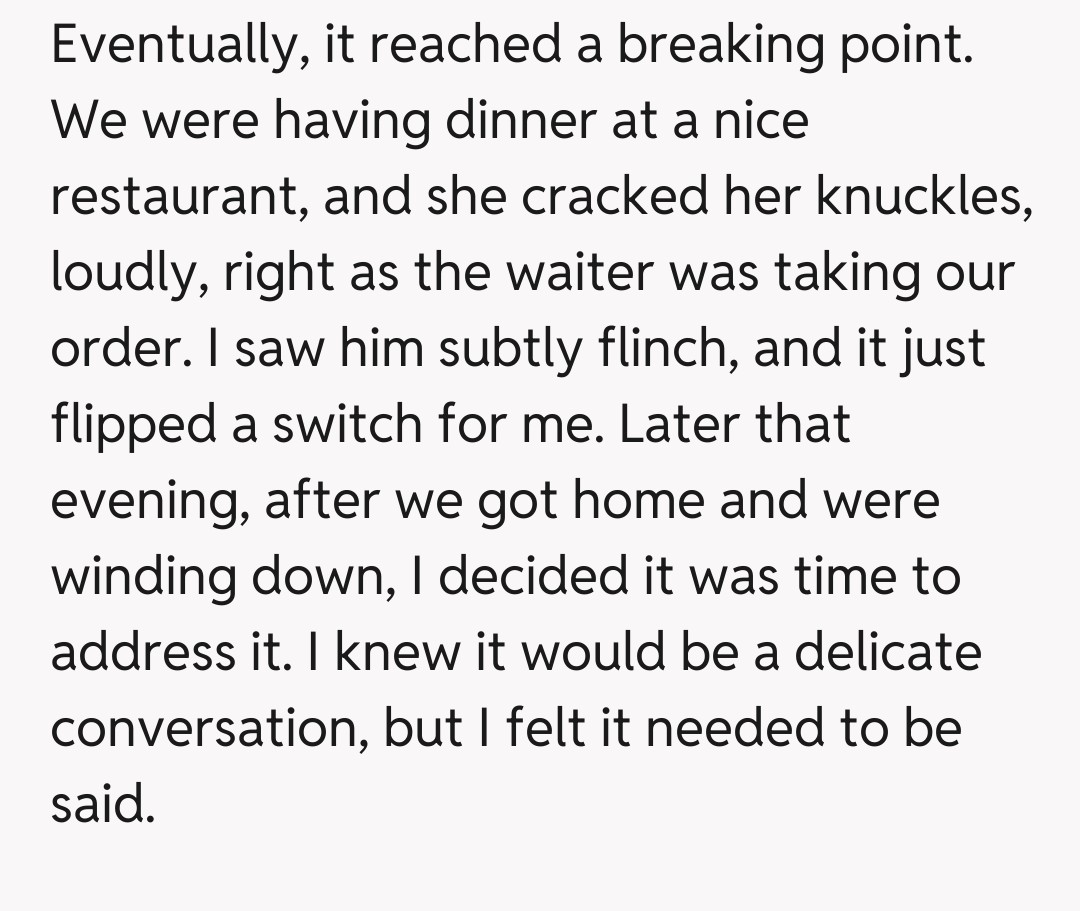
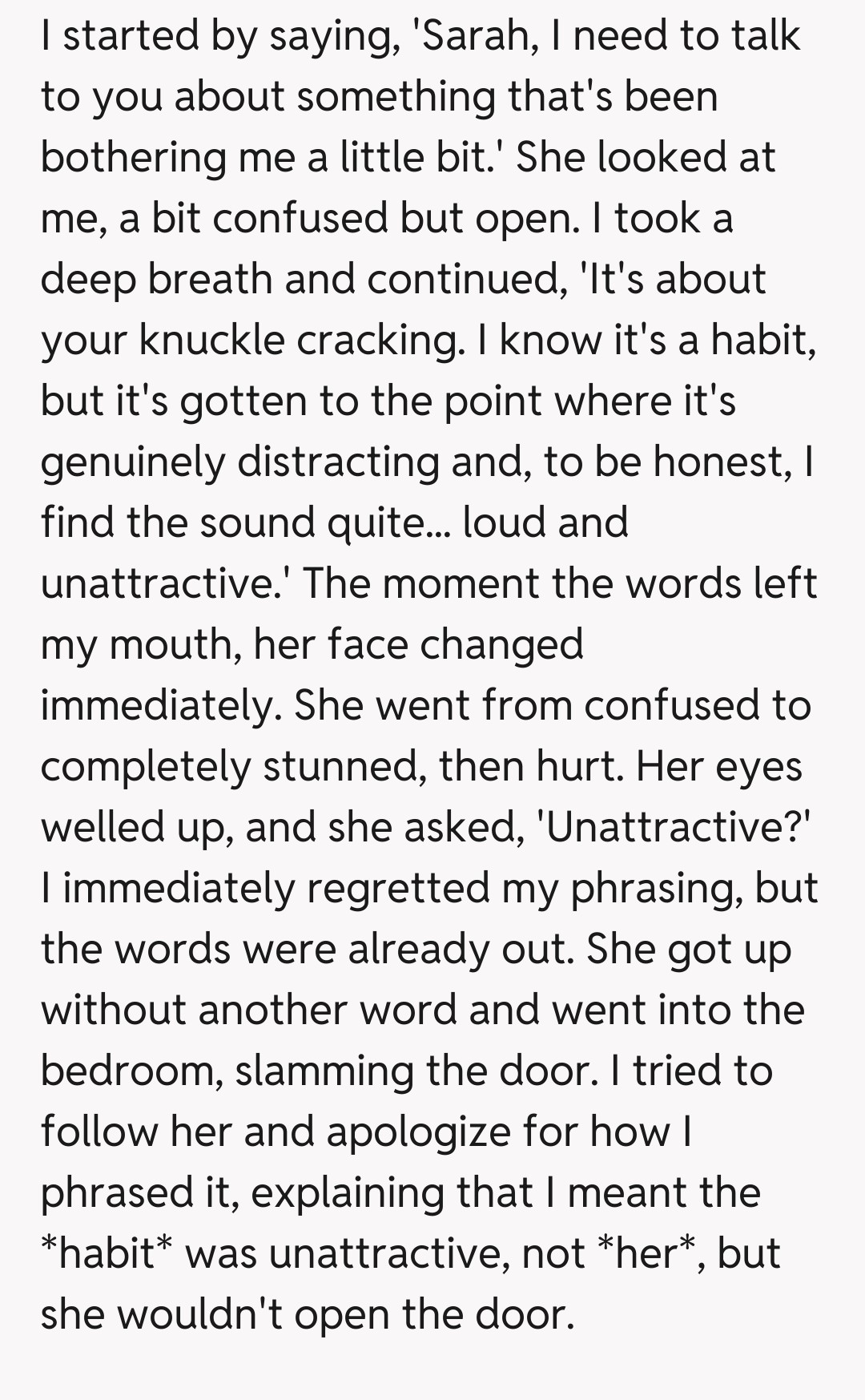
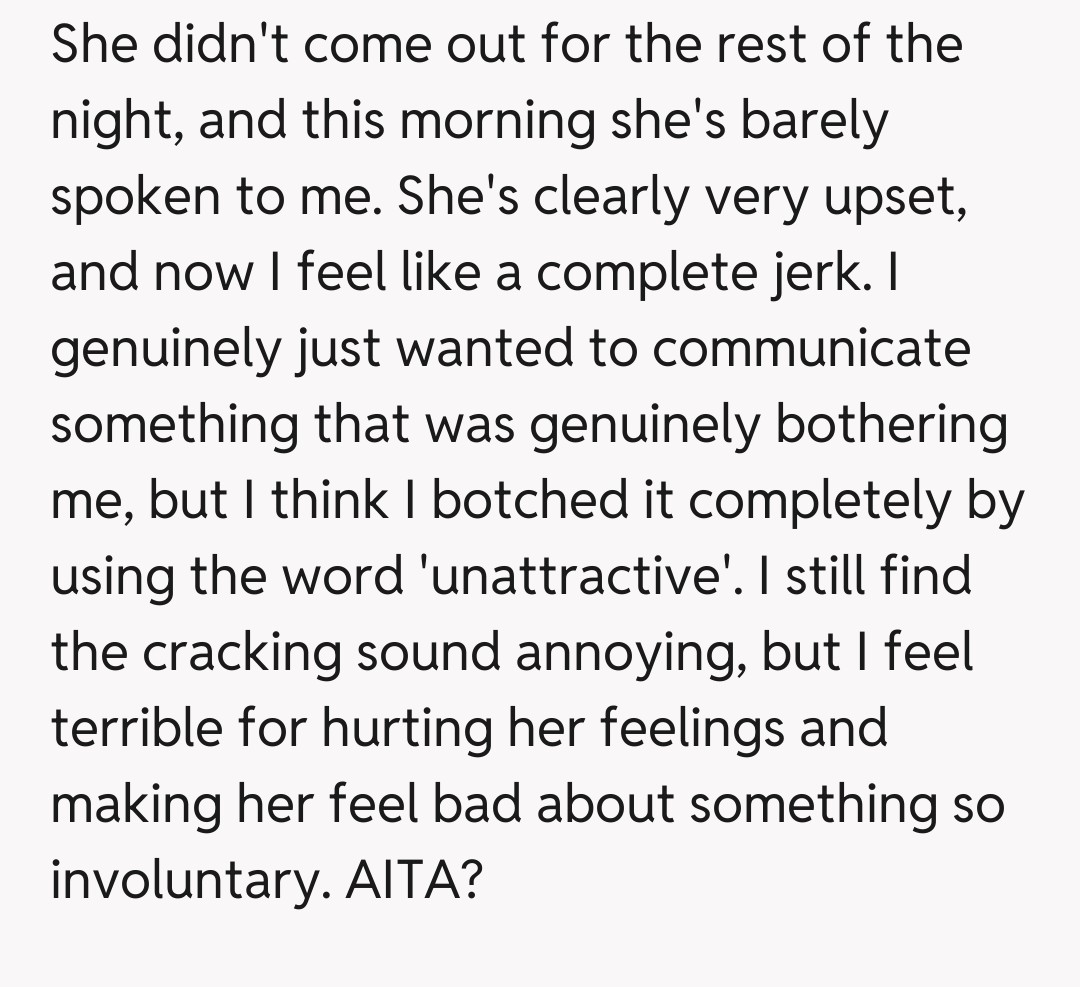
This is a classic example of how intent and impact can diverge wildly in relationships. On one hand, OP has every right to express discomfort or annoyance about something his partner does, especially if it genuinely affects his peace or enjoyment of their time together. Suppressing these feelings can lead to resentment, which is far more damaging in the long run than an honest conversation.
However, the choice of words is where OP clearly stumbled. Describing a bodily habit as 'unattractive' can easily be internalized as a personal attack on one's appearance or overall appeal. While OP might have meant the *habit* itself was unattractive to him, it's virtually impossible for a partner to hear that without feeling personally diminished or insecure. This crosses a line from addressing a behavior to criticizing a part of them.
Communication is key in any relationship, but so is empathy. There are myriad ways to address a grating habit without resorting to terms that could be deeply hurtful. Focusing on the *impact* of the noise ('it distracts me,' 'I find it hard to concentrate') rather than a subjective judgment of its attractiveness would have been far more productive and less likely to cause a major upset.
Sarah's reaction, though perhaps extreme to some, is understandable. Being told something you do, possibly unconsciously, makes you 'unattractive' is a harsh blow. It can make her self-conscious about her body and movements, affecting her comfort around OP. The relationship now faces the challenge of healing this perceived slight and finding a way forward where both feel respected and heard.
The Verdict Is In: Was He Out of Line, or Just Honest?
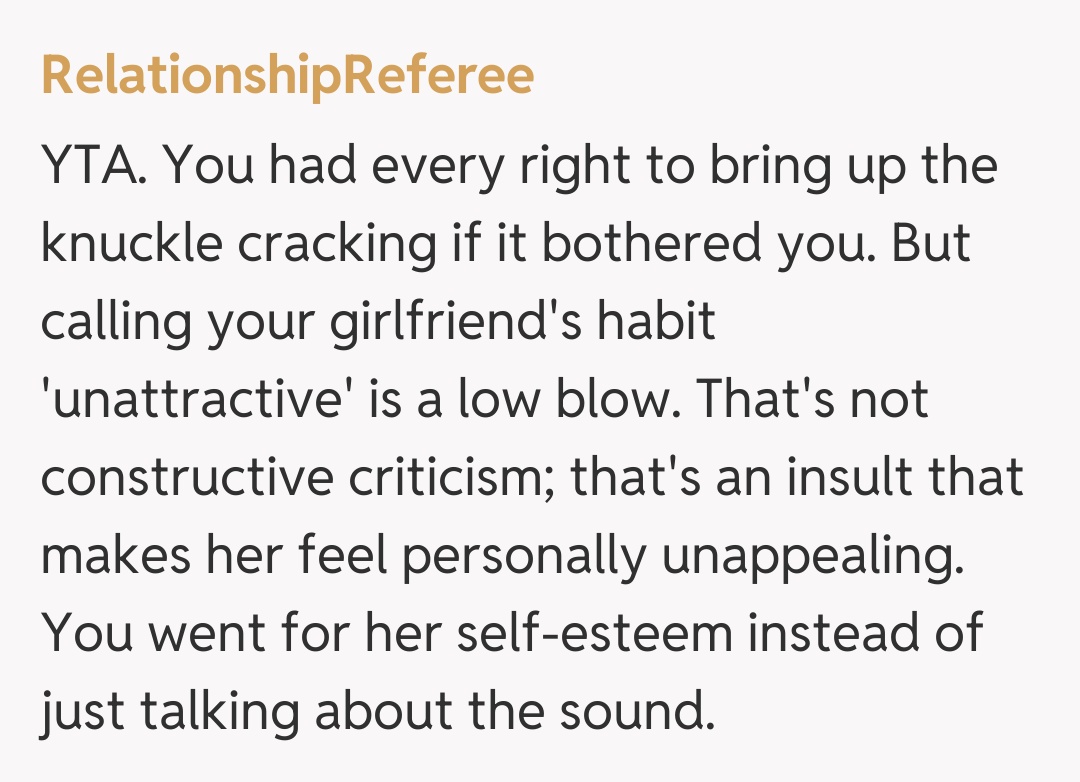
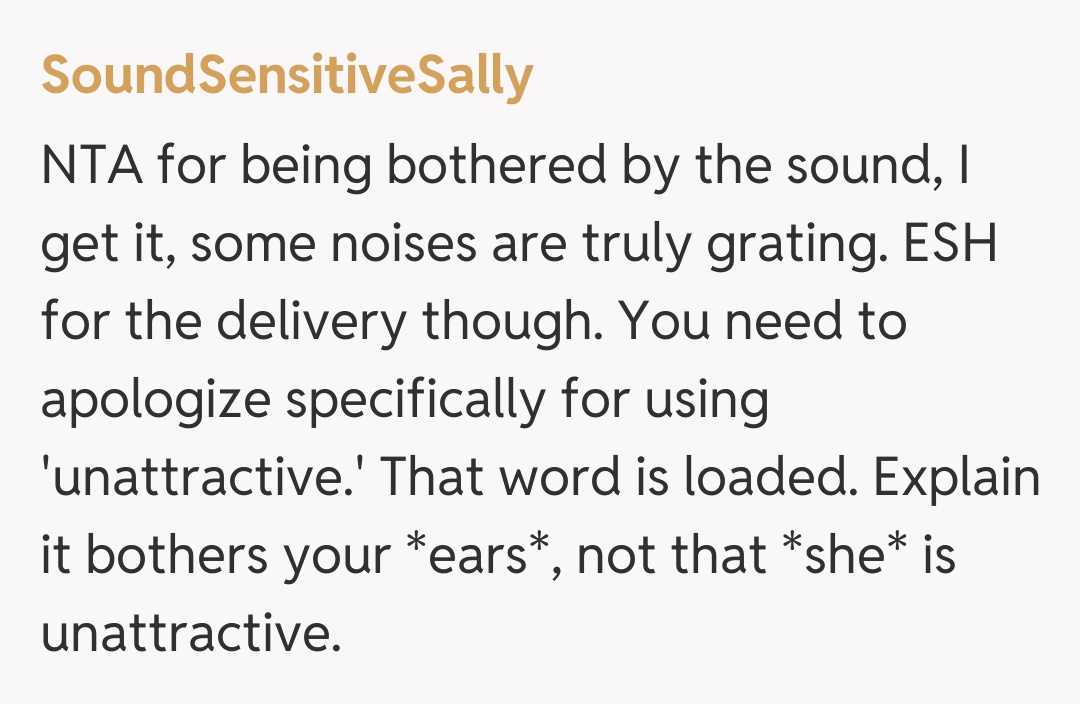
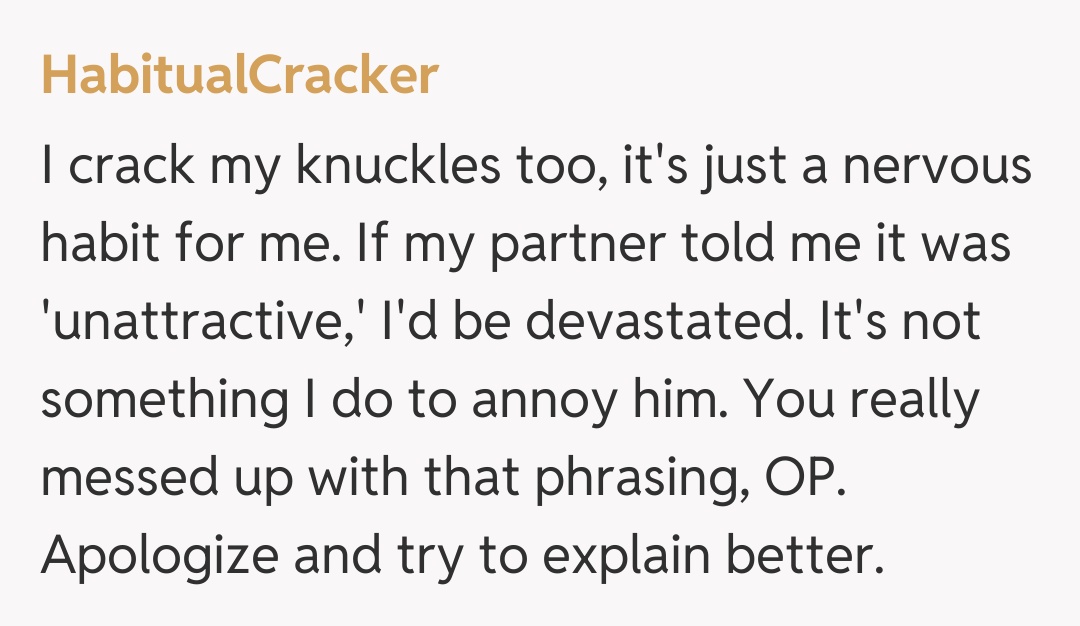
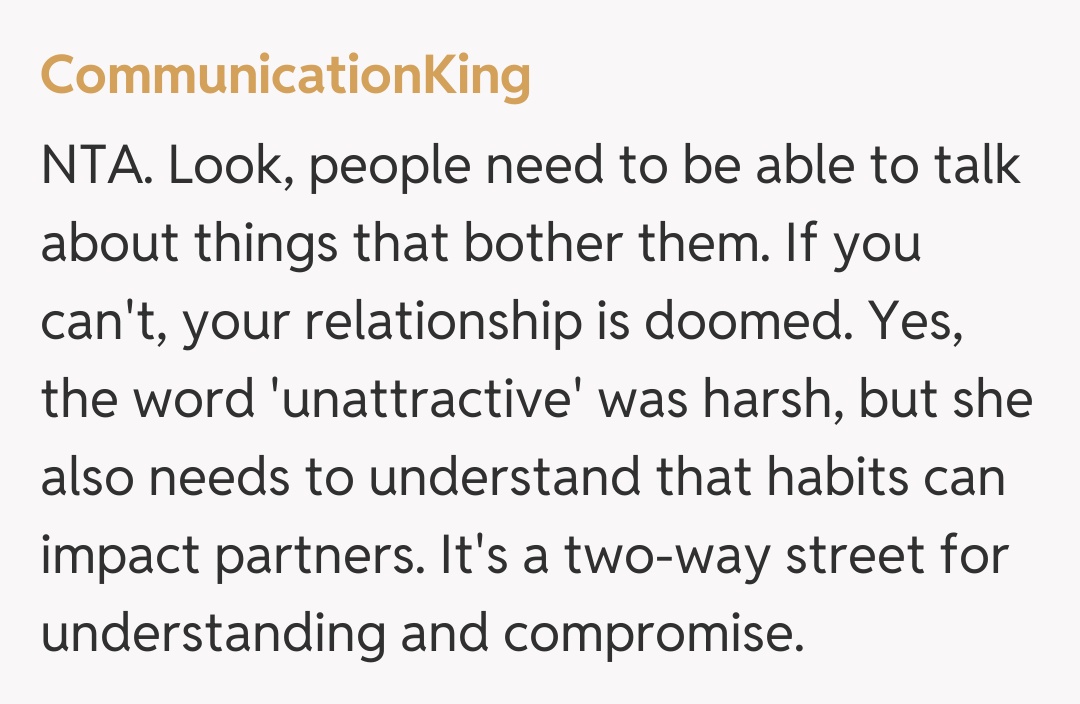
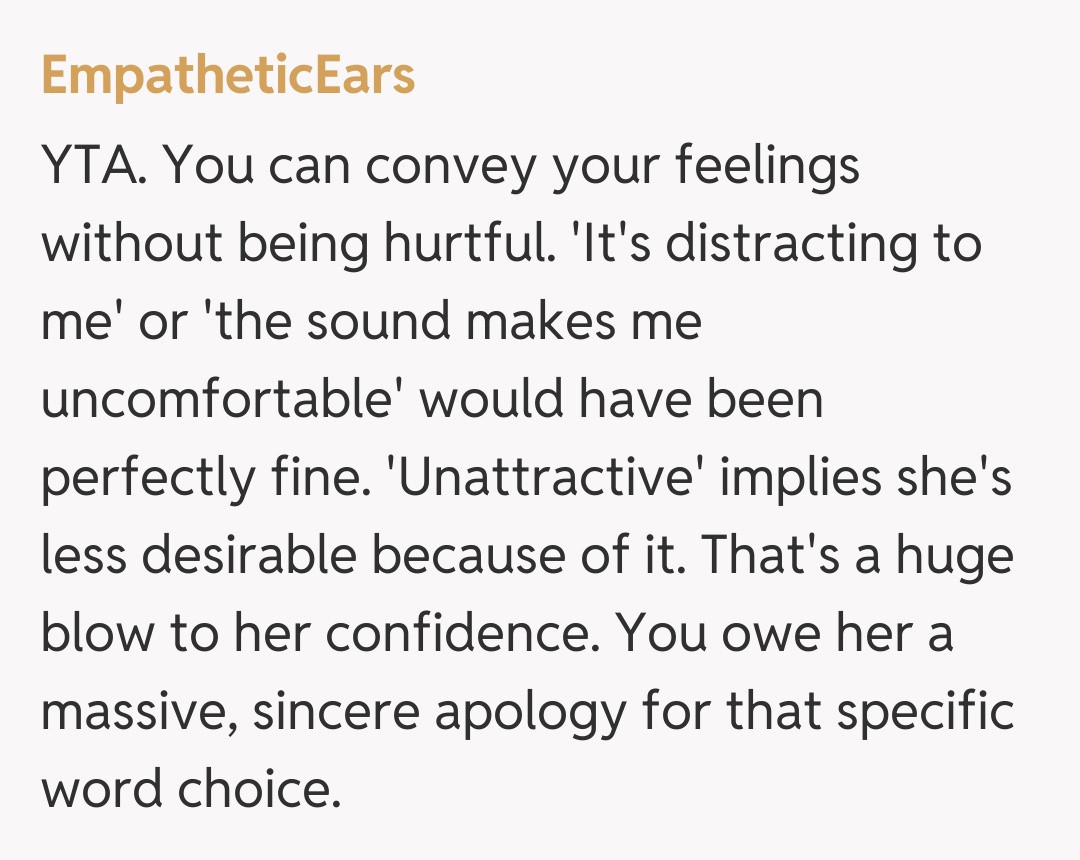
The comments section for this one was, predictably, a whirlwind! Many users sympathized with OP's frustration, acknowledging that certain sounds or habits can be incredibly irritating. They argued that it's important to be able to communicate genuine annoyances in a relationship, otherwise they fester. However, almost universally, users pointed out that his choice of the word 'unattractive' was where he unequivocally became the AITA.
The consensus was clear: while it's okay to express that a sound is annoying or distracting, labeling a partner's habit as 'unattractive' shifts the criticism from a behavior to a personal flaw. Commenters highlighted that this word choice can deeply hurt self-esteem and creates unnecessary insecurity. The general advice leaned towards apologies for the phrasing and a gentler re-approach, focusing on the sensory impact, not a judgment of her appeal.
This story serves as a stark reminder that in relationships, *how* we say something can often be more impactful than *what* we say. While honesty is crucial, it must be tempered with kindness and empathy, especially when discussing personal habits. Learning to communicate discomfort without causing deep personal hurt is a skill every couple needs to master. Hopefully, OP and Sarah can navigate this bump, with OP offering a heartfelt apology and both learning to approach difficult conversations with more care and consideration for each other's feelings.