AITA for telling my husband his ear hair is gross and he needs to trim it weekly?
Oh, the joys and challenges of living with another human being! We all have our little quirks and habits, some endearing, some… well, let's just say they require a bit of diplomatic navigation. Today's AITA post dives headfirst into one of those delicate domestic dilemmas that many couples might silently grapple with but rarely discuss openly. It's about personal grooming, perceived standards, and the fine line between helpful advice and hurtful criticism.
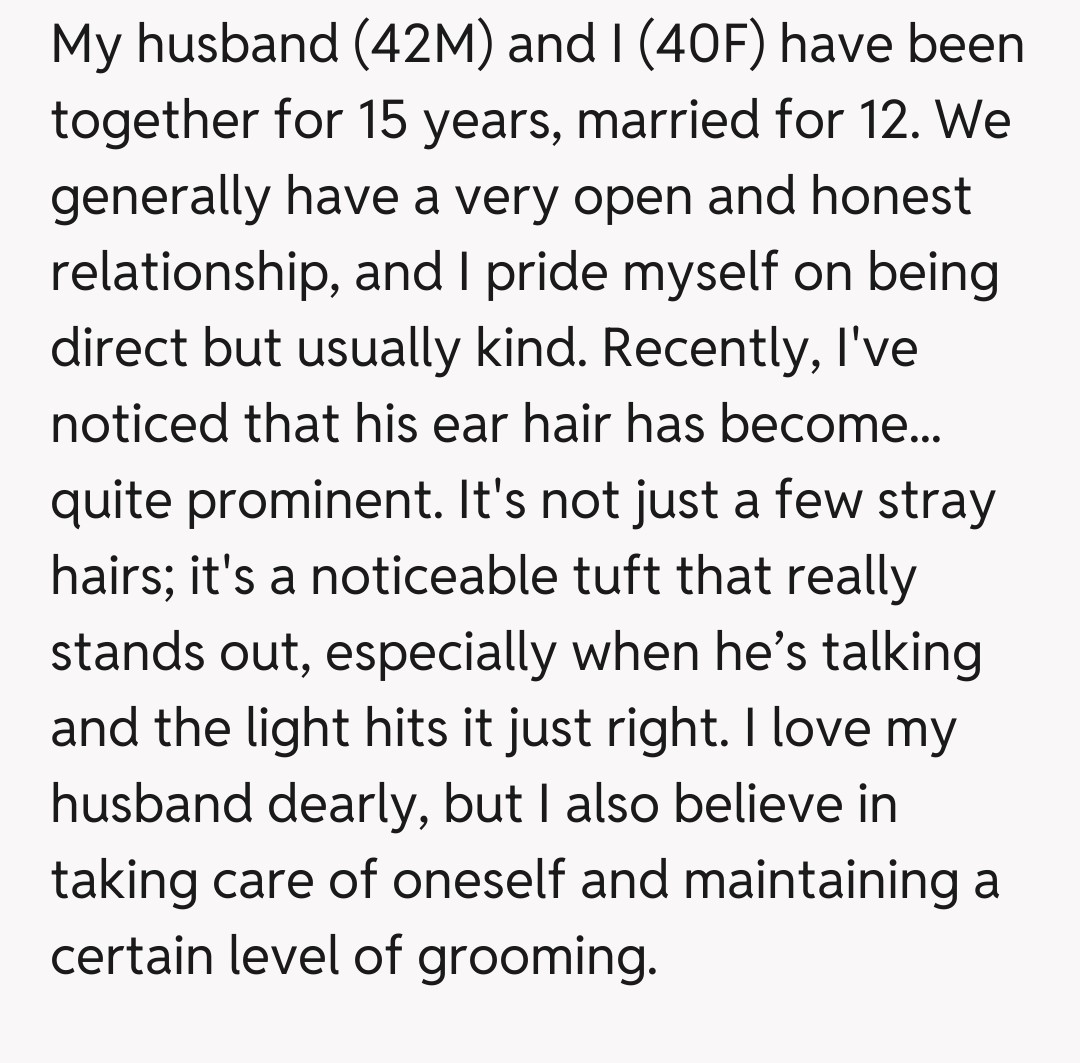
It's a classic setup: one partner has a legitimate concern about the other's appearance, but how that concern is communicated can make all the difference between a productive conversation and a full-blown marital skirmish. Our poster, 'EarHairFrustration,' found herself at a crossroads regarding her husband's increasingly prominent ear hair. Was her approach justifiable, or did she cross a line into being an insensitive spouse? Let's dive into her story.

"AITA for telling my husband his ear hair is gross and he needs to trim it weekly?"
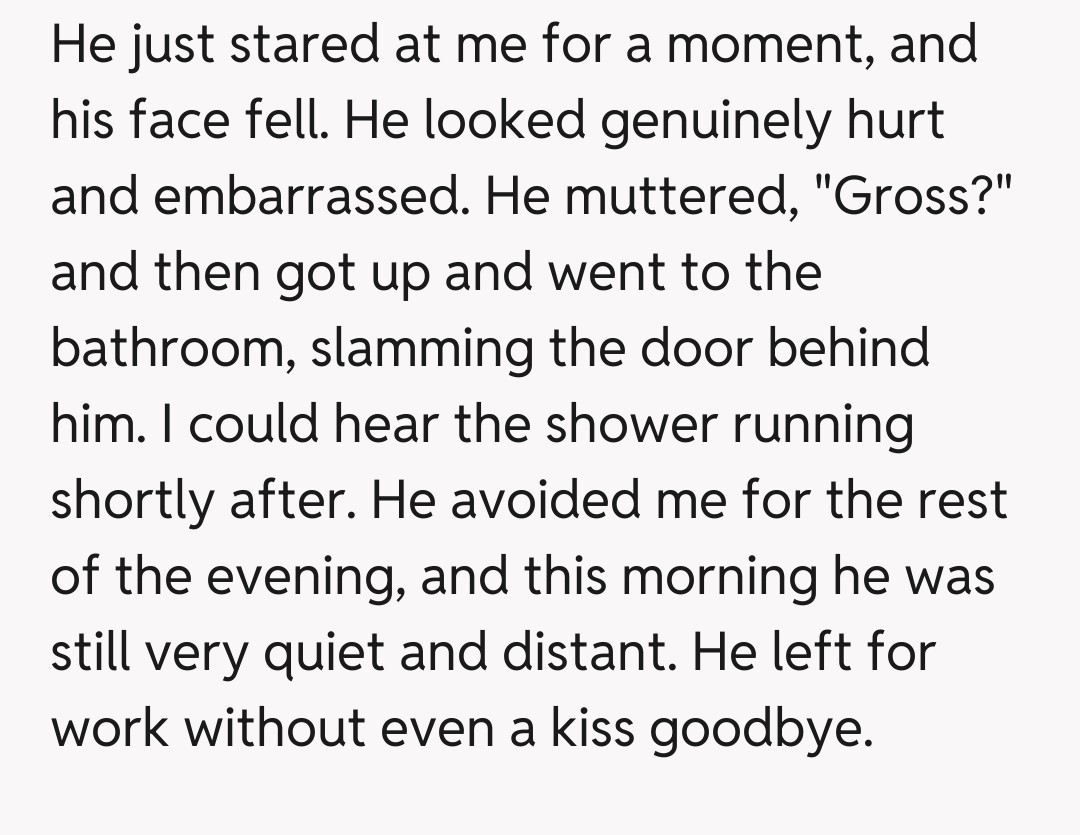
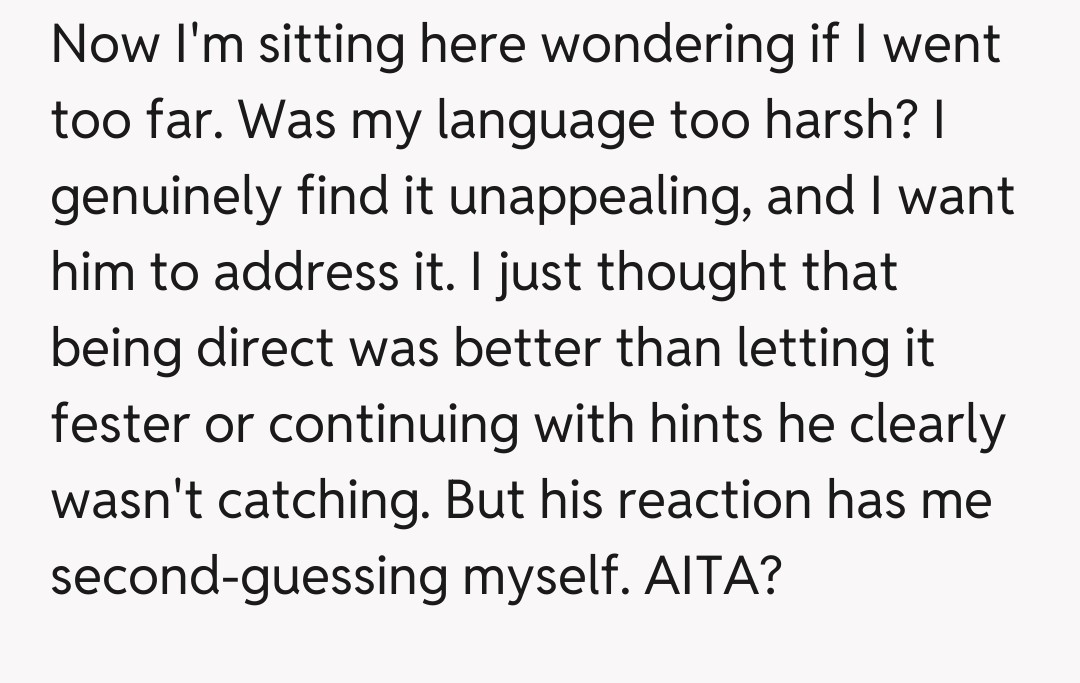
This is a classic 'delivery over message' dilemma. On one hand, it's perfectly natural for partners to notice and even be bothered by changes in appearance or grooming habits. After 15 years, a certain level of candor is expected and often appreciated in a relationship. The desire for your spouse to look and feel their best is often rooted in affection and care, not malice. Ignoring something that genuinely bothers you can lead to resentment.
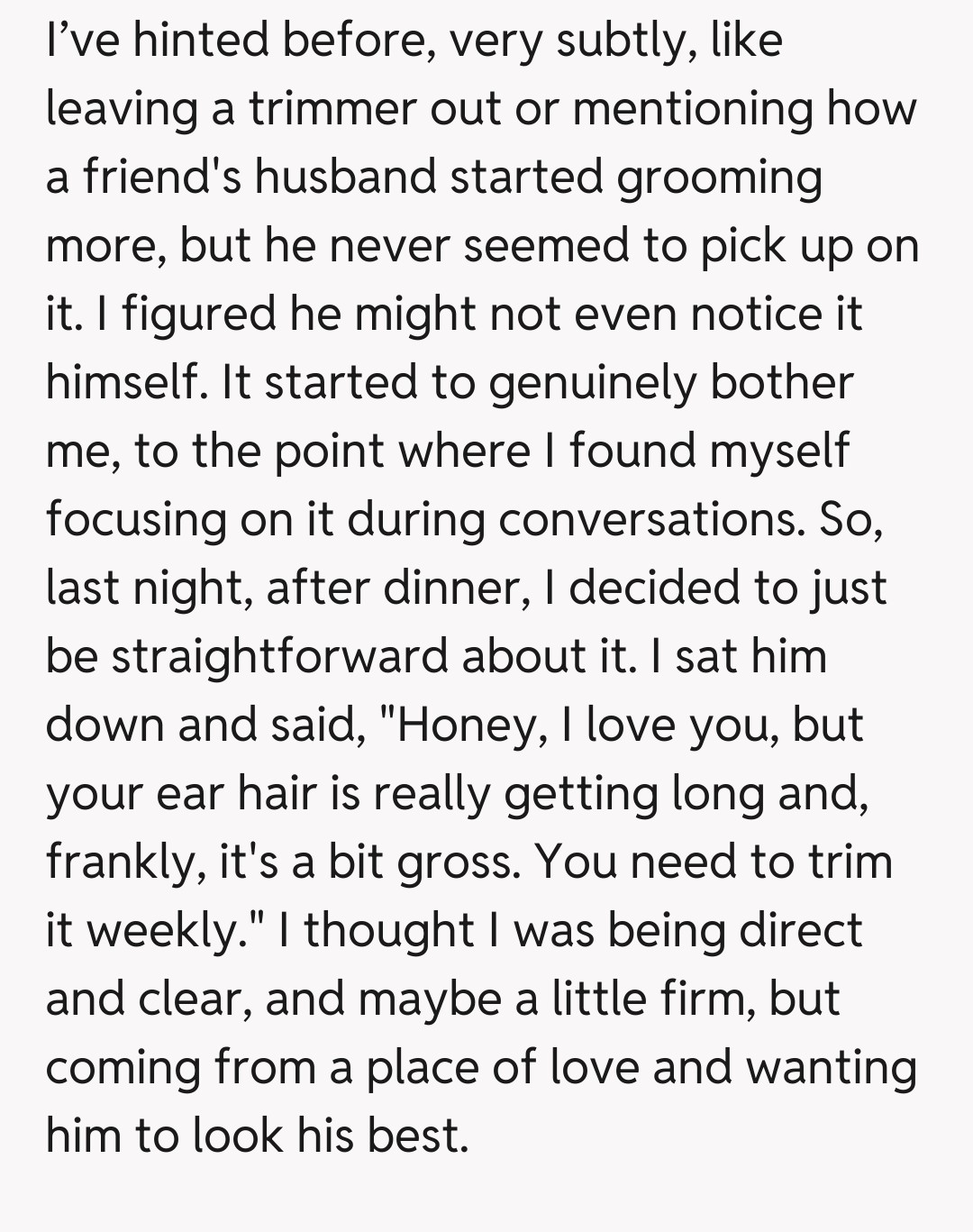
However, the language used here is critical. Calling something your partner cannot entirely control (like hair growth patterns) "gross" can be deeply wounding. It implies a level of disgust that goes beyond a simple suggestion for grooming. This kind of phrasing can make a person feel unattractive, unloved, and even ashamed of a natural bodily process. It's a direct attack on their body, which can feel very personal.
Your previous attempts at hinting were perhaps too subtle for him to grasp, which led you to believe directness was the only path. But there's a spectrum between subtle hints and blunt, potentially harsh, criticism. A more gentle approach, focusing on how *you* feel or suggesting a shared grooming routine, might have yielded better results without the emotional fallout.
Ultimately, while your intention might have been to help him, the impact of your words was clearly negative. When addressing sensitive topics like personal appearance, it's crucial to prioritize your partner's feelings and self-esteem. "Gross" is a word that rarely fosters positive change; it usually just causes pain and defensiveness. Open communication is key, but so is empathy and choosing your words carefully.
The Internet Weighs In: Was Her Ear Hair Comment a Misstep?
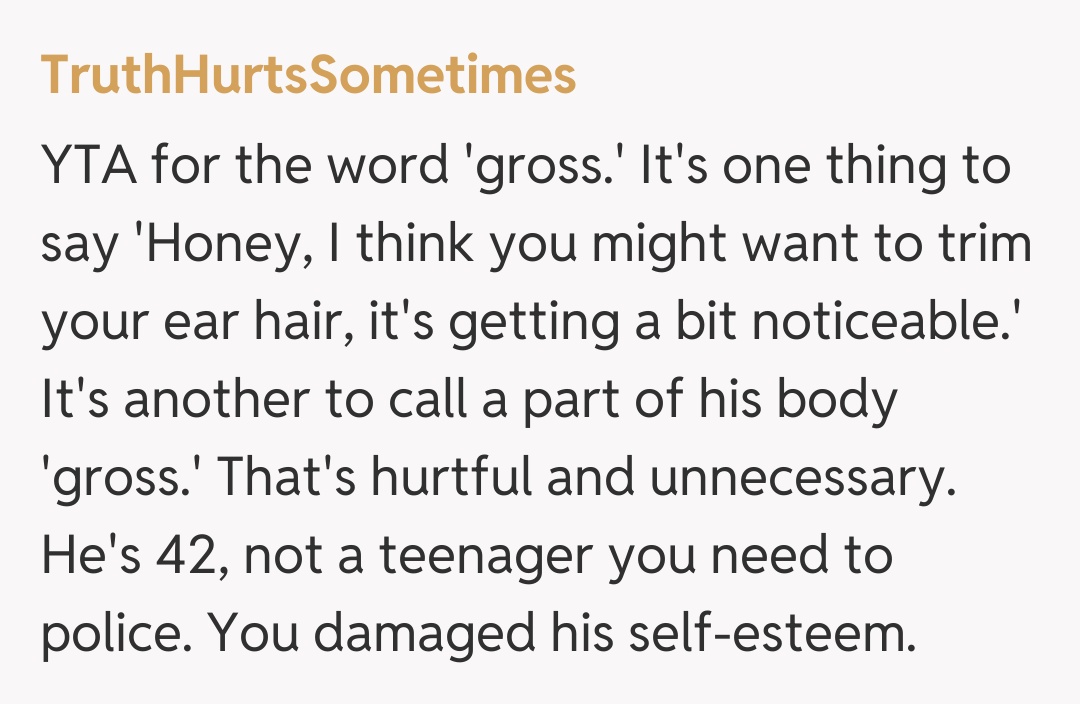
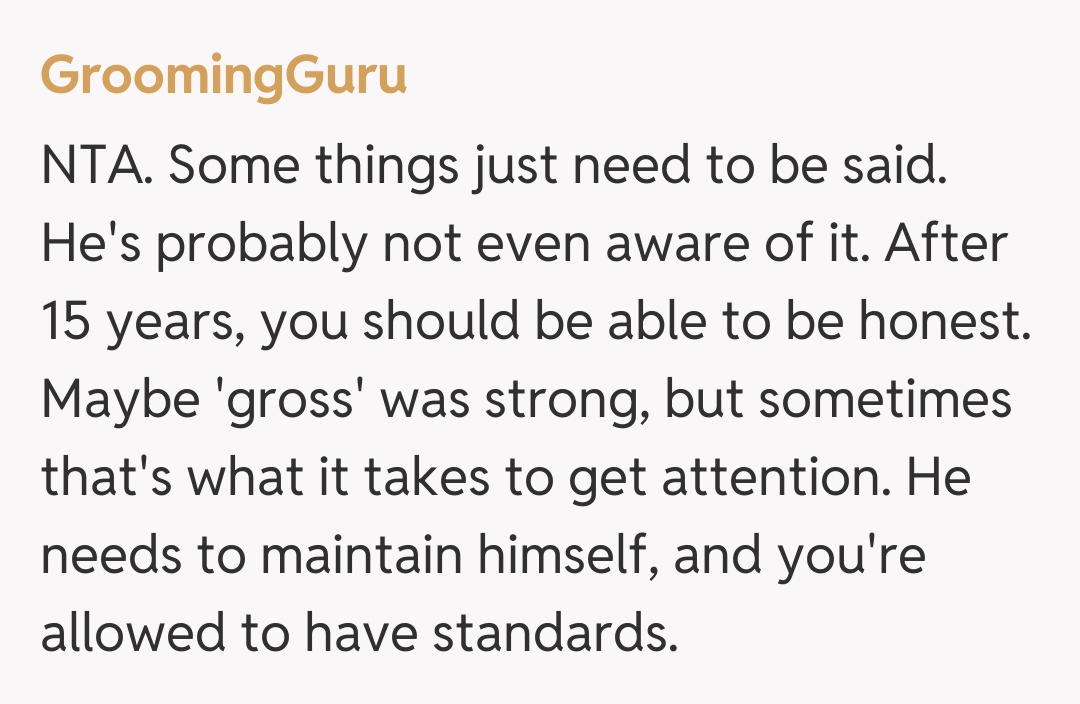
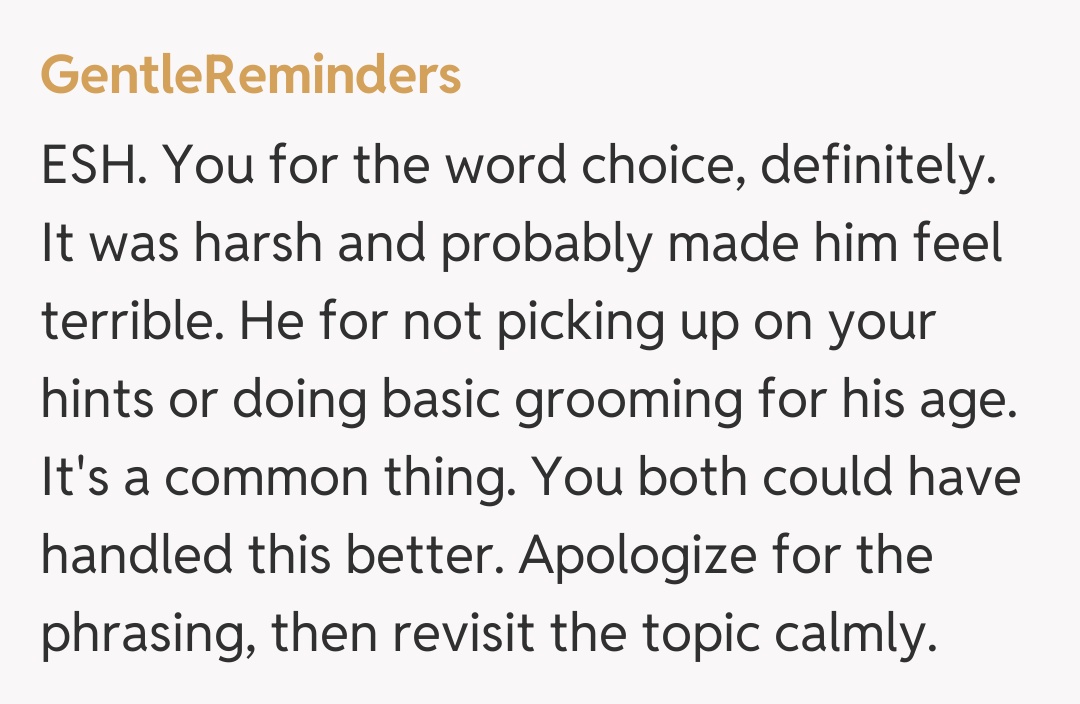
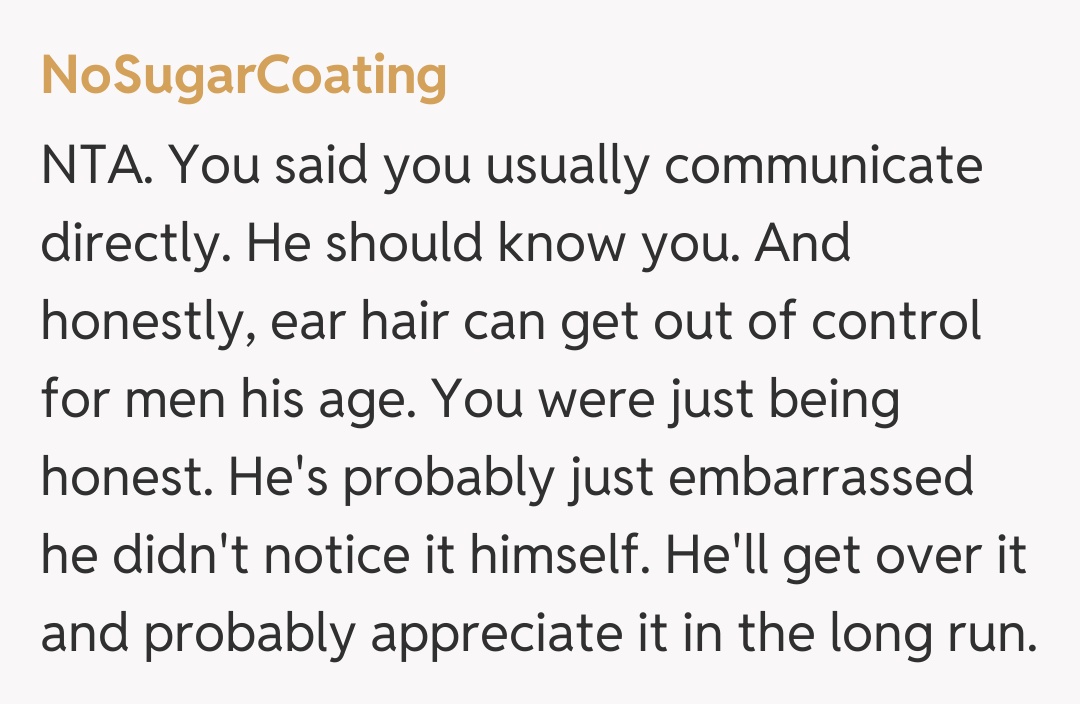
The comment section, as expected, is a lively debate of NTA versus YTA, with a significant lean towards the latter, focusing on the delivery. Many users acknowledge that it's okay to have preferences for a partner's grooming, but the word "gross" seems to be the main point of contention. Several commenters highlighted how such a word could severely damage a spouse's self-esteem, especially coming from the person who is supposed to love them unconditionally.
Others suggested alternative ways the OP could have approached the subject, like offering to help trim it, buying a specific grooming tool as a gift, or simply stating that she finds it more appealing when he's trimmed. The consensus seems to be that while the underlying issue (ear hair) might be a legitimate concern for the OP, the execution of her communication left much to be desired, causing unnecessary hurt.
This post serves as a potent reminder that in relationships, especially long-term ones, the way we communicate matters just as much as what we're communicating. While the desire to address a partner's grooming is understandable, leading with a word like "gross" can cause significant emotional damage. It's a lesson in empathy and choosing kinder, more constructive language, even when delivering an honest truth. Hopefully, our OP and her husband can move past this, perhaps with an apology and a new, gentler approach to shared self-care discussions. What do you think? Let us know below!