AITA for refusing to let my husband wear shorts because his calf hair is too thick?
Welcome back, dear readers, to another fascinating delve into the often-murky waters of relationship etiquette and personal boundaries. Today's submission brings us a truly unique predicament that has sparked quite the debate in our inbox. It's a tale that reminds us how even the most seemingly minor preferences can sometimes escalate into significant points of contention between partners.\nThis story, at its core, explores the delicate balance between personal comfort, aesthetic preferences, and the unspoken rules we sometimes impose on those we love. Is it ever okay to dictate what your partner wears, especially when it concerns their natural appearance? Let's dive into this hairy situation and see if we can untangle the threads of 'AITA' culpability.

"AITA for refusing to let my husband wear shorts because his calf hair is too thick?"
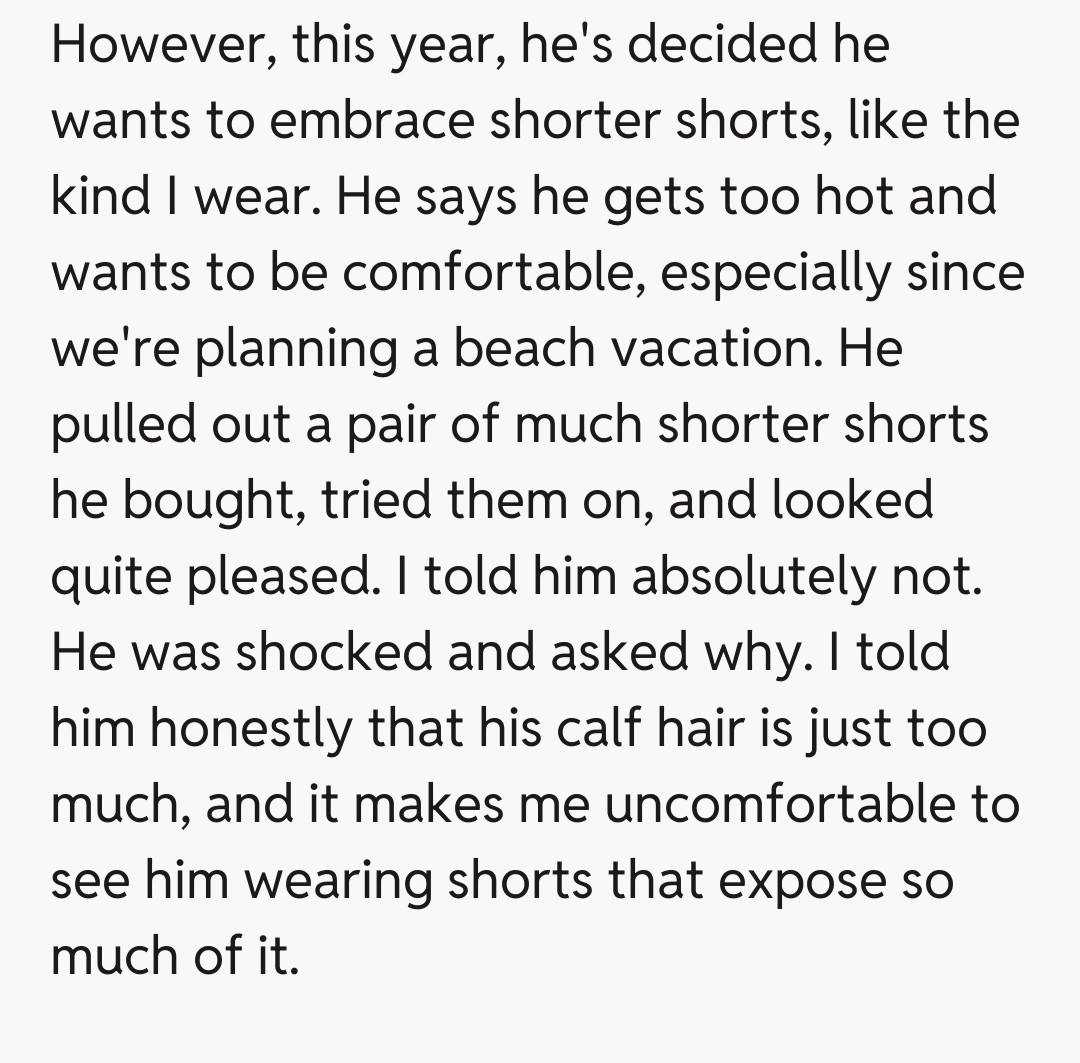
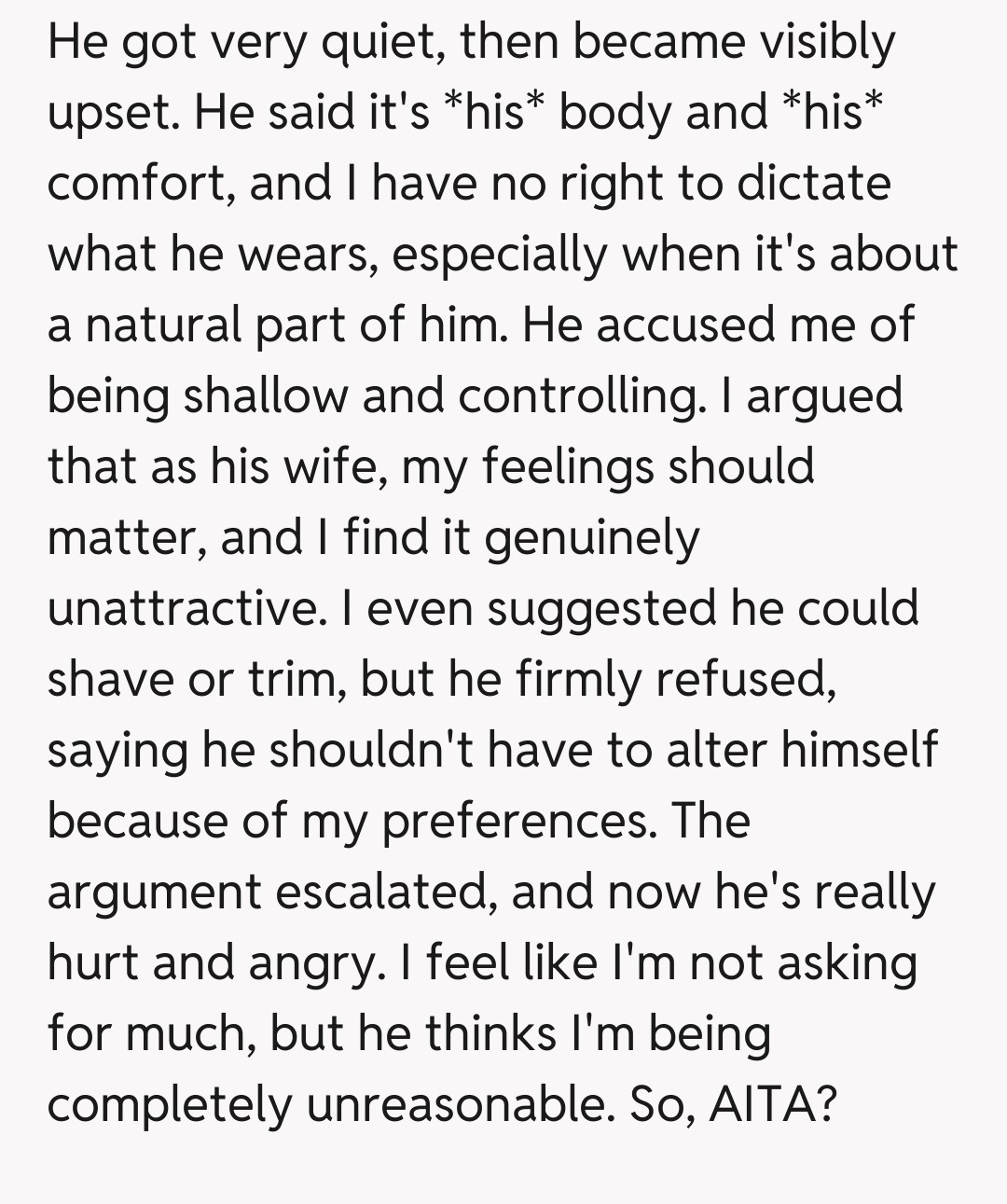
This AITA post brings up a classic dilemma within relationships: where do personal preferences end and controlling behavior begin? On one hand, it's completely natural for individuals to have aesthetic preferences, and it's not uncommon for partners to subtly influence each other's style or grooming choices. Many couples engage in discussions about what they find attractive, aiming to strike a balance between individual expression and mutual appeal. However, the line becomes blurry when one partner attempts to impose their preferences onto the other's fundamental bodily appearance or comfort.
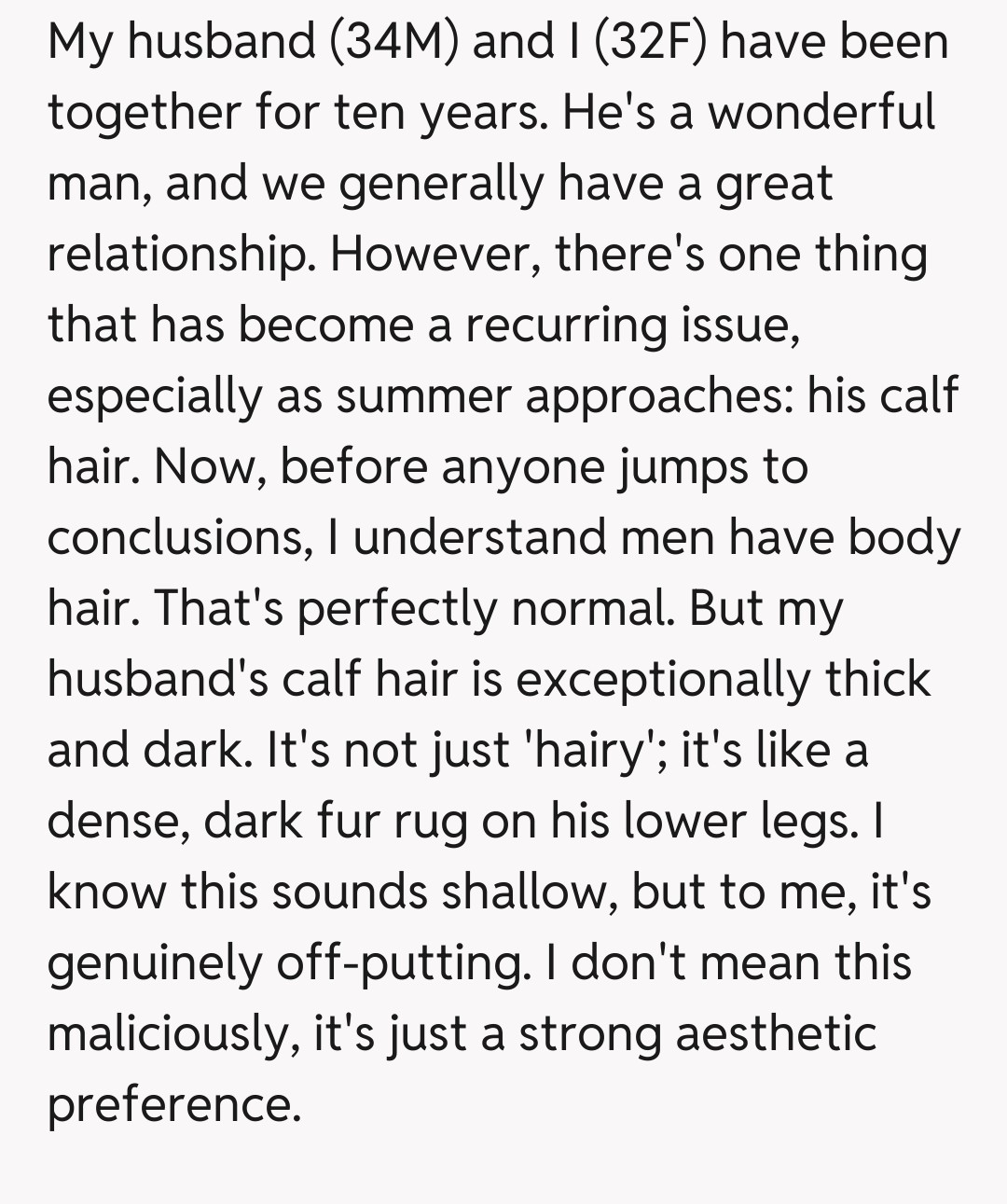
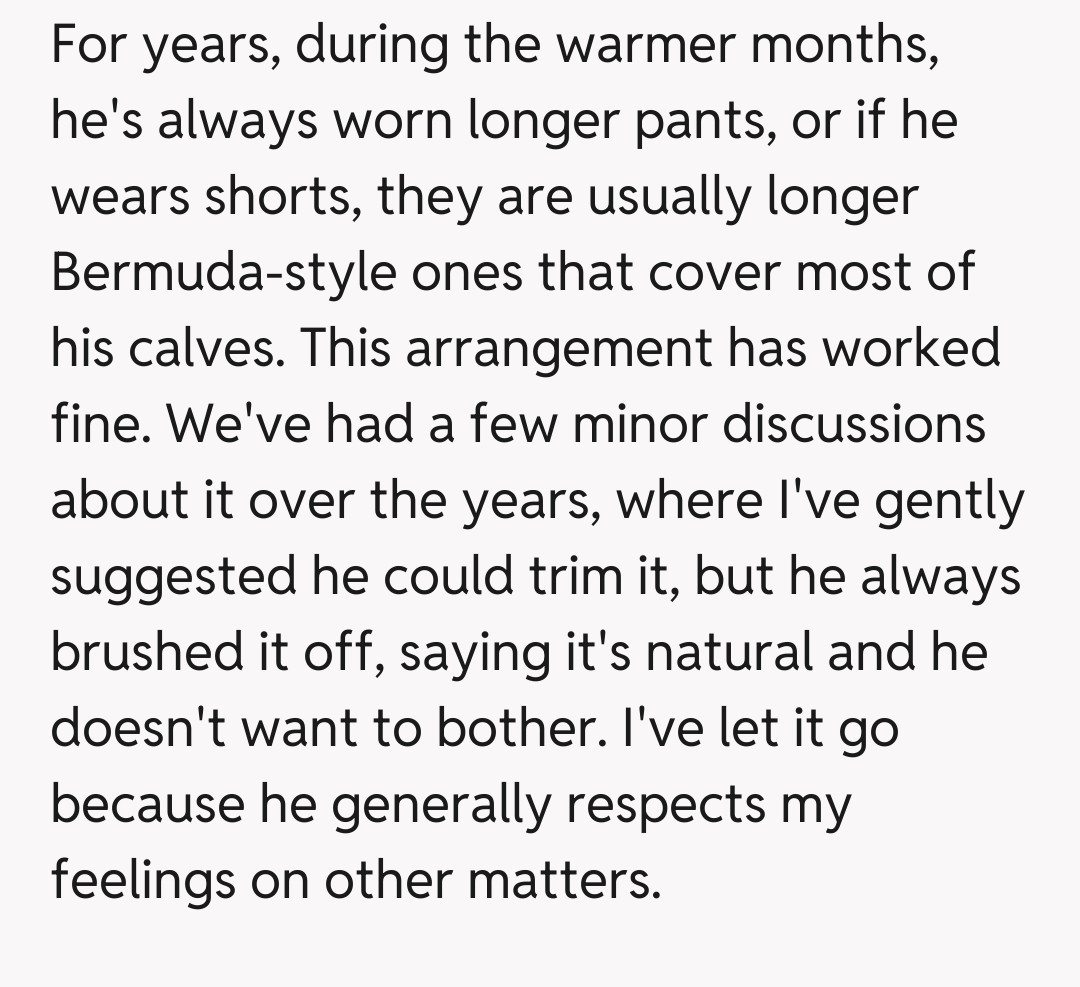
The poster, OP, states her discomfort with her husband's exceptionally thick calf hair and explicitly 'refuses to let him' wear shorter shorts. This phrasing, 'refuse to let him,' immediately flags a potential issue regarding control and autonomy. While OP is entitled to her feelings and preferences, dictating what her husband can or cannot wear based on a natural bodily characteristic crosses into a territory that many would consider disrespectful of his agency and self-image. His desire for comfort and self-expression is a valid point that shouldn't be dismissed.
From the husband's perspective, he's simply seeking comfort and personal style, which are fundamental rights. Being told that a natural part of his body is 'too much' or 'unattractive' by his spouse can be deeply hurtful and damaging to his self-esteem. He didn't choose to have this amount of body hair; it's a genetic trait. Asking him to modify his body or clothing choices purely for her aesthetic comfort, especially after years of a tacit agreement, could feel like a betrayal of trust and acceptance in their relationship.
Ultimately, this situation highlights a breakdown in communication and empathy. While OP's feelings are valid to her, the way she's approaching the situation seems to prioritize her aesthetic comfort over her husband's physical comfort and personal autonomy. A healthy relationship requires respect for individual differences, even when they clash with our personal tastes. Finding a compromise that honors both partners' needs without one dictating terms to the other is crucial.
The Verdict Is In: A Hairy Situation Unpacked by the Internet!
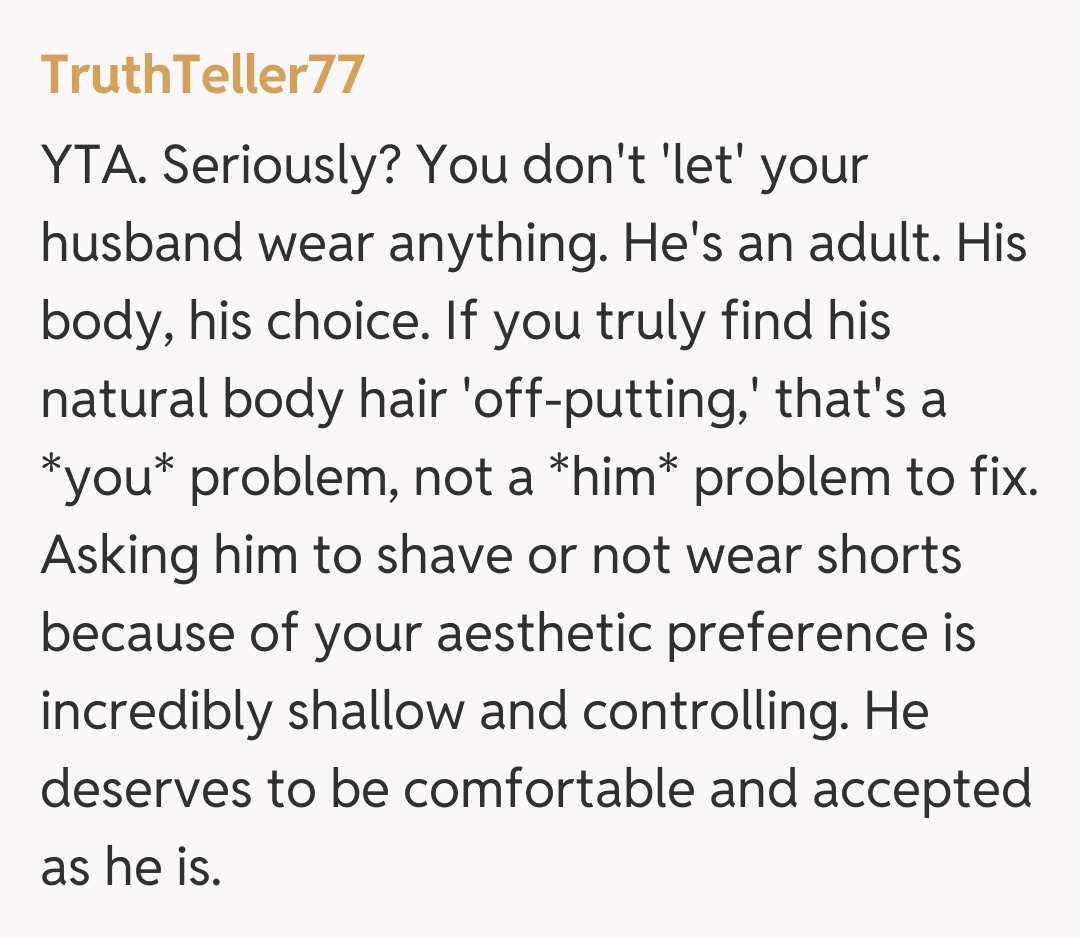
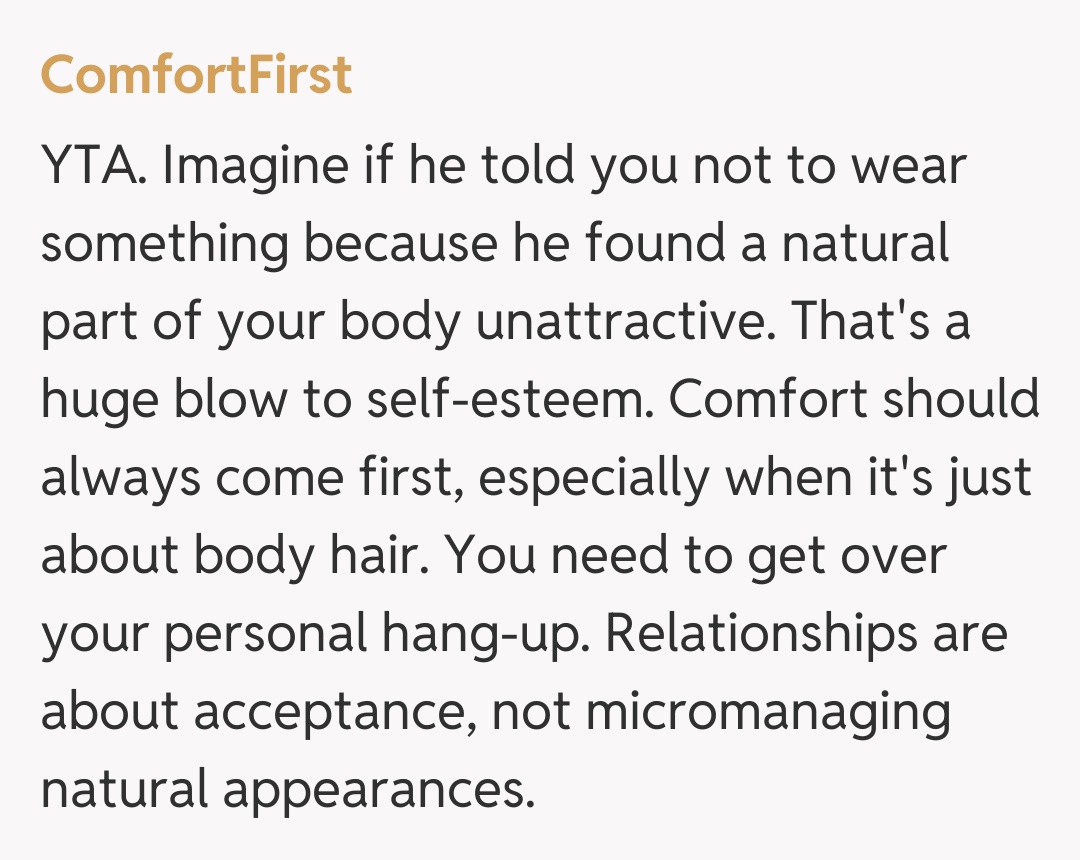
The comments section for this story absolutely blew up, and the consensus was remarkably clear. It seems the internet largely sided with the husband, emphasizing the importance of body autonomy and personal comfort in a relationship. Many users pointed out that while aesthetic preferences are normal, 'refusing to let' a partner wear something based on a natural physical trait is a significant overstep.
There was a strong sentiment that the wife's approach was shallow and controlling, highlighting how hurtful it must have been for the husband to hear such comments from his spouse. The discussion often revolved around the idea that partners should accept each other for who they are, body hair and all, rather than trying to dictate grooming or clothing choices. The advice mostly centered on the wife needing to re-evaluate her priorities and communicate more respectfully.
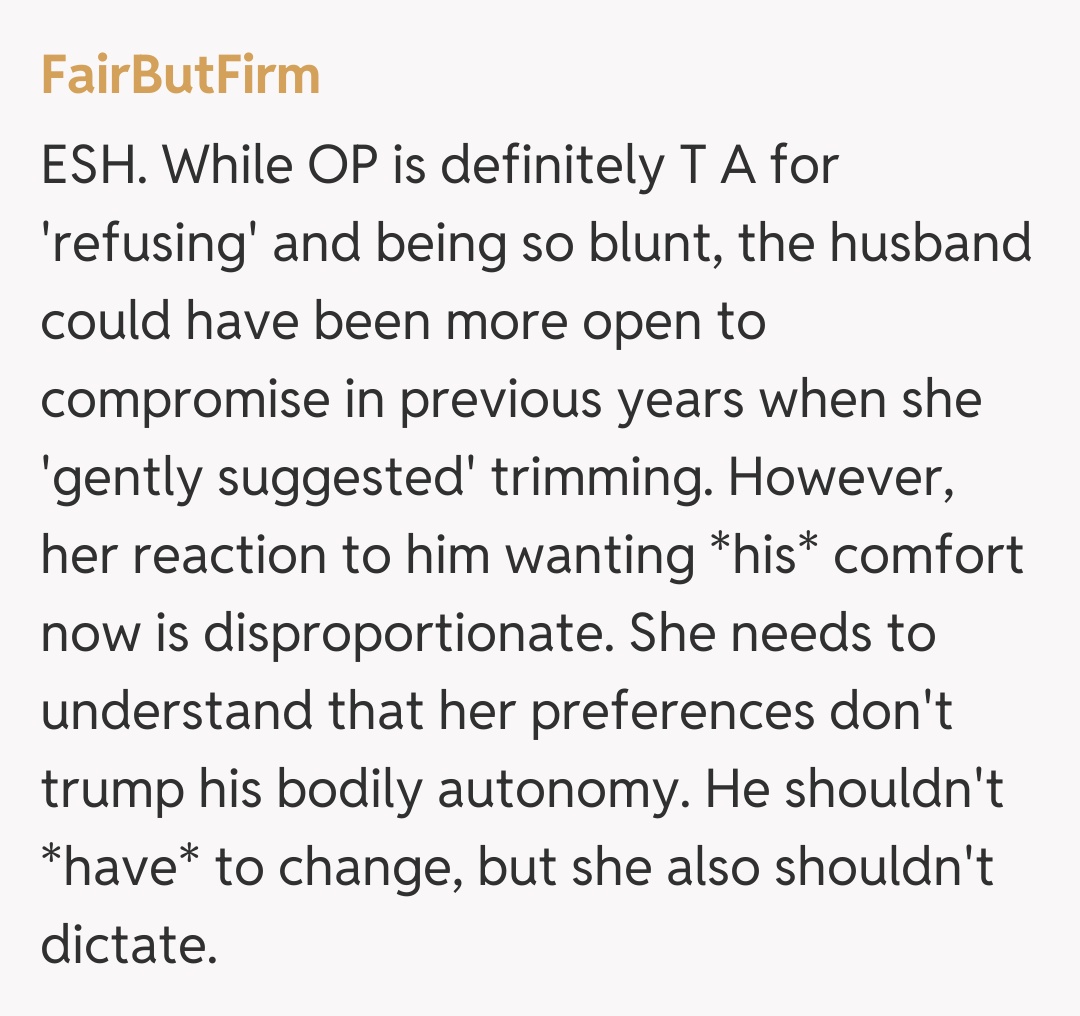
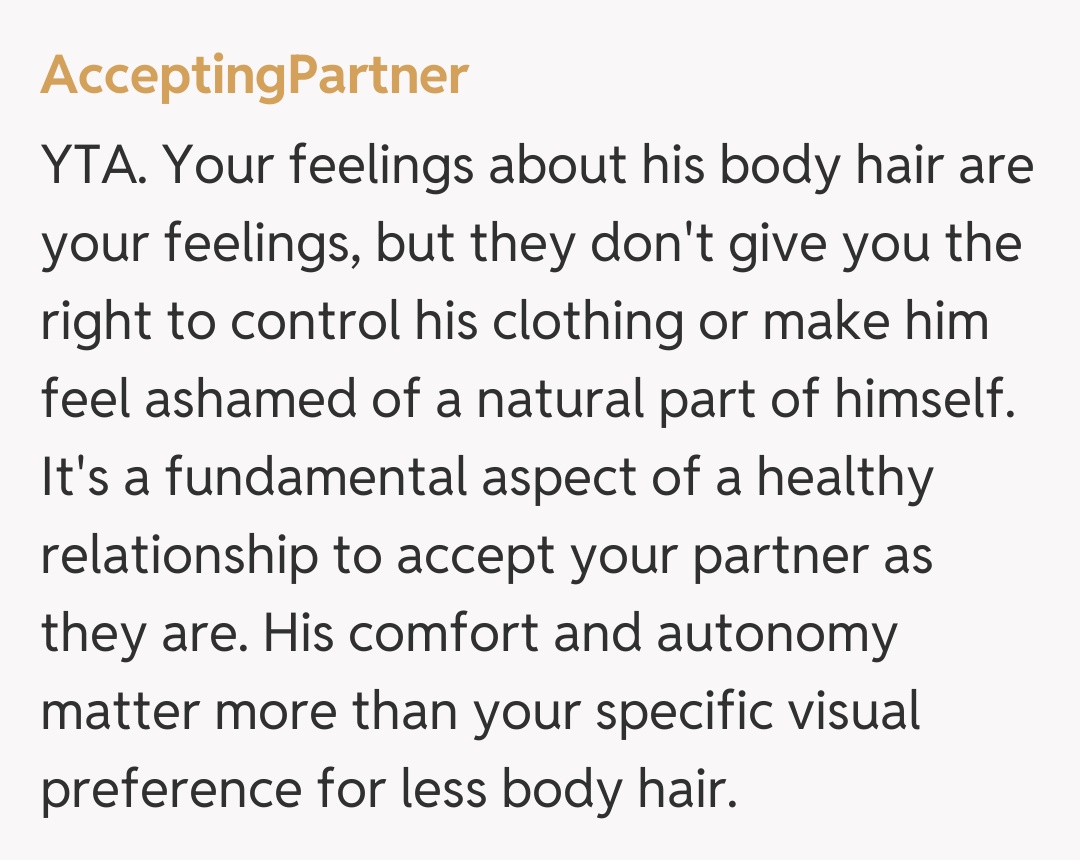
This particular AITA story serves as a powerful reminder that while personal preferences are valid, they should never supersede a partner's autonomy and comfort. The overwhelming sentiment from the community highlighted the importance of acceptance and respectful communication over control. Ultimately, relationships thrive on mutual respect and understanding, where partners feel loved and accepted for who they are, natural body hair and all. Perhaps a conversation focusing on empathy and compromise, rather than ultimatums, is the best path forward for this couple.