AITA for telling my daughter her natural lip color is too pale and she needs tint?
Oh, the complexities of mother-daughter relationships, especially when beauty standards enter the chat! Today's AITA submission dives straight into that delicate territory. Our OP found herself in a sticky situation after offering what she thought was helpful advice to her daughter about her appearance. What might seem like a small comment can often bloom into a full-blown family drama, leaving everyone wondering who's truly in the wrong.
It's a common tightrope walk for parents: how do you guide your children without making them feel inadequate? Society constantly bombards us with ideals, and sometimes, those ideals seep into our personal interactions. This story brings to light the fine line between constructive feedback and potentially damaging criticism, particularly when it comes to something as personal as one's natural features. Let's unpack this one.

"AITA for telling my daughter her natural lip color is too pale and she needs tint?"
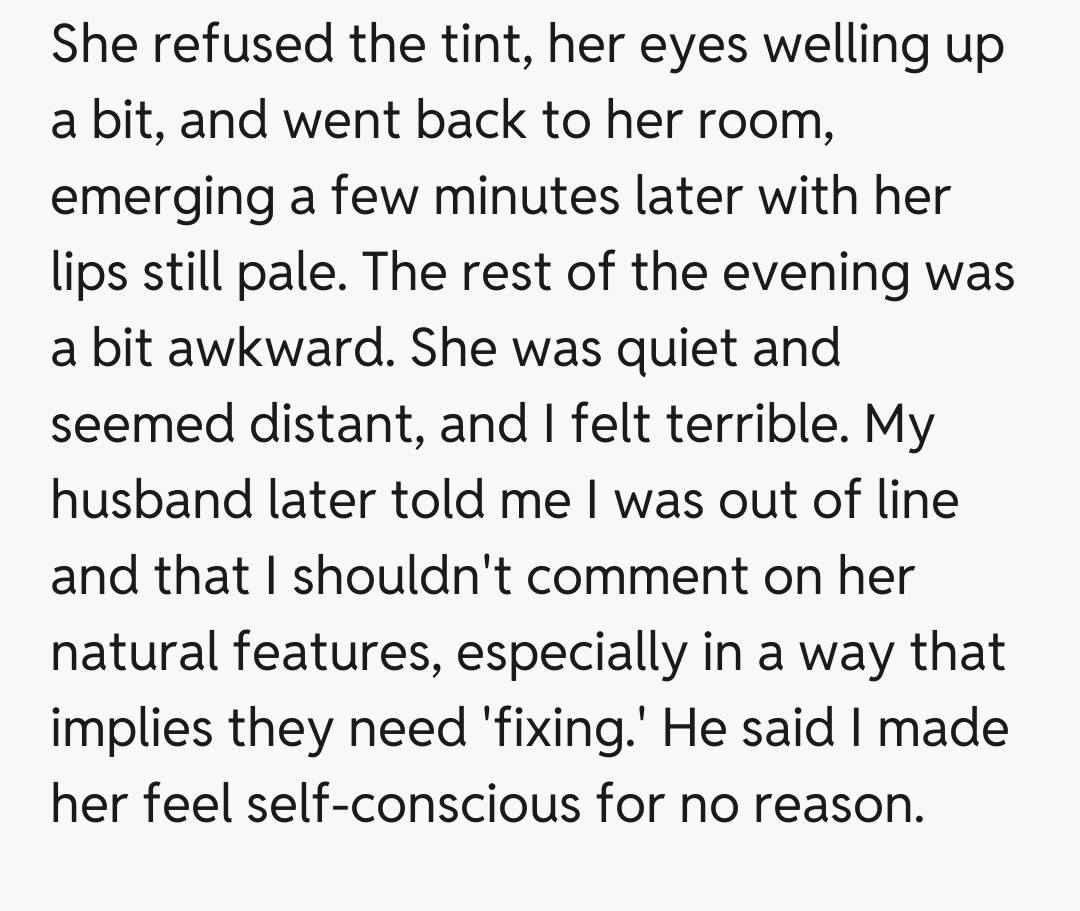
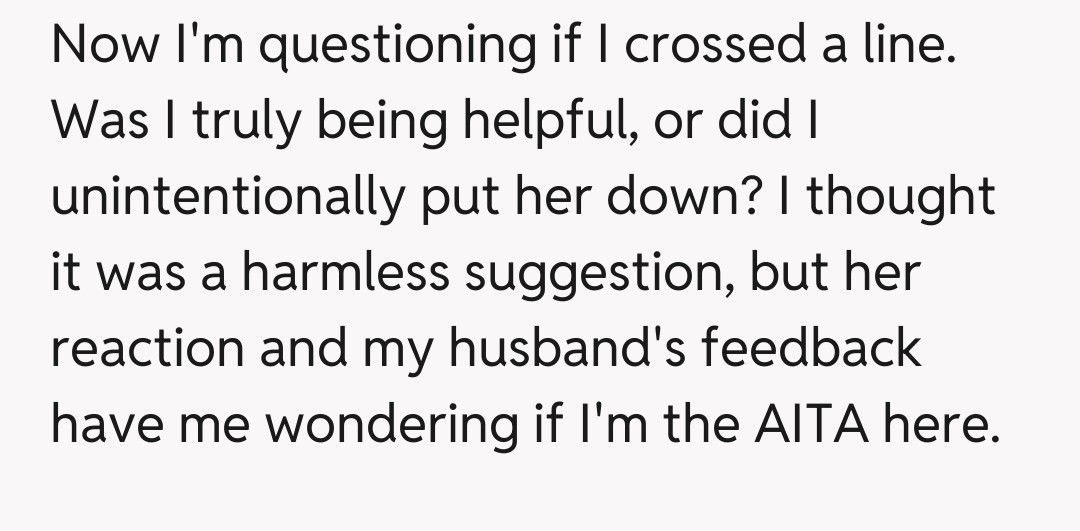
This situation perfectly encapsulates the minefield that is parenting teenagers, especially daughters, around body image and appearance. On one hand, a mother's instinct can be to offer advice or share beauty tips, often rooted in a desire for her child to present their best self to the world. It’s easy to see how OP might have genuinely believed she was offering a helpful suggestion to enhance her daughter’s look for a special occasion.
However, the impact of such comments, regardless of intent, can be vastly different from what's intended. Teenagers are incredibly vulnerable to criticism, especially concerning their natural features. A comment about needing 'tint' because a natural lip color is 'too pale' can easily be interpreted as 'you are not good enough as you are' or 'there's something wrong with your natural appearance.'
The key here lies in the framing and the recipient's perception. While the mother might view it as a minor suggestion, the daughter perceives it as a critique of her inherent features. This difference in interpretation highlights a common communication breakdown. Parents often forget that their children hear their words through a very different filter, especially when self-esteem is still developing and external validation feels crucial.
Ultimately, fostering self-acceptance and confidence should be paramount. While makeup can be fun and a form of self-expression, implying a natural feature is deficient can chip away at a young person's self-worth. It's a tricky balance between guiding and inadvertently shaming, and this story is a poignant reminder of how easily that line can be crossed, even with the best intentions.
The Lipstick Line: Readers Weigh In on the Pale Lip Predicament!
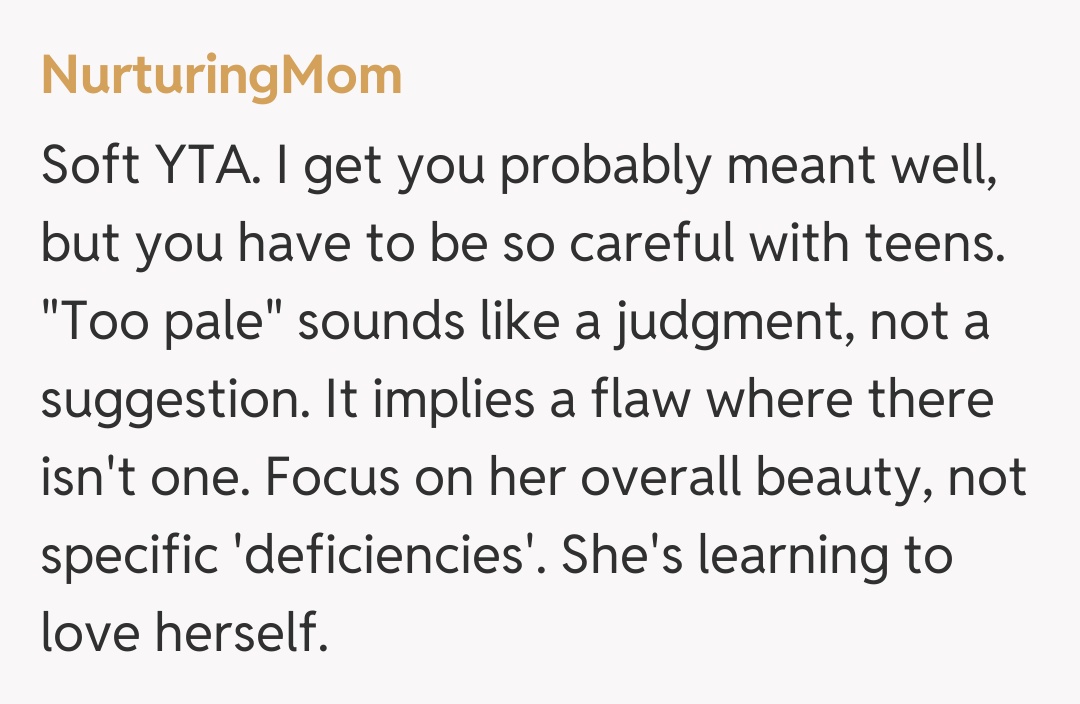
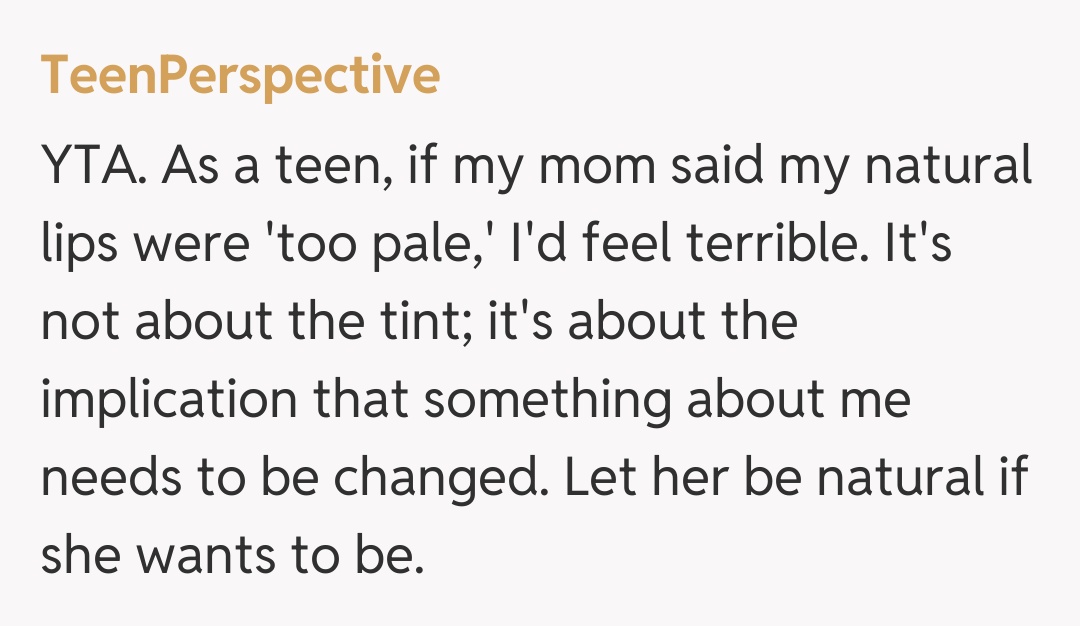
The comments section for this one was absolutely buzzing, and it's clear many of you have strong feelings about parental comments on appearance. A significant number of users felt OP was definitely the AITA. They emphasized that commenting on a child's natural features as "too pale" or needing "fixing" can be incredibly damaging to their self-esteem, especially for a teenager. Many shared personal anecdotes of similar comments that stuck with them for years.
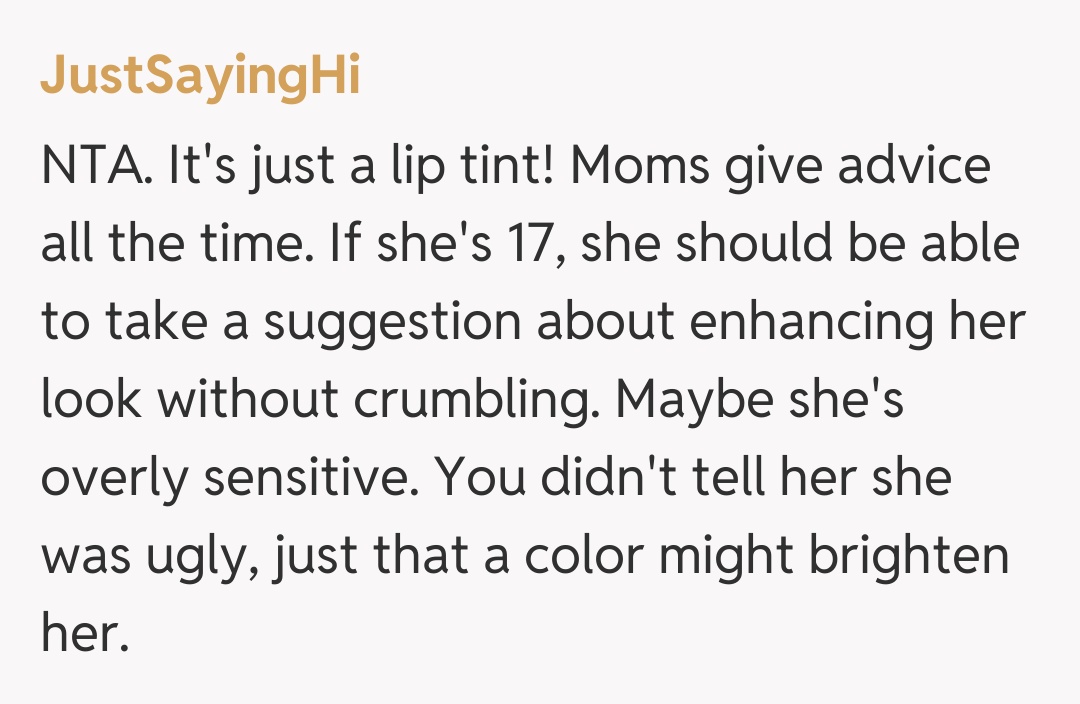
On the flip side, a smaller but vocal group defended OP, suggesting she likely had good intentions and was just trying to be helpful, as many mothers do. They argued that it's just makeup and not a deep criticism, and perhaps the daughter was overly sensitive. However, even these commenters generally agreed that the phrasing "too pale" was probably where OP went wrong, indicating that even well-meaning advice needs careful delivery.


This story serves as a powerful reminder of the lasting impact our words can have, especially on those we love most. While the intention behind a comment might be benign, the reception can be entirely different. Fostering a supportive environment where natural beauty is celebrated, and enhancements are a choice rather than a necessity, is crucial. Perhaps an open, honest conversation between mother and daughter, focusing on feelings rather than just facts, is the best path forward to mend this small but significant rift.