AITA for telling my son his skinny legs are why he can’t wear shorts confidently?
Parenting is a delicate dance, especially when your children are navigating the tumultuous waters of adolescence. We all want our kids to be confident, resilient, and happy, but sometimes, in our attempts to guide them, we stumble over our own words. The line between 'tough love' and 'unintentional harm' can be incredibly fine, and it's a boundary many parents struggle to define.
This week's AITA post dives headfirst into that very dilemma. A father, clearly frustrated by his son's body image issues, delivered a 'truth bomb' that has sent ripples through their family. Was he merely being honest in an effort to motivate, or did he cross a line into outright body shaming? It's a conversation starter that every parent should lean into, offering valuable insights into how our words truly land.

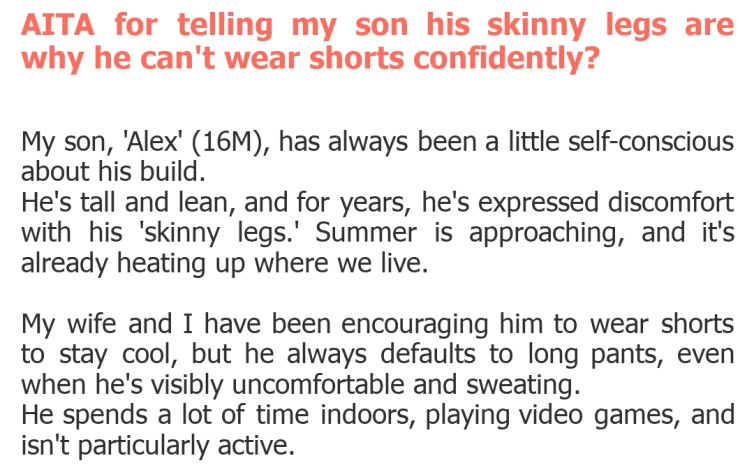
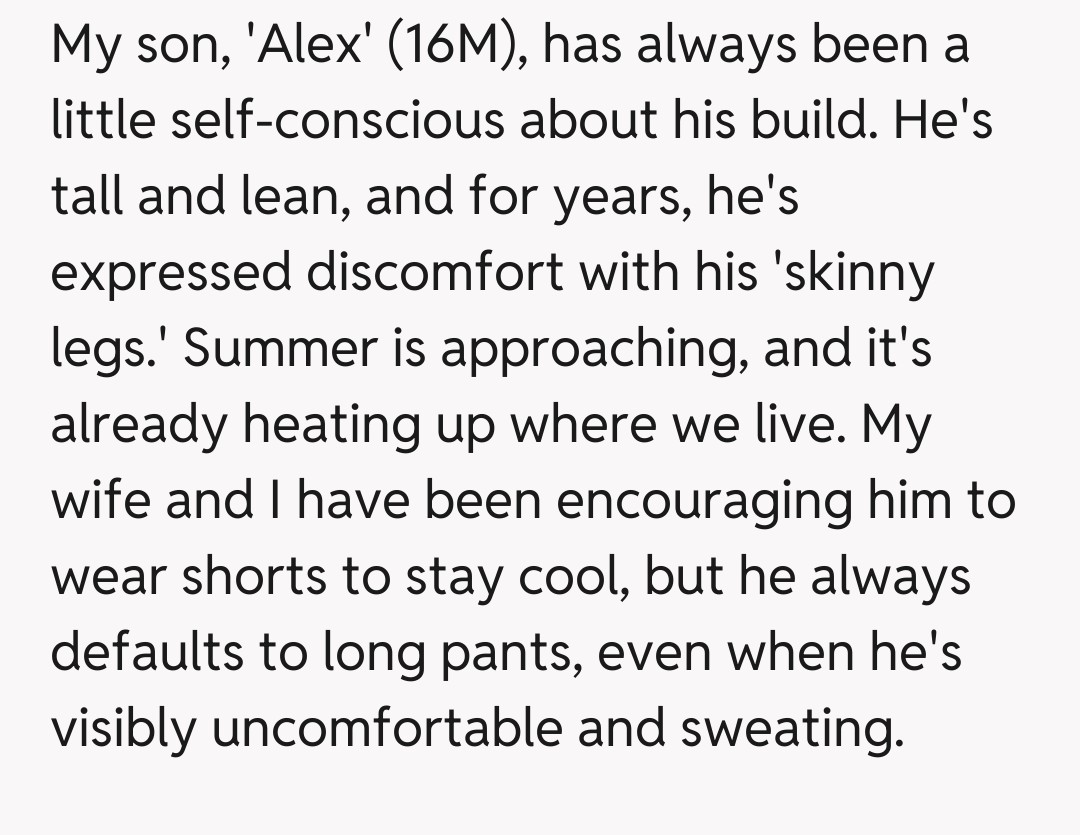
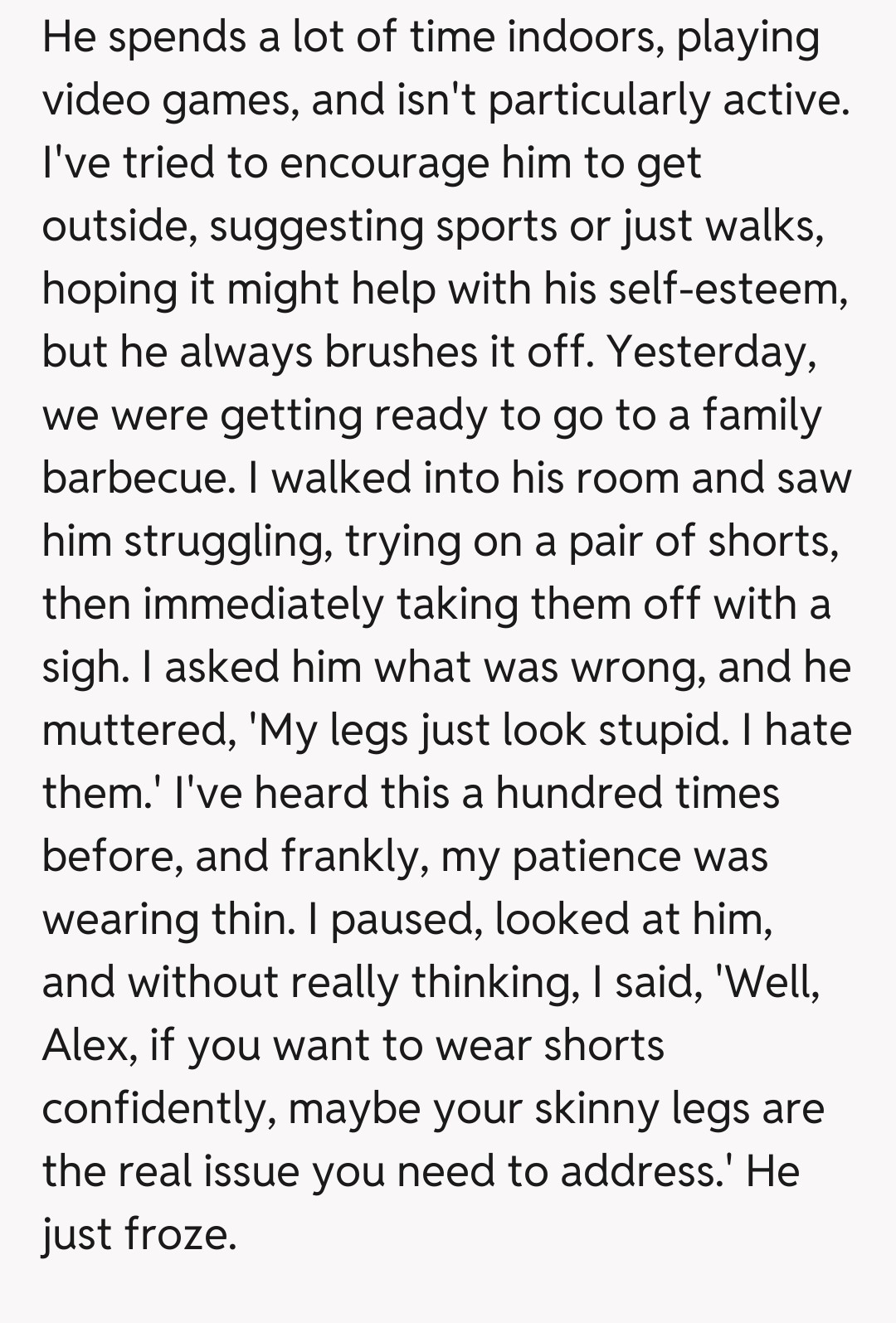
"AITA for telling my son his skinny legs are why he can't wear shorts confidently?"
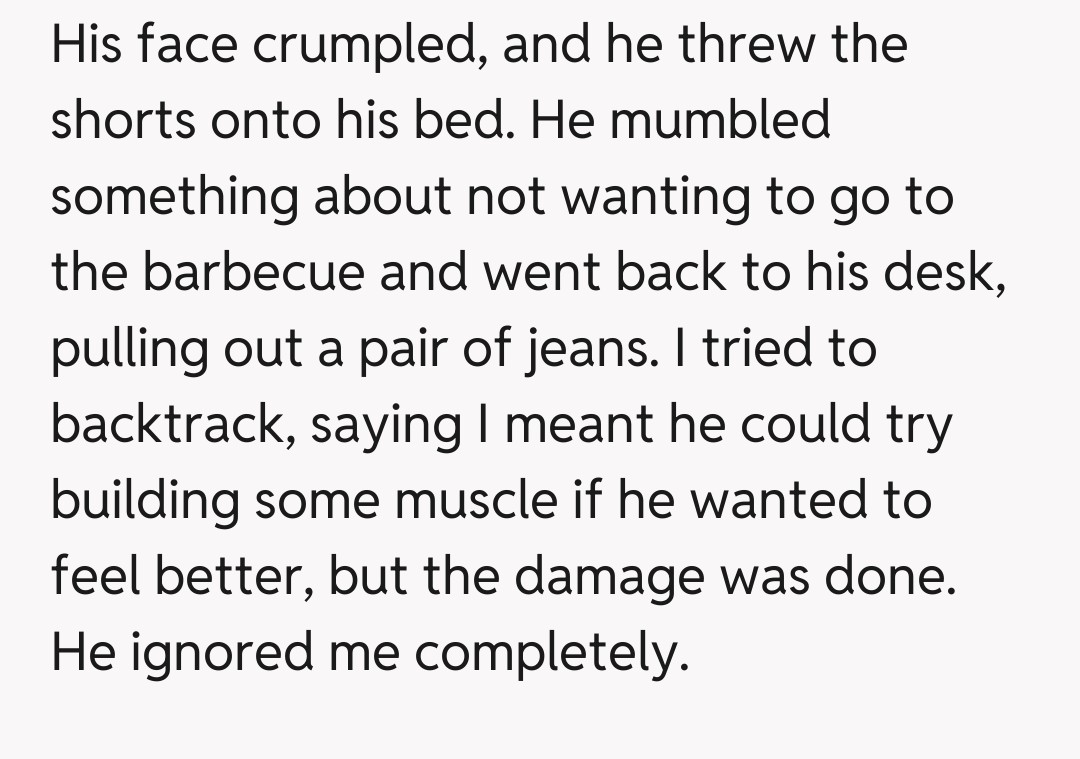
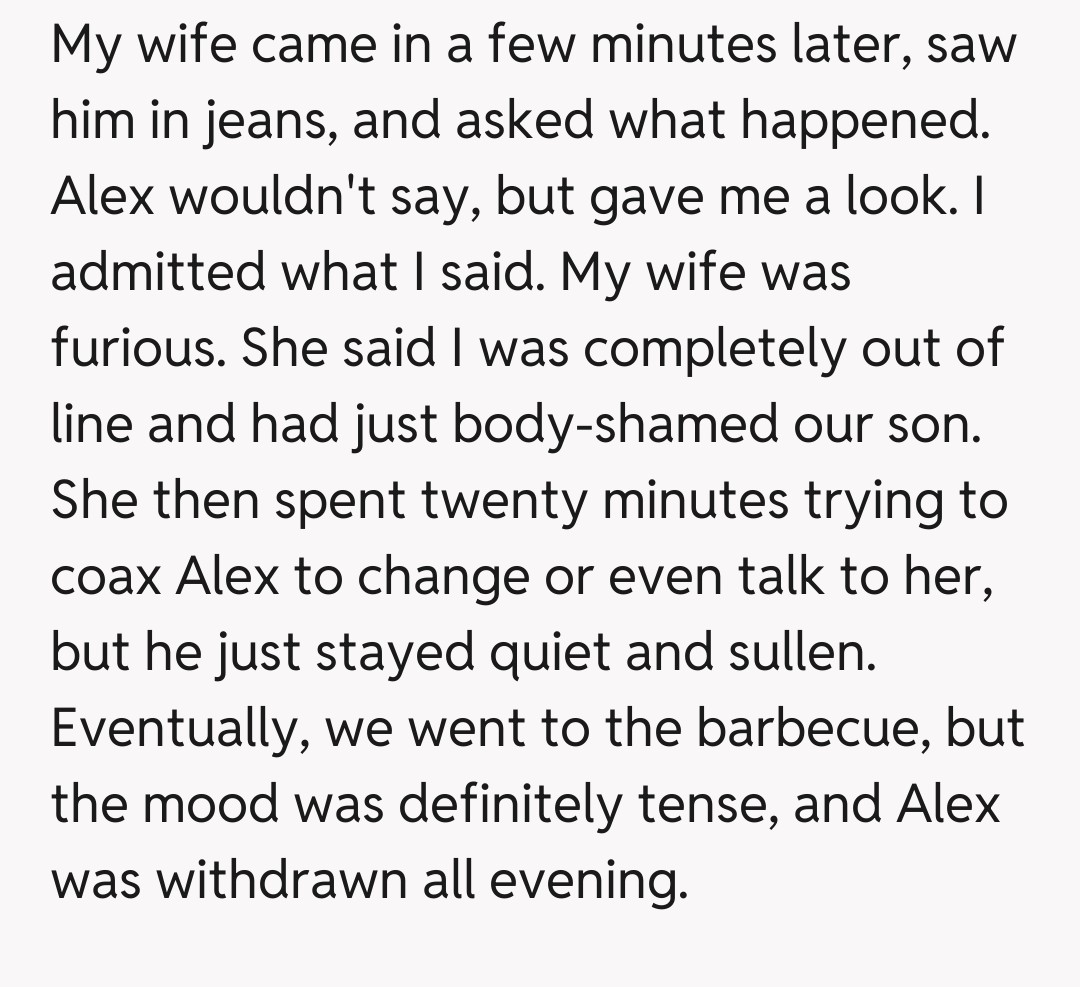
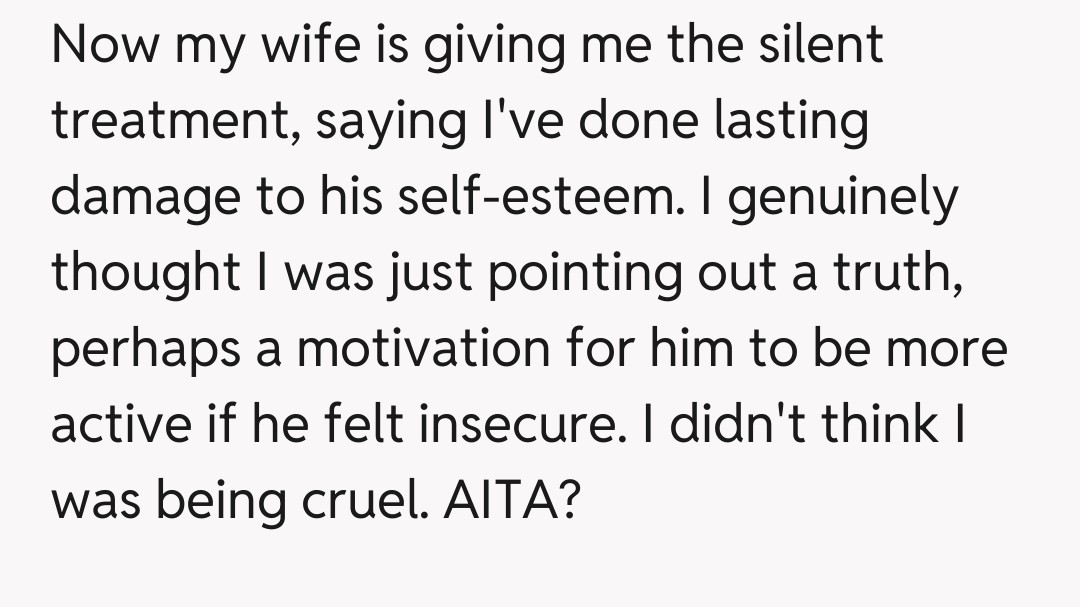
This scenario highlights a common parental pitfall: good intentions derailed by poor delivery. It's clear the father is frustrated by his son's insecurity and inactivity. His desire to see his son confident and comfortable in his own skin is understandable. However, directly linking his son's lack of confidence to a physical attribute, especially one the son is already self-conscious about, is almost guaranteed to backfire, regardless of the underlying motivation.
Teenage years are a fragile time for self-esteem, and body image is a particularly sensitive topic. Children, especially adolescents, are incredibly receptive to parental criticism, even when it's framed as 'truth' or 'motivation.' Such comments can easily be internalized as shame, reinforcing existing insecurities rather than inspiring positive change. The impact of a parent's words can linger for years, shaping how a child perceives themselves.
Instead of a blunt assessment, the father could have explored more supportive avenues. Encouraging physical activity for health and enjoyment, leading by example, or gently suggesting ways to build strength could have been far more constructive. Focusing on the 'why' behind the son's discomfort (e.g., 'What about your legs makes you feel stupid?') could open a dialogue, rather than shutting it down with a critical statement. Empathy is key.
From the son's perspective, this comment likely felt like a direct validation of his worst fears. He already believes his legs 'look stupid,' and his father's words would have confirmed that belief, coming from a person whose approval he values deeply. This can create a deeper sense of inadequacy and resentment, making him less likely to trust his father with future vulnerabilities or to act on any suggestions, however well-meant.
The internet weighs in: Tough love or just plain mean?
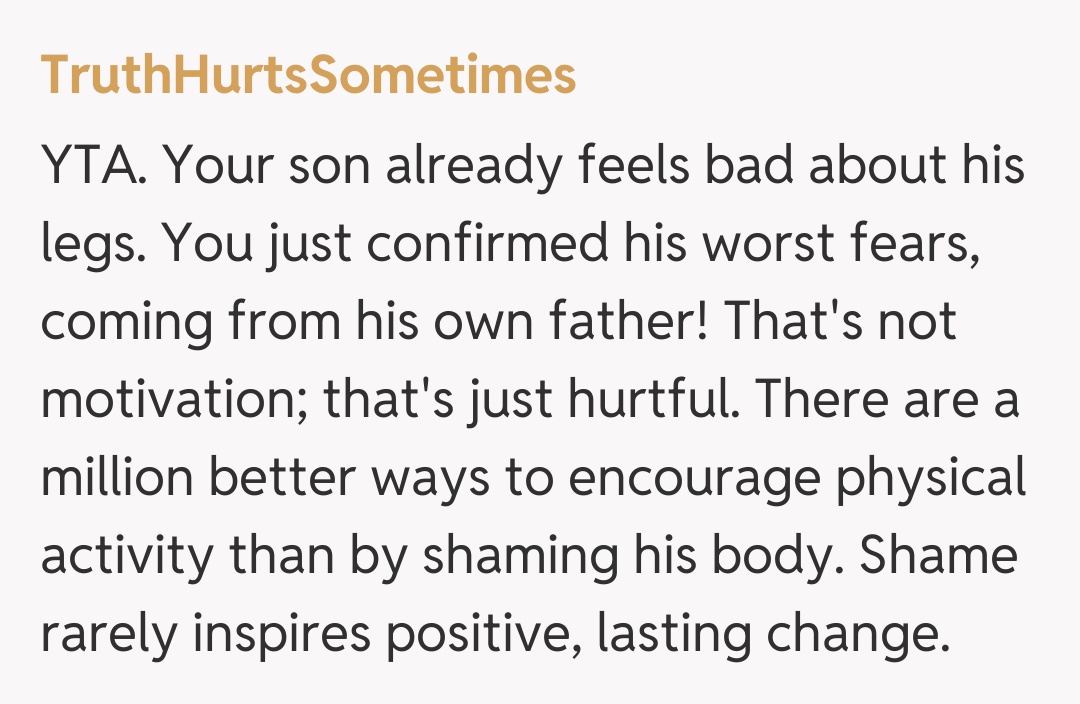
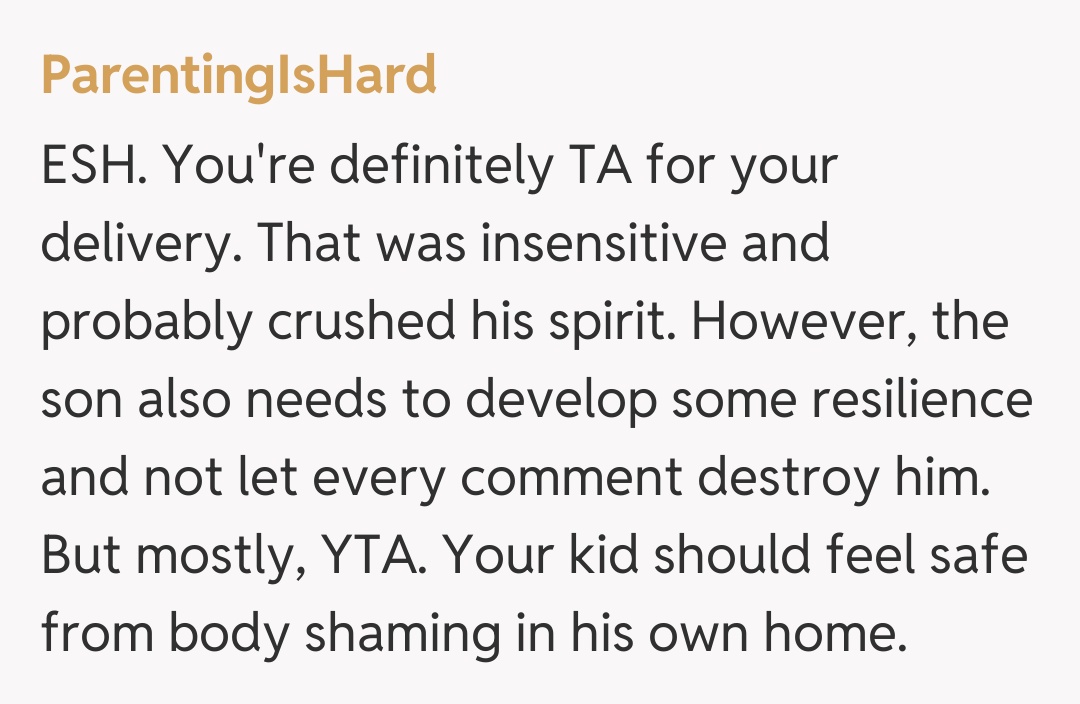
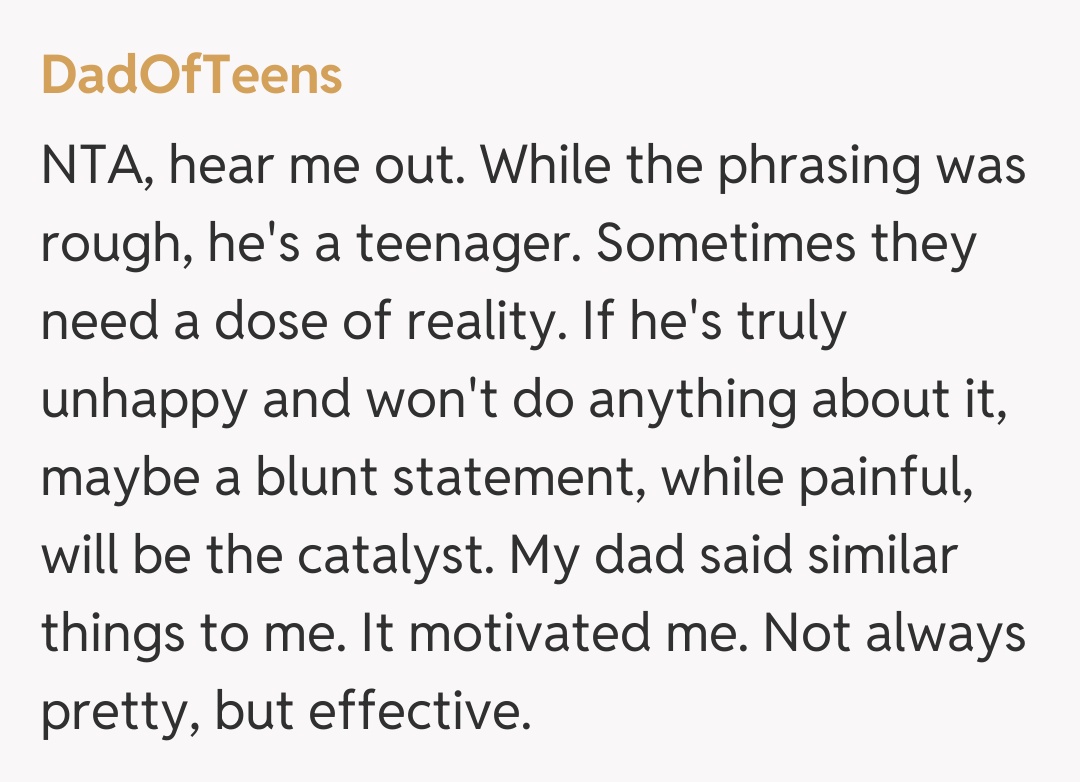
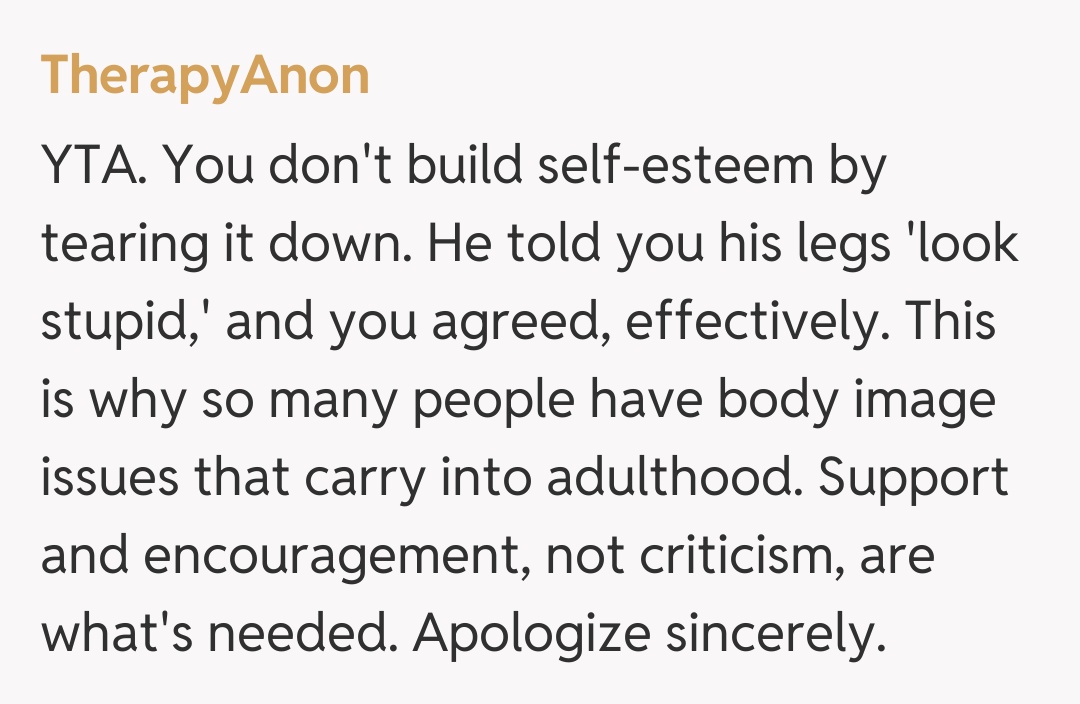
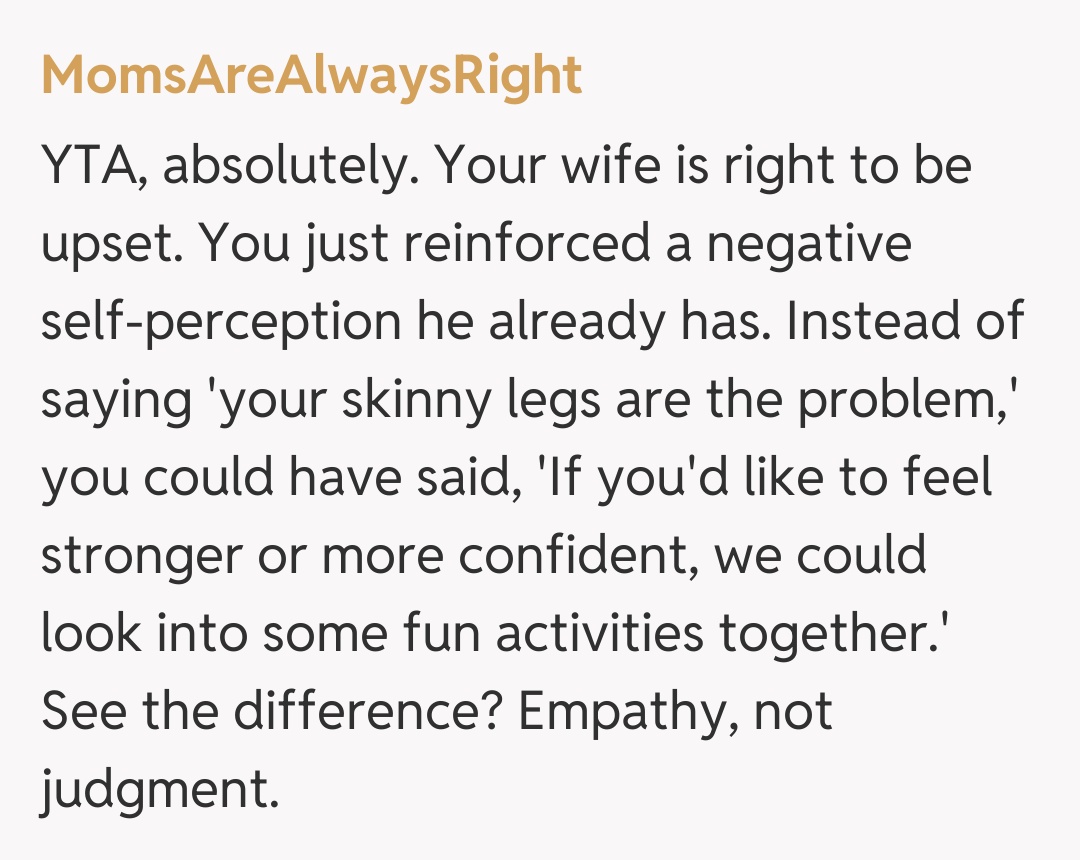
The comment section for this post was, as expected, a whirlwind of opinions, though the consensus leaned heavily towards YTA. Many users pointed out that while a father's desire to help his son is valid, the method was deeply flawed. The most common theme was the distinction between constructive guidance and direct body shaming, emphasizing that critical comments about appearance rarely lead to positive self-esteem changes.
There were some who argued that the father was simply being 'honest' and that sometimes kids need to hear the truth. However, even those comments often caveated that there's a 'way' to say things. The overwhelming sentiment was that a parent's role is to build confidence, not dismantle it, especially when a child is already struggling with insecurity. It's a powerful reminder of how sensitive our youth are.
This post serves as a potent reminder that our words, especially as parents, carry immense weight. While frustration is a natural part of parenting, channeling it into critical comments about a child's appearance can have unintended and lasting negative consequences. The goal should always be to foster a child's well-being and confidence through supportive communication, rather than inadvertently reinforcing their deepest insecurities. There's always an opportunity for apology and repair, and hopefully, this family can find a path towards healing and better understanding.