AITA for refusing to let my girlfriend keep her wisdom tooth necklace?
Welcome back, dear readers, to another installment of relationship dilemmas that make us question our own sanity. Today, we're diving into a tale that's sure to spark strong opinions, one about personal boundaries, unusual keepsakes, and perhaps, a touch of the macabre. Our OP (Original Poster) found himself in a peculiar situation involving his girlfriend and a very… personal piece of jewelry. Get ready, because this one isn't your average 'who pays for dinner' debate.
We all have our unique quirks and sentimental attachments. Some collect stamps, others vintage spoons, and some might even keep a lock of hair from a loved one. But what happens when a cherished item crosses into territory that makes a partner deeply uncomfortable? Is it always about acceptance, or are there valid reasons to draw a line? This story pushes those boundaries, asking us to consider what's acceptable in a relationship and where personal preferences become relationship friction.

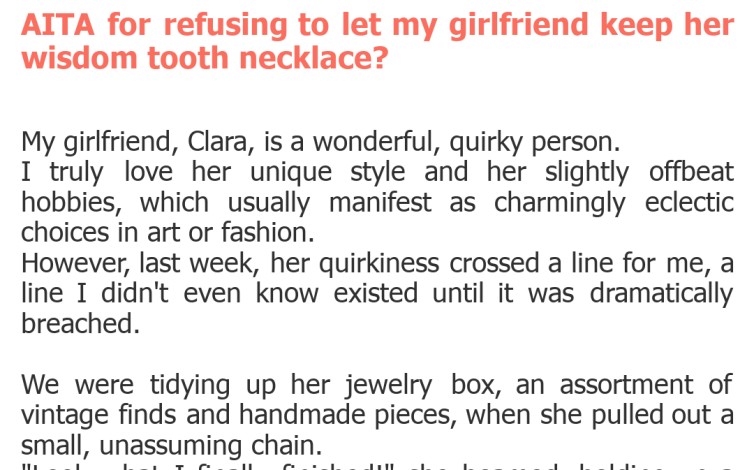
"AITA for refusing to let my girlfriend keep her wisdom tooth necklace?"
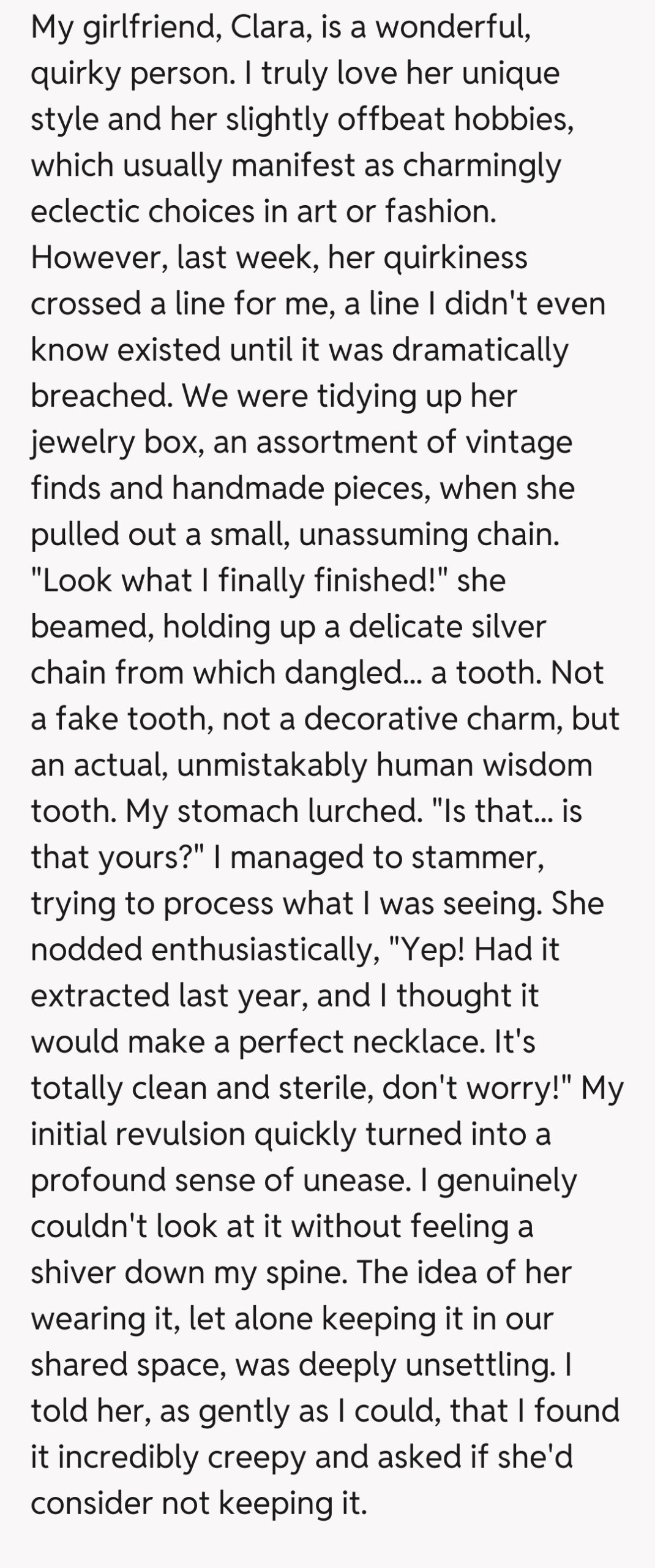
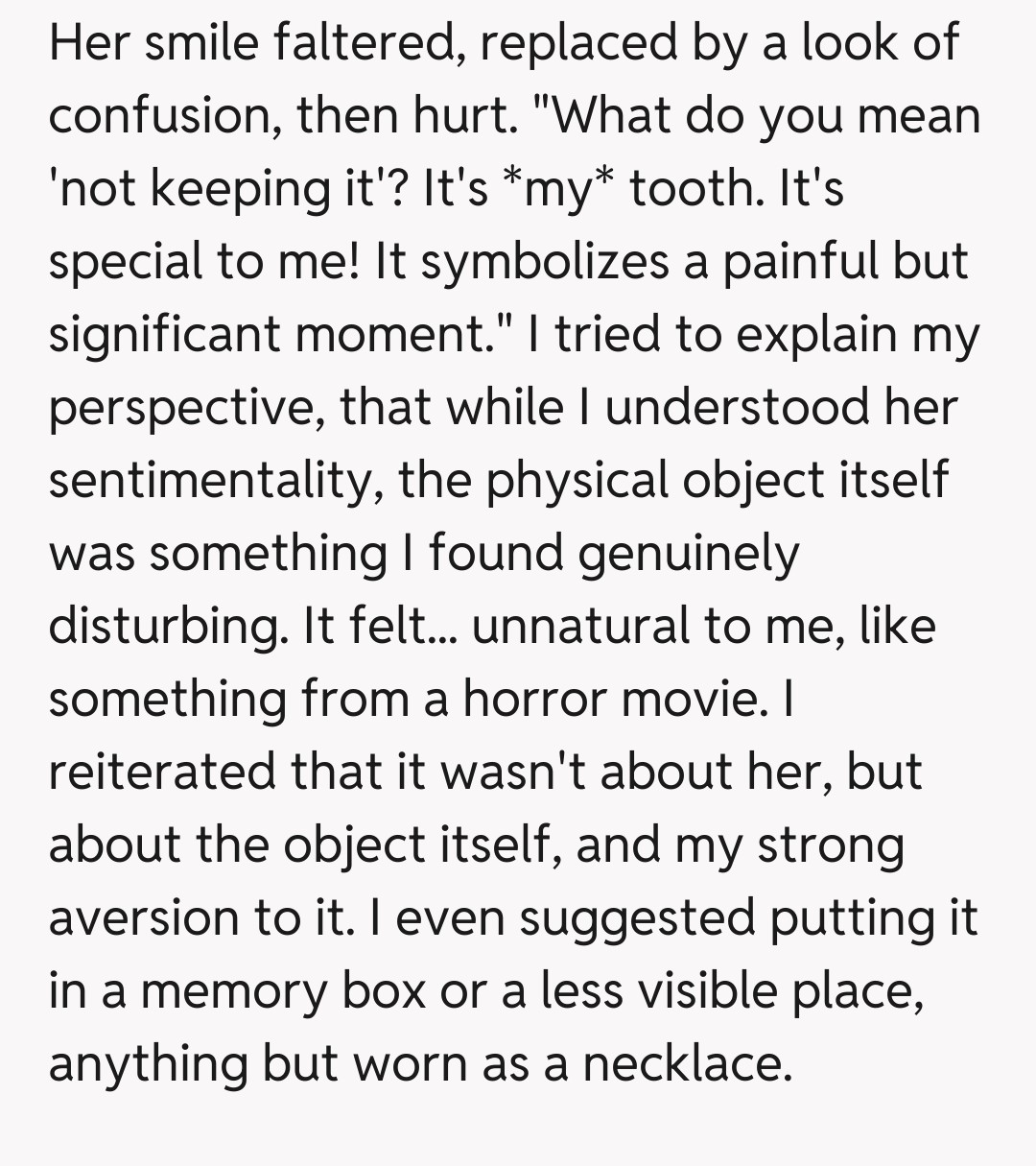
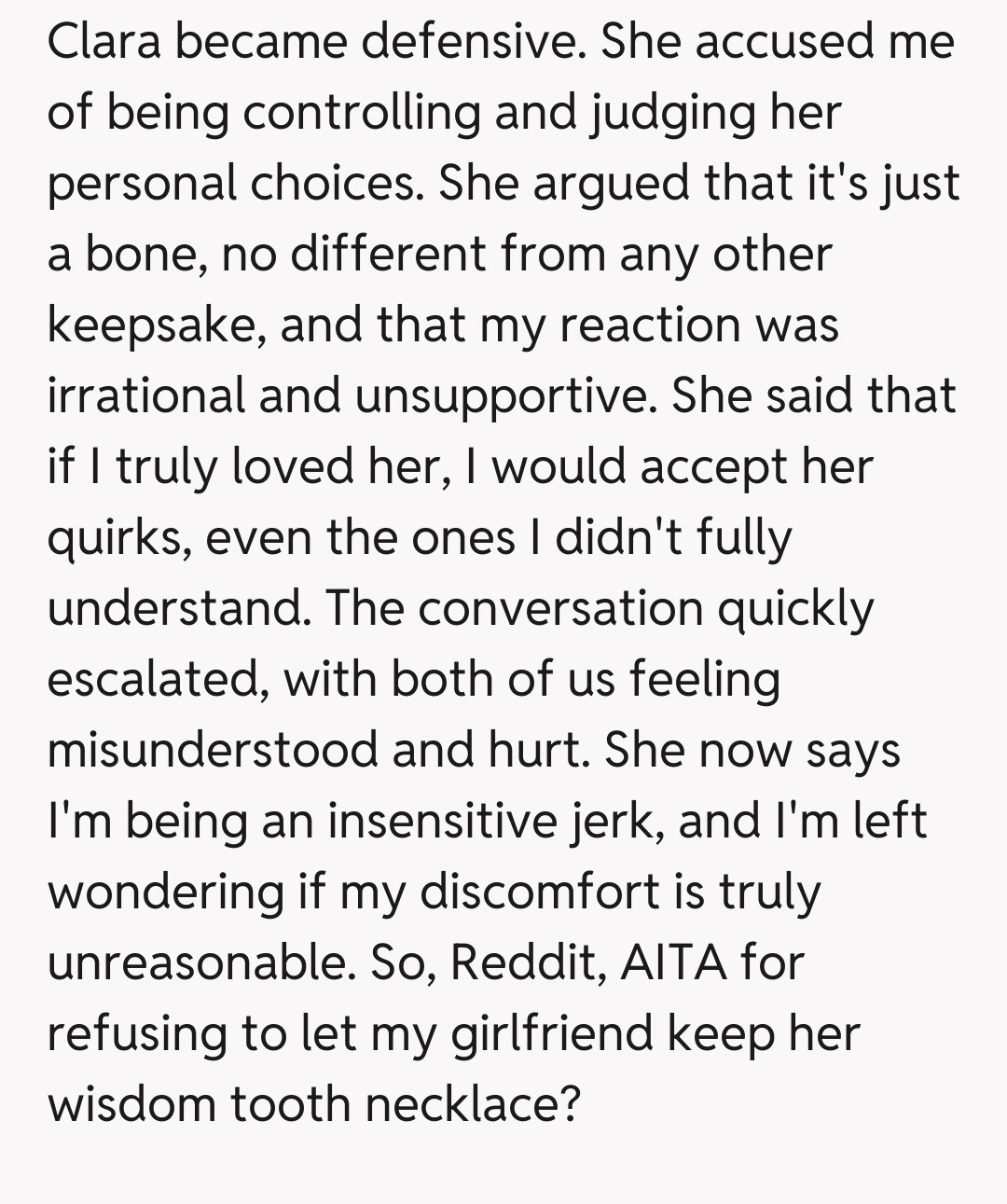
This story hits on a classic relationship conflict: when one partner's personal preference or comfort clashes with the other's. OP's aversion to a wisdom tooth necklace, while perhaps uncommon, isn't entirely baseless. Many people find detached body parts unsettling, even if they're their own. It taps into a primal sense of disgust or fear, and it's difficult to simply switch off such an instinctual reaction. Forcing oneself to be okay with something deeply unsettling can lead to resentment.
On the other hand, Clara is entitled to her personal belongings and self-expression. Her tooth represents something personal and meaningful to her, and she might feel that OP is judging her character or her past experiences by rejecting her keepsake. It's easy to feel attacked when a partner criticizes something you've created or cherish. Her perspective that it's 'just a bone' is also valid, as cultural norms around such items vary wildly.
The core issue here seems to be a breakdown in communication and a lack of empathy for each other's feelings. OP could have tried to understand Clara's attachment more deeply, perhaps asking what exactly makes it special to her, rather than immediately expressing revulsion. Similarly, Clara could have acknowledged OP's clear discomfort instead of dismissing it as irrational or controlling.
Ultimately, relationships require compromise and understanding. Neither partner is inherently 'right' or 'wrong' for their feelings. The solution likely lies in finding a middle ground where Clara can honor her sentimentality without making OP feel perpetually uncomfortable. This might involve a different way of displaying the tooth or a clear boundary on when and where it's worn.
The Tooth, The Whole Tooth, and Nothing But The Tooth: Readers Weigh In!
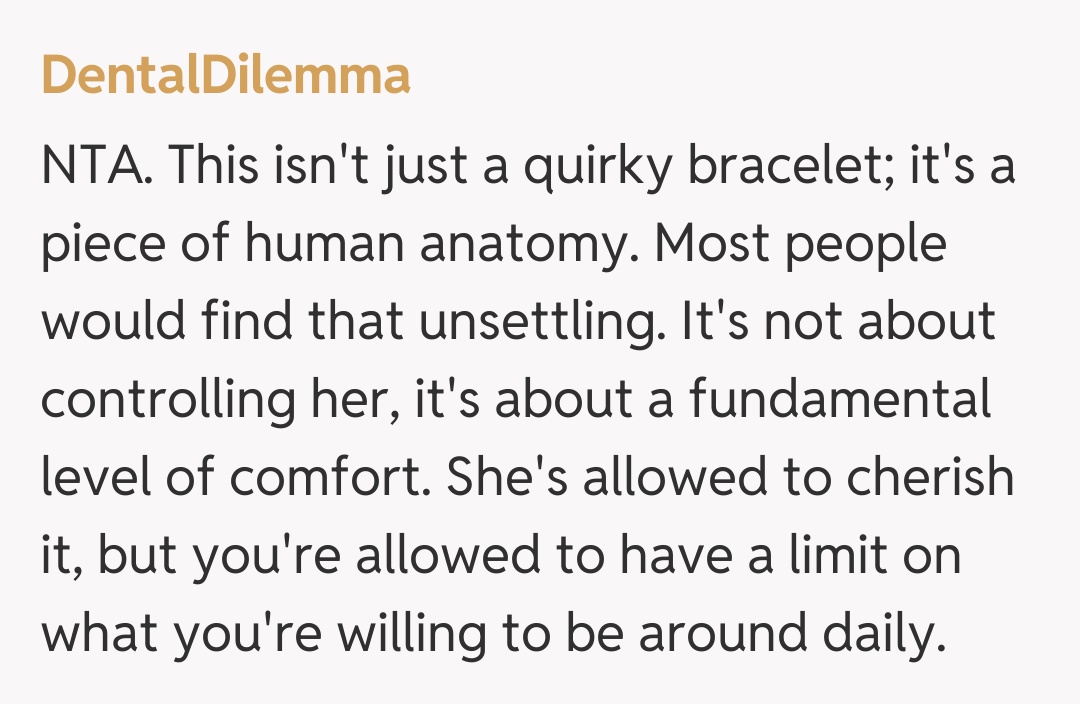
The comments section for this one was, as expected, a wild ride! Many users leaned towards 'NTA' for the OP, arguing that personal boundaries and genuine discomfort are valid, especially when it comes to something as unusual as a human tooth necklace. They emphasized that while Clara has a right to her belongings, OP also has a right to feel comfortable in his own home and relationship. Many shared their own phobias or visceral reactions to similar items, showing OP isn't alone in his feelings.
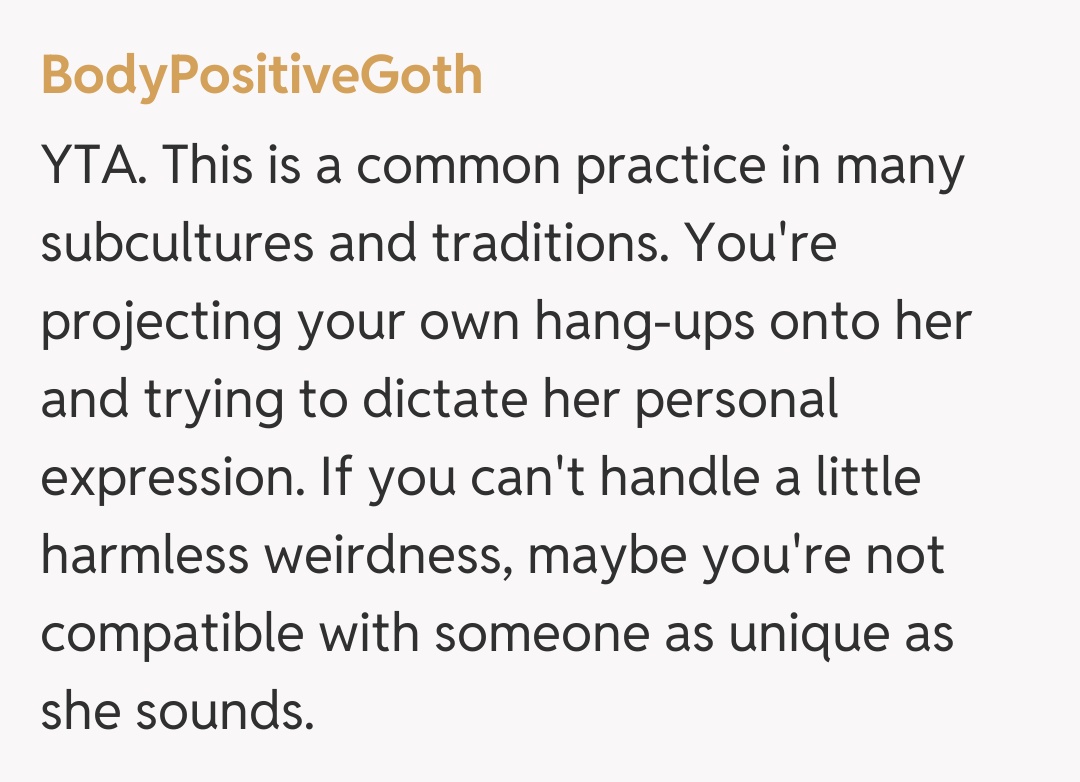
However, a significant portion of commenters went with 'YTA' or 'ESH'. These users often highlighted Clara's right to self-expression and accused OP of being controlling or overly squeamish. They pointed out that it's her body, her tooth, and her choice, and that a loving partner should be more accepting of their significant other's quirks, no matter how unusual. The sentiment was that if it's 'just a tooth', OP should get over it.
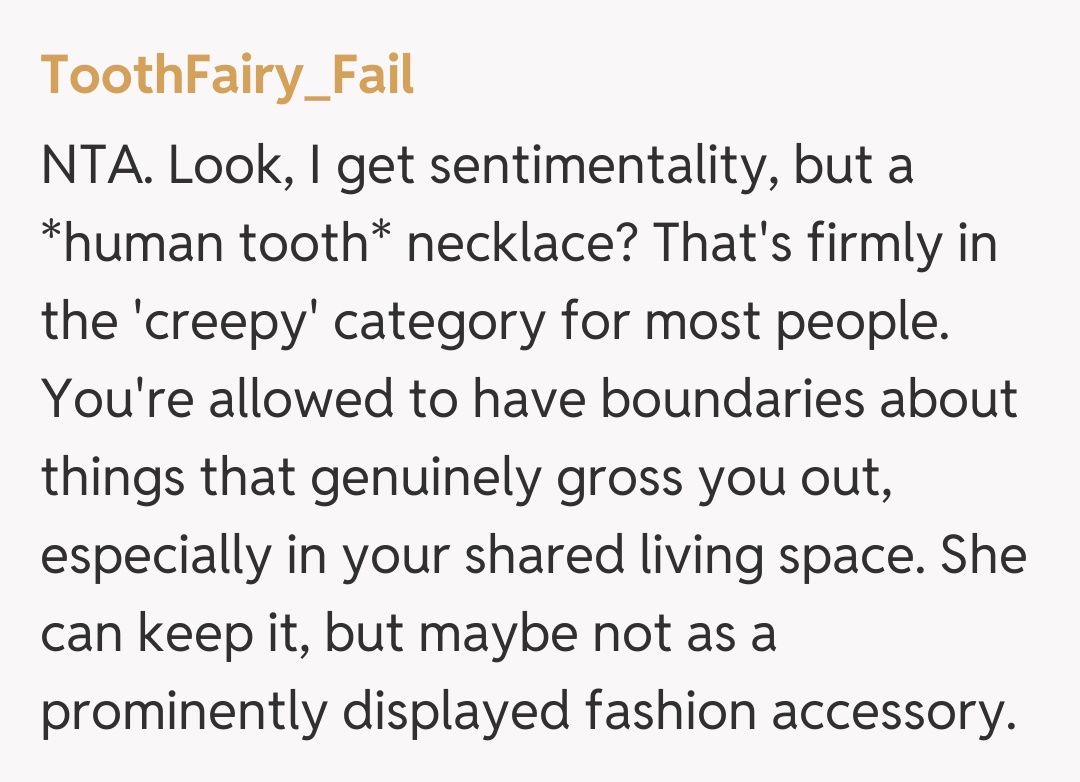
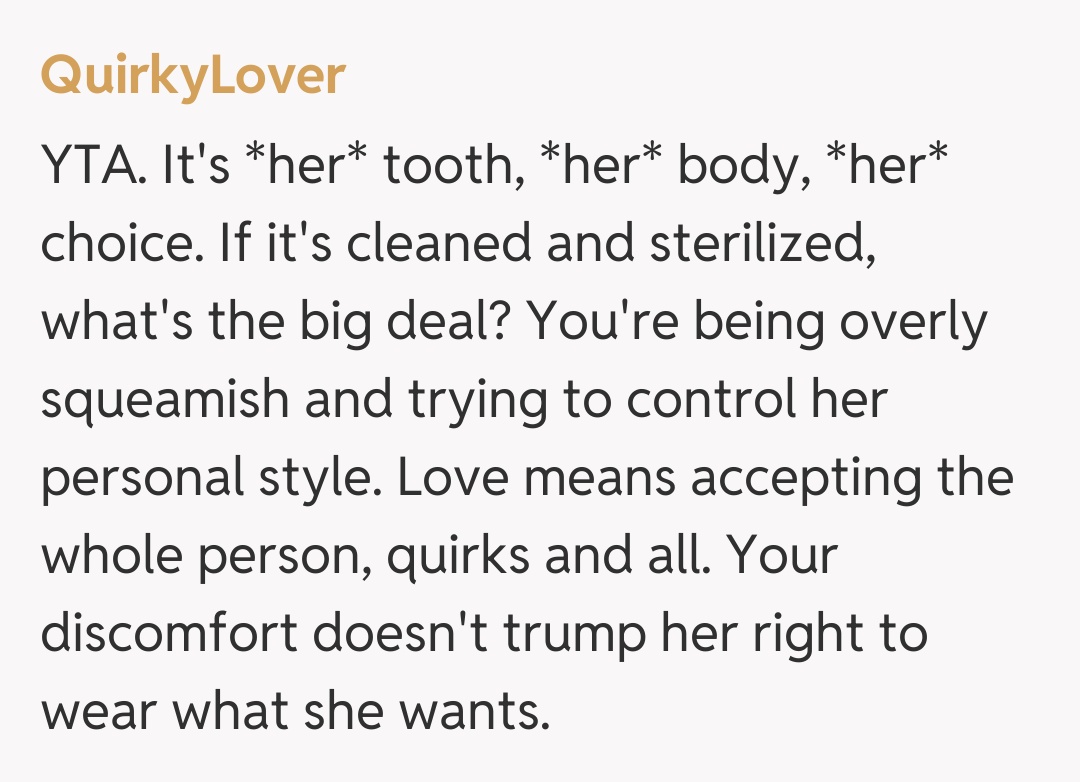
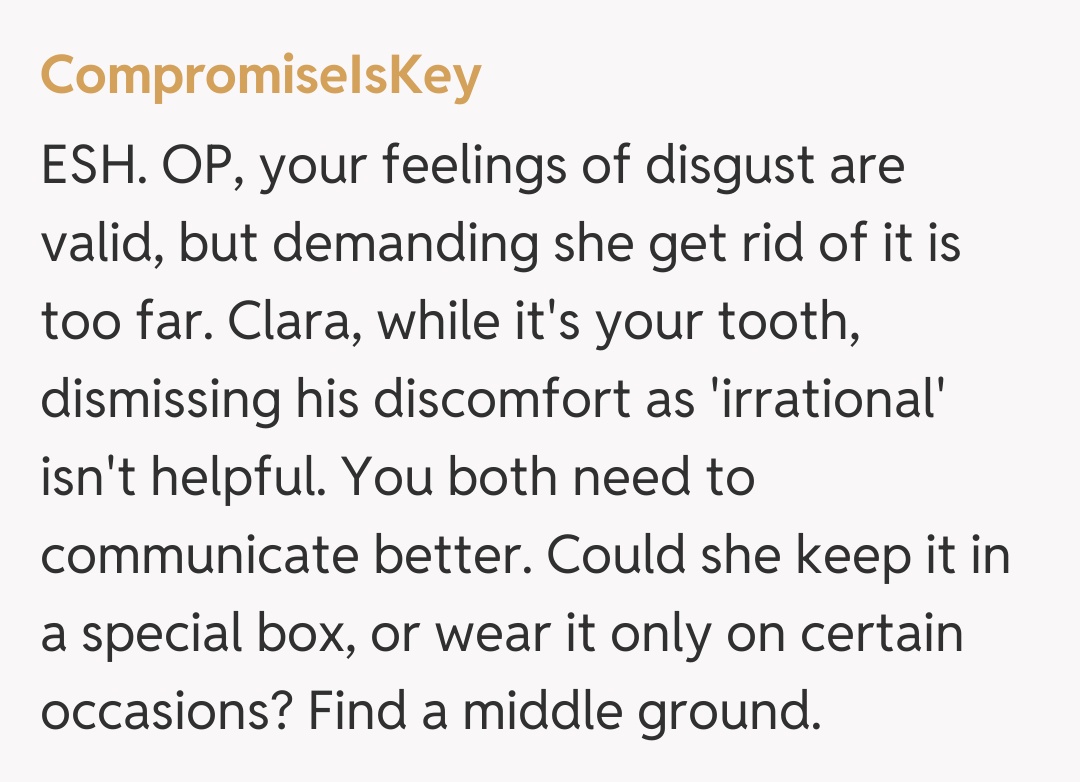
This wisdom tooth dilemma truly highlights the delicate balance in relationships between individual autonomy and shared comfort. While Clara has every right to her personal possessions and expression, OP's visceral reaction is also a valid personal boundary. The key takeaway, as often is the case, is communication and empathy. A relationship thrives when both partners feel heard and respected, even when their preferences differ wildly. Hopefully, OP and Clara can find a way to honor both their feelings, perhaps by finding a new 'home' for the necklace that respects both their perspectives.