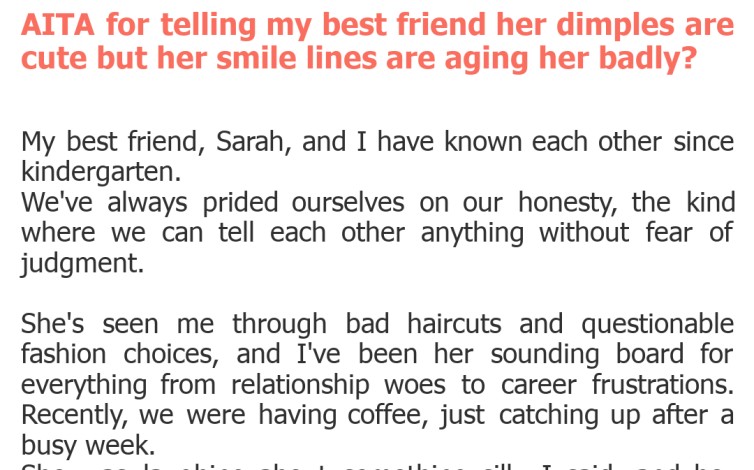
AITA for telling my best friend her dimples are cute but her smile lines are aging her badly?
Friends, we've all been there: that delicate dance between brutal honesty and tact. There's a fine line between offering a helpful observation and delivering a sting that leaves a lasting mark. Today's AITA story perfectly encapsulates this dilemma, diving deep into the complexities of female friendships and the unspoken rules around appearance. Our original poster found herself in a sticky situation after a seemingly innocent, yet undeniably direct, comment.
It's a common belief that true friends can tell each other anything, no filter required. But does that sentiment extend to pointing out perceived flaws, especially those related to aging? This story asks us to consider where the boundaries lie. Was OP genuinely trying to be helpful, or did her words cross into unsolicited and hurtful territory? Get ready to weigh in on this classic friendship conundrum.

"AITA for telling my best friend her dimples are cute but her smile lines are aging her badly?"
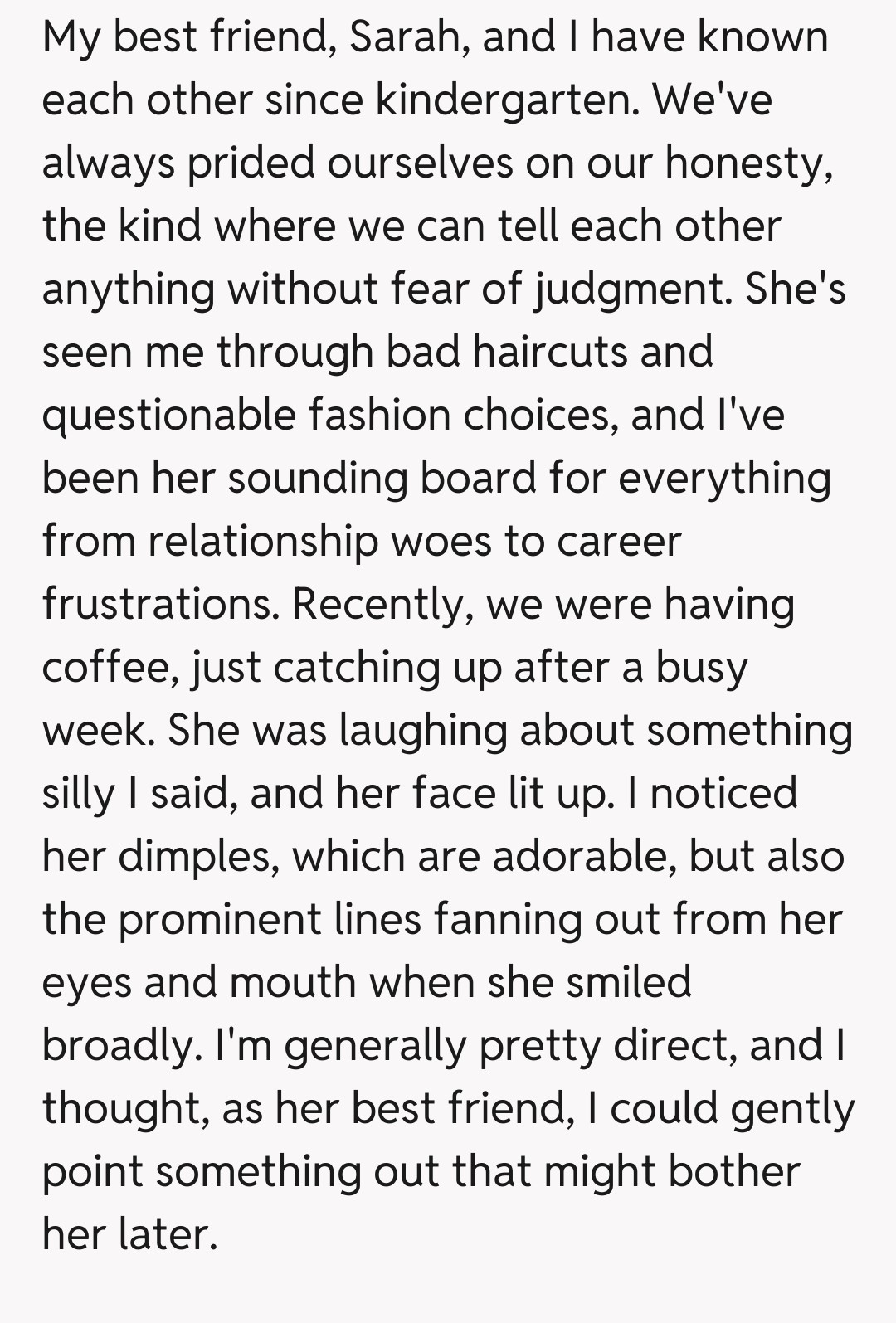
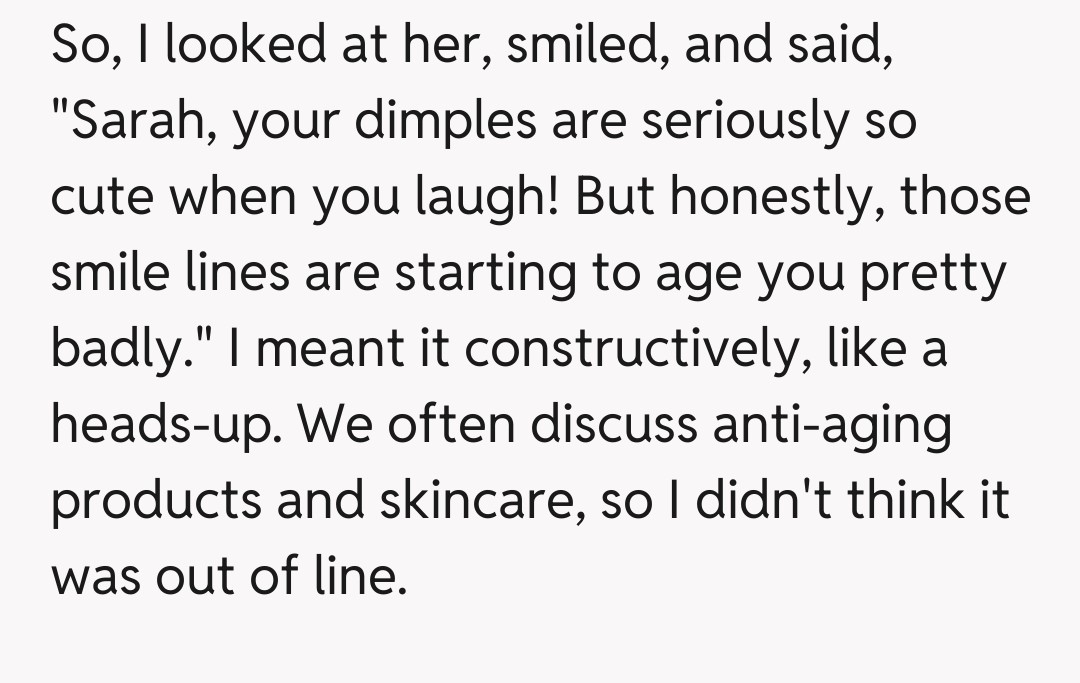
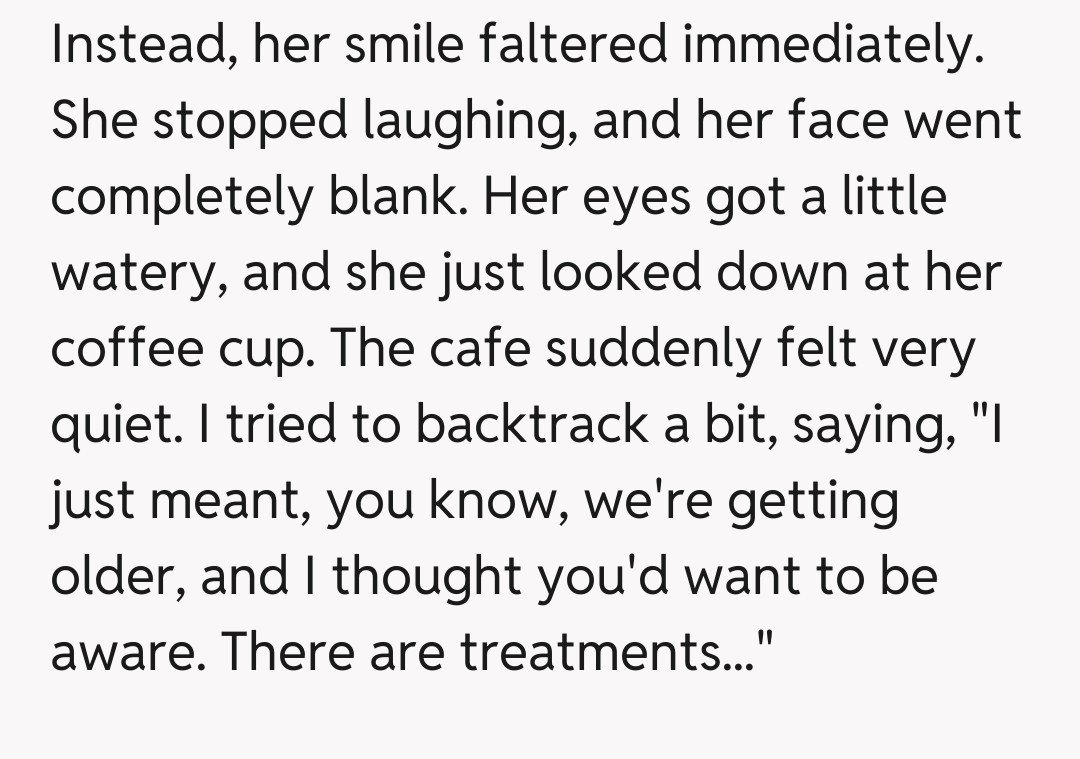
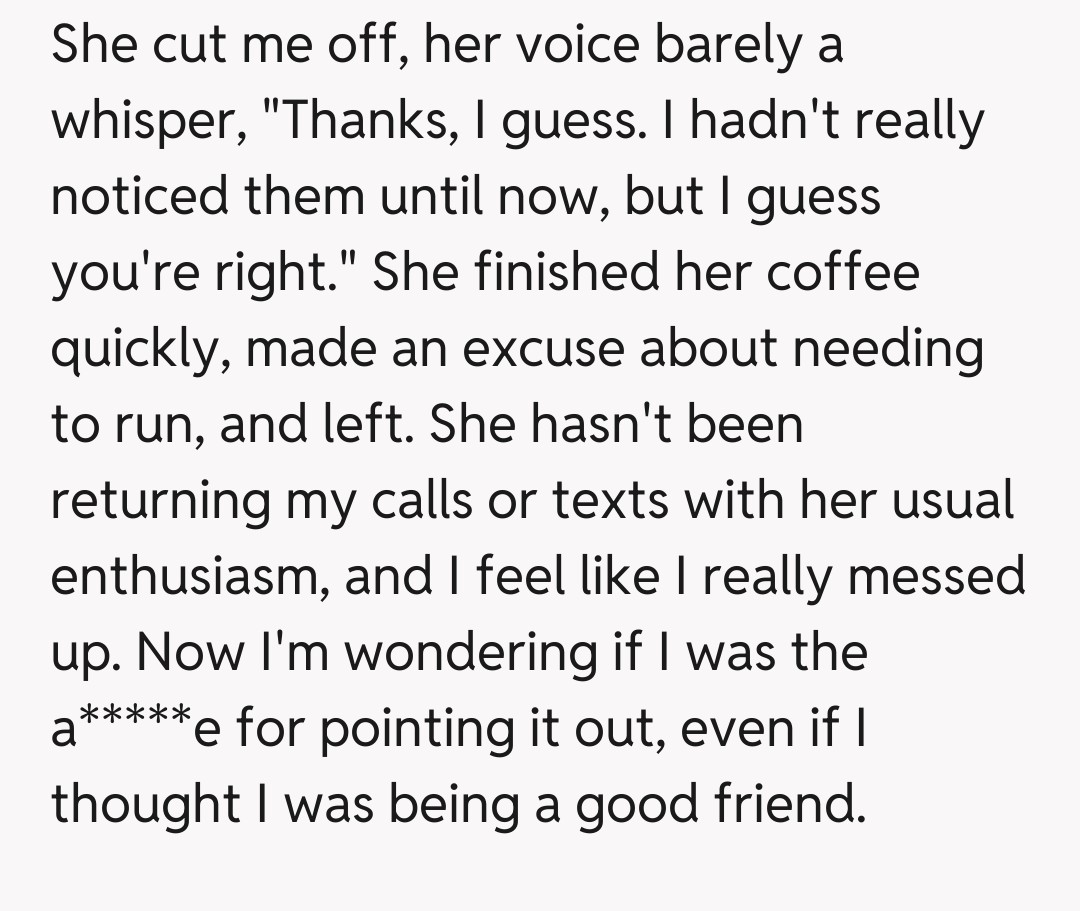
This situation is a classic example of how intent can clash dramatically with impact. The original poster likely believed she was being a good, honest friend, sharing a 'truth' she felt her best friend deserved to hear. In her mind, she was offering a heads-up, a practical observation within the context of their long-standing, brutally honest friendship. This type of dynamic often creates a blurred line regarding what is acceptable to say.
However, beauty standards and personal appearance are incredibly sensitive topics for most people, especially women. Pointing out signs of aging, even if framed with a compliment, can feel like a direct attack on someone's self-esteem. Sarah's reaction — a faltering smile, watery eyes, and an abrupt departure — clearly indicates that the comment was deeply hurtful, regardless of OP's benevolent intentions.
The key difference here lies in unsolicited advice versus asked-for advice. Had Sarah complained about her smile lines or asked for an opinion on anti-aging, OP's comment might have been received differently. But by volunteering this observation, OP essentially highlighted a perceived flaw that Sarah may not have even been conscious of, or perhaps had already accepted as a natural part of aging.
Friendship, while valuing honesty, also thrives on empathy and kindness. There's a difference between telling a friend they have spinach in their teeth and telling them their natural facial expressions are making them look 'bad.' The former is easily fixed and universally helpful; the latter attacks a core part of their being and can inflict lasting damage to their confidence and trust in the friendship.
The Verdict Is In: Was Honesty The Best Policy, Or Just Plain Hurtful?
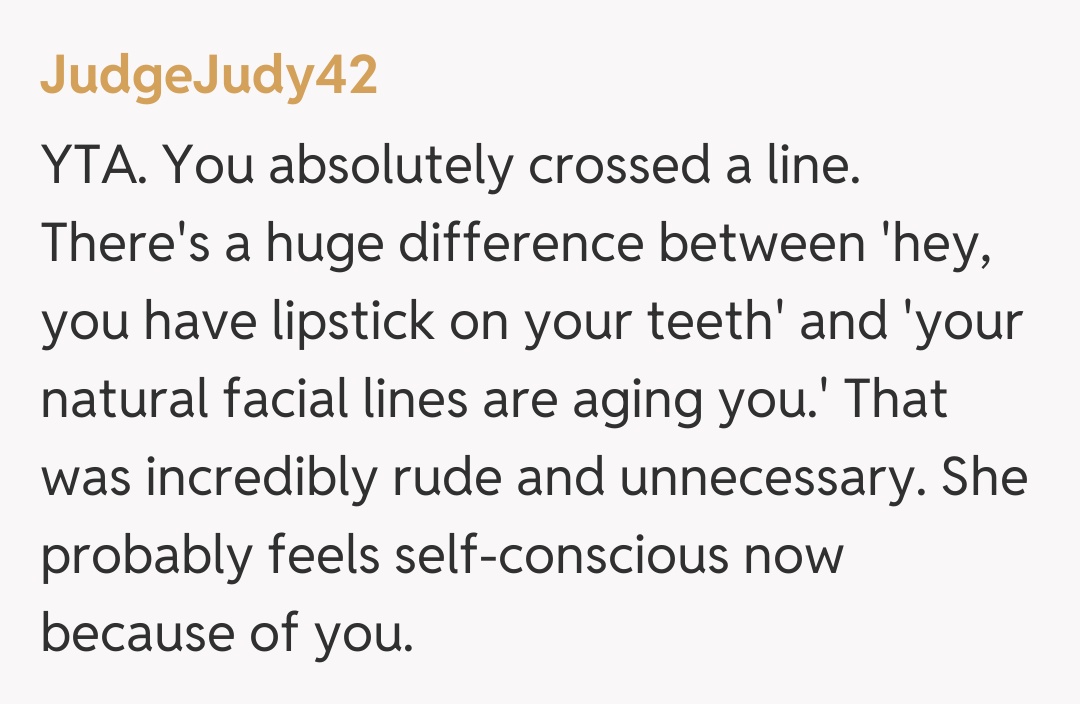
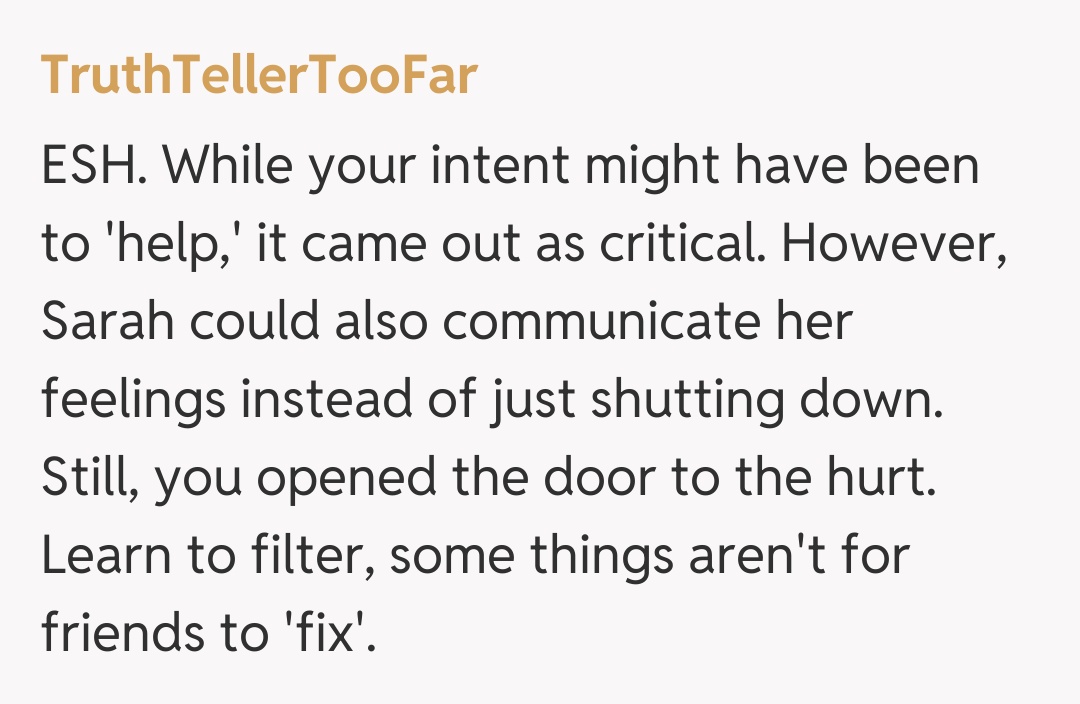
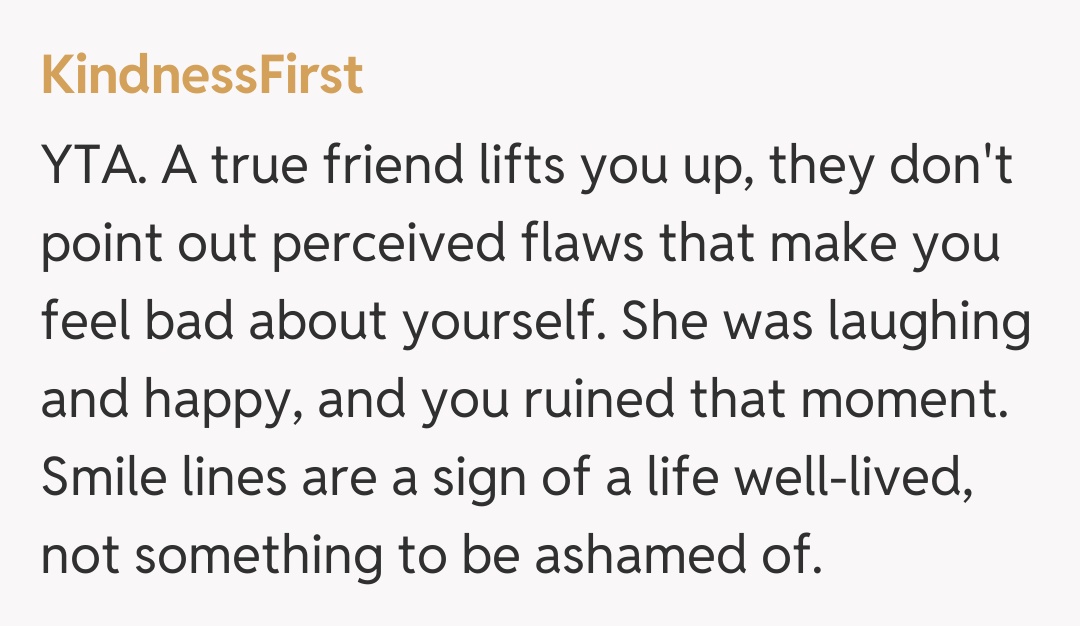
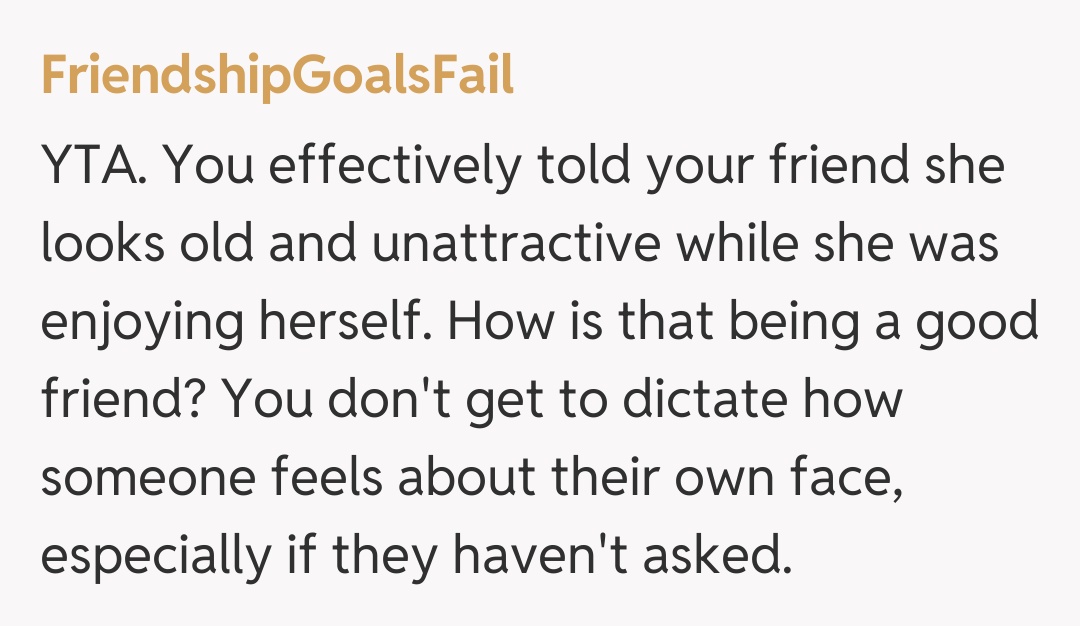
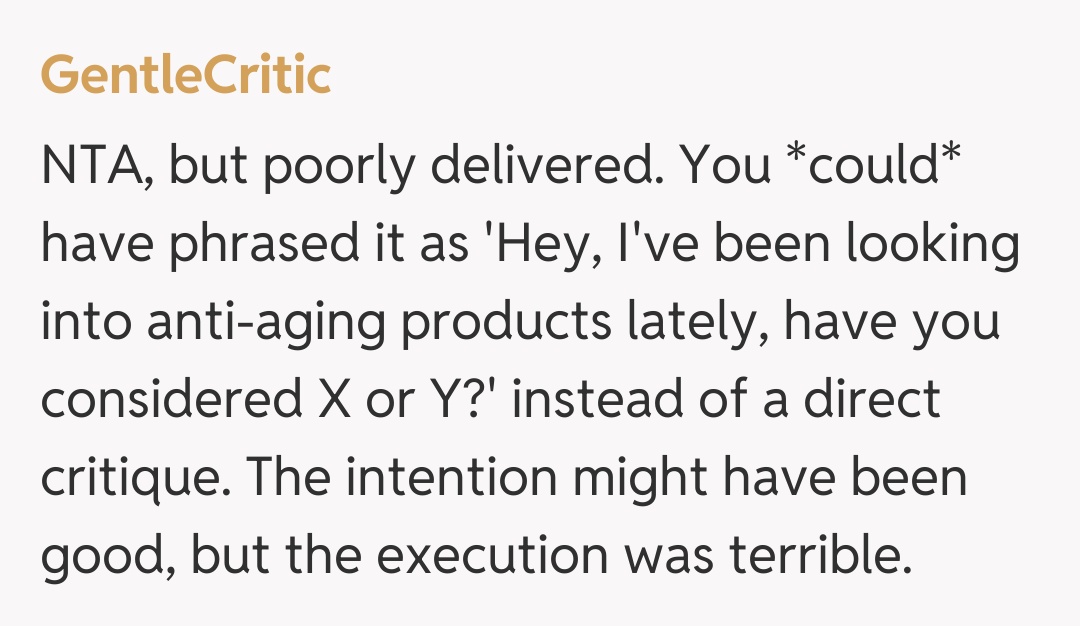
Well, the internet has spoken, and the consensus is pretty clear on this one. Many users felt that while honesty is a cornerstone of strong friendships, there are certain topics that should remain off-limits unless explicitly invited. Unsolicited comments on someone's physical appearance, especially regarding natural aging, often come across as critical and hurtful rather than helpful, regardless of the speaker's intentions.
A recurring theme in the comments was the idea of 'reading the room' and considering the potential impact of words. While OP felt she was being a 'good friend,' the majority of commenters emphasized that kindness and empathy should always trump brutal honesty, particularly when dealing with sensitive personal matters. It seems many agree that some truths are better left unsaid, especially if they only serve to diminish someone's self-esteem.
This story serves as a powerful reminder that even with the best intentions, our words can have unforeseen impacts. While honesty is a valuable trait in friendship, it must always be tempered with empathy and consideration. Before offering any 'truth' about someone's appearance, especially unsolicited, it's crucial to ask ourselves: Is this kind? Is this necessary? Is this helpful? Sometimes, the most supportive thing we can do is simply let our friends be, celebrating their natural beauty without critique. It seems OP learned this lesson the hard way.