AITA for telling my wife her freckles are ugly and she should get laser treatment to remove them?
Oh boy, here we go again. The internet's favorite debate: unsolicited appearance advice from a partner. Today's AITA post dives headfirst into this tricky territory, featuring a husband who believes he's offering helpful suggestions, while his wife clearly feels attacked. This situation is a classic example of how intentions, no matter how 'good,' can pave the road to resentment when it comes to personal body image.
It's a delicate balance to navigate when you're in a long-term relationship. How much input is too much? When does a 'suggestion' cross the line into an 'insult'? This particular story has all the hallmarks of a major communication breakdown, and I predict the comment section is going to be absolutely buzzing with opinions. Let's dive into the details and see what the community thinks.

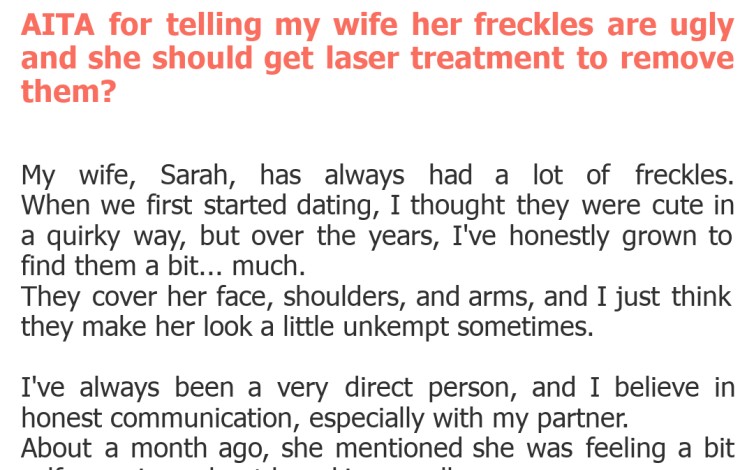
"AITA for telling my wife her freckles are ugly and she should get laser treatment to remove them?"
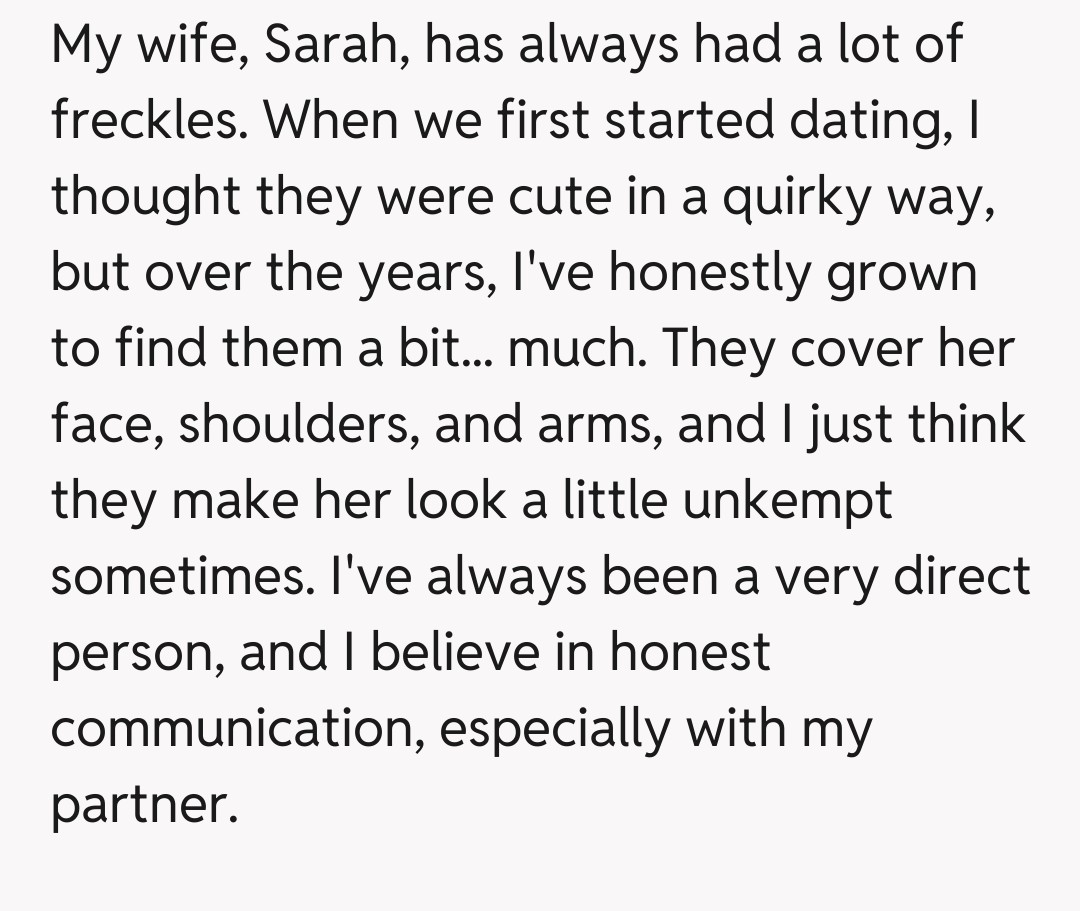
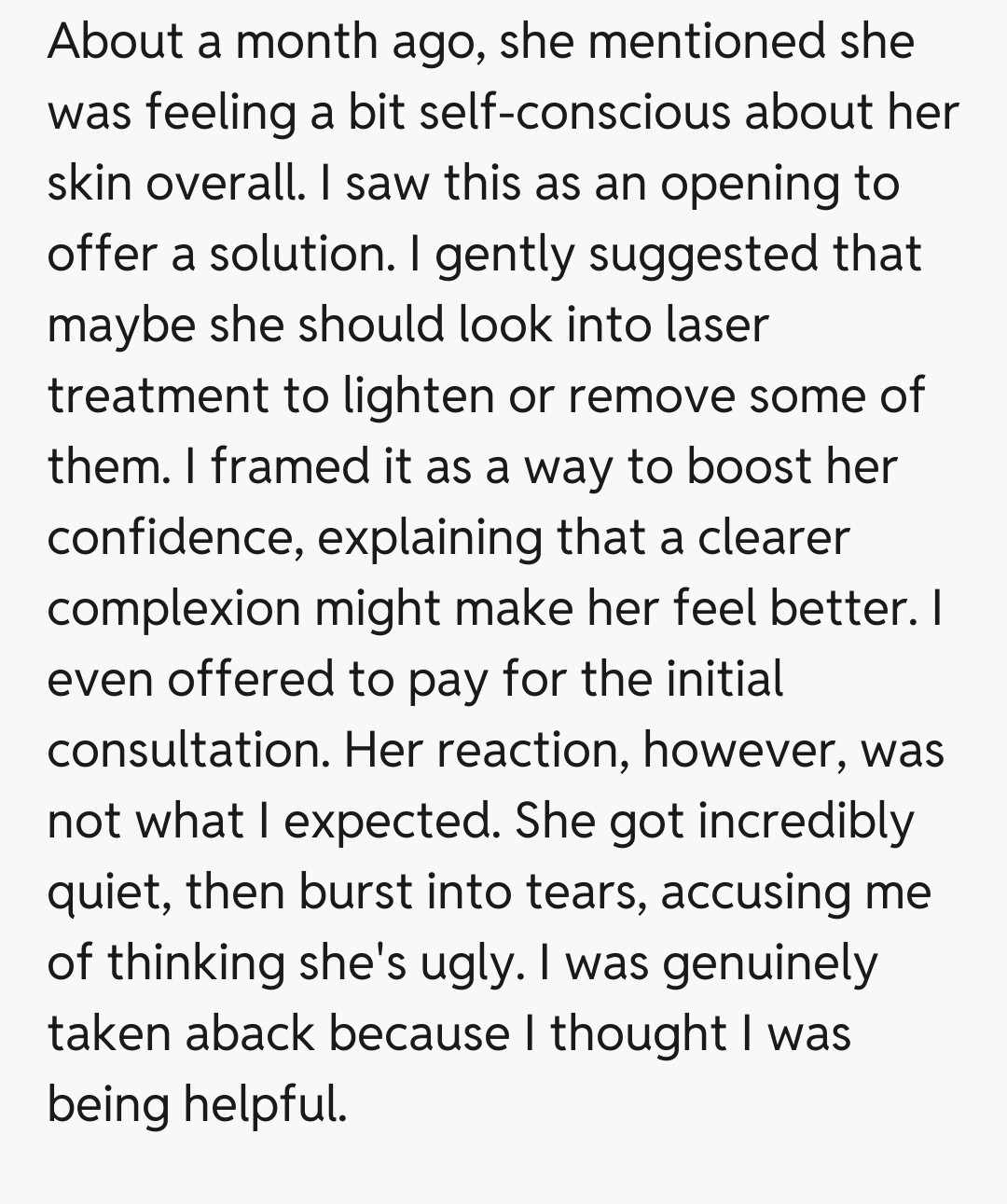
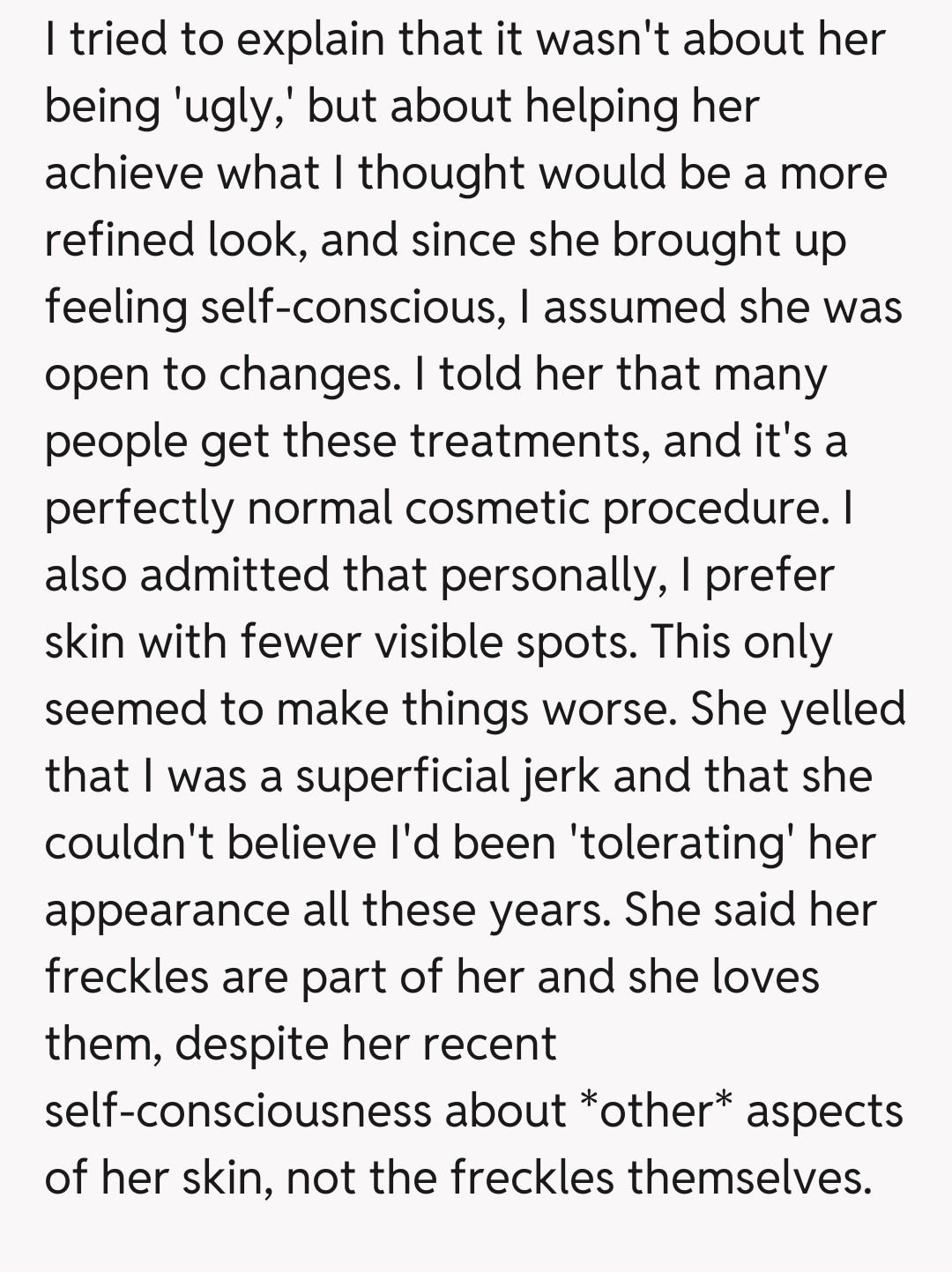
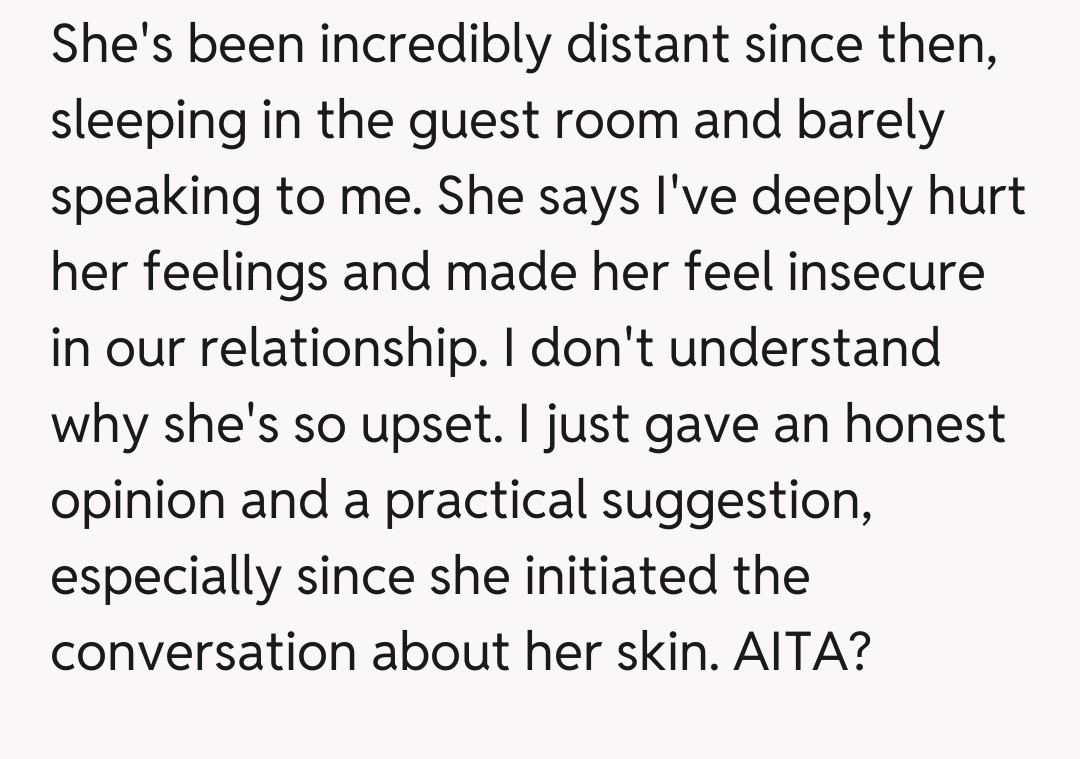
This post highlights a common pitfall in relationships: the difference between constructive feedback and outright criticism, particularly when it comes to a partner's physical appearance. While the original poster (OP) might genuinely believe he was being helpful, his choice of words and framing clearly missed the mark. Referring to a natural feature as 'ugly' is inherently negative and can have a devastating impact on someone's self-esteem.
It's crucial to understand that unsolicited advice about appearance, even if well-intentioned, often comes across as deeply personal judgment. When a partner shares feelings of self-consciousness, it's usually an invitation for comfort and reassurance, not a prompt for suggested alterations. The wife expressing general skin concerns doesn't automatically mean she's looking for ways to eradicate a defining feature she may well cherish.
The OP's justification that he's a 'direct person' often serves as a shield for delivering harsh truths without considering the emotional impact. Honesty is vital in a relationship, but it must be tempered with empathy and kindness. There's a significant difference between saying, 'I've always found your freckles charming,' and 'I find your freckles ugly and you should remove them.' One celebrates, the other diminishes.
Ultimately, a partner's body is their own. Suggesting permanent cosmetic procedures, especially for something as innocuous as freckles, touches on deep-seated insecurities and autonomy. The wife's reaction isn't an overreaction; it's a natural response to feeling unloved or deemed 'not good enough' by the person who should be her biggest admirer. The breakdown in communication here is profound.
The Verdict Is In: Was He Really 'Helping' or Just Plain Mean?
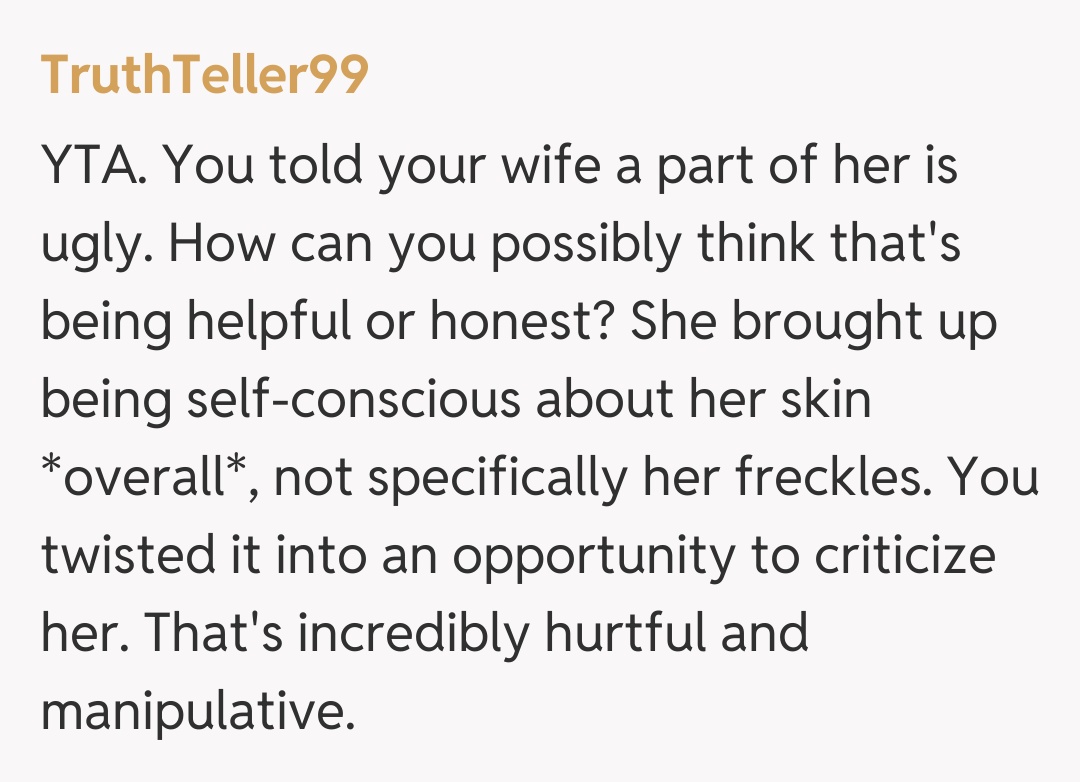
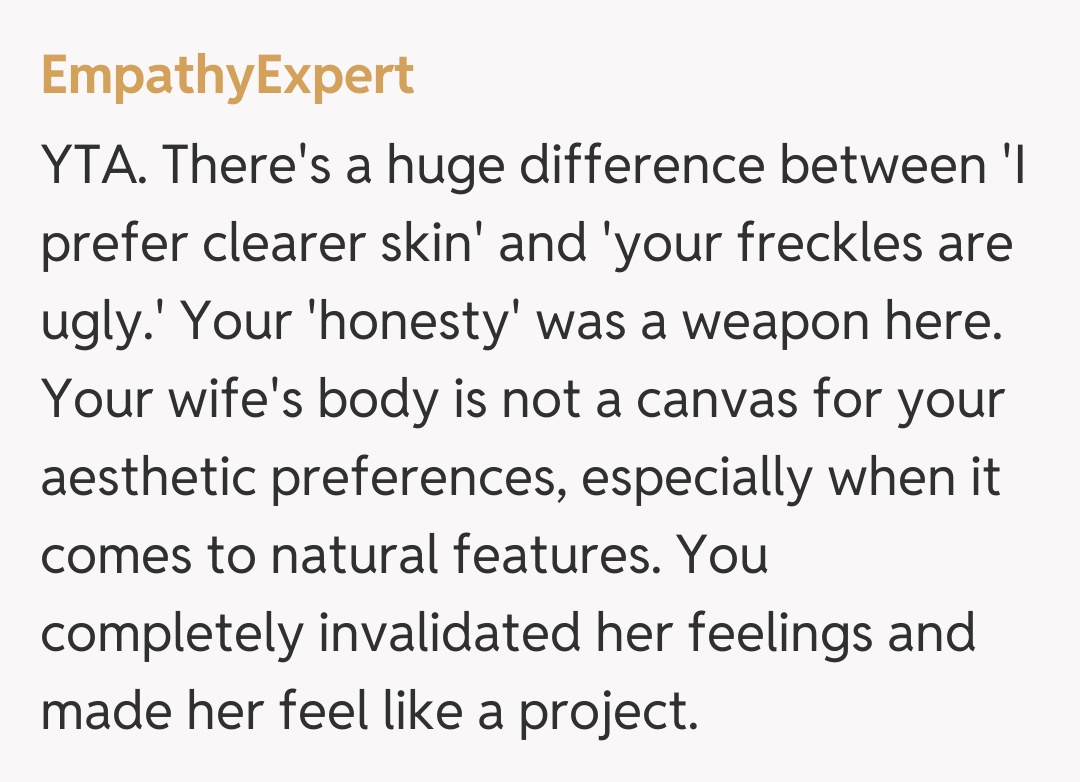
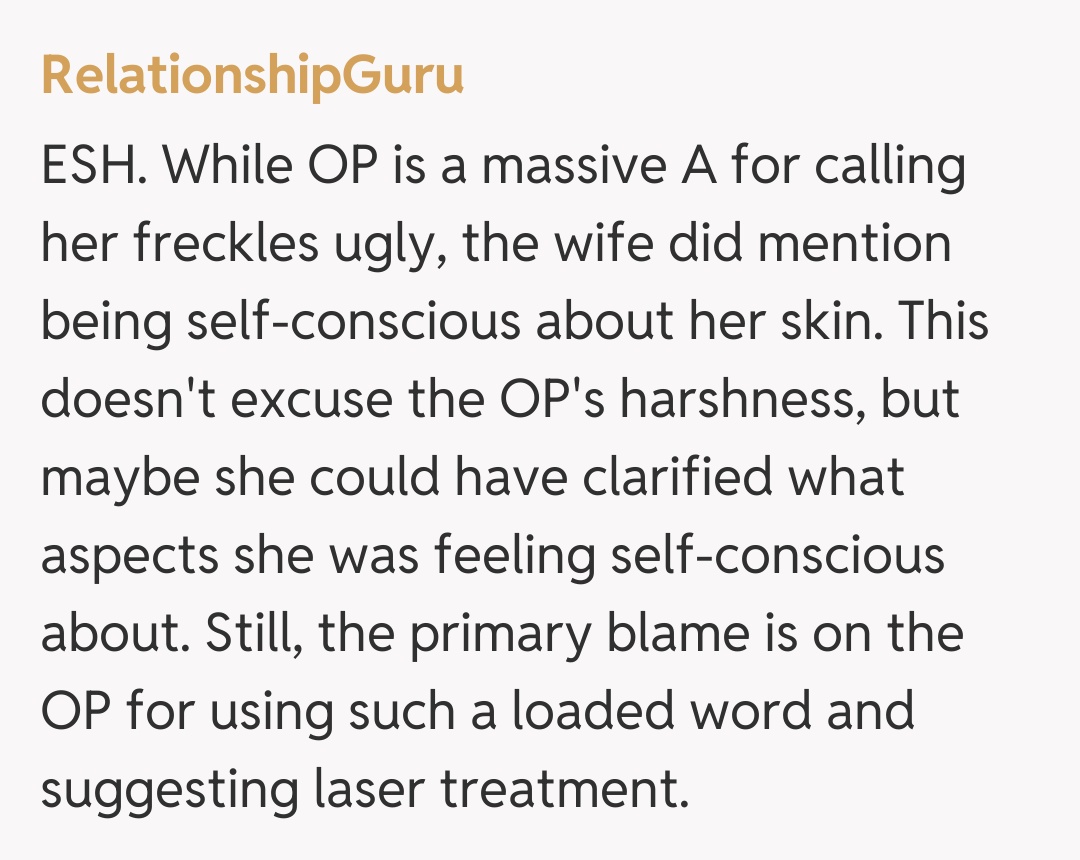
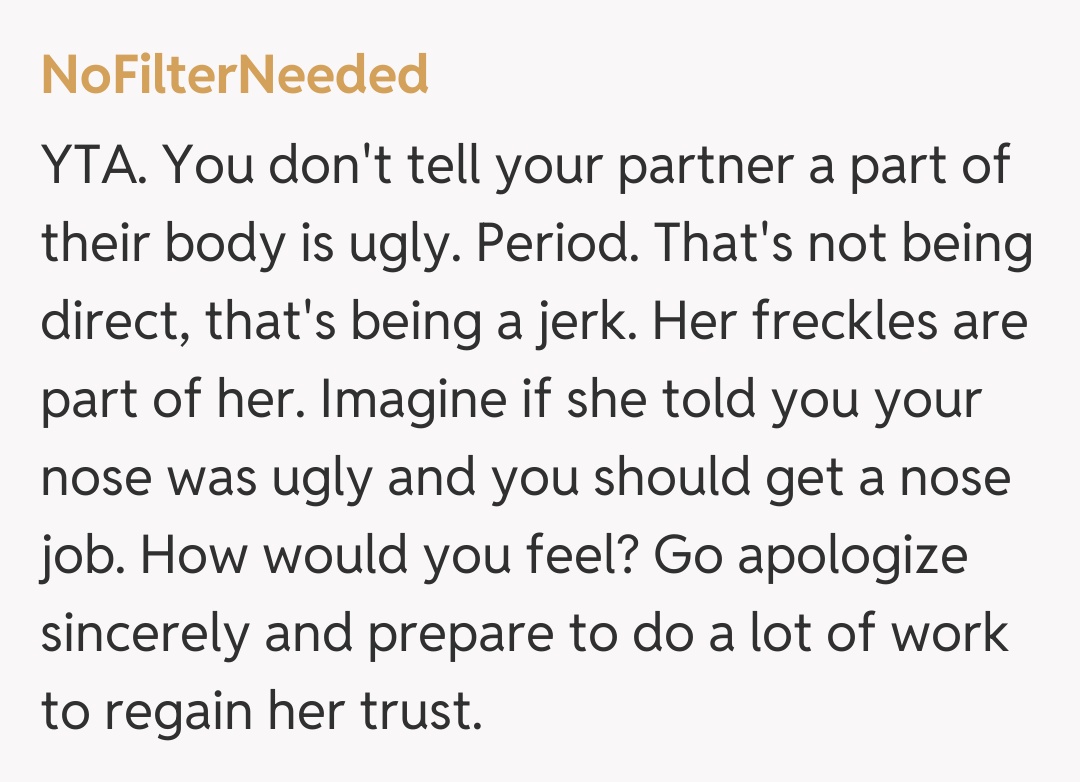
The comment section, as expected, is a fiery battleground, but the consensus is pretty clear. The overwhelming majority of users are siding with the wife, calling the OP out for his insensitivity and lack of empathy. Many point out that 'ugly' is a particularly cruel word to use when describing a natural feature, especially to a partner who relies on you for affection and acceptance.
Some users are discussing the broader implications of body image issues in relationships, highlighting how comments like these can erode trust and self-esteem over time. There's a strong sentiment that a partner's role is to uplift and cherish, not to point out perceived flaws or suggest expensive, unnecessary cosmetic alterations. It seems the internet has spoken loud and clear on this one.
This post serves as a potent reminder that communication in a relationship, especially regarding sensitive topics like appearance, requires immense care and empathy. While honesty is valuable, it should never come at the expense of a partner's self-worth. The OP's journey to understanding his wife's hurt feelings will be a long one, requiring genuine remorse and a commitment to appreciating her for who she is, freckles and all. Hopefully, this situation can become a learning experience for them both, fostering deeper understanding and more compassionate dialogue in the future.