AITA for telling my best friend her new veneers make her smile look fake and horse-like?
Welcome back, dear readers, to another deep dive into the sometimes messy world of interpersonal relationships and the ever-present question: Am I the A-hole? Today's story brings us face-to-face with a dilemma that many friendships encounter: when does brutal honesty cross the line into hurtful criticism? It's a tightrope walk, especially when appearance is involved.
Our protagonist found herself in a sticky situation with her best friend, whose recent cosmetic dental work became the unexpected catalyst for a major rift. When a new smile doesn't quite hit the mark, is it a friend's duty to deliver the harsh truth, or to offer unwavering support? Let's unpack this one, because the comments section is sure to be buzzing!

"AITA for telling my best friend her new veneers make her smile look fake and horse-like?"
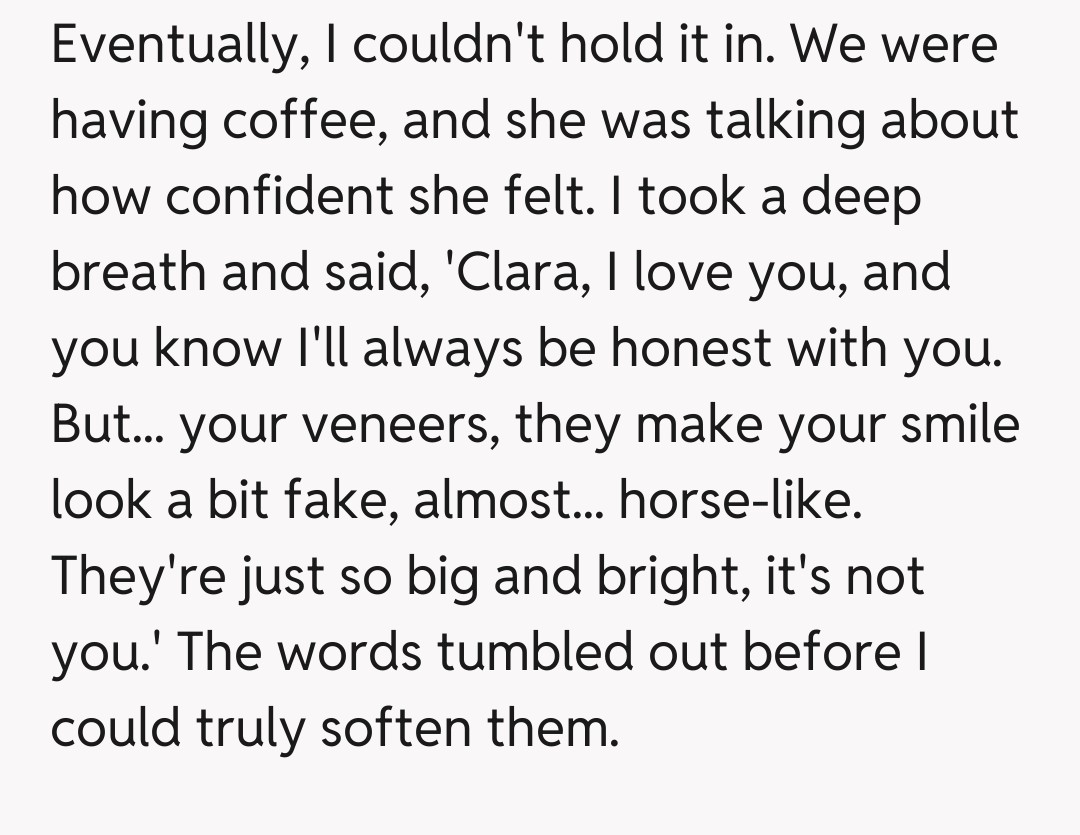
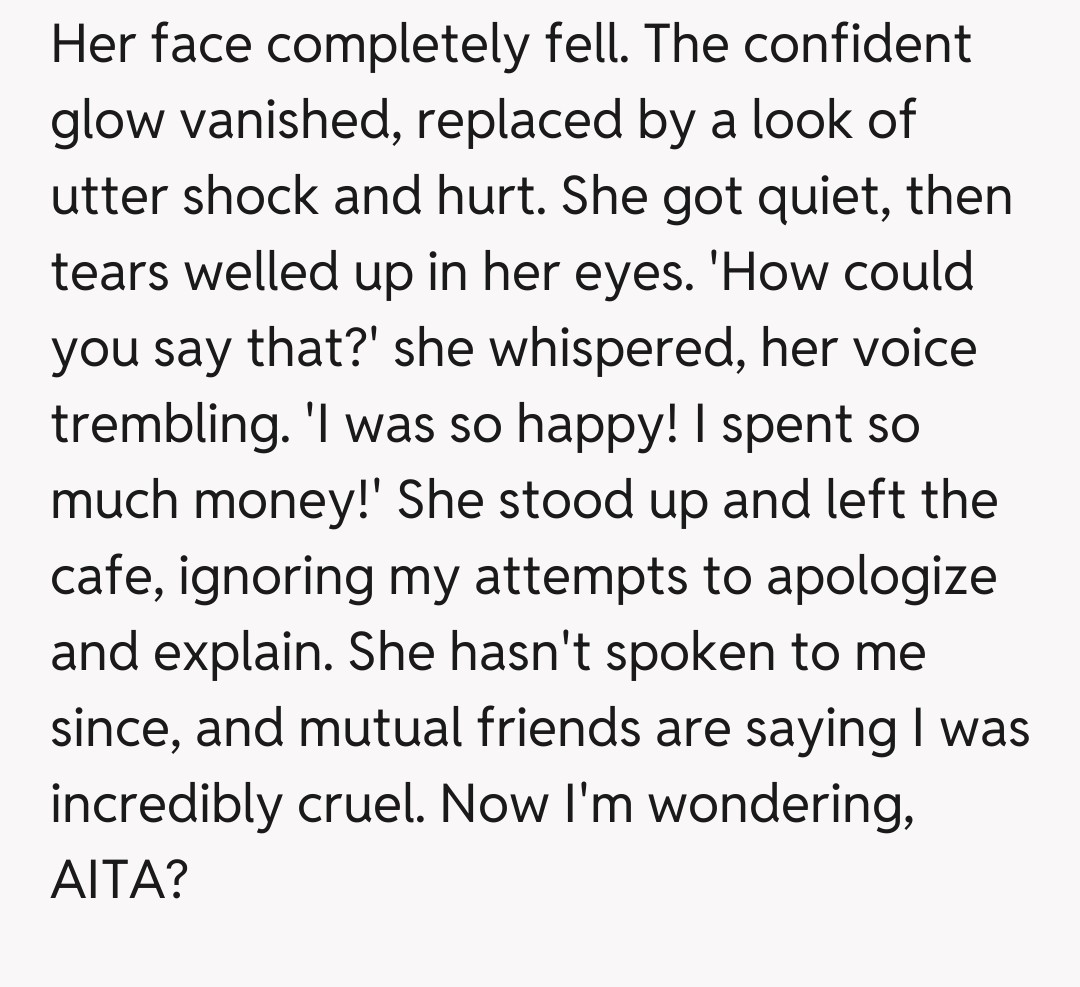
This scenario perfectly illustrates the tightrope walk between honesty and kindness, especially when it comes to personal choices and self-esteem. The original poster (OP) clearly believes she was acting out of love and a long-standing agreement of brutal honesty. In her mind, she was preventing her best friend, Clara, from potentially regretting a costly and permanent cosmetic procedure.
However, the crucial element here is the impact of the delivery and the specific words chosen. While intent might be good, the outcome was deeply hurtful. Appearance, particularly a new and expensive one, is incredibly personal. Clara was already feeling confident and happy, making her vulnerable to such a direct and unflattering critique right after the procedure.
The phrase 'horse-like' is particularly biting and likely crossed the line from constructive feedback to a genuinely unkind insult. Even if OP felt the veneers were poorly done, there are certainly more empathetic ways to express concern. Offering a general 'I'm worried they don't quite fit your face' or 'Are you truly happy with them, knowing how much you wanted them to be subtle?' would have been gentler.
Ultimately, while friends do offer honest opinions, there's a difference between telling a friend they have spinach in their teeth and tearing down their self-esteem over a major, irreversible change they were excited about. The investment of time, money, and emotional hope in the veneers made Clara extremely sensitive to criticism, and OP's words hit her at her most vulnerable point.
The Veneer Verdict: Was Honesty The Best Policy, Or Just Cruel?
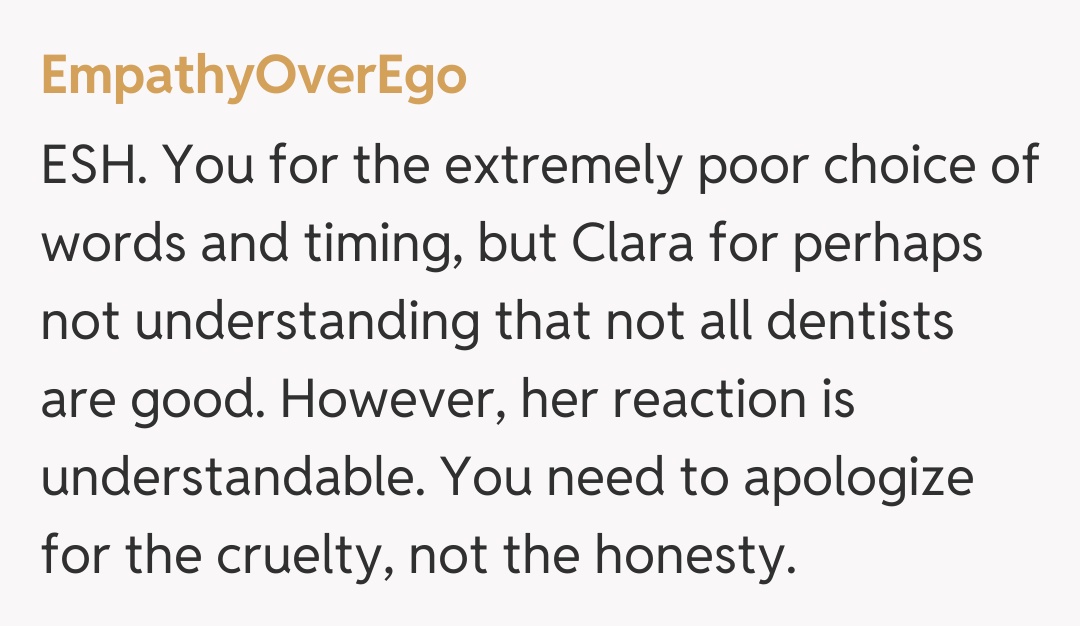
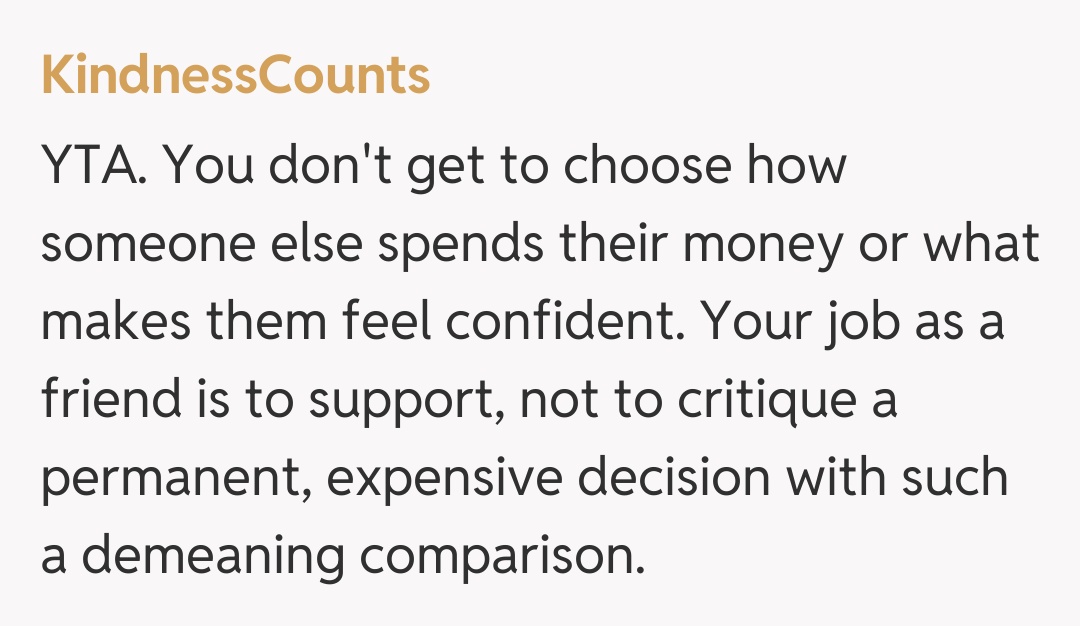
The comments section for this one is, predictably, a battleground! Many users are firmly on Team YTA, citing the harshness of the 'horse-like' comment and the timing. They argue that regardless of the OP's intentions, delivering such a critical blow right after a friend has made a significant investment in their self-image is profoundly insensitive and could severely damage their self-esteem.
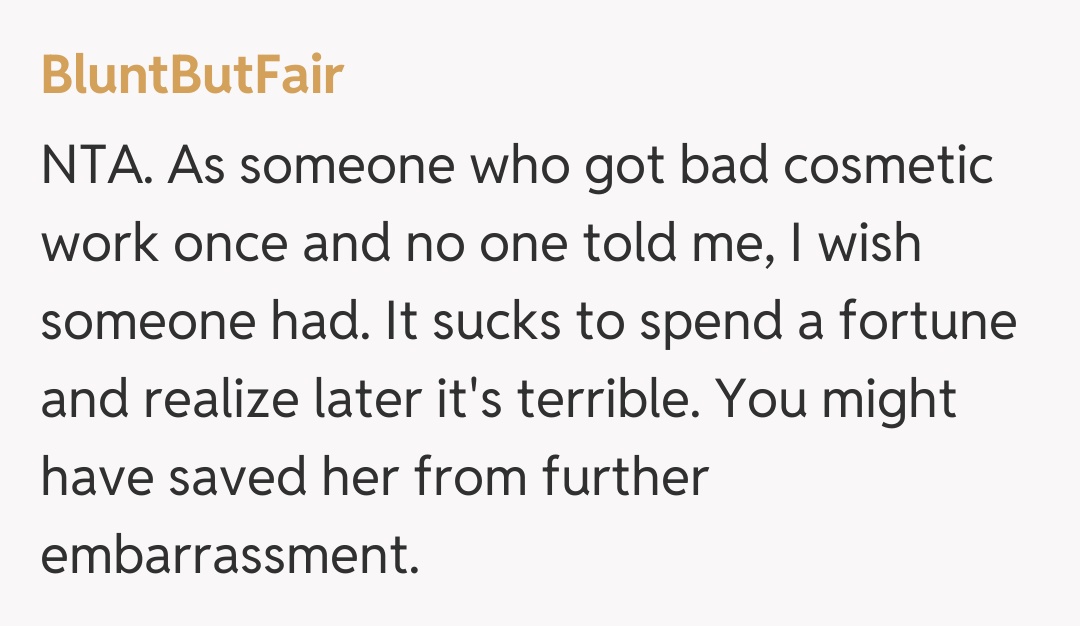
Conversely, a sizable contingent of commenters sympathizes with the OP, arguing that a best friend's role is to tell the truth, especially when others might not. They believe that if the veneers truly looked bad, someone had to say it. However, even these NTA verdicts often come with a caveat: the delivery could have been far gentler, focusing on concern rather than such a cutting description. This story truly highlights the complexities of blunt honesty.
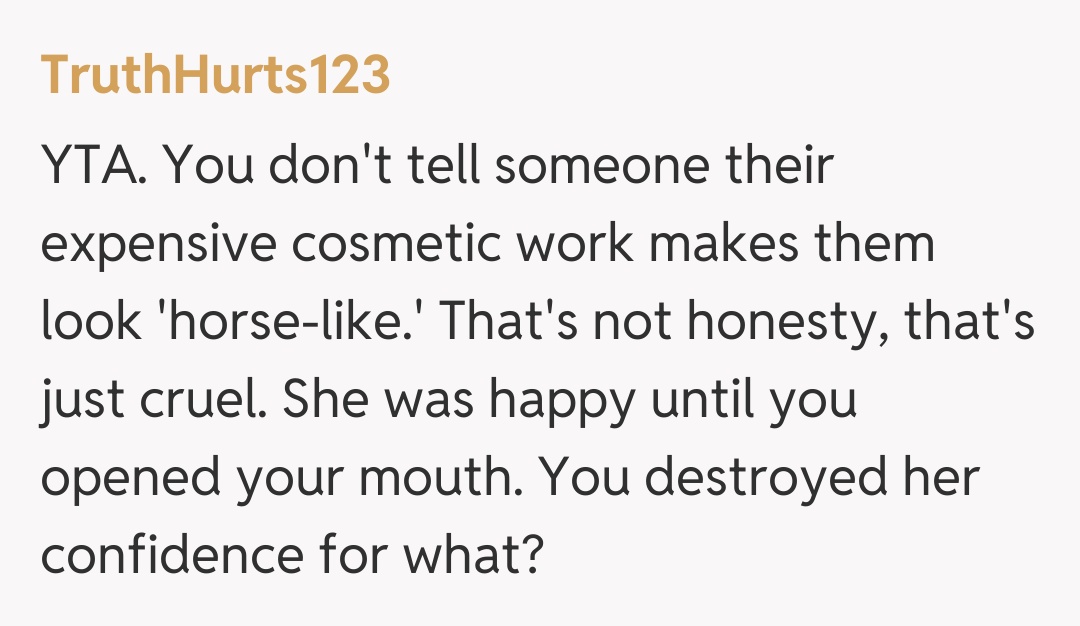
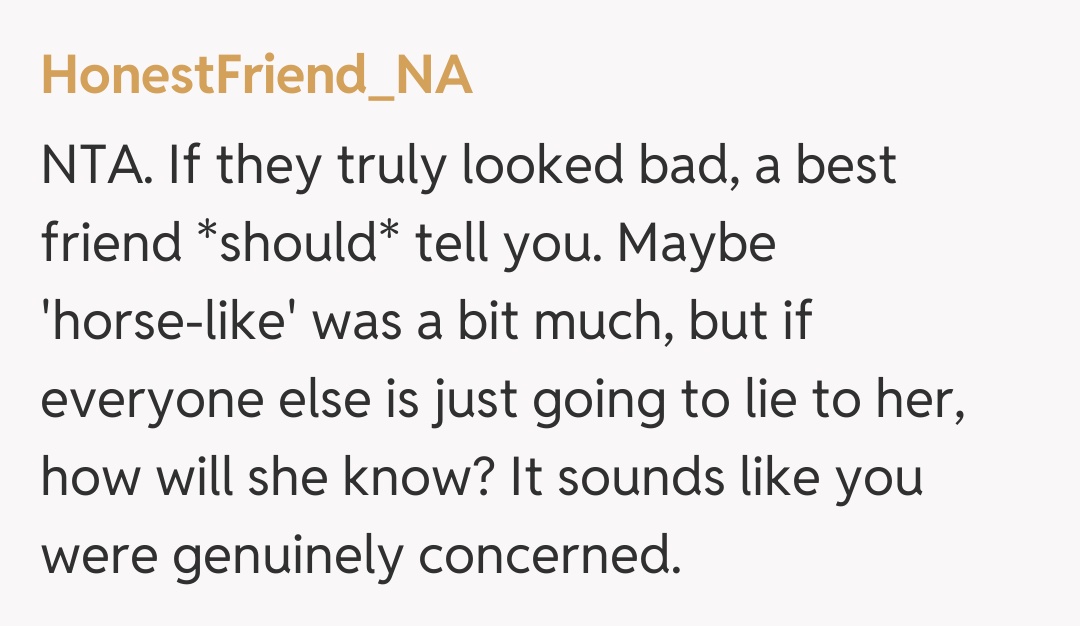
This AITA story serves as a powerful reminder that while honesty is a cornerstone of strong friendships, it must always be tempered with empathy and careful consideration of impact. The line between being a supportive, truthful friend and an unintentionally hurtful one is incredibly fine, especially when discussing sensitive topics like appearance and personal choices. The best approach often involves gentle questioning and offering support, rather than direct criticism. We hope Clara and the OP can find a way to heal this rift, learning valuable lessons about communication and kindness along the way.