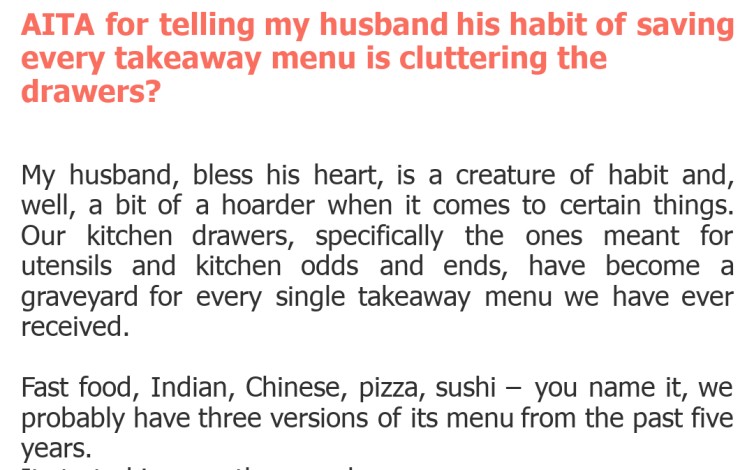
AITA for telling my husband his habit of saving every takeaway menu is cluttering the drawers?
Oh, the never-ending saga of household clutter! Today we're diving into a very relatable dilemma: the battle against accumulated 'stuff,' specifically when one partner's cherished collection becomes another's source of exasperation. It's a tale as old as time, or at least as old as shared living spaces, where tidiness ideals clash dramatically.
Our original poster (OP) has reached her breaking point with her husband's peculiar habit. It's not rare stamps or vintage comics, but rather a mountain of takeaway menus. Every single one, meticulously saved, now threatens to engulf their kitchen drawers. Is she wrong for wanting a clear space, or is he entitled to his eccentric organizational system?

"AITA for telling my husband his habit of saving every takeaway menu is cluttering the drawers?"

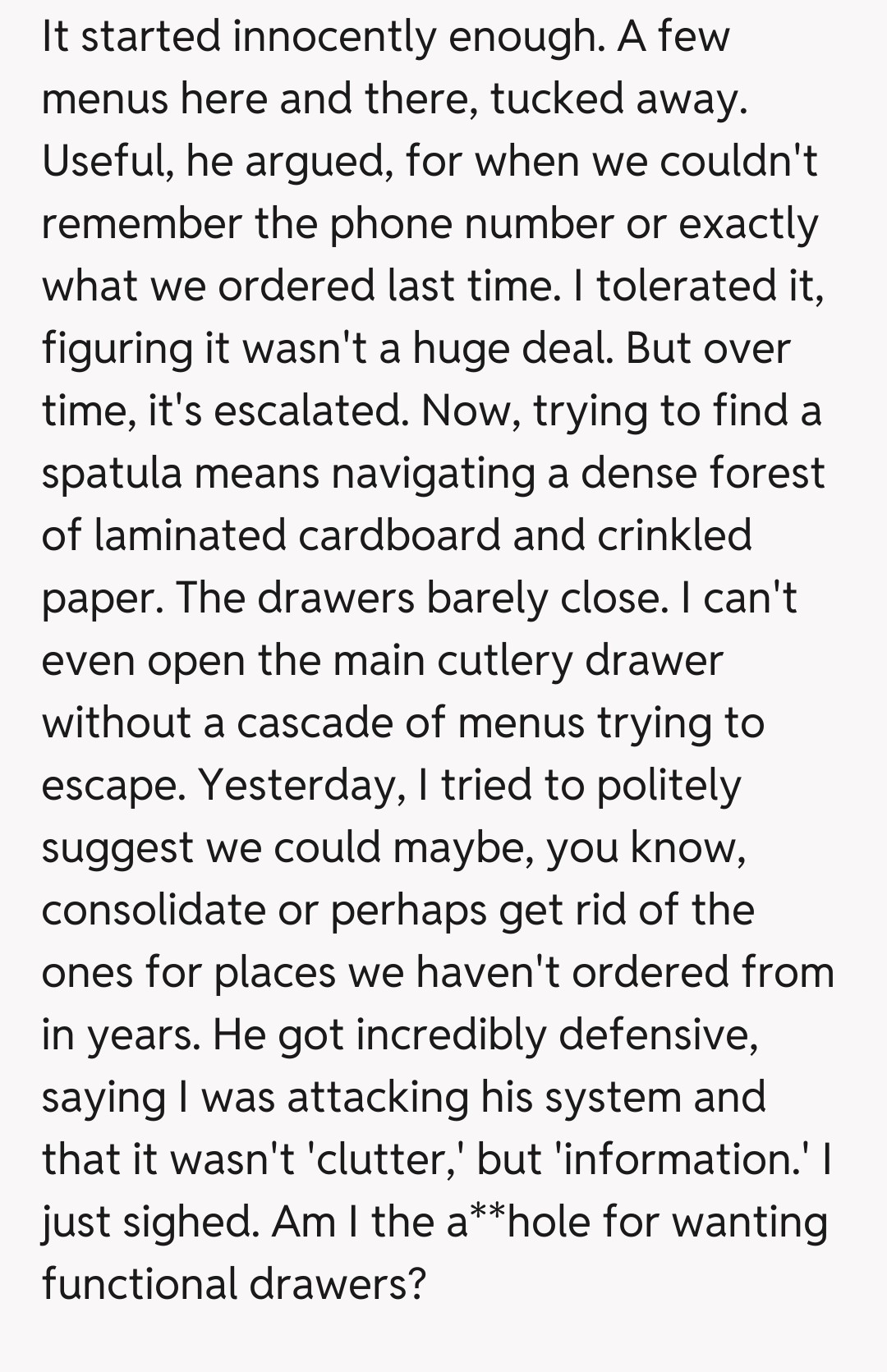
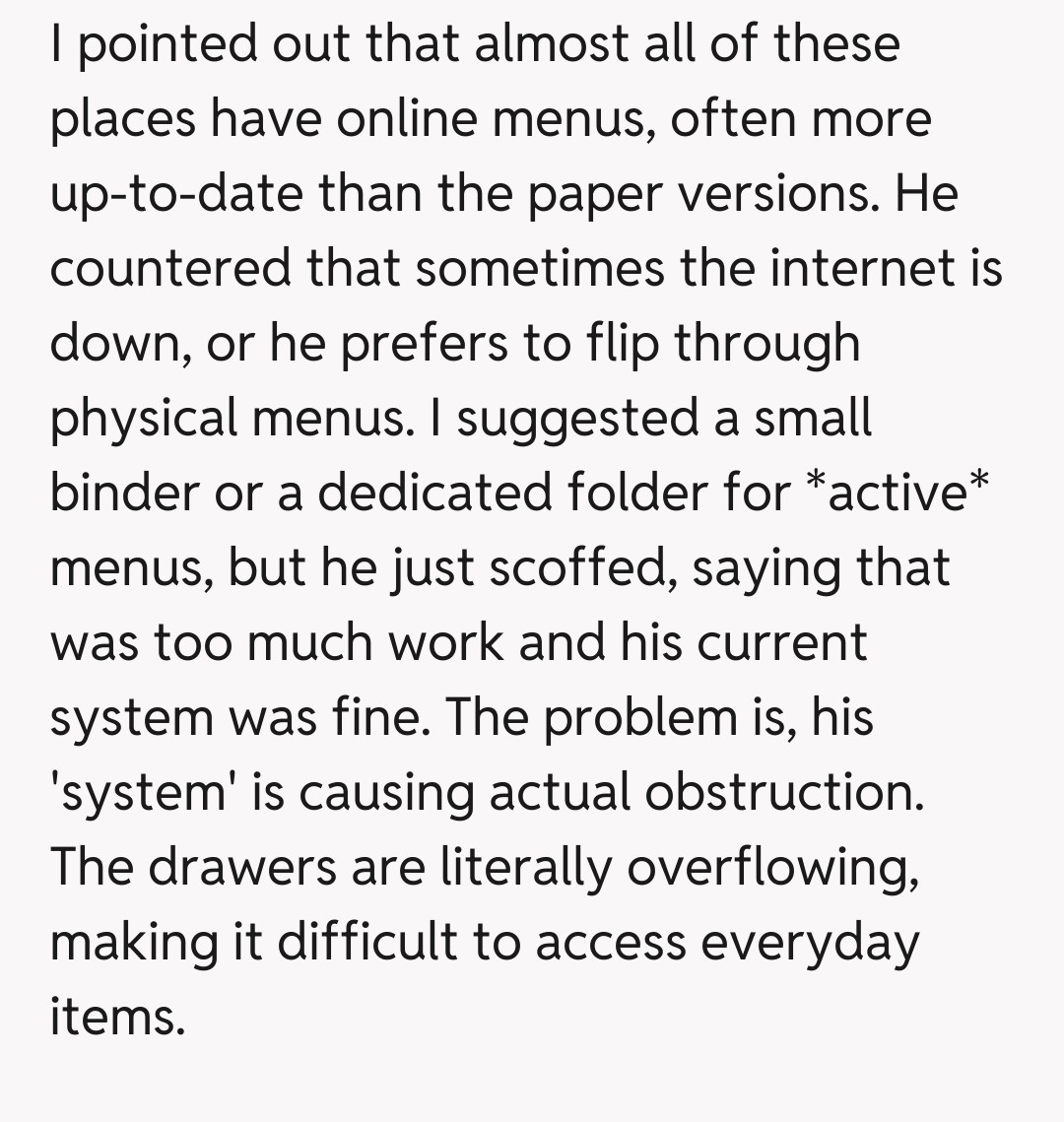
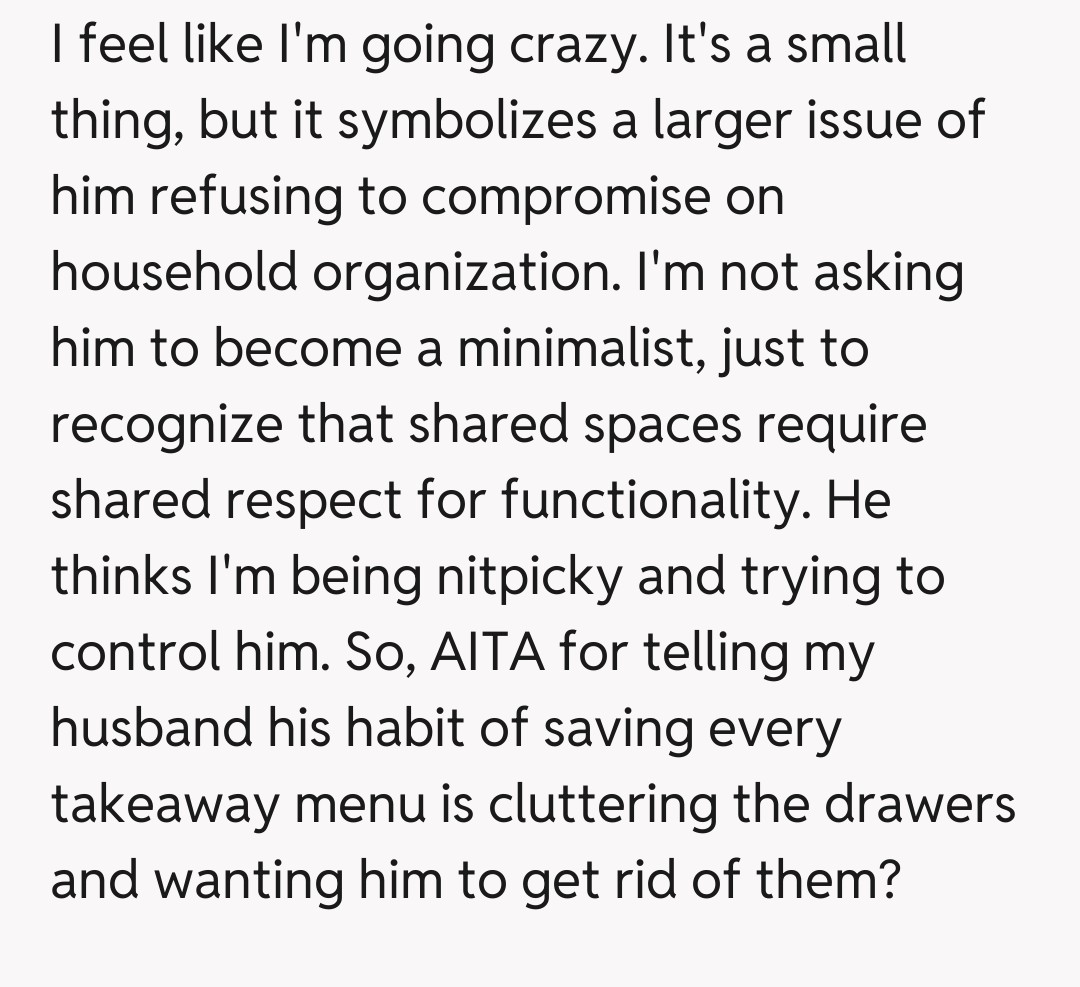
This is a classic 'clutter versus control' narrative that plays out in countless homes. On one hand, the original poster (OP) is experiencing legitimate frustration. Kitchen drawers are high-traffic areas meant for tools and efficiency. When they become unusable due to excess, it impedes daily life. Her desire for functionality and a tidy shared space is entirely understandable, and it's a common point of friction in relationships.
However, we must also consider the husband's perspective. For him, these menus aren't just paper; they're 'information' and potentially a source of comfort or familiarity. He might genuinely feel that getting rid of them would be inconvenient, or perhaps he derives a sense of security from having every option readily available, even if outdated. His defensiveness suggests a deeper attachment or a feeling of being attacked in his personal space/system.
The core issue here seems to be a lack of effective communication and compromise. The OP tried to suggest solutions, but they were dismissed. Her husband isn't acknowledging the practical impact his habit has on their shared living space. While everyone has a right to their eccentricities, those rights usually come with the caveat that they don't negatively impact others or the shared environment.
Ultimately, resolving this isn't just about the menus; it's about mutual respect and finding common ground. Is there a way for the husband to maintain some version of his 'system' without it overwhelming the shared drawers? Can the OP acknowledge his need for these items while still advocating for a functional home? It's a delicate balance requiring empathy from both sides.
The internet weighs in: Is 'information' just another word for 'clutter'?
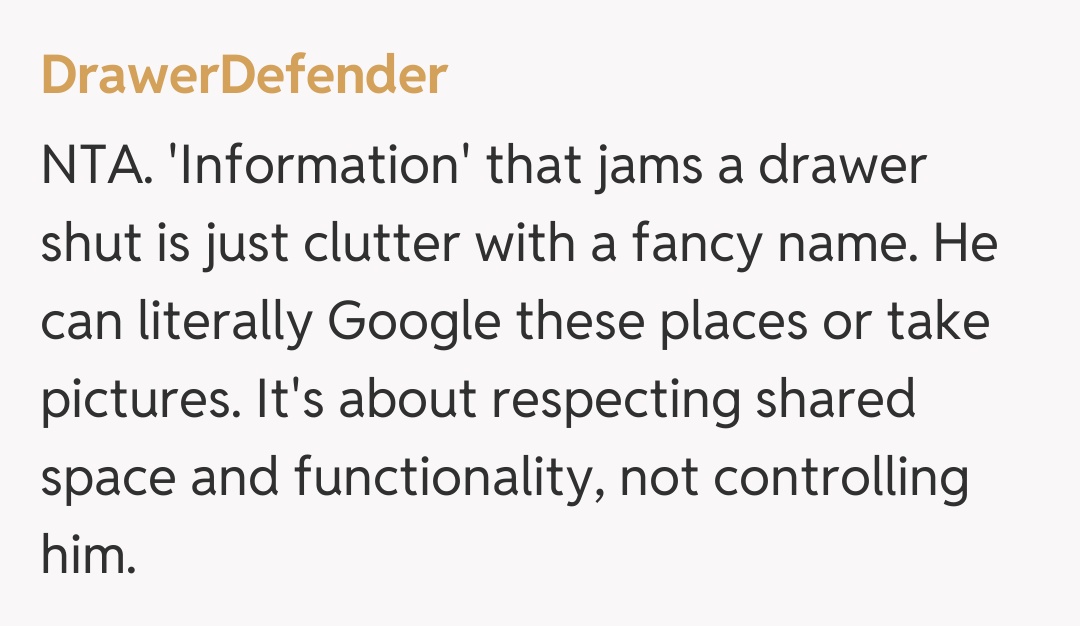
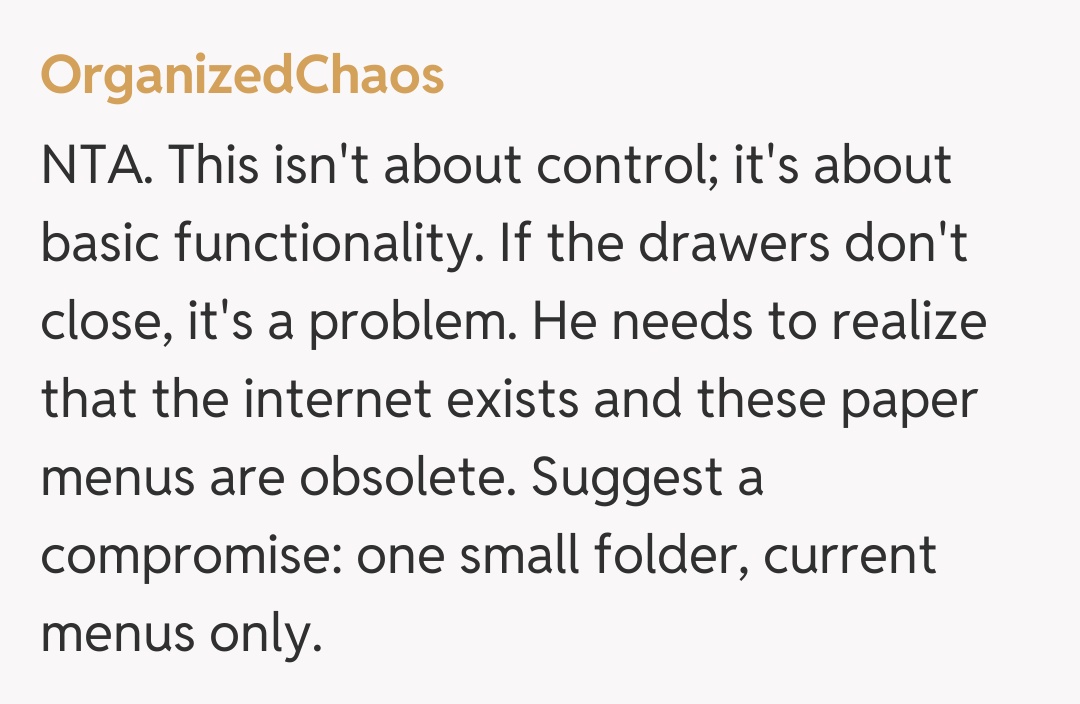
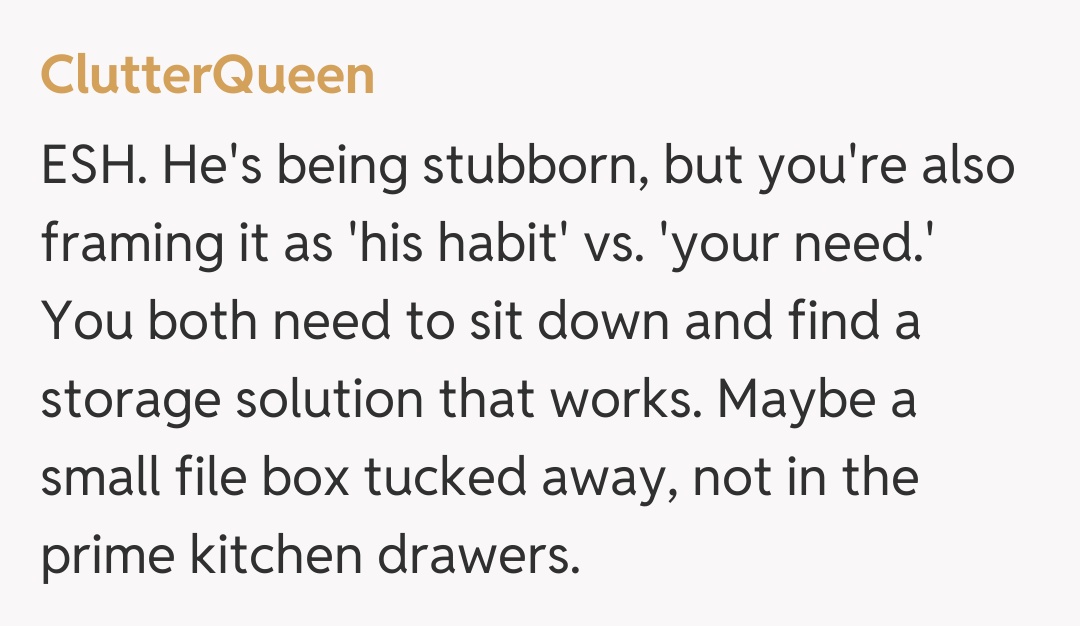
The comments section for this one was absolutely buzzing, and it seems the vast majority sided squarely with the original poster. Many readers empathized with the frustration of non-functional drawers, pointing out that practicality should often trump sentimental attachment, especially for items readily available online. The consensus leaned heavily towards NTA, highlighting that shared living spaces necessitate compromise and respect for each other's needs, including the need for basic organization.
A recurring theme in the comments was the idea of 'digital alternatives.' Many suggested that the husband could easily take photos of the menus or bookmark online versions, achieving his goal of 'information' retention without the physical clutter. There were also plenty of jokes about the sheer volume of menus, painting a vivid picture of the overflowing drawers and prompting readers to share their own partner's quirky hoarding habits.
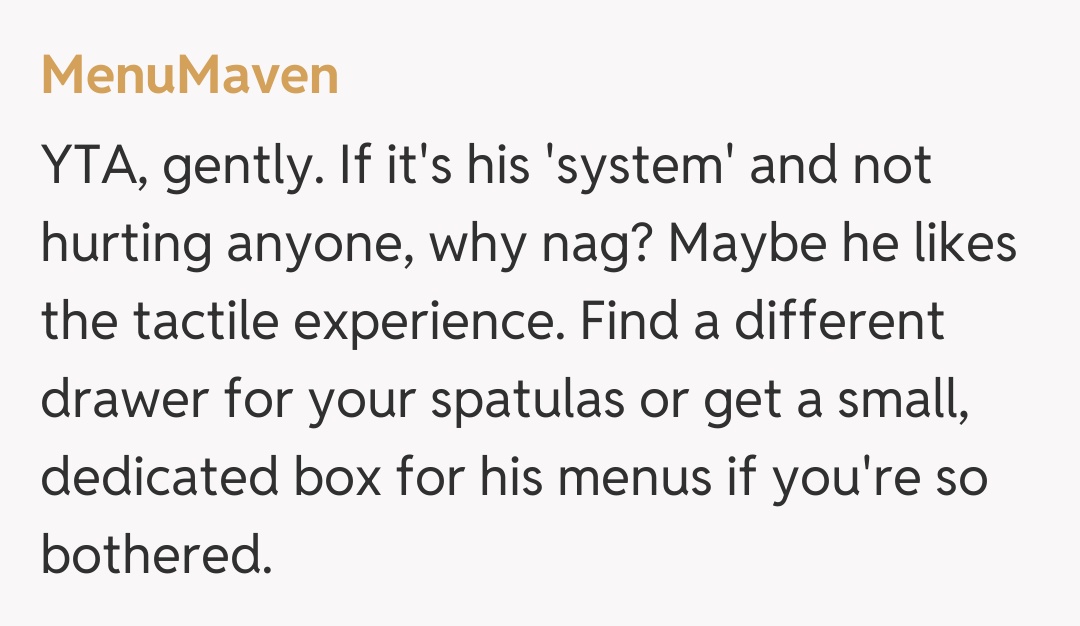
This AITA post serves as a potent reminder that even the smallest habits can escalate into significant relationship friction when communication breaks down. While the husband might see his menu collection as harmless, its impact on shared functionality is clear to the OP and our readers. The key takeaway from this discussion is the importance of compromise and finding practical solutions that respect both partners' needs. Digital alternatives or a dedicated, out-of-the-way storage system could be a sensible middle ground for this couple to achieve harmonious, uncluttered living.