AITA for refusing to let my wife hang her motivational quote posters in our shared office?
Oh, the shared office space! A modern-day battlefield where professional needs collide with personal aesthetics. Today, we're diving into a domestic dispute that's surprisingly common: what happens when your partner's 'inspirational' decor clashes with your need for a minimalist workspace? Get ready for a tale of mismatched visions and clashing design philosophies.
Our poster-averse protagonist has brought a classic AITA dilemma to the table. His wife wants to infuse their shared home office with vibrant, quote-laden posters, believing they'll boost productivity and morale. He, on the other hand, sees them as visual clutter, an unwelcome distraction in his carefully curated, distraction-free zone. Who's right when it comes to decorating a space meant for two?

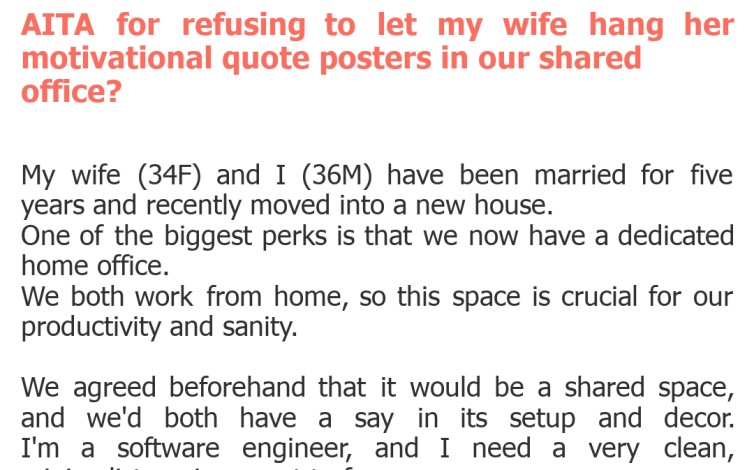
"AITA for refusing to let my wife hang her motivational quote posters in our shared office?"
This AITA post highlights a classic conflict: differing needs in a shared environment. On one hand, the original poster (OP) clearly articulates a professional necessity for a minimalist, distraction-free workspace. His job as a software engineer demands intense focus, and visual clutter genuinely hinders his ability to concentrate, affecting his work performance and mental clarity. This isn't just a preference; it's presented as a core requirement for his productivity.
Conversely, OP's wife, a graphic designer, expresses an equally valid need for visual stimulation and motivation. For some creative professionals, an environment rich with color, imagery, and positive affirmations can indeed be a powerful catalyst for ideas and energy. To her, these posters aren't clutter but tools that enhance her working state, making the office a more inspiring and enjoyable place to be.
The core of the conflict lies in the 'shared' aspect of the office. While they agreed it would be shared, they seem to have overlooked how divergent their ideal working environments truly are. The wife's desire to personalize 'her half' suggests a misunderstanding of a truly shared space versus a divided one, where separate aesthetics might be maintained without affecting the other's experience.
The challenge here is finding a compromise that honors both individuals' professional needs without one completely overshadowing the other. It's not about who is 'right' or 'wrong' in their aesthetic preference, but about mutually respecting differing requirements for a productive workday. Open communication, empathy, and perhaps a creative solution beyond simply hanging or not hanging posters are essential for moving forward.
The internet weighs in: Are these posters a productivity boost or a visual nightmare?
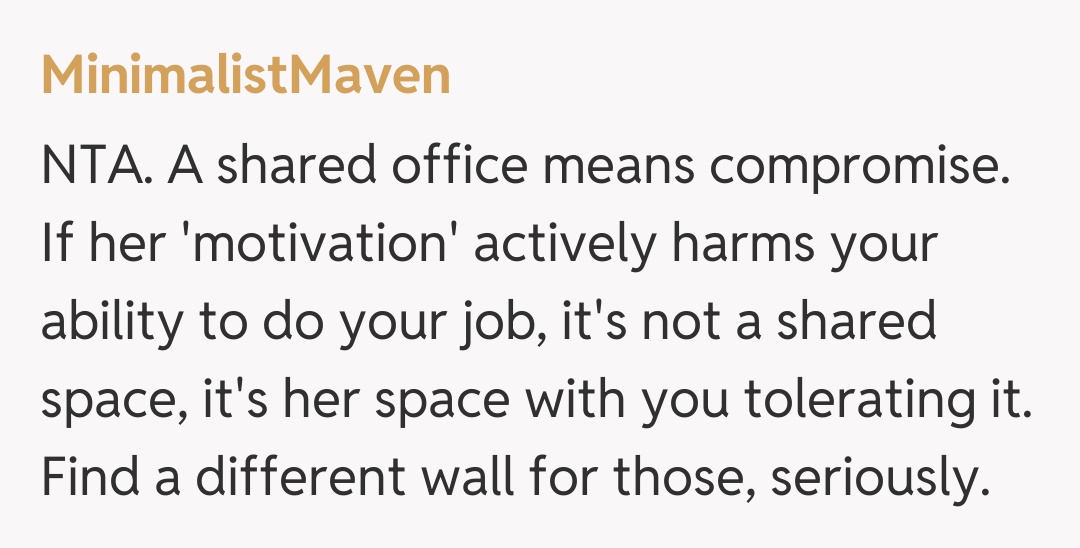
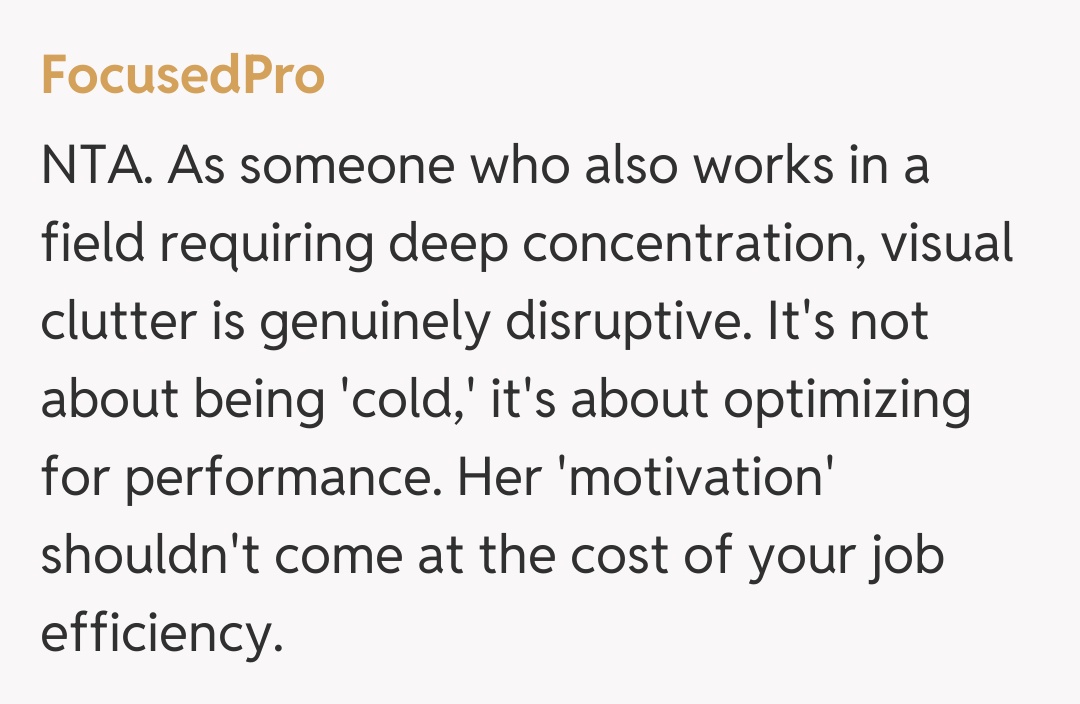
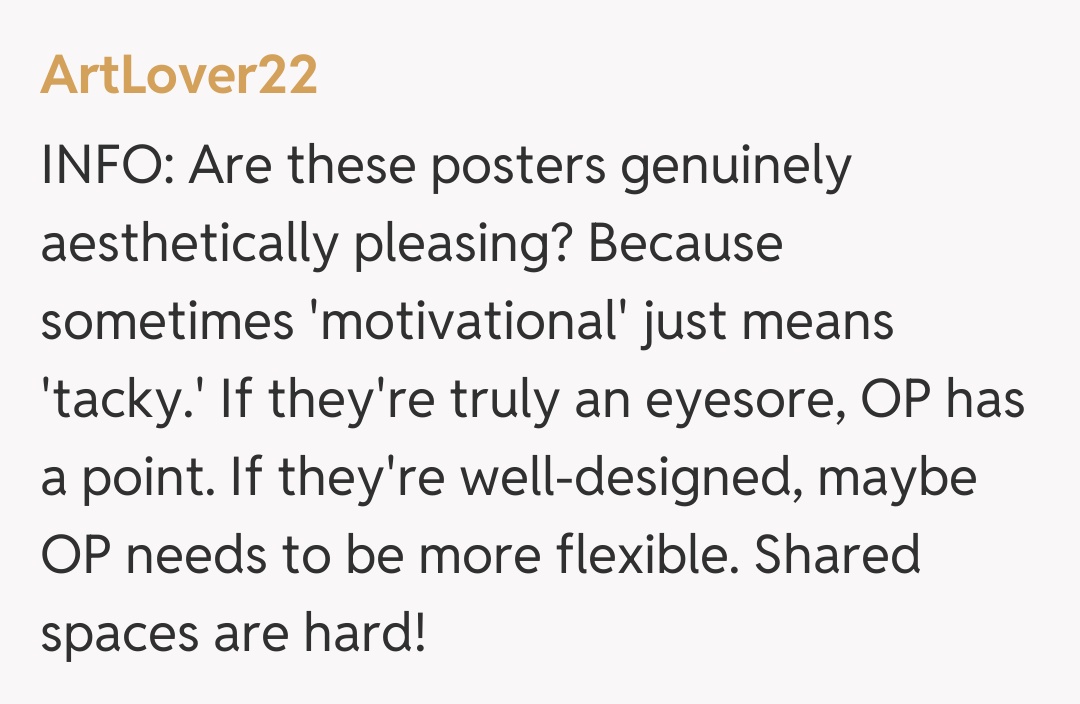
The comments section for this AITA post predictably exploded with strong opinions on both sides. Many users sided with the OP, emphasizing the critical need for a focused environment for tasks like software engineering. They highlighted that visual distractions aren't just an annoyance but a genuine impediment to complex problem-solving, suggesting the wife's approach was a bit self-centered.
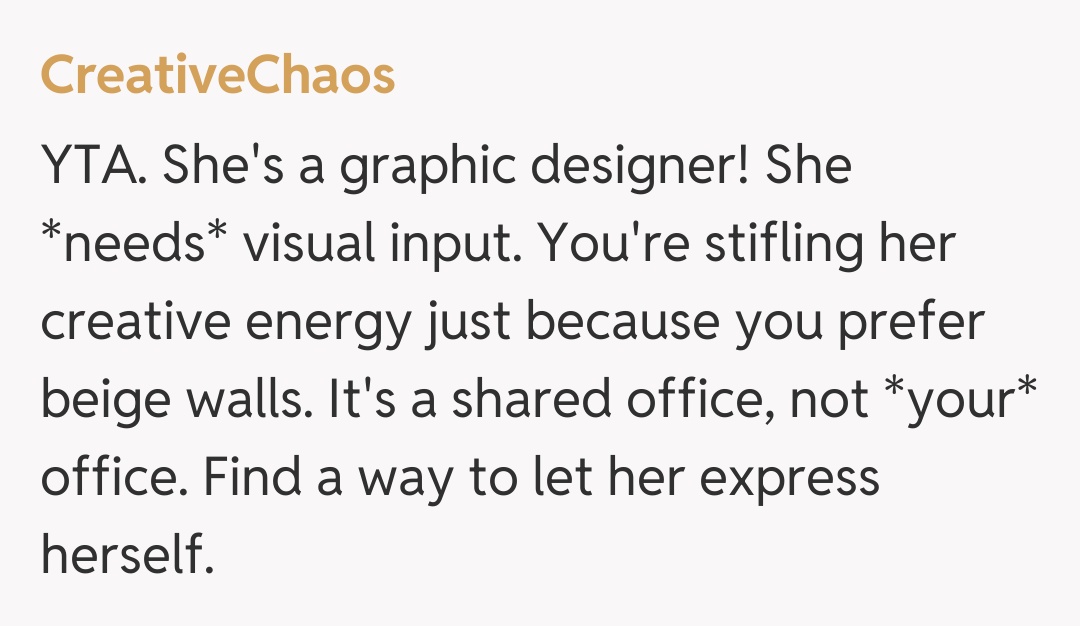
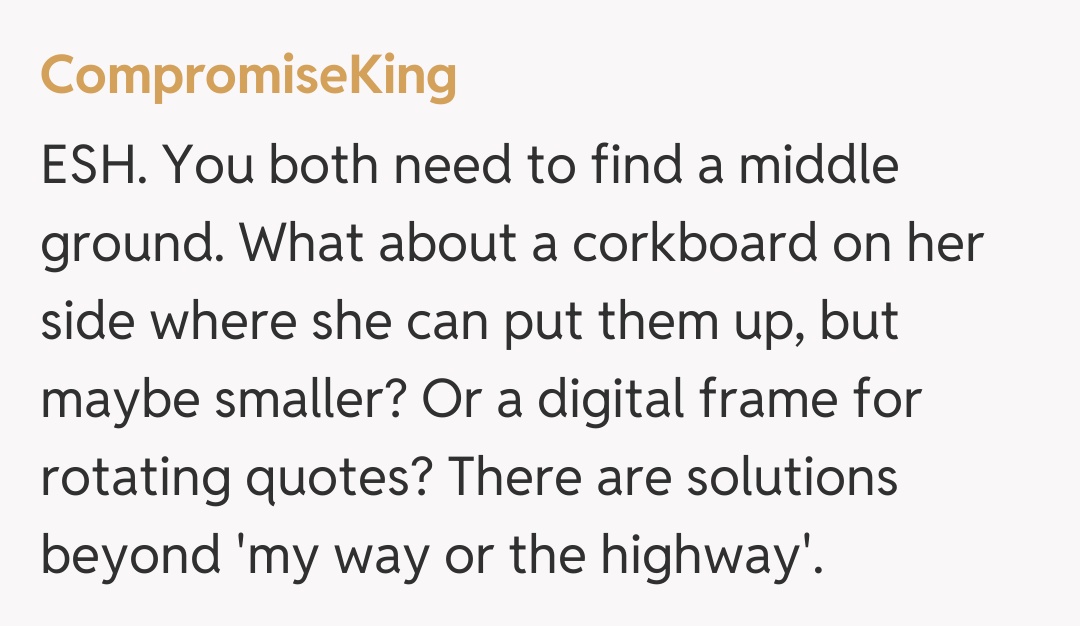
However, a significant number of commenters also empathized with the wife, particularly those in creative fields. They argued that motivation comes in many forms, and if brightly colored quotes help her, then her needs shouldn't be dismissed. Several suggested creative compromises, like rotating posters, using a digital display, or even finding a partition for her side.
This AITA post perfectly illustrates that even the smallest disagreements about home decor can uncover deeper conflicts about respect, personal space, and compromise in a relationship. While there's no clear 'villain' here, both individuals have valid points rooted in their professional needs. The solution likely lies in creative problem-solving and a renewed commitment to open dialogue, ensuring both partners feel their requirements are seen and valued. Ultimately, a harmonious shared office requires more than just furniture; it needs shared understanding.