AITA for telling my wife her obsession with renaming our Wi-Fi network every week is childish?
Welcome back, internet dwellers! Today we're diving into a domestic dispute that proves no detail is too small to spark a full-blown AITA debate. It's often the little things, isn't it? The seemingly insignificant habits that, over time, can grate on one's nerves, transforming a minor quirk into a major point of contention. This week's story perfectly exemplifies how even something as mundane as a home network's identifier can become a battleground.
Our protagonist is at his wit's end with his wife's weekly Wi-Fi name changes. What seems like a harmless, even creative, pastime for her has become a source of profound irritation for him. He believes her actions are childish and disruptive. But is he the a**hole for expressing this, or is she indeed pushing the boundaries of playful eccentricity? Let's unravel this digital drama and see where the Wi-Fi signal truly lies.

"AITA for telling my wife her obsession with renaming our Wi-Fi network every week is childish?"
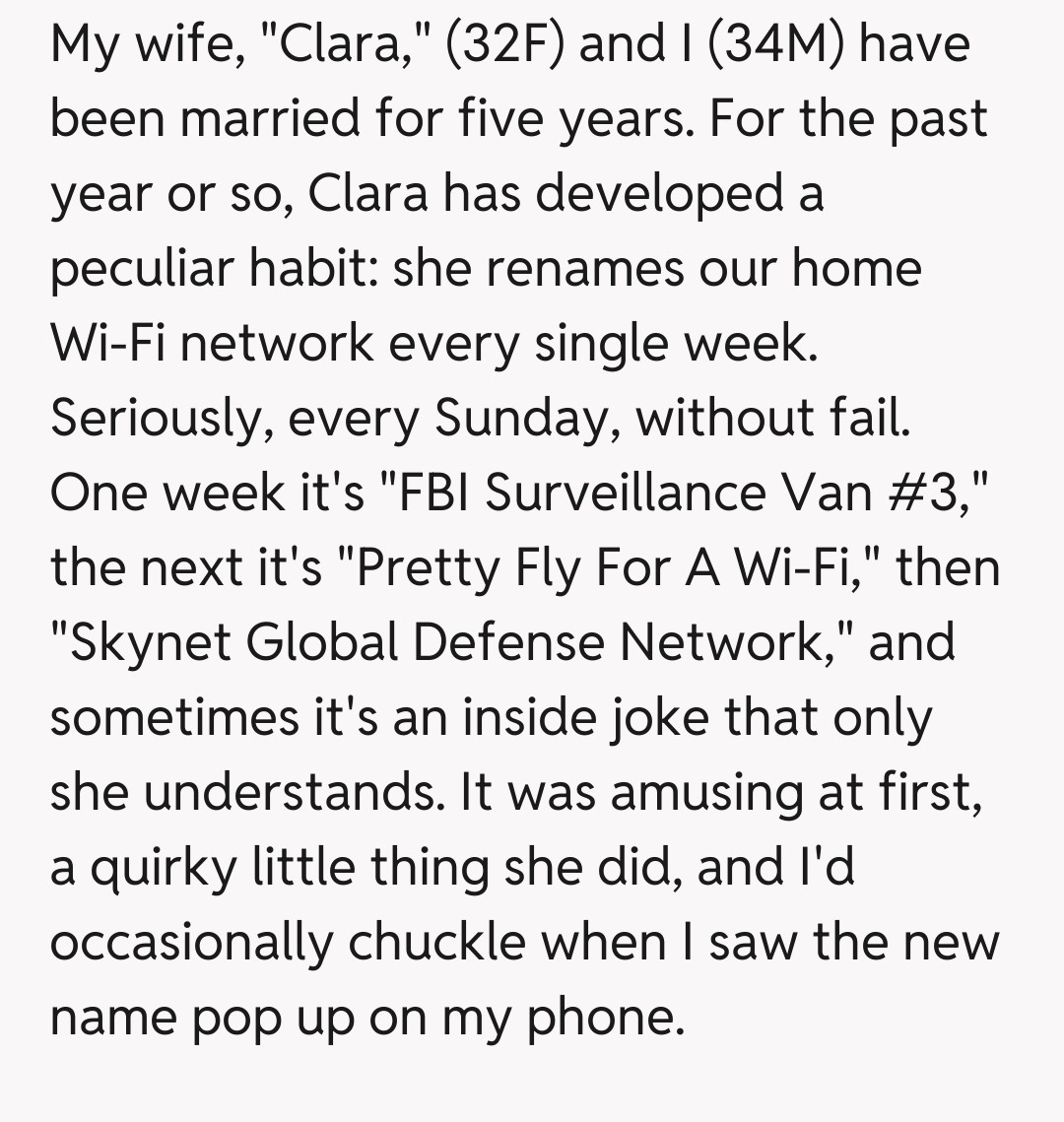
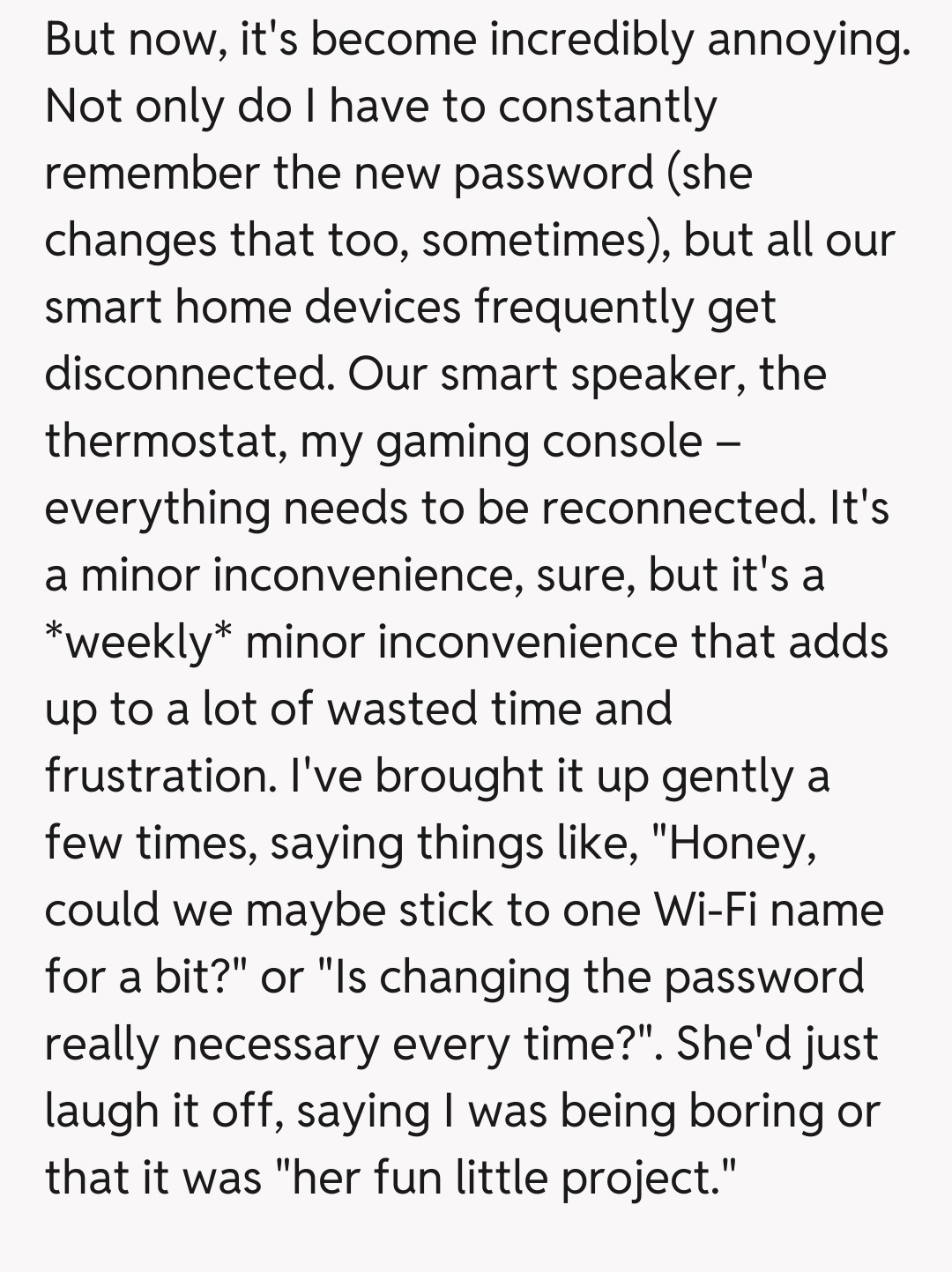
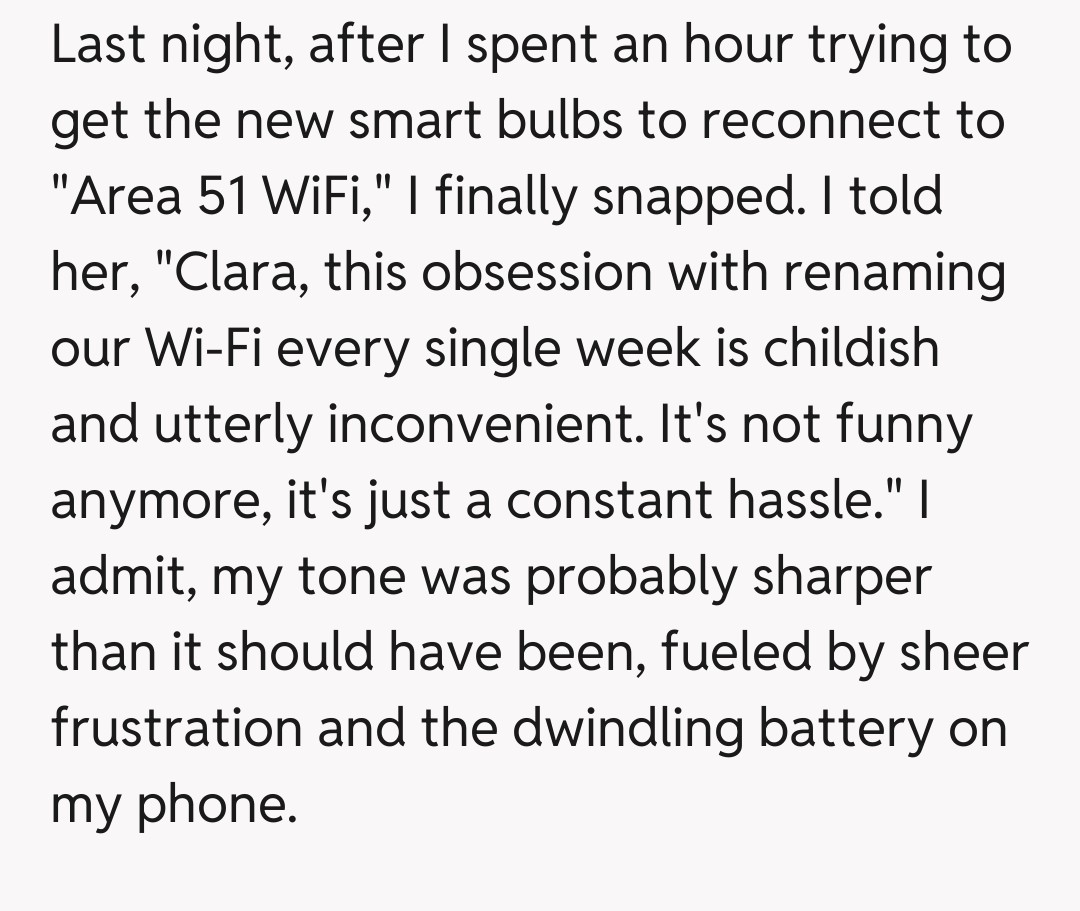
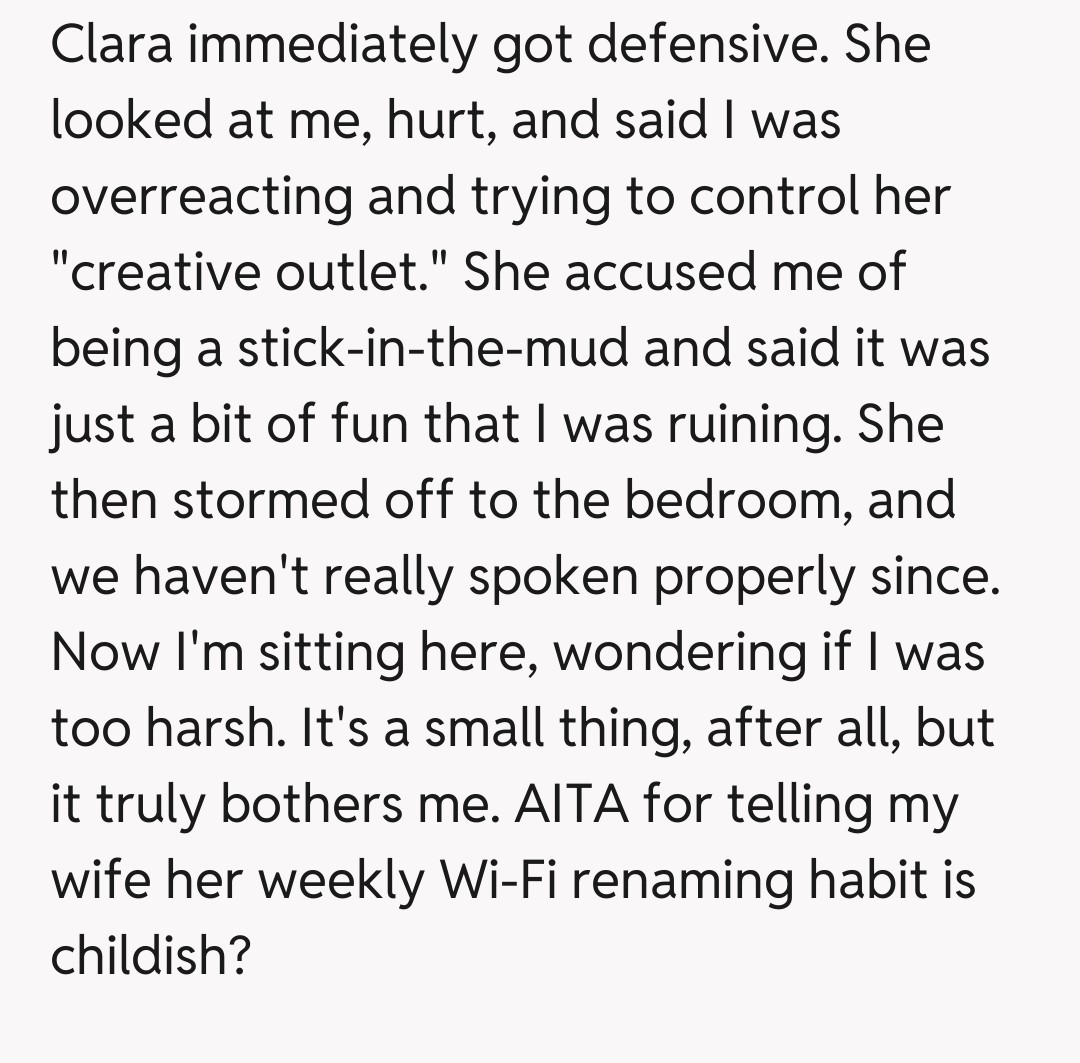
This scenario is a classic example of how seemingly trivial issues can snowball into significant relationship friction. On one hand, the wife's desire for a "creative outlet" is understandable. Hobbies, even unusual ones like weekly Wi-Fi renaming, can bring joy and a sense of personal expression. For her, it might be a small way to inject some levity and personality into their shared domestic space, something she truly enjoys doing without malicious intent.
However, the husband's perspective is equally valid. The cumulative effect of constant technical disruptions and the need to repeatedly reconfigure devices is a genuine inconvenience. What might start as a chuckle-worthy quirk can quickly become a tiresome chore when it directly impacts daily routines and the functionality of their shared home. His frustration isn't about the *idea* of a unique Wi-Fi name, but the *frequency* and its practical implications.
The core issue here seems to be a breakdown in communication and a lack of mutual understanding. The husband attempted to express his discomfort gently, but his concerns were dismissed as "being boring." This dismissal likely exacerbated his feelings of being unheard and disrespected, leading to his eventual outburst. For the wife, her partner's harsh words likely felt like an attack on her personality and harmless fun, understandably causing her to react defensively.
A healthy relationship requires both partners to listen to each other's grievances, no matter how small they may seem. While the wife might not view her habit as a problem, the fact that it causes her husband genuine stress should be reason enough for a re-evaluation. Similarly, the husband could have approached the conversation with more tact, perhaps suggesting a compromise rather than an outright accusation of childishness.
The Internet Weighs In: Is Weekly Wi-Fi Whimsy Worth the Wireless Woes?
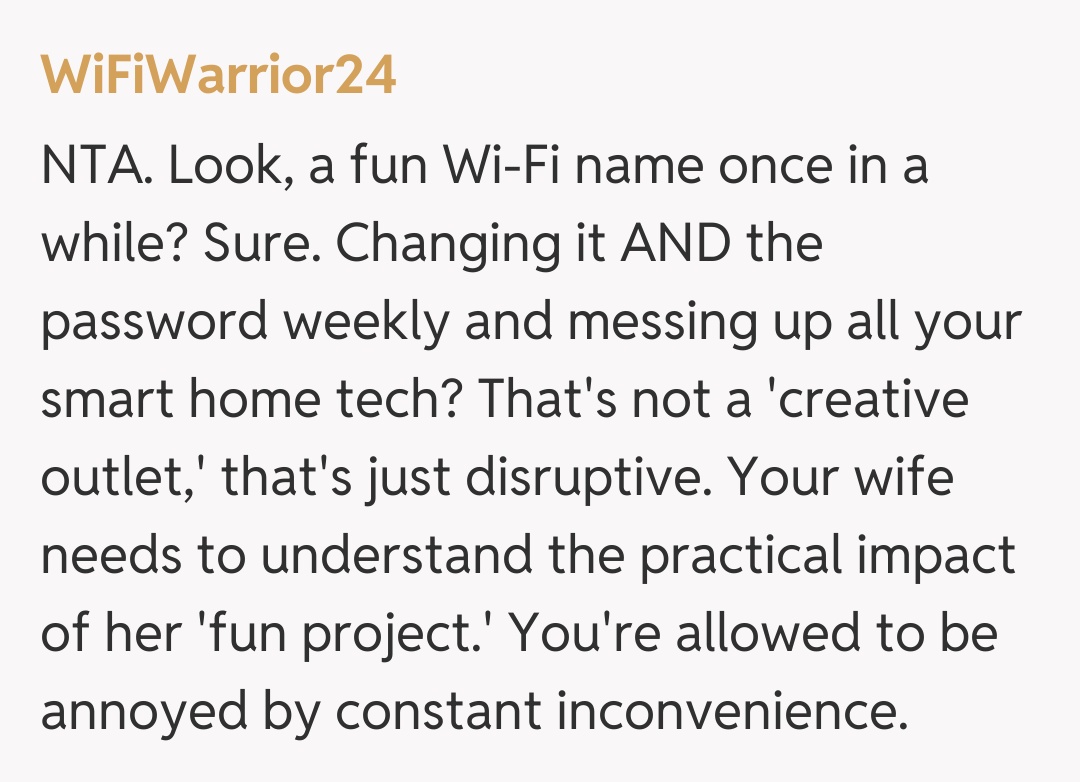
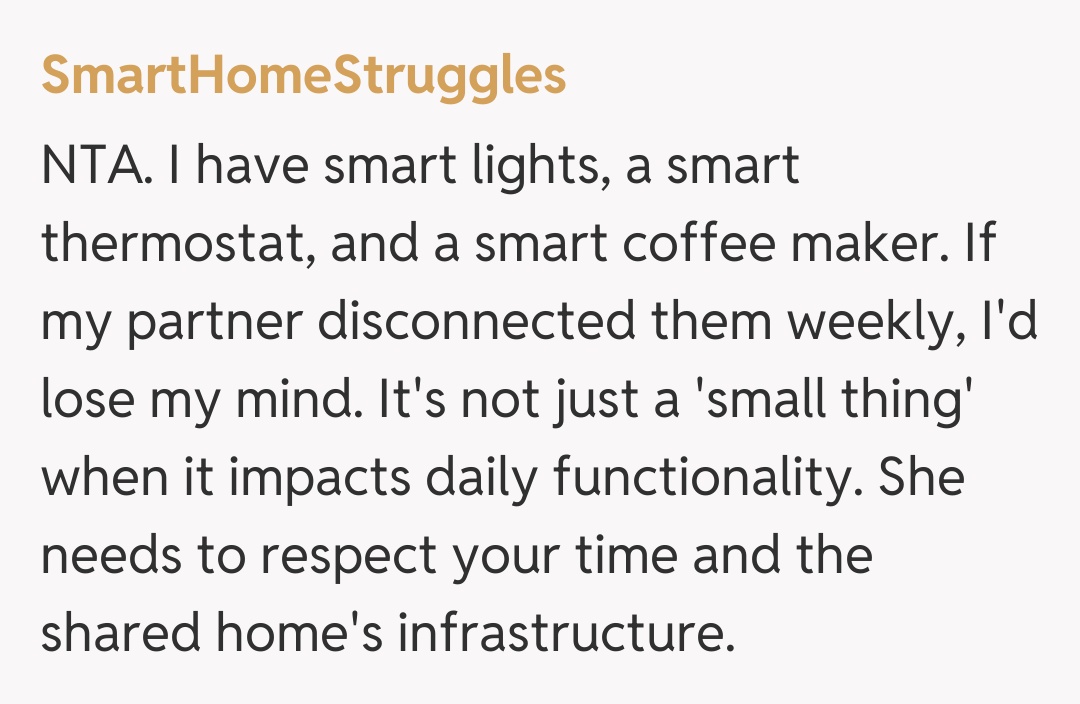
The comment section on this post was, as expected, a lively debate! Many users leaned towards "NTA" for the husband, emphasizing the practical annoyances of constantly resetting smart devices. They argued that while a quirky Wi-Fi name is fun, changing the password and disconnecting essential home tech *every week* goes beyond harmless fun and enters the realm of inconsiderate behavior. The consensus was that hobbies shouldn't create significant, recurring inconvenience for others.
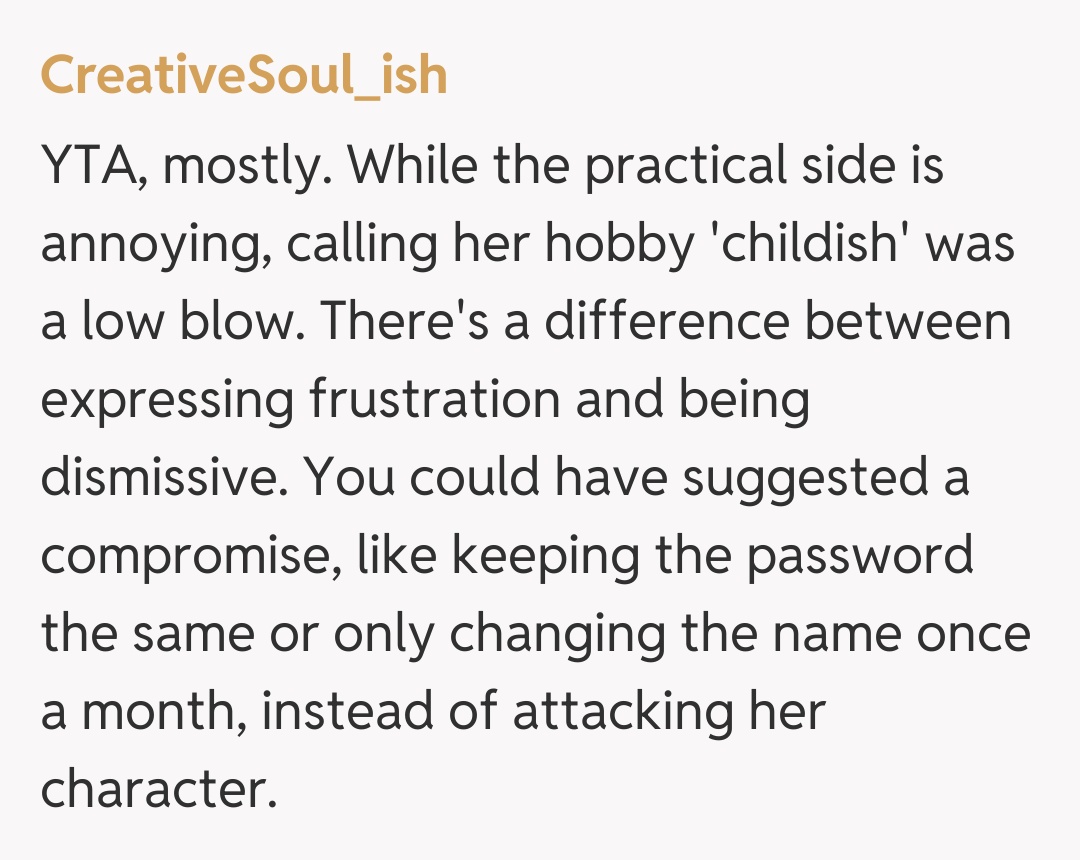
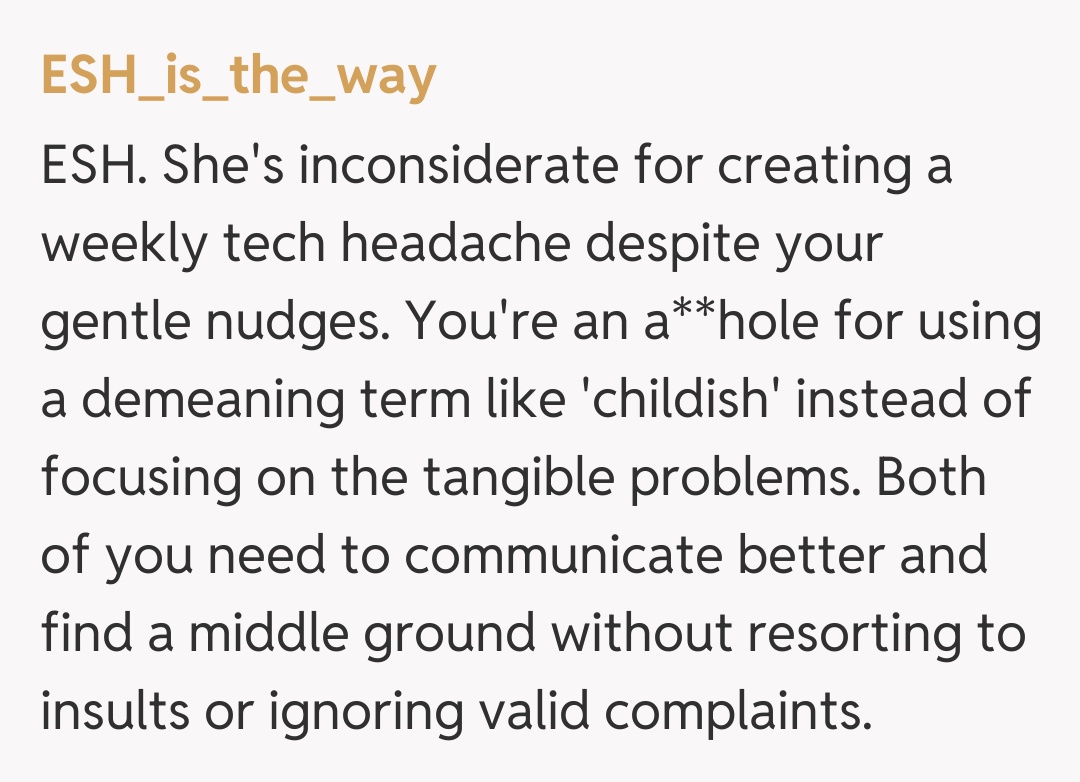
However, a good number of "YTA" and "ESH" votes also emerged, particularly focusing on the husband's delivery. Commenters pointed out that calling his wife's hobby "childish" was condescending and dismissive, likely guaranteeing a defensive reaction. They suggested that a more collaborative approach, like suggesting a themed monthly change or keeping the password consistent, might have yielded a better outcome, highlighting that tone matters as much as the message.
This Wi-Fi saga reminds us that every relationship thrives on compromise and mutual respect, even over the smallest of details. While a hobby should bring joy, it shouldn't consistently cause significant disruption to a partner's peace or routine. Both parties in this story have valid points, and the path forward undoubtedly involves a calmer, more empathetic conversation where feelings are acknowledged, and a practical solution is sought. Let's hope they can find a network name they both can live with!