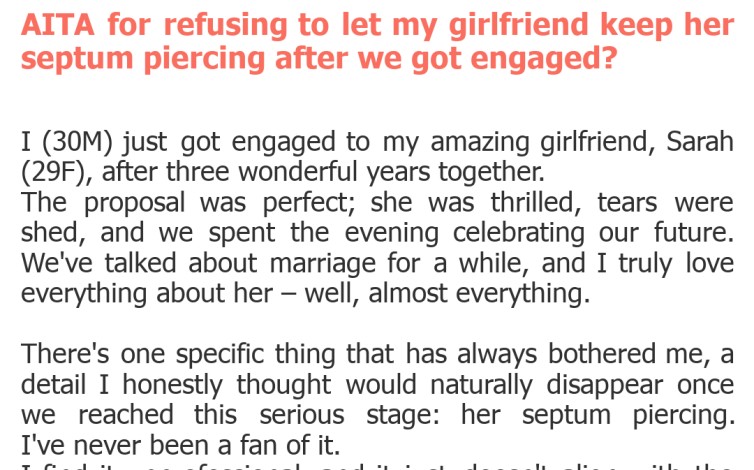
AITA for refusing to let my girlfriend keep her septum piercing after we got engaged?
Oh, engagement bliss! It's a time when couples are usually floating on clouds, planning their future, and cementing their bond. But what happens when a significant detail about one partner's appearance suddenly becomes a dealbreaker right after the 'yes'? It seems that for our latest AITA submission, the celebration quickly turned into a tense negotiation over a piece of jewelry.
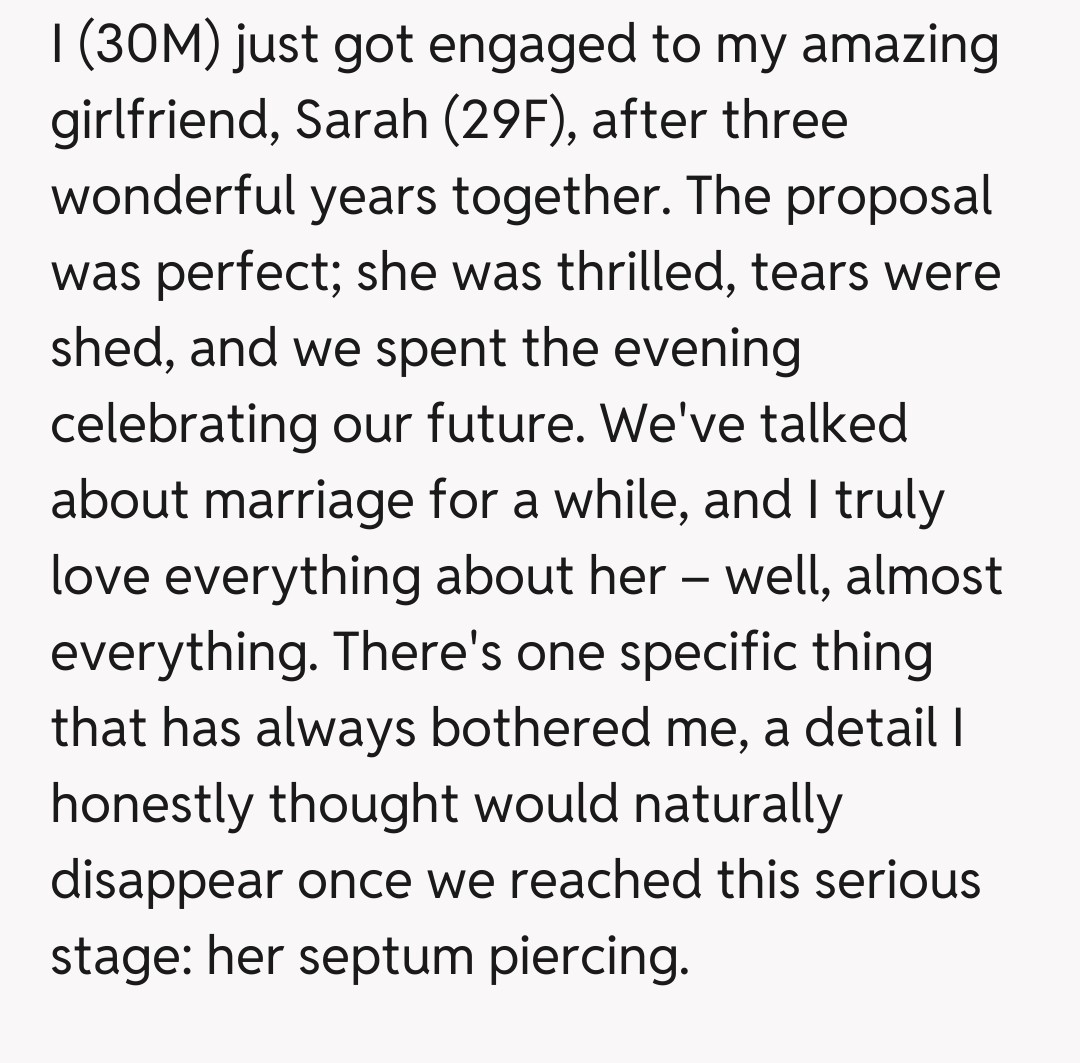
We've all heard stories about couples navigating differences, but this one cuts right to the core of personal expression versus partnership expectations. The original poster, let's call him Mark, proposed to his girlfriend, Sarah, and was met with an enthusiastic acceptance. However, the subsequent conversation about her septum piercing has thrown a massive wrench into their engagement, leaving them both reeling. Is his request reasonable, or is he overstepping a boundary?

"AITA for refusing to let my girlfriend keep her septum piercing after we got engaged?"
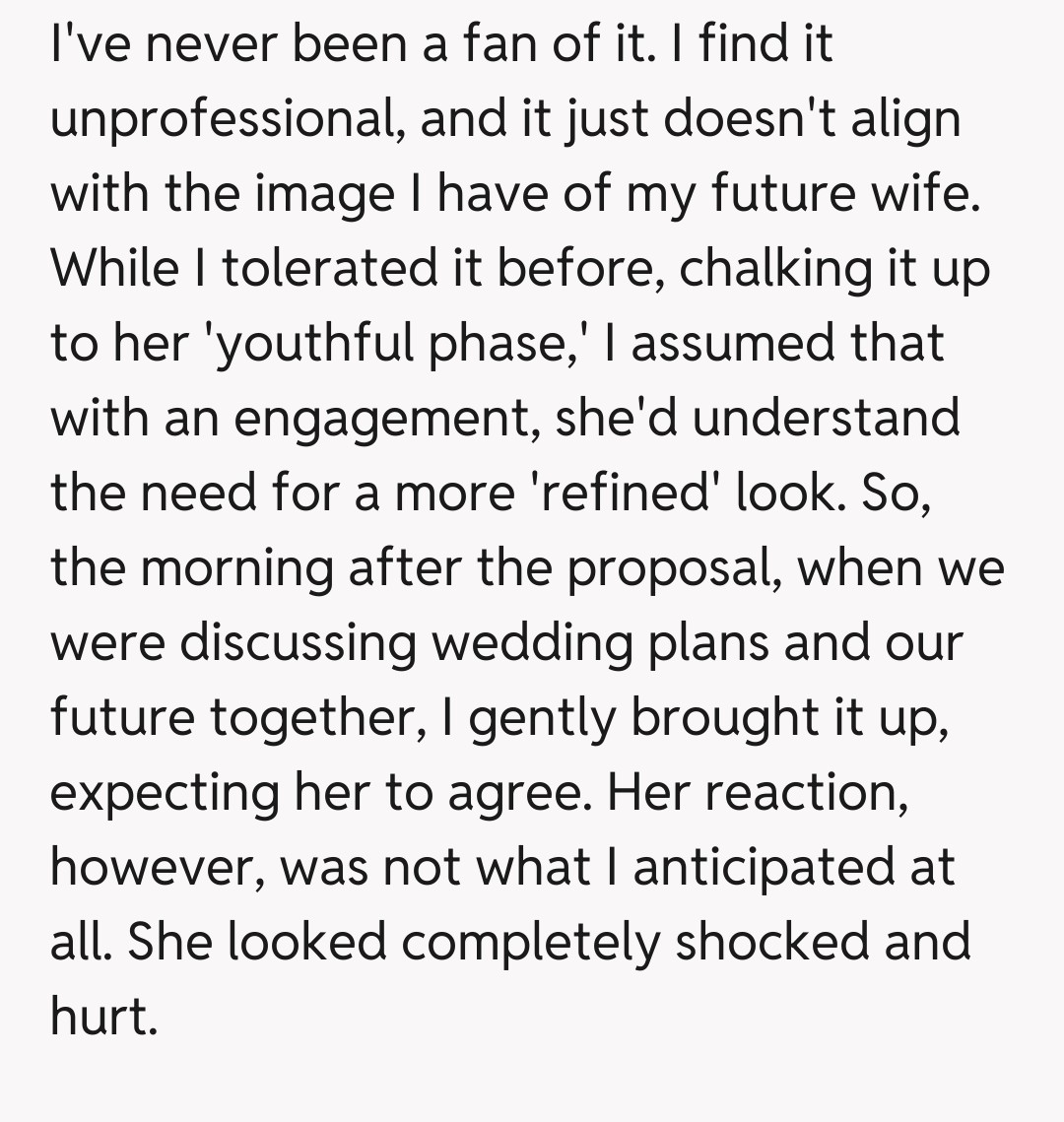
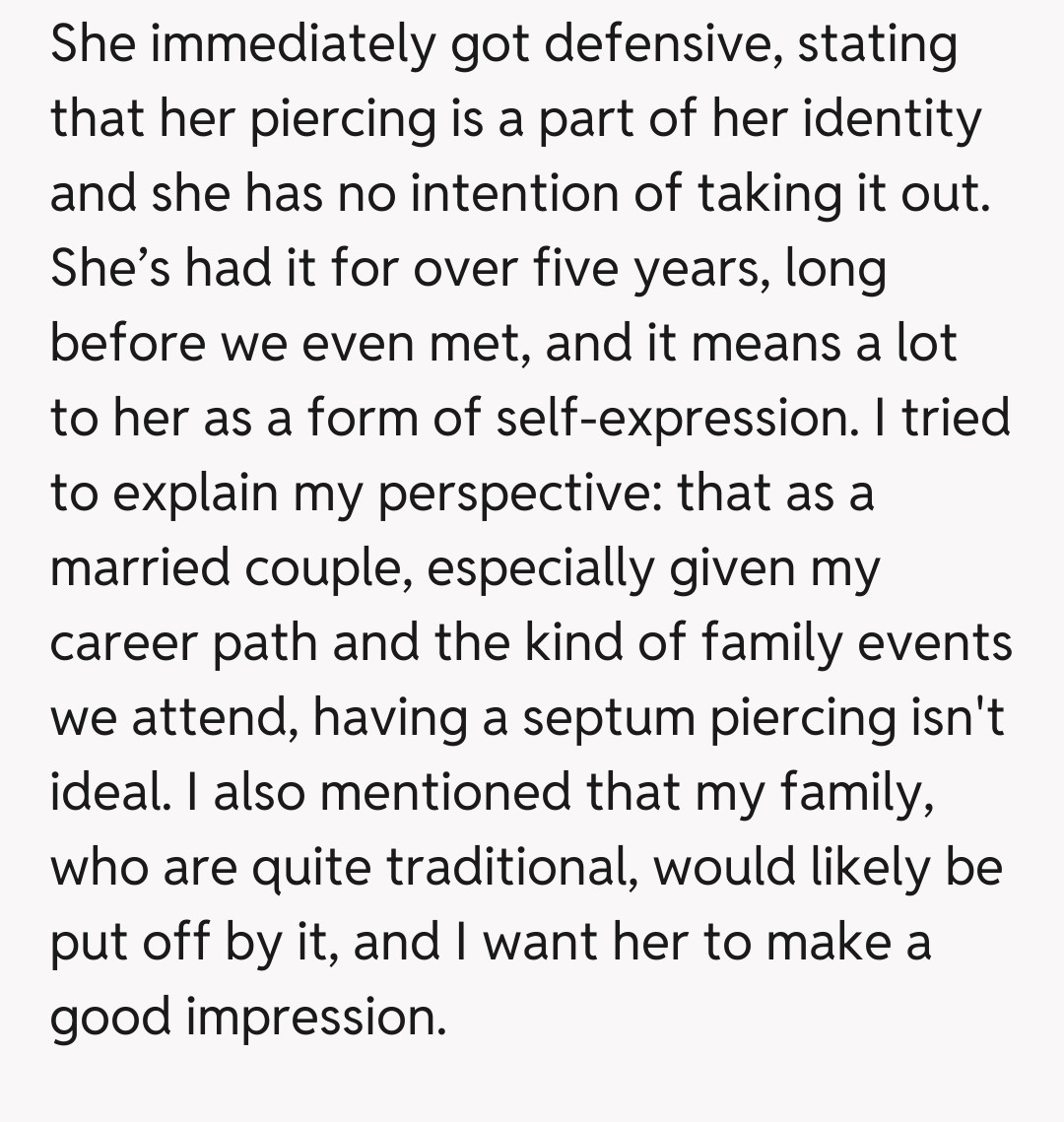
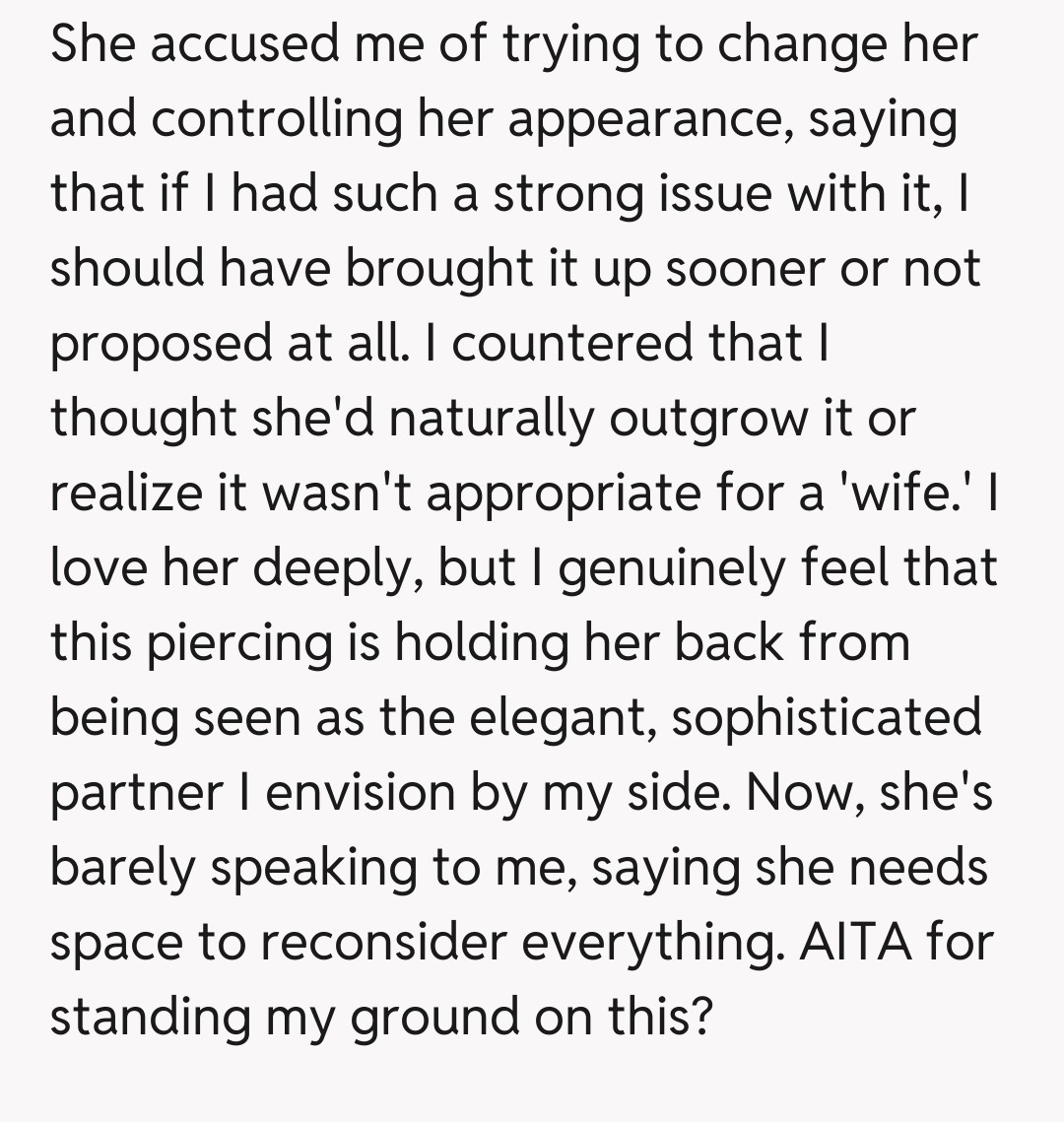
This story immediately raises questions about expectations versus communication in a relationship. On one hand, it's understandable for someone to have preferences for their partner's appearance, and an engagement often signifies a coming together of lives and, sometimes, images. However, the timing and nature of the request are critical here. Waiting until *after* the proposal to voice such a significant demand about a long-standing personal choice seems to be a major misstep by the original poster.
Sarah's reaction is entirely valid. Her septum piercing is not a new tattoo she spontaneously got last week; it's something she's had for five years, predating their relationship. To assume she would 'outgrow' it or willingly discard it for an 'appropriate' wife image shows a lack of respect for her autonomy and self-expression. This isn't just about a piece of metal; it's about control over her body and her identity within the relationship.
The original poster's reasoning, citing professional image and family expectations, while potentially understandable from his viewpoint, places an unfair burden on Sarah. A partner should be loved and accepted for who they are, not for who they *could be* if they conformed to a pre-conceived ideal. If these concerns were truly dealbreakers, they should have been discussed openly and honestly long before an engagement was even on the table.
Ultimately, this conflict isn't just about a piercing; it's a symptom of deeper communication issues and potentially a power imbalance. An engagement should be about mutual acceptance and a joint future built on respect. Forcing a partner to change a part of themselves they value so deeply, especially under the implicit threat of calling off the engagement, can breed resentment and undermine the very foundation of trust. Both parties need to reflect on what a partnership truly means.
The internet weighs in: Is it love or control?
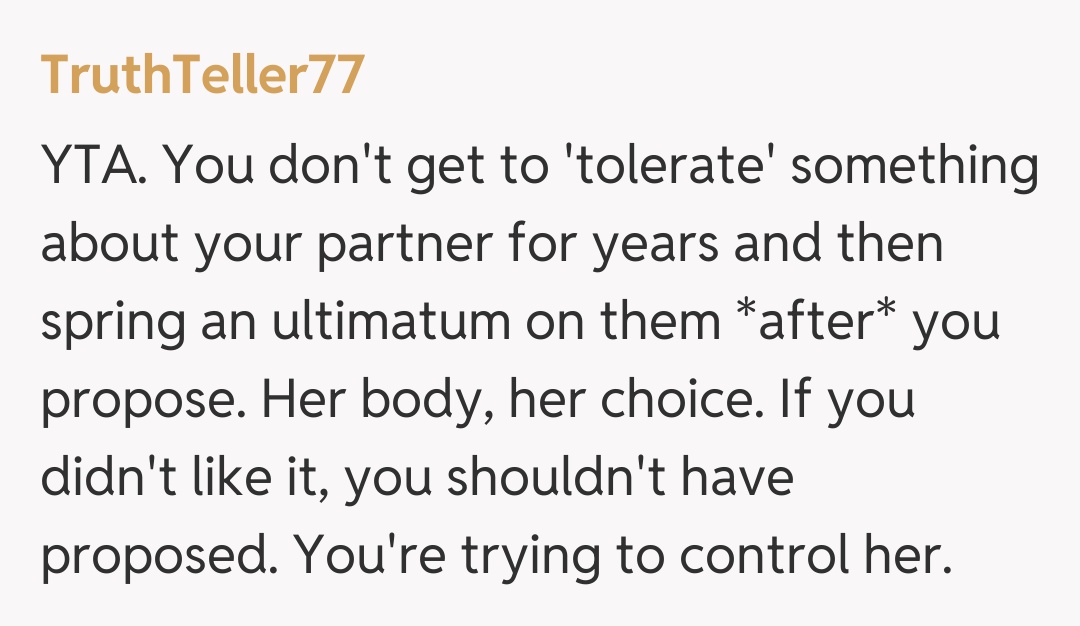
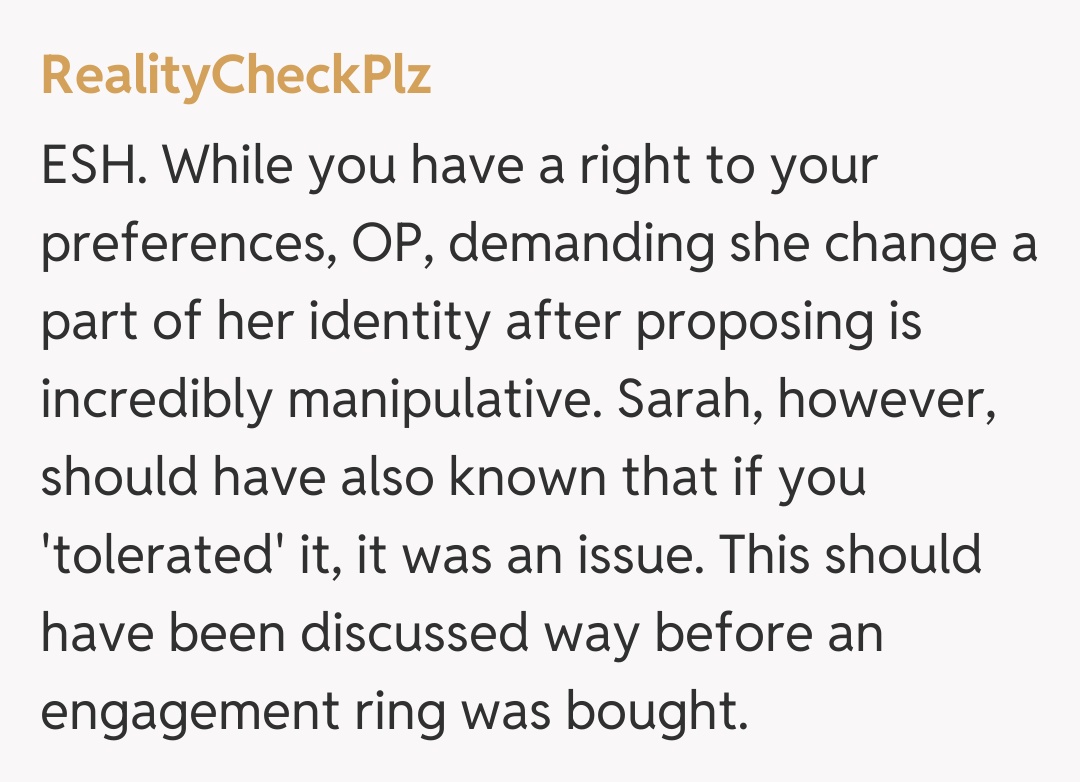
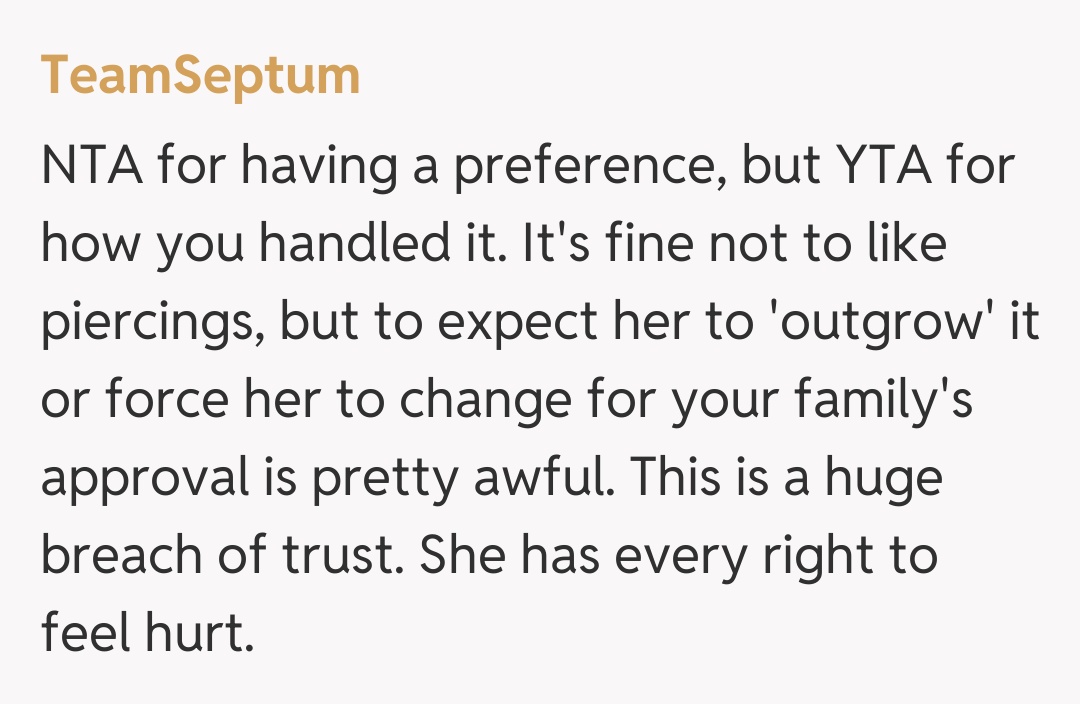
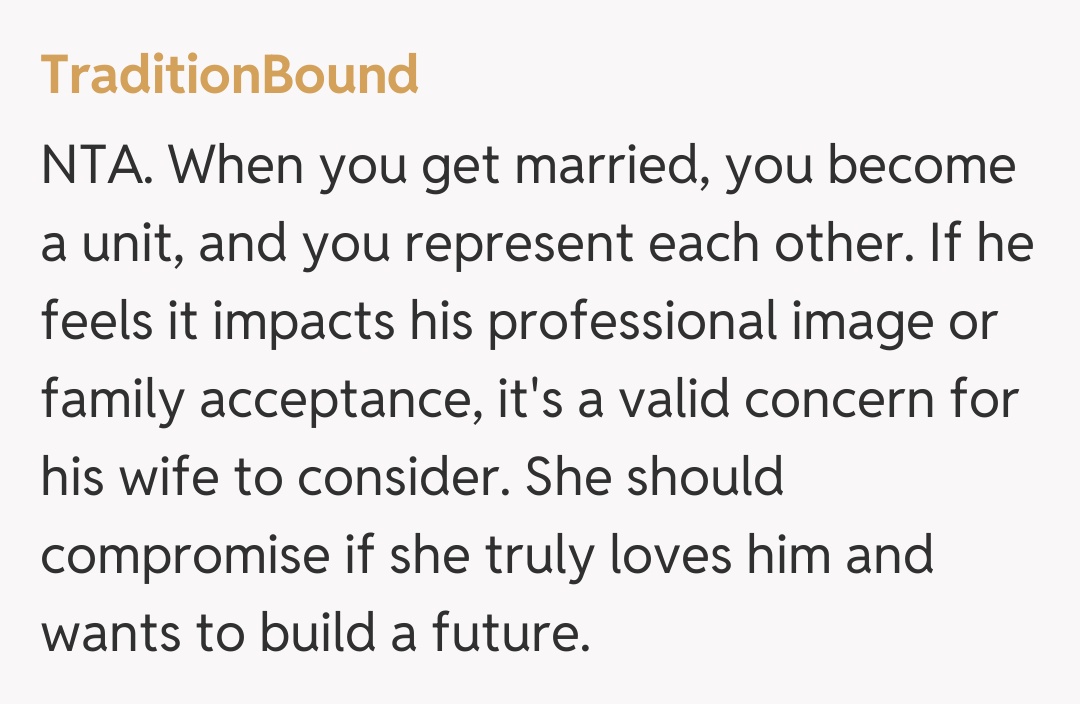
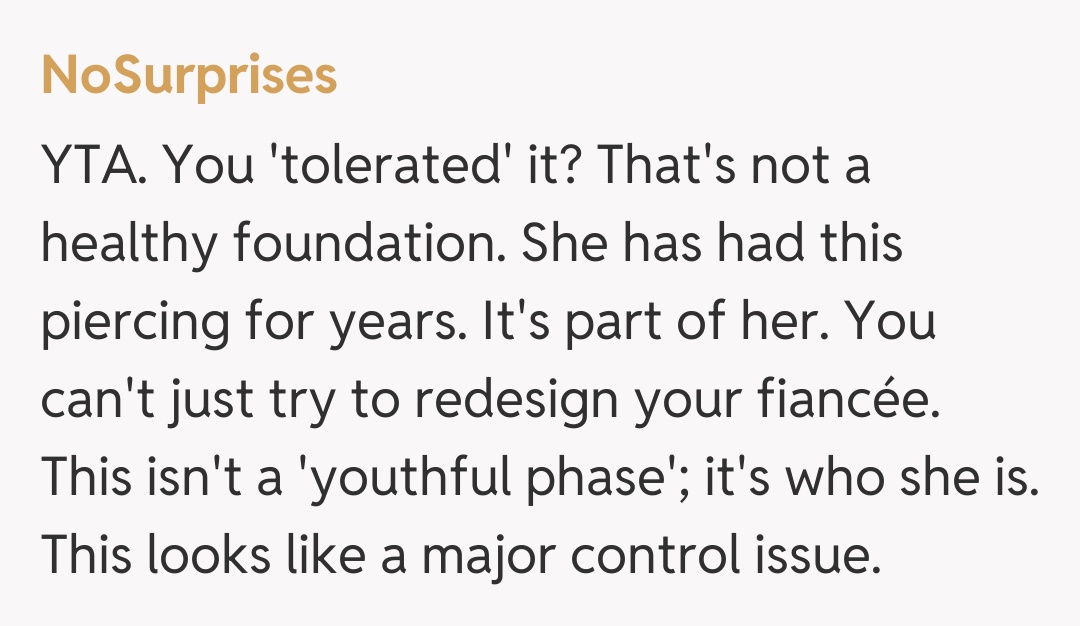
The comment section for this post absolutely erupted, with a resounding message emerging: the timing and nature of OP's request were a huge red flag. Many users pointed out that demanding such a change after three years and a proposal indicates a fundamental misunderstanding of his girlfriend's identity and a deeply problematic assumption on his part. The consensus leaned heavily towards YTA for not addressing this much, much earlier.
Interestingly, some commenters did acknowledge that having preferences for a partner's appearance isn't inherently wrong, but the way OP handled it was the critical flaw. It became clear that what he saw as a 'gentle suggestion' was perceived by Sarah, and by the internet, as an ultimatum. This story really highlights how crucial open and honest communication is, especially when it comes to significant personal choices, long before any rings are exchanged.
This situation is a stark reminder that true partnership means accepting and celebrating each other, piercing and all. Assumptions, especially those concerning a partner's personal appearance or identity, can severely damage the trust and foundation of a relationship. While preferences are natural, demanding a change after an engagement signals a lack of communication and respect that goes far beyond a simple piece of jewelry. Couples should prioritize open dialogue about expectations and boundaries long before making lifetime commitments, ensuring both feel truly seen and valued for who they are.