AITA for reporting my co-worker to HR for having an OnlyFans on the side, even though it doesn’t affect her job, just because it makes me “uncomfortable”?
Welcome back, internet sleuths and armchair judges! Today, we're diving into a workplace dilemma that's as modern as it is muddled. Our original poster (OP) has brought forth a situation that truly tests the boundaries of personal privacy, professional conduct, and the ever-present 'ick' factor in the digital age. It's a tricky tightrope walk between personal feelings and company policy.
This particular AITA post sparked a firestorm of debate, pitting 'mind your own business' against 'workplace comfort'. In an era where many people have side hustles, how much should employers—and co-workers—know or care about what we do in our off-hours? Especially when that off-hours activity involves a platform like OnlyFans. Let's peel back the layers and see where the court of public opinion lands.

"AITA for reporting my co-worker to HR for having an OnlyFans on the side, even though it doesn't affect her job, just because it makes me "uncomfortable"?"
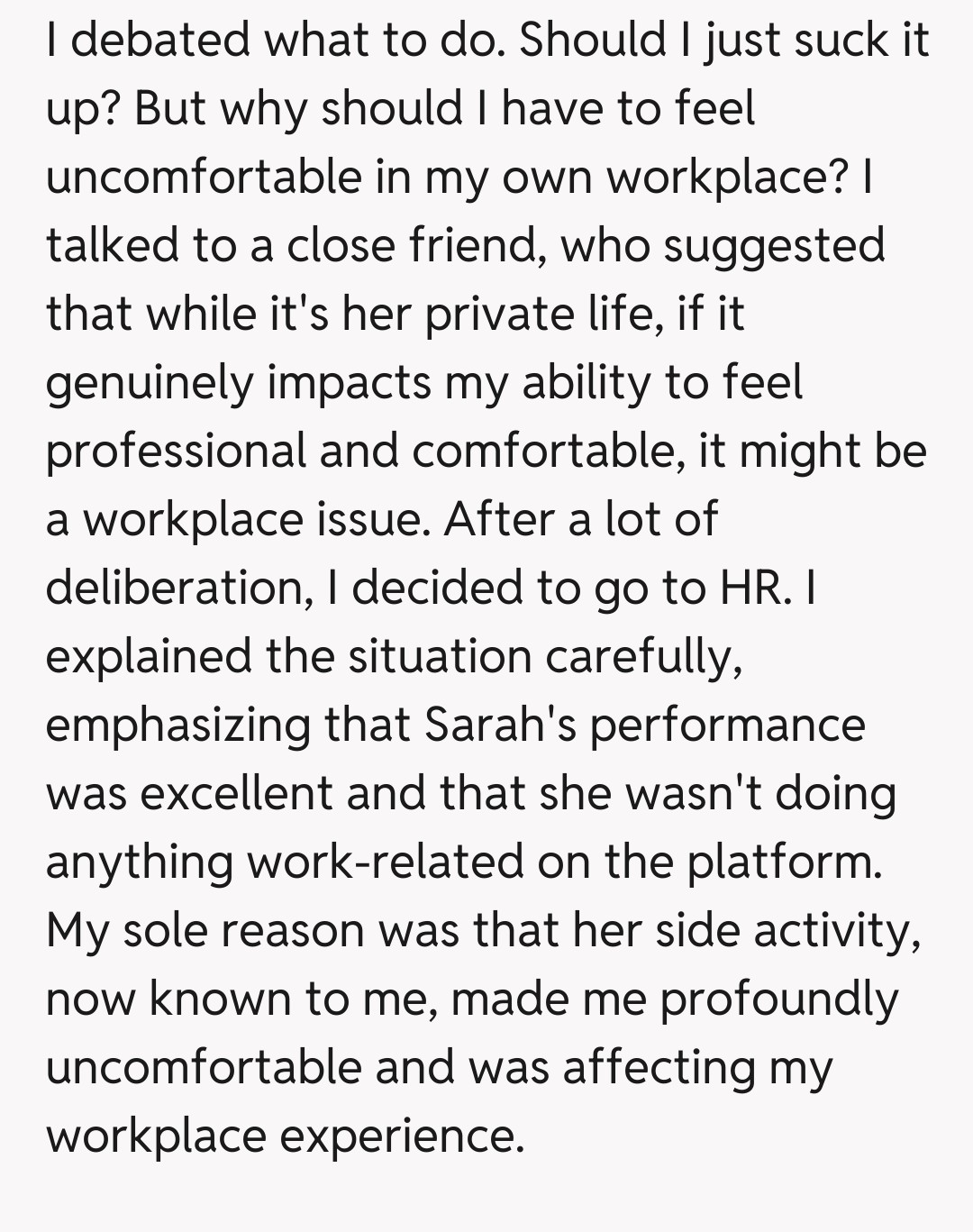
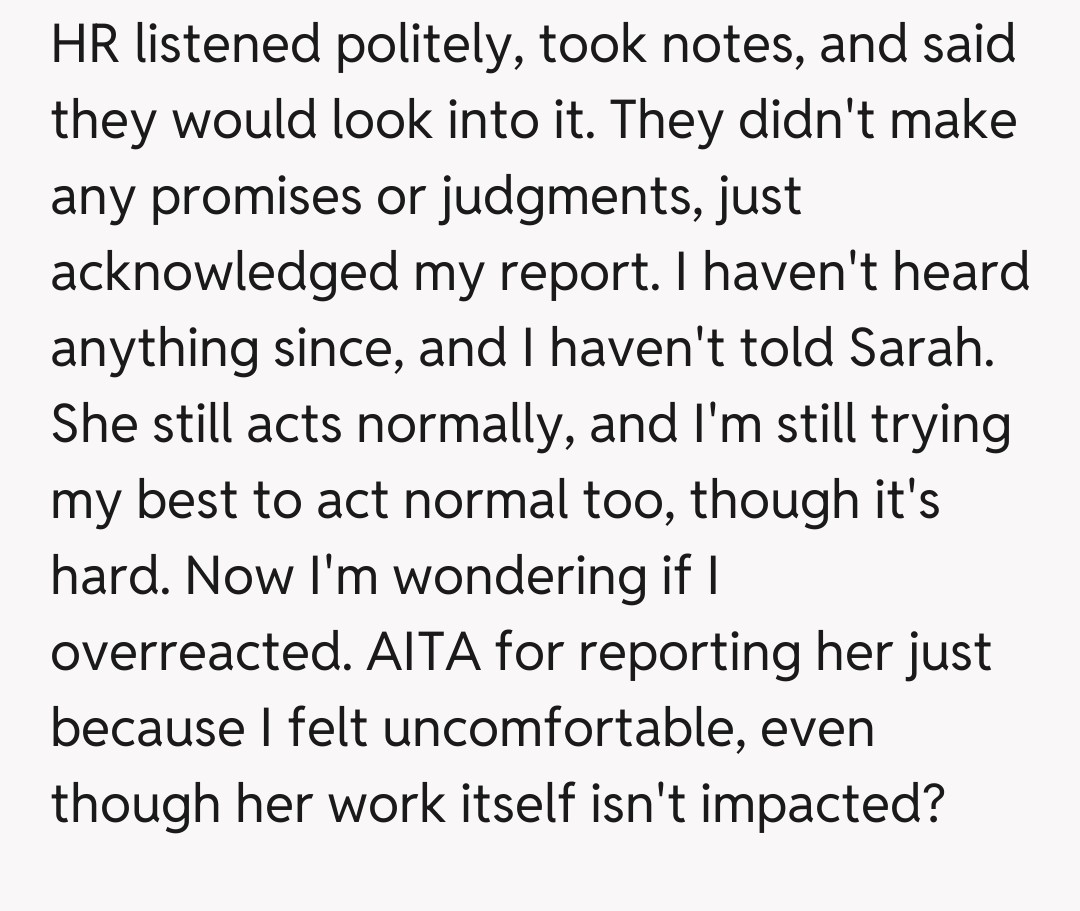
This AITA post opens a fascinating, albeit uncomfortable, dialogue about professional boundaries in the age of digital transparency. The core conflict here isn't about job performance, as OP explicitly states Sarah is a great employee. Instead, it revolves entirely around the OP's personal discomfort stemming from knowledge of a co-worker's off-duty online activities. This highlights a complex gray area in modern workplace ethics, where personal feelings often collide with expectations of professional detachment.
From a policy perspective, many companies have broad 'conduct' clauses that can extend to off-duty behavior if it impacts the workplace reputation, employee morale, or creates a 'hostile environment.' However, simply knowing a co-worker has an OnlyFans account, without any explicit workplace impact like harassment or misuse of company resources, is a much harder case to argue. HR departments often find themselves navigating these nuanced situations, trying to balance employee privacy with the collective comfort of the workforce.
One key aspect to consider is the expectation of privacy. While Sarah's OnlyFans profile is public enough to be discovered, she likely doesn't expect her colleagues to be actively searching for or consuming her content. The OP's discovery, while accidental, places them in a unique position of having information that Sarah probably keeps separate from her professional persona. This knowledge creates a subjective discomfort for OP, which is a legitimate feeling, but its validity as a basis for formal HR action is debatable.
Ultimately, the question hinges on whether discomfort alone, without a demonstrable impact on job function or explicit policy violation (like bringing the content *into* the workplace), warrants intervention. While the OP is entitled to their feelings, reporting a co-worker for private, legal activities that don't directly interfere with work performance or create an objective hostile environment can be seen as overstepping. HR will need to carefully assess if OP's subjective discomfort translates into an actionable workplace issue.
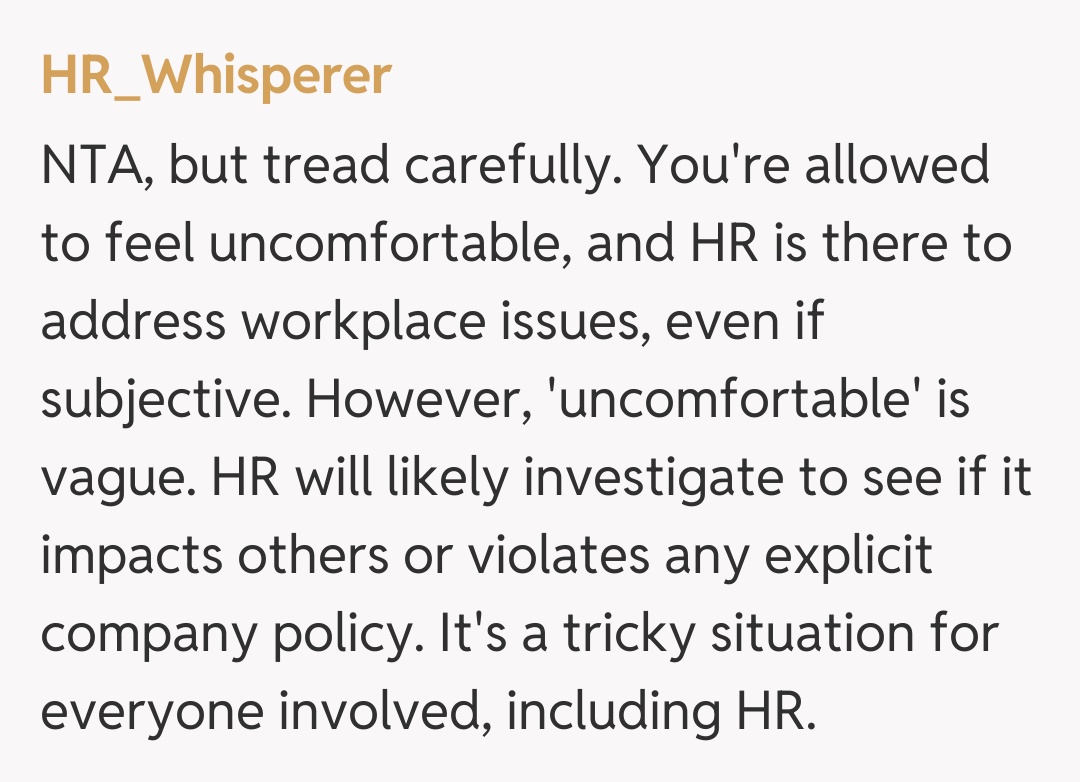
The internet weighs in: Is 'uncomfortable' enough?
The comments section on this post was, predictably, a battleground. Many users sided with Sarah, emphasizing the 'mind your own business' mantra. They argued that what a person does on their own time, especially if it's legal and doesn't affect their job, should be off-limits for co-worker scrutiny or HR complaints. The overwhelming sentiment in this camp was that OP's discomfort, while valid for OP, doesn't translate into a problem for Sarah.
However, a significant number of commenters also acknowledged the genuine discomfort OP felt. While they might not agree with the HR report, they understood that once information like this is known, it can change perceptions and make interactions awkward. Some suggested that while the report might be an overreaction, the underlying feeling of unease is a shared human experience when personal and professional boundaries blur unexpectedly. Others questioned if the OP's discomfort was rooted in judgment.
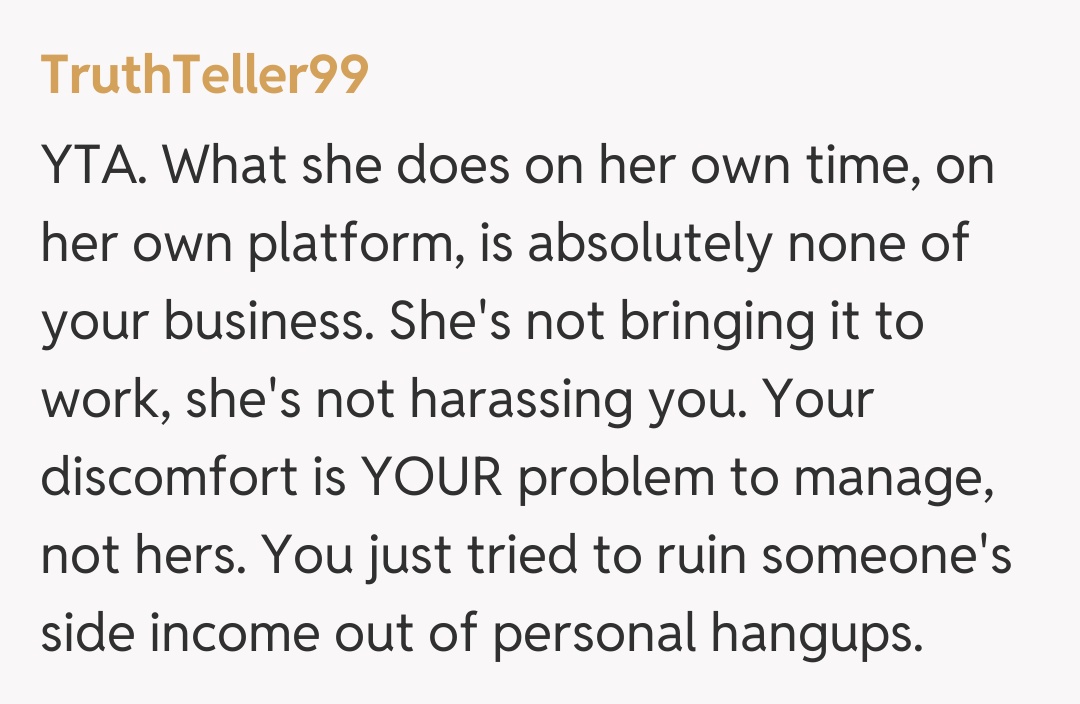
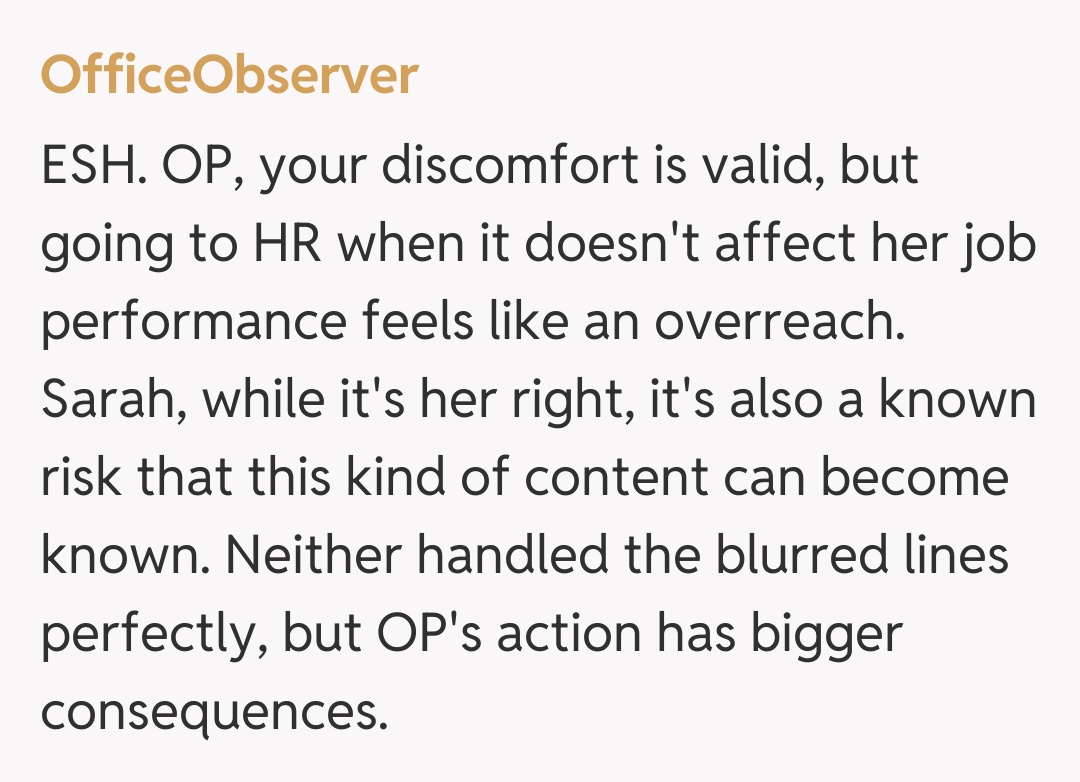
This AITA story perfectly encapsulates the challenges of modern professional life, where our online personas can inadvertently intersect with our real-world careers. While OP's discomfort is a genuine feeling, the community grappled with whether that feeling justifies involving HR in a co-worker's private, legal, and non-work-related activities. It's a stark reminder that as digital citizens, we're all navigating increasingly permeable boundaries between our personal and professional lives. What do you think HR ultimately decided? And how would you handle such a discovery?