AITA for bringing my new girlfriend to my late wife’s memorial service only three months after she passed away?
Oh, boy, do we have a heart-wrenching and highly contentious AITA post for you today! Grief is a messy, unpredictable journey, and everyone navigates it differently. But what happens when one person's coping mechanism completely clashes with the expectations and raw emotions of an entire grieving family? Today's story dives headfirst into that incredibly complex and sensitive territory, guaranteed to spark a fierce debate among our readers.
Our original poster, 'Grieving_Husband_Throwaway,' has presented a scenario that will undoubtedly have many of you clutching your pearls or shaking your heads in disbelief. He’s asking if he’s the jerk for a decision made during a moment of profound sorrow and remembrance. Get ready to weigh in on a situation where timelines, social graces, and personal needs collide with the solemnity of loss. This one is heavy, folks.

"AITA for bringing my new girlfriend to my late wife’s memorial service only three months after she passed away?"
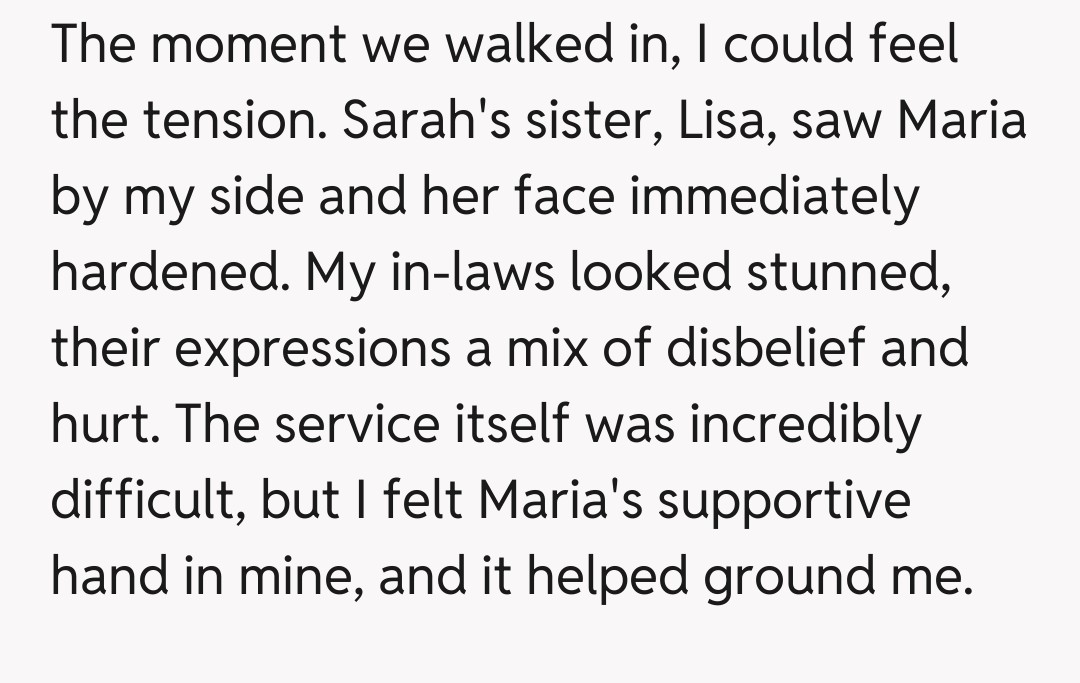
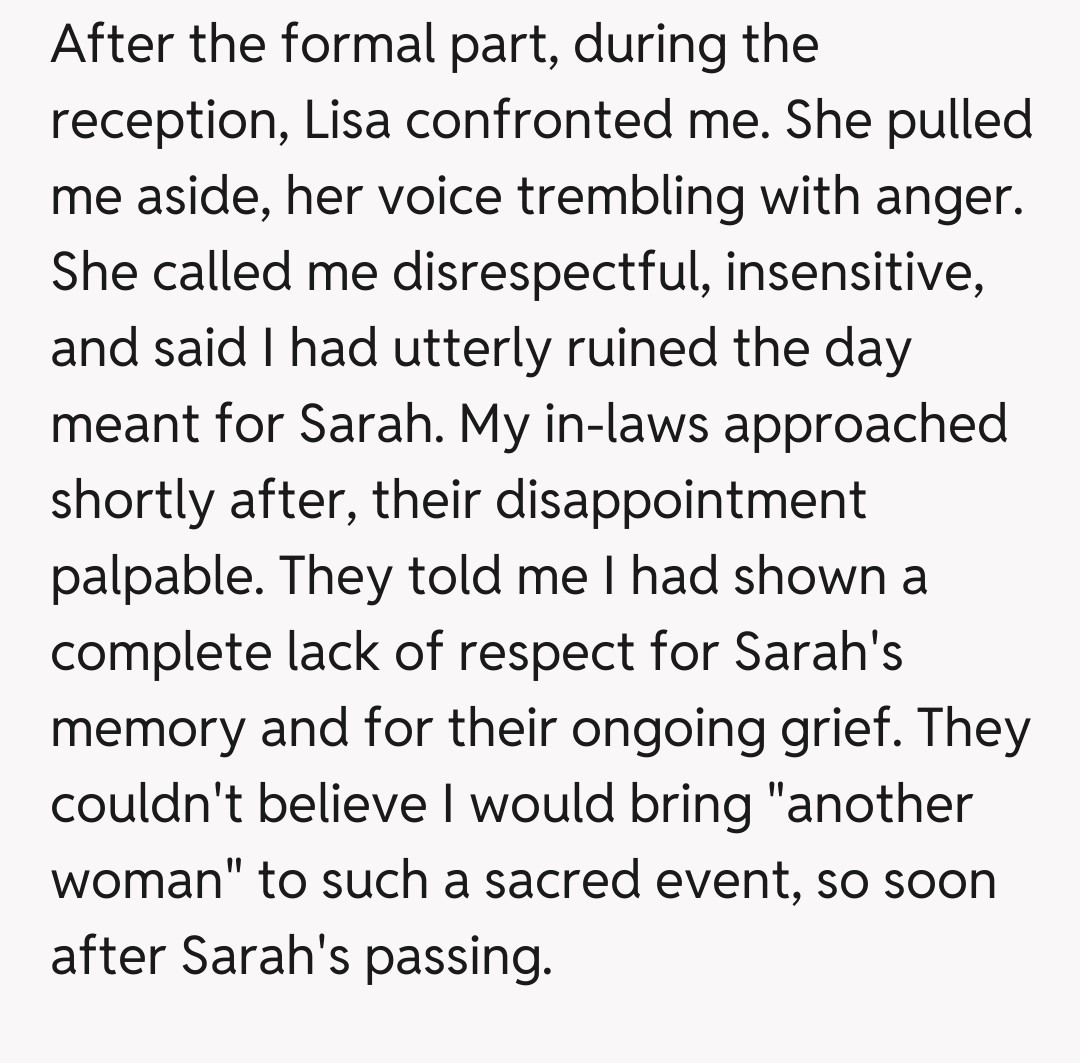
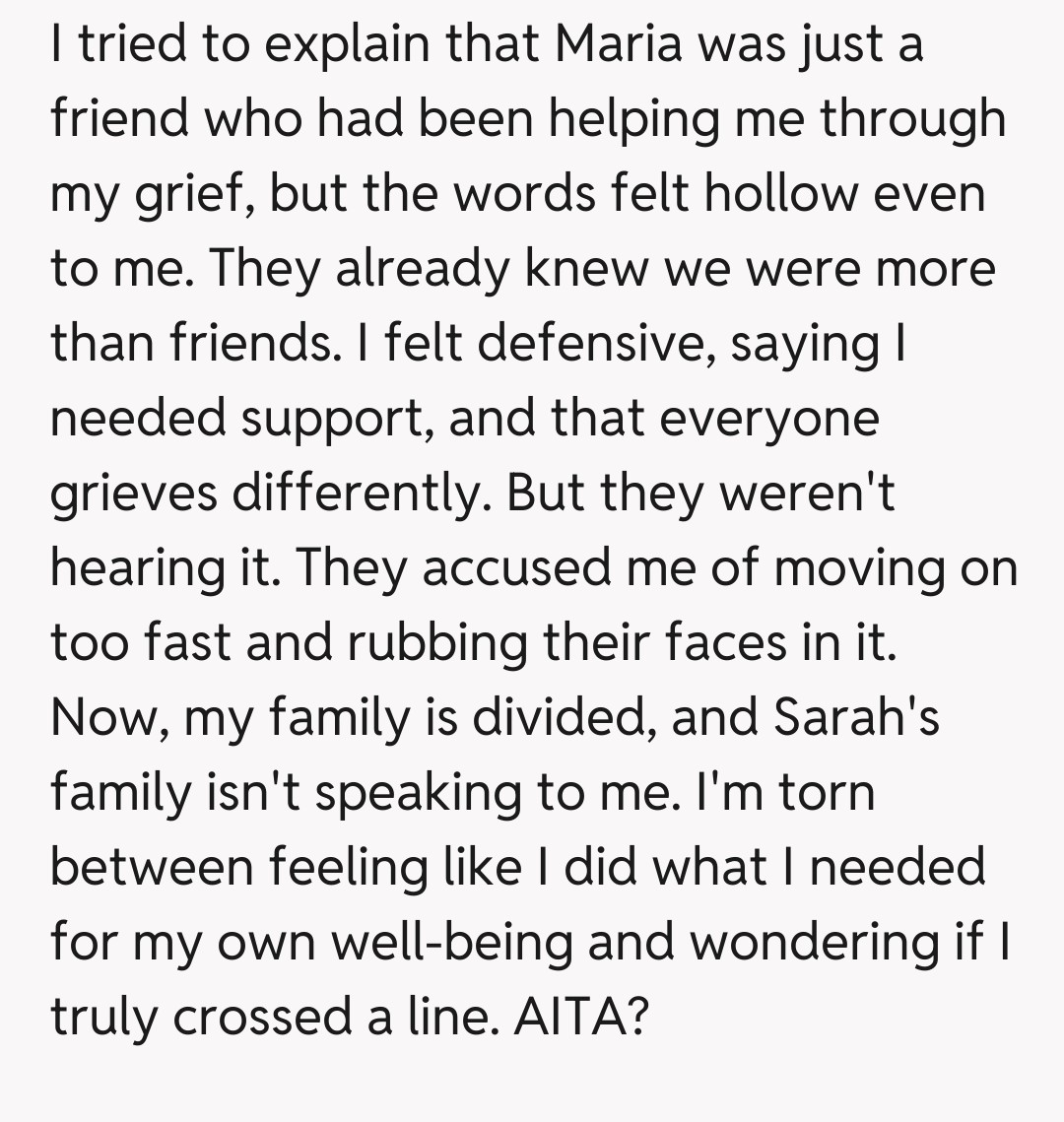
Okay, let's unpack this incredibly sensitive situation. On one hand, grief is an intensely personal journey, and there’s no universal timeline or ‘right way’ to process loss. Some people isolate, others seek immediate comfort and connection. The OP clearly found solace in Maria's presence during a period of unimaginable pain, and that need for support is entirely valid. Feeling utterly lost after losing a life partner can push anyone to seek comfort wherever they can find it.
However, the context here is absolutely crucial. A memorial service is not just for the immediate spouse; it’s a communal gathering for everyone who loved the deceased to mourn and remember. Sarah’s family, who are also grappling with profound loss, likely viewed this event as a sacred space dedicated solely to her memory. Introducing a new romantic partner, regardless of how supportive she is, can easily be perceived as a profound disrespect to the deceased and an insult to the surviving family’s raw grief.
The timing, just three months after Sarah's sudden passing, adds another layer of complexity. While the OP feels he moved on quickly for his own well-being, this timeline can appear incredibly jarring and even callous to those still deep in the throes of early mourning. Societal expectations, while not always fair, do exist around appropriate grieving periods and introducing new partners, especially to such solemn events. The shock value alone would have been immense for Sarah's family.
Ultimately, the issue isn't whether the OP found comfort, but rather the public display of that new relationship at a deeply significant and sensitive family event. The lack of communication with Sarah’s family beforehand was a critical misstep. Even if the OP believed Maria's presence was necessary for his support, failing to consider or prepare the grieving family for such a revelation was likely a significant error in judgment, leading directly to the widespread hurt and anger.
The Verdict is In: Was OP's Grief a Justification or a Gross Misstep?
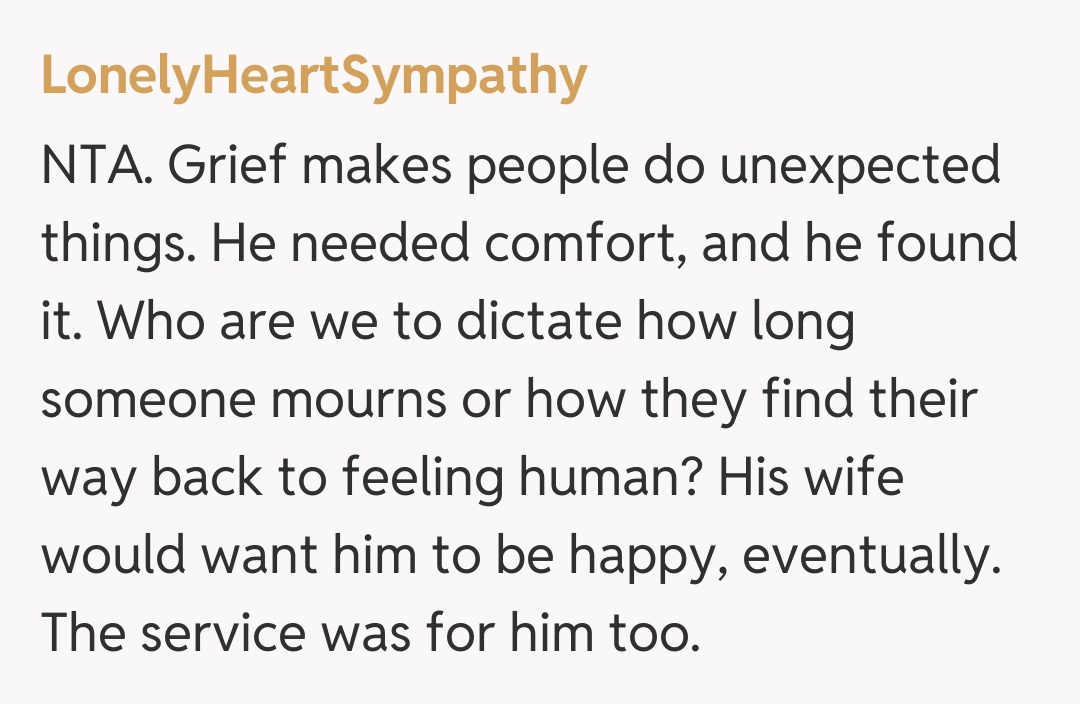
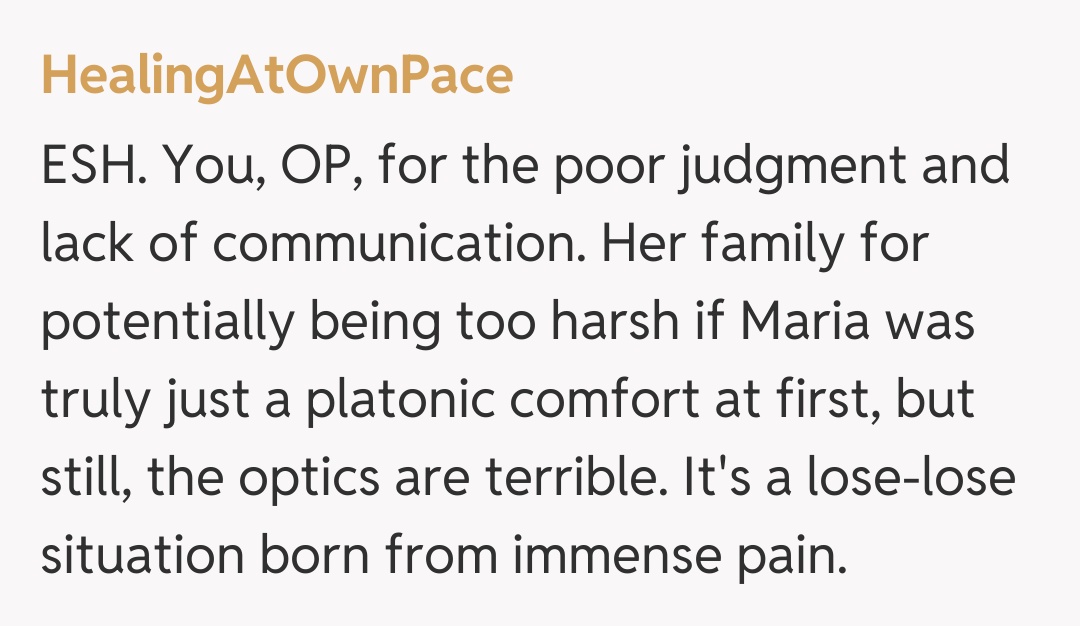
The comment section exploded, as expected, with a resounding NTA/YTA split, though leaning heavily towards YTA for the timing and venue. Many readers acknowledged the OP's immense grief and the personal nature of processing loss, sympathizing with his need for support. They highlighted that everyone grieves differently and a relationship timeline isn't for outsiders to judge. Some even suggested that his new connection might have been a lifeline, preventing him from spiraling further into despair.
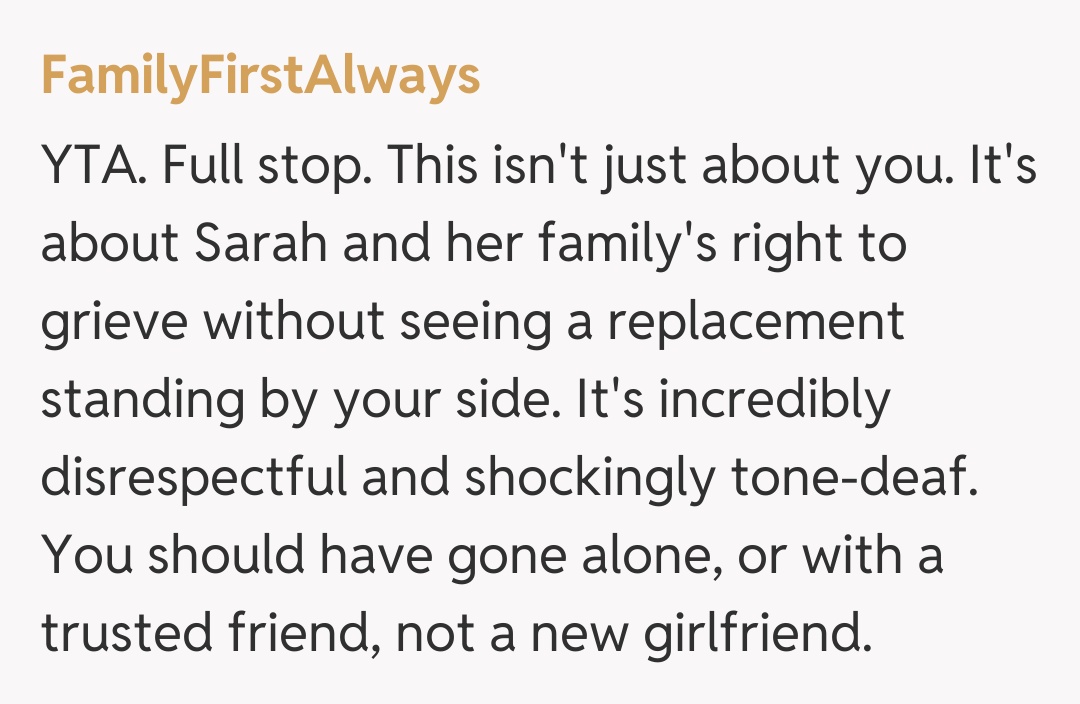
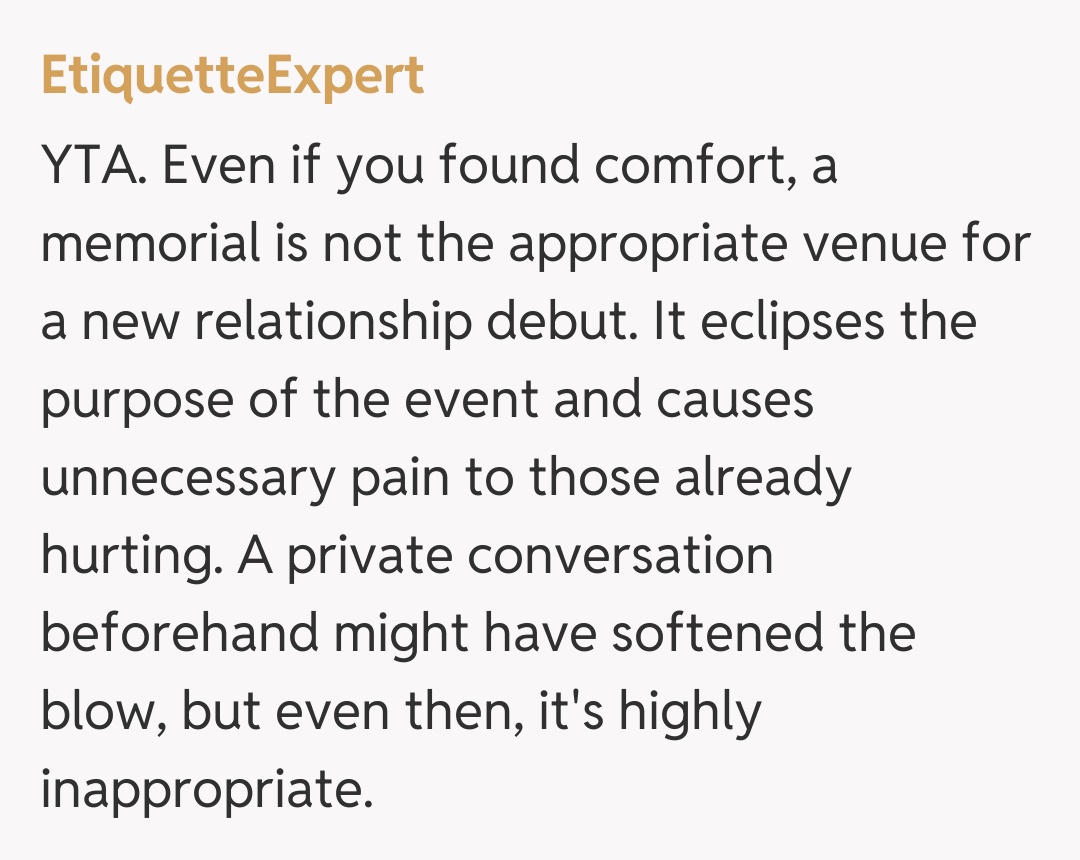
However, the vast majority of comments condemned the OP's actions, emphasizing the disrespect shown to Sarah's memory and her grieving family. The core argument was that a memorial service is sacred, not a place for introducing new partners, especially after such a short period. Readers pointed out the blatant insensitivity and how it added more pain to an already excruciating day for the in-laws. The lack of communication was a huge factor, showing a disregard for anyone else's feelings.
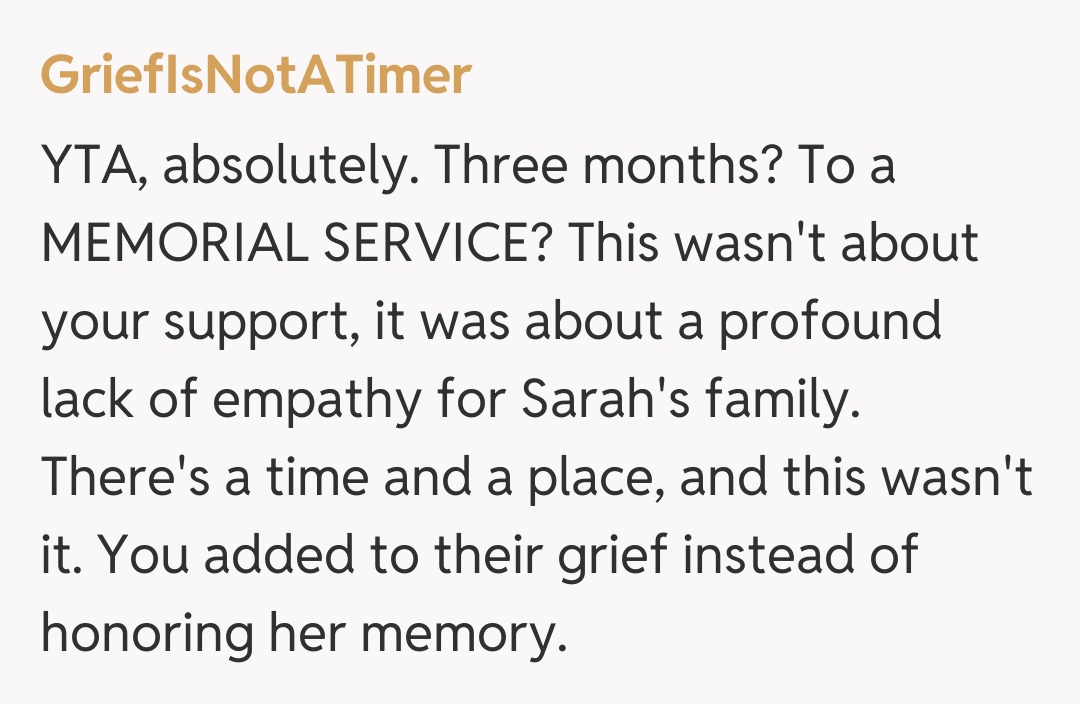
So, where do we land on this thorny issue? While the OP’s need for comfort is undeniable, the overwhelming consensus points to a severe misjudgment in bringing a new romantic partner to a memorial service just three months post-loss. Grief is complex, but social grace and empathy for others' mourning are equally important. This story serves as a stark reminder that even in our deepest pain, considering the feelings of those around us, especially family, is paramount. There might be no 'right' way to grieve, but there are definitely less hurtful ways to navigate new relationships during such sensitive times.