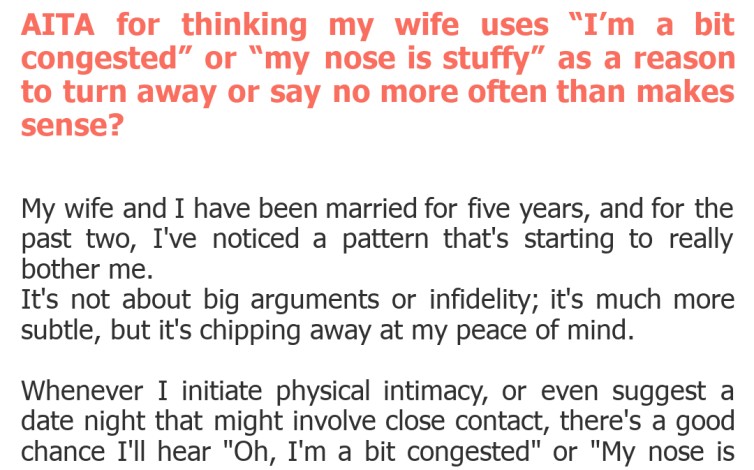
AITA for thinking my wife uses “I’m a bit congested” or “my nose is stuffy” as a reason to turn away or say no more often than makes sense?
Welcome back, internet denizens, to another thrilling dive into the moral complexities of everyday life! Today's story brings us into the intimate, and sometimes frustrating, world of marital dynamics. Our anonymous poster is grappling with a recurring issue that's left them questioning their partner's sincerity and their own patience. It's a classic case of communication breakdown meeting perceived avoidance.
We're talking about those little white lies, or perhaps genuine ailments, that start to feel like convenient shields. When does a legitimate health concern morph into a regular excuse, and when is it okay to call it out? This poster believes their spouse's 'stuffiness' has moved from a fleeting discomfort to a persistent barrier in their relationship. Let's unpick this delicate situation.

"AITA for thinking my wife uses “I’m a bit congested” or “my nose is stuffy” as a reason to turn away or say no more often than makes sense?"
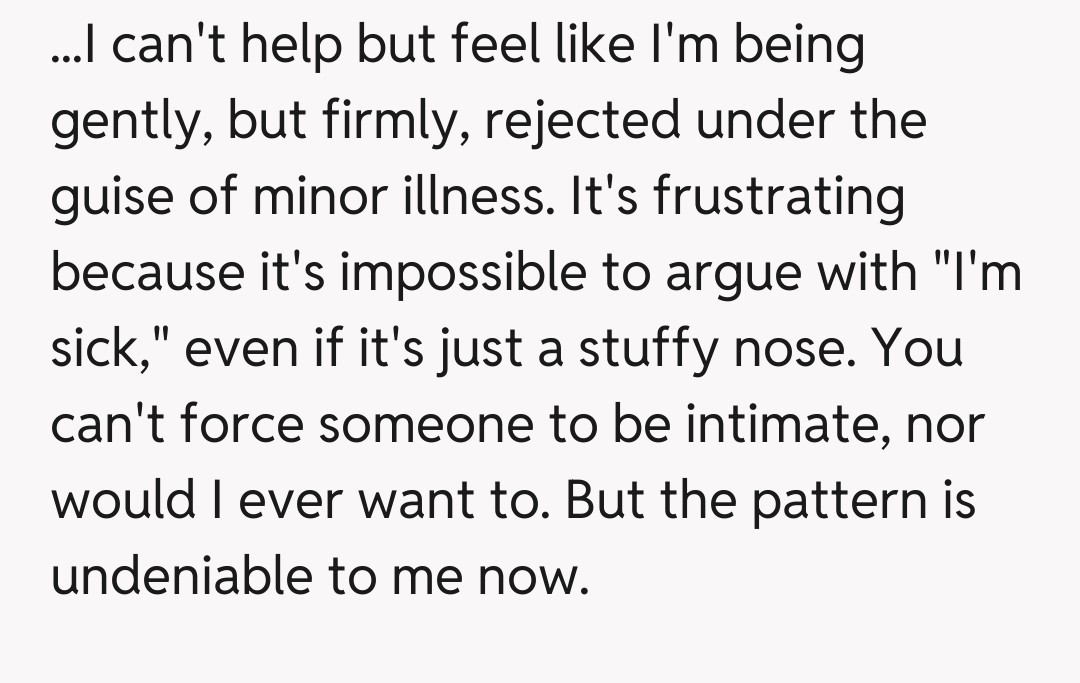
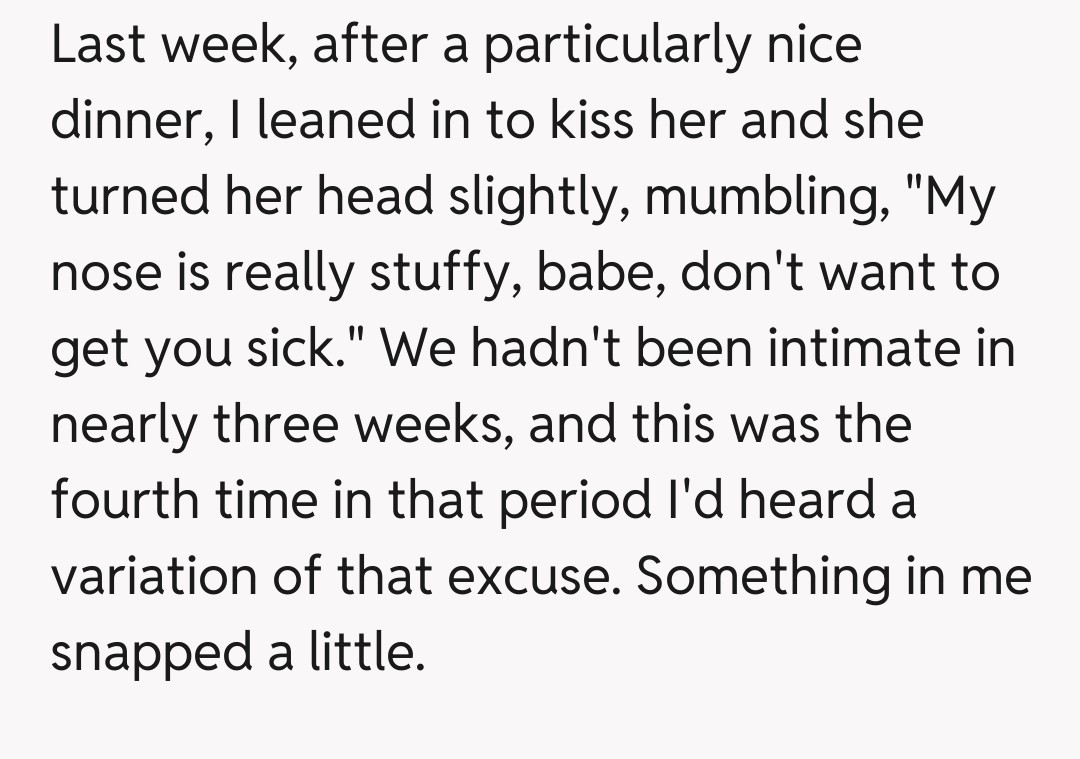
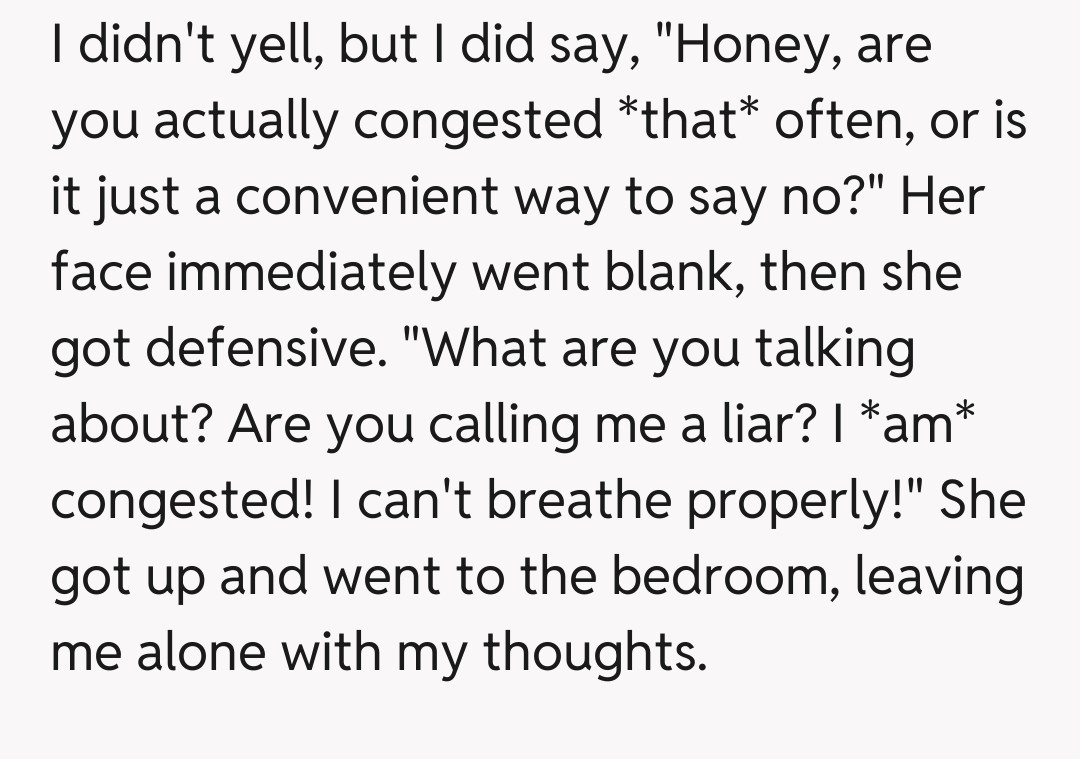
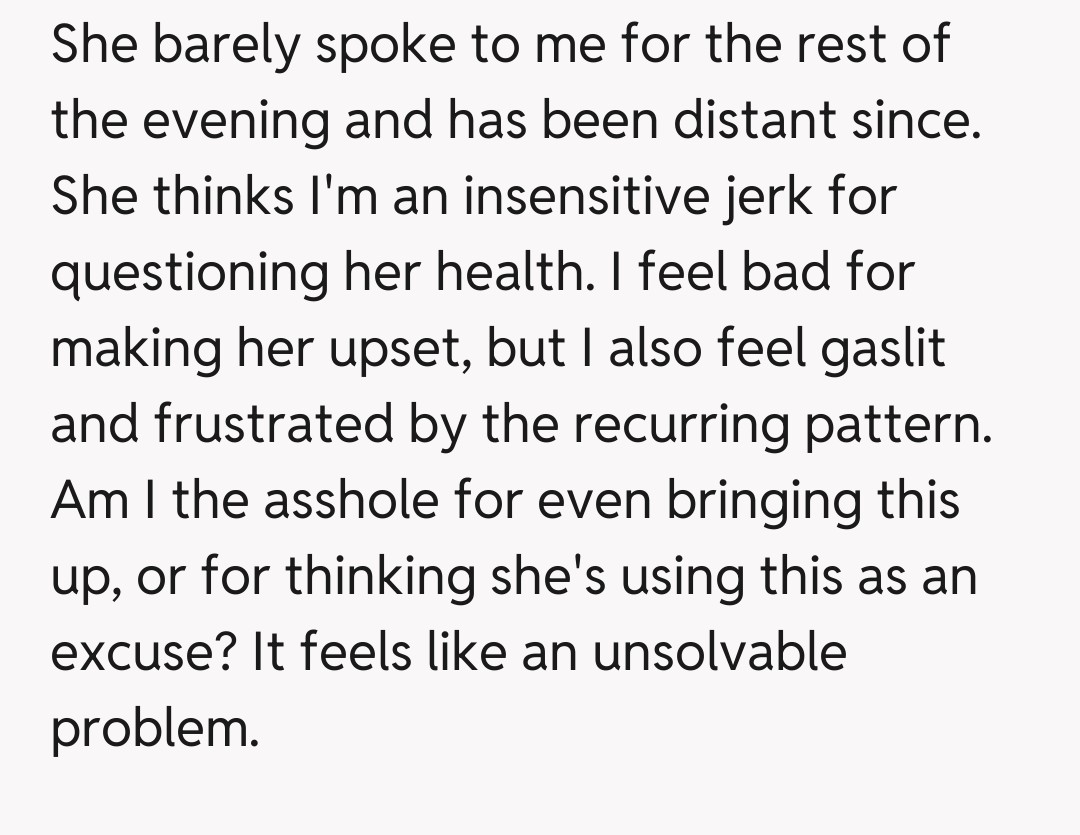
This is a classic relationship dilemma where perception and communication collide. On one hand, the poster's frustration is understandable. When a recurring, seemingly minor ailment consistently aligns with a partner's desire for intimacy or closeness, it's natural for suspicions to arise. The feeling of being subtly rejected, especially when a direct "no" isn't given, can be incredibly isolating and damaging to self-esteem.
However, we must also consider the wife's perspective. What if she genuinely *does* suffer from frequent congestion, perhaps due to allergies or an underlying issue she hasn't fully addressed or shared? Being accused of faking an illness, even a minor one, can feel deeply invalidating and hurtful. Her defensiveness might stem from feeling attacked and misunderstood, rather than from guilt.
The core issue here seems to be a breakdown in open and honest communication about intimacy and physical needs. Instead of directly addressing any underlying discomfort or lack of desire, the wife might be defaulting to a "safe" excuse. Similarly, the husband has allowed resentment to build before confronting the issue, leading to an explosive and accusatory interaction.
Blame is rarely productive in these situations. Both partners bear some responsibility for the current state of affairs. The wife for potentially not being direct about her feelings or seeking a solution for her recurring congestion, and the husband for letting his frustration fester into an accusation rather than initiating a softer, more inquisitive conversation about their intimacy and connection.
The Internet Weighs In: Is He Out of Line, or Is She Sneezing Her Way Out of Intimacy?
The comments section on this one is predictably split, with a slight lean towards validating the poster's feelings, but with a strong caveat about communication. Many users immediately recognized the "recurring ailment as an excuse" pattern, sharing similar experiences where a partner uses headaches, tiredness, or other minor complaints to avoid intimacy. They empathize with the frustration of not being able to directly address the real issue.
On the other side, a significant portion of commenters highlighted the poster's approach as problematic. While his feelings might be valid, accusing his wife of lying about her health was seen as a relationship-killing move. They stressed the importance of gentle, open dialogue about their intimacy issues *without* questioning her physical symptoms, suggesting therapy or a doctor's visit could be a less confrontational path.
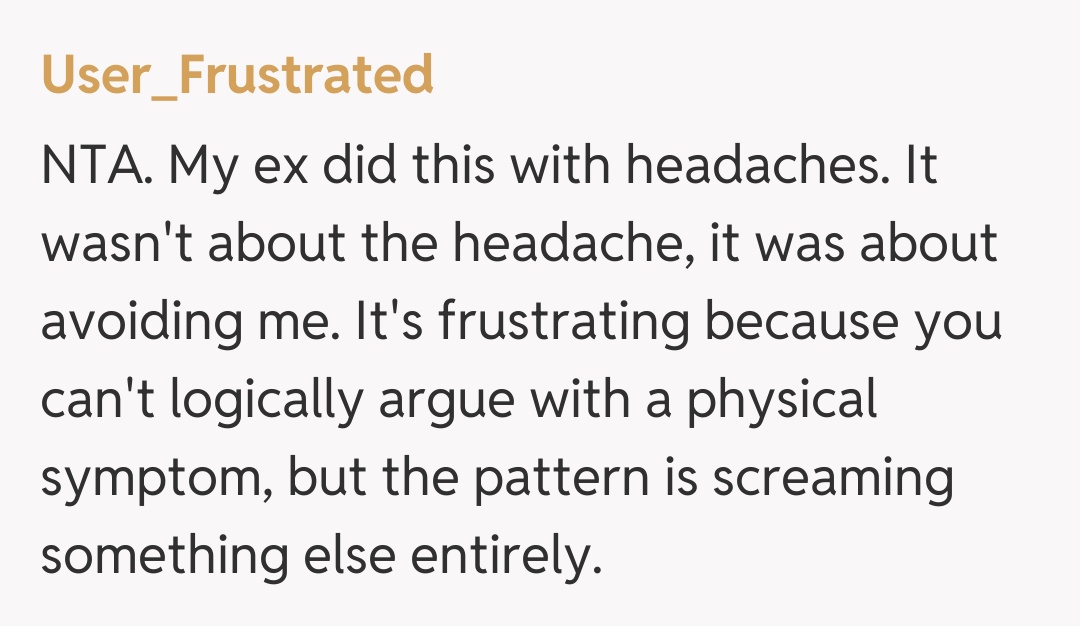
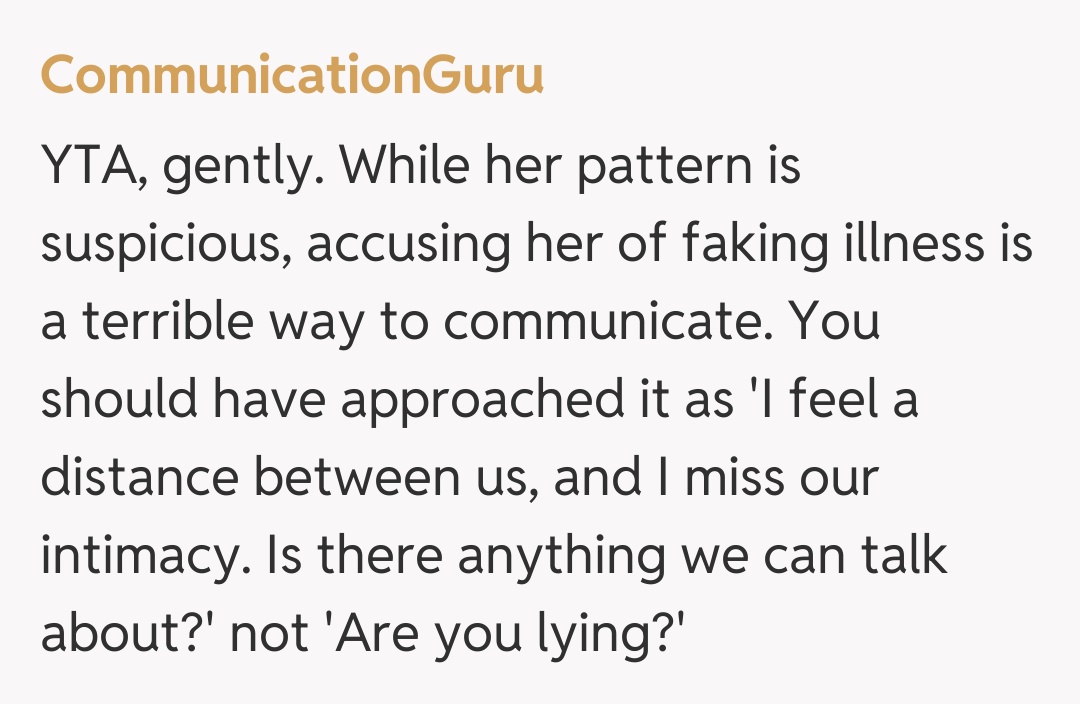
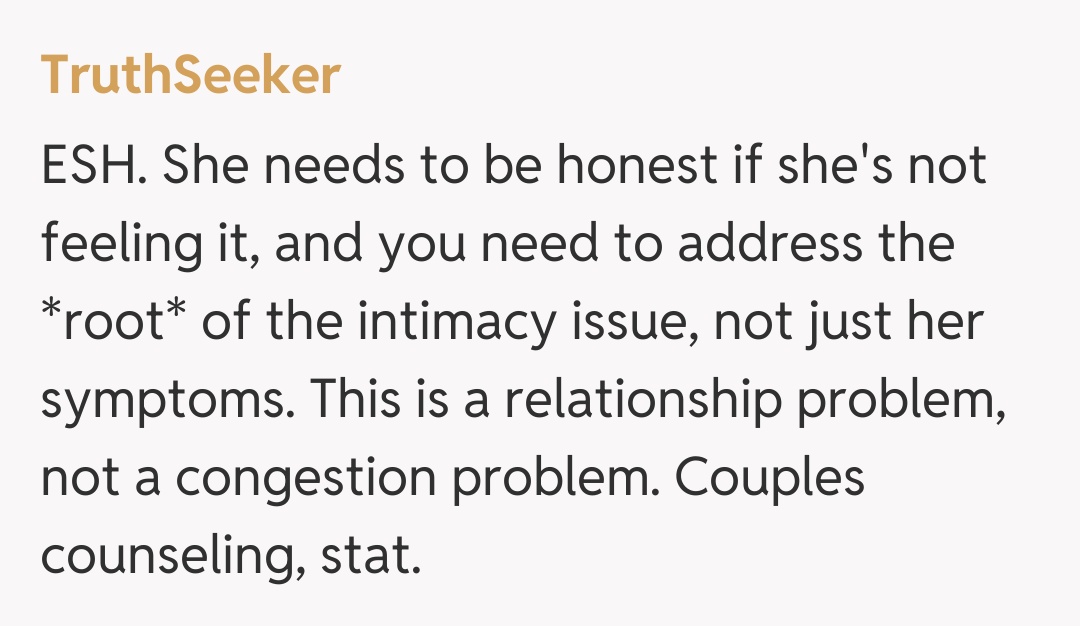
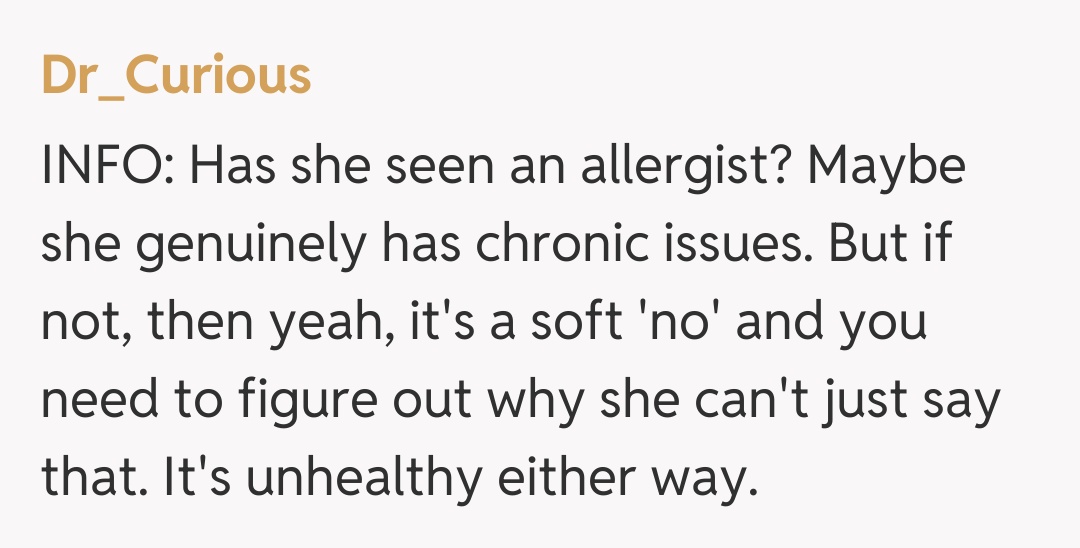
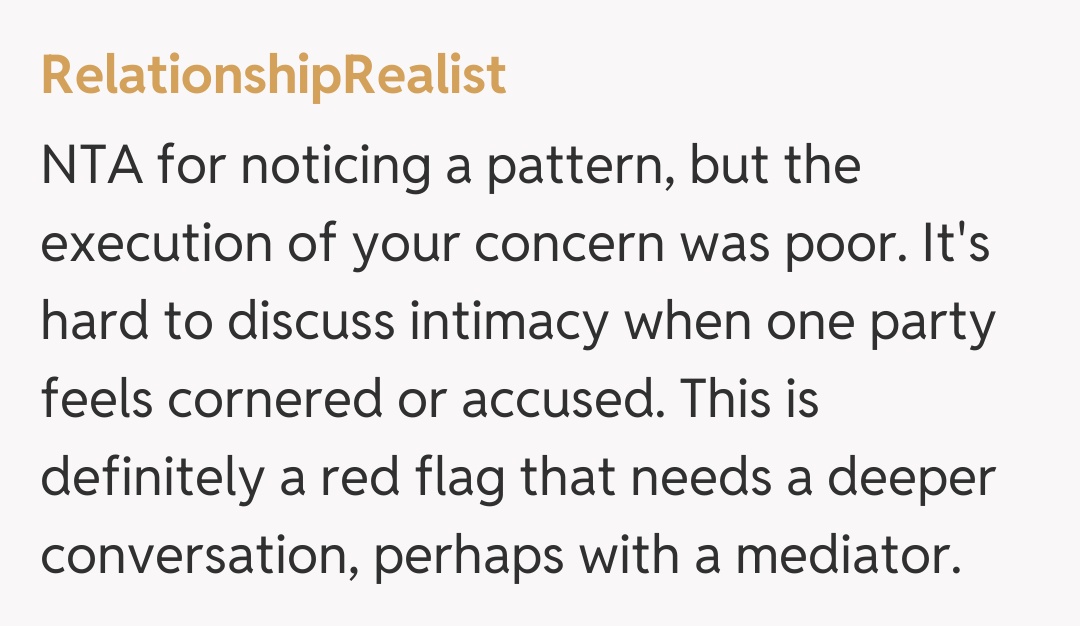
This story highlights a common trap in relationships: avoiding difficult conversations by using indirect methods. While it's easy to sympathize with the poster's frustration, the path forward requires a shift from accusation to genuine inquiry and vulnerability. Both partners need to be willing to address the unspoken truths, whether it's about genuine health concerns or underlying intimacy issues. Open communication, perhaps facilitated by professional help, is the only way to clear the air—literally and figuratively—and rebuild trust and connection.