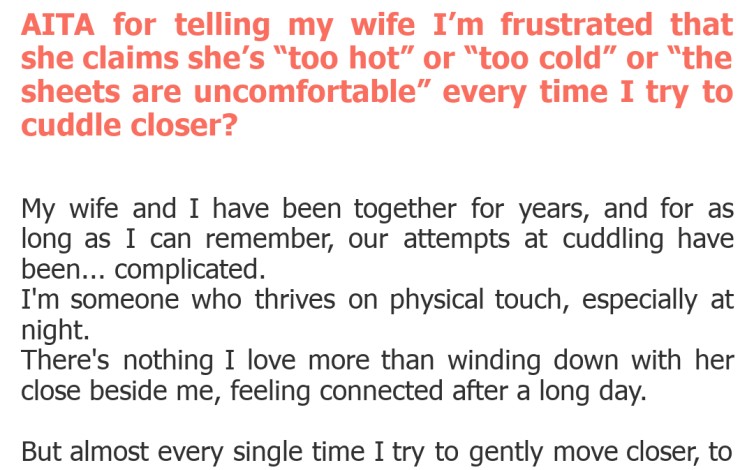
AITA for telling my wife I’m frustrated that she claims she’s “too hot” or “too cold” or “the sheets are uncomfortable” every time I try to cuddle closer?
Ah, the age-old dilemma of couples in bed! One partner craves closeness, the other just can't seem to get comfortable. This week's AITA post dives right into that thorny issue, highlighting the subtle but significant ways our comfort levels can impact intimacy and emotional connection. It's a relatable scenario many relationships navigate, often silently.
Our Original Poster (OP) is at their wit's end, feeling rejected by their wife's consistent complaints about temperature or bedding every time they try to cuddle. This isn't just about physical proximity; it’s about feeling wanted and connected. The frustration is palpable, and it raises a crucial question: when does a comfort preference become an intimacy barrier, and how do you even begin to address it?

"AITA for telling my wife I’m frustrated that she claims she’s “too hot” or “too cold” or “the sheets are uncomfortable” every time I try to cuddle closer?"
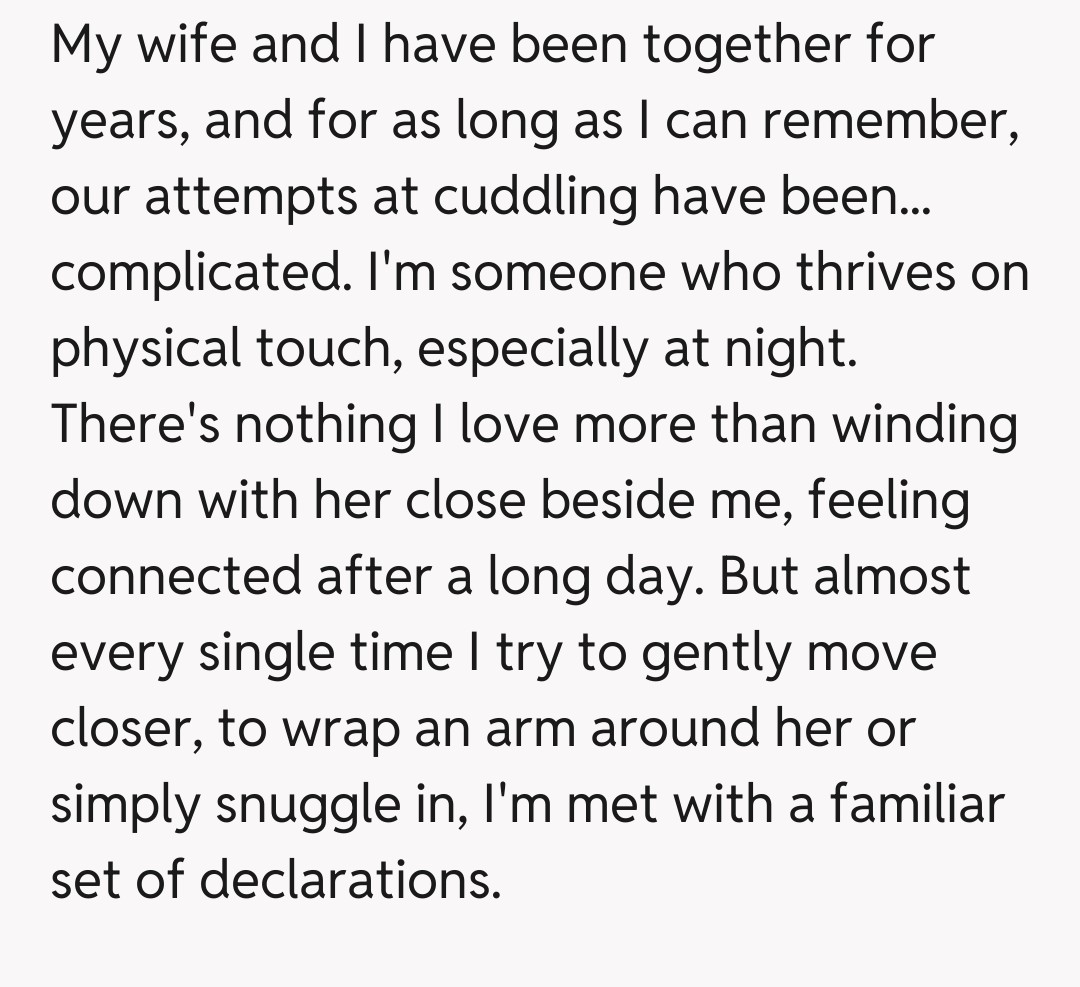
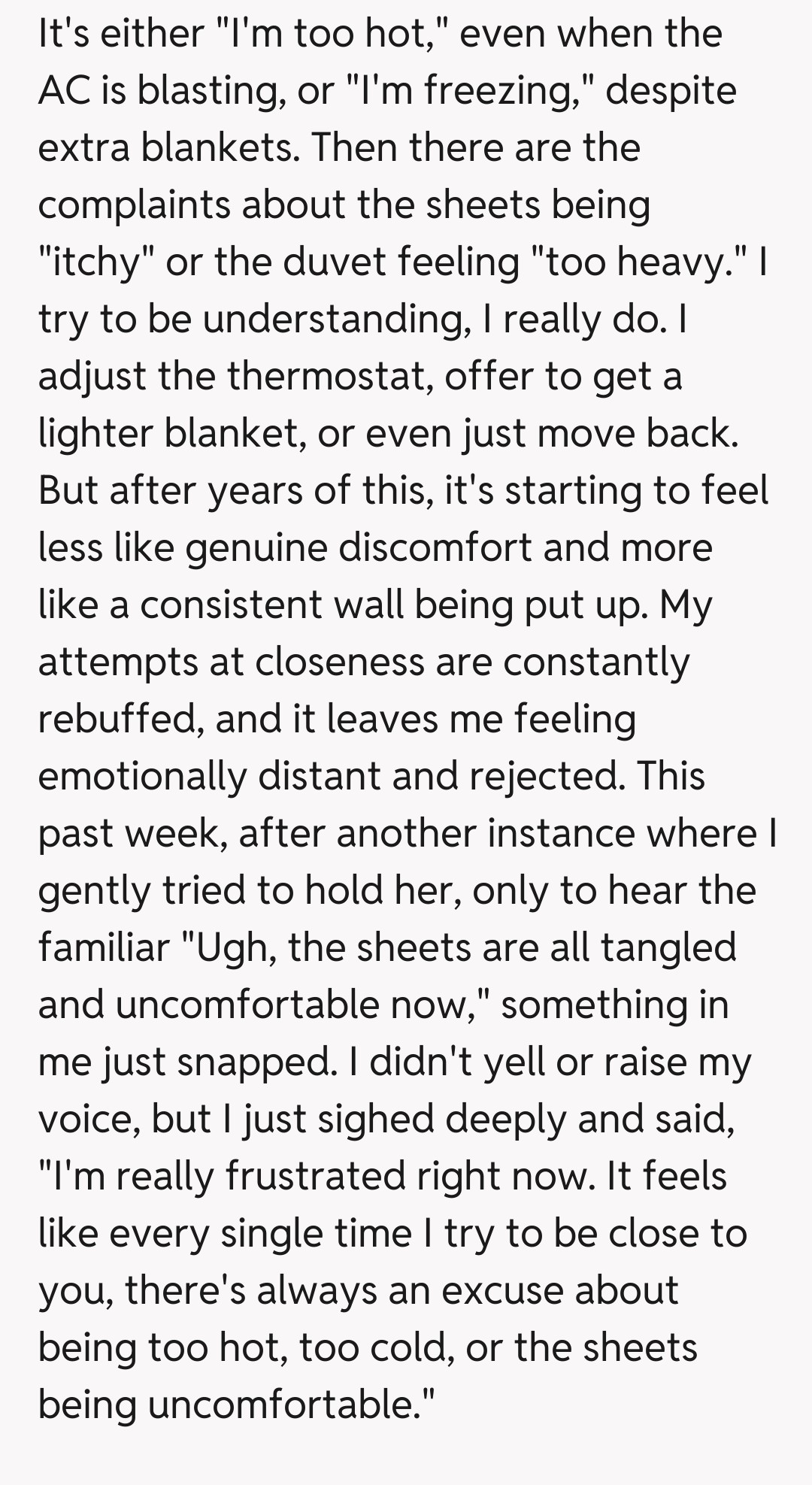
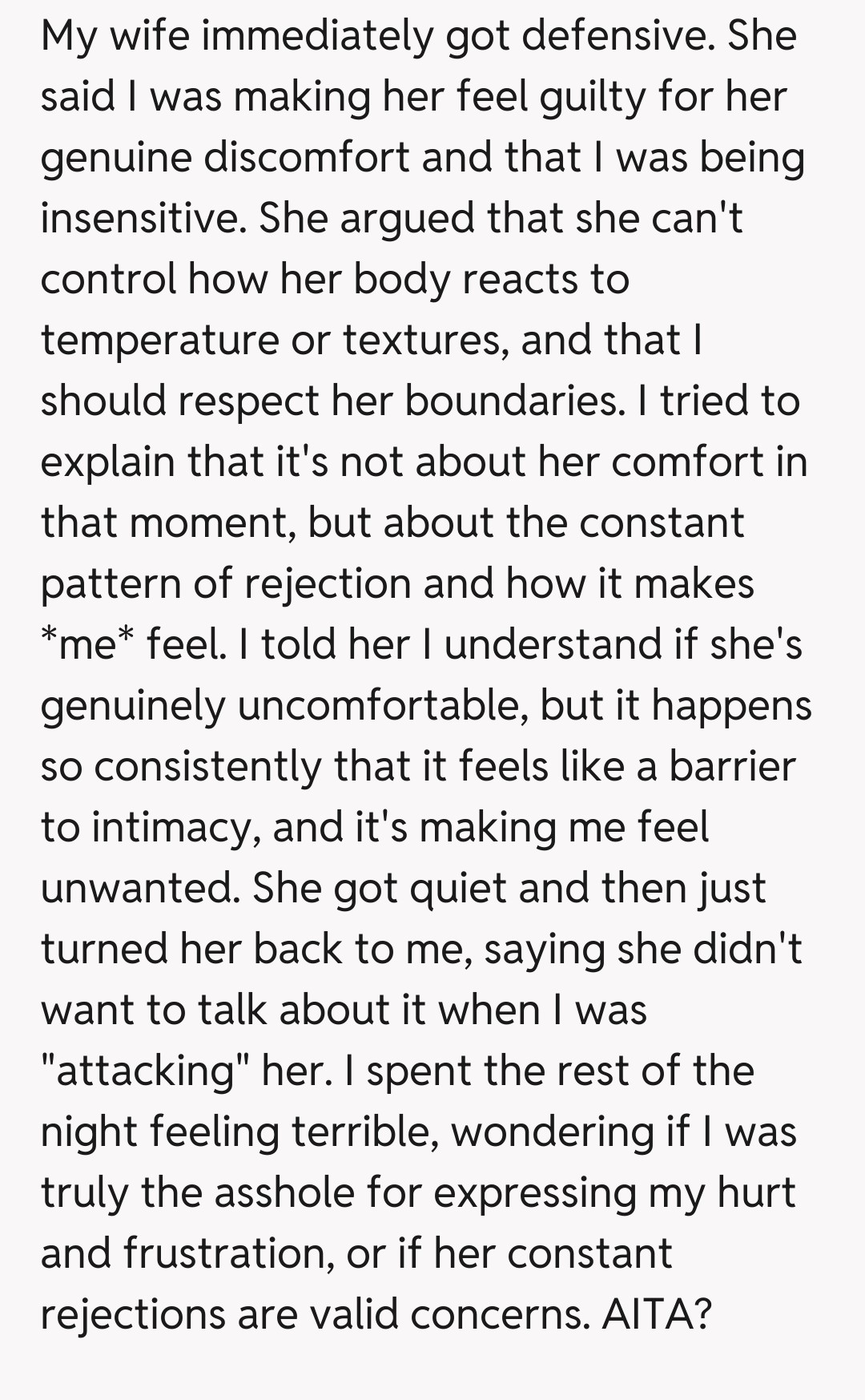
This scenario highlights a common disconnect in relationships: the desire for physical intimacy clashing with personal comfort needs. OP's feelings of rejection are completely valid. Consistent rebuffs, even if stemming from genuine discomfort, can understandably lead to feelings of being unwanted and emotionally distant. Their need for physical touch is a legitimate relationship component.
On the other hand, the wife's discomfort with temperature or textures might also be very real. Sensory sensitivities are highly personal, and what one person finds tolerable, another might find agonizing. Dismissing her physical complaints as mere "excuses" could indeed feel invalidating to her, particularly if she genuinely struggles with these issues.
The core issue here isn't necessarily about who is "right" or "wrong" in their physical sensations, but rather a breakdown in communication regarding emotional needs and perceived barriers. Both partners' feelings are valid, but they're not being effectively heard or addressed by the other. The conversation escalated into defensiveness rather than a mutual understanding of each other's experiences.
To move forward, a more empathetic approach is needed. Perhaps exploring different types of bedding, investing in a split-temperature blanket, or seeking intimacy in ways that don't involve prolonged physical contact in bed could be solutions. Ultimately, open and calm communication about both the desire for closeness and the need for comfort is paramount.
The Cuddle Conundrum: What the Internet Had to Say!
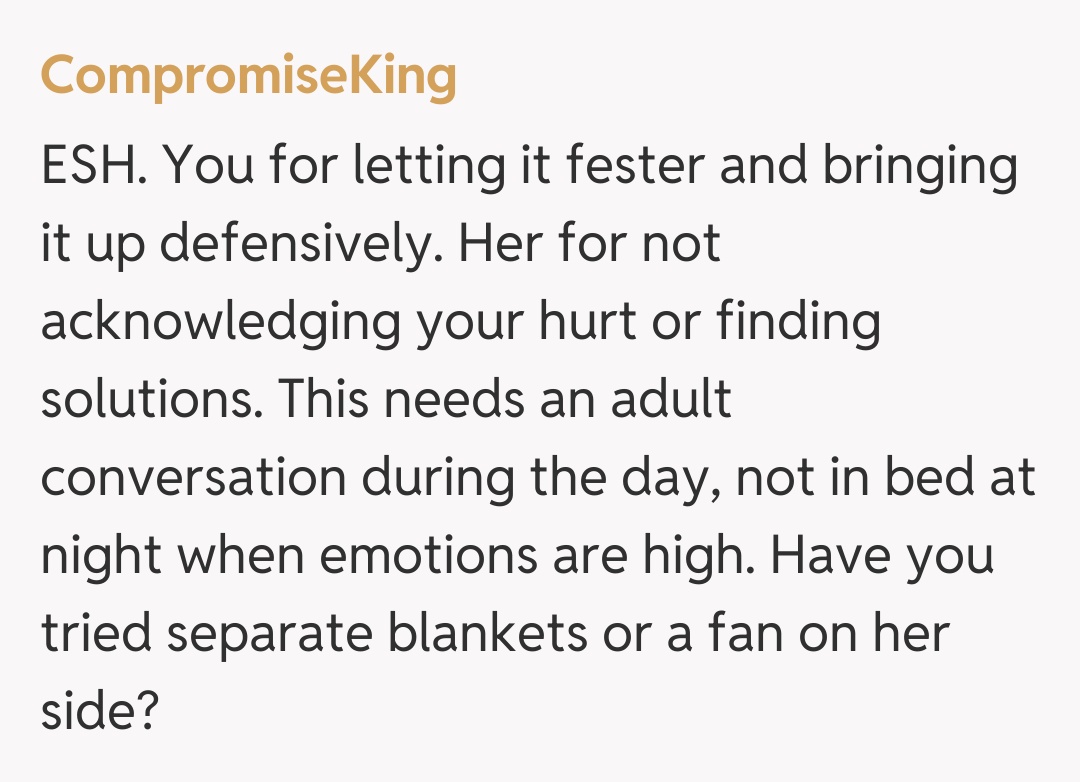
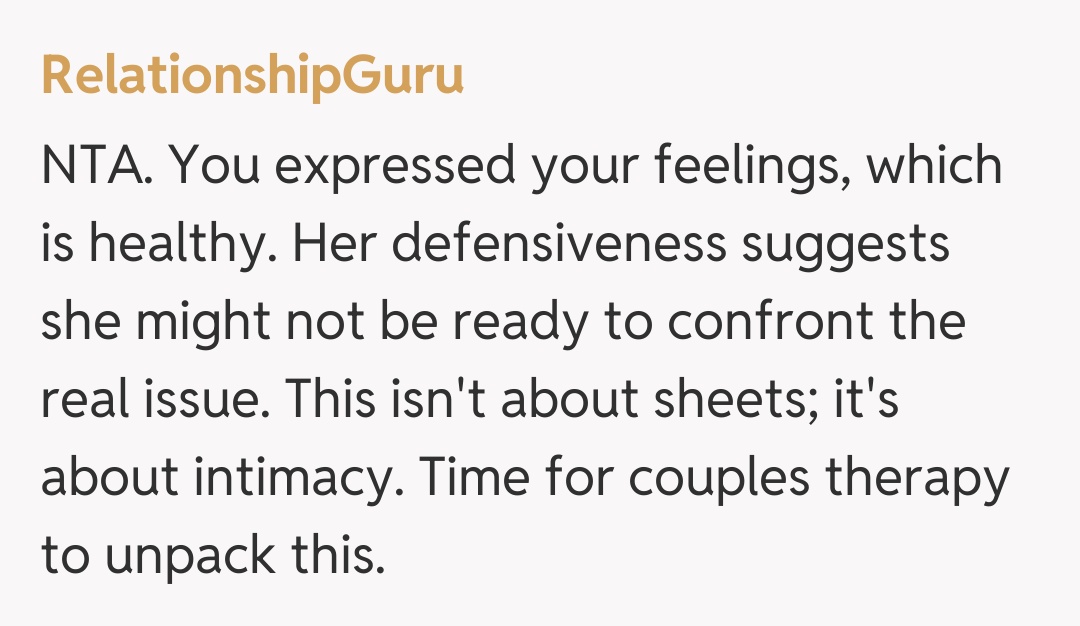
The comments section for this post was a lively debate, reflecting the complex nature of intimacy and comfort in relationships. Many users sympathized with OP, acknowledging how hurtful consistent rejection can be, regardless of the reason. There was a strong sentiment that OP's feelings were valid and that expressing them, even if difficult, was a necessary step.
However, a significant portion of commenters also emphasized the wife's perspective, suggesting her discomfort might be genuine and that OP needed to be more understanding of her physical needs. Many advised couples counseling to mediate the discussion and find compromises, or to explore alternative expressions of affection that don't involve battling over bed conditions. It's clear that finding balance is key.
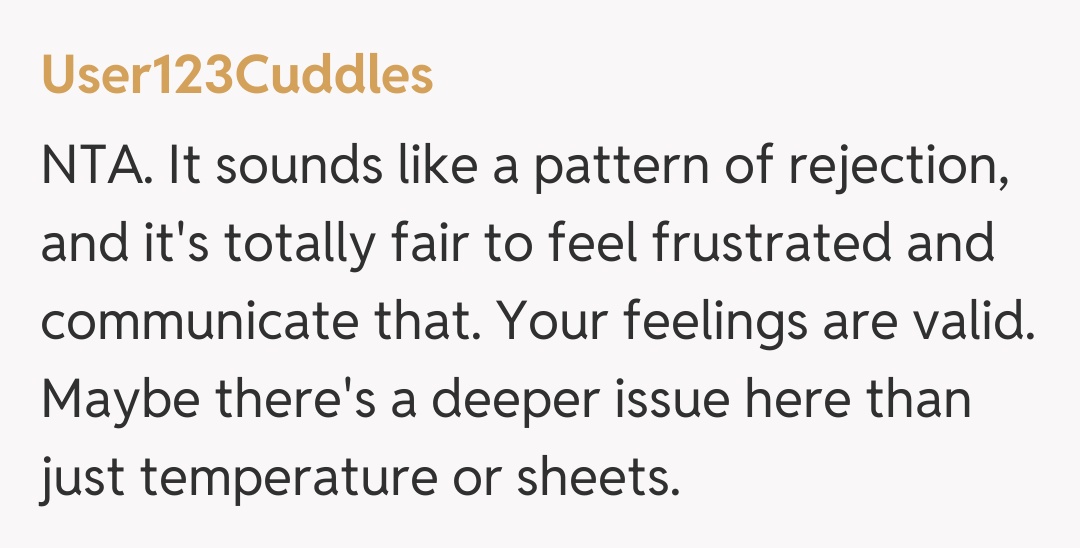
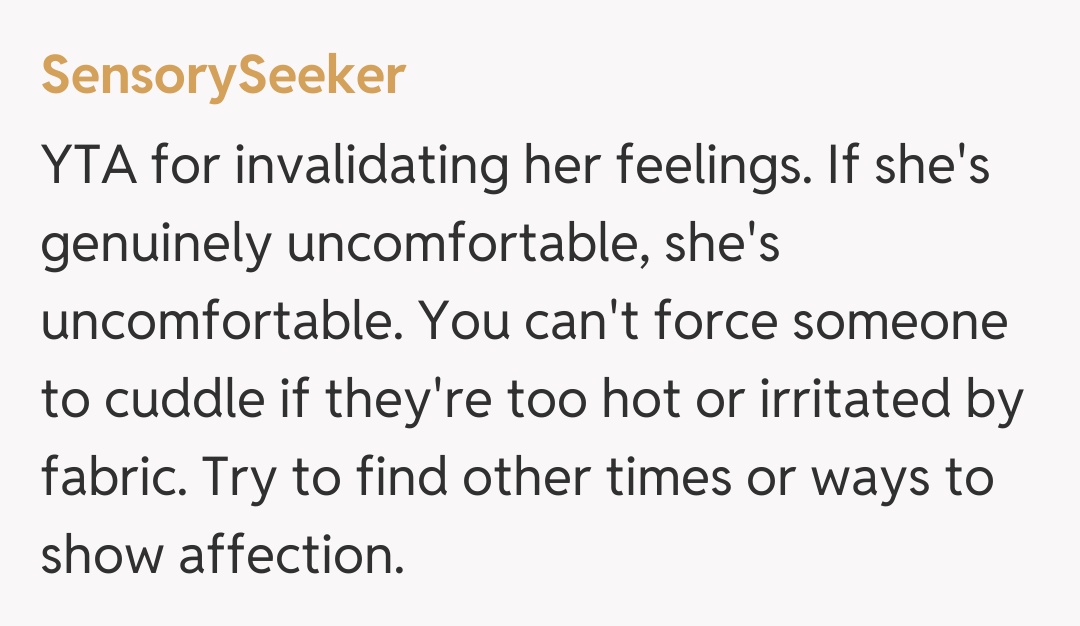
This AITA story serves as a powerful reminder that intimacy comes in many forms, and physical comfort is a non-negotiable for some. While OP's frustration is understandable, so too might be the wife's sensory challenges. The key takeaway from this scenario, and the comments, is the absolute necessity of open, empathetic communication. Instead of focusing on blame, couples need to explore solutions that honor both partners' needs. True connection involves understanding and compromise, even when it comes to the simple act of cuddling.