AITA for telling my wife her arms are starting to jiggle when she waves and she should do more arm exercises to tighten them up?
Welcome back, folks, to another installment of AITA! Today's story plunges us into the tricky territory of unsolicited advice, particularly when it comes from a spouse and concerns physical appearance. It's a minefield of good intentions gone wrong, or perhaps just plain insensitivity. Let's see if our anonymous poster crossed a line with their wife, who is now understandably upset.
We often hear about communication being key in relationships, but what happens when that communication touches on sensitive topics like body image? Our poster believed they were offering helpful feedback, but their wife's reaction suggests otherwise. Was this a loving nudge or a thoughtless jab? The internet is ready to weigh in on this domestic dilemma and decide who is truly the a**hole in this scenario.

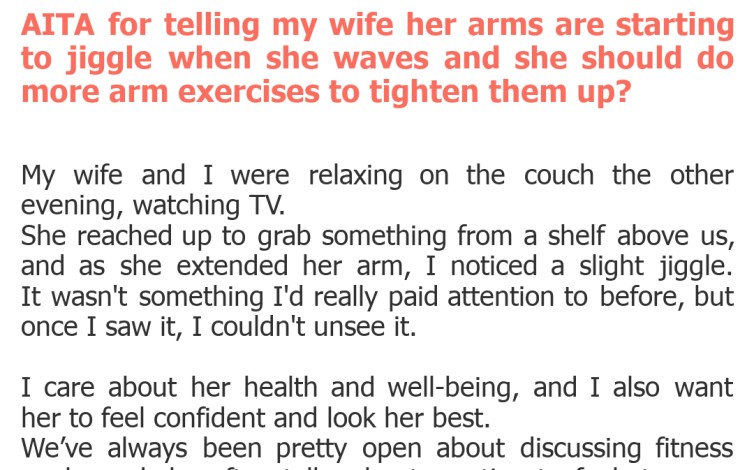
"AITA for telling my wife her arms are starting to jiggle when she waves and she should do more arm exercises to tighten them up?"
My wife and I were relaxing on the couch the other evening, watching TV. She reached up to grab something from a shelf above us, and as she extended her arm, I noticed a slight jiggle. It wasn't something I'd really paid attention to before, but once I saw it, I couldn't unsee it. I care about her health and well-being, and I also want her to feel confident and look her best. We’ve always been pretty open about discussing fitness goals, and she often talks about wanting to feel stronger. So, I thought I was being helpful, bringing it up in a gentle way. I waited for a pause in the show, then turned to her and said, "Hey, honey, I noticed when you waved earlier that your arms are starting to jiggle a bit. Maybe we could start doing some arm exercises together to tighten them up?"
Her face instantly fell, and she looked at me with a mix of disbelief and hurt. The air in the room suddenly felt incredibly thick, and I knew immediately I had messed up, but I wasn't sure why it was such a big deal. She just stared at me, then quietly got up and went to the bedroom, leaving me alone with the remote.
I followed her after a few minutes, trying to apologize and explain my intentions, but she just kept saying, "Did you really just say that?" and "I can't believe you said that to me." She told me it was incredibly rude and made her feel self-conscious and unattractive. She said she felt judged and that my comment was completely unnecessary and hurtful, regardless of my supposed good intentions.
I tried to explain that I only meant it in a constructive way, thinking we could work on fitness together, as we've done before. But she said there's a huge difference between discussing fitness goals mutually and pointing out a perceived physical flaw unprompted. She’s still upset and has been quite cold towards me since. Now I'm wondering if I really am the AITA for trying to be helpful, or if I just phrased it poorly.
This scenario is a classic example of how intentions and impact can diverge dramatically. The poster claims to have had good intentions, aiming for constructive feedback about fitness and health. On the surface, if a couple often discusses fitness, one might assume such a comment falls within acceptable boundaries. However, body image is an incredibly sensitive topic, especially for women, and unsolicited comments can easily be misinterpreted or cause significant emotional distress.
The core issue here lies in the delivery and the inherent power dynamics. Even if the poster genuinely wanted to encourage joint exercise, framing it by pointing out a perceived 'flaw' – "your arms are starting to jiggle" – immediately puts the wife on the defensive. It transforms an offer of support into a criticism, suggesting that her current state is somehow lacking or undesirable. This can deeply wound self-esteem and create insecurity.
Consider the context. Was the wife actively asking for feedback on her appearance? Was she complaining about her arms? If not, the comment was uninvited and intrusive. While couples should be able to communicate openly, there's a fine line between open communication and critical observations about physical attributes. Partners are supposed to be a source of unconditional love and acceptance, and comments like these can erode that trust.
Ultimately, the wife's reaction is very telling. Her hurt and disbelief clearly indicate that the comment was not received as helpful encouragement. The poster's initial thought of "I meant it constructively" doesn't negate the impact. In relationships, understanding how our words affect our partner is paramount. Even with the best intentions, if your words cause pain, it's crucial to acknowledge that pain rather than defend the intent.
The Verdict Is In: Was He "Helpful" or Just Plain Rude?
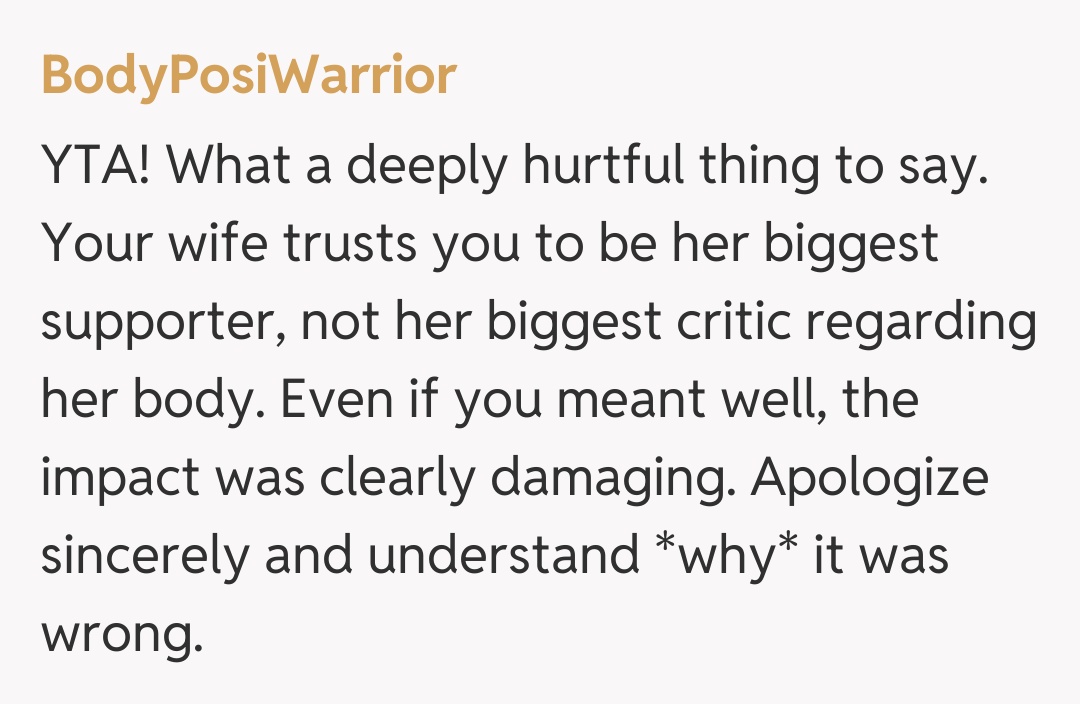
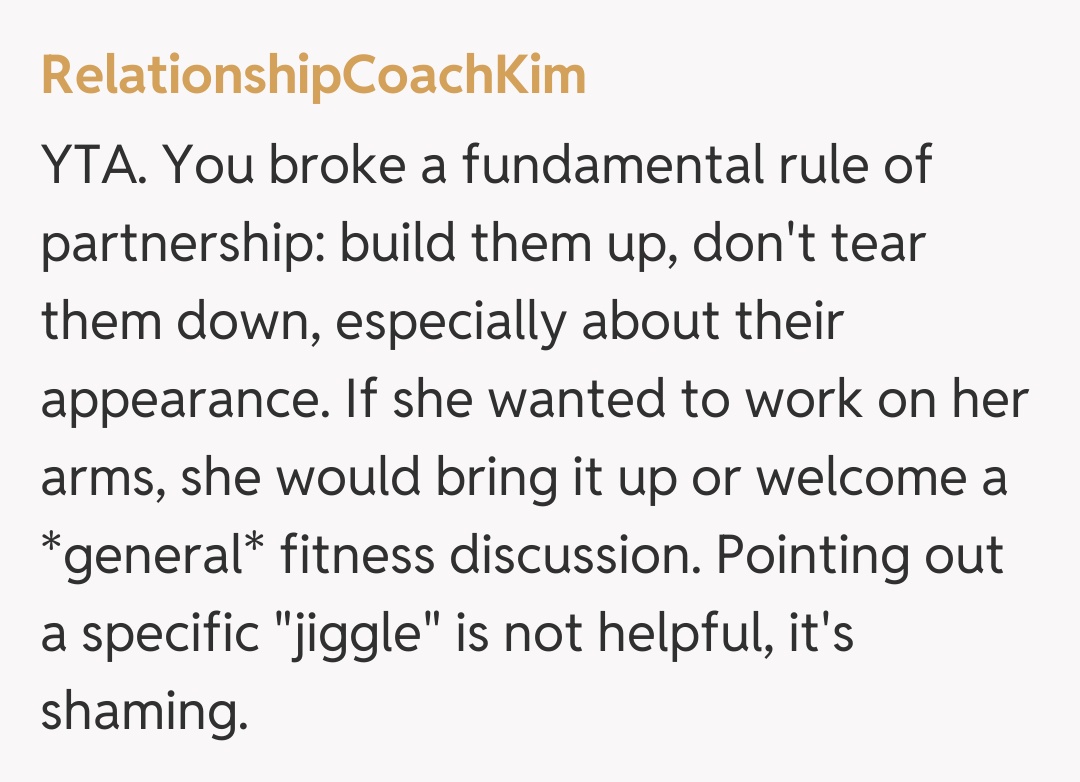
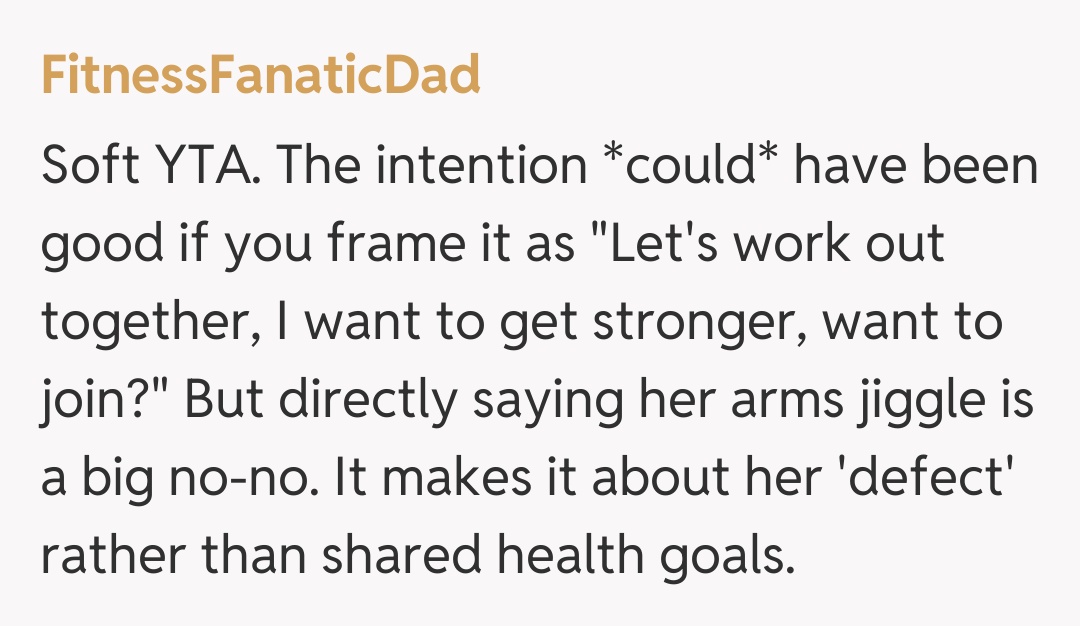
As expected, the comments section is ablaze with strong opinions on this one! The overwhelming consensus leans towards YTA (You're The A**hole), with many users highlighting the insensitivity of pointing out a physical flaw, especially when unprompted. Many women shared their own experiences of similar comments, emphasizing the lasting damage such remarks can inflict on body image and self-esteem within a relationship.
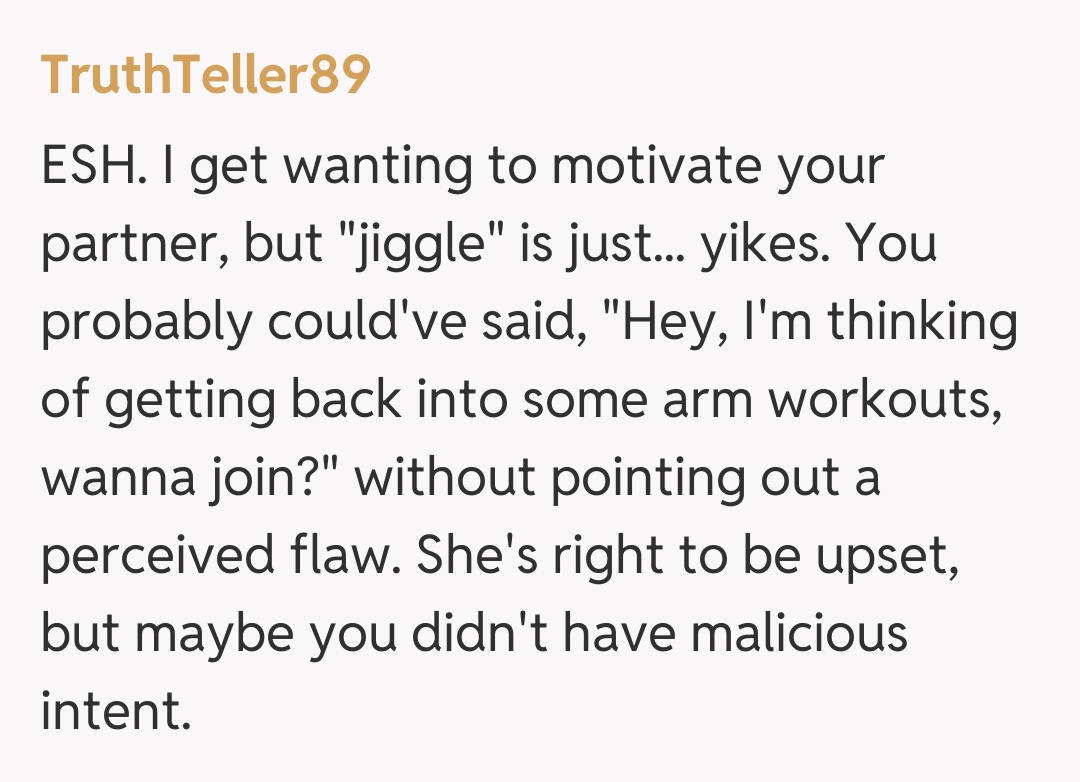
There are a few dissenting voices who argue that if the couple has an open dialogue about fitness, the comment might have been clumsy but not malicious. However, even these users acknowledge that the phrasing ("jiggle") was particularly unfortunate. The core takeaway from the community seems to be: think before you speak, especially when it comes to a partner's body, and always prioritize kindness and respect over unsolicited "constructive" criticism.
This story serves as a stark reminder that even with the best intentions, words about a partner's body can cause significant pain. The key takeaway is to prioritize empathy and sensitivity, especially on personal topics like appearance. Unsolicited advice, particularly critical observations, can erode trust and confidence. Always consider the impact of your words and remember that a partner's self-esteem is far more valuable than a "helpful" but hurtful comment that leaves them feeling judged and self-conscious.