AITA for refusing to buy my girlfriend flowers anymore because “she never appreciates them and they die anyway”?
Ah, the timeless dance of relationship gestures! We all want to show our partners we care, but sometimes, the way we express affection doesn't quite land the way we expect. What feels like a grand romantic gesture to one person might be seen as a burden, or simply not appreciated, by another. It's a common pitfall in even the strongest connections.
Today, we're diving into a classic AITA dilemma that pits traditional romance against practical perspectives. Our poster is at their wit's end after years of trying to express love through a classic symbol, only to feel their efforts are constantly unappreciated. Is it ever okay to stop a gesture because you feel it's wasted? Let's unpack this thorny situation.

"AITA for refusing to buy my girlfriend flowers anymore because “she never appreciates them and they die anyway”?"
I (32M) have been with my girlfriend (31F) for almost five years now. Throughout our relationship, I've always made an effort to bring her flowers, whether for special occasions, as an apology, or just because. I thought it was a sweet, traditional gesture that most partners would appreciate. However, her reaction has always been… lukewarm, at best. It's never been a big 'wow, thank you!' moment.
Every time I'd bring a bouquet, the reaction was always a muted 'Oh, thank you,' followed by a sigh about 'another thing to water' or 'they'll just die in a week' or 'what am I supposed to do with these?' Sometimes she'd just leave them in the plastic wrap on the counter for days. I tried different types of flowers, different colors, even plants, thinking maybe it was the specific kind, but the response was consistently the same. My efforts felt increasingly pointless, like I was just throwing money away on something that brought her no joy and caused her mild inconvenience. I started to resent it, feeling like my thoughtful gesture was constantly being dismissed and unappreciated.
It reached a boiling point last week when it was her birthday. I deliberated for a long time, looking at bouquets, but couldn't bring myself to buy them. Instead, I got her a new book from her favorite author and a gift card to her favorite coffee shop, things I knew she'd genuinely enjoy and use. When she opened her gifts, she was really happy with them. Then she looked around and asked, 'No flowers this year?'
I probably should have phrased it better, but after years of feeling unheard, I just said, 'No. You never appreciate them and they just die anyway, so I figured I'd get you something you actually like.' She got really quiet and seemed upset. Later, she said I was being mean and dismissive of her, implying I was cheap. I told her I wasn't being cheap, just realistic, and that if she wanted flowers, she should have shown some appreciation for them over the past five years. Now she's barely speaking to me. So, AITA?
This situation highlights a classic communication breakdown in relationships. The poster clearly believes they are making a loving gesture, but their partner's consistent, unenthusiastic reaction has understandably led to frustration. It’s natural to feel discouraged when your efforts aren’t met with the appreciation you hope for, especially when it comes to something meant to be romantic or thoughtful. The poster's pragmatic approach to gift-giving here is a direct result of feeling unheard for years.
On the other hand, the partner's perspective is also valid, though perhaps poorly communicated. Her comments about flowers dying or being 'another thing to water' might stem from a practical mindset, or perhaps flowers just aren't her preferred love language. It's possible she simply doesn't value them as much as other forms of affection, and her muted reactions might be her honest, albeit ungracious, response. However, even if she doesn't love flowers, a minimum level of appreciation for a consistent gesture of affection is generally expected.
The poster's final delivery, stating that she 'never appreciates them and they just die anyway,' was undoubtedly harsh and probably unnecessary, especially on her birthday. While his frustration is understandable, expressing it in such a blunt and confrontational manner can easily come across as dismissive and hurtful, rather than a genuine attempt to address a long-standing issue. The core truth behind his words might be valid, but the way it was said likely overshadowed any constructive intent.
Ultimately, this scenario screams for open, honest communication long before a birthday confrontation. Both individuals share responsibility: the poster for not clearly communicating his feelings of unappreciation earlier, and the partner for not articulating her preferences or showing more graciousness. Finding common ground in how to show and receive affection is key to preventing these kinds of misunderstandings from festering.
The Verdict is In: Was This Gesture Necessary, or Just Harsh Reality?
The comments section on this one is going to be a battleground of 'YTA' for the delivery versus 'NTA' for the underlying sentiment. Many will point out that while the poster's feelings are valid, the timing and phrasing of his refusal were likely to cause more harm than good. It's one thing to stop a gesture that isn't appreciated, and another to rub it in someone's face.
We'll also see a lot of discussion around 'love languages.' It's clear that 'gifts' might be one of the poster's, but perhaps not his partner's, or at least not flowers specifically. The comments will emphasize the importance of understanding how your partner *wants* to receive love, rather than just giving it in the way you prefer to give. Communication, as always, is the unsung hero that was sorely missed here.
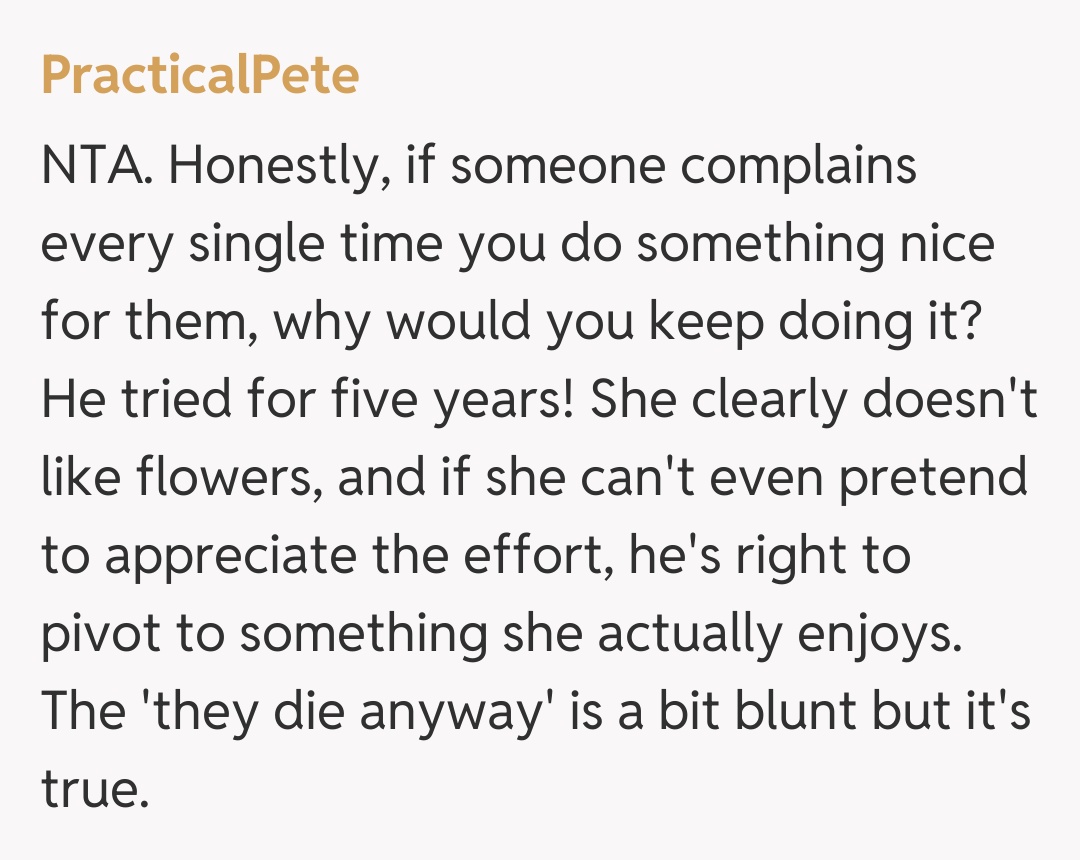
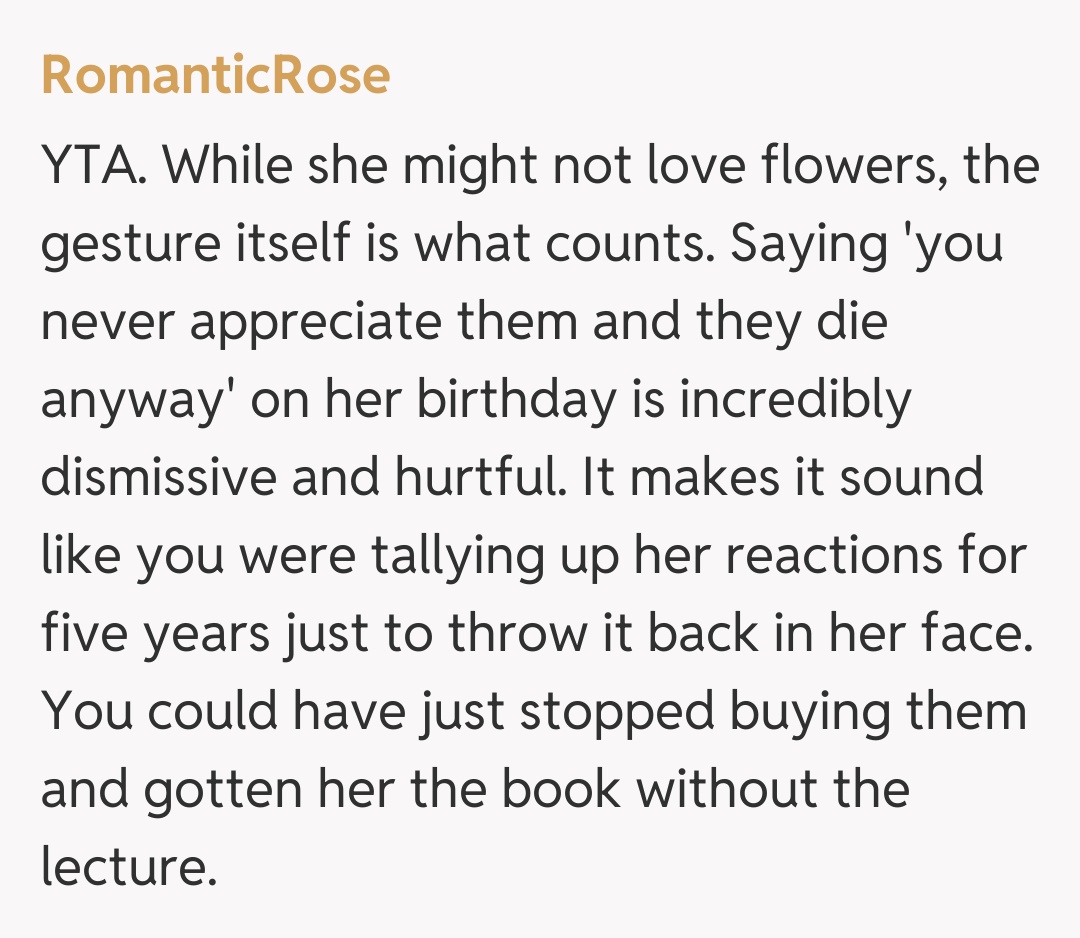
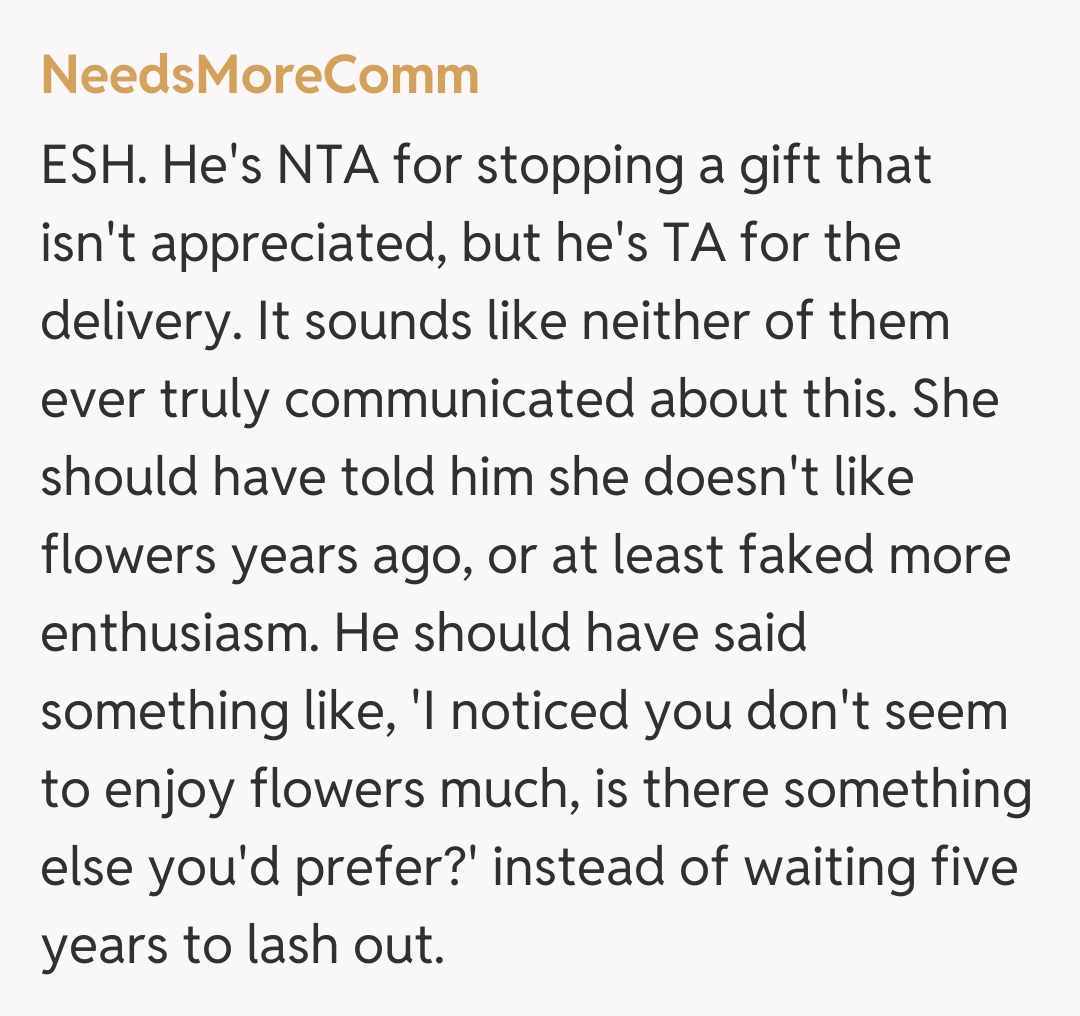
This AITA story serves as a stark reminder that while intentions matter, so does impact, and crucially, communication. It’s easy to fall into cycles of unappreciated gestures or unspoken resentments. Both individuals here could have handled the situation with more grace and directness. The takeaway? Don't assume your partner understands your good intentions, and don't expect them to magically know your preferences. Talk it out, find out what truly makes each other feel loved, and adapt your gestures accordingly. A healthy relationship thrives on genuine connection, not just on wilting flowers.