AITA for banning my husband from watching sports with his friends because “he gets too loud and ignores me”?
Oh, the age-old dilemma of partners with vastly different tolerances for noise and enthusiasm! Today we're diving into a classic AITA tale that pits a quiet evening against the roar of the crowd. It's about a partner who has finally reached their breaking point with game day noise and the perceived neglect that comes with it. Is setting boundaries an act of control or self-preservation?
We've all been there, haven't we? One person wants peace and quiet, while the other is fully immersed in their passion, sometimes forgetting the world around them. This story explores the fine line between asking for consideration and dictating another adult's leisure activities. Get ready to debate whether our poster is justified in their extreme measure or if they've overstepped into controlling territory.

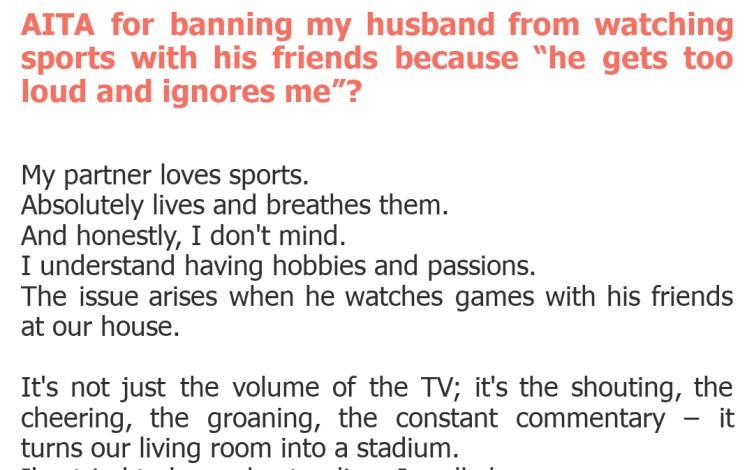
"AITA for banning my husband from watching sports with his friends because “he gets too loud and ignores me”?"
My partner loves sports. Absolutely lives and breathes them. And honestly, I don't mind. I understand having hobbies and passions. The issue arises when he watches games with his friends at our house. It's not just the volume of the TV; it's the shouting, the cheering, the groaning, the constant commentary – it turns our living room into a stadium. I've tried to be understanding, I really have. I've gone to another room, put on headphones, even left the house sometimes. But it feels like I'm constantly being driven out of my own home every weekend. The noise is one thing, but the complete absorption, where he barely acknowledges my existence, is another.
We've talked about it before. I've asked him to keep the volume down, to try and contain the yelling, or to consider watching at a friend's place more often. He always agrees, but come game day, it's the same story. He gets caught up in the excitement, his friends egg him on, and I become invisible. Last weekend was the final straw. It was a crucial game, and the noise was unbearable. I tried to ask him a simple question, and he literally shushed me, not even looking away from the screen. That's when I snapped.
Later that evening, after his friends had left and he was finally calming down, I told him that I couldn't do this anymore. I explained how disrespected and ignored I felt, and how the noise was genuinely impacting my peace in our shared home. I told him that from now on, he could watch sports with his friends, but it wouldn't be at our house. He was furious. He called me controlling and unreasonable, saying it's his house too and he should be able to enjoy his hobbies. He said I was trying to punish him for something he can't help.
I told him it wasn't about punishment, but about setting a boundary for my own well-being and for the respect I deserve in our relationship. I suggested he go to a sports bar, or a friend's house, or even set up a dedicated space in his shed if he wanted to scream at the TV. He's been giving me the silent treatment ever since. His friends are now messaging me, calling me a killjoy and asking what's wrong with me. Am I the asshole for banning him from watching sports with his friends in our home?
This situation highlights a common conflict in relationships: the balancing act between individual needs and shared space. On one hand, the poster has a right to feel comfortable and respected in their own home. Repeatedly being shushed or ignored, coupled with excessive noise, can definitely make someone feel like their personal space and emotional needs are being disregarded. Boundaries, even firm ones, often stem from a place of feeling unheard over time.
However, the term "banning" can sound quite strong and controlling, which is likely why the partner reacted so negatively. While the partner's behavior (ignoring, shushing) is certainly problematic and disrespectful, completely prohibiting an activity he enjoys with friends in his own home might be perceived as an overreach. Relationships thrive on compromise, and an outright ban, rather than a negotiated solution, can escalate conflict.
One could argue that the partner's prior attempts at communication were ineffective, leading to this drastic measure. If discussions about volume and consideration repeatedly failed, the poster might feel they had no other option to protect their peace. The partner's inability to self-regulate the noise or give attention during games is a significant issue that needs addressing, beyond just where the game is watched.
Ultimately, both individuals have valid points, but the execution of the solution is where the AITA judgment often lies. The partner needs to acknowledge the impact of their actions, and the poster needs to consider if a less absolute solution could have been found. Effective communication, respecting boundaries, and finding mutual ground are crucial for a healthy shared living situation.
The internet weighs in: Is she a killjoy or a hero of peace?
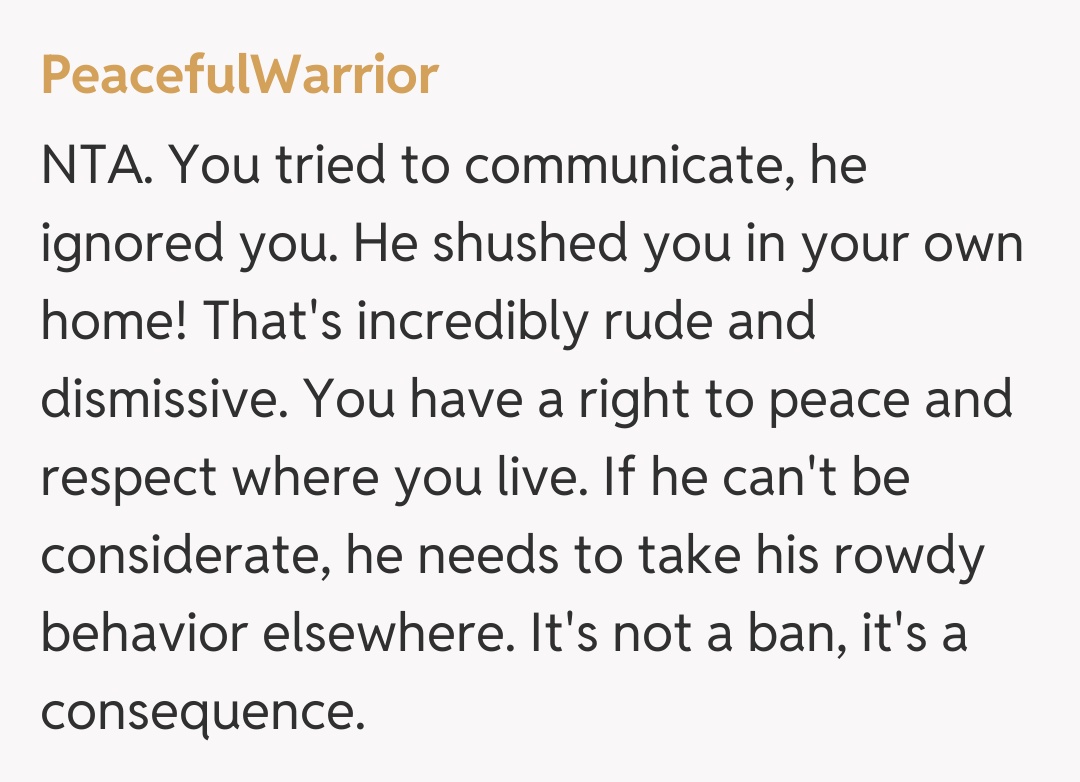
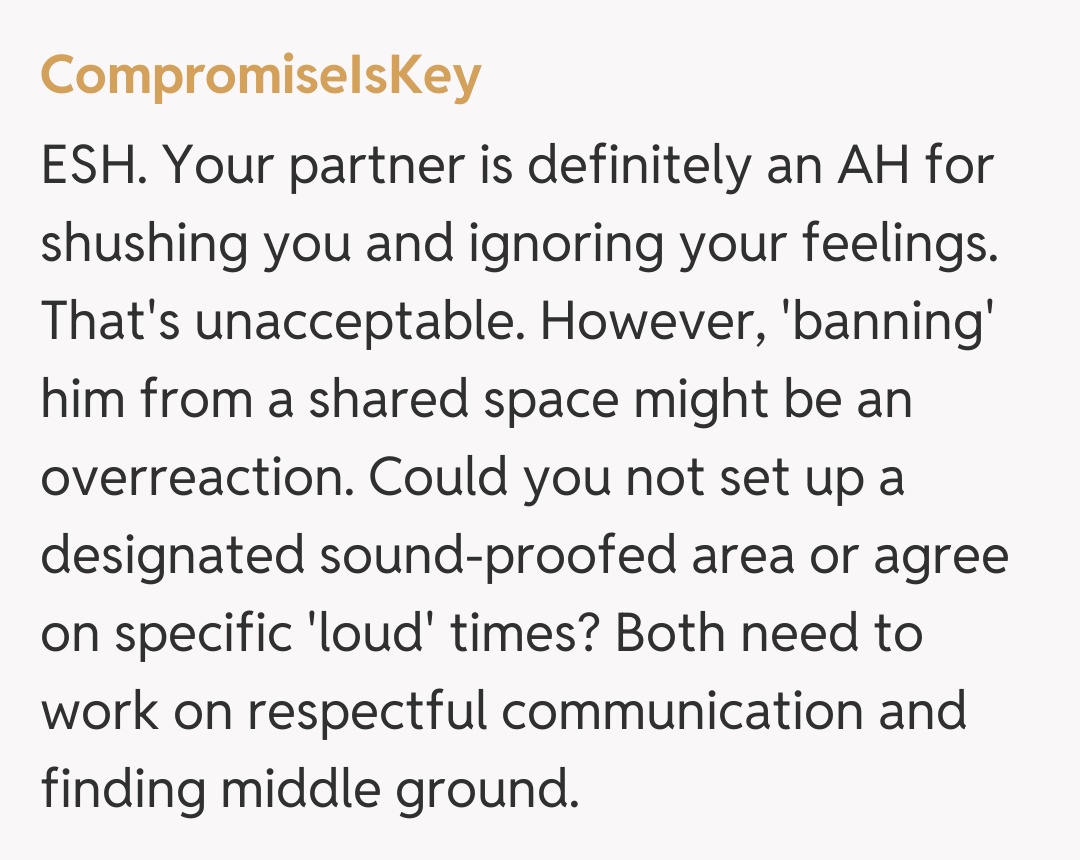
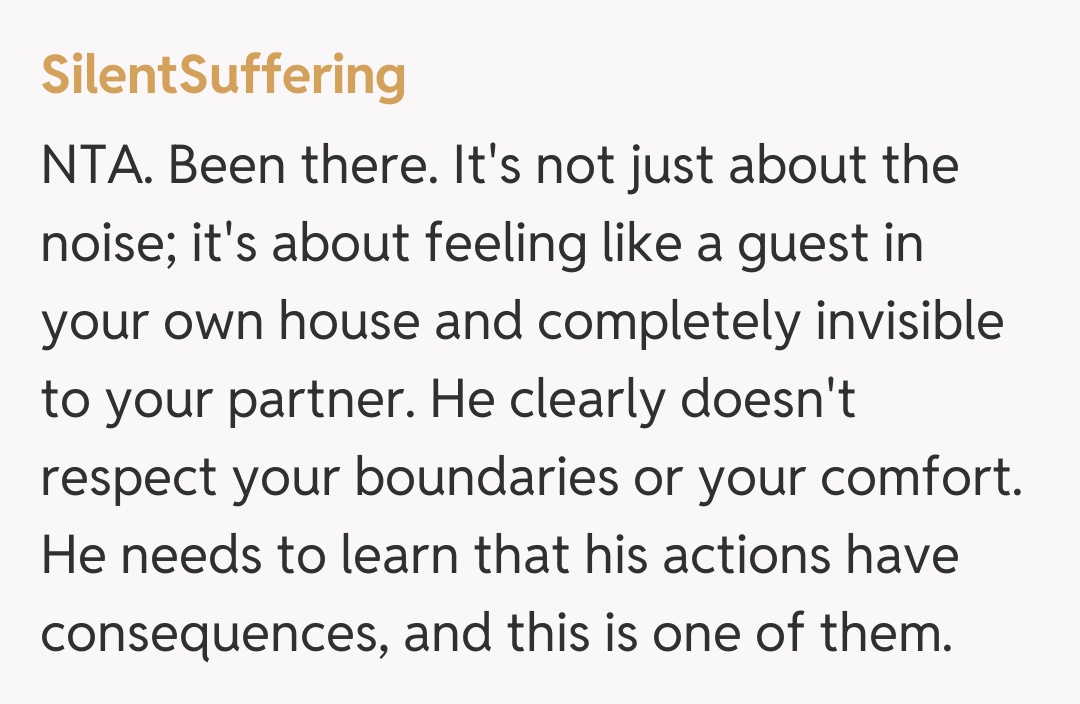
The comments section on this one was, as expected, a fiery battleground! Many commenters sided with the original poster, emphasizing that everyone deserves peace in their own home. They highlighted the disrespect of being shushed and ignored, pointing out that repeated failed attempts at communication often necessitate firmer boundaries. Many felt the 'banning' was a consequence of the husband's own actions and inability to compromise.
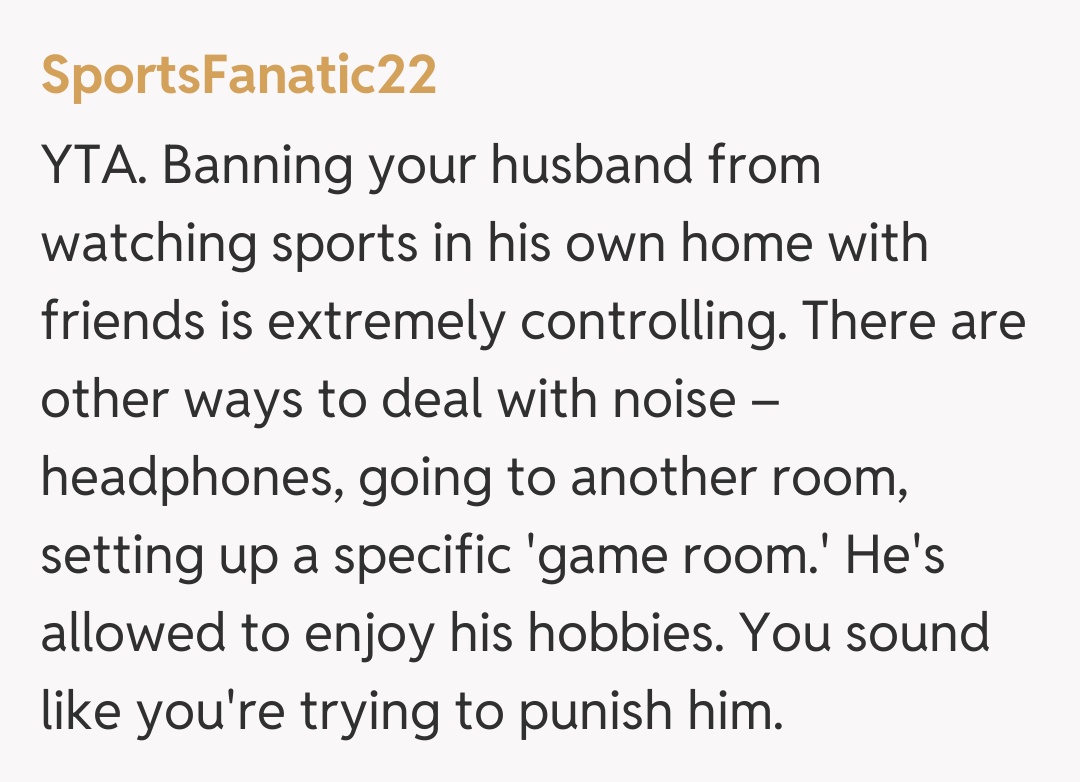
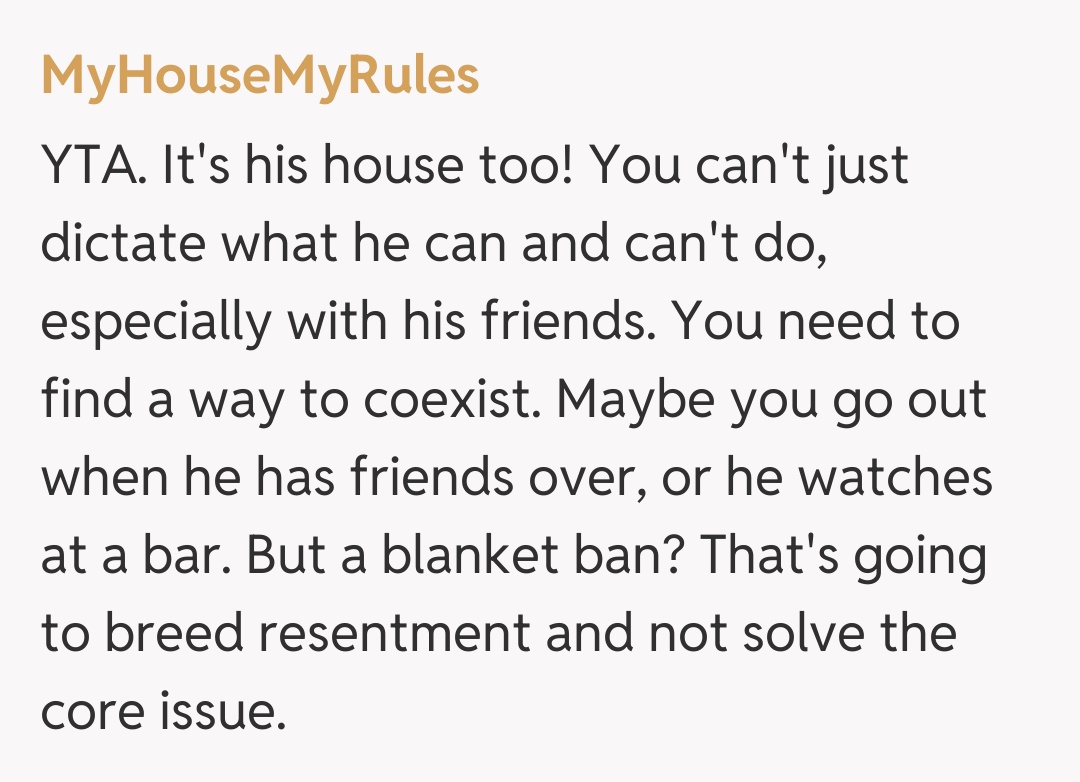
Conversely, a significant portion of the community felt the poster went too far. They argued that a shared home means shared enjoyment, and completely prohibiting a spouse from enjoying their hobby with friends, even if loud, was controlling. Some suggested alternative solutions like better soundproofing, dedicated man-caves, or specific time limits rather than an outright ban. The term 'banning' itself seemed to be the sticking point for many.
This particular AITA story really boils down to communication, respect, and compromise within a shared living space. While the poster's frustration is entirely understandable given the partner's disrespectful behavior, the approach of an outright "ban" definitely sparked strong reactions. Moving forward, both parties need to engage in honest dialogue, not just about the noise, but about feeling valued and heard. Finding a solution that respects both the need for peace and the freedom to enjoy hobbies will be essential for their relationship's long-term health.