AITA for telling my wife we’re not having s*x until she loses the 20 kg she gained since we got married?
Oh boy, do we have a doozy for you today! This story dives headfirst into one of the most sensitive topics in a relationship: physical attraction and body image. It’s a minefield, folks, where one wrong step can detonate months, if not years, of built-up intimacy and trust. Our submitter, let's call him 'The Husband', has made a bold, some might say incredibly insensitive, declaration to his wife. Prepare yourselves for some serious discussion.
Today's tale features a husband who has laid down an ultimatum that has sent shockwaves through the online community. He feels his wife has let herself go after their marriage, gaining a significant amount of weight, and he's decided to take drastic action. His method of communicating this concern has ignited a firestorm, leaving everyone wondering: is he a man simply expressing his needs, or has he crossed a line into deeply hurtful territory? Let's unpack this emotional grenade.

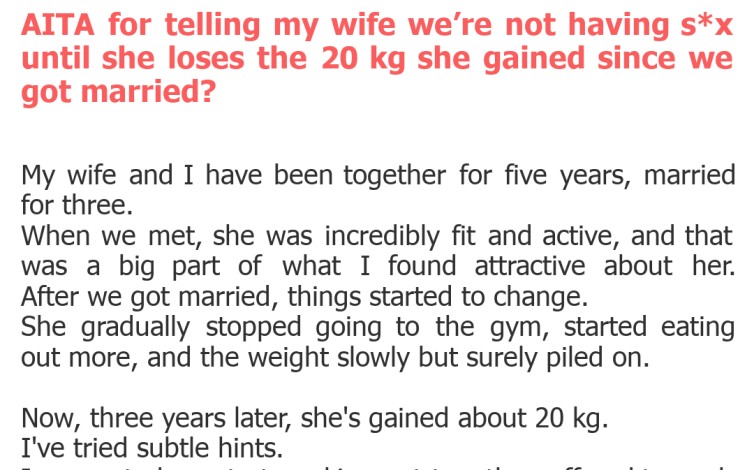
"AITA for telling my wife we’re not having s*x until she loses the 20 kg she gained since we got married?"
My wife and I have been together for five years, married for three. When we met, she was incredibly fit and active, and that was a big part of what I found attractive about her. After we got married, things started to change. She gradually stopped going to the gym, started eating out more, and the weight slowly but surely piled on. Now, three years later, she's gained about 20 kg.
I've tried subtle hints. I suggested we start working out together, offered to cook healthier meals, and even bought her some new activewear, hoping it would motivate her. Nothing worked. She'd get excited for a week or two, then revert to old habits. I genuinely feel like I'm no longer attracted to her in the same way. Our s*x life has dwindled significantly, and honestly, I initiate less and less because I just don't feel that spark. It's not just about looks, it's about the effort, the vitality I once admired. I feel disconnected, like I'm living with a different person. Last night, after another failed attempt to initiate intimacy, I just… broke. I told her we needed to talk.
I explained how I felt, how her weight gain was impacting my attraction to her, and how it was affecting our intimate life. It was a difficult conversation, and she was clearly hurt. She started crying, saying I was shallow and that she couldn't believe I was punishing her. I explained it wasn't punishment, but an honest expression of my feelings and needs within the marriage. I told her that until she showed a serious commitment to losing the weight she'd gained – specifically the 20 kg – I couldn't bring myself to be intimate with her. I need to feel that connection and attraction again.
She's now furious and heartbroken, saying I'm being controlling and that this is emotional manipulation. I feel terrible for hurting her, but I also feel like I'm allowed to have preferences and desires in my marriage. Am I the a**hole for being honest about my attraction and setting a boundary, even if it's a harsh one?
This is a truly difficult situation, showcasing a significant breakdown in communication and mutual understanding. On one hand, the husband is expressing a very real feeling – a decline in physical attraction towards his spouse. Attraction is a complex and often involuntary component of a relationship, and denying one's feelings can lead to resentment and further emotional distance. It's vital that partners feel they can be honest about their needs, even if those needs are challenging to hear.
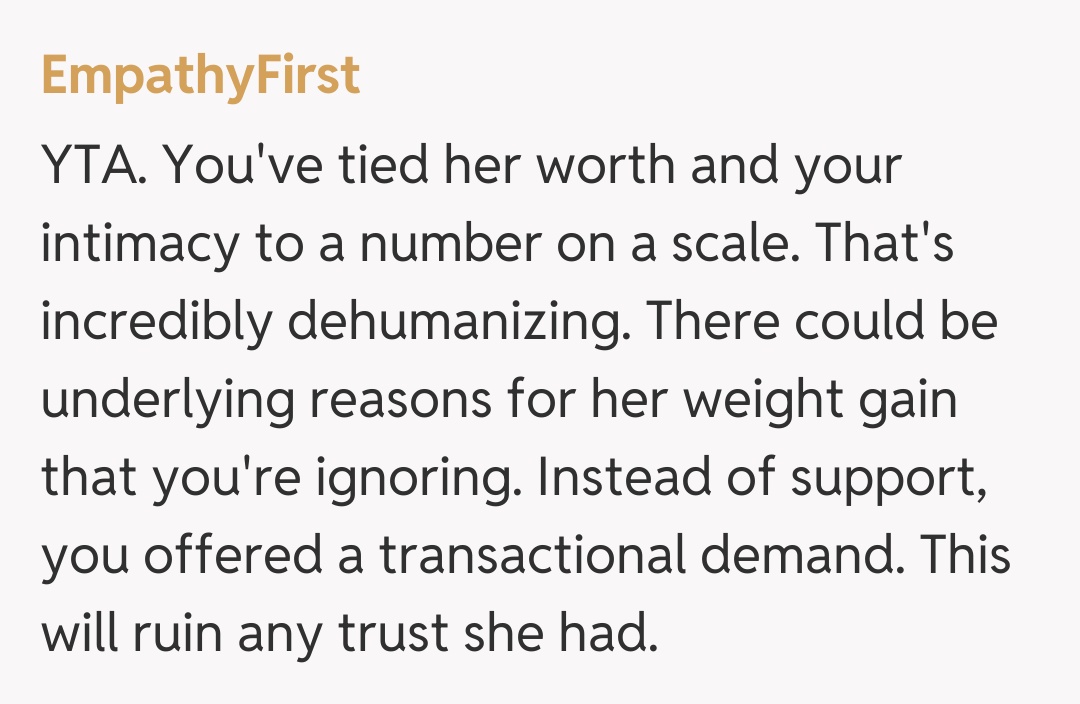
However, the *method* of communication and the ultimatum presented here are deeply problematic. Linking s*xual intimacy directly to a specific weight loss target can be perceived, and indeed felt, as incredibly coercive and emotionally manipulative. It weaponizes intimacy, turning it into a reward or punishment rather than a natural expression of love and connection. Such an approach can cause profound damage to a partner's self-esteem and body image, creating a toxic dynamic.
Furthermore, focusing solely on the physical change might overlook deeper issues. A significant weight gain often stems from underlying factors such as stress, depression, health problems, or a lack of self-care. A more compassionate and effective approach might have involved exploring these potential root causes together, offering support, and focusing on shared health goals rather than issuing a punitive directive linked to intimacy.
Ultimately, while the husband has a right to his feelings, the manner in which he expressed them and the ultimatum he delivered appear to be highly damaging. A healthy relationship thrives on mutual respect, empathy, and constructive problem-solving, not on conditional affection or demands that undermine a partner's sense of self-worth. This approach risks destroying trust and the very foundation of their marital intimacy.
The internet weighs in: Is honesty always the best policy, or is this just cruel?
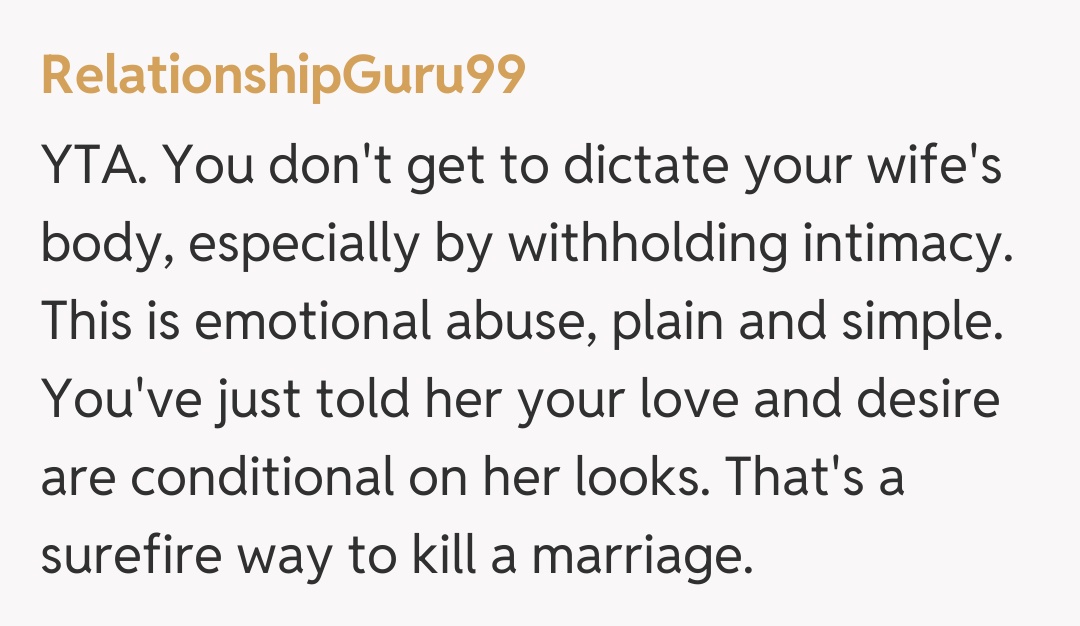
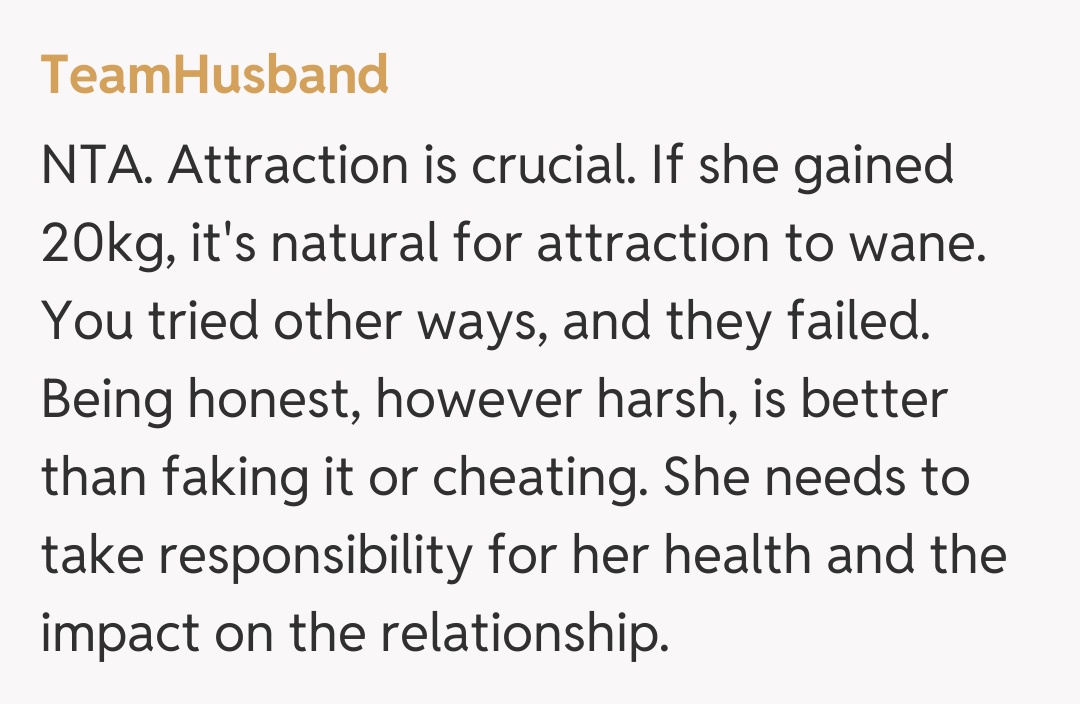
The comments section for this story, as expected, is a firestorm! A vast majority of responders are leaning heavily towards 'You're The A**hole,' citing emotional manipulation and the harmful weaponization of intimacy. Many users are pointing out that while attraction is important, demanding a specific body change as a condition for s*xual contact is incredibly damaging to a partner's self-esteem and the overall health of the relationship.
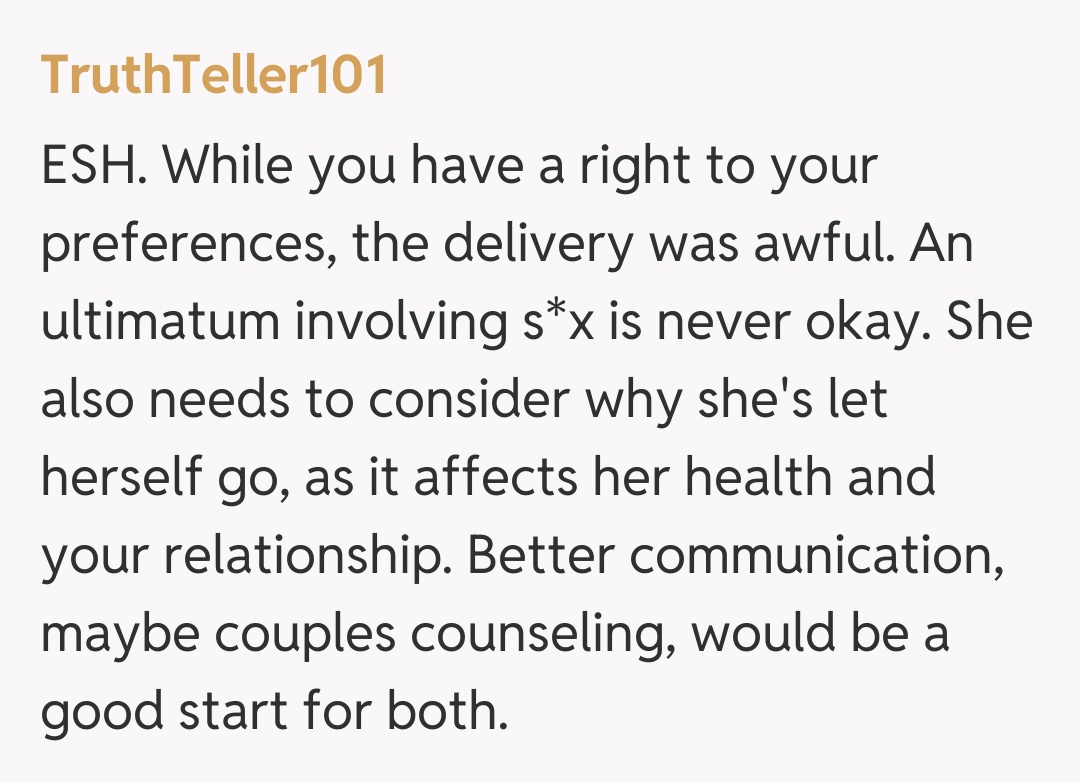
However, there's also a smaller contingent of commenters who sympathize with the husband's predicament, suggesting that he's merely being honest about his needs. They argue that attraction is fundamental and that a spouse shouldn't 'let themselves go' if they want to maintain intimacy. This perspective, though less popular, highlights the complexities of long-term relationships and the often unspoken expectations partners have for each other.
This post serves as a stark reminder of the delicate balance required in relationships, especially concerning sensitive topics like body image and attraction. While open communication is key, the *method* and *empathy* behind that communication are equally, if not more, important. Ultimately, weaponizing intimacy as a tool for change often backfires, leaving behind a trail of hurt and resentment that can be incredibly difficult, if not impossible, to repair. This couple desperately needs professional help to navigate this betrayal of trust and redefine their relational dynamics.