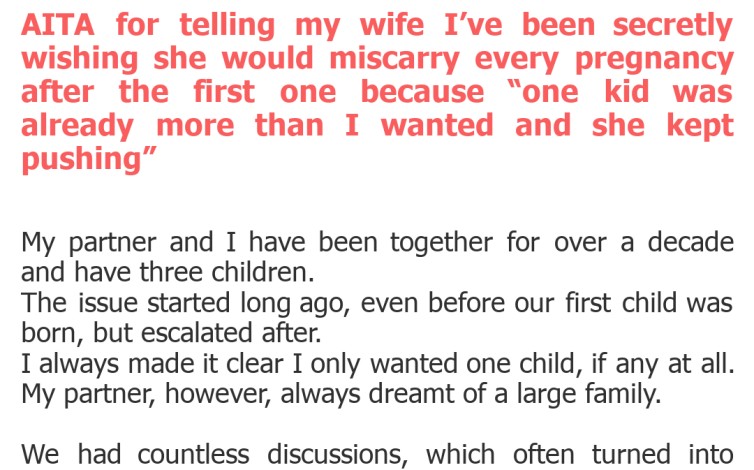
AITA for telling my wife I’ve been secretly wishing she would miscarry every pregnancy after the first one because “one kid was already more than I wanted and she kept pushing”
Oh, dear readers, we've got a doozy for you today from the deepest corners of relationship conflict. This story dives headfirst into the incredibly sensitive and emotionally charged arena of family planning, expectations, and the dark secrets one partner can harbor. It's a stark reminder that what remains unsaid can often be far more damaging than any argument.
Today's submission asks a question that will undoubtedly spark intense debate and strong opinions across the board. When deeply personal desires clash, and one partner's dreams become another's nightmare, where does the fault lie? Get ready to unpack a truly difficult situation that challenges the very foundation of trust and understanding in a marriage.

"AITA for telling my wife I’ve been secretly wishing she would miscarry every pregnancy after the first one because “one kid was already more than I wanted and she kept pushing”"
My partner and I have been together for over a decade and have three children. The issue started long ago, even before our first child was born, but escalated after. I always made it clear I only wanted one child, if any at all. My partner, however, always dreamt of a large family. We had countless discussions, which often turned into arguments, about family size. I thought we had reached a compromise when we decided to have one, but she always implied she wanted more.
After our first was born, the hints became more direct. She started talking about a second, then a third, as if it was a given, despite my consistent discomfort and protests. I felt increasingly unheard and pressured. Every time she announced a new pregnancy, a wave of dread would wash over me. I couldn't bring myself to be excited. The financial strain, the loss of personal time, the sheer exhaustion – it was all too much for me. I started to resent the situation and, shamefully, even resent her a little.
This simmering resentment came to a head recently during a particularly heated discussion about our family life. She brought up how I never seem happy with our family, and how I'm always distant during her pregnancies. The argument escalated, and in a moment of pure frustration and anger, I blurted out that I had secretly wished she would miscarry every pregnancy after the first one. I told her that one child was already more than I wanted, and she kept pushing for more, ignoring my feelings.
The look on her face… it was pure devastation. She just stared at me, then started crying, a silent, heartbreaking cry. She hasn't spoken to me since, except to tell me she needs space and doesn't know how she can ever look at me the same way again. Our children are young, and I feel like I've shattered our family. I know it was an awful thing to say, but I felt so trapped and unheard for so long. Am I the a**hole for expressing my true, albeit terrible, feelings?
This story presents a profoundly complex and painful situation, highlighting a massive breakdown in communication and trust between two partners. The original poster's confession of wishing for miscarriages is undeniably shocking and deeply hurtful, striking at the core of a partner's most vulnerable experiences. It's a statement that, regardless of underlying frustration, carries an immense emotional weight and can cause irreparable damage to a relationship.
From one perspective, the original poster felt immense pressure and a lack of agency regarding family size. While his feelings of being unheard are valid, the way he chose to express them, and the nature of the secret he harbored, are extreme. Wishing ill upon your partner's pregnancies, even in secret, indicates a severe level of resentment and emotional distress that should have been addressed much earlier, perhaps through counseling.
On the other hand, the partner's actions of "pushing" for more children despite explicit objections also contribute to the marital strain. While her desire for a large family is her own, unilaterally pursuing it when her partner clearly expressed different wishes creates a situation where one person's desires overshadow the other's. This dynamic fosters resentment and makes healthy compromise incredibly difficult to achieve.
Ultimately, this situation is a tragic example of what happens when fundamental differences in life goals, particularly regarding family, are not genuinely resolved. Secrets and unaddressed resentments fester, leading to explosive confessions that can shatter the foundation of a marriage. Both parties bear some responsibility for the communication breakdown, but the immediate impact of the original poster's confession is deeply traumatic.
The internet weighs in on a shocking confession of marital discord and dark secrets.
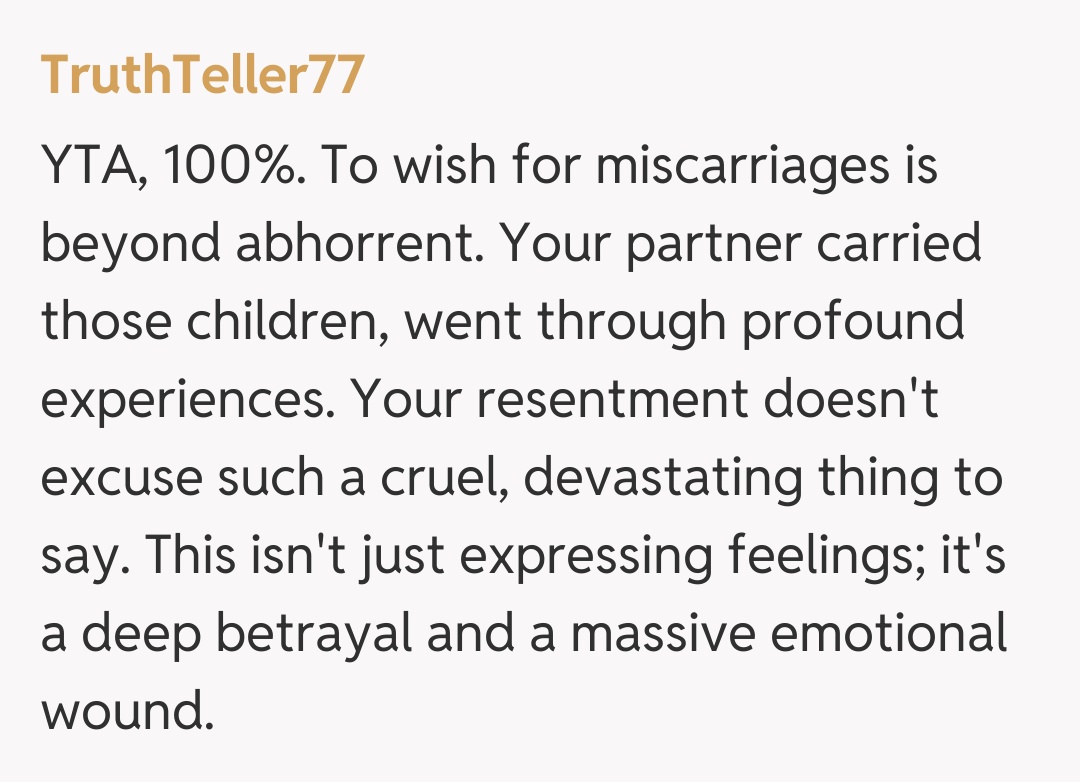
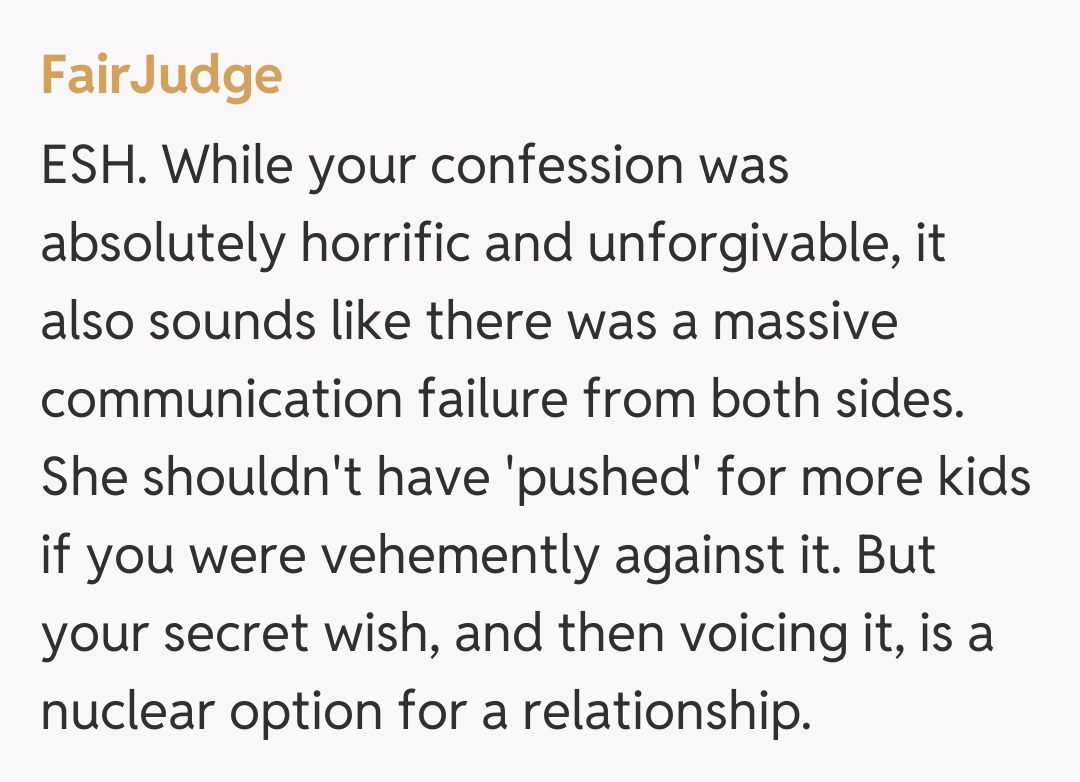
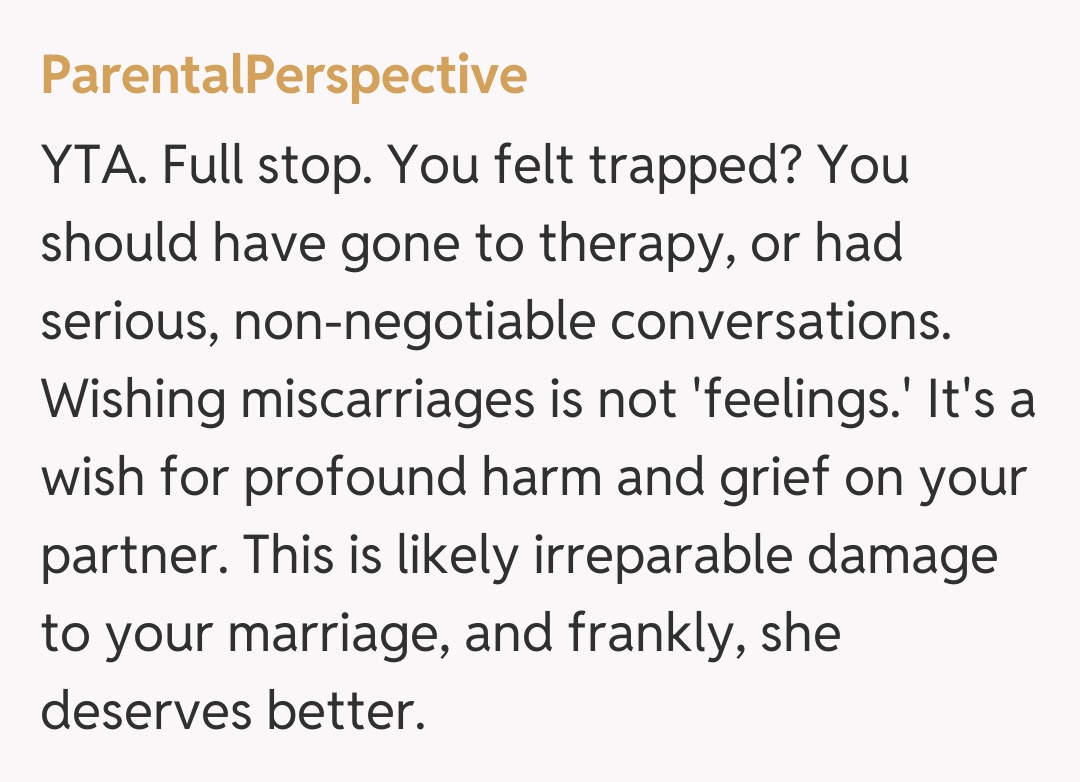
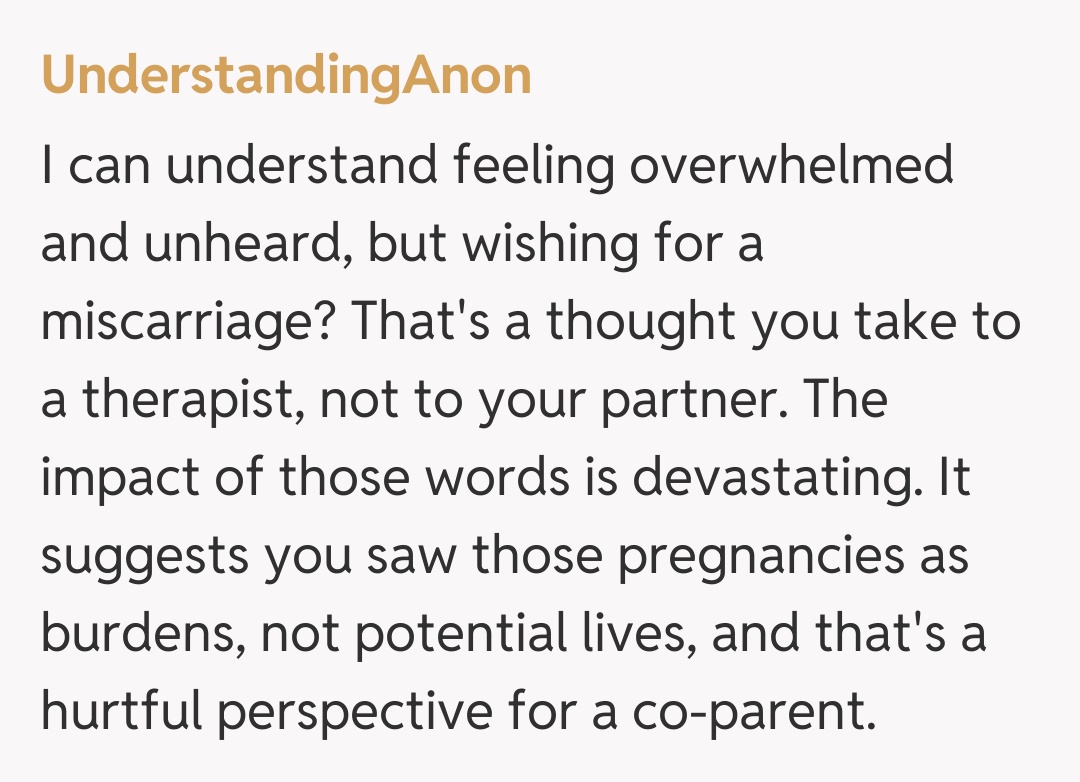
The comment section for this story, as expected, was a whirlwind of raw emotion and strong opinions. A significant majority of readers sided firmly with the partner, expressing profound shock and condemnation for the original poster's confession. Many highlighted the sheer cruelty of wishing for miscarriages, emphasizing the deep trauma and grief associated with such an event, regardless of the original poster's personal desires for family size.
However, there was also a smaller, yet vocal, contingent who tried to dissect the underlying issues. While not condoning the original poster's words, these comments often pointed to the breakdown in communication and the feeling of being pressured. They questioned why the partner continued to pursue more children when one spouse explicitly stated they wanted fewer, suggesting a fundamental incompatibility that was ignored.
This incredibly difficult story serves as a stark warning about the dangers of unresolved conflict and unspoken resentments in a marriage. While both partners had differing desires regarding family size, the original poster's confession highlights the extreme damage that can occur when communication breaks down entirely. Moving forward, the couple faces an arduous path, requiring deep introspection, potentially professional help, and a willingness to confront the profound emotional wounds inflicted. It's a painful reminder that some words, once spoken, can never truly be unsaid, forever altering the landscape of a relationship.