AITA for making my wife apologize to my mom every time she “talks back” during family dinners, because “respecting elders is non-negotiable in my house”?
Oh, family dinners! They can be a source of warmth, laughter, and cherished memories, but just as often, they're battlegrounds for unspoken tensions, cultural clashes, and generational divides. Today's AITA post dives headfirst into one of these tricky situations, where a partner is caught between their spouse and their parent, with potentially serious ramifications for their relationship.
Our submitter lays down a rather firm ultimatum regarding how his wife should interact with his mother, especially when it comes to expressing differing opinions. The phrase 'respecting elders is non-negotiable' is a powerful one, often rooted deeply in cultural values, but how does it translate when it clashes with a spouse's autonomy and right to speak their mind? Let's unpack this complex dynamic.

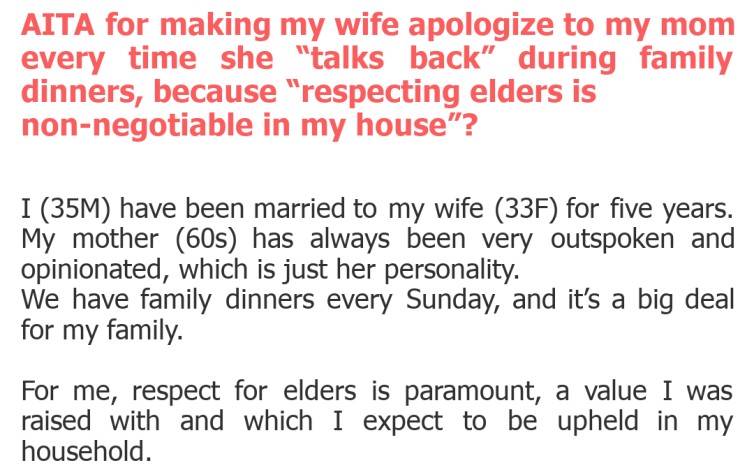
"AITA for making my wife apologize to my mom every time she “talks back” during family dinners, because “respecting elders is non-negotiable in my house”?"
I (35M) have been married to my wife (33F) for five years. My mother (60s) has always been very outspoken and opinionated, which is just her personality. We have family dinners every Sunday, and it’s a big deal for my family. For me, respect for elders is paramount, a value I was raised with and which I expect to be upheld in my household.
My wife, while generally polite, tends to be more direct and doesn't shy away from politely disagreeing or correcting my mother if she feels something said is inaccurate or unfair. My mother, in turn, perceives this as 'talking back' and becomes visibly upset. It's never a shouting match, but the tension is palpable. Afterwards, my mother will often call me, upset, and detail her grievances. I’ve always told my wife that in our culture, you don’t openly challenge an elder, especially not in front of others.
To keep the peace and ensure that my mother feels respected, I've established a rule: if my wife 'talks back' during dinner, she needs to apologize to my mother. This isn't about whether my wife is right or wrong in her statement, but about the *manner* and the *principle* of respecting my elders. I see it as a non-negotiable part of our family dynamics. My wife has done this a few times, but it’s clear she resents it. She says she feels like a child being disciplined and that I’m prioritizing my mother’s feelings over hers and our partnership.
I believe I’m just upholding an important cultural value and maintaining harmony in my family. I’ve told her that if she can’t adapt to this, our family gatherings will always be strained. She argues that respect should be mutual and that my mother is also disrespectful by not listening or considering other viewpoints. I think she just needs to learn to pick her battles and understand that family harmony sometimes requires a bit of deference. AITA?
This scenario highlights a very common conflict point in many marriages: the intersection of cultural expectations, family loyalty, and marital partnership. The submitter clearly values the tradition of respecting elders, which is a noble principle in many cultures. He sees his actions as upholding this value and maintaining peace within his family unit, particularly with his mother.
However, the concept of 'respect' can be highly subjective. Is it about absolute deference, or can it coexist with polite disagreement and independent thought? The submitter's wife feels she is being forced into a submissive role, where her voice is stifled not because she is being genuinely rude, but because her directness is interpreted as 'talking back' by her mother-in-law. This distinction is crucial.
The submitter's role as the bridge between his wife and his mother is critical here, and it appears he has chosen to firmly side with his mother's interpretation of events. By making apologies mandatory regardless of the content of the disagreement, he effectively silences his wife's perspective and validates his mother's emotional response as the sole metric for conflict. This can erode trust and equality in the marital relationship.
A healthy marriage is built on mutual respect and partnership. When one partner is consistently made to feel secondary, especially in interactions with extended family, it can lead to deep resentment. The submitter needs to consider if his 'non-negotiable' rule is truly fostering harmony, or if it's simply creating an illusion of peace at the expense of his wife's dignity and their marital bond. Compromise and clear communication are essential.
The Verdict Is In: Is Family Loyalty More Important Than Marital Respect?
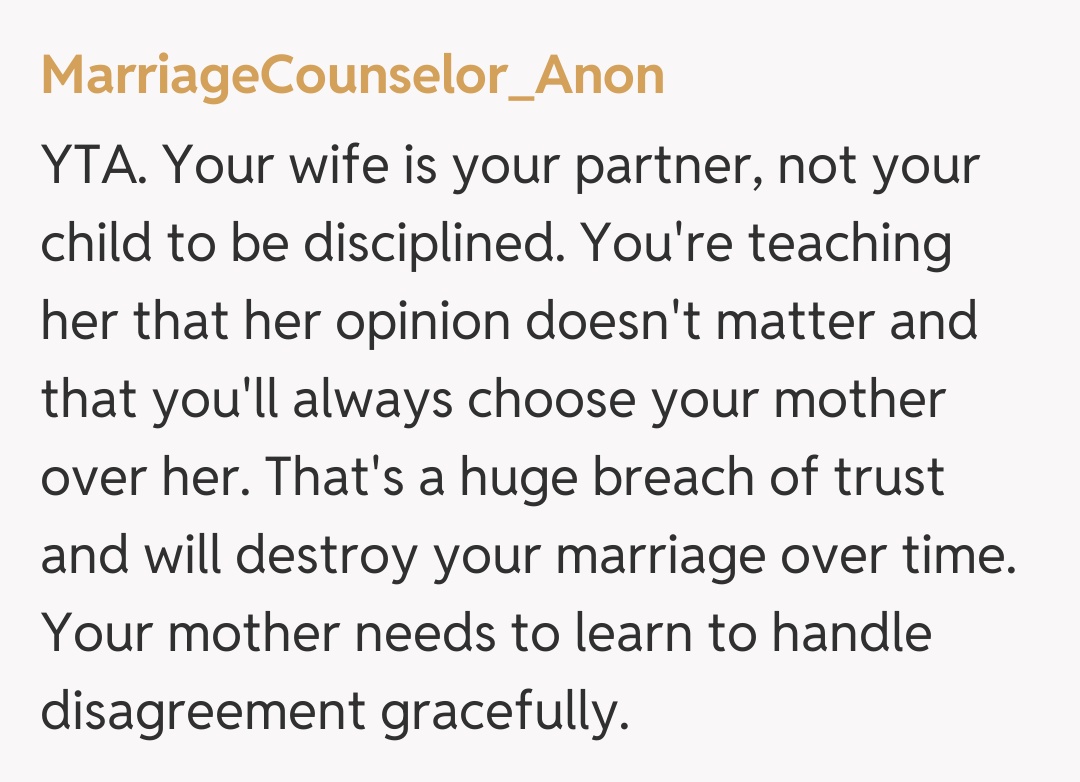
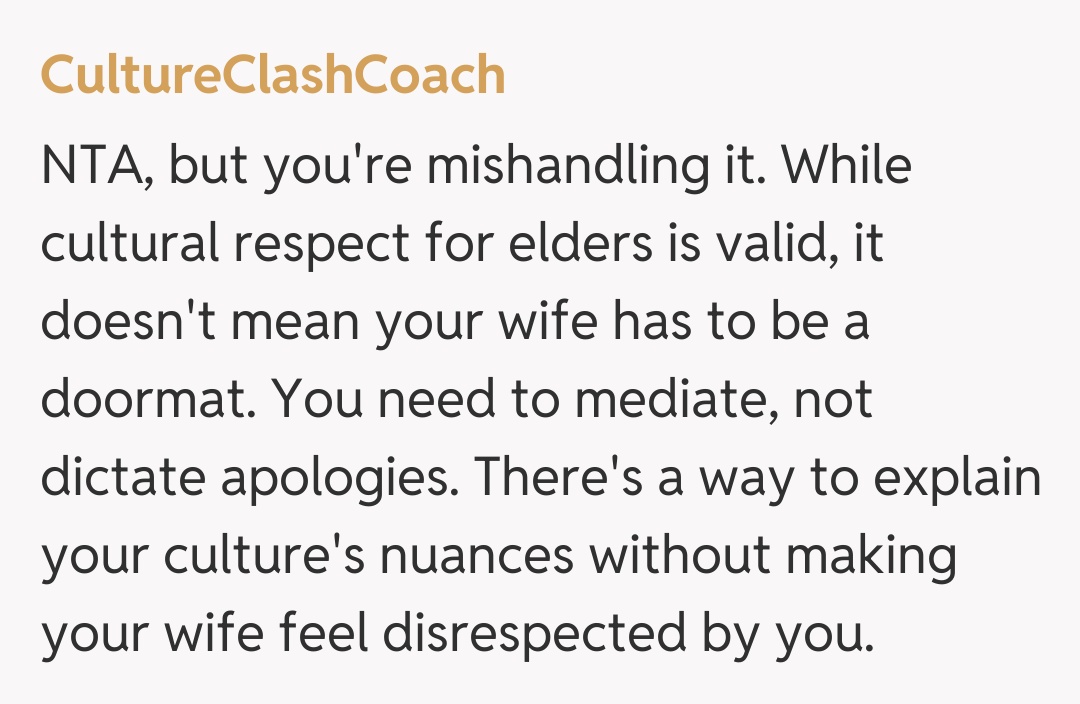
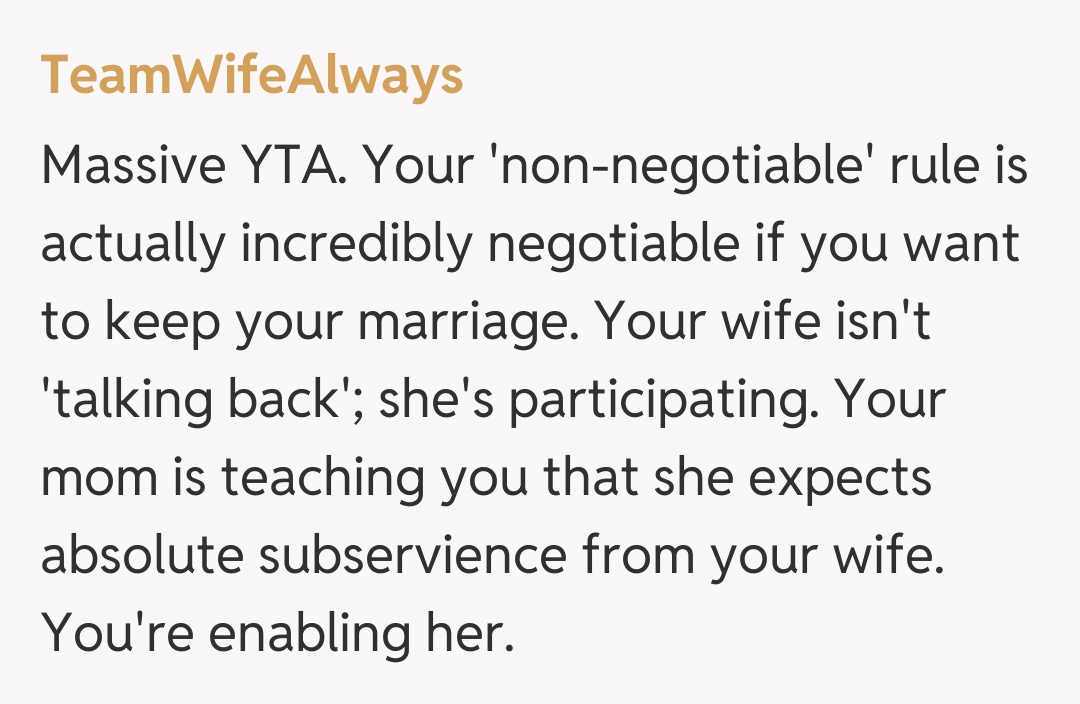
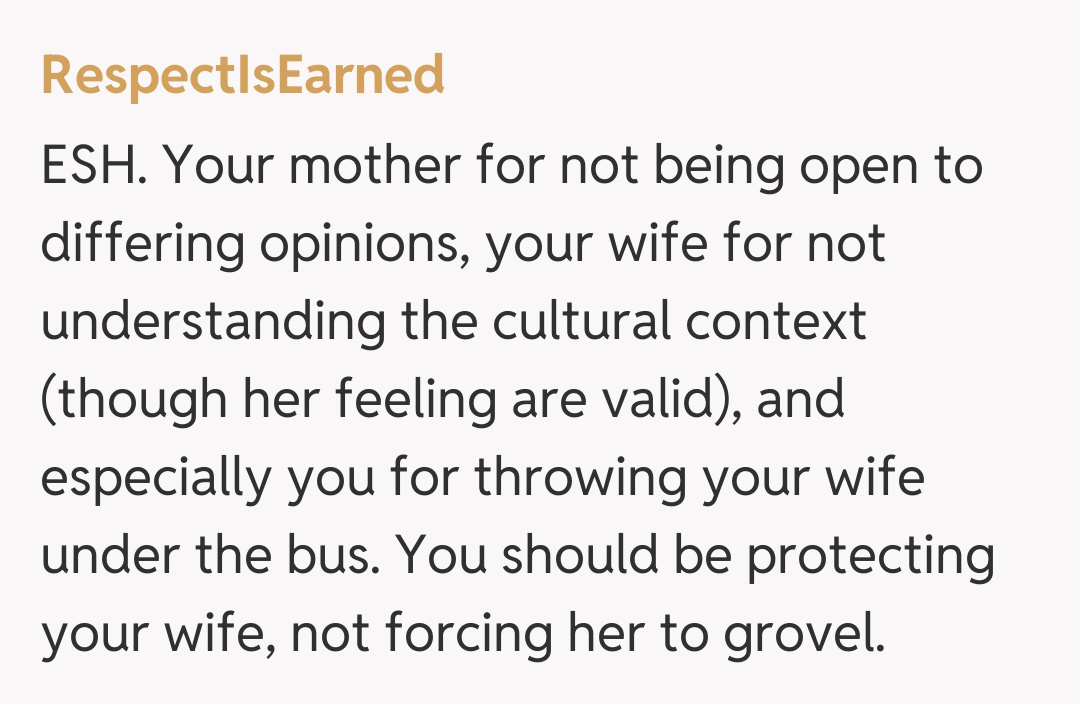
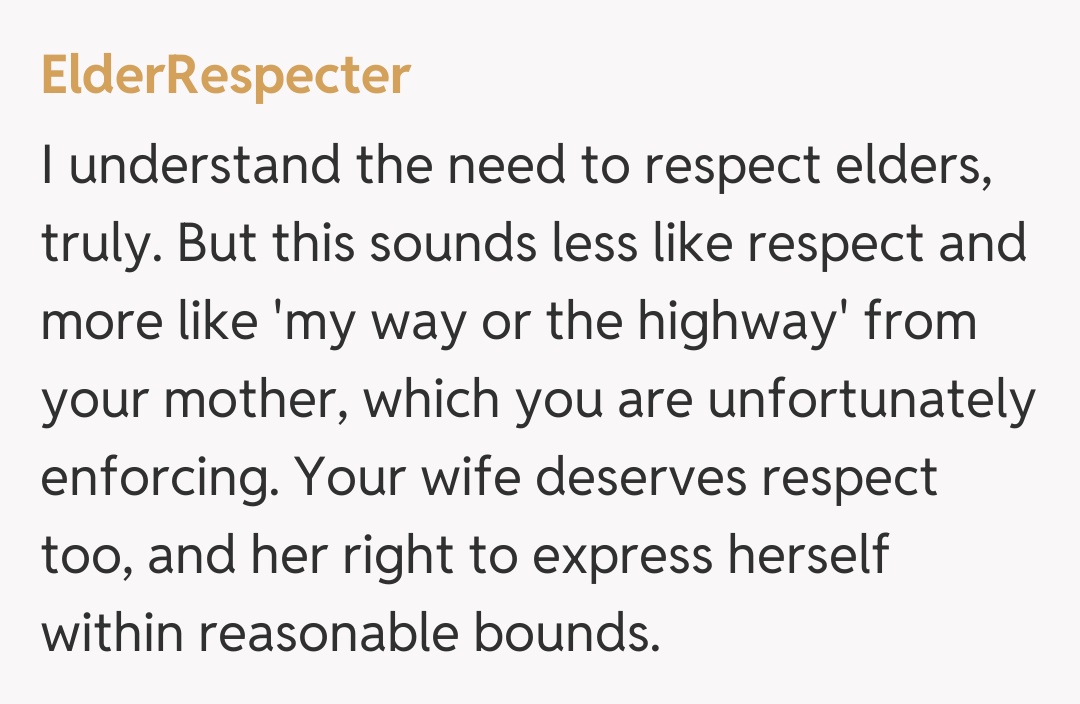
The comment section, as expected, was a whirlwind of strong opinions, with the vast majority siding firmly with the submitter's wife. Many users expressed concern that the submitter was enabling his mother's behavior and sacrificing his wife's autonomy for the sake of perceived 'peace' at family dinners. The consensus seemed to be that respect should be a two-way street.
There was a recurring theme that while respecting elders is important, it doesn't equate to blind obedience or the suppression of one's own voice. Many commenters pointed out that the submitter was not acting as a supportive partner but rather as an enforcer of his mother's demands, which is a recipe for marital disaster. The advice often centered on establishing boundaries with the mother-in-law and prioritizing the marital unit.
This AITA post serves as a stark reminder of the delicate balance required in navigating family relationships, especially when cultural expectations meet modern partnerships. While respect for elders is a foundational value, it must be balanced with mutual respect within the marital unit. The submitter's approach risks alienating his wife and undermining their relationship. Ultimately, fostering true harmony means finding a path where everyone feels heard, valued, and respected, not just those in a position of seniority. Communication and empathy are key to bridging these generational and cultural divides.