AITA for demanding my wife starts using retinol every night because the crow’s feet are making her look tired and old even when she’s smiling?
Oh boy, do we have a doozy for you today! This AITA post dives headfirst into one of the most sensitive topics imaginable within a relationship: a partner's physical appearance. Specifically, the dreaded signs of aging. It's a tale that quickly went viral, sparking passionate debate across the internet, and for good reason. When does 'concern' cross the line into 'control'?\nWe've all felt the societal pressure to maintain a youthful glow, but when that pressure comes from your own spouse, it hits differently. Our original poster believes he's just being helpful, but his approach has left many readers, and likely his partner, feeling more than a little uncomfortable. Let's unpack this thorny situation together and see where the collective judgment falls.

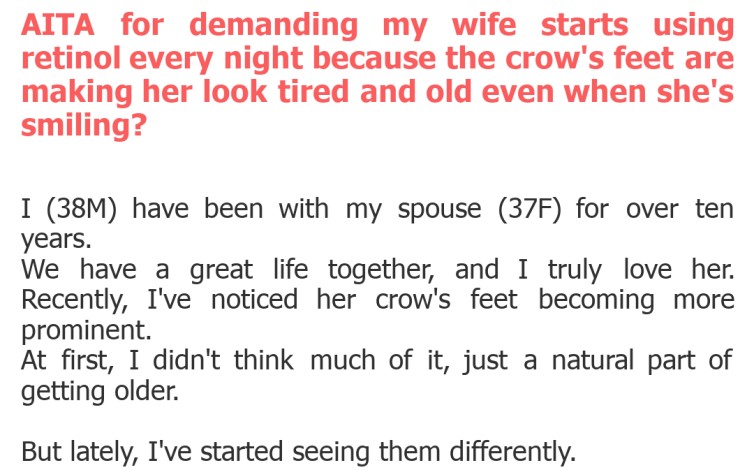
"AITA for demanding my wife starts using retinol every night because the crow's feet are making her look tired and old even when she's smiling?"
I (38M) have been with my spouse (37F) for over ten years. We have a great life together, and I truly love her. Recently, I've noticed her crow's feet becoming more prominent. At first, I didn't think much of it, just a natural part of getting older. But lately, I've started seeing them differently. They're not just lines of character; they make her look genuinely tired and, dare I say, older than her years, even when she's in a good mood and smiling widely.\nI mentioned it gently a few times, suggesting she might want to try some eye cream, maybe something for 'rejuvenation.' She brushed it off, saying she's fine and doesn't care much about wrinkles. I even bought a high-quality retinol cream and left it on her bathroom counter, hoping she'd get the hint. She didn't use it. This past weekend, I brought it up more directly. I told her I really think she should start using the retinol every night because the lines are noticeable and frankly, they make her look like she's constantly exhausted. I explained that I want her to look and feel her best, and that this is important to me, almost a demand now. She got incredibly upset, accused me of being superficial and said I was essentially telling her she's not good enough as she is. She also said it's controlling and that she's not my 'project.'\nI honestly don't see it that way. I care about her deeply, and I think it's natural to want your partner to look vibrant and healthy. I'm not asking her to undergo surgery or anything drastic, just use a simple cream that could make a big difference. I feel like I'm trying to help her, and she's overreacting. Am I the AITA for demanding she uses retinol for her crow's feet?
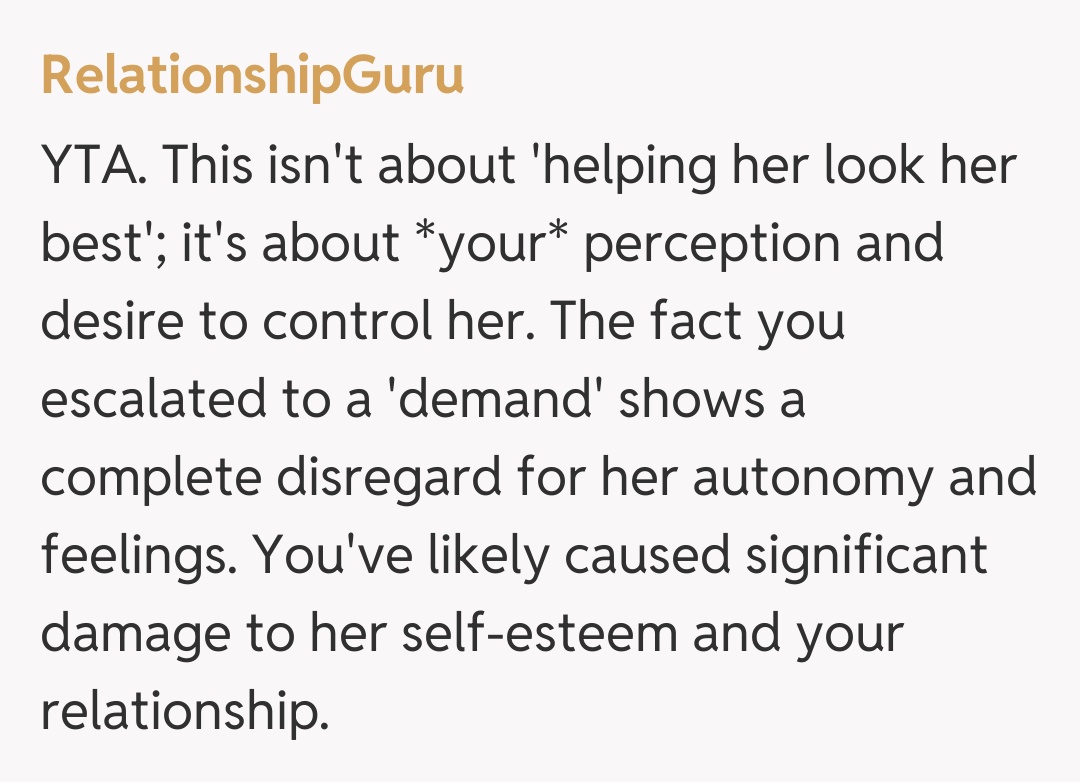
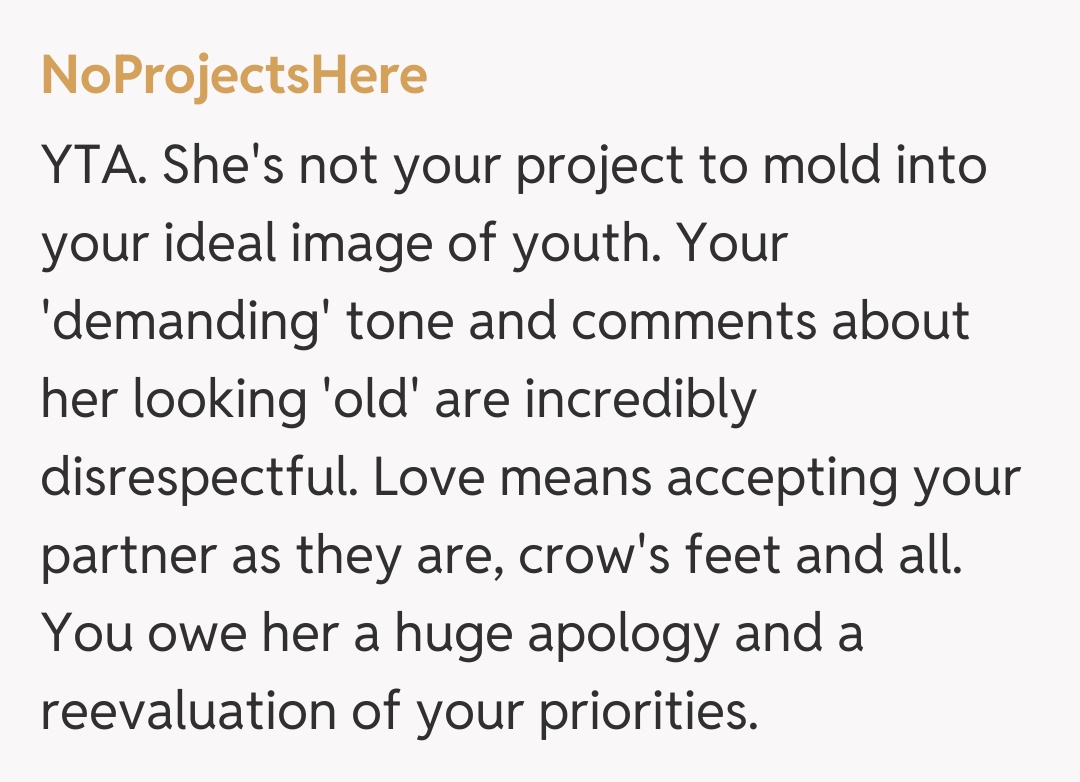
This post immediately raises red flags for many readers, touching upon the delicate balance between genuine concern and unsolicited, appearance-based criticism from a partner. While the original poster (OP) frames his actions as being 'helpful' and wanting his spouse to 'look and feel her best,' the crucial word here is 'demanding.' This shifts the dynamic significantly from a supportive suggestion to an expectation that can feel coercive.\nFrom the spouse's perspective, hearing that her natural facial lines make her look 'tired and old' is deeply hurtful and undermines her self-esteem. Aging is an inevitable part of life, and for a partner to highlight these signs as a problem, especially after she's expressed disinterest in addressing them, implies an unspoken condition of acceptance. It suggests that her current appearance is somehow insufficient or displeasing to him.\nThe act of buying a specific product and then escalating to a 'demand' when it wasn't used also indicates a lack of respect for her bodily autonomy and personal choices. In a healthy relationship, partners support each other's well-being, but they don't dictate personal grooming or aesthetic decisions. Her statement about not being his 'project' perfectly encapsulates the feeling of being managed rather than loved unconditionally.\nUltimately, while the OP may genuinely believe he's acting out of love, his method and choice of words are likely to cause significant emotional damage. True partnership involves acceptance, open communication, and celebrating each other as individuals, not attempting to 'fix' perceived flaws. This situation is less about retinol and more about respect, boundaries, and how partners navigate sensitive personal topics.
Wrinkle Wars: The Internet Weighs In On What Your Partner Can (and Can't) Demand
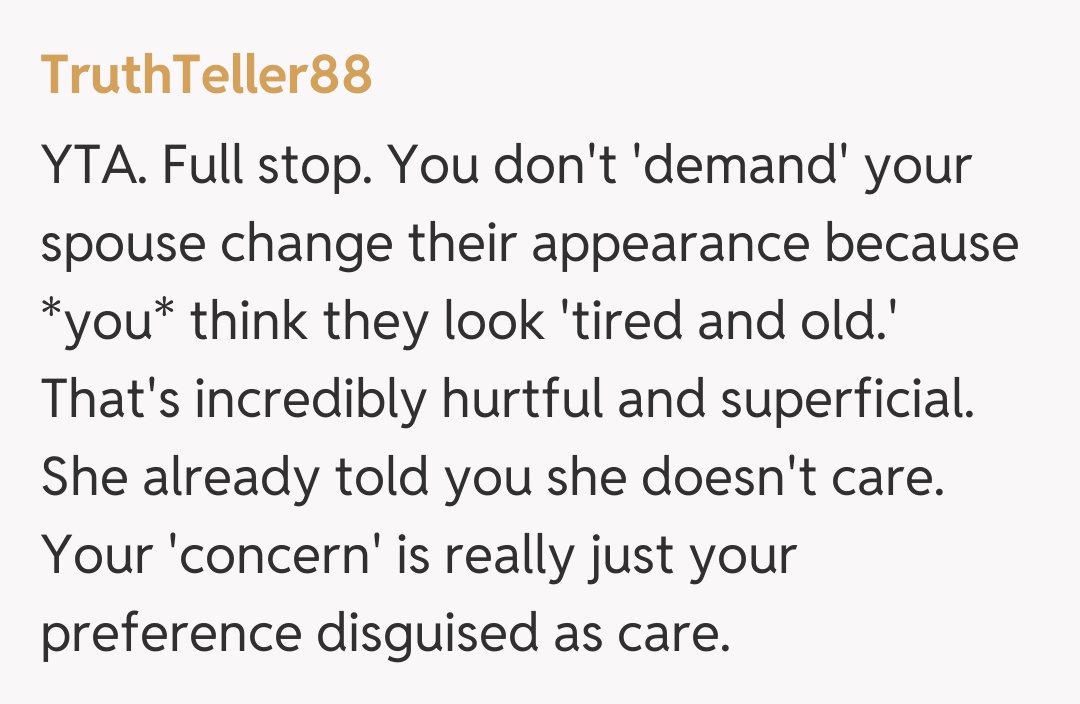
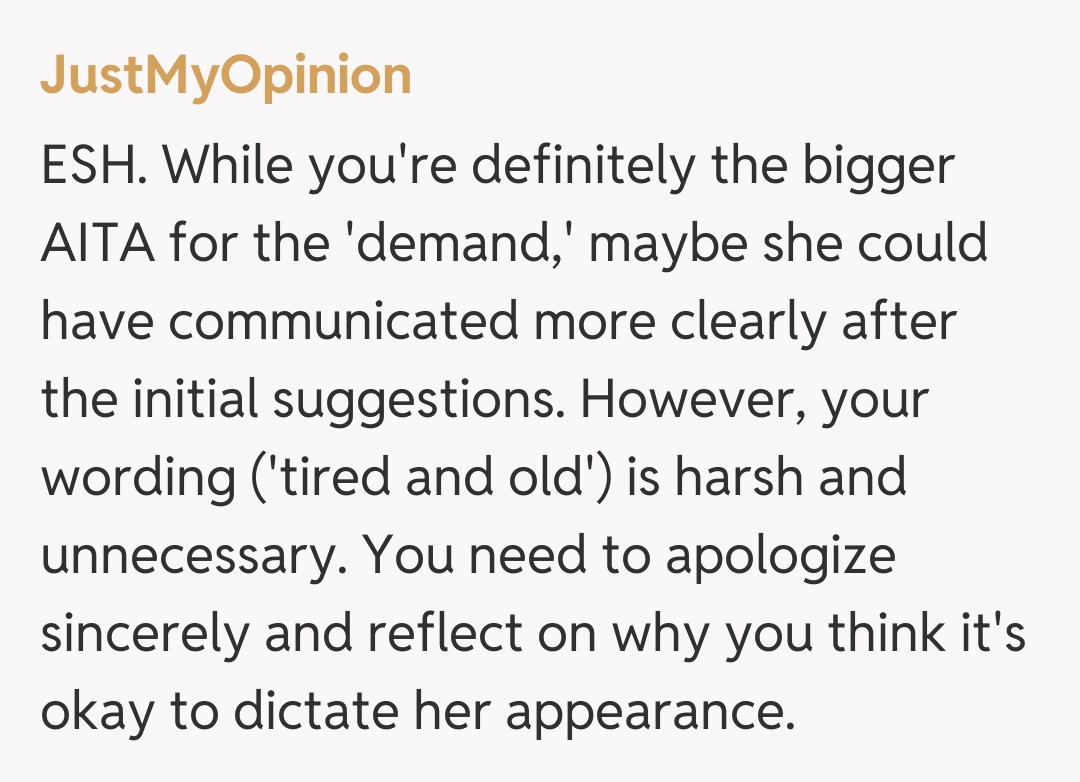
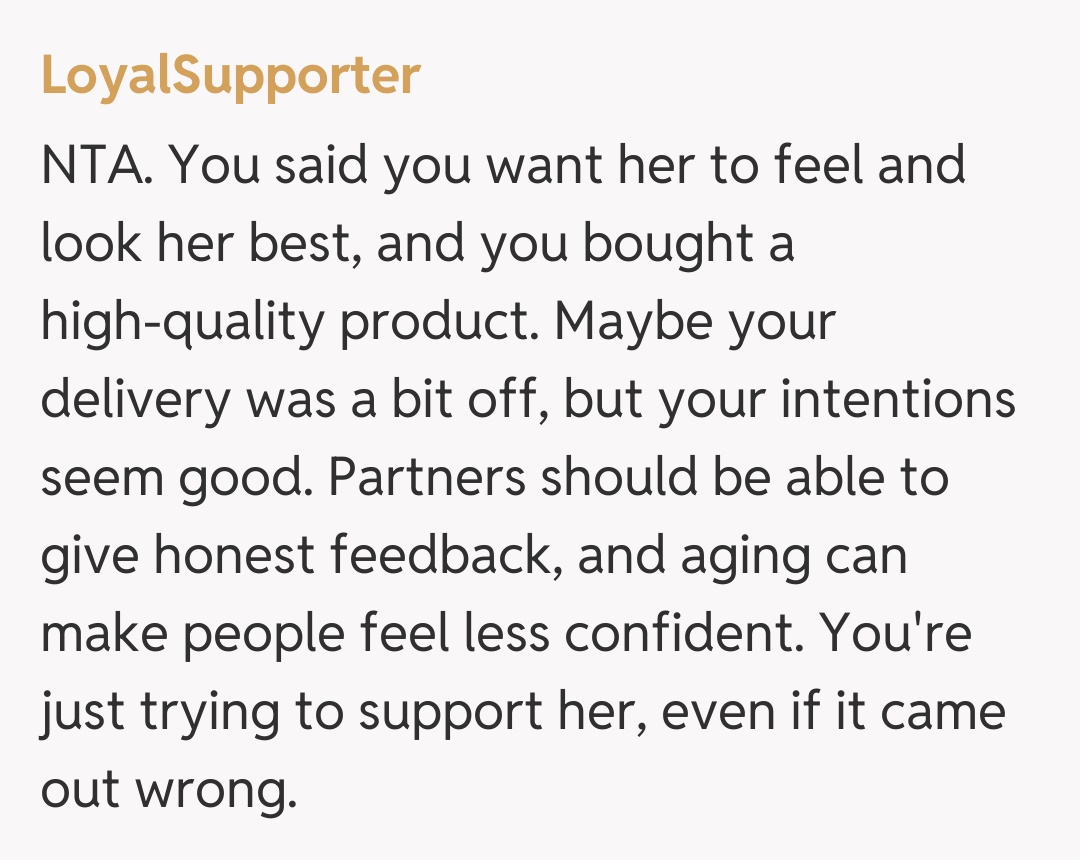
The comments section for this post was, predictably, a fiery battleground, though largely united against the original poster. The overwhelming consensus leaned towards 'You're The AITA,' with many users highlighting the incredibly damaging nature of his 'demand.' People emphasized how such comments chip away at a partner's confidence and foster resentment, rather than creating a closer bond.\nSeveral commenters pointed out the double standard, questioning if the OP would appreciate his own physical changes being 'demanded' into submission. The discussion quickly moved beyond just crow's feet to the broader issue of unsolicited advice and control in relationships, proving that this story resonated deeply with anyone who's ever felt judged or pressured by a loved one about their appearance.
This AITA post serves as a powerful reminder that while good intentions can sometimes exist, the delivery of feedback, especially concerning a partner's appearance, is paramount. What started as perceived concern quickly morphed into a controlling demand, eroding trust and causing significant hurt. Relationships thrive on acceptance, respect, and open communication, not on dictating personal choices or making partners feel inadequate. Let this be a lesson to us all: before offering 'helpful' advice on appearance, consider the emotional impact and whether it truly comes from a place of unconditional love and acceptance.