AITA for telling my wife her therapy sessions are just paid whining and she should stop wasting our money on “feelings”?
Oh, relationships and money! What a volatile combination, especially when thrown into the already complex mix of mental health and personal growth. Today's AITA story dives headfirst into this often-unspoken tension, bringing up a core question about support, understanding, and the perceived value of emotional well-being within a partnership. It's a tale that many can relate to, even if their specific circumstances differ, highlighting the delicate balance between individual needs and shared resources.
It's easy to dismiss what we don't understand, and for many, therapy still carries a stigma or is seen as an unnecessary luxury. But what happens when one partner genuinely believes it's essential for their well-being, and the other views it as a drain on finances for something intangible? Our letter writer has strong opinions, and they certainly didn't hold back. Let's unpack this conflict and see where the community stands.

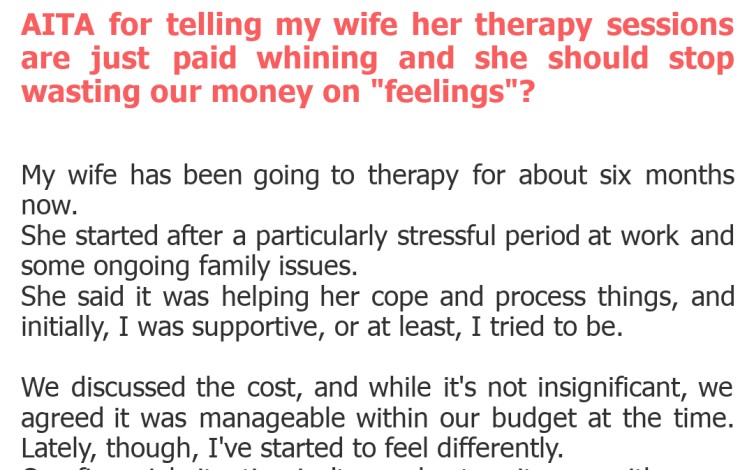
"AITA for telling my wife her therapy sessions are just paid whining and she should stop wasting our money on "feelings"?"
My wife has been going to therapy for about six months now. She started after a particularly stressful period at work and some ongoing family issues. She said it was helping her cope and process things, and initially, I was supportive, or at least, I tried to be. We discussed the cost, and while it's not insignificant, we agreed it was manageable within our budget at the time.
Lately, though, I've started to feel differently. Our financial situation isn't as robust as it was, with some unexpected expenses popping up. Every week, another bill for her sessions lands, and frankly, I don't see the tangible results. She talks about 'processing' and 'validating feelings,' but to me, it often sounds like she's just rehashing old problems that she could probably talk to me about for free, or just 'get over.' It feels like an indulgence we can no longer afford.
I finally hit my breaking point last night when she mentioned needing to schedule a few extra sessions before the end of the year. I just blurted out, "Are you serious? More 'paid whining'? Can't you just deal with your feelings instead of paying someone to listen to them? It's a waste of our money, and honestly, you should just stop."
She looked absolutely stunned. Her face fell, and she went completely silent. After a moment, she just got up and left the room. She hasn't really spoken to me since, beyond clipped answers to direct questions. I tried to explain that I was just worried about our finances, but she just shakes her head and avoids eye contact. The atmosphere in our home is incredibly tense.
Now I'm wondering if I went too far. I stand by my concerns about the money, and I still think she could handle things differently, but the way she reacted has me questioning if my delivery was out of line. I was just trying to be practical, but she's clearly hurt. AITA?
This post touches on a raw nerve for many couples: how to navigate personal needs versus shared financial realities. The original poster (OP) clearly views therapy as an expendable luxury, especially when finances tighten. Their frustration stems from a lack of perceived 'return on investment' and a belief that emotional processing can be handled internally or through informal discussion, rather than a professional setting. This perspective is not uncommon, but it often clashes profoundly with those who find immense value in therapeutic support.
The core issue isn't just the money; it's also a fundamental difference in understanding and valuing emotional work. For the wife, therapy is likely a vital tool for her mental health, a space to explore complex feelings without judgment, something a partner, however loving, isn't always equipped to provide. The husband's dismissal as 'paid whining' invalidates her experience and the therapeutic process entirely, which can feel incredibly hurtful and isolating, especially coming from a spouse.
Financial stress is absolutely a valid concern in any relationship. It's understandable for someone to look for areas to cut back when money gets tight. However, the manner in which this concern was raised was undeniably harsh and disrespectful. There's a significant difference between expressing worry about the budget and attacking a partner's chosen method of self-care and personal growth with such dismissive language. The impact of the words used here is clearly much greater than the financial concern itself.
Moving forward, communication is key, but it needs to be constructive and empathetic. The couple needs to address both the financial constraints and the wife's need for mental health support. Perhaps exploring more affordable options for therapy, or discussing a clear budget for it, could be solutions. However, the immediate priority should be repairing the emotional damage caused by the husband's invalidating remarks, acknowledging the wife's feelings before tackling logistics.
The internet weighs in: Was it tough love or just plain cruel?
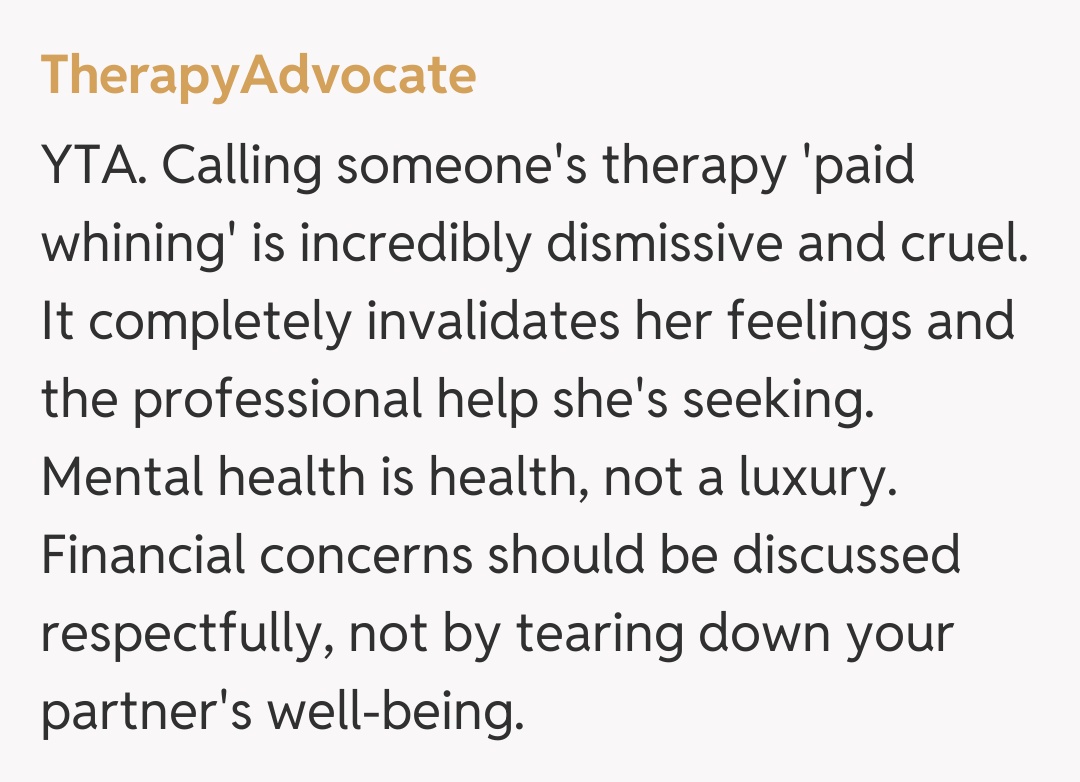
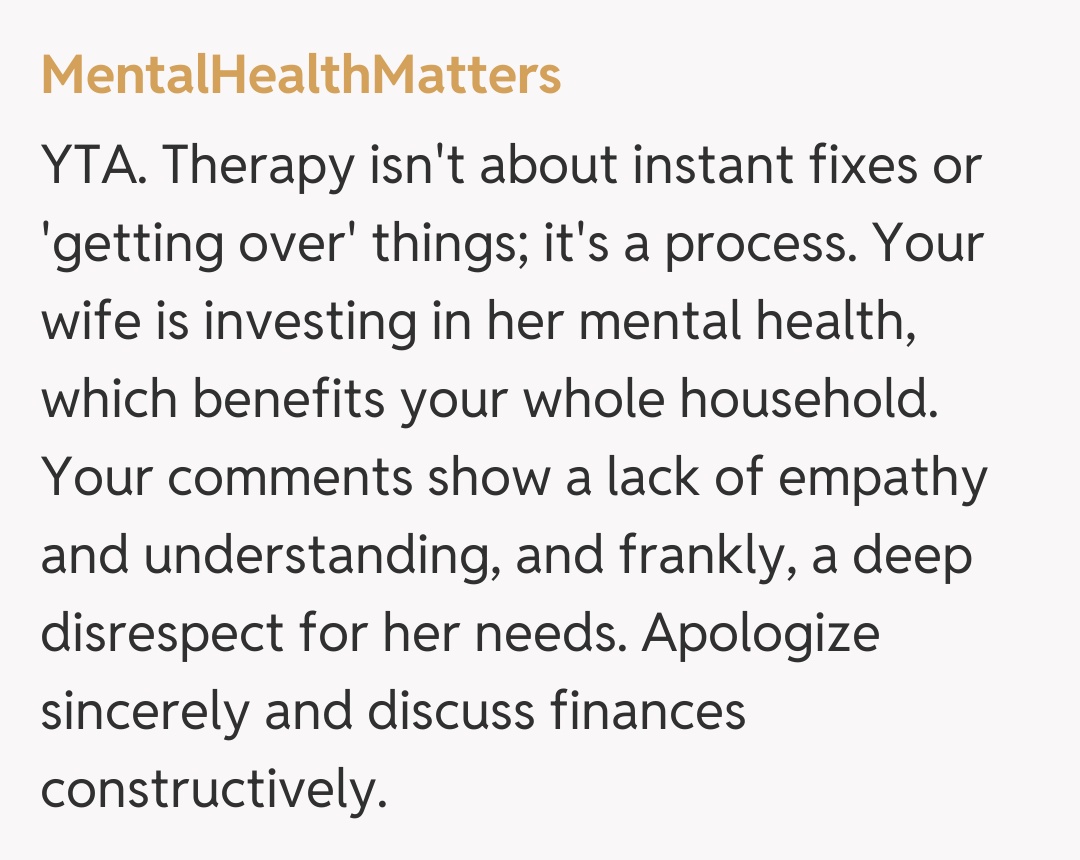
The comments section on this one was, as expected, a whirlwind! A significant majority leaned towards 'You're The Asshole' (YTA), with many users pointing out the immense invalidation and disrespect inherent in calling therapy 'paid whining.' The consensus was that while financial concerns are legitimate, the delivery was incredibly damaging and undermined the wife's mental health journey. Many shared personal stories about how therapy saved their relationships or personal well-being, emphasizing its value.
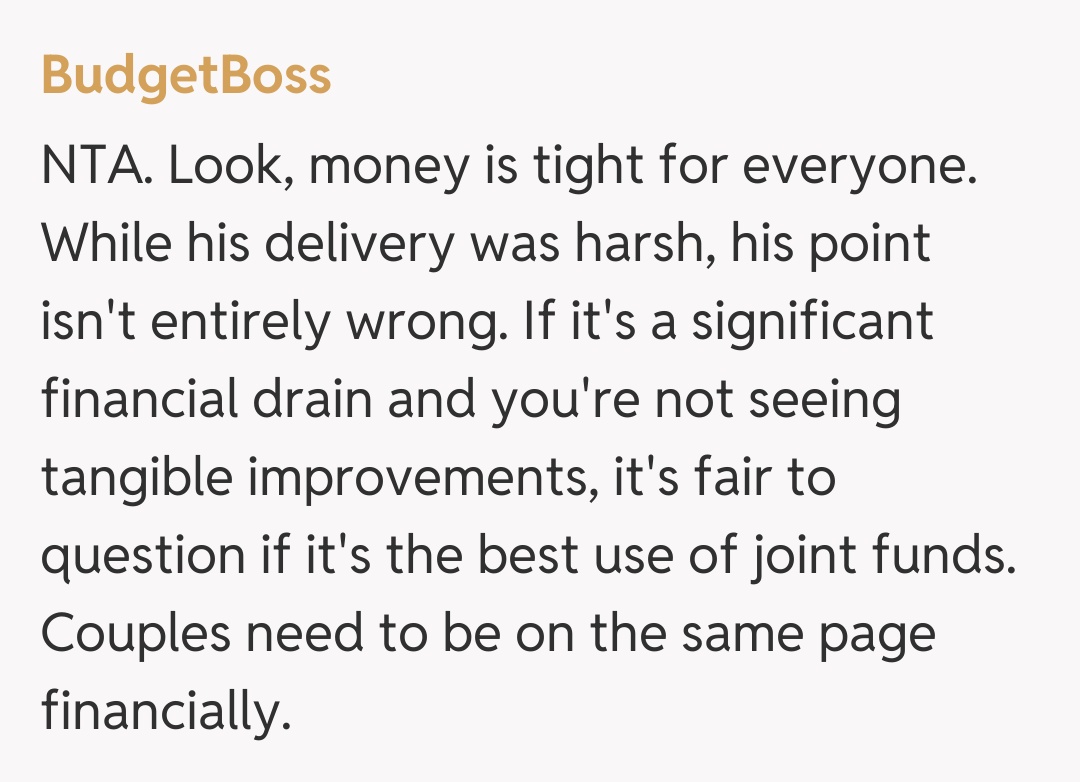
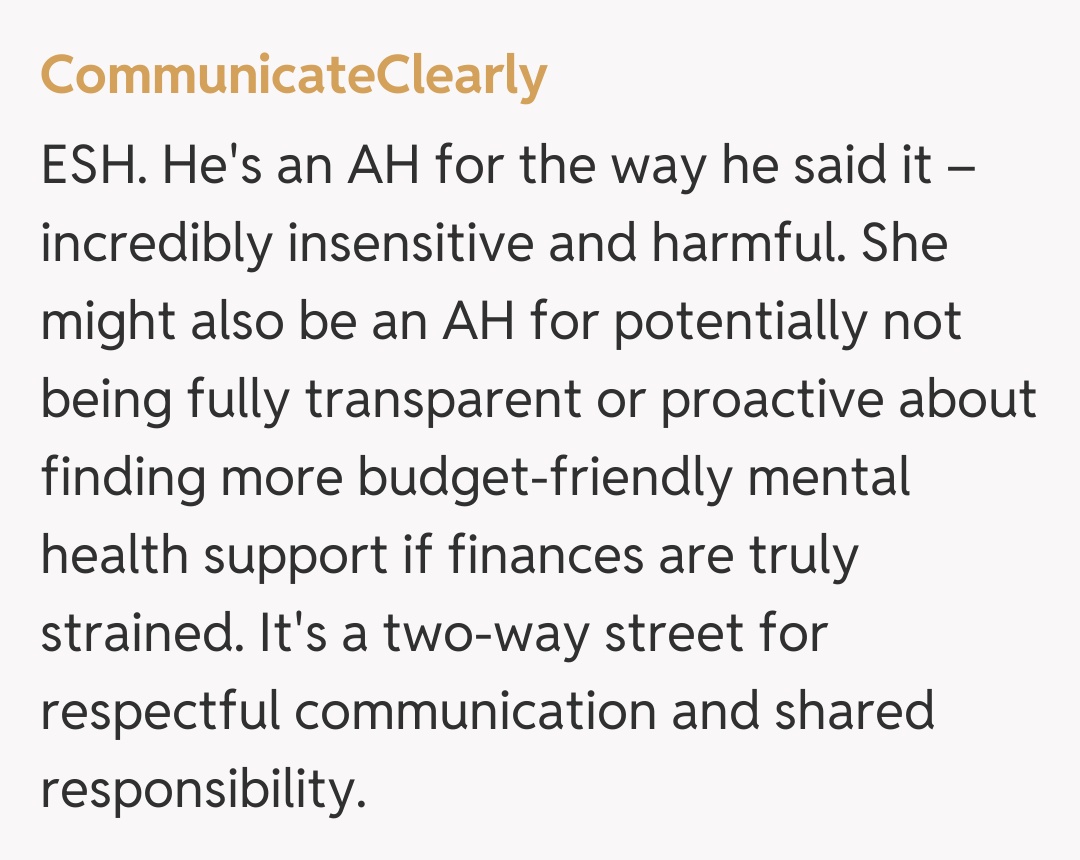
However, a smaller but vocal contingent sided with 'No Assholes Here' (NTA) or 'Everyone Sucks Here' (ESH), arguing that financial transparency and responsible budgeting are crucial. These commenters acknowledged the husband's right to be concerned about money, suggesting that perhaps the wife wasn't fully considering the joint financial strain. Some also noted that if therapy isn't showing 'results' in the husband's eyes, a conversation about its efficacy or alternatives could be warranted, though again, the phrasing was key.
This AITA post serves as a potent reminder of the importance of empathy and respect within a relationship, especially when discussing sensitive topics like mental health and finances. While financial concerns are always valid, the language we choose can either build bridges or burn them down. Invalidating a partner's emotional journey often does irreparable harm. The key takeaway here is that communication must be empathetic, even when addressing difficult truths. Perhaps this couple can still find a path forward by prioritizing understanding before problem-solving.