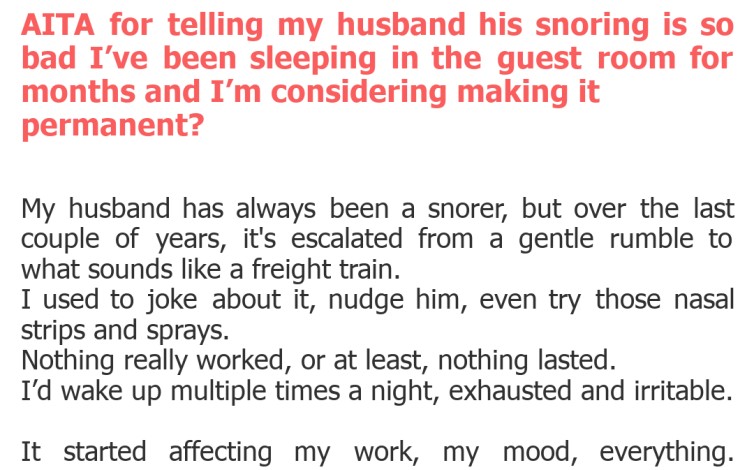
AITA for telling my husband his snoring is so bad I’ve been sleeping in the guest room for months and I’m considering making it permanent?
Oh, the silent killer of relationships: snoring! We've all been there, or know someone who has, where a peaceful night's sleep becomes a distant dream thanks to a partner's nocturnal symphony. It's not just an annoyance; it can seriously impact mental health, productivity, and even the intimacy between a couple. This week's AITA story dives deep into this very common, yet often unaddressed, marital challenge.
Our poster is at their wit's end, and frankly, who can blame them? Years of interrupted sleep can make anyone desperate for a solution. But at what point does seeking personal solace become a betrayal to the marital bed? It's a tricky balance between self-preservation and maintaining closeness, and this story perfectly encapsulates that difficult decision. Let's unpack it.

"AITA for telling my husband his snoring is so bad I’ve been sleeping in the guest room for months and I’m considering making it permanent?"
My husband has always been a snorer, but over the last couple of years, it's escalated from a gentle rumble to what sounds like a freight train. I used to joke about it, nudge him, even try those nasal strips and sprays. Nothing really worked, or at least, nothing lasted. I’d wake up multiple times a night, exhausted and irritable. It started affecting my work, my mood, everything.
About six months ago, after yet another sleepless night that ended with me crying in frustration, I quietly packed a pillow and blanket and moved into our guest room. I didn't say anything to him initially. I just needed sleep. He noticed the next morning, of course, and seemed a little hurt but understood my need for rest. Since then, it’s become the norm. I spend most nights in the guest room, and my sleep has dramatically improved. It’s been a huge relief, honestly, to finally get some consistent rest.
Recently, during a conversation about some home renovations, he casually mentioned redecorating the guest room. I blurted out, without really thinking, that it wouldn't be a guest room for much longer because I was considering making it my permanent bedroom. The look on his face just crumpled. He asked if I was serious, and I admitted I was, explaining that I valued my sleep too much to go back to our shared bed given his snoring.
He got very quiet and then said he felt rejected and that it felt like I was giving up on our intimacy. I tried to explain it wasn't about him, but about the sleep, and that we could still find time for closeness. He just shook his head and walked away, clearly upset. Now I'm wondering if I went too far. I genuinely need my sleep, but I don't want to hurt him. AITA?
This AITA post highlights a truly common and often agonizing dilemma in long-term relationships: how to balance individual needs, like essential sleep, with the perceived needs of the partnership, such as sharing a bed. On one hand, the poster's desperation for consistent, uninterrupted sleep is completely understandable. Chronic sleep deprivation can lead to serious health issues, mood disturbances, and a decreased quality of life, impacting all aspects of daily functioning.
The poster tried various solutions and endured months of suffering before taking the step of moving to the guest room. This wasn't a snap decision but a gradual progression of seeking relief. Prioritizing one's health and well-being is not inherently selfish. If a person isn't getting adequate rest, they can't be their best self for their partner, family, or work, which ultimately affects everyone.
However, it's also crucial to acknowledge the husband's perspective. For many, sharing a bed is a fundamental aspect of marital intimacy and connection. Waking up next to your partner, even without physical contact, can foster a sense of security and togetherness. The abruptness of the poster's statement about making the separate sleeping arrangement permanent, after months of it being a quiet 'temporary' solution, likely felt like a significant emotional blow.
His feeling of rejection is valid, even if unintentional. It's not just about s*x, but about daily physical proximity and comfort. While the poster focused on sleep, the husband may interpret the separate rooms as a sign of emotional distance. Open and empathetic communication, perhaps involving professional guidance for his snoring and their communication around the issue, could be key to navigating this sensitive situation.
The Verdict Is In: Is Sleep More Important Than The Shared Bed?
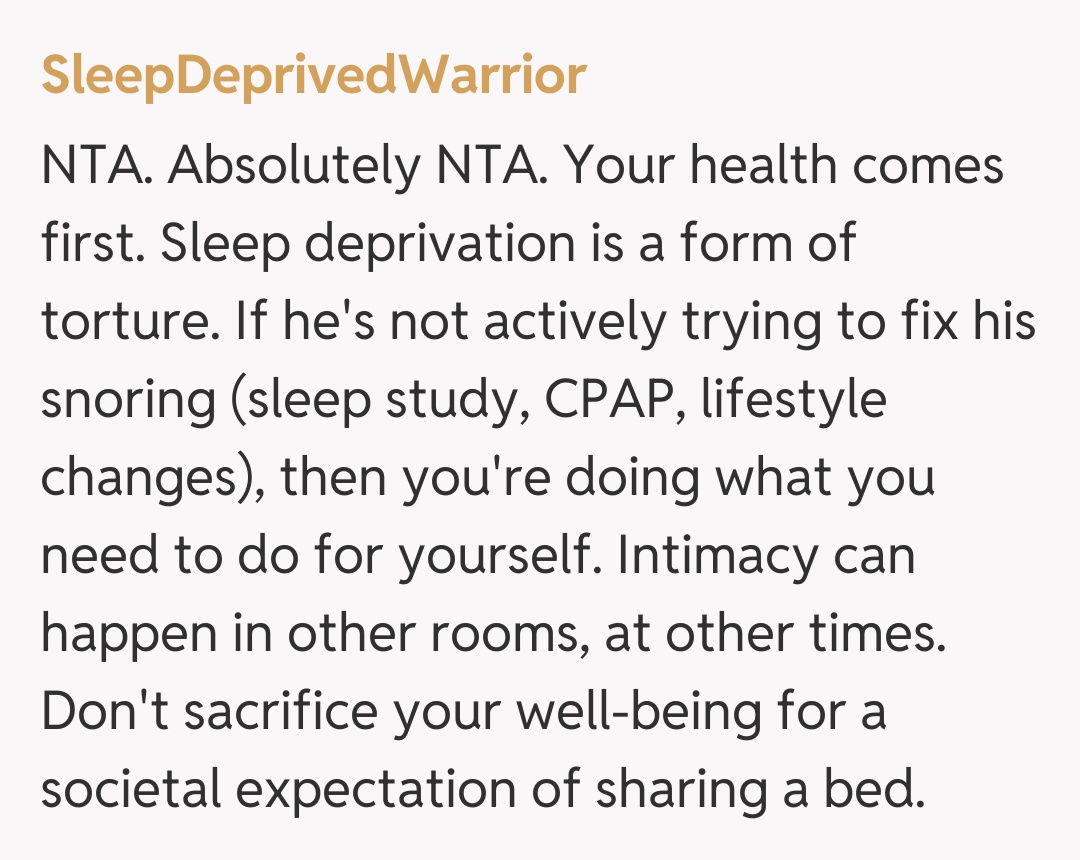
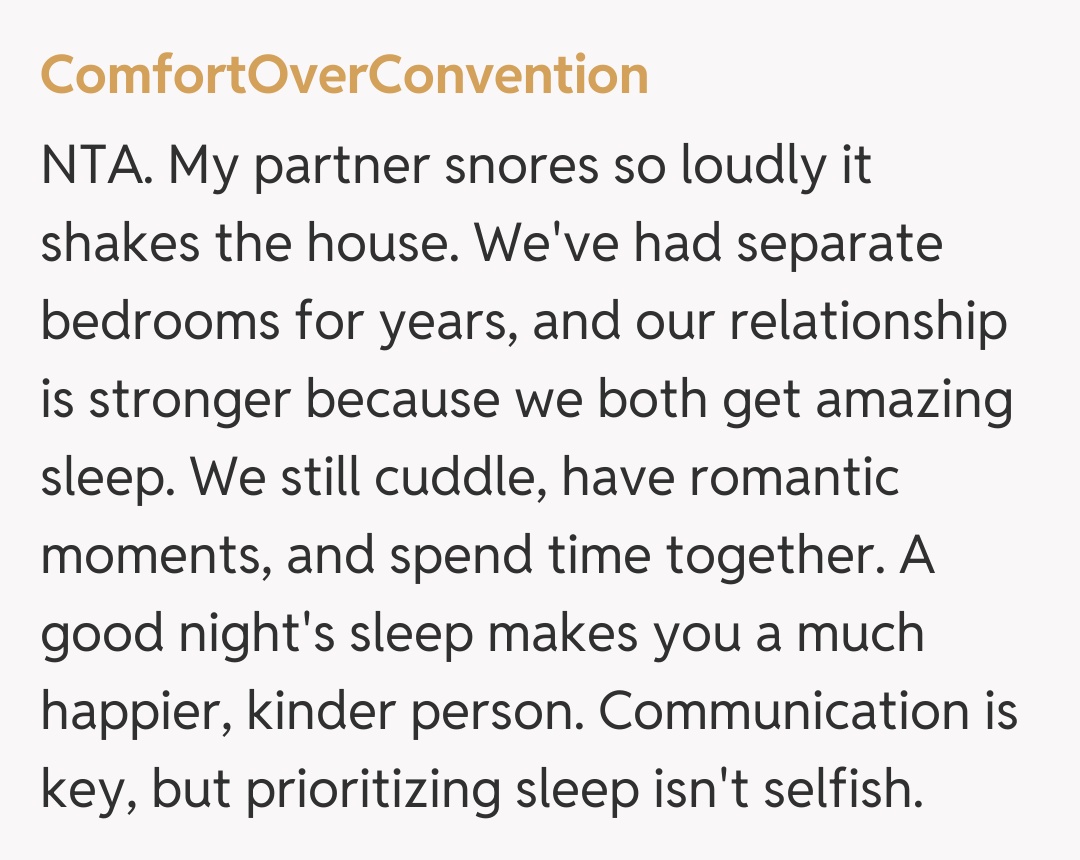
The comments section for this one was absolutely buzzing, and it's clear this issue resonates deeply with many readers. A significant number of people sided with the poster, emphatically declaring them NTA. Many shared their own struggles with snoring partners, detailing the extreme measures they've taken for sleep, from earplugs to separate rooms, emphasizing that sleep is a non-negotiable human need. The sentiment was strong: you can't be a good partner if you're constantly exhausted.
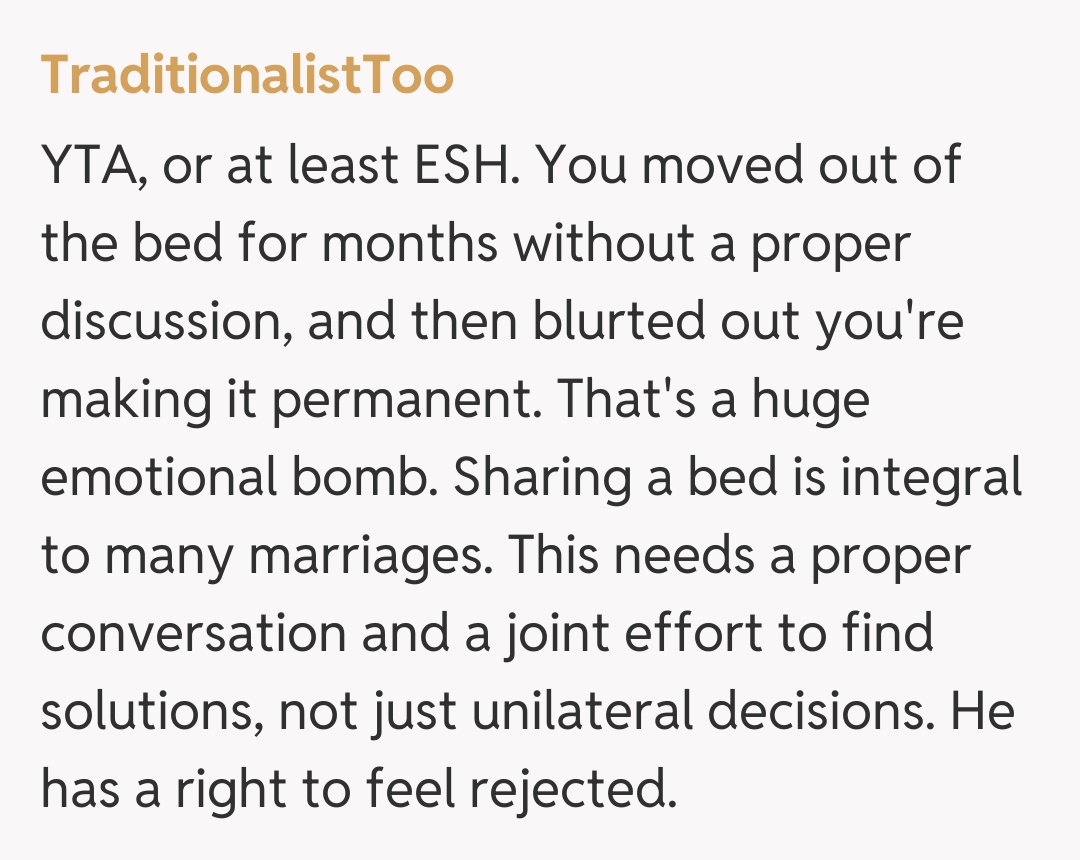
Conversely, a smaller but vocal contingent suggested the poster might be the A**hole, or at least could have handled the situation more sensitively. These comments often focused on the husband's feelings of rejection and the potential for separate bedrooms to erode intimacy. Some advised couples therapy or more aggressive medical intervention for the snoring, suggesting that permanently moving out felt like giving up on a shared solution.
This AITA post perfectly illustrates the delicate balance between personal needs and relational harmony. While the need for sleep is undeniable, the way difficult truths are communicated can deeply impact a partner. There's no single 'right' answer, as every couple's dynamics and definitions of intimacy are unique. Ultimately, this situation underscores the importance of ongoing, honest communication and perhaps even professional help, both for the medical issue of snoring and the emotional impact of separate sleeping arrangements, to ensure both partners feel heard and valued.