AITA for telling my wife that her stretch marks make her “unf***able” now and she should cover up even at home?
Oh boy, do we have a doozy for you today, folks. This AITA submission touches on some incredibly raw nerves concerning body image, marital respect, and the often-unspoken struggles that new parents face. When a partner makes comments about physical changes after childbirth, especially derogatory ones, it rarely ends well. This story is a stark reminder of how deeply words can cut and the lasting damage they can inflict on a relationship.
Our submitter is grappling with the aftermath of some truly shocking statements made to their wife regarding her post-pregnancy body. The title alone gives you a chilling preview of the insensitivity involved. We're diving into a situation where a new mother, already vulnerable, has been dealt a cruel blow by the person who should be her greatest support. Let's unpack this heavy scenario and see where the community lands on who's the asshole here.

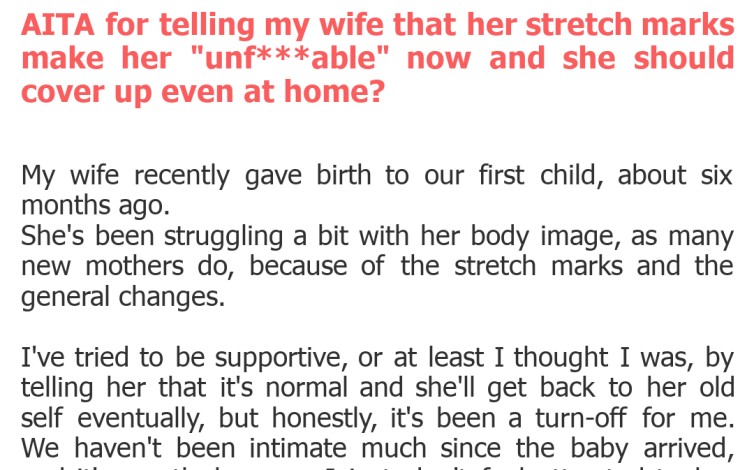
"AITA for telling my wife that her stretch marks make her "unf***able" now and she should cover up even at home?"
My wife recently gave birth to our first child, about six months ago. She's been struggling a bit with her body image, as many new mothers do, because of the stretch marks and the general changes. I've tried to be supportive, or at least I thought I was, by telling her that it's normal and she'll get back to her old self eventually, but honestly, it's been a turn-off for me. We haven't been intimate much since the baby arrived, and it's mostly because I just don't feel attracted to her body the way I used to.
Last night, she came into the living room wearing a short nightgown, something she used to wear all the time before. The stretch marks on her stomach were quite visible. I just blurted it out, without really thinking. I told her that those marks make her 'unf***able' right now and that maybe she should consider covering up more, even around the house, because it was hard for me to look at. She froze, then her eyes welled up. She didn't say anything, just turned around and walked back to the bedroom. I heard sobbing for a while. Now she's barely speaking to me, and I'm wondering if I went too far. I mean, I was just being honest, wasn't I?
I understand that what I said was harsh, but I feel like I'm also suffering here. My sex life has plummeted, and I miss the physical intimacy we once shared. I just want to feel attracted to her again. I thought by being direct, we could address the elephant in the room. I didn't mean to hurt her, but I also feel like my feelings are valid. Should I just lie and pretend I find her body exactly the same? I feel like that would be dishonest in a different way, and our relationship is built on honesty.
She's been sleeping in the guest room since, and the tension is palpable. My attempts to apologize have been met with silence or short, clipped responses. She even mentioned that she feels completely betrayed and that I've destroyed her confidence. I honestly didn't think it would hit her this hard. I just wanted to express my feelings. So, AITA for being honest about my attraction, or lack thereof, to my wife's post-pregnancy body?
This situation is undoubtedly complex, touching on the delicate balance of honesty in a relationship versus the impact of hurtful words. While it's true that open communication is vital, the manner and language used when expressing discomfort or lack of attraction can either build bridges or burn them down. The choice of words, specifically calling her 'unf***able,' crosses a line from honest expression into deeply personal and destructive territory.
New mothers are incredibly vulnerable, both physically and emotionally, after childbirth. Their bodies undergo immense changes, and self-esteem can be fragile. At this stage, a partner's support and affirmation are paramount. To have the person who shared in creating their child deliver such a devastating blow to her body image can be incredibly damaging, potentially eroding trust and intimacy for years to come.
One could argue that the submitter was trying to be 'honest' about their feelings. However, there's a vast difference between articulating a struggle with attraction in a compassionate, empathetic way and using language that strips a partner of their dignity and desirability. 'Honesty' is not a free pass for cruelty, especially not when directed at someone in a vulnerable state. Empathy should always be the guiding principle in such sensitive conversations.
The consequence of these words is evident in the wife's reaction and the immediate strain on the marriage. While the submitter's feelings about a change in attraction are their own to experience, the way they communicated those feelings was profoundly misguided and harmful. Addressing intimacy concerns requires tact, sensitivity, and a focus on solutions and understanding, not brutal, shaming pronouncements.
The internet weighs in: Is 'honesty' always the best policy?
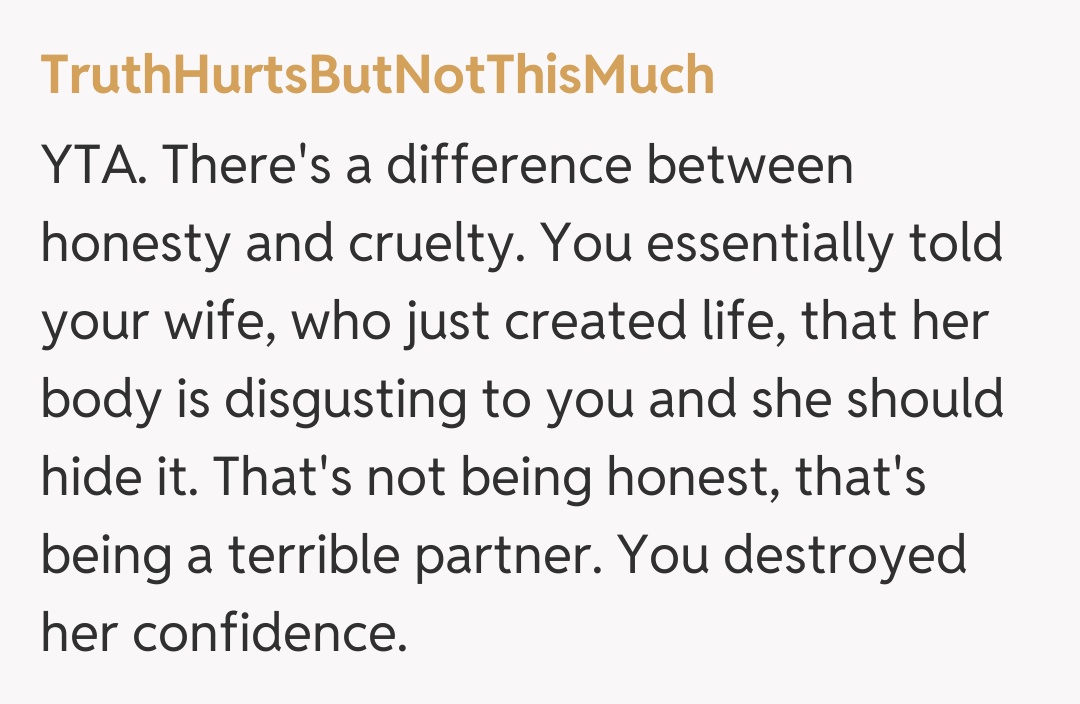
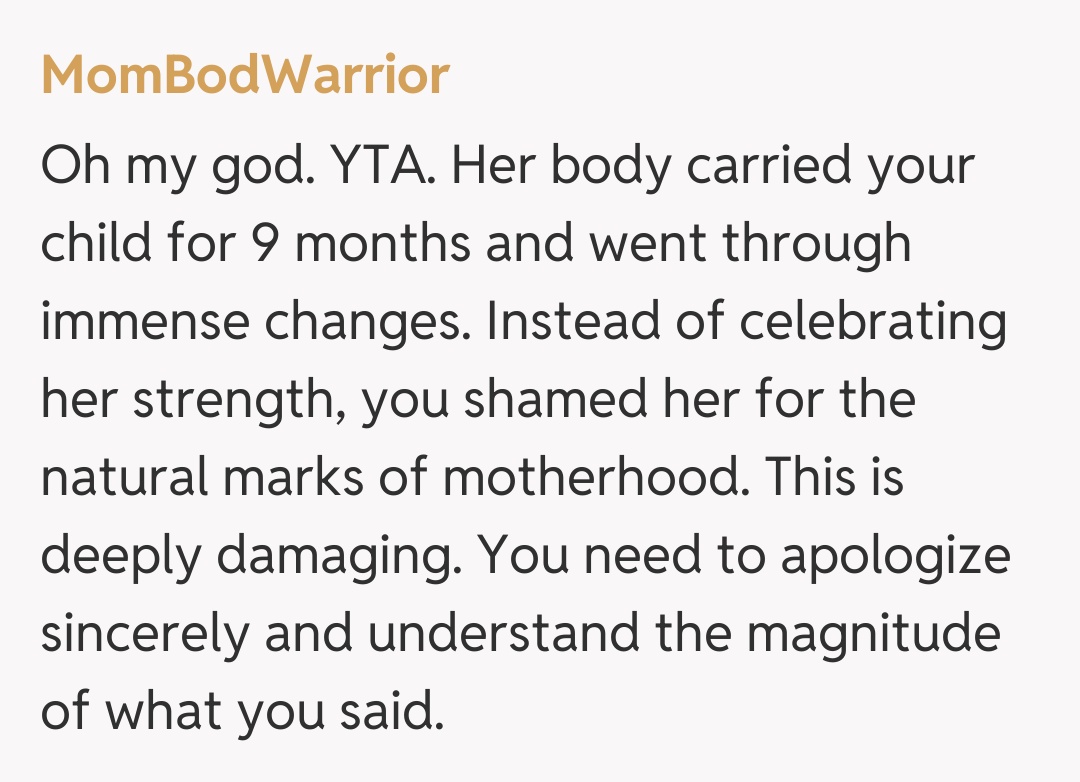
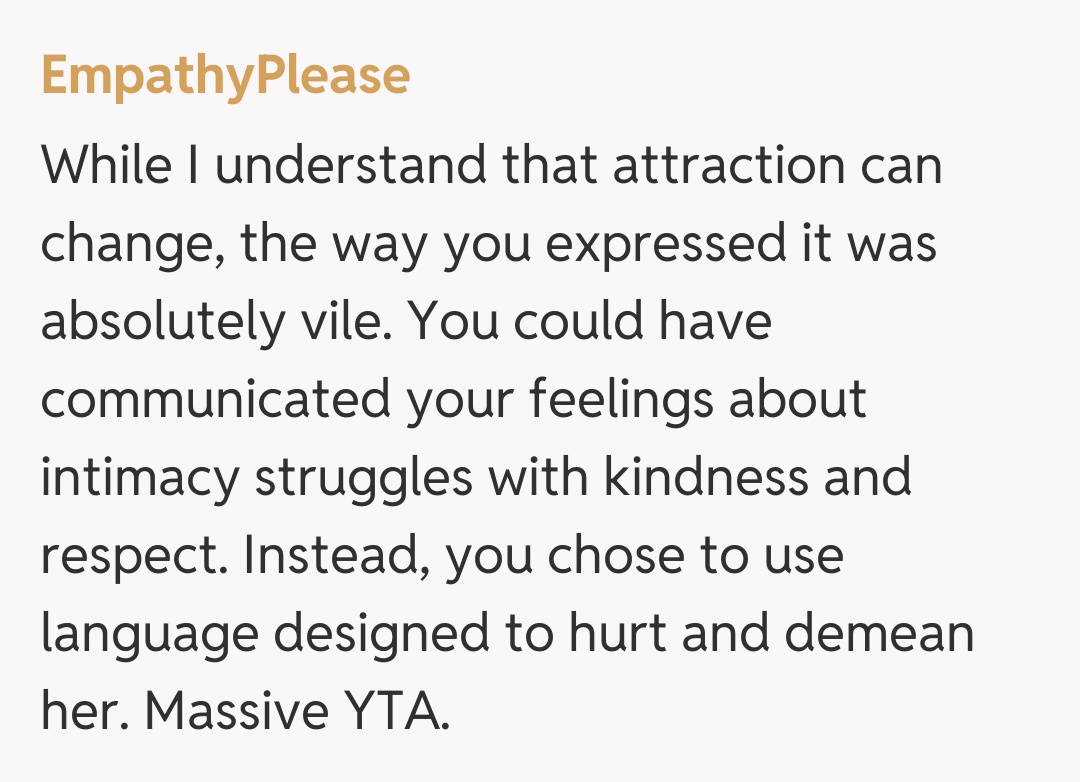
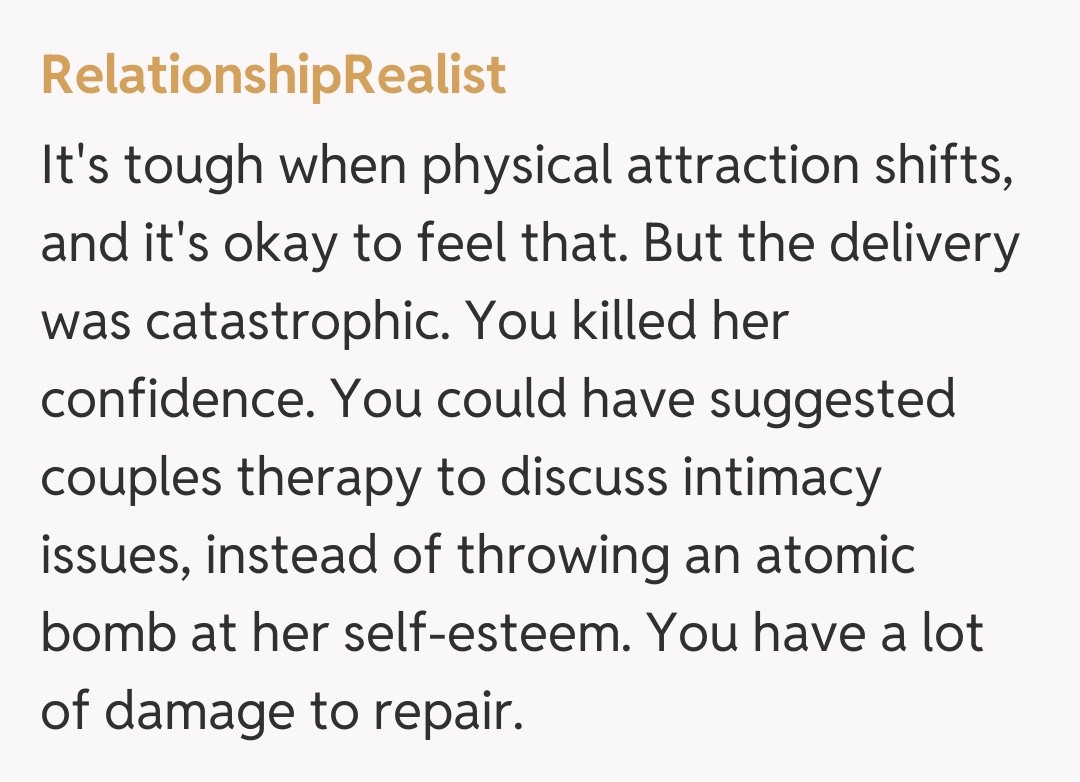
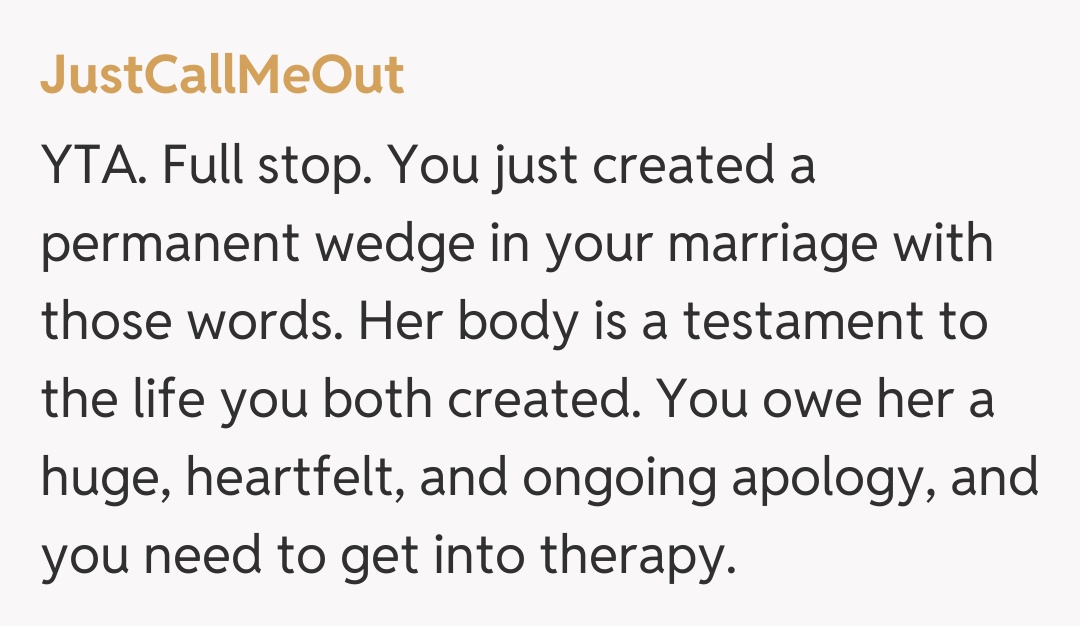
The comments section for this story exploded, as expected. The overwhelming consensus leans towards a resounding 'YTA' for the submitter, and it's easy to see why. Many users highlighted the cruel and unnecessary nature of the language used, pointing out that there are a million better ways to express a change in feelings than by declaring a partner 'unf***able.' The sheer lack of empathy shown towards a new mother was a recurring theme.
Several comments focused on the double standard, questioning if the submitter would appreciate such a frank and harsh assessment of their own physical changes or shortcomings. The discussion often shifted to the long-term damage such words can inflict, suggesting that restoring trust and intimacy after such a betrayal will be an uphill battle. The community mostly agrees this wasn't honesty, but rather a profound failure of kindness and partnership.
This post serves as a powerful cautionary tale about the irreversible impact of harsh words, particularly in intimate relationships during vulnerable times. While the submitter may have believed they were being 'honest,' the chosen language crossed a line into profound cruelty. Repairing the damage to his wife's self-esteem and their marital trust will require immense effort, sincere apologies, and likely professional help. This isn't just about stretch marks; it's about respect, empathy, and the foundation of a partnership. Let's hope the submitter learns the vital lesson that some truths are better handled with compassion, or not at all.