AITA for secretly tracking my boyfriend’s location 24/7 and confronting him every time he’s near a woman’s apartment?
Welcome back, dear readers, to another installment of relationship dilemmas that leave us all scratching our heads and debating ethical boundaries. Today's story plunges us into the complex world of trust, technology, and the thorny issue of privacy within a partnership. It's a tale that many might find unsettling, pushing the limits of what's considered acceptable in the name of security or insecurity. We're talking about a significant breach of personal space and autonomy.
This situation highlights how modern tools, while incredibly useful, can also become instruments of control or suspicion if not handled with extreme care and mutual consent. The core of any healthy relationship is built on a foundation of open communication and trust, and when that foundation is chipped away by secret actions, the entire structure can crumble. So, let's dive into this intense narrative and see where the community stands on such a controversial choice.

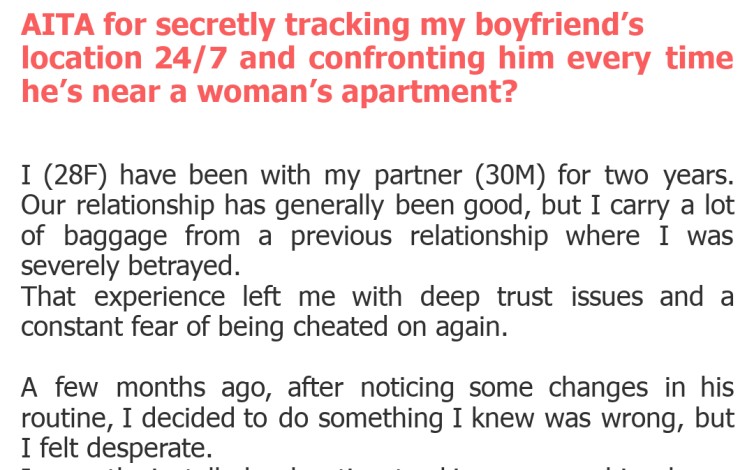
"AITA for secretly tracking my boyfriend’s location 24/7 and confronting him every time he’s near a woman’s apartment?"
I (28F) have been with my partner (30M) for two years. Our relationship has generally been good, but I carry a lot of baggage from a previous relationship where I was severely betrayed. That experience left me with deep trust issues and a constant fear of being cheated on again. A few months ago, after noticing some changes in his routine, I decided to do something I knew was wrong, but I felt desperate. I secretly installed a location tracking app on his phone.
My intention wasn't malicious, truly. I just wanted peace of mind, to confirm he was where he said he was. However, it quickly became a habit, an obsession even. I started checking his location constantly, especially when he was out without me. The real problem began when I noticed a recurring pattern: he would frequently be in the vicinity of a particular apartment complex, one I knew belonged to a female colleague of his. My stomach would drop every single time I saw that dot on the map. I knew I couldn't let it go, so I started confronting him.
I never mentioned the tracking directly. Instead, I'd say things like, "Oh, you were really close to [area name] today, anything interesting going on?" or "Did you run into [colleague's name] today? I saw her car nearby." My partner would often look confused or annoyed, saying he was just driving through, or picking up something, or that he stopped to talk to a mutual friend in the building. Each time, I'd feign belief, but the seed of doubt grew, fueled by the tracking data.
Lately, his frustration has escalated. He's started asking why I'm so obsessed with his whereabouts, and even accused me of not trusting him. Last night, after another incident where I confronted him about being near the complex, he blew up. He said he feels like he's under constant surveillance and that I'm creating problems where there are none. He said if I don't trust him, we shouldn't be together. He doesn't know about the app, but he clearly feels the pressure. I feel terrible, but I don't know how to stop. Am I the asshole for doing this?
This story immediately raises a fundamental question about trust versus control within a relationship. The poster openly admits to carrying significant baggage from past betrayals, which is a very real and painful experience. It's understandable that such a history could lead to heightened anxiety and a desperate desire for reassurance. Acknowledging this underlying pain is crucial before diving into the actions taken, as it explains the motivation, even if it doesn't excuse the behavior.
However, the decision to secretly track a partner's location 24/7 crosses a significant boundary of privacy and respect. A relationship thrives on transparency and mutual consent, and installing an app without a partner's knowledge is a direct violation of that. This act transforms a personal device into a surveillance tool, fundamentally shifting the dynamic from partnership to a covert investigation. It creates an unequal power dynamic where one person holds secret information over the other.
The partner's reaction, feeling constantly surveilled and interrogated, is entirely valid. Even without knowing about the tracking app, the subtle probing and pointed questions would inevitably create an atmosphere of suspicion and distrust. This can make the tracked partner feel like they're being accused even when innocent, leading to resentment, frustration, and a breakdown in open communication. Their feeling of being 'under constant surveillance' is, unfortunately, accurate.
Ultimately, while the poster's underlying fear of betrayal is a legitimate concern that deserves to be addressed, the chosen method of addressing it is deeply problematic. True security in a relationship comes from open dialogue, establishing boundaries, and working through trust issues together, perhaps with professional help. Secret tracking undermines the very foundation of what a healthy, respectful relationship should be.
The Digital Leash: Is This Love or Control?
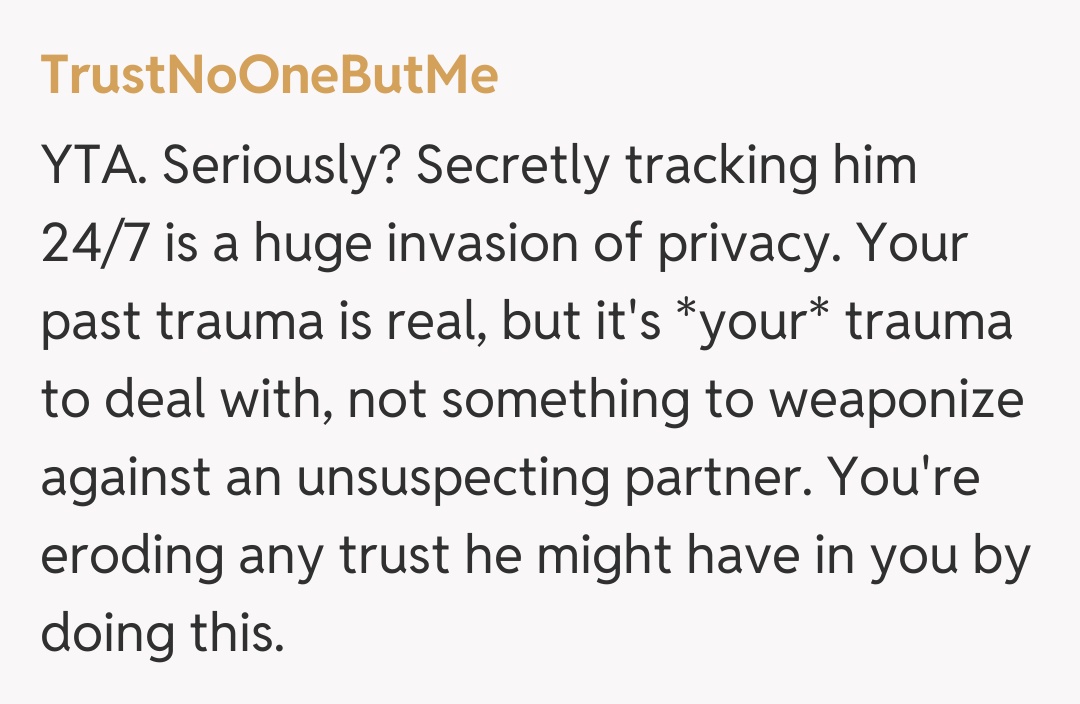
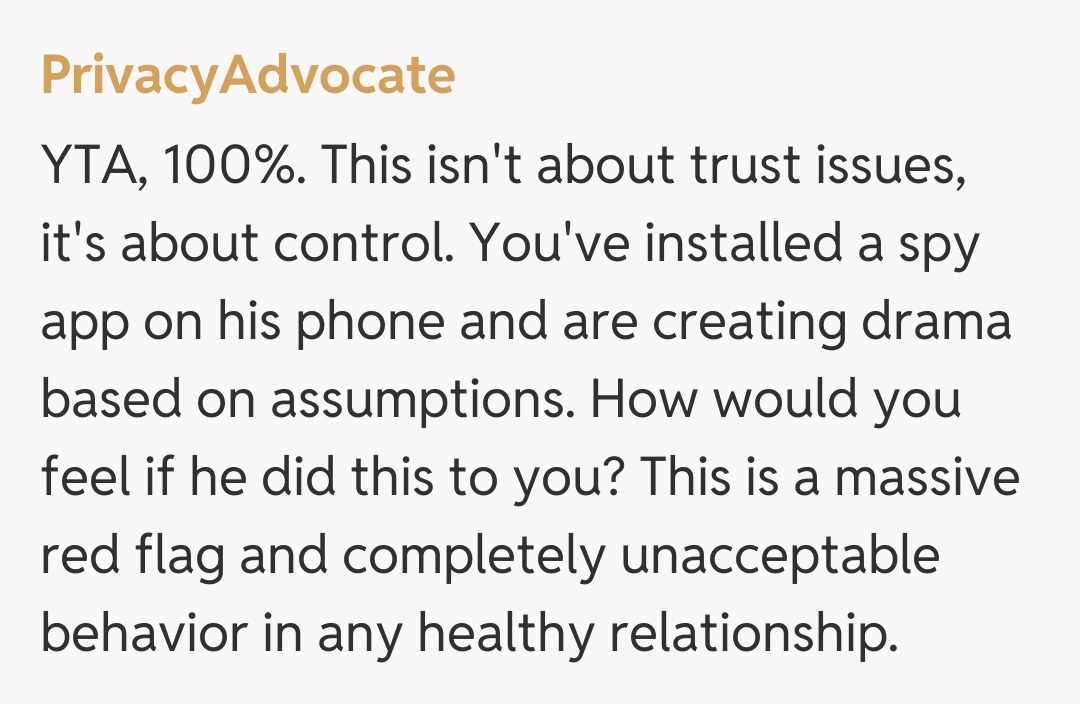
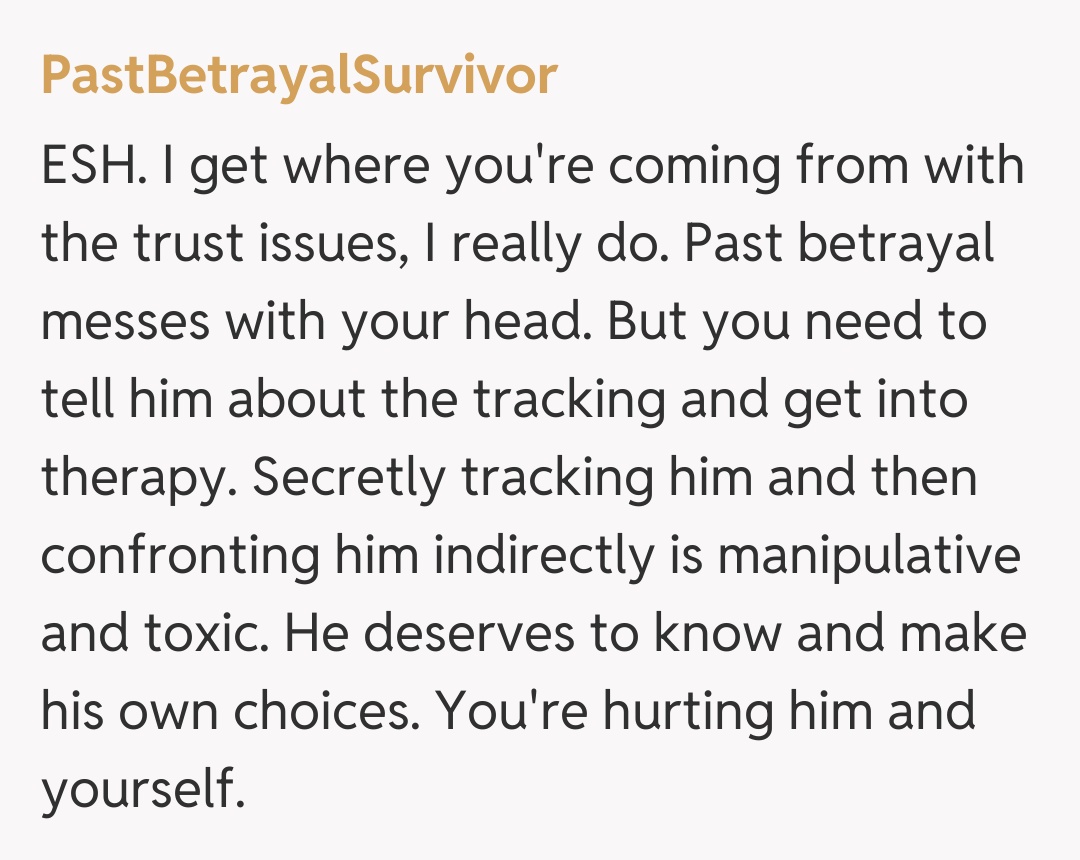
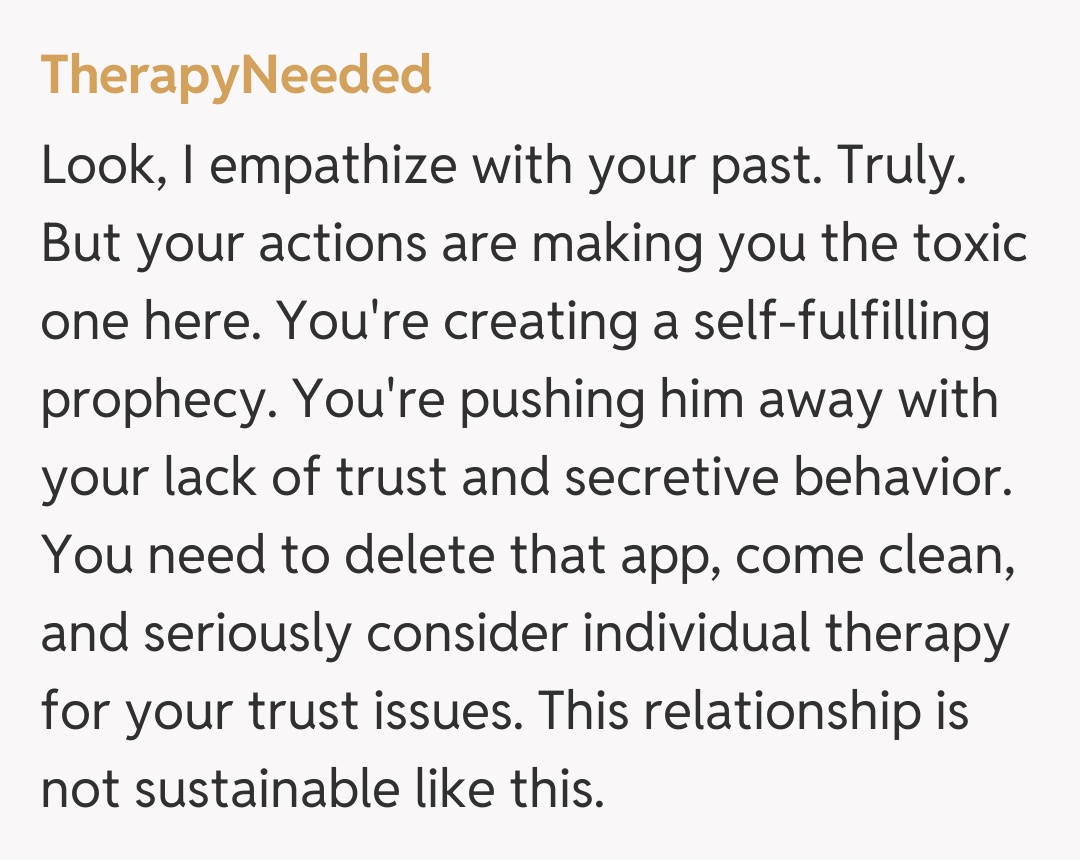
The comments section for this story quickly ignited, with a strong consensus emerging regarding the poster's actions. Many readers expressed profound discomfort with the concept of secret location tracking, highlighting it as a significant breach of trust and privacy. The general sentiment was that while past trauma is valid, it does not justify violating a partner's autonomy in such a manner, essentially turning the relationship into an interrogation.
Interestingly, while most comments condemned the tracking, there was also a thread of empathy for the poster's underlying insecurity and fear of betrayal. However, this empathy was often paired with firm advice that the poster needs to address their own trust issues, possibly with therapy, rather than projecting them onto their current partner through surveillance. The community strongly emphasized that open communication, not covert tracking, is the path to a healthier relationship.
This AITA story serves as a stark reminder of how challenging it can be to navigate relationships, especially when past wounds linger. While empathy for the poster's trust issues is certainly warranted, the overwhelming consensus points to the secret tracking as a detrimental and disrespectful act. It's a powerful illustration that true security and intimacy are built on open communication and mutual trust, not surveillance. For anyone struggling with similar insecurities, seeking professional guidance to heal past traumas and develop healthier coping mechanisms is always the most constructive path forward.