AITA for telling our kids their mom is cheating to turn them against her?
Welcome back, drama-lovers! Today's story plunges us into the messy, often heart-wrenching world of divorce, where the battle lines sometimes extend right into the tender hearts of children. When relationships crumble, it's easy for emotions to run wild, and the desire to 'win' or expose perceived wrongs can become overwhelming. The pain of betrayal can drive individuals to make choices they might later regret, especially when those choices involve the most vulnerable among us: the kids.
Our poster, David, found himself in just such a tumultuous situation. Faced with what he believes was a betrayal, he made a drastic choice that has ignited a firestorm of controversy. The question isn't just about his actions, but the fundamental ethical boundaries of parental conflict. Should children ever be used as pawns in their parents' disputes, especially when sensitive information is involved?

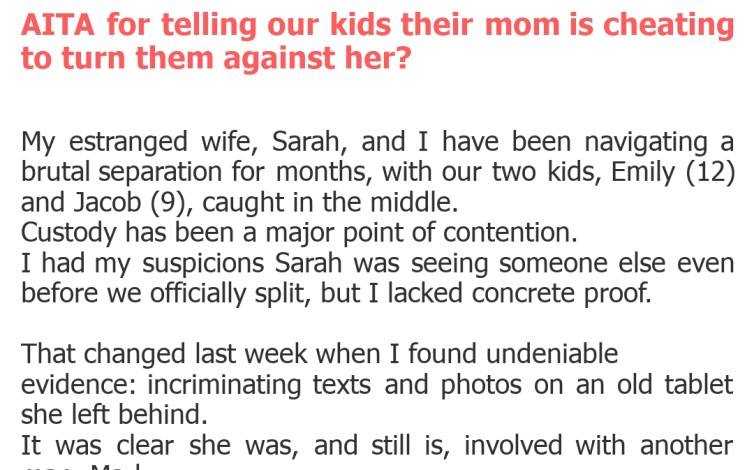
"AITA for telling our kids their mom is cheating to turn them against her?"
My estranged wife, Sarah, and I have been going through a brutal separation for the past few months. We have two kids, Emily (12) and Jacob (9), and custody has been a major point of contention. I always suspected Sarah was seeing someone else, even before we officially split, but I never had concrete proof. Then, last week, I stumbled upon a series of incriminating texts and photos on an old tablet she left behind. It was undeniably clear: she was, and still is, involved with another man, Mark.
My blood ran cold. I felt a surge of anger, but also a deep sense of injustice, thinking about how she'd always portrayed herself as the victim. I knew I couldn't just sit on this. Our kids deserved to know the truth, not just for my sake, but because I felt Sarah's actions were disrespectful to our family and undermined any trust we had left. I didn't want them to be blindsided or, worse, swayed by Sarah's potentially manipulative narrative. So, I decided to sit Emily and Jacob down.
It was a tough conversation, filled with tears and confusion. I explained, as gently as I could, that their mom had a new boyfriend named Mark and that she had been spending time with him before our separation was finalized. I didn't explicitly use the word 'cheating,' but I certainly implied it by stressing the timeline. The kids were obviously devastated, especially Emily, who's old enough to grasp the implications. Jacob just kept asking why.
Sarah found out what I did about an hour later when Emily texted her, asking who Mark was. Sarah immediately called me, screaming about how I was a manipulative monster and how I had no right to poison our children against her. She accused me of using them as pawns in our divorce, trying to make her look bad for my own gain. She even threatened to take me back to court for emotional abuse and parental alienation.
My stance is that the kids are not babies; they're old enough to understand that their mom has been dishonest. I believe I was simply providing them with facts, so they wouldn't feel confused or betrayed down the line. I wanted them to hear it from me, in a controlled way, rather than accidentally stumbling upon it or being fed a whitewashed version by Sarah. AITA for telling them what their mom was doing?
This situation is a truly agonizing example of how personal pain can lead to decisions with profound consequences, especially for children. David's feelings of betrayal are undoubtedly valid. Discovering infidelity, particularly during an already difficult separation, is deeply hurtful. It's understandable that he felt a strong urge to react, to expose what he perceived as injustice, and perhaps even to seek a form of retribution or validation for his own pain.
However, the fundamental question here is whether involving young children in adult conflicts, particularly regarding infidelity, is ever appropriate. Kids, especially at ages 9 and 12, are not equipped to process such complex and emotionally charged information about their parents. Their primary need is stability and a sense of security, not the intimate details of their parents' marital failings. They need to love both parents without feeling obligated to choose sides or carry adult burdens.
By presenting the information, even if framed as 'facts,' David inevitably placed a heavy burden on Emily and Jacob. He introduced doubt and potentially animosity towards their mother, which can have long-lasting psychological effects. Children often internalize parental conflict, believing it's somehow their fault or feeling immense guilt for loving one parent over the other. This can damage their relationships with both parents and their overall sense of family stability and trust.
While David may have felt he was 'protecting' them from Sarah's narrative, he effectively forced them to confront their mother's personal choices prematurely. There are established legal and therapeutic channels for addressing infidelity during a divorce, which don't involve making children messengers or judges. The primary goal in a divorce involving children should always be to safeguard their well-being and maintain their relationship with both parents, fostering a sense of security during a turbulent time.
The Digital Jury Weighs In: Was David Justified, or Did He Cross the Line?
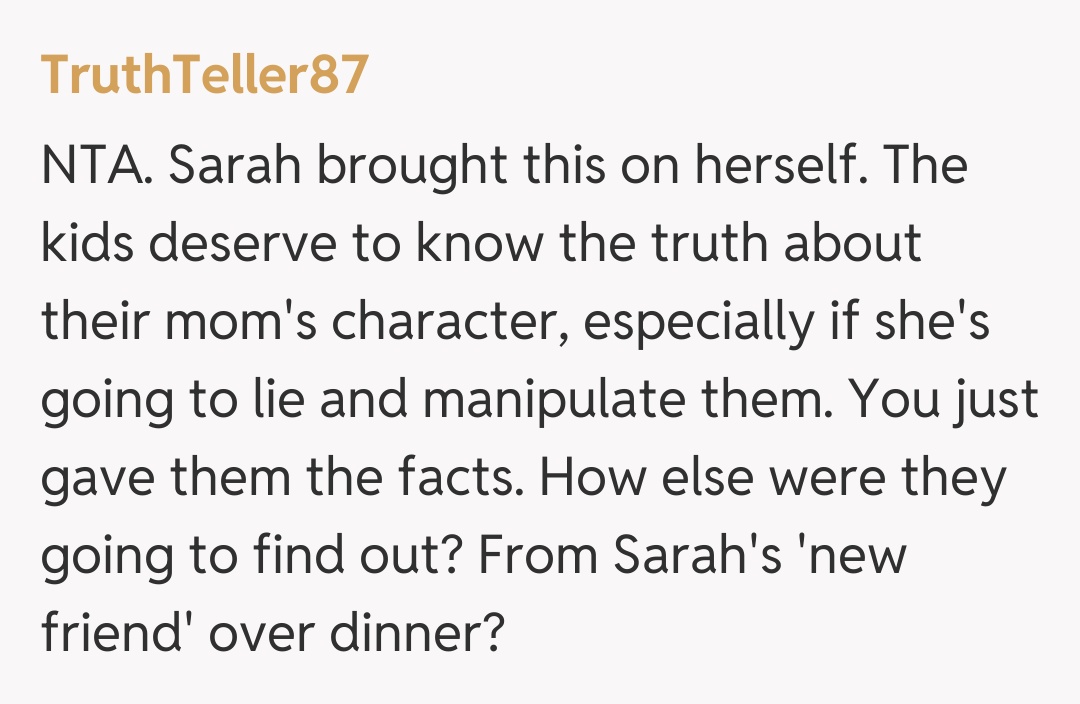
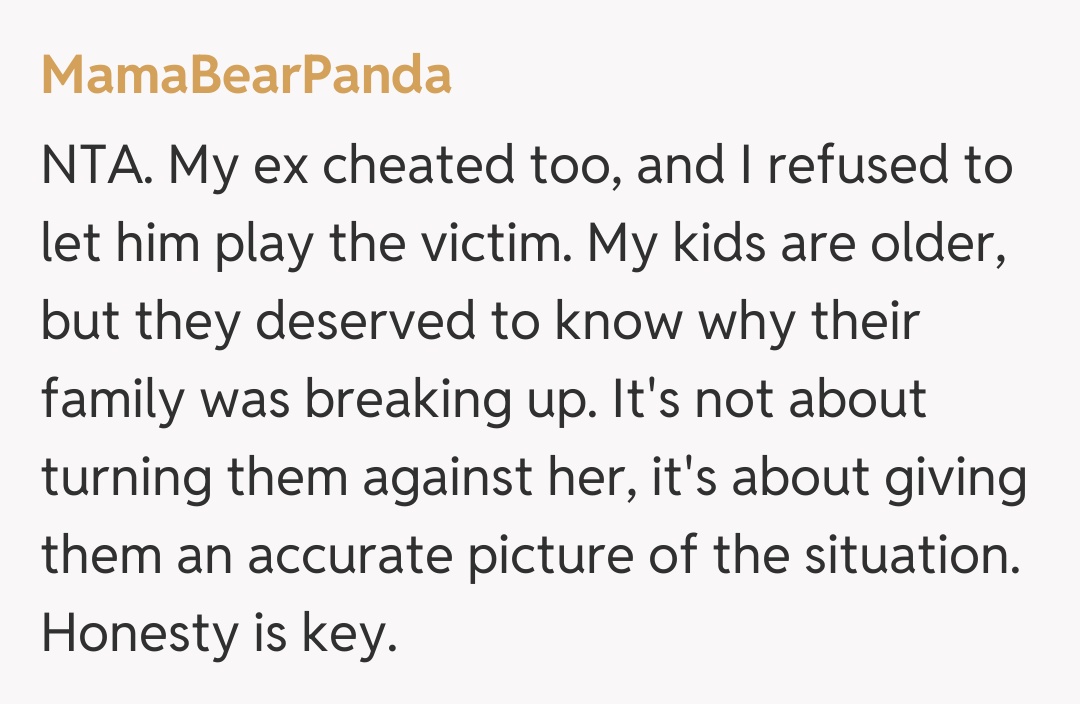
The comments section for this post was, as expected, a whirlwind of strong opinions. Many users empathized with David's pain, acknowledging the sting of betrayal and the desire for honesty. They argued that kids aren't stupid and deserve to know the truth, especially if one parent is being dishonest. The sentiment here was often 'ripping off the band-aid' – that it's better to know now than later, to avoid further deception.
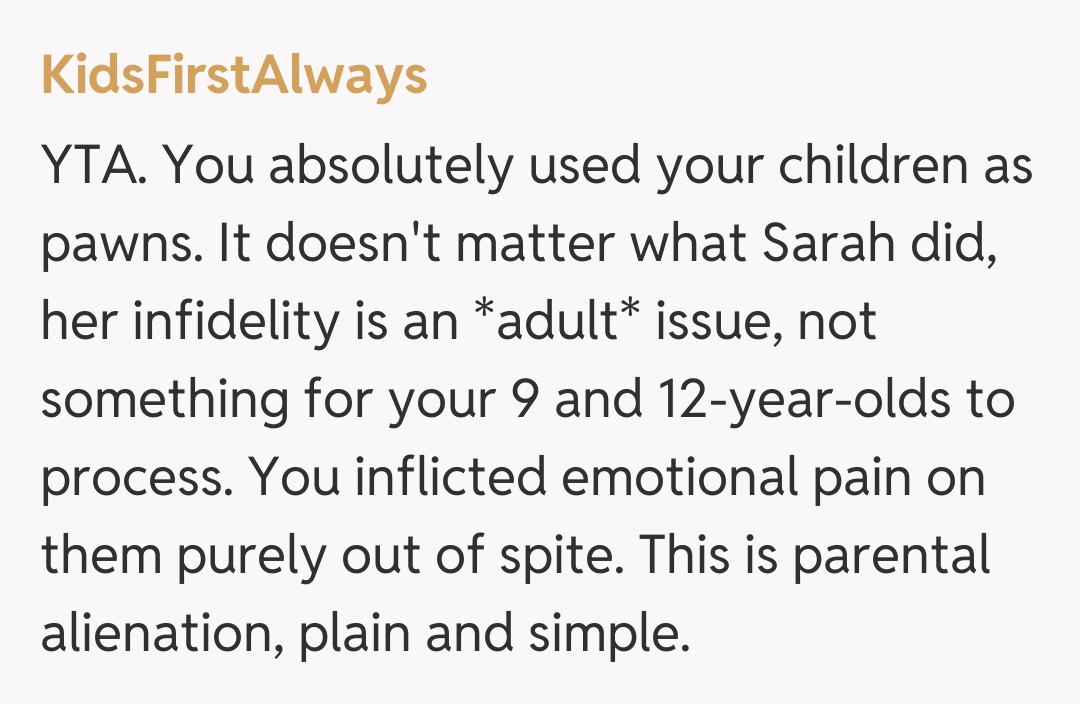
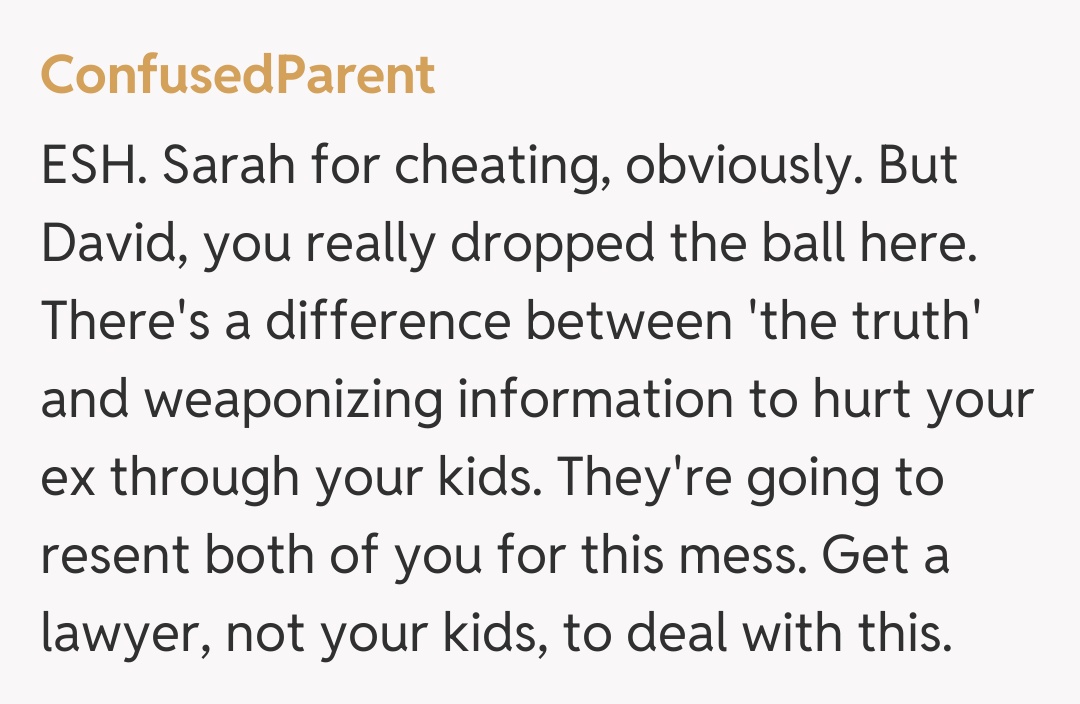
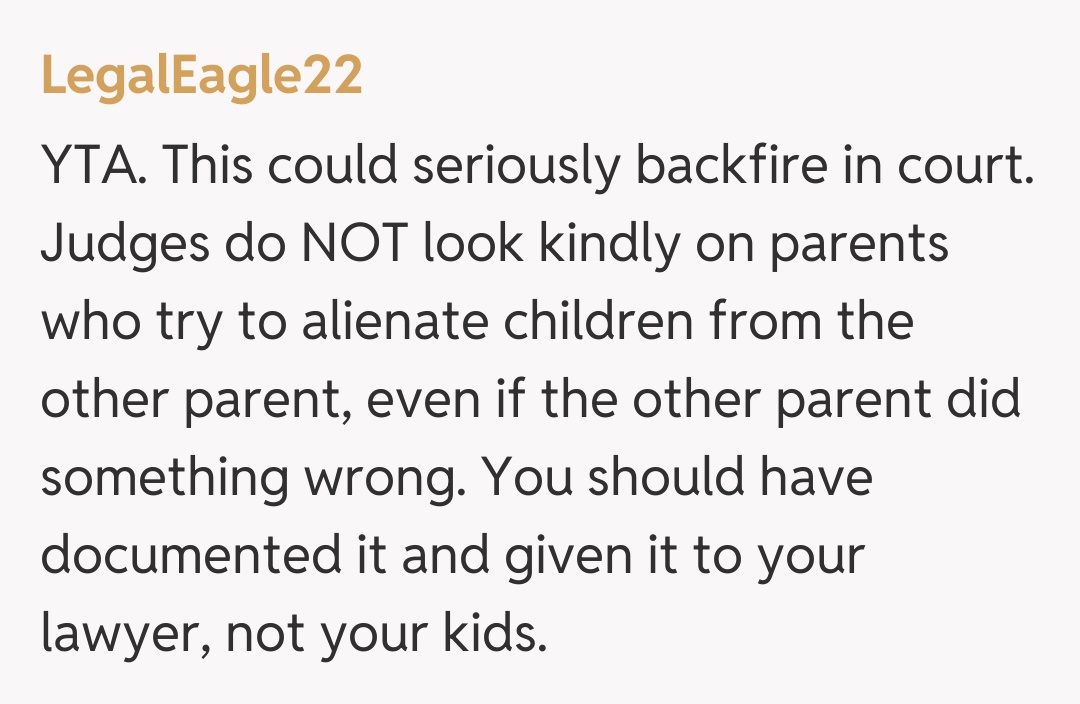
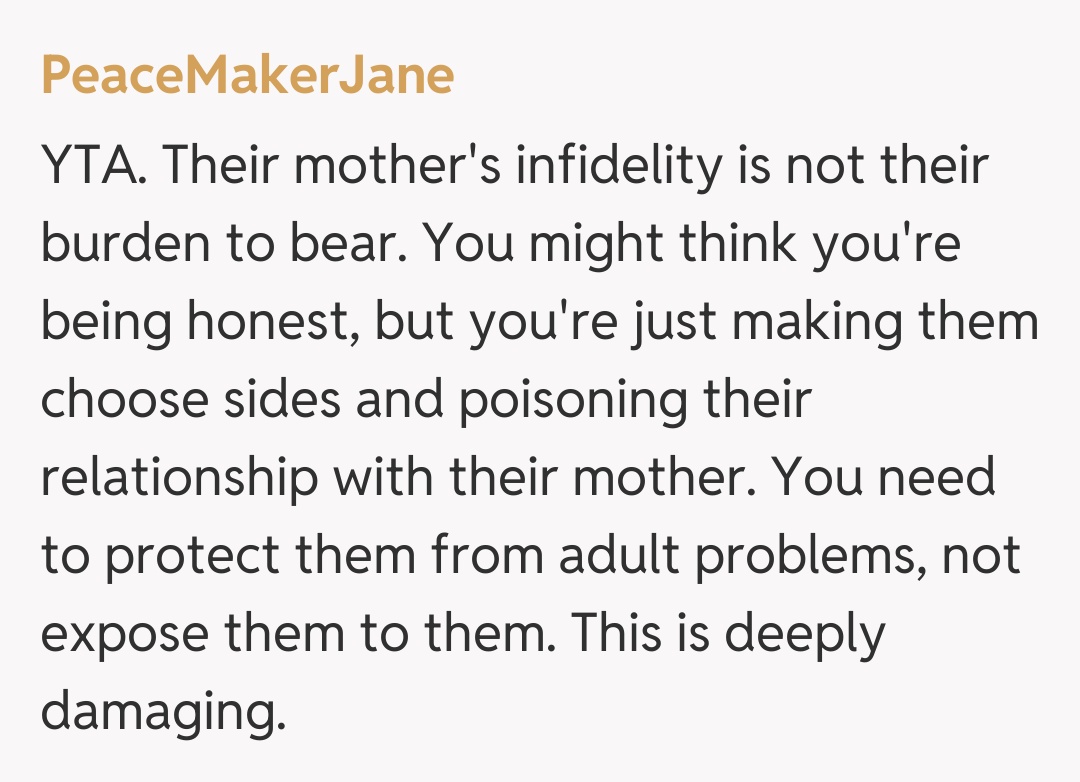
However, a significant portion of the community vehemently condemned David's actions, citing the harm caused to the children. These commenters highlighted the manipulative aspect of using children as tools in a parental conflict and emphasized that children should be shielded from adult issues like infidelity. Many pointed out the potential for parental alienation and the long-term damage to the kids' emotional health and trust in their parents.
This deeply complex situation highlights the agonizing choices parents face during separation. While the desire for honesty or to expose wrongs is understandable, children's well-being must remain paramount. Weaponizing sensitive information, even if factually true, can inflict profound and lasting emotional harm. This story serves as a stark reminder that adult conflicts require adult solutions, shielding children from the collateral damage of their parents' personal battles. Ideally, David, Sarah, Emily, and Jacob can find a path towards healing and respectful co-parenting, prioritizing the children's emotional stability above all.