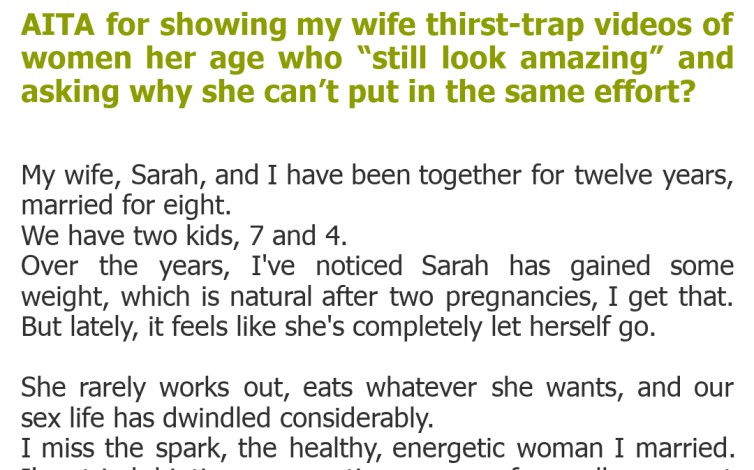
AITA for showing my wife thirst-trap videos of women her age who “still look amazing” and asking why she can’t put in the same effort?
Oh boy, do we have a doozy for you today! This particular AITA post landed in our inbox and immediately sparked a vigorous debate amongst the team. It’s a classic tale of intentions versus impact, and a stark reminder that what one person perceives as 'motivation' can be deeply hurtful to another. Relationships are complex, and body image is an incredibly sensitive topic, especially within the confines of a marriage. So, buckle up, because this one is going to ruffle some feathers and get those comment sections buzzing.
Our submitter, let's call him John, presents a situation where he genuinely believes he's trying to help his wife, Sarah, by inspiring her to 'put in more effort.' However, the method he chose has, predictably, gone down like a lead balloon. This scenario forces us to examine communication, expectations, and the fundamental respect needed in a partnership. It's a tricky tightrope walk between wanting your partner to be healthy and fit, and outright body shaming. Where do we draw the line? Let's dive in.

"AITA for showing my wife thirst-trap videos of women her age who “still look amazing” and asking why she can’t put in the same effort?"
My wife, Sarah, and I have been together for twelve years, married for eight. We have two kids, 7 and 4. Over the years, I've noticed Sarah has gained some weight, which is natural after two pregnancies, I get that. But lately, it feels like she's completely let herself go. She rarely works out, eats whatever she wants, and our sex life has dwindled considerably. I miss the spark, the healthy, energetic woman I married. I've tried hinting, suggesting we go for walks, or eat healthier as a family, but it never sticks. She just shrugs it off or says she's too tired after work and with the kids.
Recently, I've been seeing a lot of these 'fit over 40' women on social media – the ones who look absolutely incredible, flaunting their toned physiques in 'thirst-trap' type videos. They’re usually dancing or doing quick workout routines. Many of them are around Sarah's age. I thought, 'Hey, maybe if she sees what's possible, what other women her age are achieving, it might light a fire under her.' So, a few nights ago, while we were watching TV, I pulled up a few videos on my phone. I showed them to her, hoping for a positive reaction, or at least some curiosity. Instead, her face just fell. She looked at me, then at the phone, then back at me, with this look of absolute betrayal.
I asked her, "See? These women are your age, some even older, and they still look amazing. Why can't you put in the same effort?" I genuinely thought I was being helpful, trying to inspire her. But she just stared at me, then quietly took the remote and changed the channel. She didn't say a word to me for the rest of the evening. The next day, she was still cold and distant. I tried to talk to her, asking why she was upset. She eventually said, "You think I'm fat and lazy, don't you? You just want me to be someone I'm not." I tried to explain I just wanted her to be healthy and feel good about herself, like she used to, and that I missed our intimacy. She just shook her head and walked away.
Now she's barely speaking to me, and the atmosphere in the house is terrible. I feel like I was just trying to motivate her and reignite our spark. I don't think I said anything wrong, just pointed out a reality. Am I the asshole here?
John's intentions, while perhaps rooted in a desire for a healthier, more vibrant relationship and partner, were fundamentally flawed in their execution. It's understandable to miss aspects of a relationship or to be concerned about a partner's well-being. However, comparing your spouse to curated, often heavily edited, social media personas is almost guaranteed to backfire. The goal of 'inspiration' rarely translates when it's delivered as a direct comparison, especially in such a sensitive area as body image and perceived effort.
From Sarah's perspective, this interaction likely felt like a direct attack on her self-worth and her body. After carrying two children and managing the demands of life, being told she's not 'putting in the effort' while being shown 'thirst-trap' videos is incredibly demeaning. It dismisses her current efforts, whatever they may be, and implies her value is tied to her physical appearance and how it compares to an idealized standard.
The method chosen also speaks volumes about a potential communication breakdown. If John truly wants to support Sarah in leading a healthier lifestyle, there are countless more constructive and empathetic ways to approach the topic. Initiating a conversation about shared goals, offering practical support (like cooking together or arranging childcare for a gym session), or even couples counseling, would be far more effective than direct comparison and implied criticism.
Ultimately, relationships thrive on mutual respect, understanding, and open, supportive communication. While John might have felt his comments were a wake-up call, they instead created a significant rift and caused deep emotional pain. The focus shifted from a shared vision of health to an external, unattainable standard, delivered in a way that likely made Sarah feel inadequate and unappreciated. This highlights the importance of empathy in these difficult conversations.
The Internet Weighs In: Is John a Motivator or a Major A-Hole?
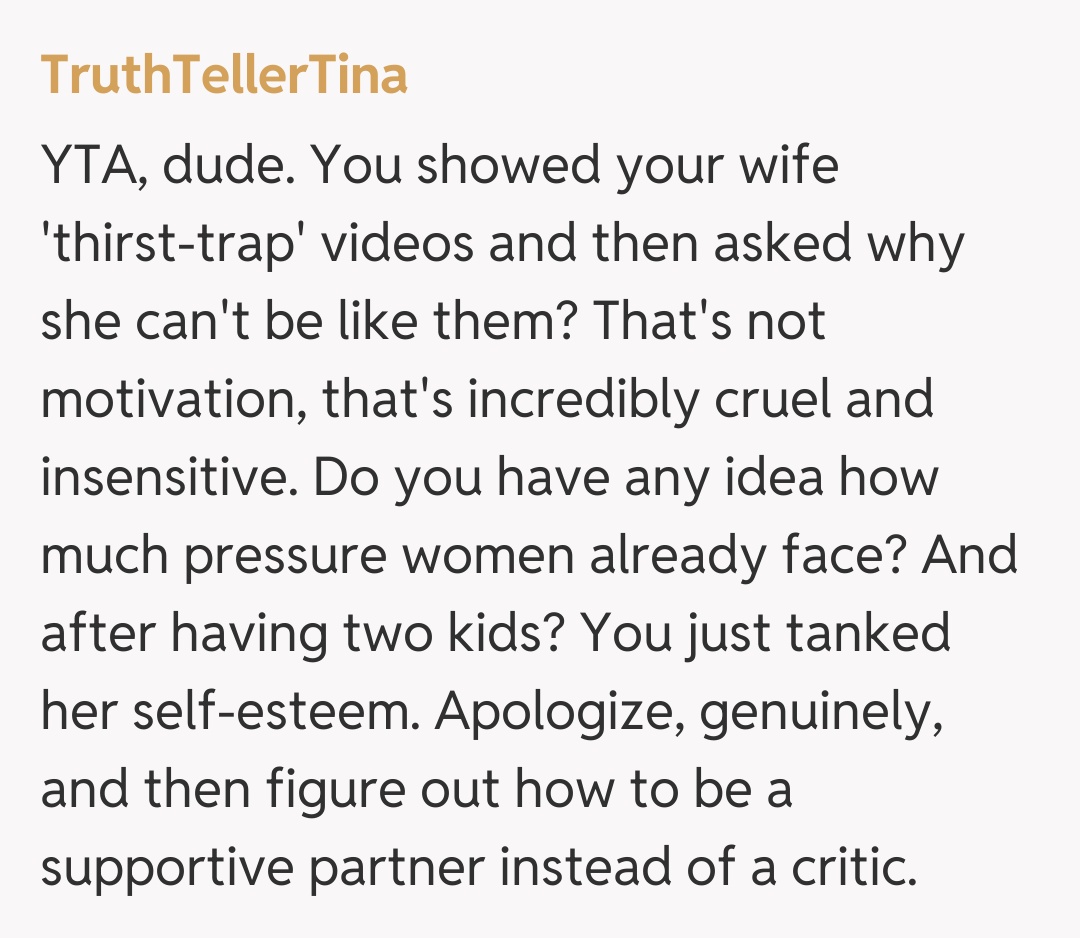
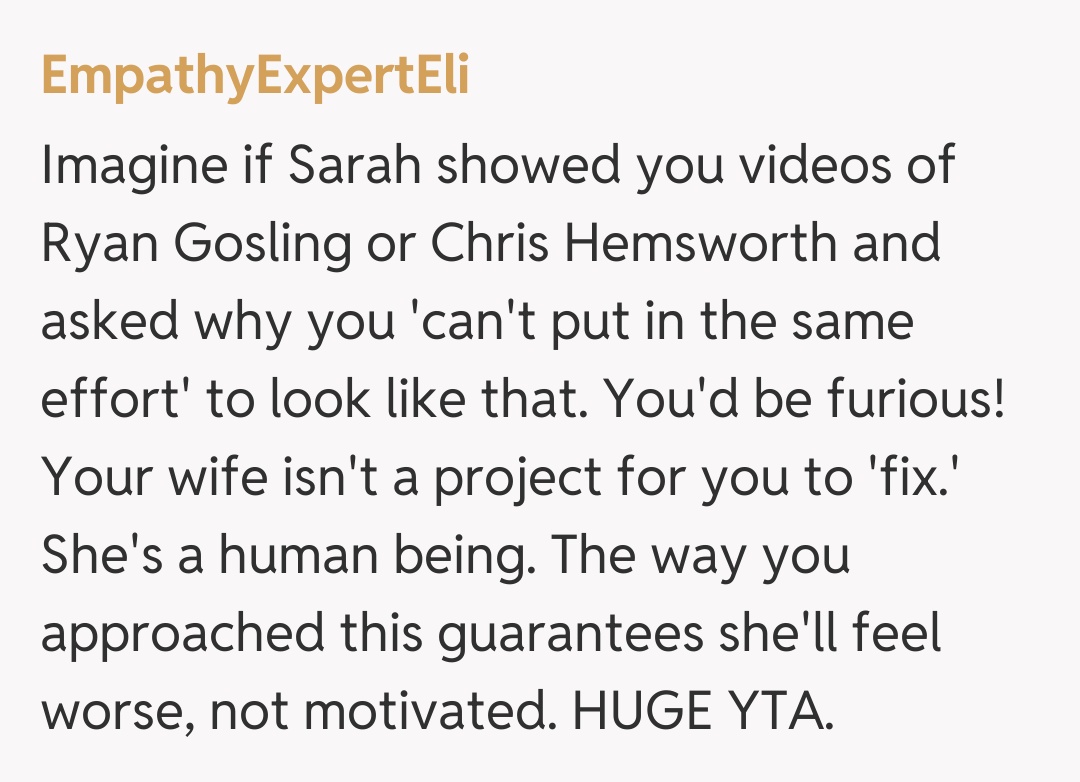
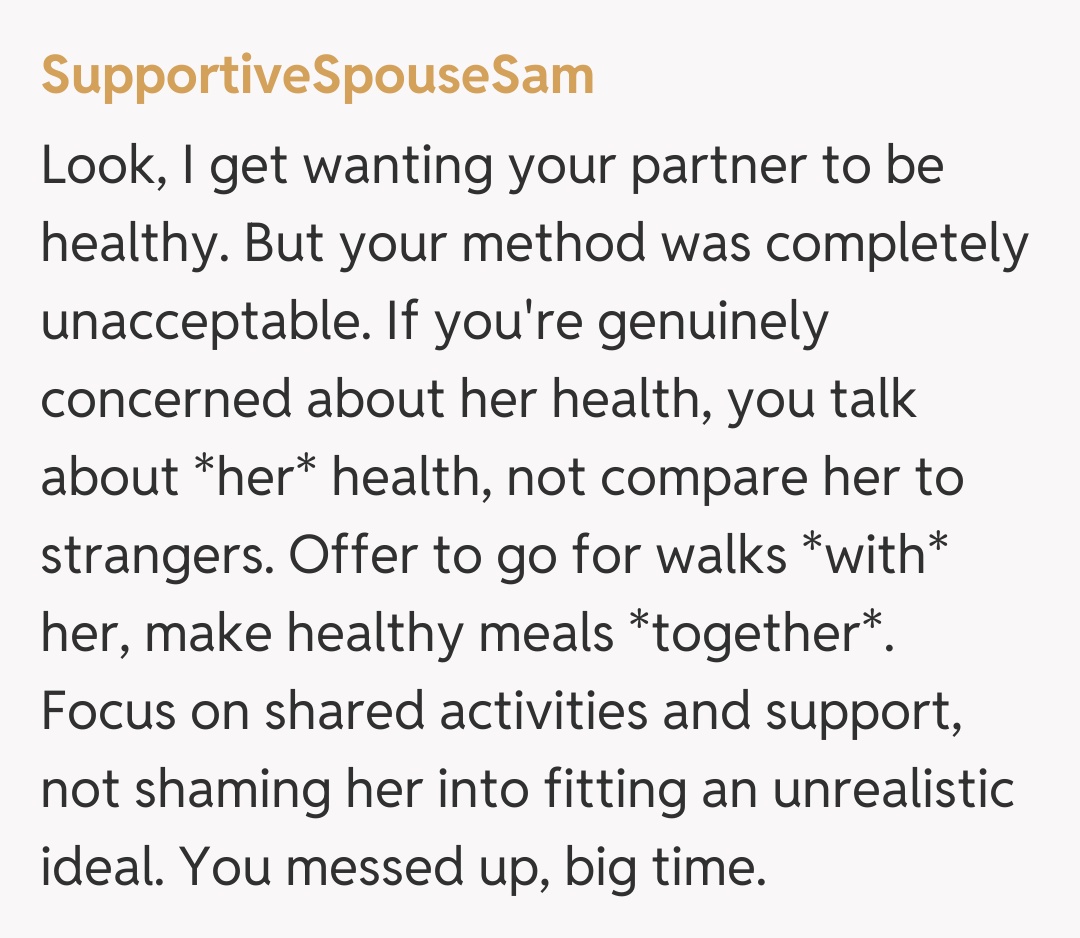
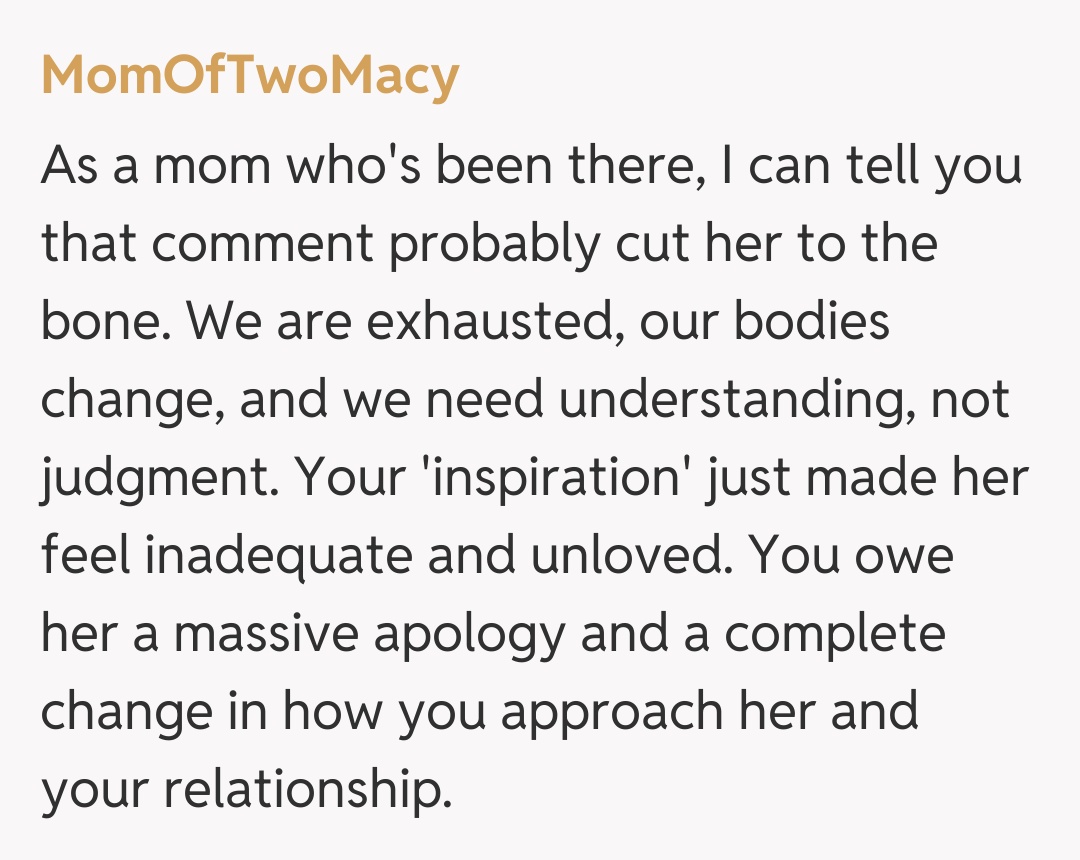
Unsurprisingly, the comment section for this post exploded, and the consensus was overwhelmingly clear. Readers did not hold back in telling John exactly where he went wrong. Many pointed out the egregious nature of comparing a real-life wife and mother to highly curated, often professional, social media influencers. The sheer lack of empathy and understanding for the realities of post-pregnancy bodies and demanding family life was a recurring theme.
Numerous comments highlighted the severe emotional damage such a comparison can inflict. People emphasized that true intimacy and connection come from support and appreciation, not from tearing down a partner's self-esteem. The advice universally leaned towards open, loving communication and offering genuine support, rather than resorting to shaming tactics that only breed resentment. It seems the internet has spoken loud and clear on this one.
This AITA post serves as a powerful cautionary tale about the pitfalls of insensitive communication in relationships. While concerns about a partner's health or changes in intimacy are valid, the way those concerns are addressed can make all the difference. Comparing a loved one to idealized social media figures is a surefire way to damage trust and self-esteem. True love and support manifest through empathy, open dialogue, and shared effort, not through critical comparisons. Hopefully, John can learn from this and work towards repairing the hurt he has caused, focusing on building Sarah up, not tearing her down.