AITA for refusing to compliment or touch my wife anymore until she gets back to her pre-pregnancy weight, because “attraction isn’t a choice and I’m tired of pretending”?
Welcome back, dear readers, to another heart-wrenching AITA dilemma that has sparked a massive debate across the internet. Today, we're diving into a deeply sensitive topic: post-pregnancy body image and the strains it can place on a marriage. The journey of parenthood is transformative in countless ways, not least of which is the physical change a woman's body undergoes, and how partners navigate these shifts can make or break a relationship.
Our story features a husband who has made a very controversial stand regarding his wife's post-baby body. He claims he's just being "honest" about his attraction, but his approach has, understandably, caused a firestorm of opinions. We'll explore the raw emotions involved, the societal pressures on new mothers, and the fundamental question of what "attraction" truly means in a committed partnership. Buckle up, this one's a tough read.

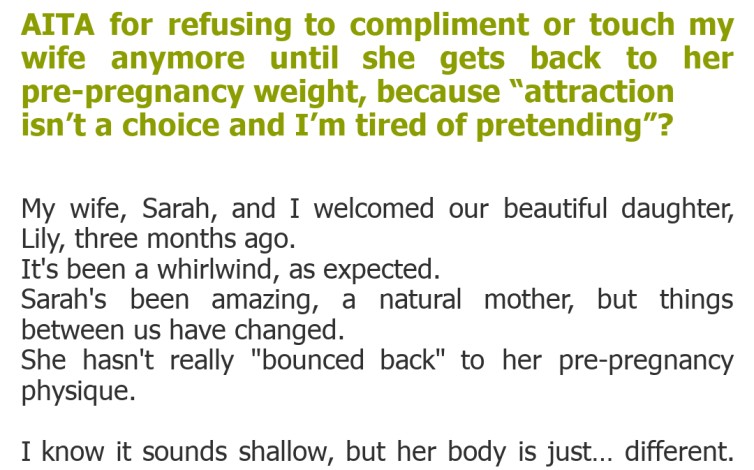
"AITA for refusing to compliment or touch my wife anymore until she gets back to her pre-pregnancy weight, because “attraction isn’t a choice and I’m tired of pretending”?"
My wife, Sarah, and I welcomed our beautiful daughter, Lily, three months ago. It's been a whirlwind, as expected. Sarah's been amazing, a natural mother, but things between us have changed. She hasn't really "bounced back" to her pre-pregnancy physique. I know it sounds shallow, but her body is just… different. I used to find her incredibly attractive, and now, honestly, I just don't feel that spark. I've been trying to force myself to be affectionate, to compliment her, but it feels fake.
The other night, she asked me why I'd been so distant, why I hadn't initiated anything intimate in weeks. I finally cracked. I told her the truth, or at least my truth. I explained that I'm just not attracted to her current body. I said attraction isn’t a choice, and I’m tired of pretending. I told her I couldn't compliment her or be physically intimate with her until she gets back to how she was before Lily.
She just stared at me, tears welling up in her eyes. I expected her to be upset, but her reaction was intense. She started crying uncontrollably, saying I was a monster and how could I say such a thing after she just carried our child. She then called her sister, Emily, who came over immediately. Emily gave me a look that could curdle milk and then took Sarah and Lily to her place.
Now, Sarah isn't answering my calls or texts. Emily has sent me a few scathing messages about how I'm a cruel, superficial jerk. My own parents think I handled it badly, though my dad mumbled something about "men being visual." I feel like I'm being unfairly demonized. I didn't say I didn't love her, just that my physical attraction has temporarily waned. I'm being honest, which I thought was important in a marriage. AITA for being truthful about my feelings and setting a boundary?
This situation touches on one of the most raw and vulnerable aspects of a relationship: physical attraction and body image, especially in the sensitive post-partum period. The original poster, David, believes he is simply being honest about his feelings, arguing that attraction isn't something one can choose. This perspective, while perhaps uncomfortable, does reflect a common human experience regarding initial physical draw.
However, the manner and timing of his honesty are where the complexities truly begin. A woman's body undergoes immense changes during pregnancy and childbirth, and the recovery period is not just physical but deeply emotional. To voice such a stark condition for affection when his wife, Sarah, is likely at her most vulnerable, exhausted, and possibly insecure, displays a profound lack of empathy and understanding for her experience.
While physical attraction is a component of many relationships, a committed partnership, especially one that has just brought a child into the world, demands a deeper form of love and support. This includes appreciating a partner beyond superficial appearances and recognizing the incredible sacrifice and effort involved in carrying and birthing a child. Reducing his wife's worth to her current post-pregnancy weight is deeply damaging.
David's statement effectively places a conditional clause on his affection, creating an impossible burden for Sarah. Relationships thrive on unconditional love and acceptance, particularly through life's challenging phases. Instead of open communication, support, and patience, David chose a path that has caused immense pain, pushing his wife away at a time when she needed him most to affirm her worth and love.
The Internet Weighs In: Is Honesty Always the Best Policy?
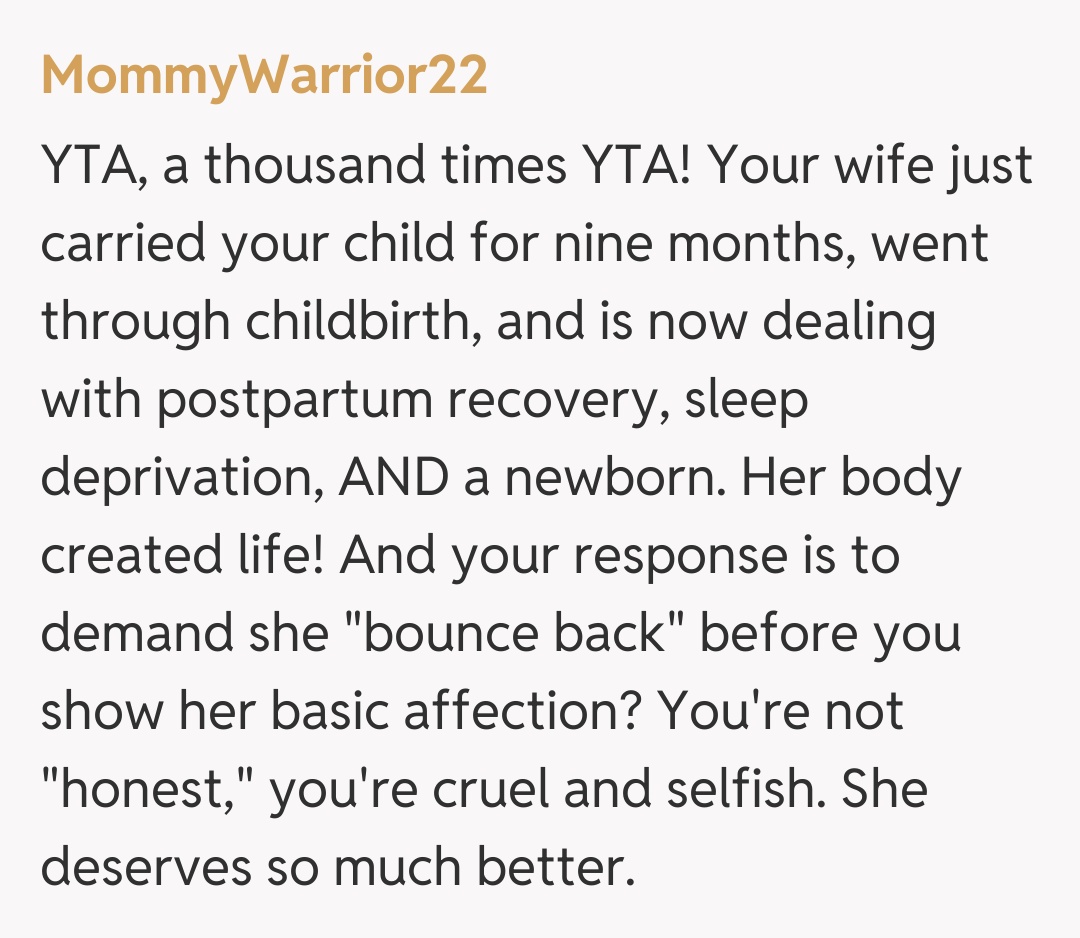
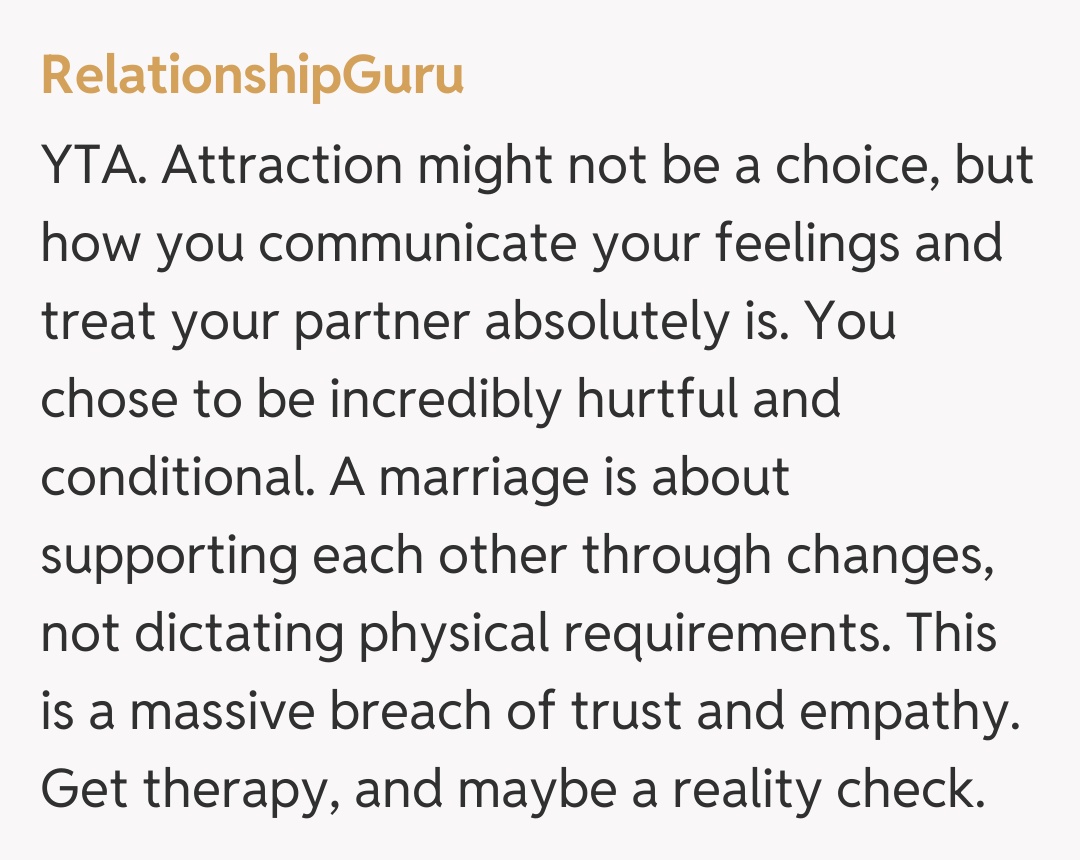
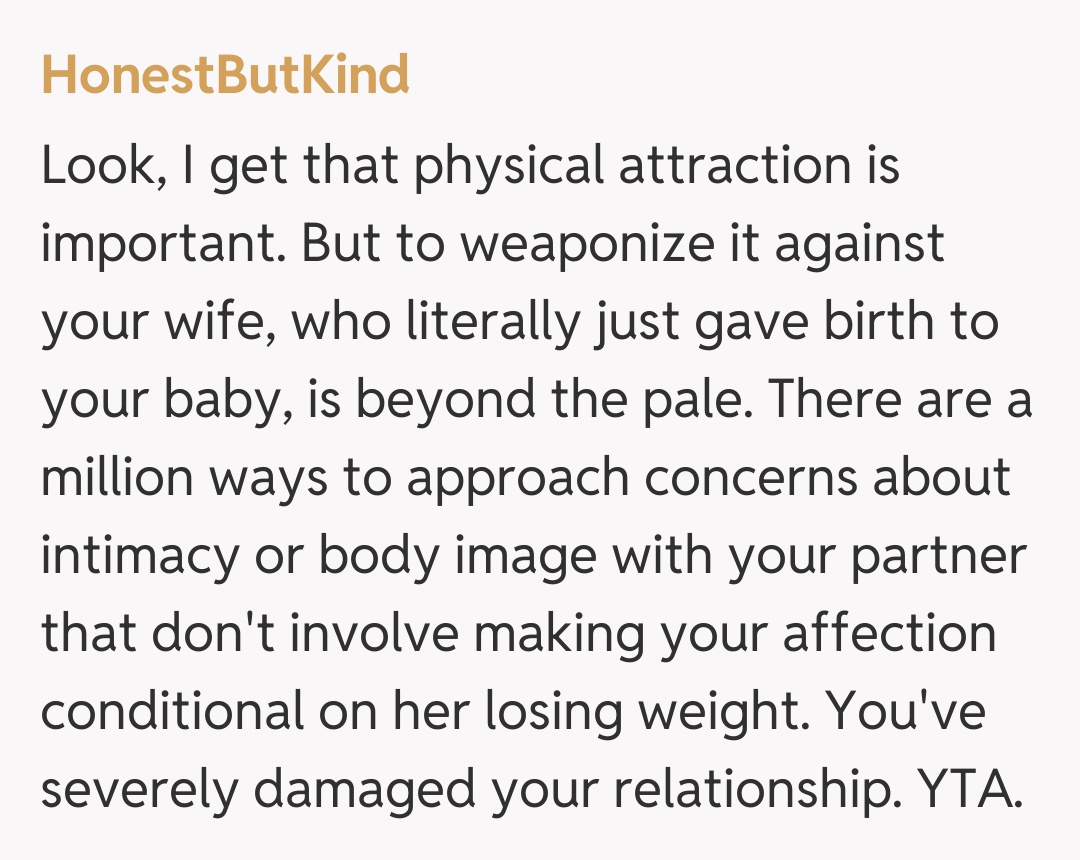
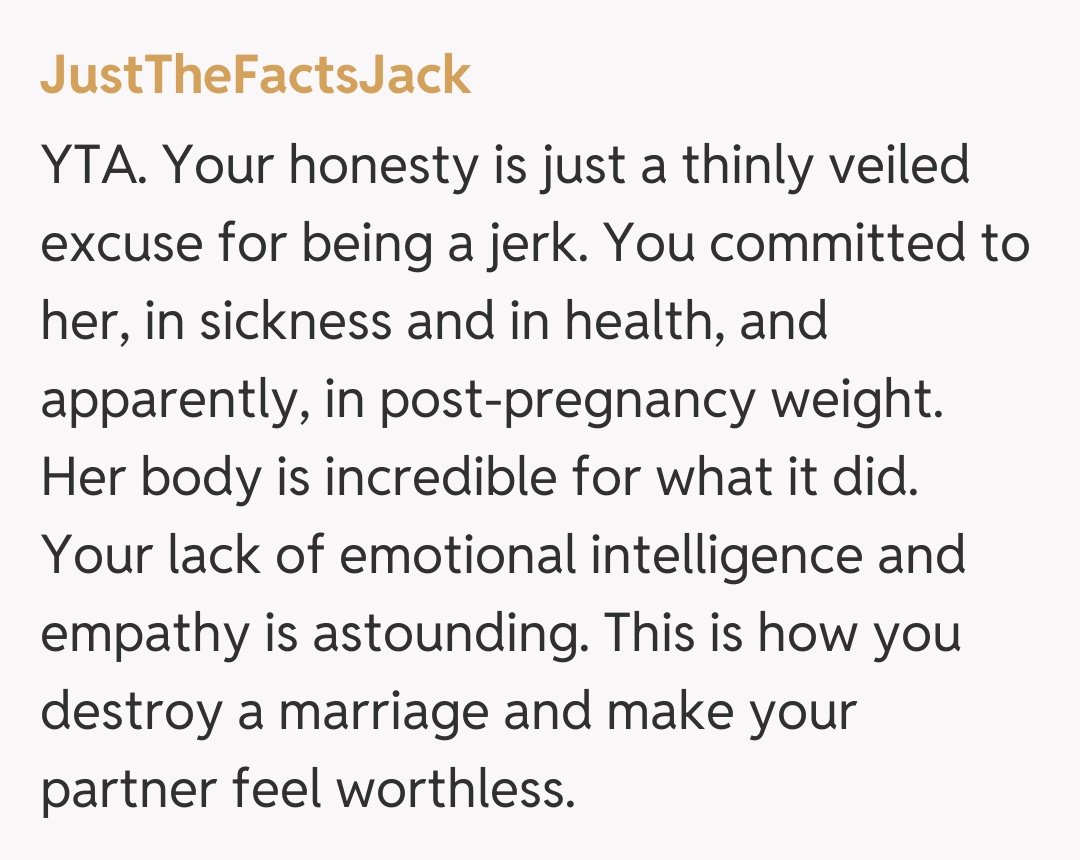
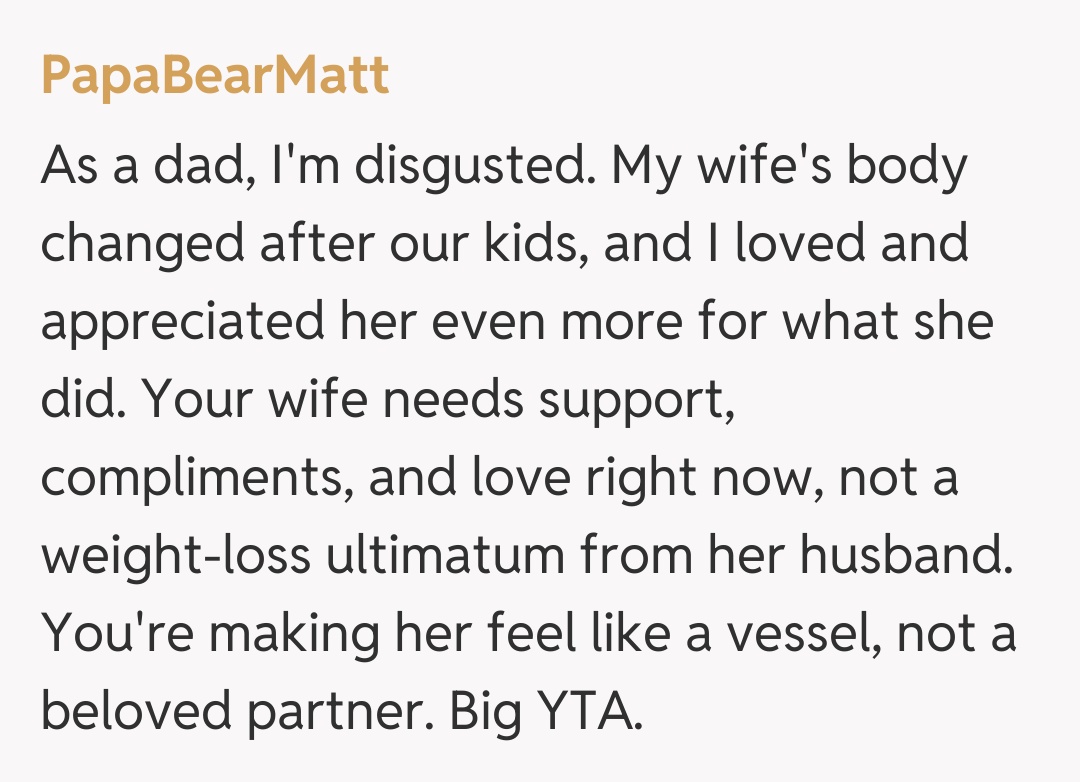
The comment section exploded, as expected, with a resounding consensus that David was, indeed, the A-hole here. Users were quick to point out the extreme insensitivity of his comments, especially considering Sarah had just given birth to their child. Many highlighted that physical changes are a natural part of motherhood, and a partner's role is to offer support and affirmation, not to set conditions on love and affection.
While a small minority tried to sympathize with David's "honesty" argument, emphasizing that attraction can't be faked, the overwhelming sentiment was that he utterly failed as a supportive husband and father. Many suggested therapy, not just for Sarah, but for David to understand the depth of his hurtful words and to recalibrate his understanding of commitment beyond superficiality.
This AITA post serves as a stark reminder that true partnership goes far beyond superficial attraction. While physical appeal is often a starting point, a lasting relationship requires deep empathy, unwavering support, and an understanding that bodies change, especially after significant life events like childbirth. David's choice to withhold affection until his wife meets a physical standard is not only deeply damaging but highlights a fundamental misunderstanding of what it means to be a loving and supportive spouse. We hope David can reflect on the pain he's caused and seek to repair the immense breach of trust.