AITA for telling my 17-year-old daughter she should focus on grades because no man will ever want her flat pancake body?

Oh, dear readers, we've landed on a tough one today, a story that truly cuts to the quick of parental influence and self-esteem. When we, as parents, try to guide our children, the words we choose carry immense weight, especially during the formative teenage years. It's a delicate balance between pushing for success and fostering a healthy sense of self-worth. This particular AITA post showcases just how easily that balance can tip into harmful territory.
Today's story revolves around a mother's controversial attempt to motivate her 17-year-old daughter to focus on academics. The method chosen, however, has sparked a fiery debate online, and for good reason. It forces us to confront the lasting impact of body-shaming and the destructive nature of linking a child's value or future to their physical appearance, especially in such a blunt and painful manner.

"AITA for telling my 17-year-old daughter she should focus on grades because no man will ever want her flat pancake body?"



This post immediately raises a lot of red flags, centering on the incredibly damaging nature of the words used. While the poster's stated intention was to motivate her daughter to focus on academics, the method employed was not only ineffective but deeply harmful. Body-shaming a teenager, particularly one already struggling with self-consciousness, is a severe breach of trust and emotional safety within the parent-child relationship. It weaponizes insecurity against the very person a parent is meant to protect.
Let's unpack the comment: 'No man will ever want your flat pancake body if you don't have anything else going for you.' This single sentence manages to devalue the daughter's entire being, reduce her worth to her physical appearance (which is then cruelly critiqued), and link her future relationship prospects to her academic performance in a wholly inappropriate way. It teaches her that her body is a currency and that without a desirable one, she must overcompensate with intelligence, rather than fostering intrinsic motivation or self-acceptance.
The impact of such a statement on a 17-year-old can be profound and long-lasting. Teenagers are already navigating a complex world of identity formation, peer pressure, and societal beauty standards. To hear such a harsh judgment from a primary caregiver can lead to body dysmorphia, eating disorders, severe anxiety, and a deep-seated sense of inadequacy. It erodes self-esteem and can create a permanent rift in the parental bond, making it difficult for the child to ever feel truly secure or loved unconditionally.
While the desire for a child to succeed academically is commendable, there are countless constructive and supportive ways to encourage better grades. These include open conversations, providing resources, setting boundaries around screen time, and offering encouragement, not criticism of their physical appearance. The poster's regret for the 'tone' but not the 'message' indicates a troubling lack of understanding regarding the profound emotional damage inflicted, suggesting a need for serious introspection and a different approach to parenting.
The Verdict is In: A Harsh Lesson in Parental Responsibility!
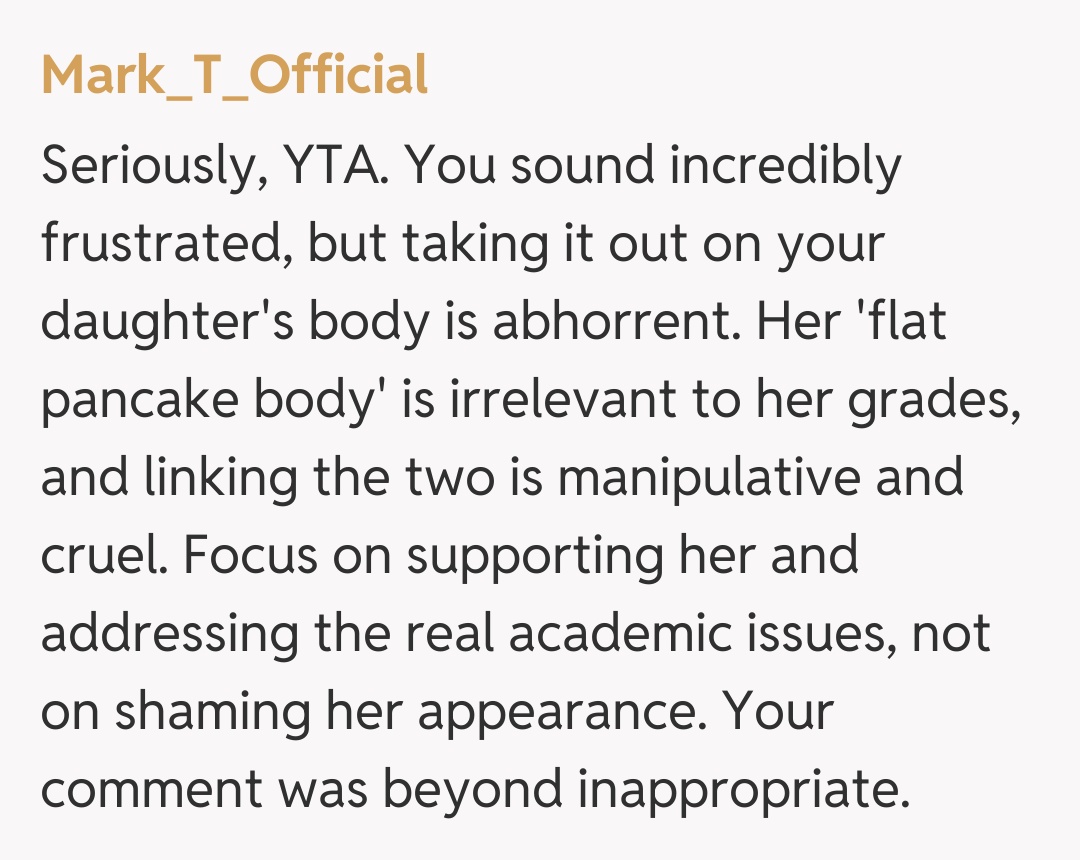
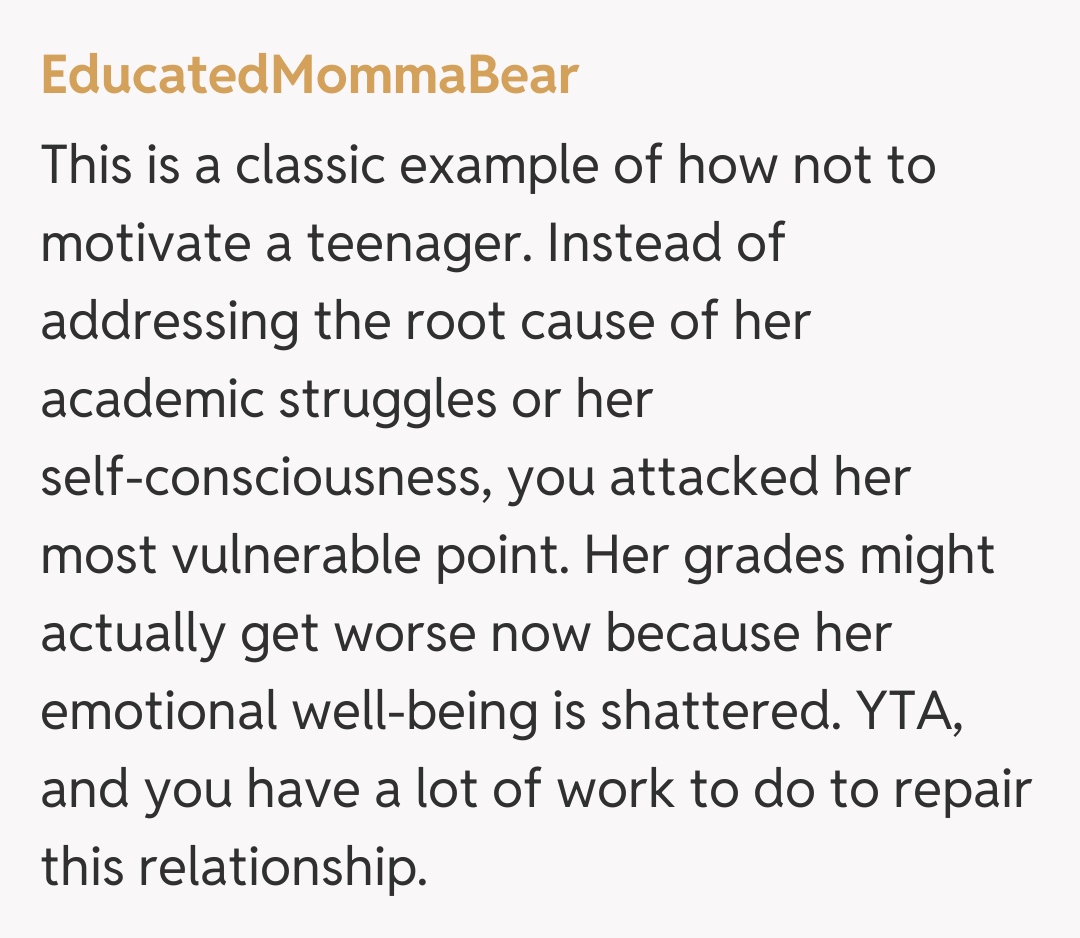
The comment section for this post exploded, as expected, with a near-unanimous verdict condemning the mother's words. Users were quick to point out the severe emotional damage such a statement inflicts on a developing teenager, highlighting the cruel irony of trying to 'motivate' by tearing down self-worth. Many shared personal stories of similar parental criticisms and the long-term impact on their body image and relationships, emphasizing that these wounds don't heal easily.
There was a strong consensus that even if the mother's ultimate goal was to encourage academic focus, the chosen method was incredibly abusive. Commenters articulated that parents have a fundamental responsibility to build up their children, not tear them down with body-shaming remarks. The discussion heavily leaned into the idea that this type of 'tough love' is outdated and genuinely harmful, especially when it targets a child's physical appearance and self-esteem during such a vulnerable period.



This story serves as a stark reminder that our words, especially as parents, carry immense power. While the desire to see our children succeed is natural, the methods we choose to instill that drive can either build them up or break them down. Body-shaming is never an appropriate tool for motivation, and its long-term damage far outweighs any perceived short-term gain. It’s crucial for parents to reflect on the impact of their communication and prioritize their child's emotional health and self-worth above all else, fostering an environment of unconditional love and support.