AITA for exposing my harassing neighbors’ embarrassing secret after years of ignored torment?
Oh, neighbor disputes! They're the kind of stories that truly get everyone talking, mainly because so many of us have been there, or are currently living through our own version of suburban hell. When official channels fail and peace seems impossible, people often wonder: how far is too far when seeking justice or, dare I say, revenge? Today's story dives headfirst into that very murky ethical swamp.
Our poster, let's call her 'Sarah,' has been dealing with years of relentless harassment from her neighbors, the Millers. She's tried everything by the book, but the system has seemingly failed her. Now, she's taken matters into her own hands, uncovering and publicly exposing something the Millers clearly wanted to keep private. Was her unconventional retaliation justified, or did she cross a line?

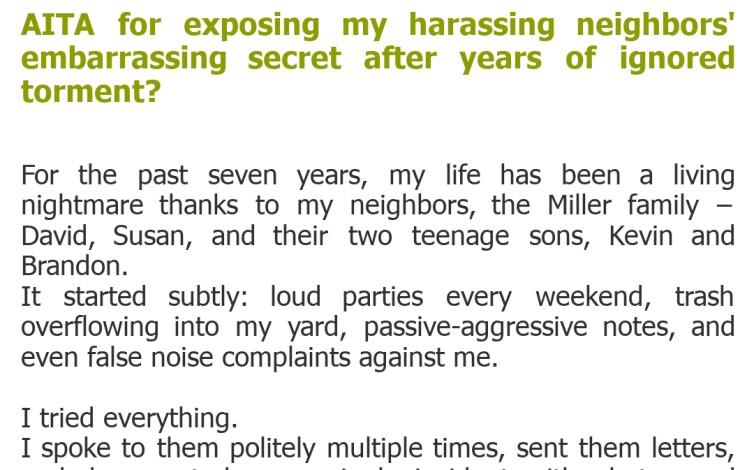
"AITA for exposing my harassing neighbors' embarrassing secret after years of ignored torment?"
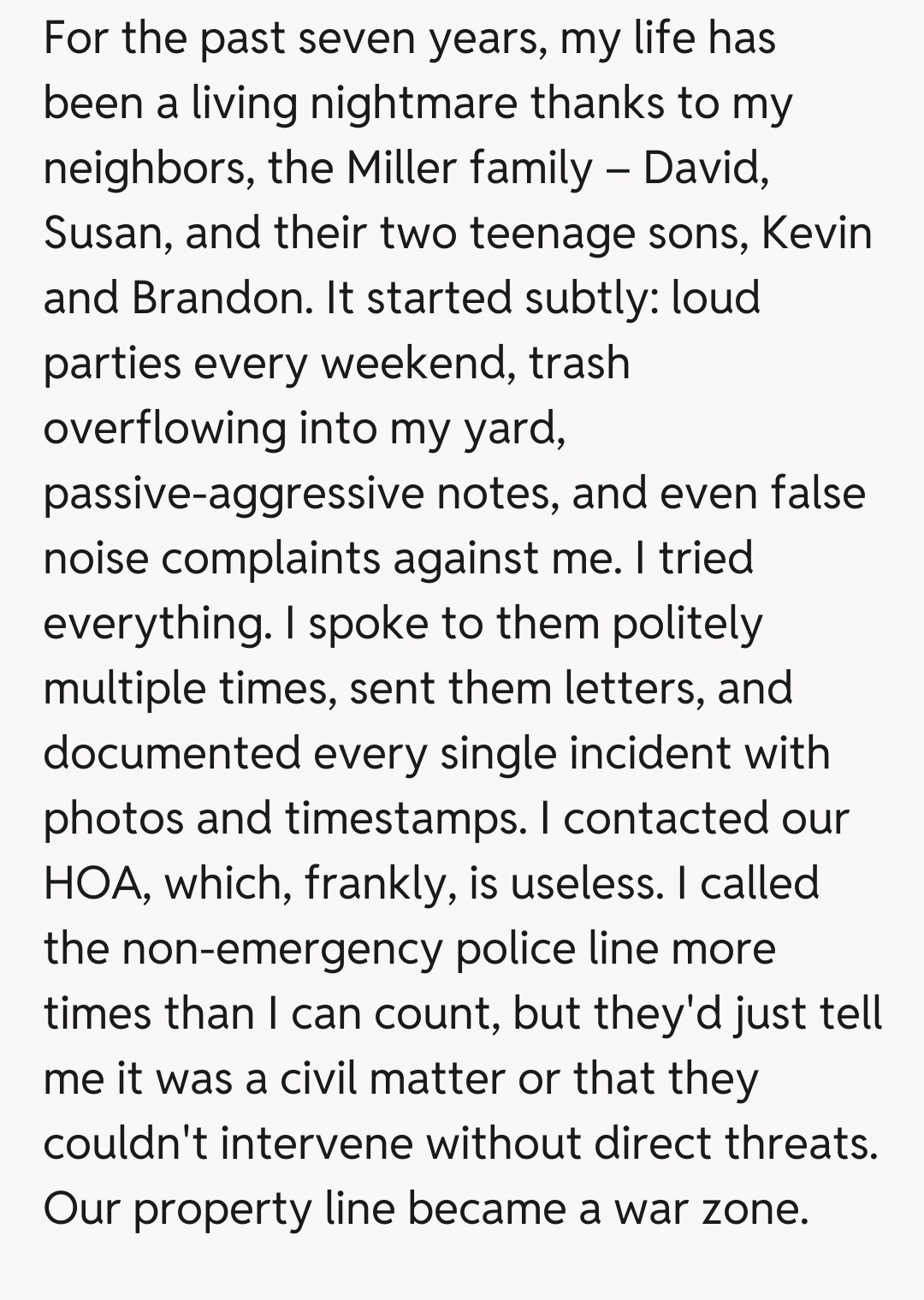


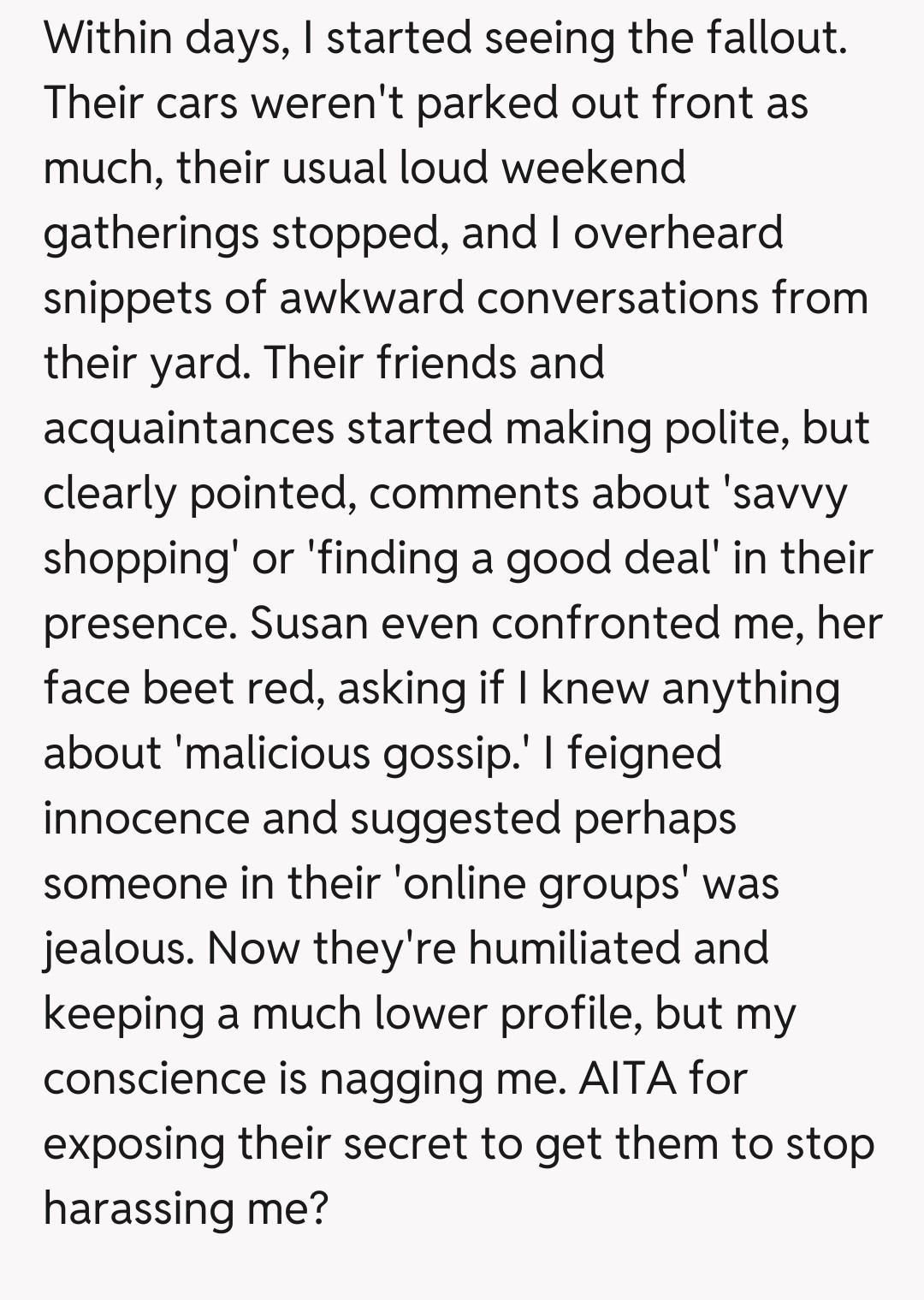
This story immediately throws us into the complex ethical dilemma of vigilante justice when the established systems fail. On one hand, 'Sarah' endured years of documented harassment from the Millers, with seemingly no recourse through official channels like the HOA or local law enforcement. Her frustration is completely understandable; feeling trapped and ignored can push people to desperate measures. The emotional toll of constant harassment can be immense, justifying a need for resolution, even if unconventional.
However, the method of retaliation—exposing a deeply personal, albeit harmless, secret—brings its own set of considerations. While the Millers' extreme couponing hobby isn't illegal or morally reprehensible, it was clearly something they wished to keep private. 'Sarah' actively sought out and disseminated this information to humiliate them among their social circle. This action, while not physically harmful, is a form of social warfare that can have significant psychological impacts.
Some might argue that 'Sarah' simply fought fire with fire, or even a smaller, less destructive fire. The Millers' actions were disruptive and intentionally malicious, affecting her peace and property. If the law couldn't protect her, was she wrong to find her own way to deter their behavior? This perspective emphasizes personal agency and the idea that bullies often only stop when faced with consequences they understand.
Conversely, others might contend that two wrongs don't make a right. While the Millers were undoubtedly in the wrong, 'Sarah's' choice to engage in a campaign of social humiliation, even if effective, lowers her to their level. It might also set a dangerous precedent, blurring the lines of what is acceptable behavior in resolving disputes, and could potentially escalate situations further in the future. The question is whether justice was served, or if she simply stooped to a similar level of petty cruelty.
The Town Divided: Was Sarah Justified or Did She Go Too Far?
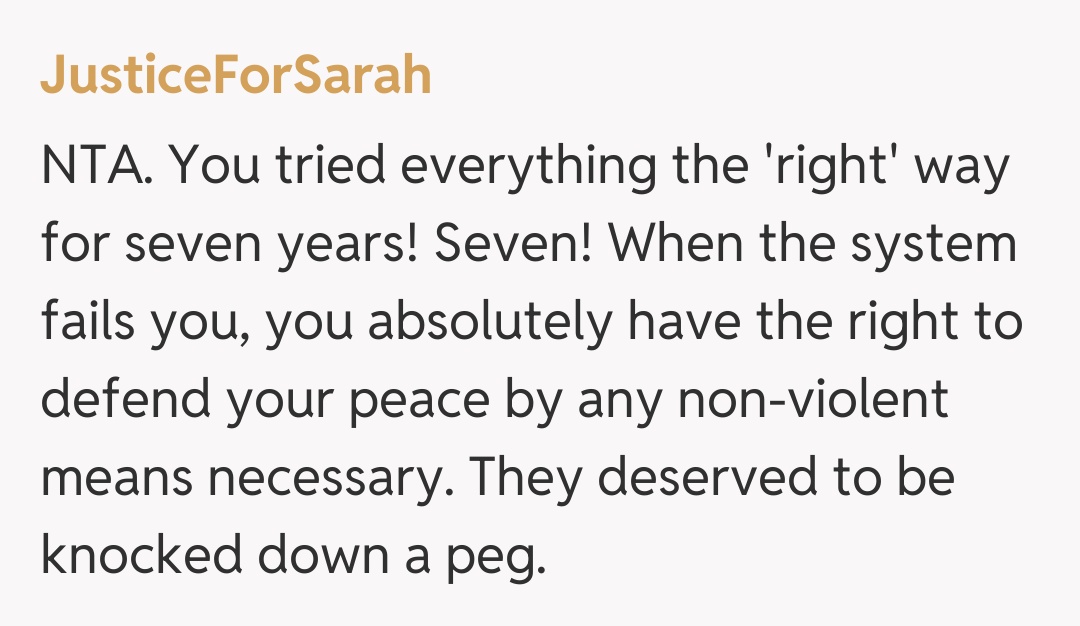
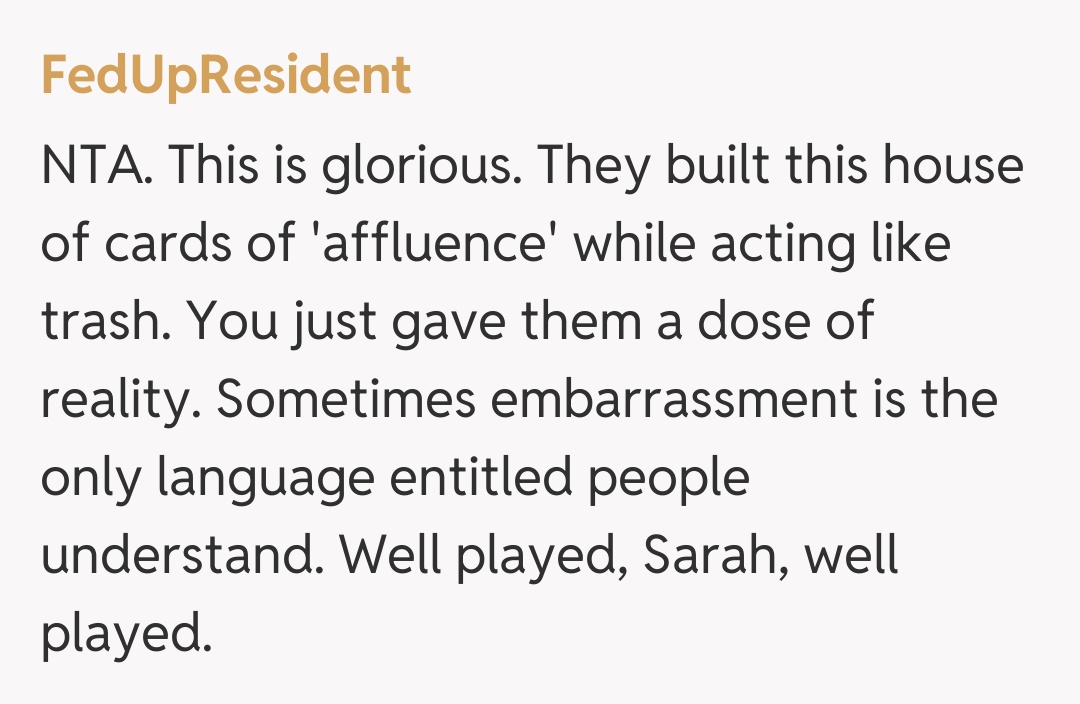
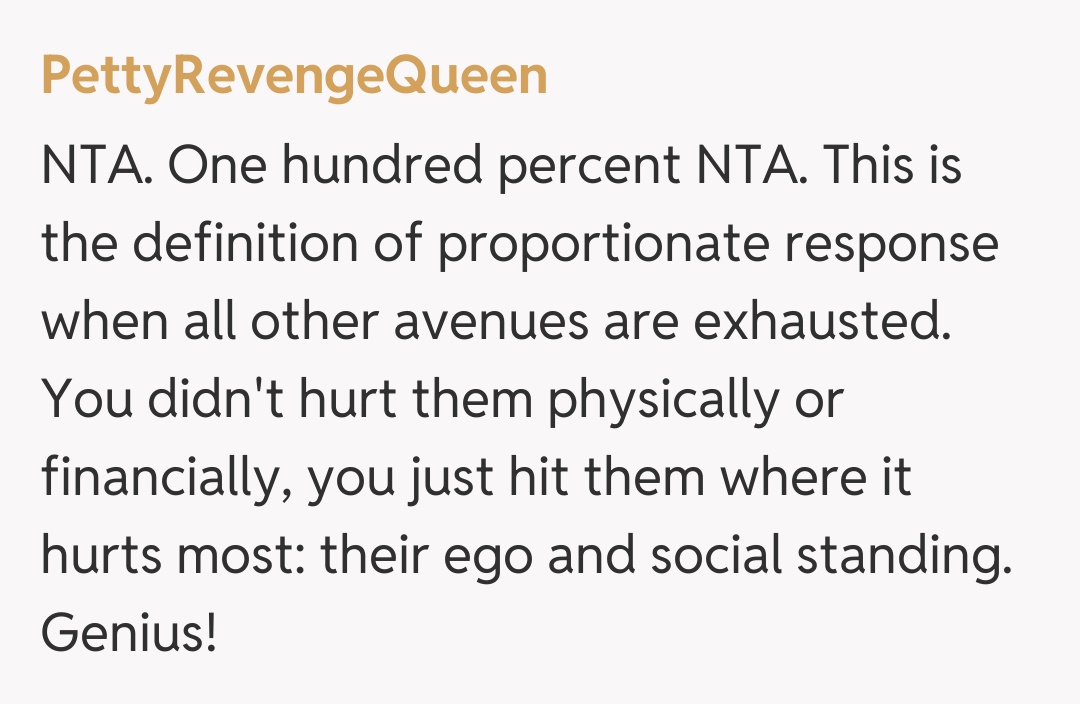
The comments section for this one was, as expected, a battleground! Many users rallied firmly behind 'Sarah,' declaring her 'NTA' for finally taking action after years of official indifference. They emphasized that the Millers brought this upon themselves by being relentless bullies and that sometimes, a taste of their own medicine is the only way to get through to people who refuse to respect boundaries. The general sentiment was that if authorities won't act, people are left with no choice but to find creative solutions.
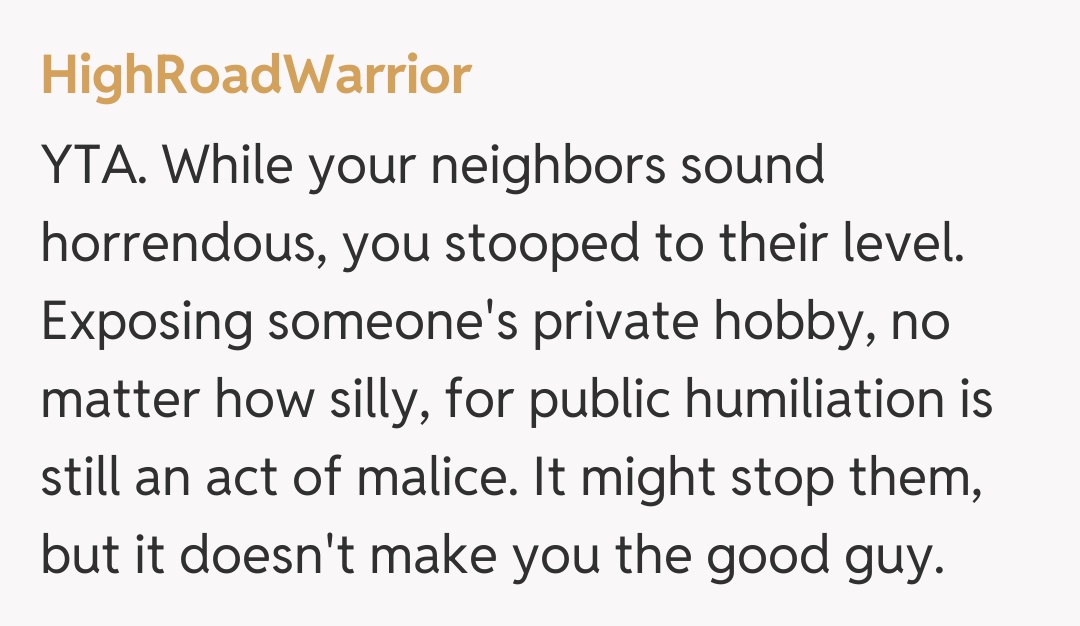
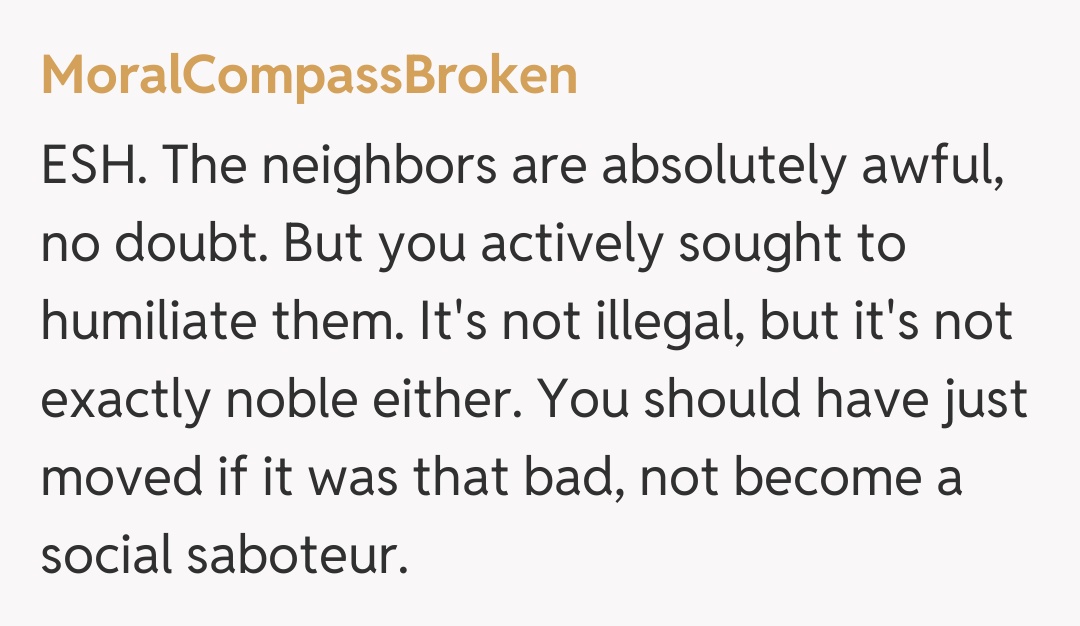
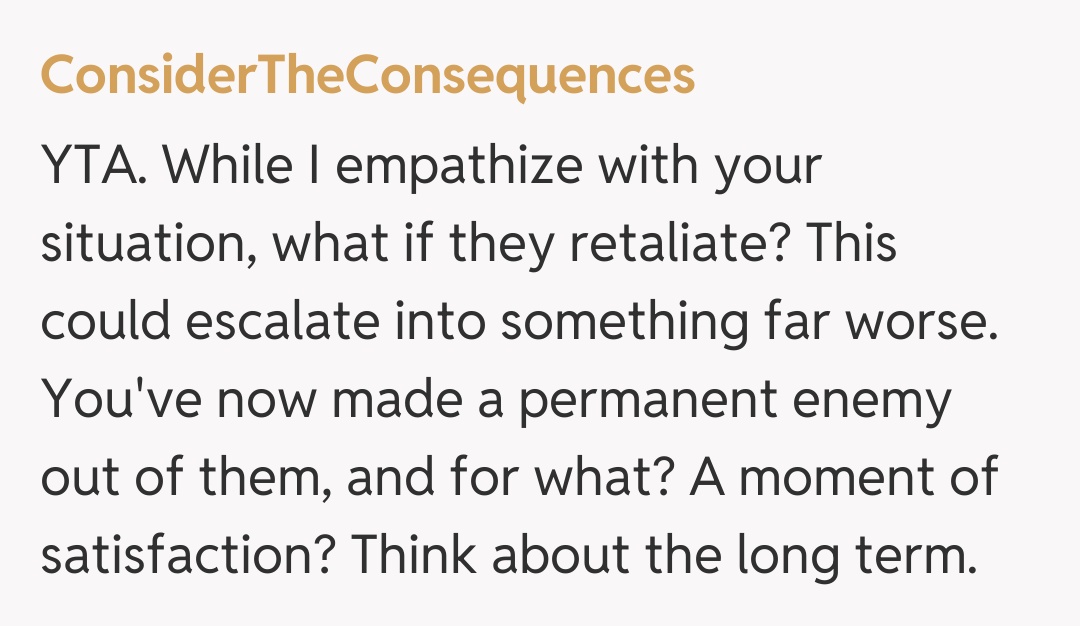
However, a significant portion of commenters argued 'YTA,' or at least 'E S H' (Everyone Sucks Here). They pointed out that while the Millers were awful, 'Sarah's' actions were a form of calculated social cruelty. They argued that exposing someone's harmless, private hobby for public humiliation, even as retaliation, is a low blow and doesn't make her any better than her tormentors. The debate often hinged on whether the 'punishment' fit the 'crime' and if 'Sarah' had truly found peace, or just created more animosity.
This case is a stark reminder that neighbor disputes can push people to their absolute limits, especially when traditional conflict resolution methods fall short. 'Sarah's' story highlights the fine line between seeking justice and crossing into an area of personal vengeance. While her actions led to a cessation of harassment, it came at the cost of deliberate social humiliation. It leaves us to ponder: is a peaceful outcome achieved through questionable means truly a victory, or simply a temporary truce in an ongoing battle of wills? The answers, as always, remain deeply personal and complex.