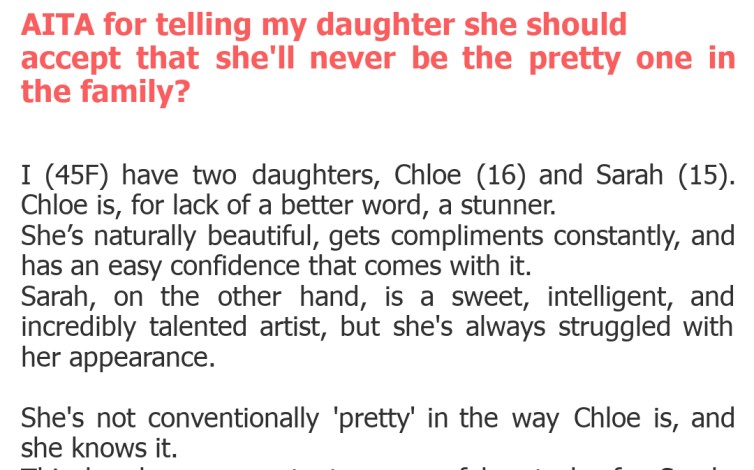
AITA for telling my daughter she should accept that she’ll never be the pretty one in the family?
Oh, the complexities of family dynamics, especially when it comes to self-esteem and appearance! Today’s AITA submission dives headfirst into a truly delicate situation that many parents might secretly grapple with, but few dare to articulate so bluntly. It's a stark reminder that words, even when born from a place of perceived realism, can cut deeper than any physical wound.
Our anonymous poster, a mother, is asking if she’s the jerk for telling her daughter a harsh truth about her looks. This isn't just about 'tough love'; it's about navigating the treacherous waters of teenage insecurity and parental responsibility to nurture self-worth. Buckle up, readers, because this one promises a heated debate and a lot of introspection on how we communicate sensitive truths to our children.

"AITA for telling my daughter she should accept that she'll never be the pretty one in the family?"
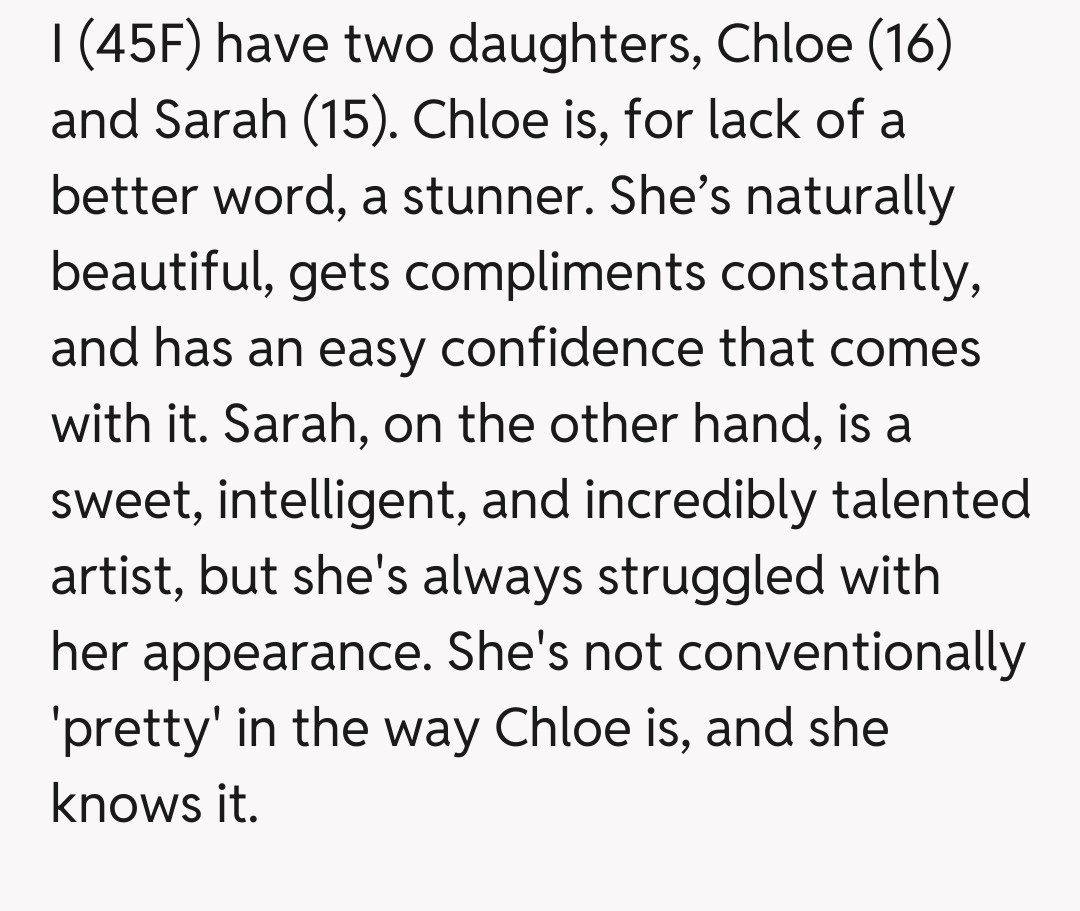
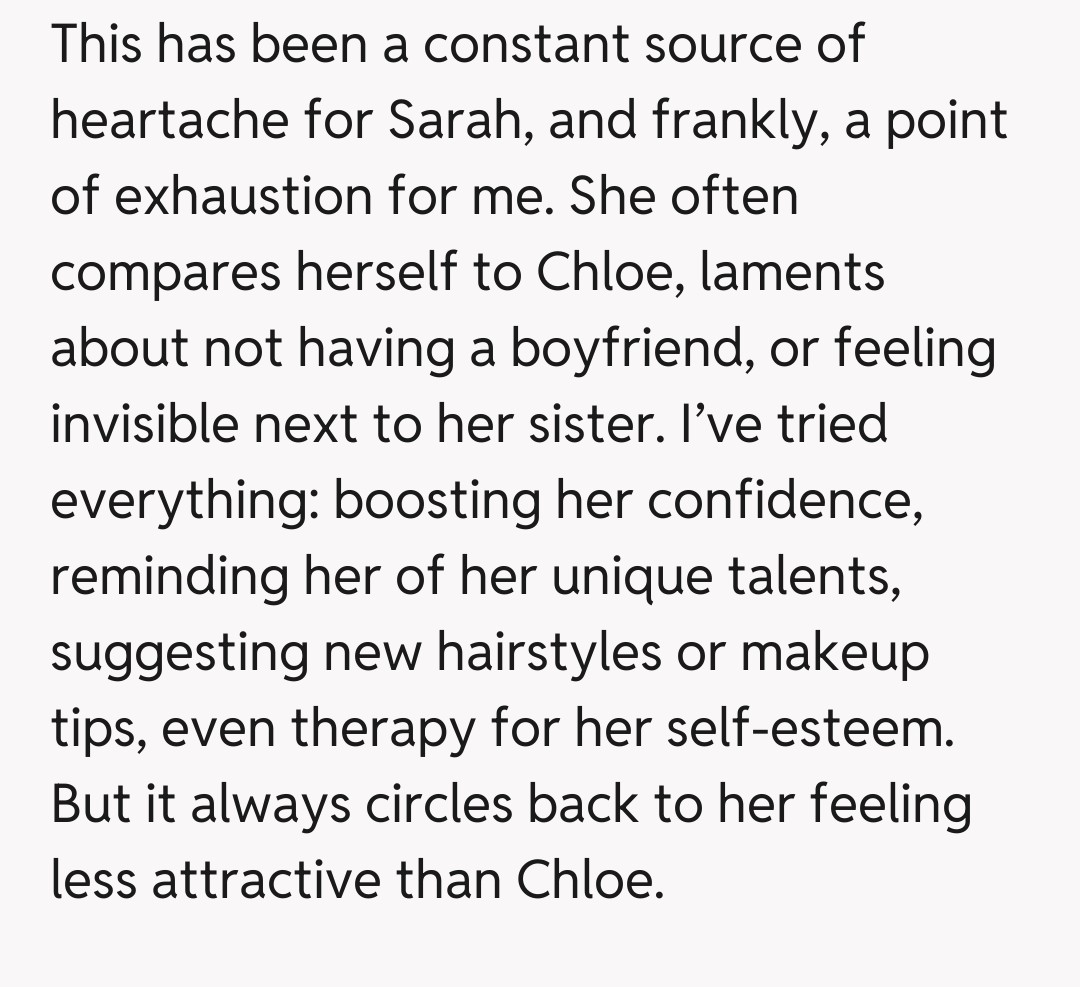
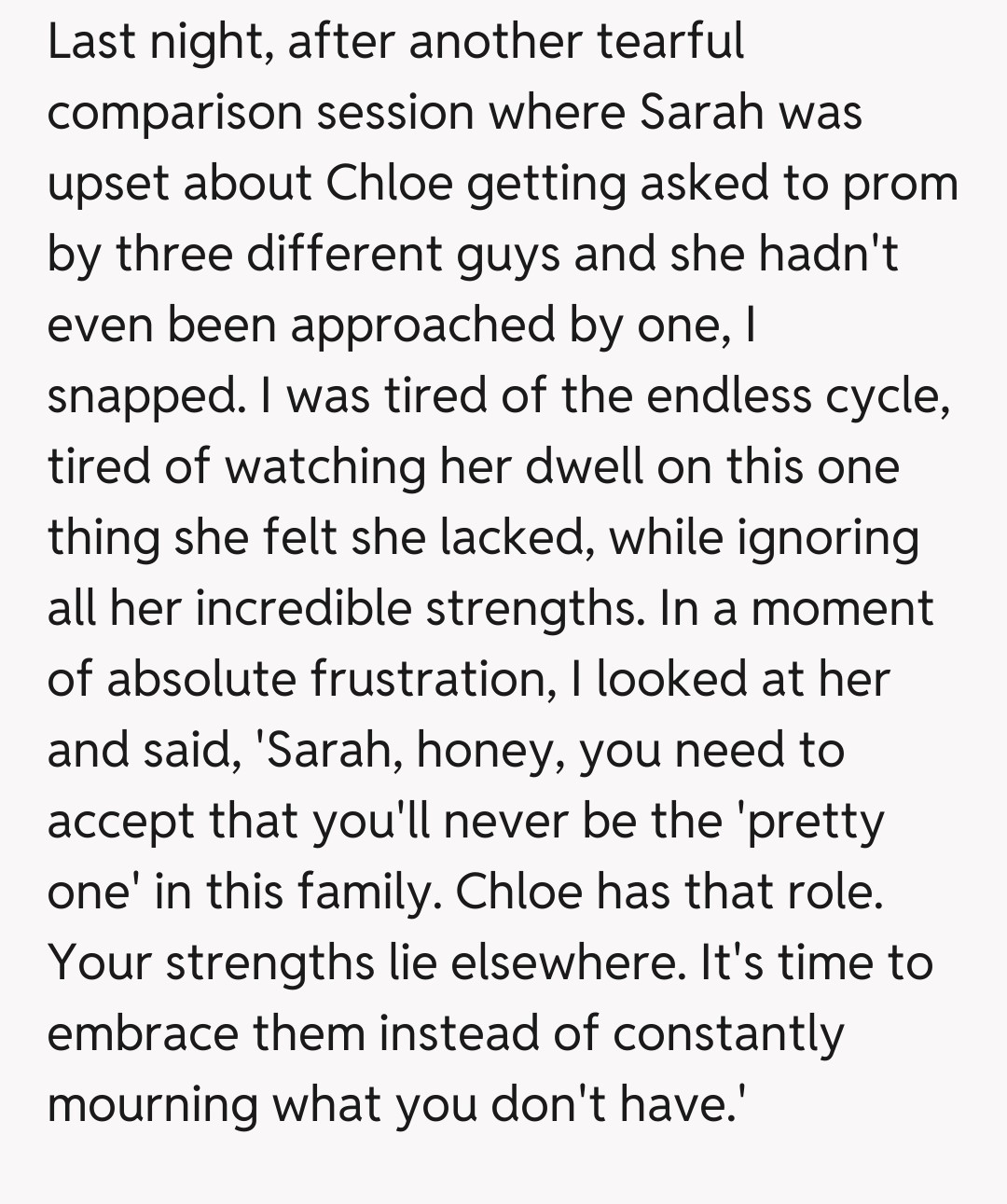
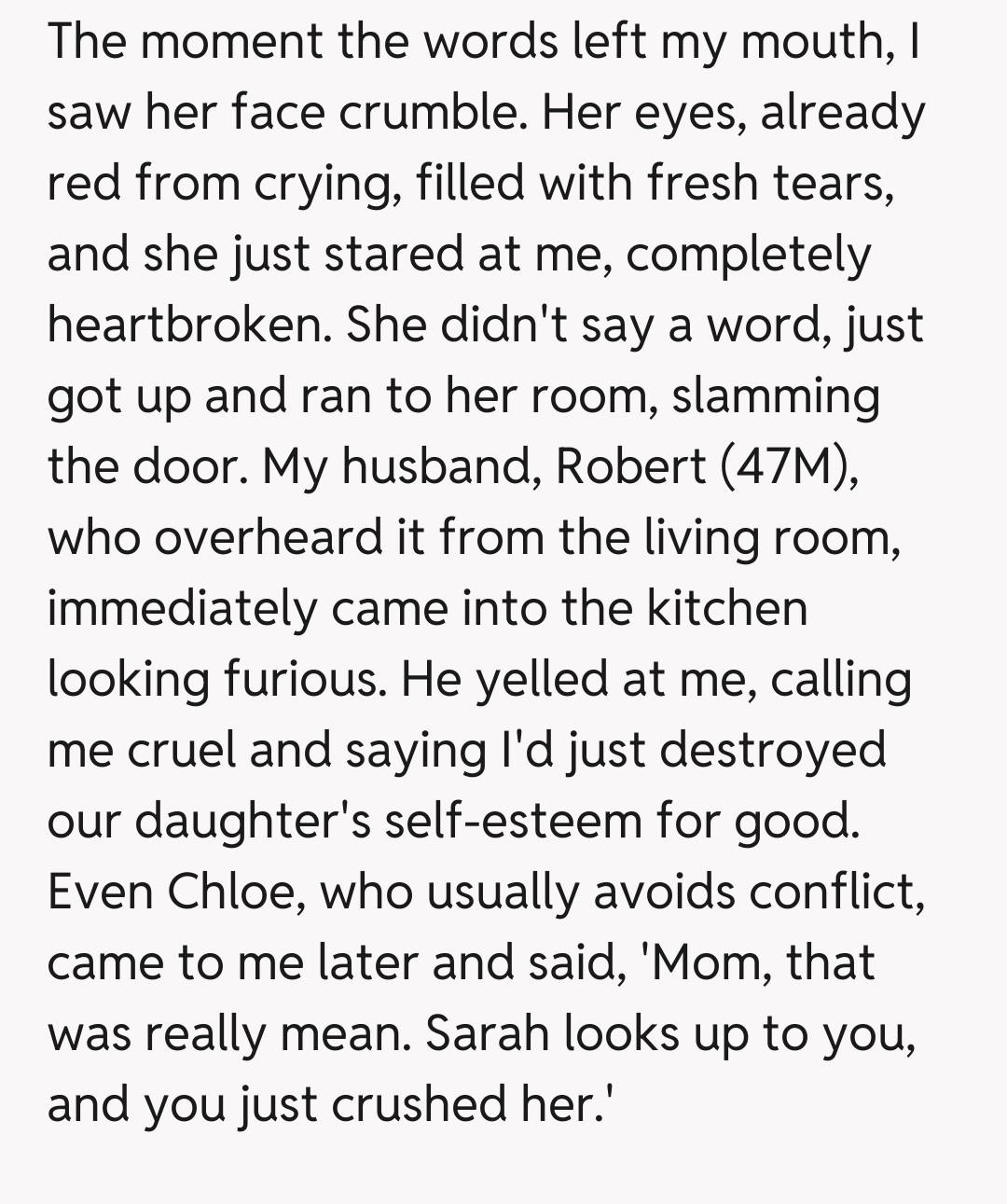
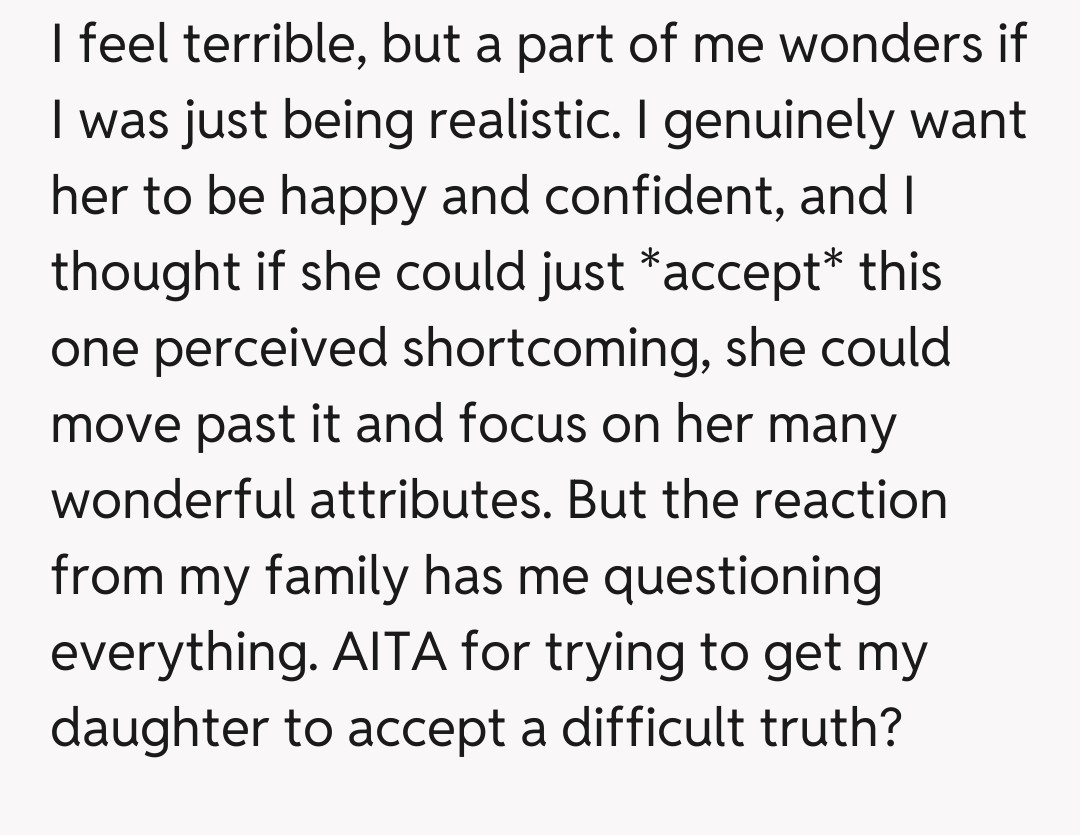
This situation is a minefield of emotional complexity. On one hand, the mother, Brenda, expresses understandable frustration with her daughter Sarah's persistent self-esteem issues rooted in appearance. It's exhausting for any parent to see their child constantly struggle with insecurity, especially when they perceive the child to have numerous other wonderful qualities that are being overlooked.
However, the method of addressing this issue was undeniably harsh. Telling a child, particularly a vulnerable teenager, that they 'will never be the pretty one' is a deeply damaging statement. It not only validates their worst fears but also comes from a primary source of validation – their own mother. The intent might have been to shift focus, but the impact was likely devastating.
The core problem lies in equating 'being pretty' with 'having value.' While the mother might have aimed to redirect Sarah towards her other strengths like intelligence and artistry, the phrasing reinforced the idea that being pretty is a 'role' or a competition within the family. This can foster resentment between sisters and leave Sarah feeling inherently lesser, regardless of her other talents.
Instead of a blunt declaration, a more empathetic approach would have involved open dialogue about societal beauty standards, affirmation of Sarah’s unique charm and qualities *without* diminishing her physical appearance, and continued professional support for her self-esteem. Guiding her to understand that beauty comes in many forms, and hers is valid, would have been far more constructive than a perceived 'reality check.'
The Internet Weighs In: Tough Love or Cruel Blow?
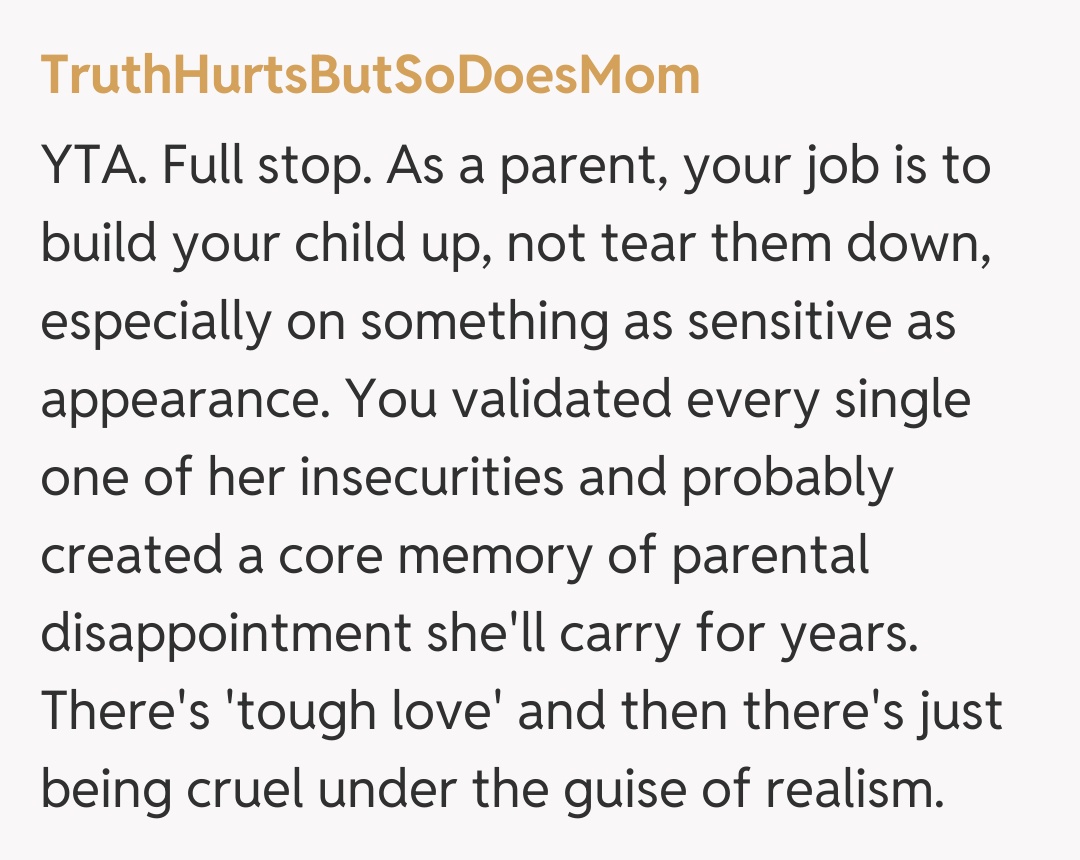
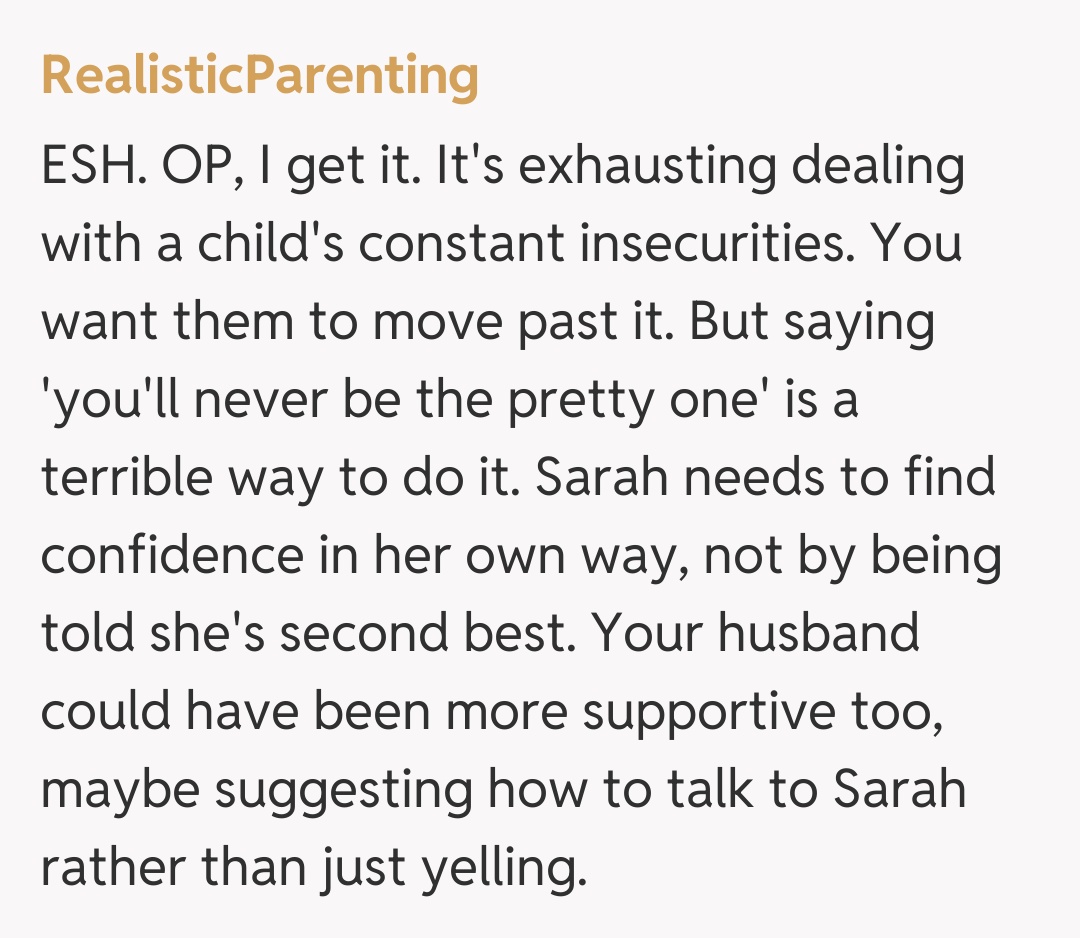
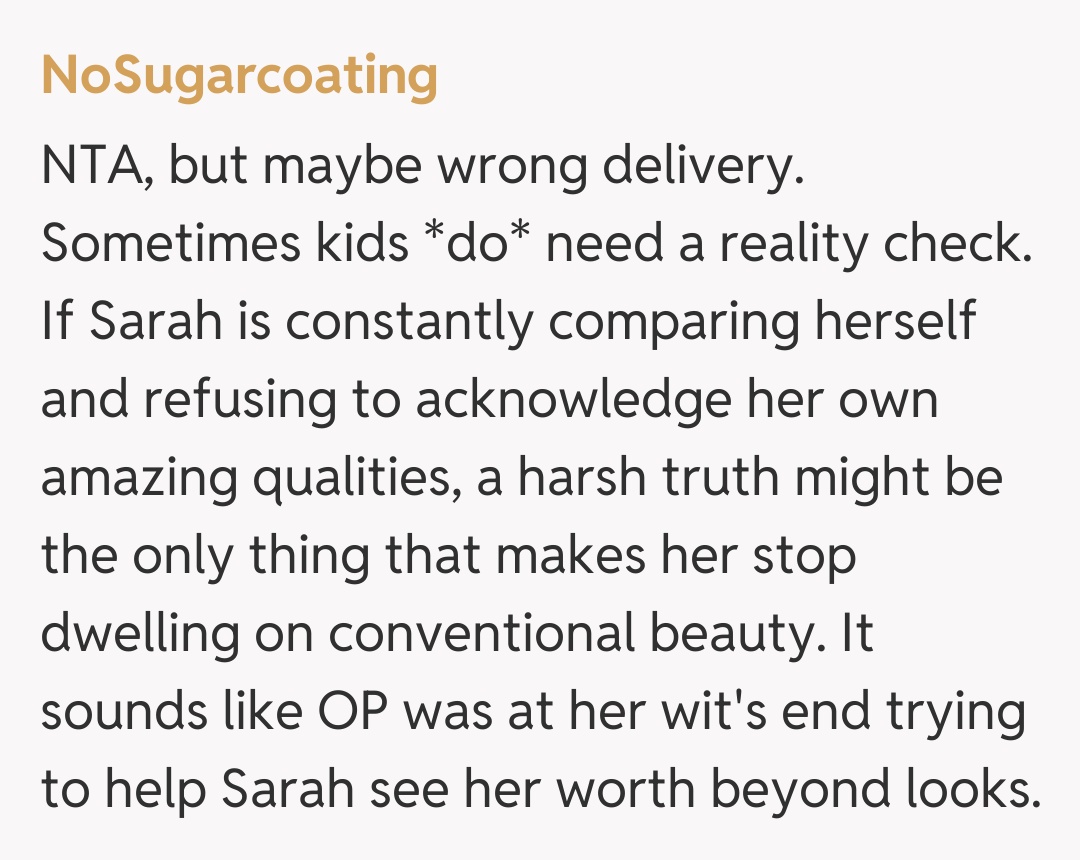
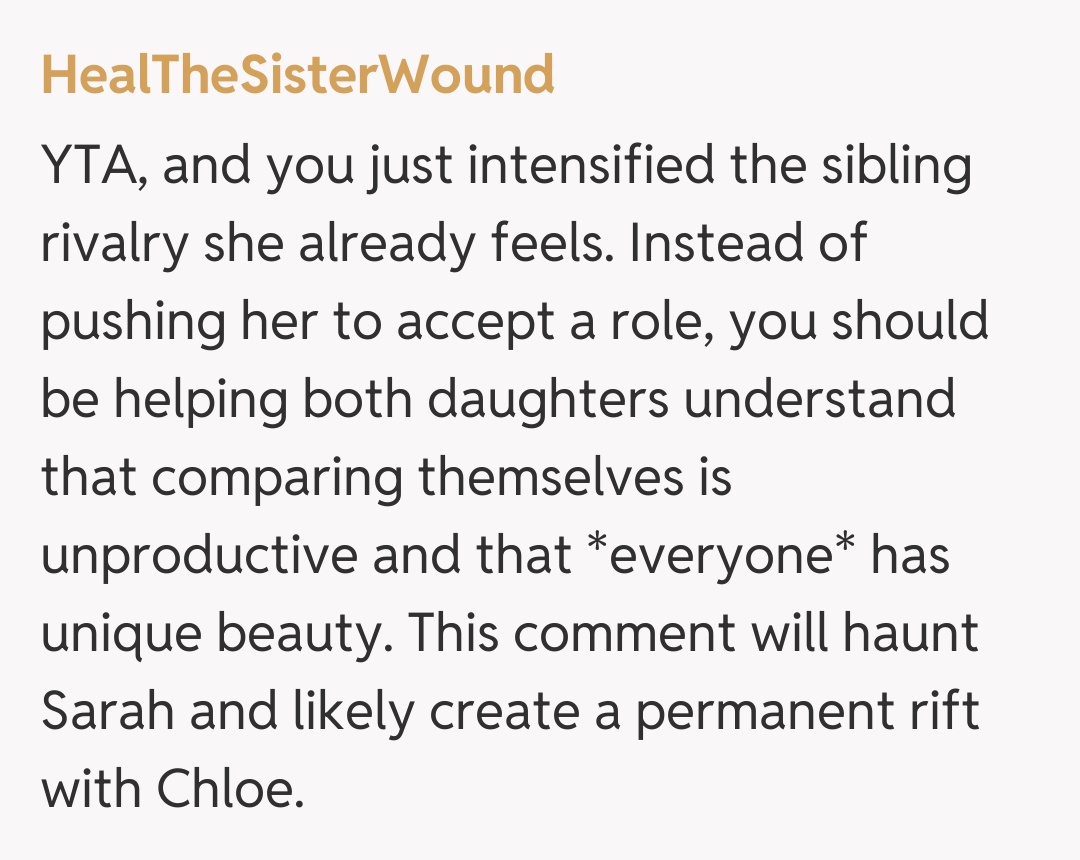
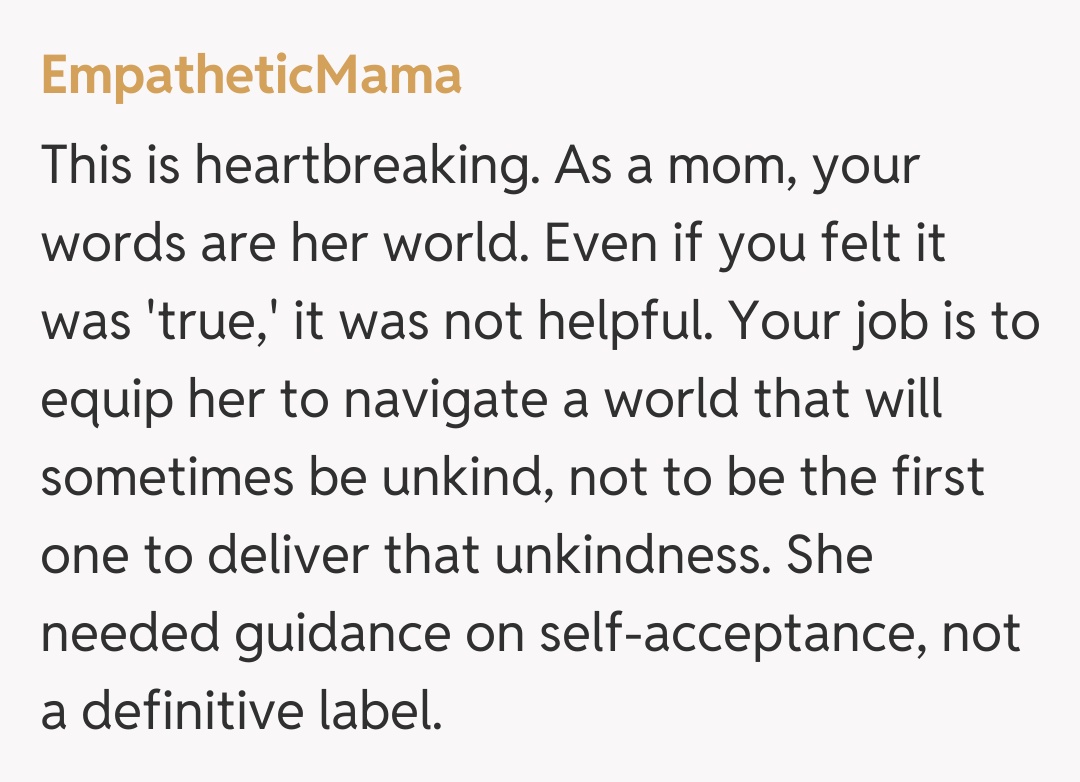
Unsurprisingly, the comment section exploded with a mix of strong opinions, though a significant majority leaned towards YTA (You're The A-hole) for the mother's execution. Many empathized with Brenda's frustration, acknowledging the difficulty of raising a child with persistent self-esteem issues. The sentiment was that she was trying to help, but her approach caused more harm than good.
There were also powerful voices highlighting the long-term psychological impact of such words from a parent. Numerous commenters shared their own stories of similar remarks from family members, underscoring how deeply these comments can scar. The consensus was that while parents want their children to be realistic, certain truths must be handled with immense care and compassion.
This AITA story serves as a profound lesson in the power of words, especially those spoken by a parent. While the desire to equip children with resilience and a realistic perspective is commendable, the delivery of harsh truths requires immense care and empathy. Ultimately, fostering a child's self-worth means celebrating their unique identity, not categorizing them within perceived family roles. Let this be a reminder to choose our words wisely, for they can shape a child's self-perception for a lifetime, for better or for worse.