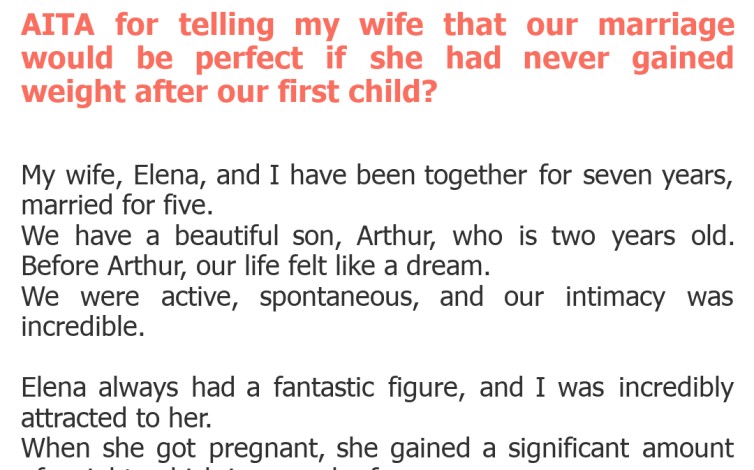
AITA for telling my wife that our marriage would be perfect if she had never gained weight after our first child?
Oh, boy, do we have a doozy for you today, folks. When relationships hit a rough patch, especially after major life changes like welcoming a child, tensions can run incredibly high. Sometimes, words are spoken in the heat of the moment that can unravel years of shared history and affection. This week's submission dives headfirst into that treacherous territory, where honesty collides with devastating insensitivity.
This AITA post isn't just about weight; it's about unmet expectations, communication breakdowns, and the profound impact of body image on a marital bond. Our OP, 'Liam', found himself in a situation many can relate to on some level, but his choice of words has ignited a firestorm of opinions online. Grab your tissues and prepare for some serious debate, because this one hits close to home for a lot of people.

"AITA for telling my wife that our marriage would be perfect if she had never gained weight after our first child?"
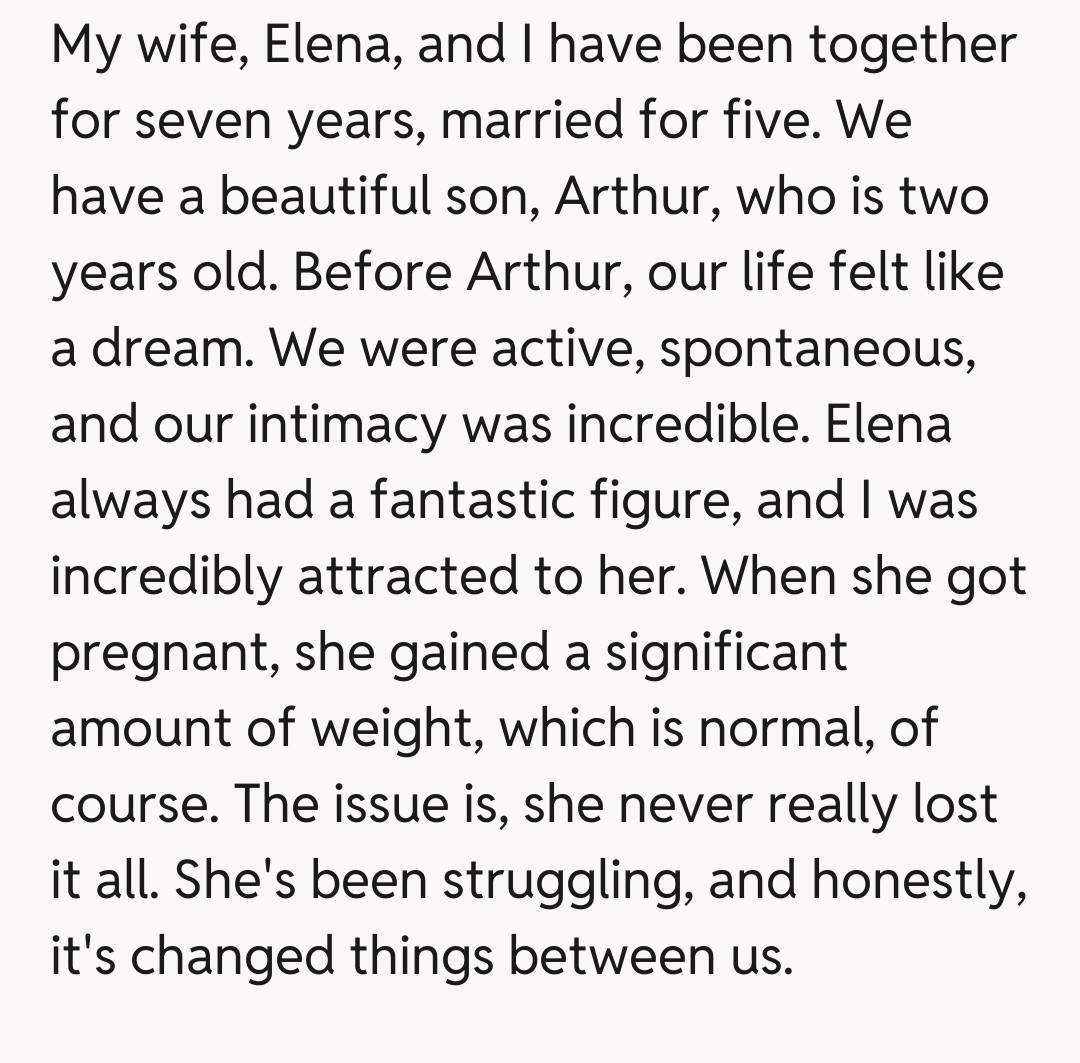
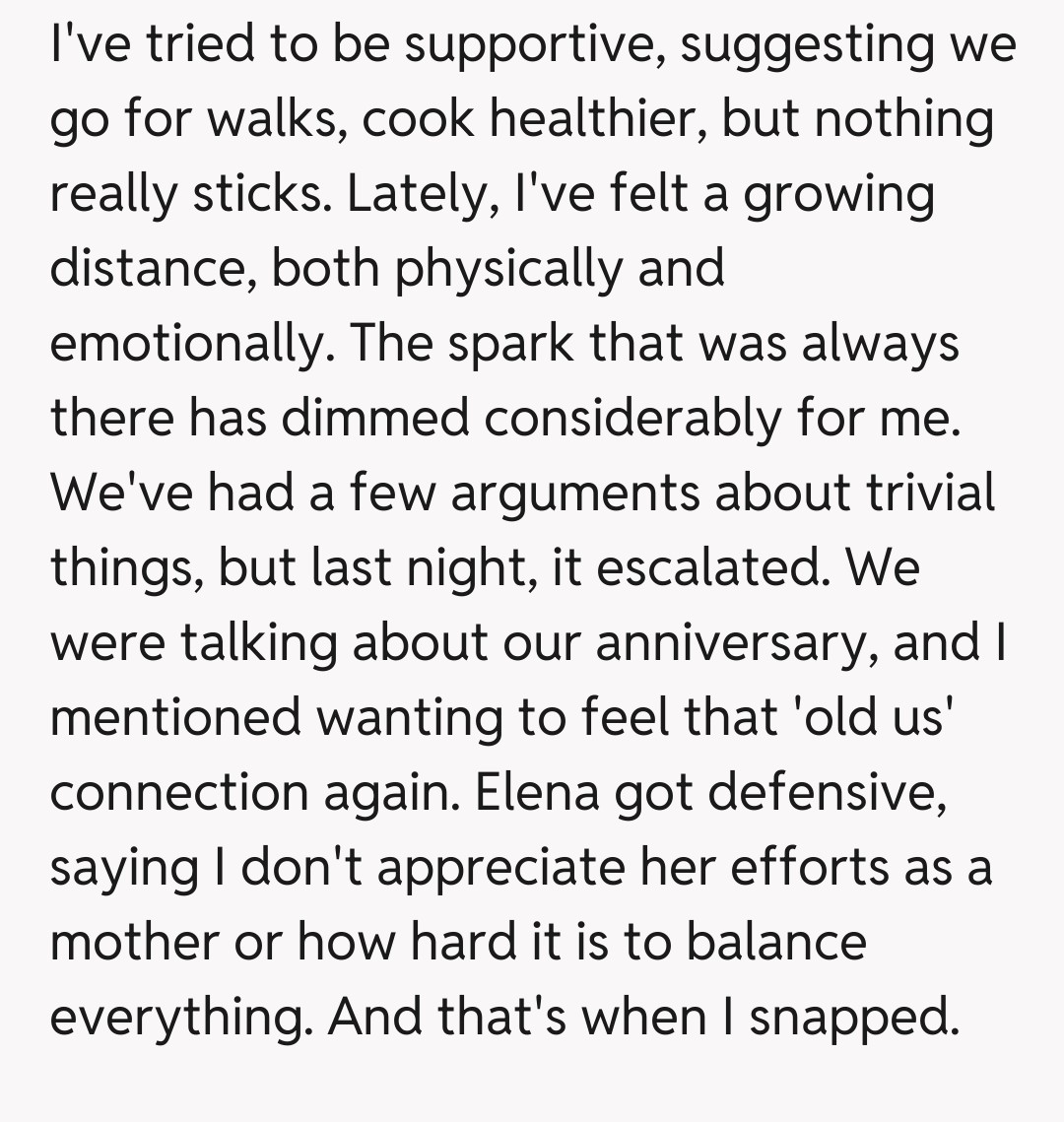
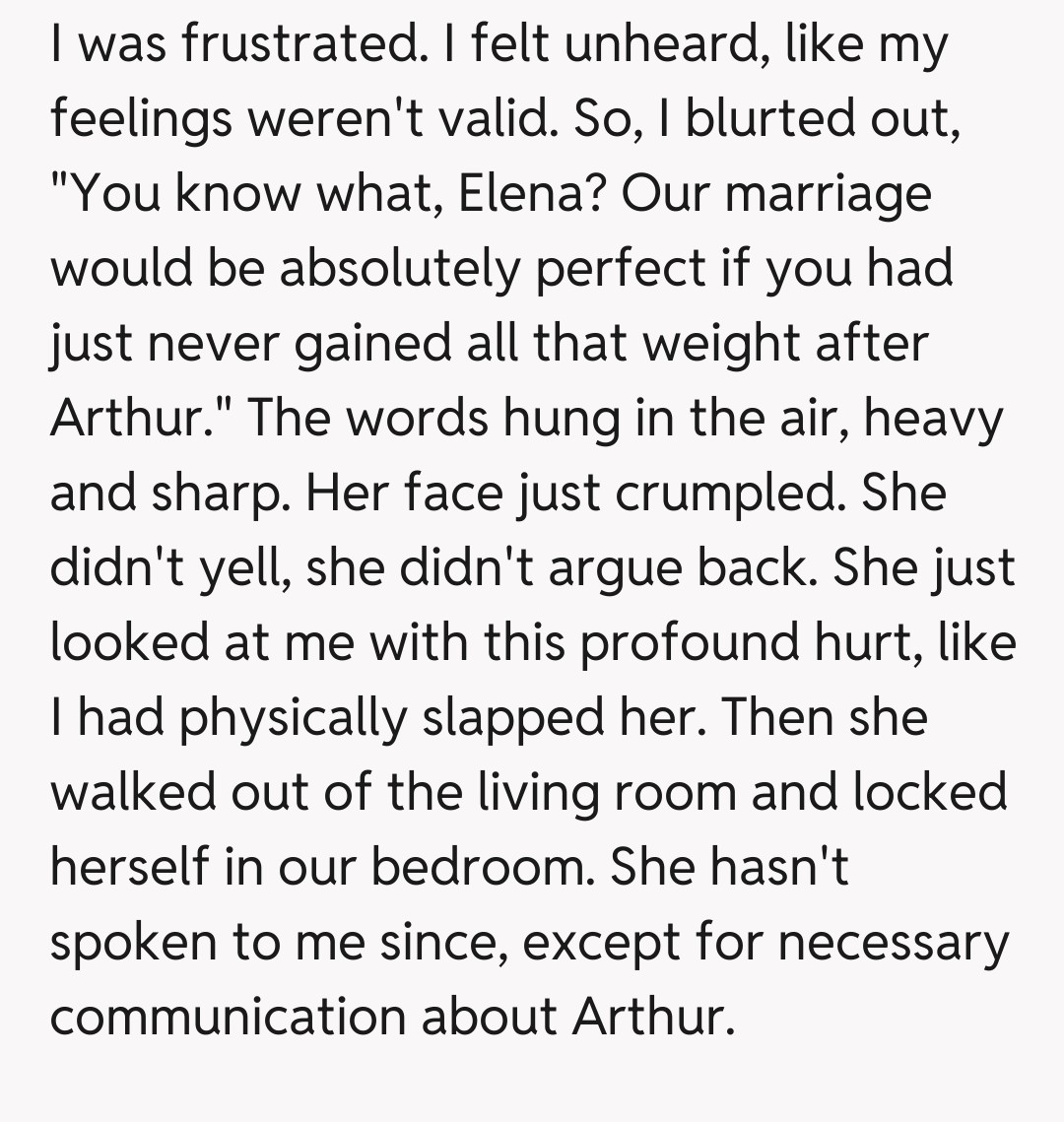
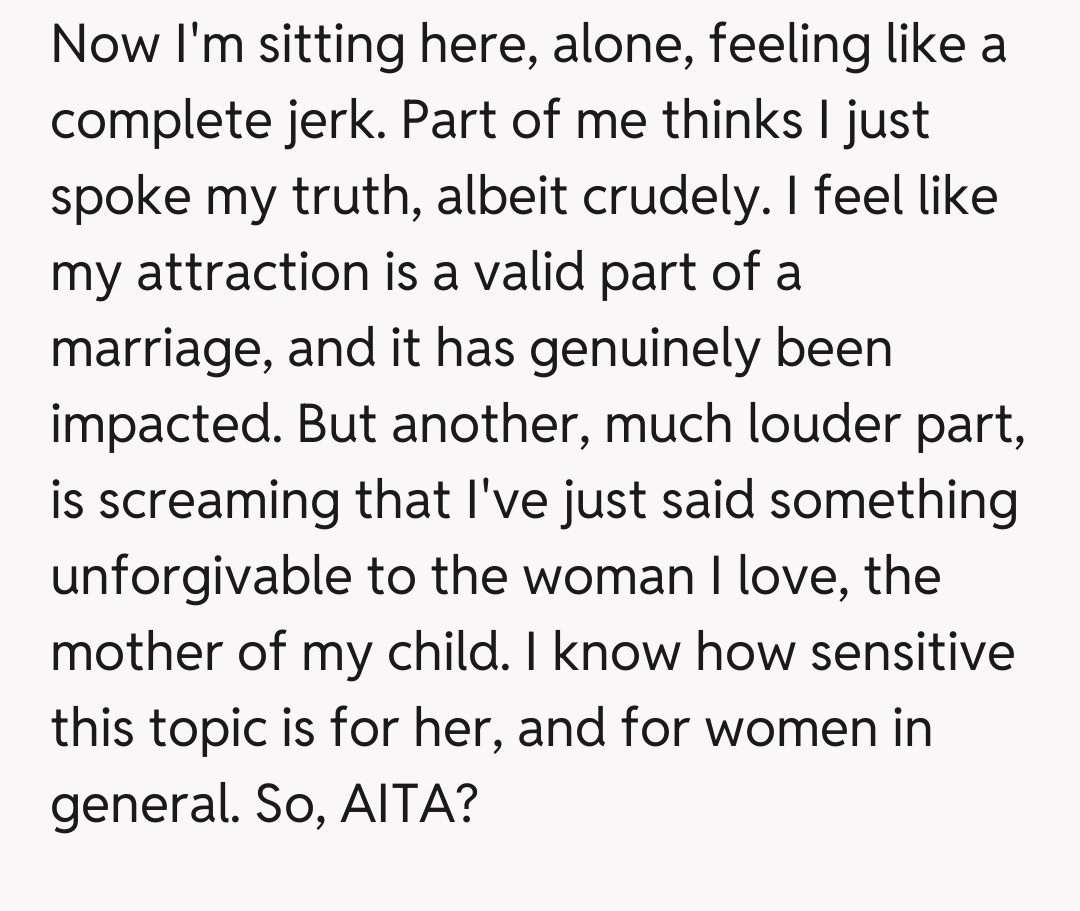
Liam's situation is undoubtedly a difficult one, navigating the complex intersection of physical attraction, post-pregnancy body changes, and the often unspoken expectations within a marriage. While it's understandable for a partner to feel a shift in attraction, the way these feelings are communicated is paramount. The internal struggle Liam describes, feeling a 'dimmed spark,' is a real experience that many individuals face after major life events, and it's important not to dismiss that.
However, the statement itself, that the marriage would be 'perfect' if not for the weight gain, is incredibly damaging. It places the entire burden of marital happiness and perfection squarely on Elena's physical appearance, effectively dismissing her identity as a mother, partner, and individual beyond her body. This kind of declaration can erode trust and self-esteem, making a partner feel conditional love, rather than unconditional acceptance.
From Elena's perspective, navigating the physical and emotional changes of postpartum life is a monumental challenge. Society often places immense pressure on new mothers to 'bounce back' immediately, and a partner's criticism, even if unintentional, can feel like a profound betrayal. Her defensiveness likely stemmed from feeling unappreciated and overwhelmed, and Liam's comment would have exacerbated those feelings exponentially.
Ultimately, while Liam's feelings of changed attraction are valid to some extent, the delivery of his concerns was deeply flawed and hurtful. A healthy marriage requires open, empathetic communication, even about sensitive topics. Instead of focusing on what's 'wrong' with Elena, a more constructive approach would have been to express his own feelings of disconnect and suggest ways they could reconnect as a couple, potentially including joint activities that promote health and well-being.
The internet weighs in: Did Liam cross an unforgivable line?
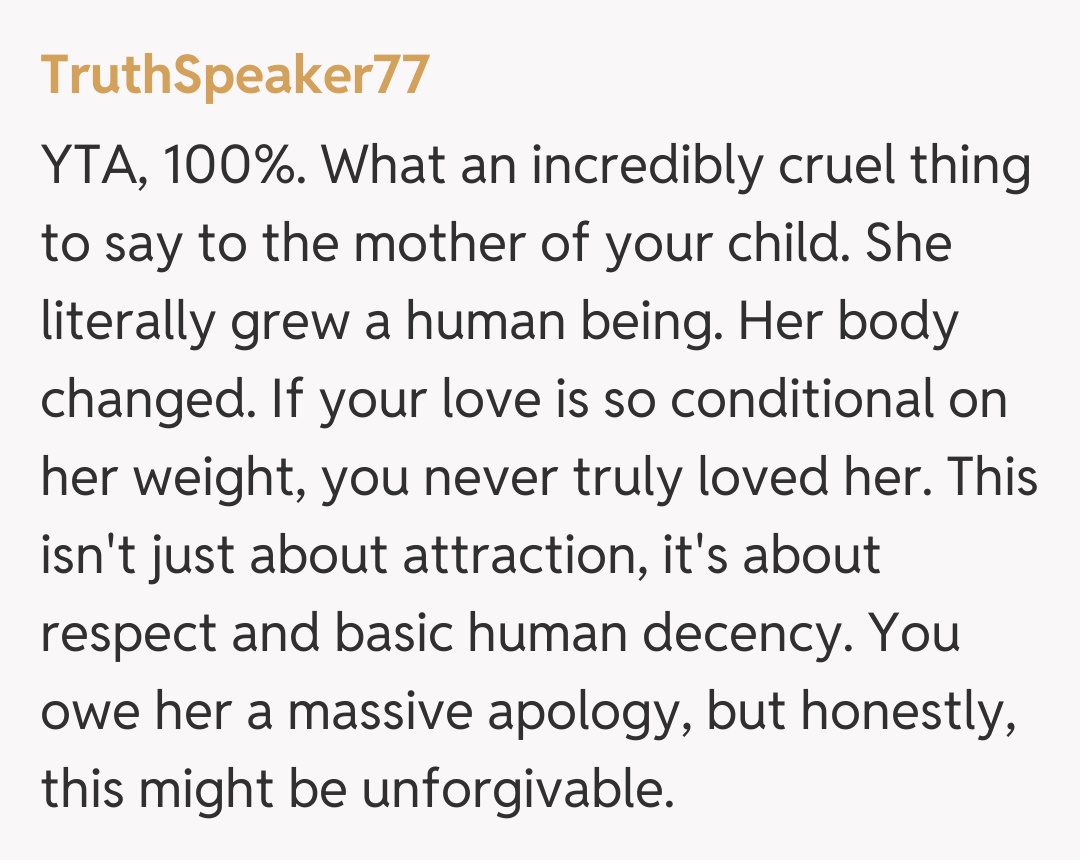
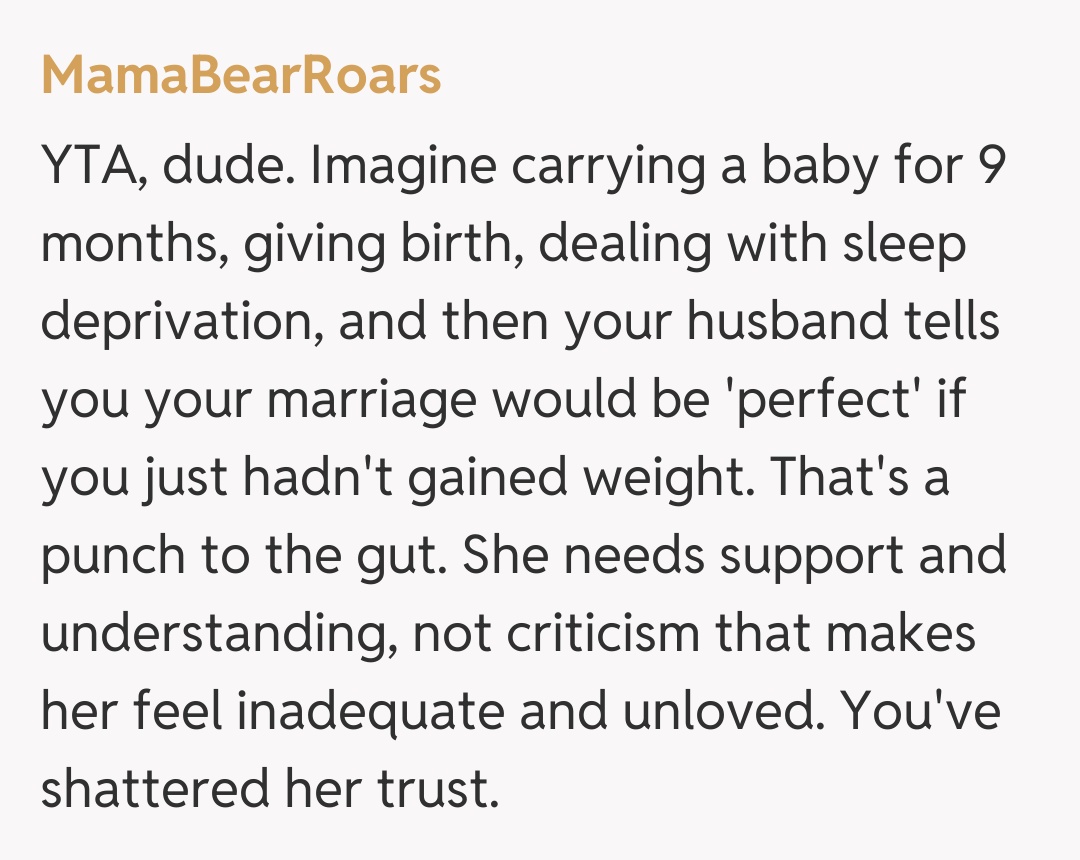
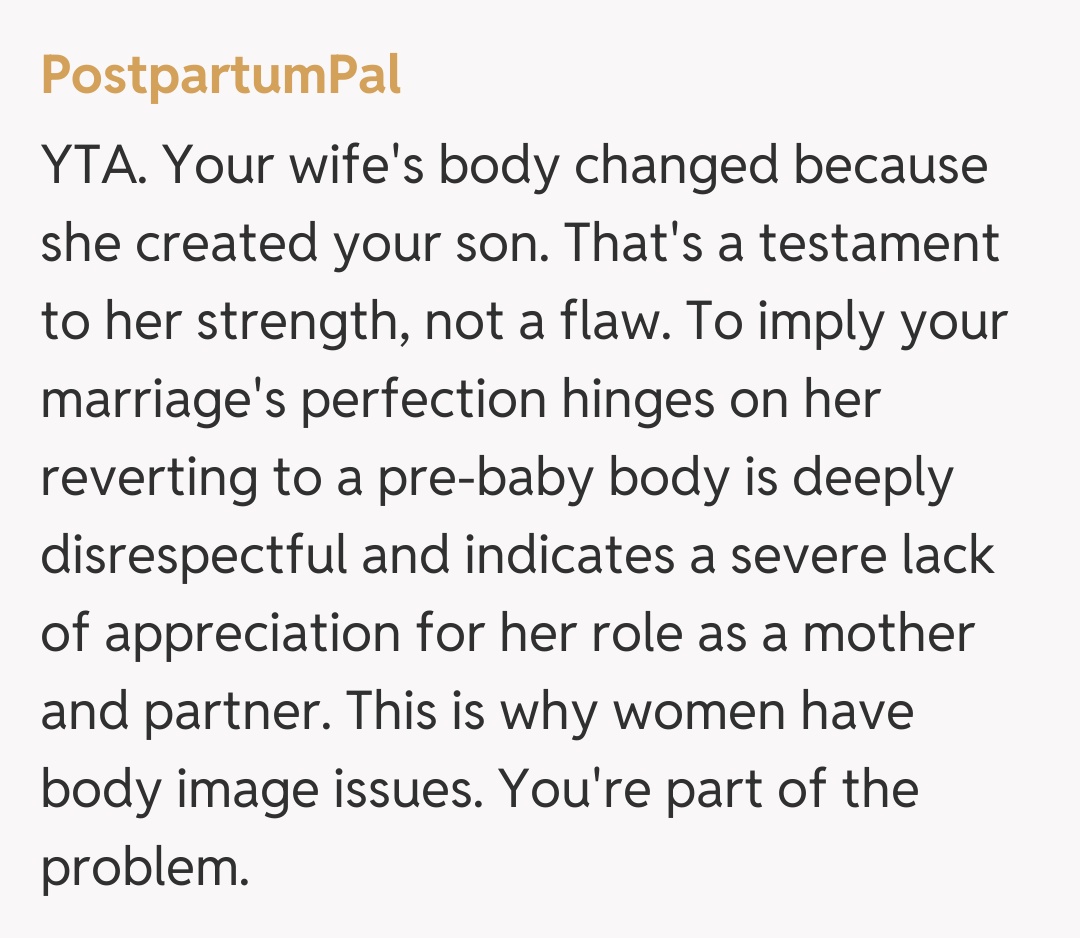
The comment section, as expected, is a heated battleground on this one! Many users are firmly in the YTA camp, lambasting Liam for his cruel and insensitive remarks. They highlight the immense pressure women face post-partum and the destructive nature of body shaming from a partner. The consensus among these commenters is that while attraction can change, expressing it in such a brutally conditional way is a relationship-ending offense that shows a fundamental lack of empathy.
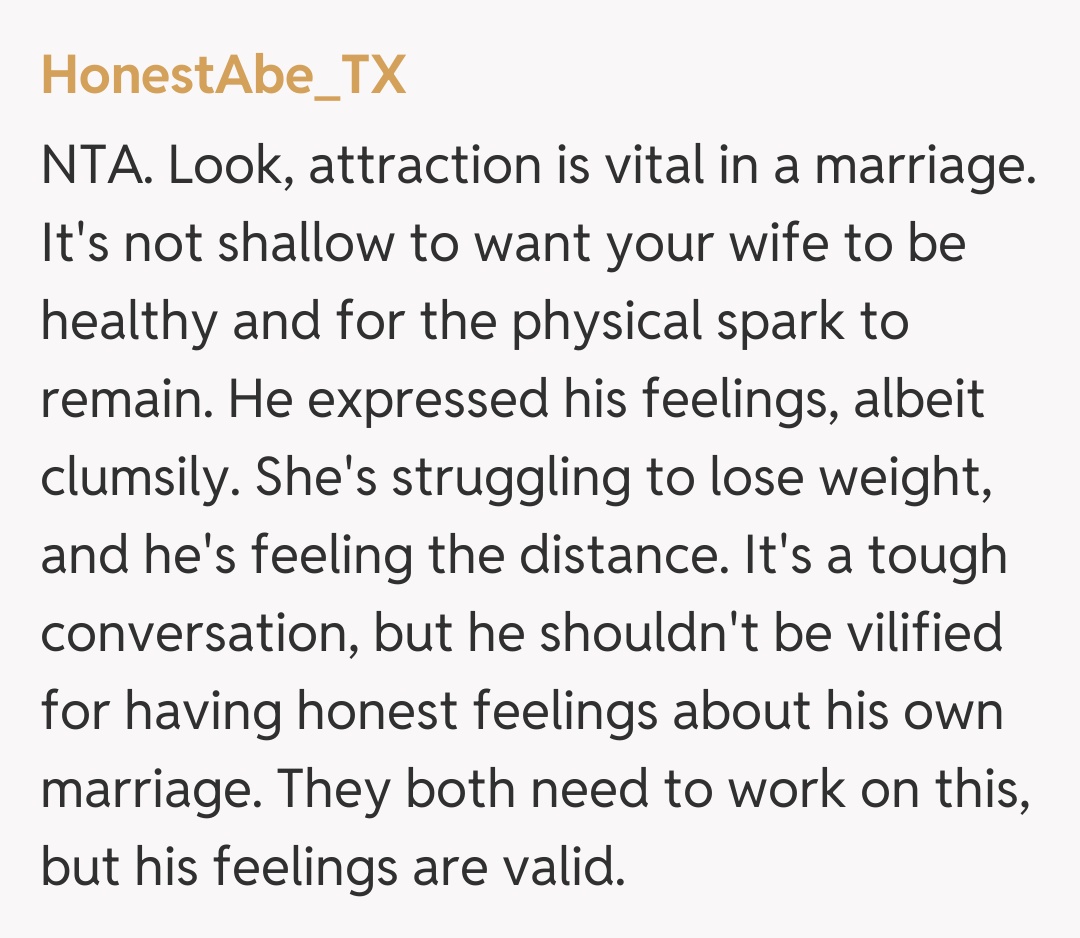
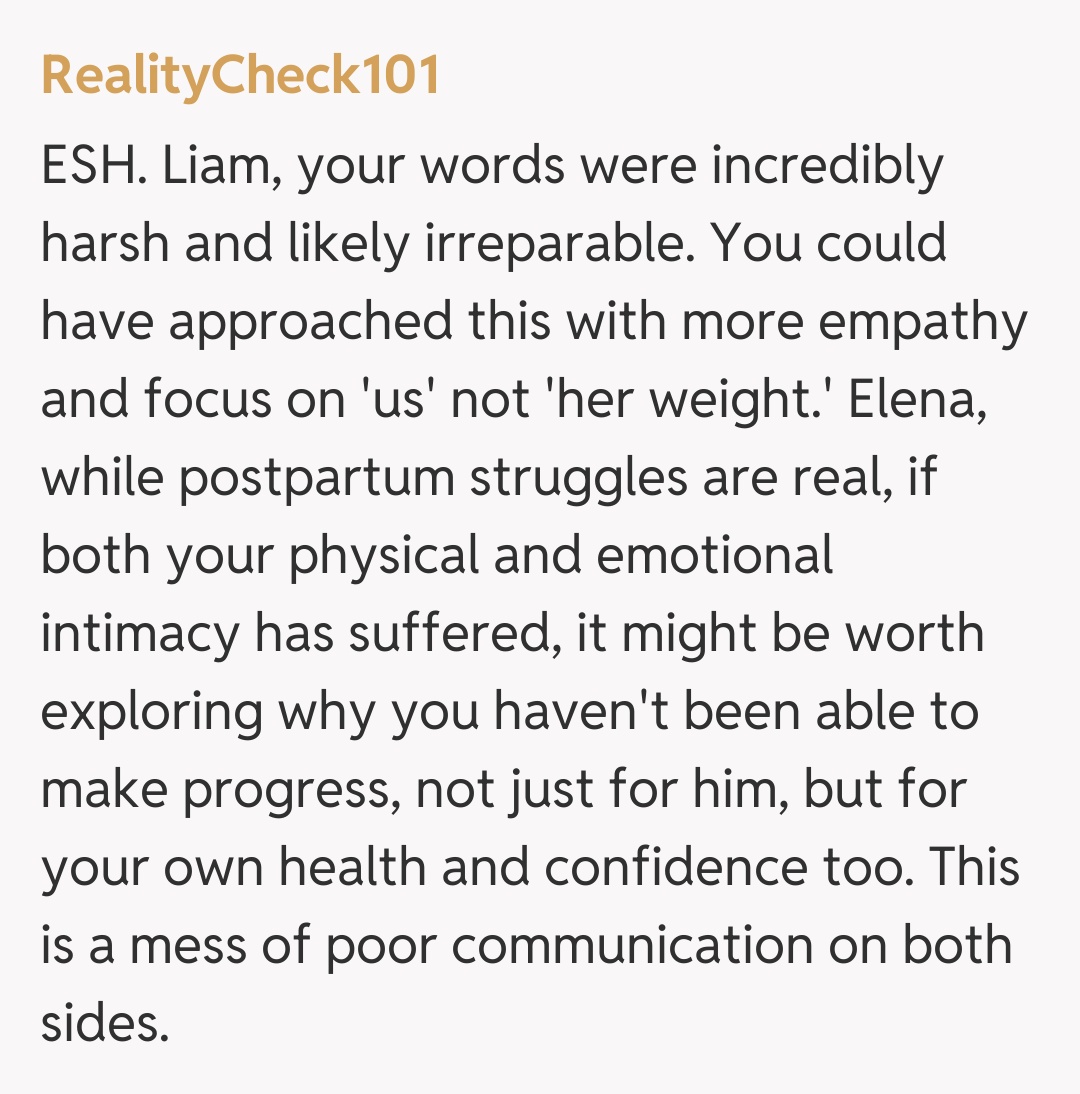
Conversely, a smaller but vocal contingent argues for NTA, or ESH, emphasizing that physical attraction is a crucial component of marriage. They suggest that Liam's feelings, though poorly articulated, are valid and that Elena also bears some responsibility for their marital issues. These users believe that ignoring a partner's feelings about attraction, even if uncomfortable, is equally detrimental. The debate rages on, showing just how complex and raw this issue truly is.
This story serves as a stark reminder of the delicate balance in marital communication, especially concerning sensitive topics like body image and attraction. While it's essential for partners to be honest with each other, the manner and context of that honesty can make all the difference between a constructive conversation and a devastating blow. Liam's post highlights the deep wounds that can be inflicted when empathy takes a back seat to frustration. Hopefully, this couple can find a path forward, perhaps with professional help, to heal the damage and rebuild trust, focusing on mutual respect and understanding.