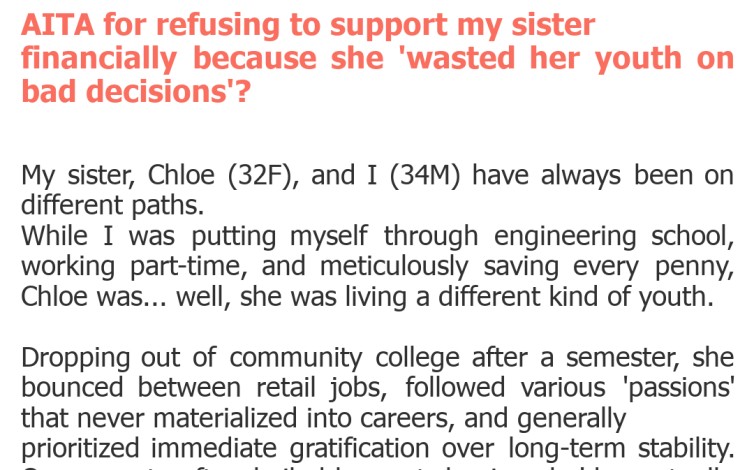
AITA for refusing to support my sister financially because she ‘wasted her youth on bad decisions’?
Welcome back to another edition of 'Am I The A**hole,' where we dissect the sticky situations that plague modern families. Today, we're diving into a deeply contentious issue: the obligation to financially support a sibling whose life choices diverged significantly from your own. Our OP, Ethan, finds himself at a crossroads, wrestling with the guilt of turning down a sister in need versus the frustration of enabling what he perceives as a pattern of irresponsibility.
This isn't just about money; it's about perceived fairness, personal sacrifice, and the unspoken contract of family. When one sibling toils tirelessly to build a stable life, while another seemingly drifts through theirs, what responsibility does the 'successful' sibling bear when the chips are down? Ethan's story forces us to confront uncomfortable truths about boundaries, the past, and whether tough love is truly the kindest option.

"AITA for refusing to support my sister financially because she 'wasted her youth on bad decisions'?"


This situation strikes at the heart of a fundamental question: where does family obligation end and personal accountability begin? On one hand, Ethan has clearly demonstrated a strong work ethic and a responsible approach to life, building his own stability through diligence and sacrifice. It's understandable that he feels resentful about being asked to essentially subsidize choices he views as reckless and irresponsible, especially when he himself made significant sacrifices.
However, the 'family' argument is a powerful one. Many believe that when a loved one is truly in need, you extend a hand, regardless of how they got there. Chloe's current crisis, even if a result of past decisions, is still a very real and painful one. The argument here is whether turning your back on a sibling in a vulnerable state, regardless of their history, crosses a line into coldness or cruelty.
Ethan's concern about enabling Chloe is also valid. If past bailouts by their parents haven't fostered self-sufficiency, what guarantee is there that his financial aid would be different? There's a fine line between helping someone get back on their feet and simply cushioning the fall of repeated poor decisions. Ethan's offer of resources rather than direct cash might be his attempt at 'tough love' – forcing her to engage in the process of rebuilding.
Ultimately, this scenario highlights the immense pressure and emotional toll placed on 'successful' siblings when others struggle. There’s a societal expectation to support family, but also a growing emphasis on individual responsibility. The challenge for Ethan lies in distinguishing between genuine, temporary hardship and a chronic pattern of dependency, and then deciding what kind of help, if any, will genuinely benefit Chloe in the long run.
The Verdict Is In: Is Blood Thicker Than Bad Choices?
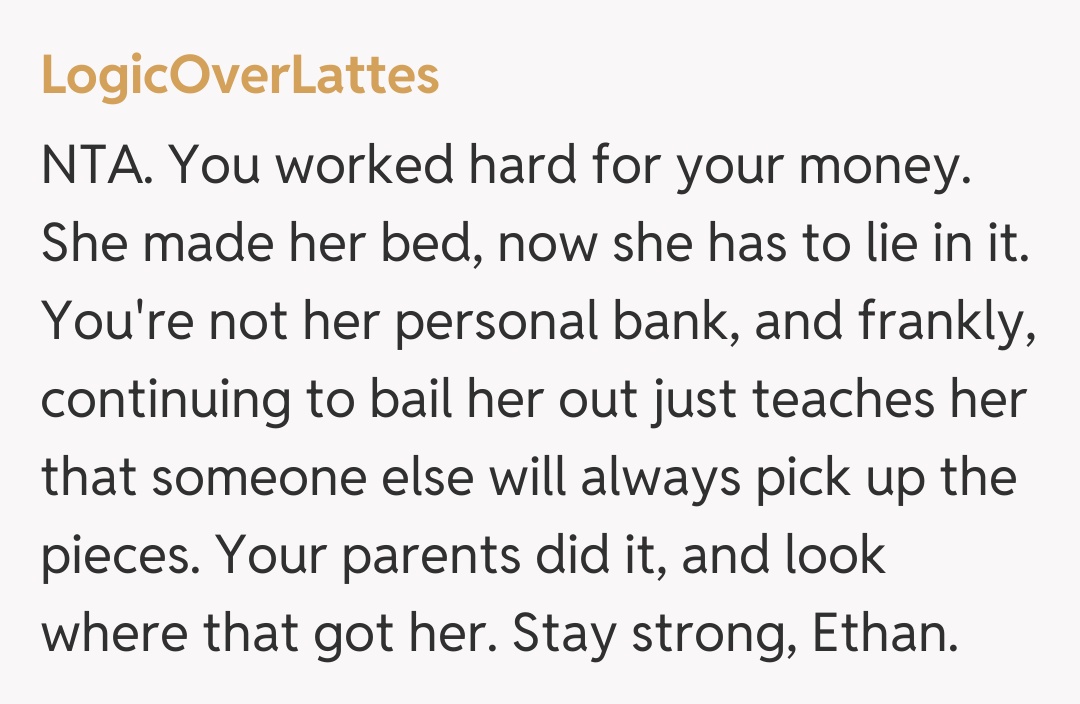
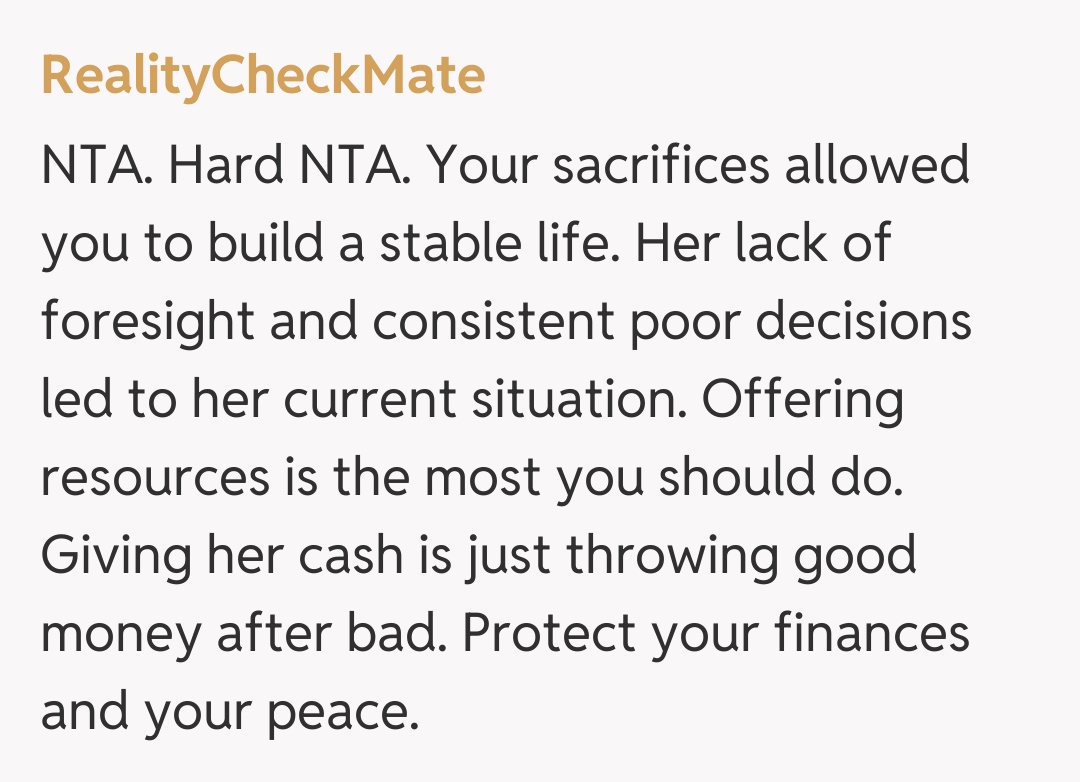
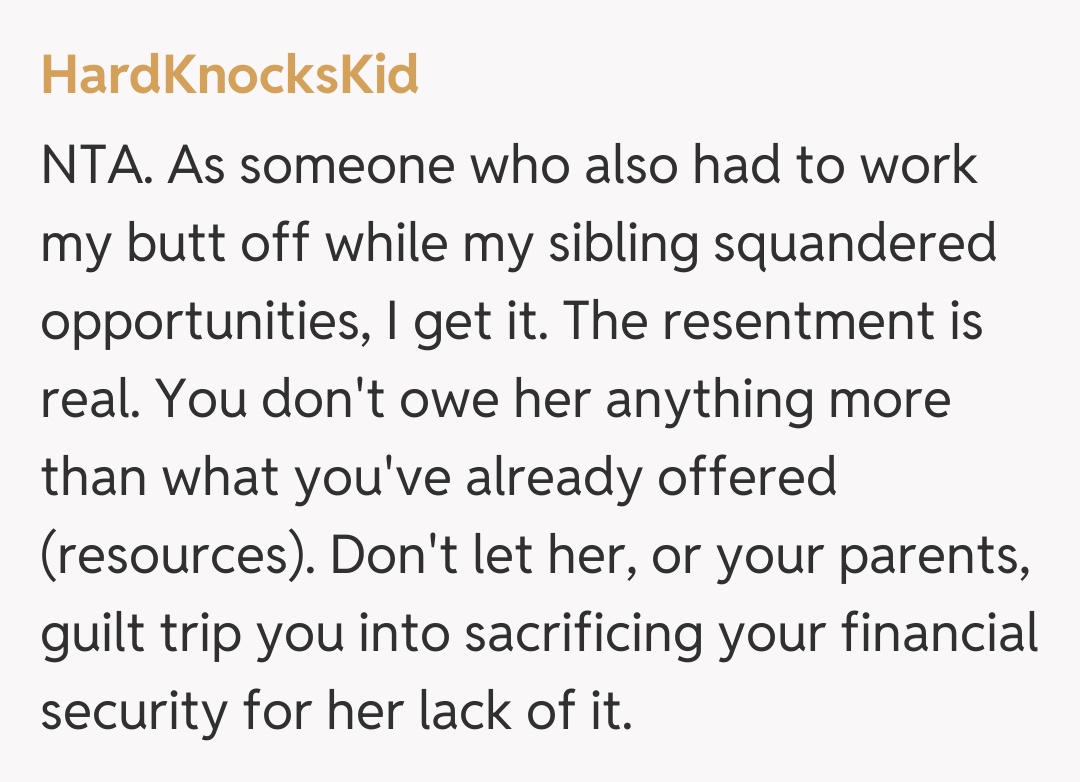
The comments section for this one was, as expected, a whirlwind of strong opinions, mirroring the deep divide in the story itself. A significant portion of our readers firmly stood with Ethan, arguing that he is NTA. Many shared their own experiences with enabling family members, emphasizing that constantly bailing someone out rarely leads to positive change and can even foster resentment and a lack of personal responsibility. The sentiment was clear: Ethan worked hard for his money, and he has no obligation to fund Chloe's consequences.
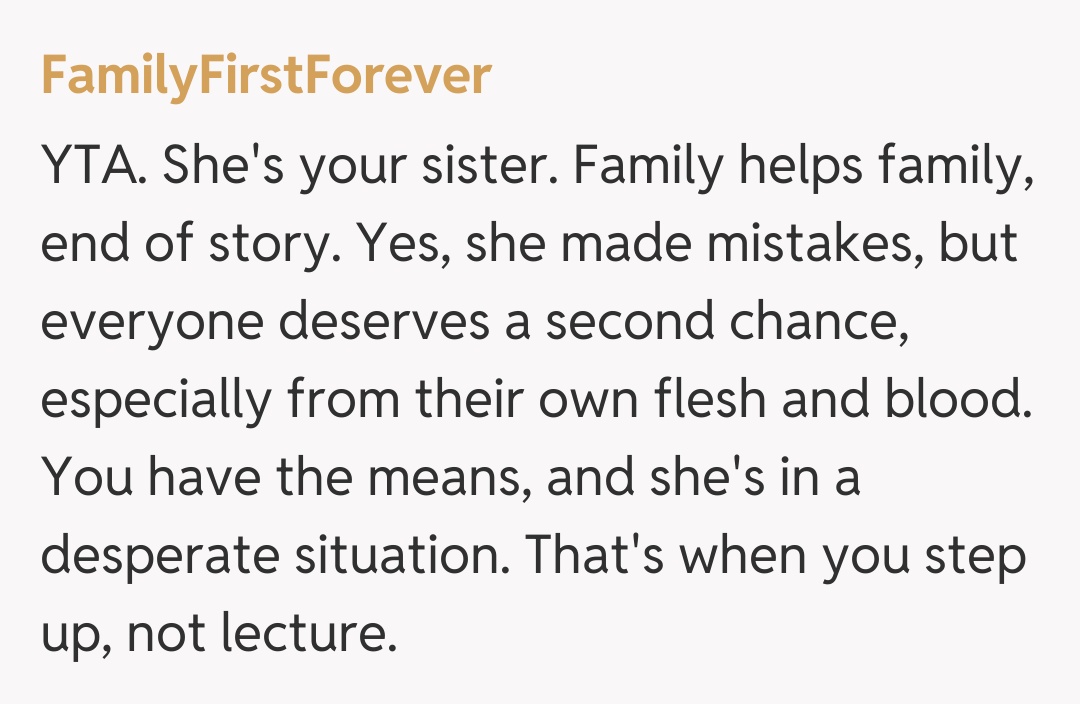
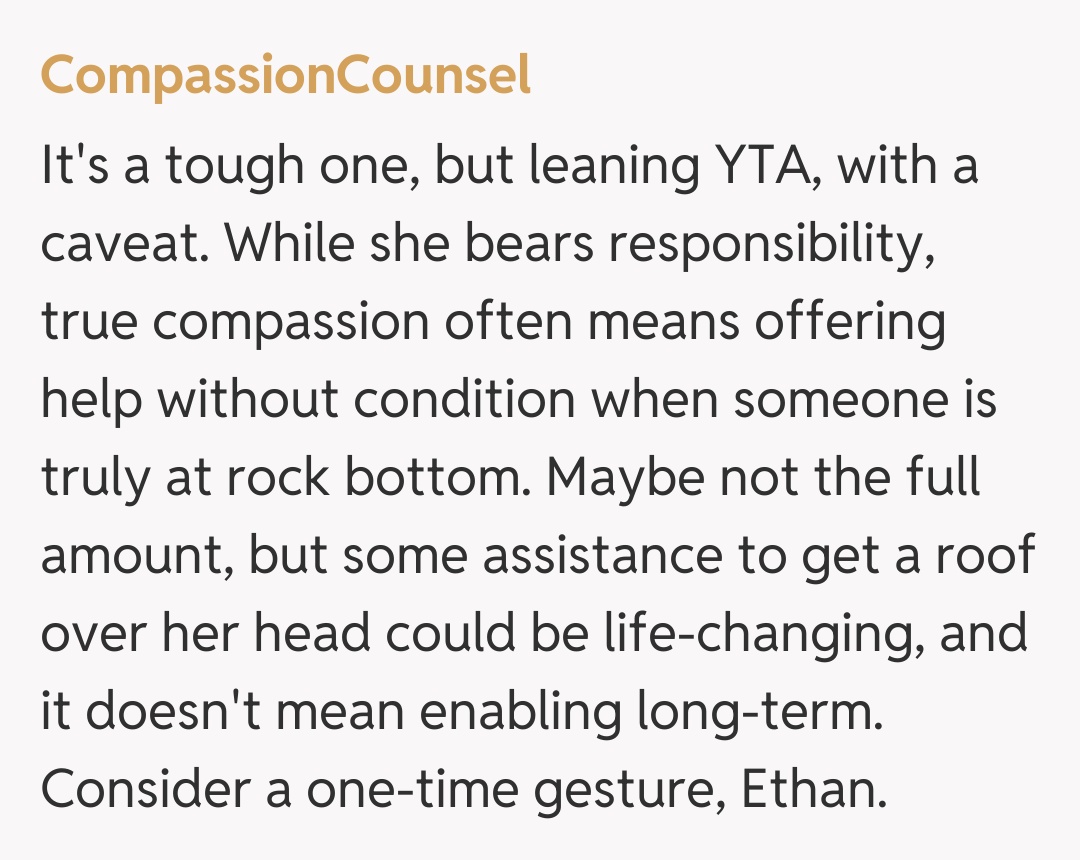
Conversely, a smaller but vocal contingent leaned towards YTA, or at least a more nuanced judgment. These commenters often highlighted the unique bond of family, suggesting that while Chloe's choices were poor, she is still his sister and in desperate need. Some urged Ethan to consider a smaller, one-time gift with strict conditions, or to provide non-financial support. The debate often circled back to whether true compassion means helping without judgment, or if compassion requires holding someone accountable.
Ethan's dilemma is a stark reminder that family ties, while powerful, are not always simple. The line between compassion and enabling is blurry, and what constitutes 'help' can differ wildly depending on perspective. While there's no universal answer, this story highlights the importance of clear boundaries, self-preservation, and a deep, honest look at the long-term impact of our actions, both on ourselves and our loved ones. It's a conversation worth having within every family, before crisis forces the issue.