AITA for refusing to help my brother pay his bills because he “chose to be a failure” and now he can live in the street?
Welcome back, drama lovers! Today we're diving into a tale that many of us can relate to: the complex dynamics of sibling relationships when money is involved. Our submitter, Eleanor, finds herself at a crossroads with her brother, Liam. It's a classic situation where one sibling has consistently made less-than-ideal choices, and the other has worked tirelessly to build a stable life.
The question at the heart of this post isn't just about financial aid, but about tough love, personal responsibility, and the perceived fairness of burdens within a family. Is Eleanor justified in drawing a hard line, or does family obligation trump past grievances? Get ready to weigh in on whether our OP is a cold-hearted pragmatist or simply a person who's had enough.

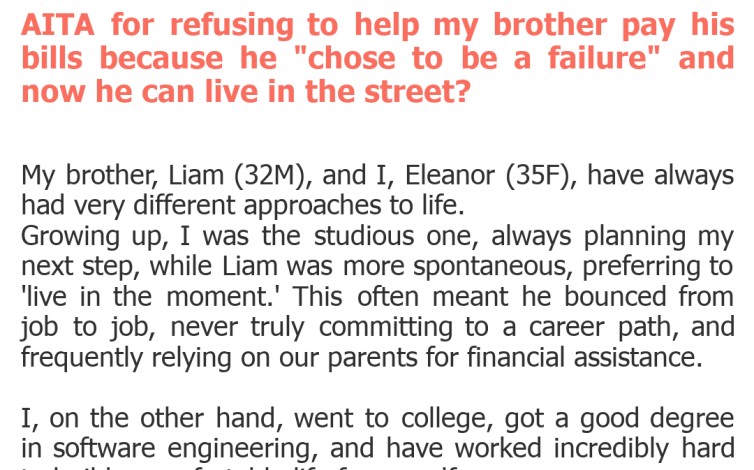
"AITA for refusing to help my brother pay his bills because he "chose to be a failure" and now he can live in the street?"
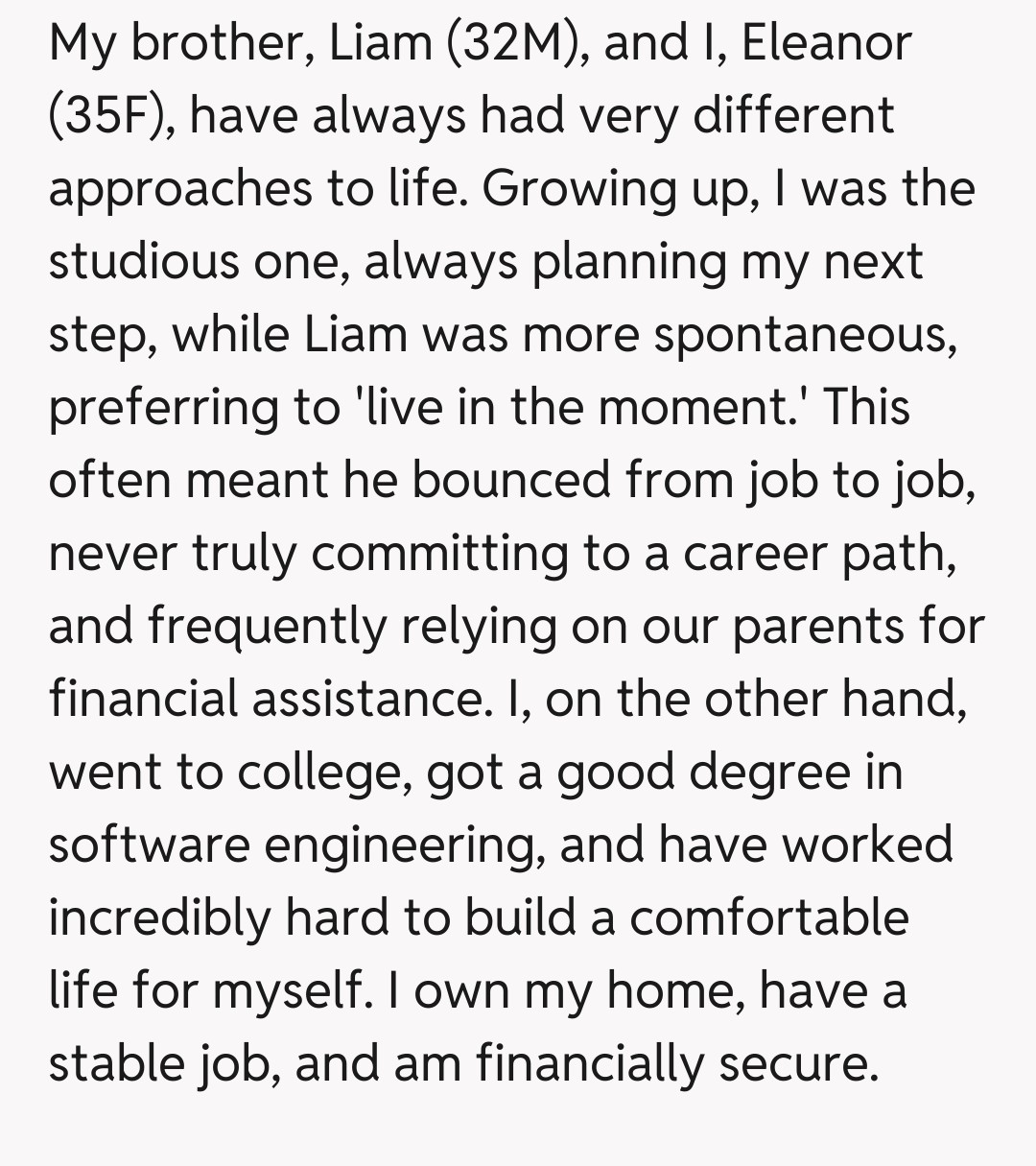
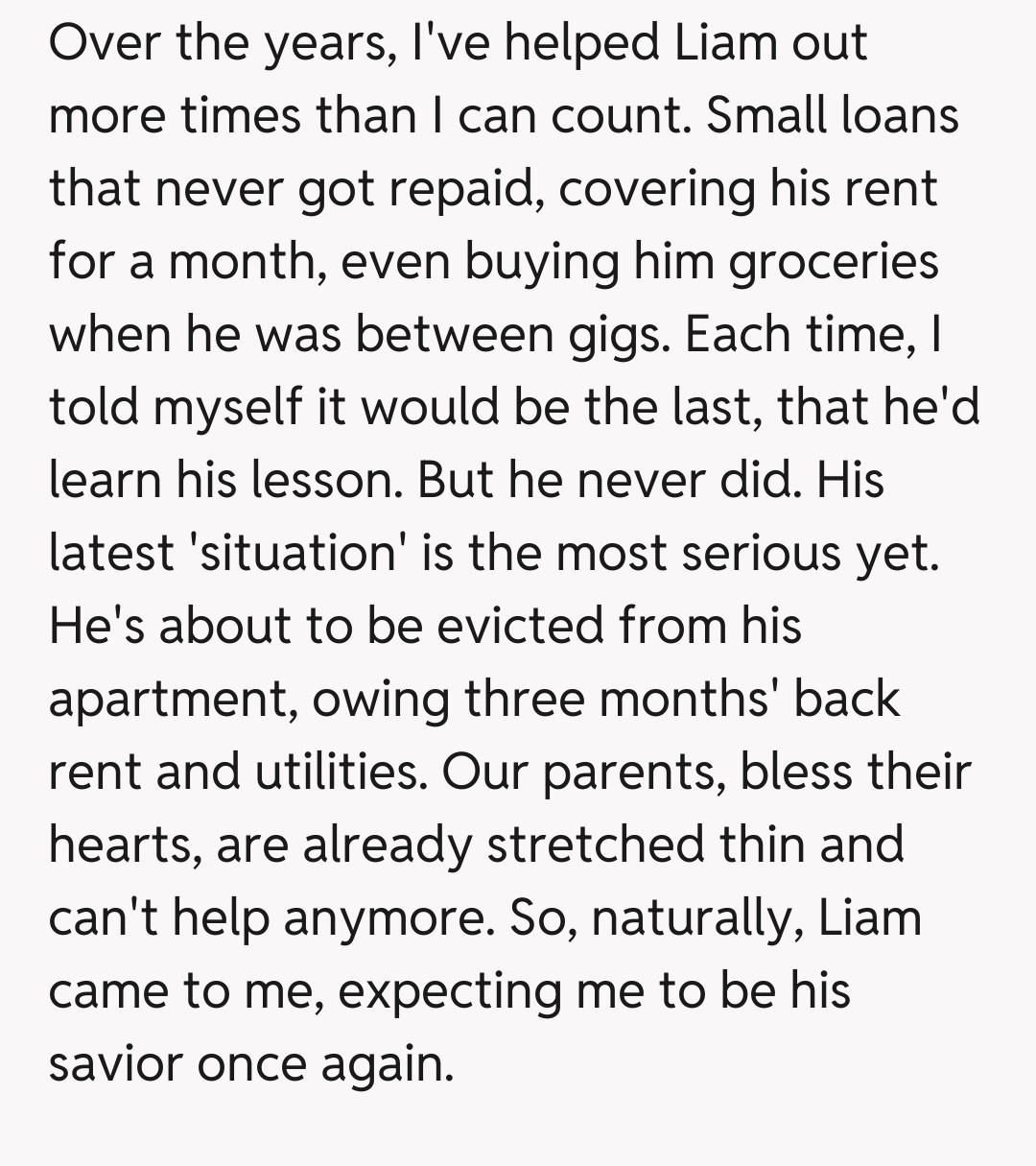
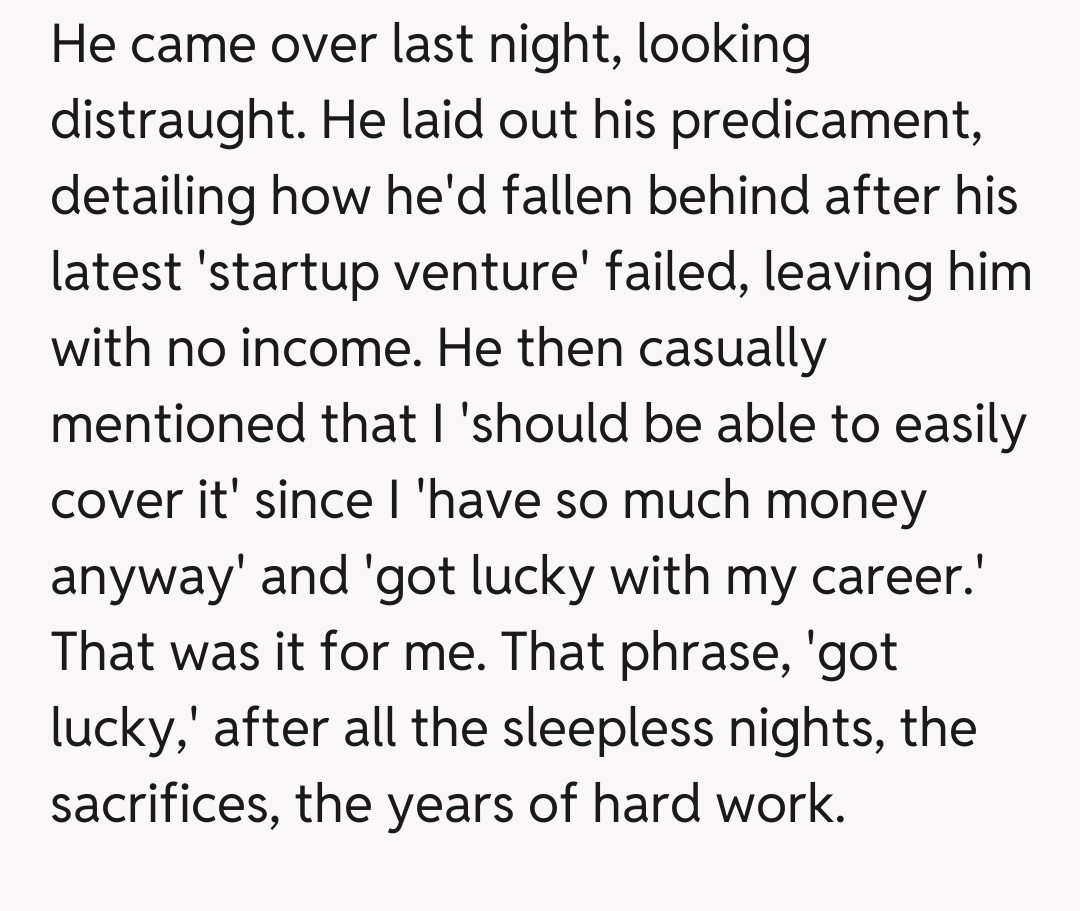
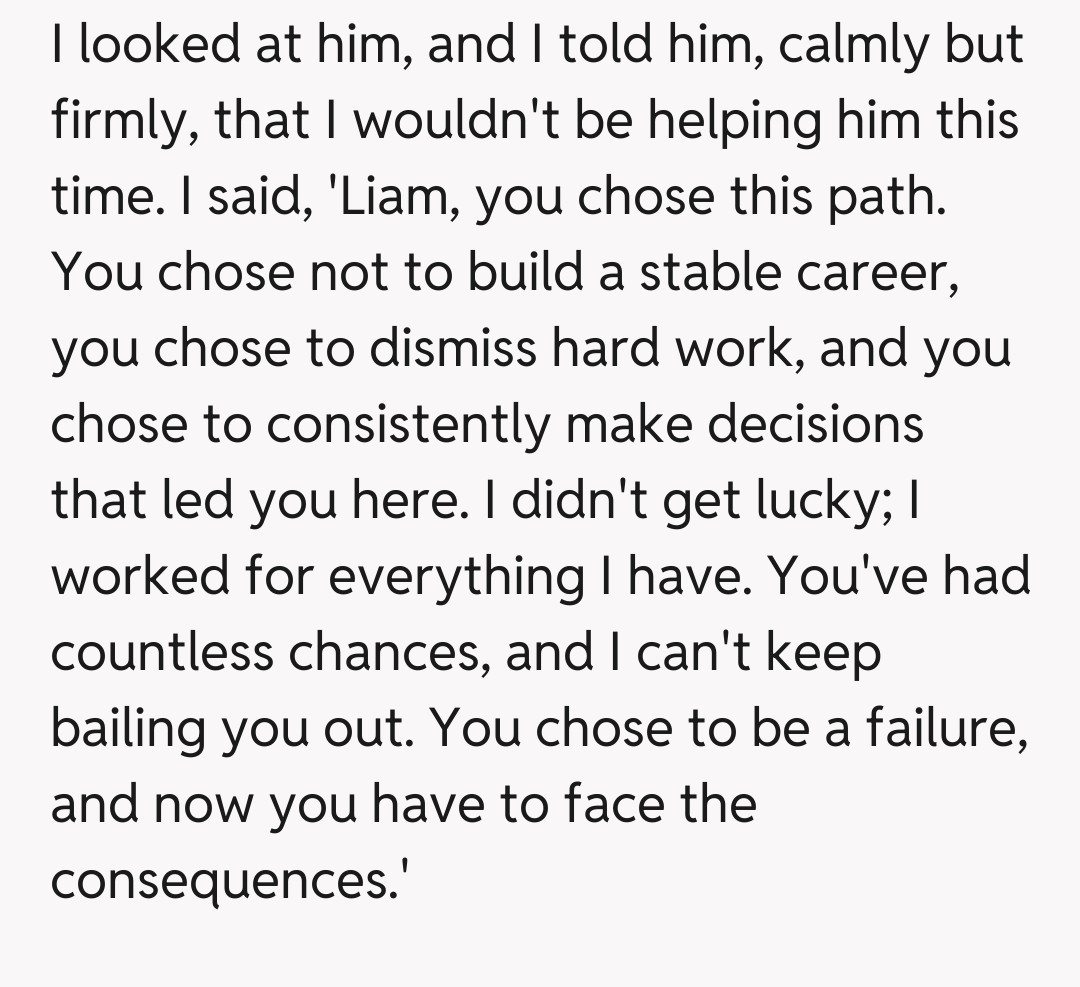
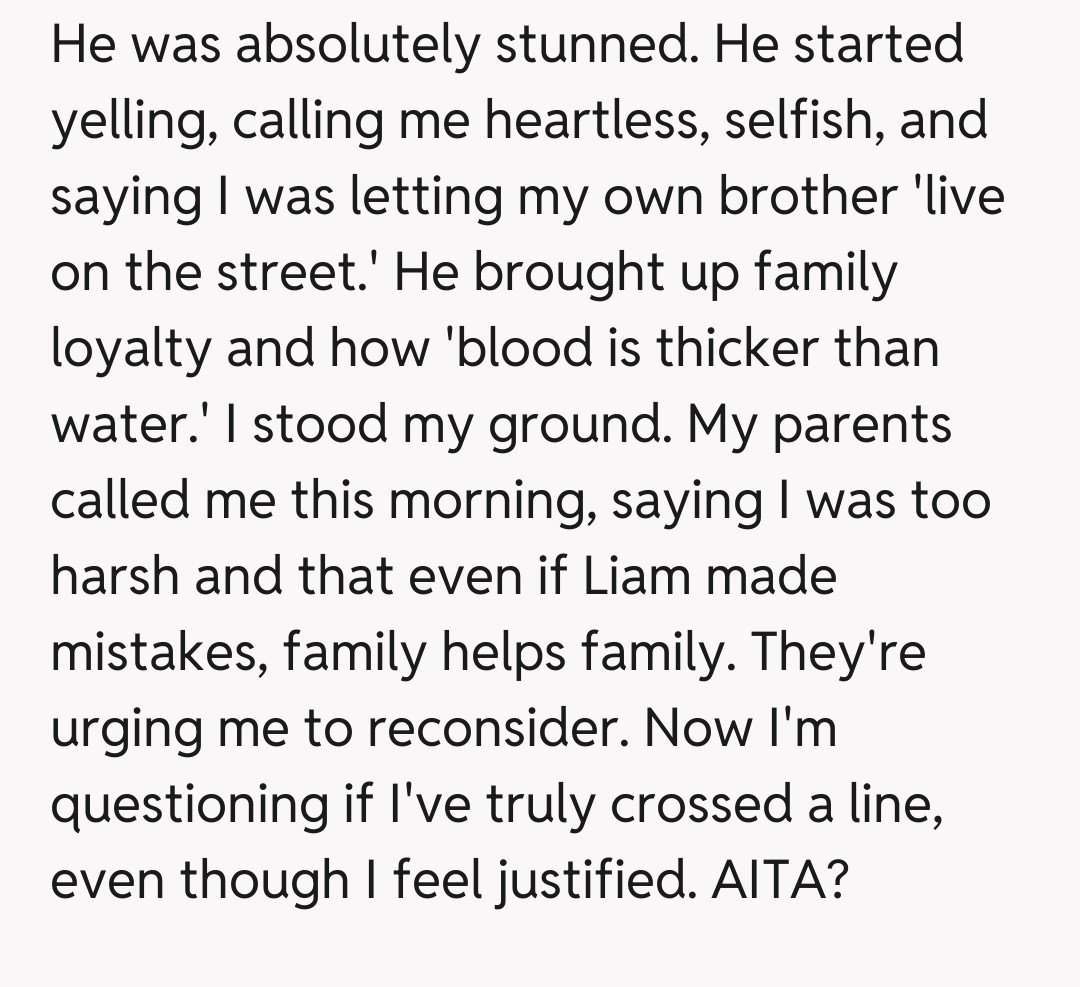
This scenario presents a classic moral dilemma: where does familial obligation end, and personal responsibility begin? Eleanor has clearly been the reliable one, consistently pulling her brother Liam out of financial holes. Her frustration is entirely understandable, especially given Liam's dismissive attitude towards her hard work, attributing her success to 'luck.' This invalidation can feel deeply insulting and diminish her efforts.
On one hand, Eleanor has every right to protect her hard-earned resources and set boundaries. Enabling a pattern of dependency can prevent Liam from truly facing the consequences of his actions and learning to manage his own life. Sometimes, allowing someone to hit rock bottom is the only way for them to understand the gravity of their situation and motivate real change. It's a tough love approach, but often necessary.
However, the severity of the consequence – potentially homelessness – does introduce a humanitarian aspect. While Liam's choices led him here, watching a sibling struggle to such an extent can be emotionally devastating, regardless of fault. The parents' intervention highlights this family-first perspective, suggesting that compassion should perhaps outweigh past grievances, especially when the stakes are so high.
Ultimately, Eleanor is navigating a difficult balance between self-preservation, fostering accountability, and familial empathy. There's no easy answer, as both perspectives hold valid points. Her current stance could be seen as long overdue self-respect or an extreme reaction to a brother in genuine peril. It truly depends on one's personal values regarding family and individual agency.
The Verdict Is In: Is Eleanor Right to Cut Him Off?
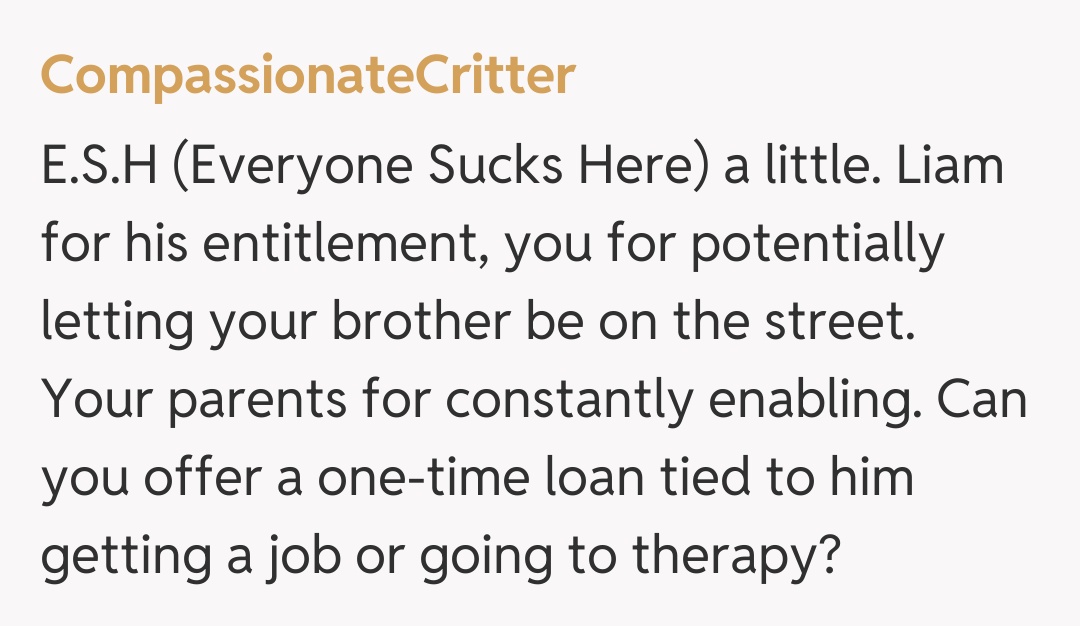
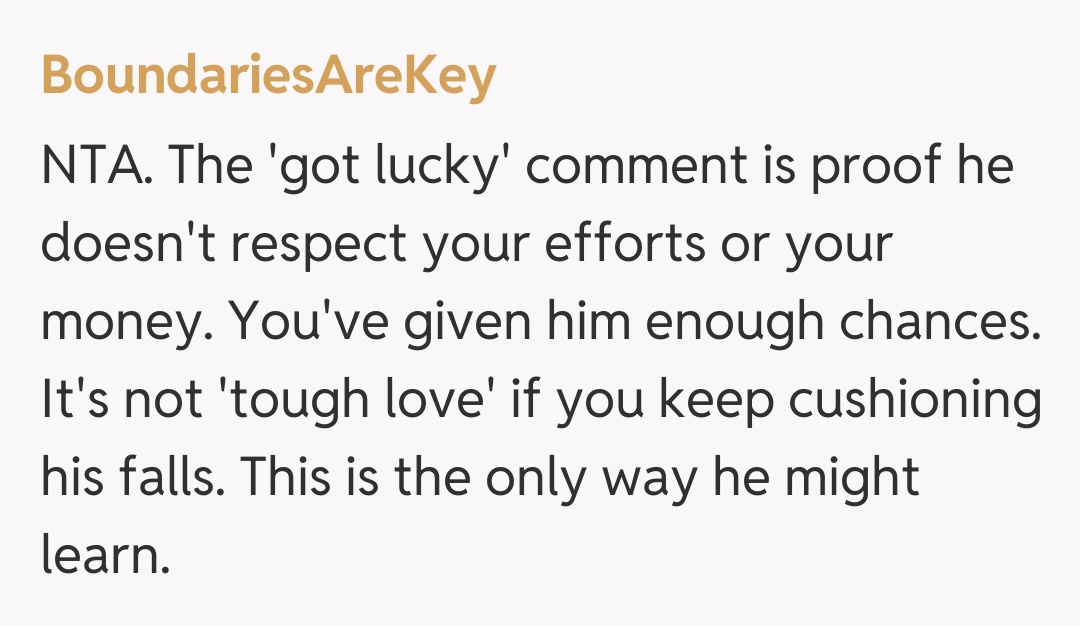
The comments section for this one is absolutely buzzing, and it's clear that this story has struck a nerve with many of you! There's a strong divide, with a significant number of readers firmly on Eleanor's side, commending her for finally setting a boundary and refusing to enable her brother's behavior. Many shared their own experiences with similar family dynamics, emphasizing the emotional and financial drain of being a perpetual rescuer.
On the flip side, a passionate minority are arguing that family comes first, no matter what. They believe that even if Liam has made poor choices, allowing a sibling to become homeless is a step too far, suggesting that Eleanor should offer a final lifeline or at least help him find resources. It's a powerful debate about where the line of 'tough love' truly lies, especially when homelessness is a real possibility. Fascinating discussion!
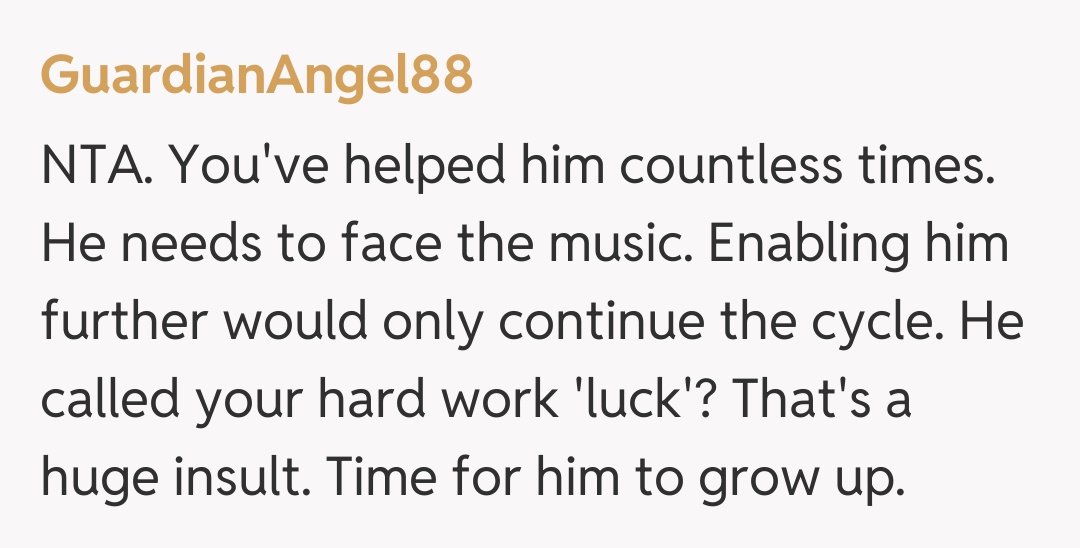
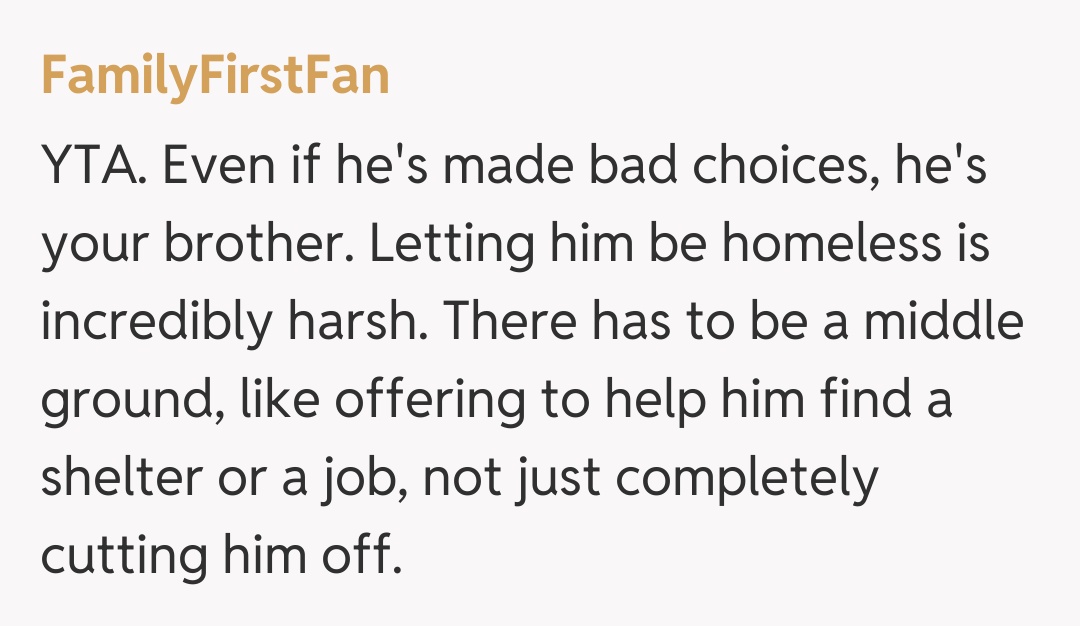
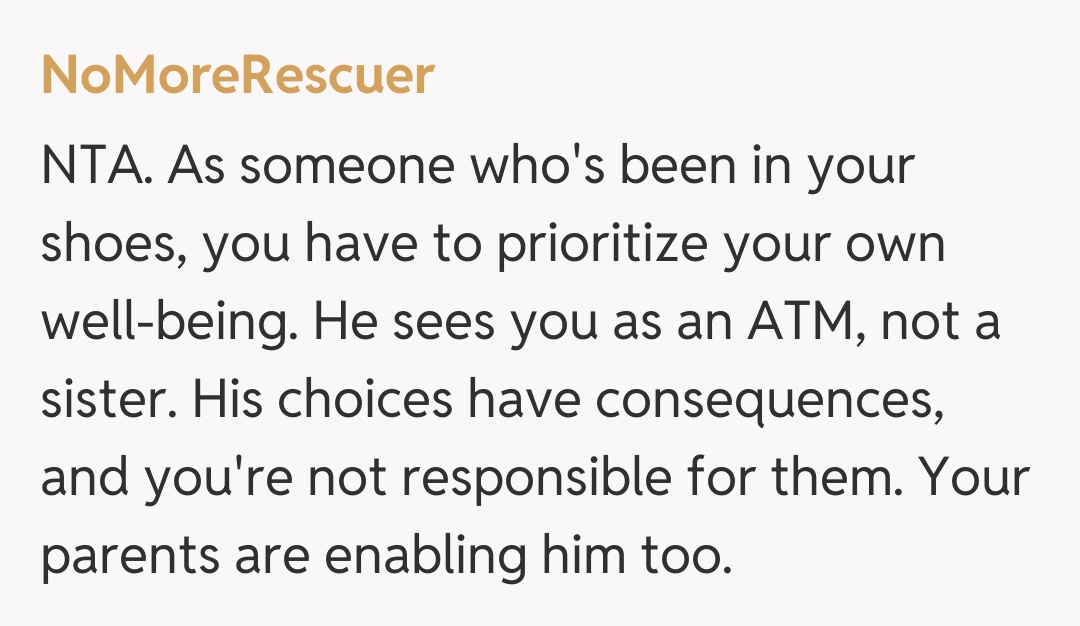
This story truly highlights the painful complexities of family relationships when boundaries are blurred and expectations are unmet. While Eleanor's refusal to continually bail out Liam is understandable given his history and disrespectful attitude, the potential outcome of homelessness adds a heavy ethical layer. There’s a fine line between enabling and showing compassion, and each family must navigate that line uniquely. Ultimately, Eleanor has made a choice she believes is necessary for her own well-being and, perhaps, for Liam's long-term growth. The community's diverse opinions reflect just how challenging these situations can be.