AITA for refusing to kiss my husband because his breath smells like rotting meat even after brushing?
Oh boy, do we have a sticky situation today! Intimacy is a cornerstone of most romantic relationships, and often, that includes the simple, tender act of a kiss. But what happens when something as fundamental as a kiss becomes a source of extreme discomfort, bordering on revulsion? Our anonymous poster is facing just that, and it's not a simple case of morning breath.
This week's AITA delves into the delicate, yet utterly impactful, realm of personal hygiene within a marriage. When one partner's breath consistently smells like 'rotting meat' – even after diligent brushing – it's more than just an inconvenience; it's a barrier to affection and perhaps a sign of a deeper issue. Let's unpack this pungent predicament and see if our OP is out of line.

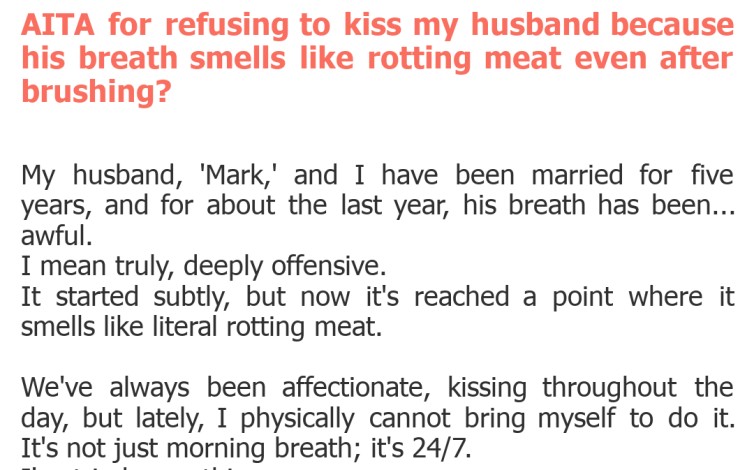
"AITA for refusing to kiss my husband because his breath smells like rotting meat even after brushing?"
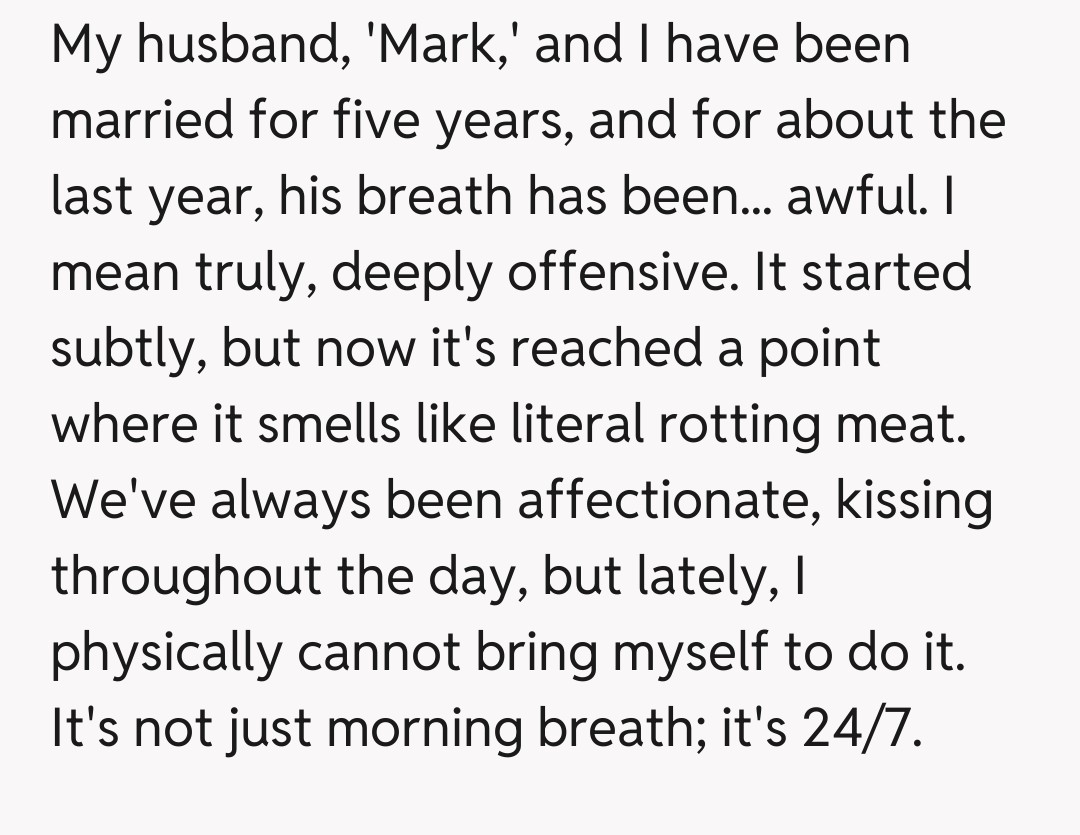
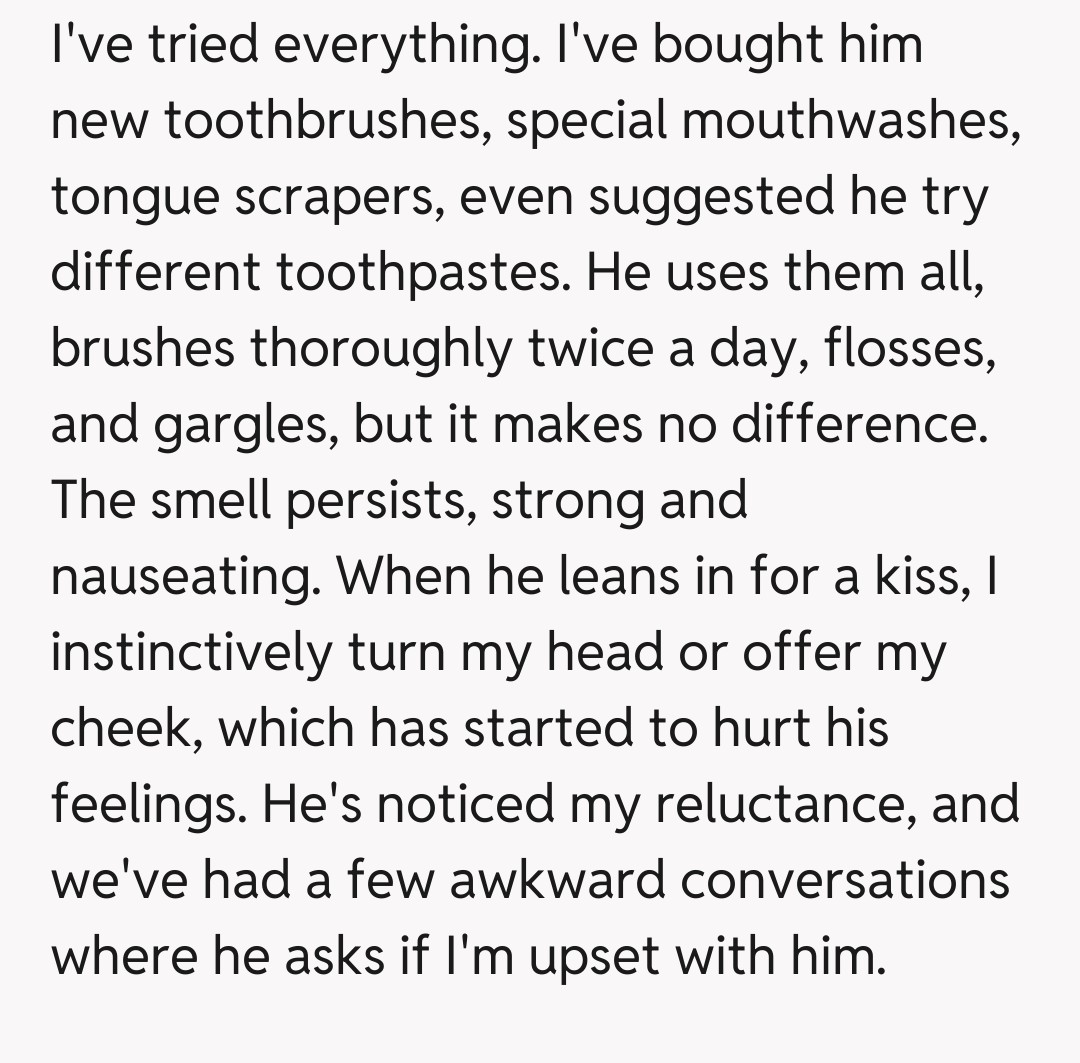
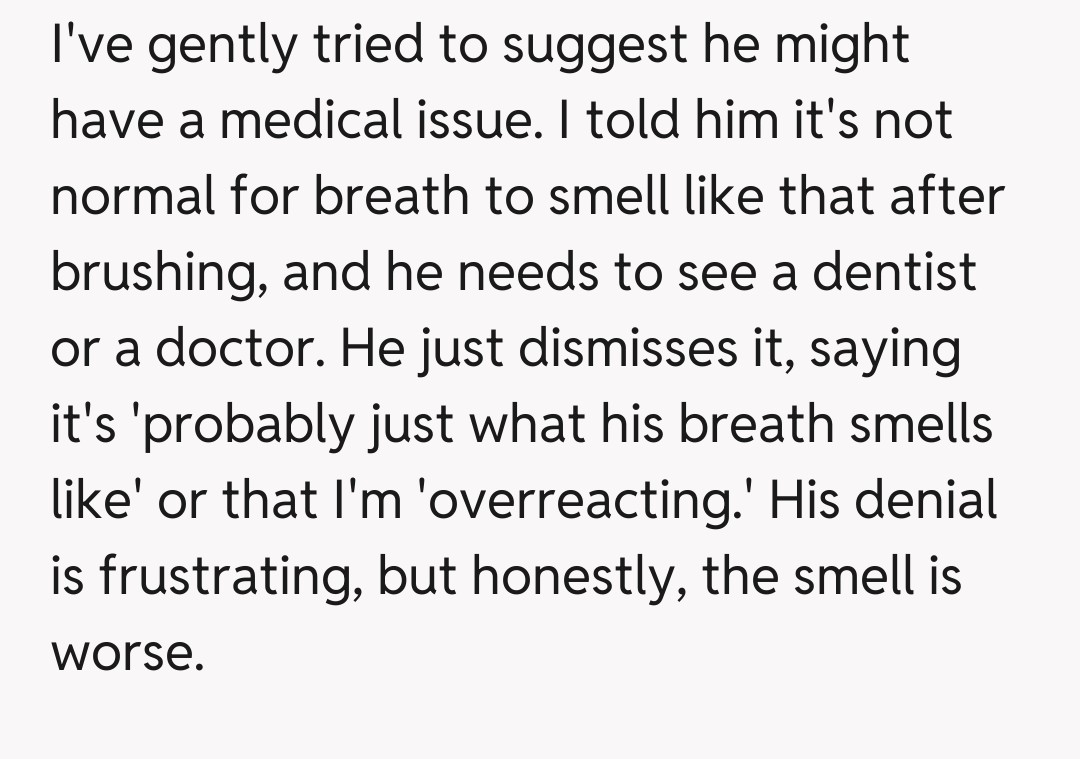
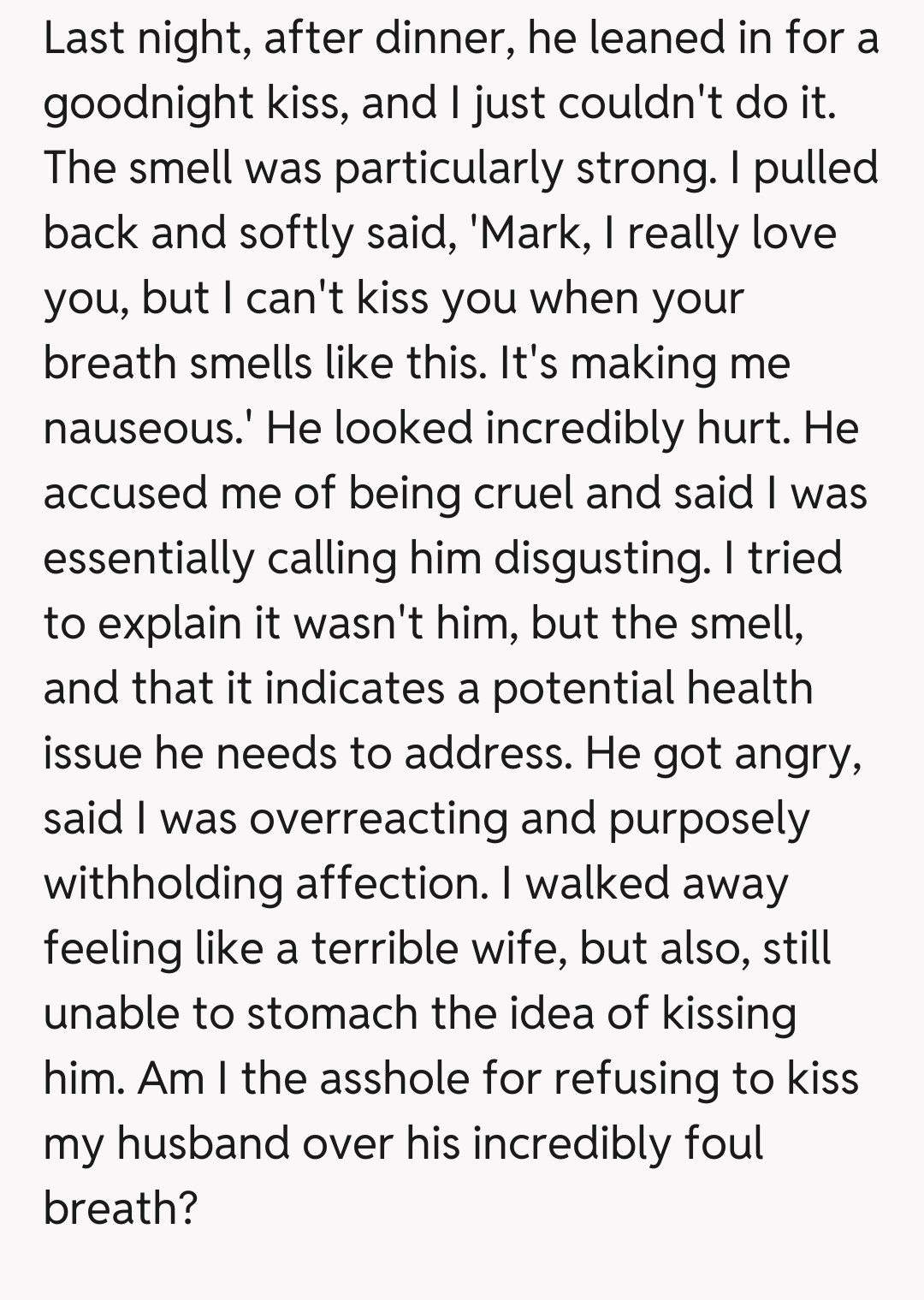
This situation is undeniably tough for both parties. For the original poster (OP), the physical aversion to her husband's breath is a genuine and powerful reaction. It's not a choice to be disgusted; it's an involuntary response to a strong, unpleasant stimulus. Her attempts to manage the problem with various hygiene products show a willingness to help, rather than simply complain, which is important to note.
From a medical perspective, a persistent 'rotting meat' smell, even after rigorous brushing, is a significant red flag. This isn't just about bad oral hygiene; it could indicate underlying health conditions such as gum disease, tonsil stones, sinus infections, gastric issues, or even more serious systemic problems like kidney or liver disease. The husband's dismissal of these concerns is worrying, both for his health and the relationship.
The refusal to kiss, while hurtful to the husband, is a natural consequence of the OP's continued discomfort and frustration. When physical intimacy, even a simple kiss, becomes impossible due to a preventable or treatable issue, it erodes the foundation of closeness. Her direct communication, albeit painful, was a desperate attempt to make him understand the gravity of the situation after other methods failed.
Ultimately, the OP is in a difficult position where her physical well-being (avoiding nausea) and the relationship's intimacy are at odds with her husband's denial. While direct refusal can sting, it highlights a crucial point that needs addressing. It forces the issue, perhaps uncomfortably, but sometimes that's necessary when subtle hints and gentle suggestions are ignored. The focus should shift from blame to finding a solution for the underlying cause.
Can Love Survive a Lousy Lingering Odor? The Internet Weighs In!
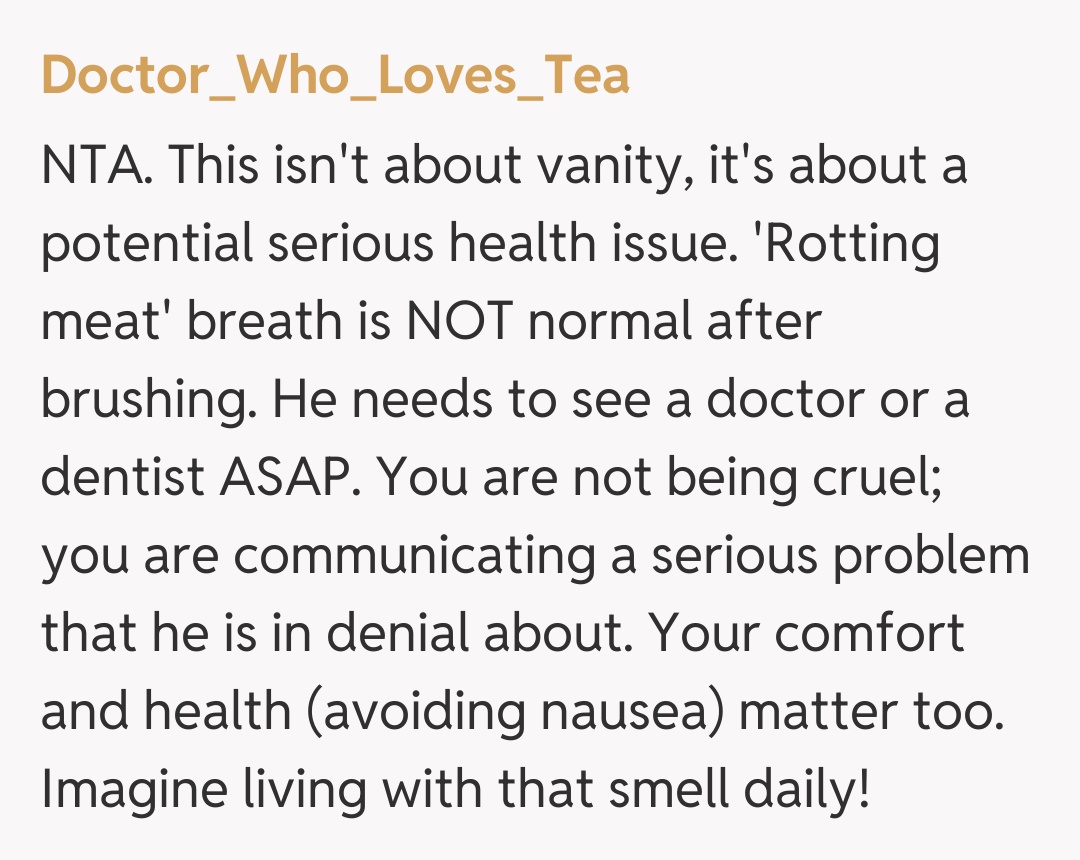
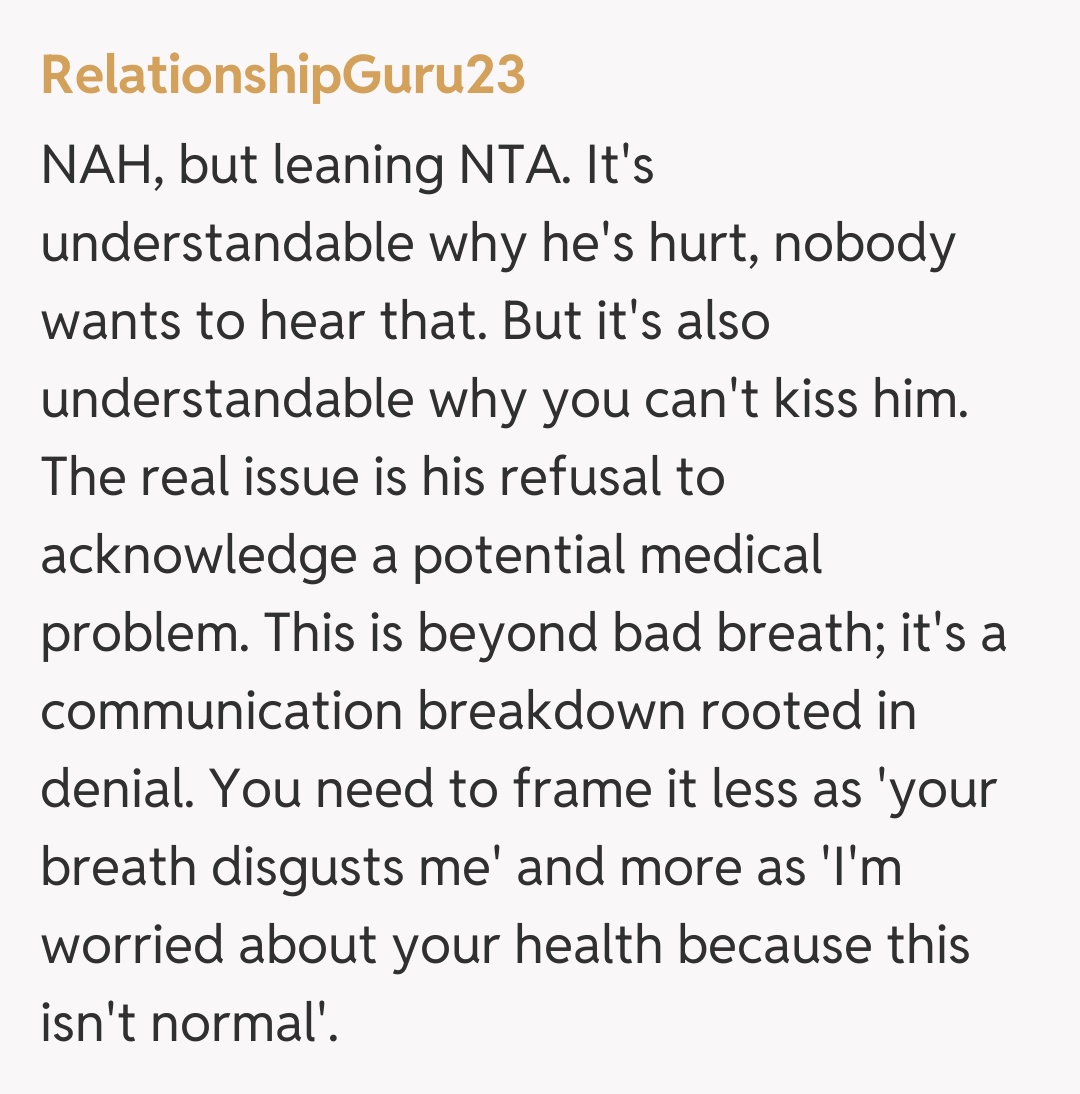
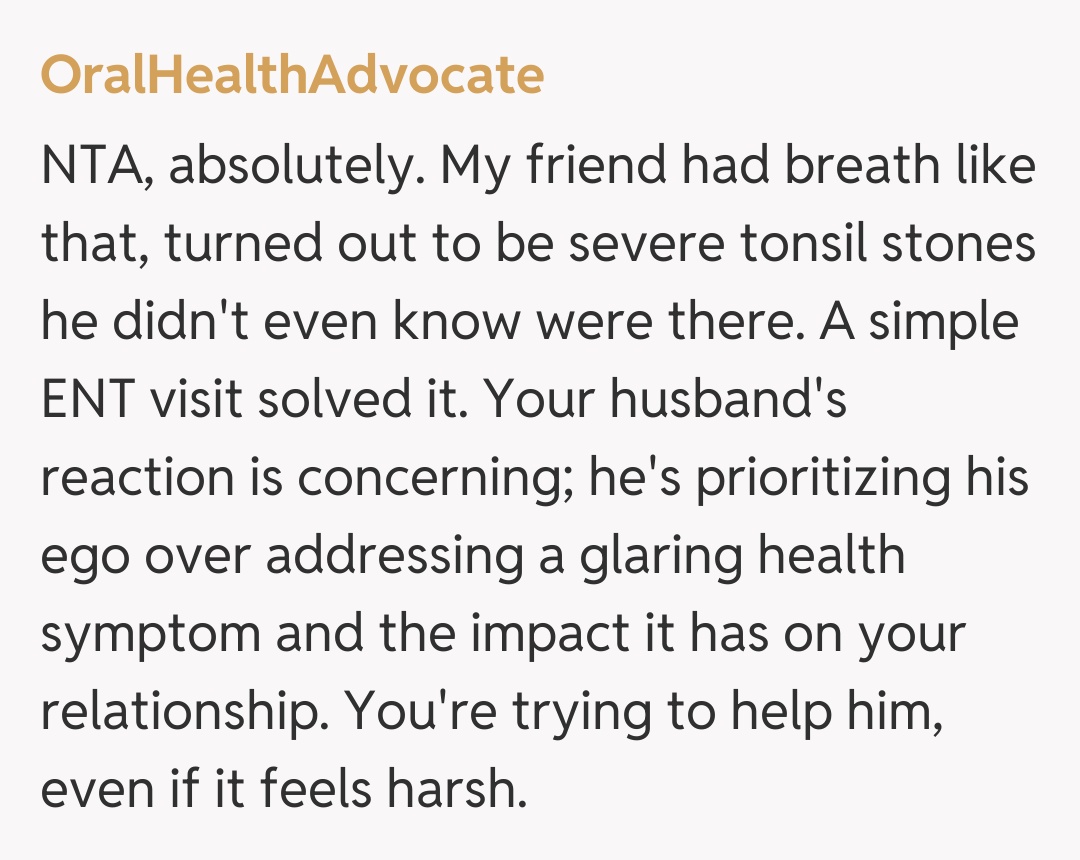
The comments section for this one is likely to be a mixed bag, but with a strong leaning towards validating the OP's feelings. Many users will instantly recognize the severity of 'rotting meat' breath as a medical symptom rather than mere poor hygiene. Expect a deluge of advice urging the husband to see a doctor or dentist, citing similar experiences where such an odor indicated serious health issues.
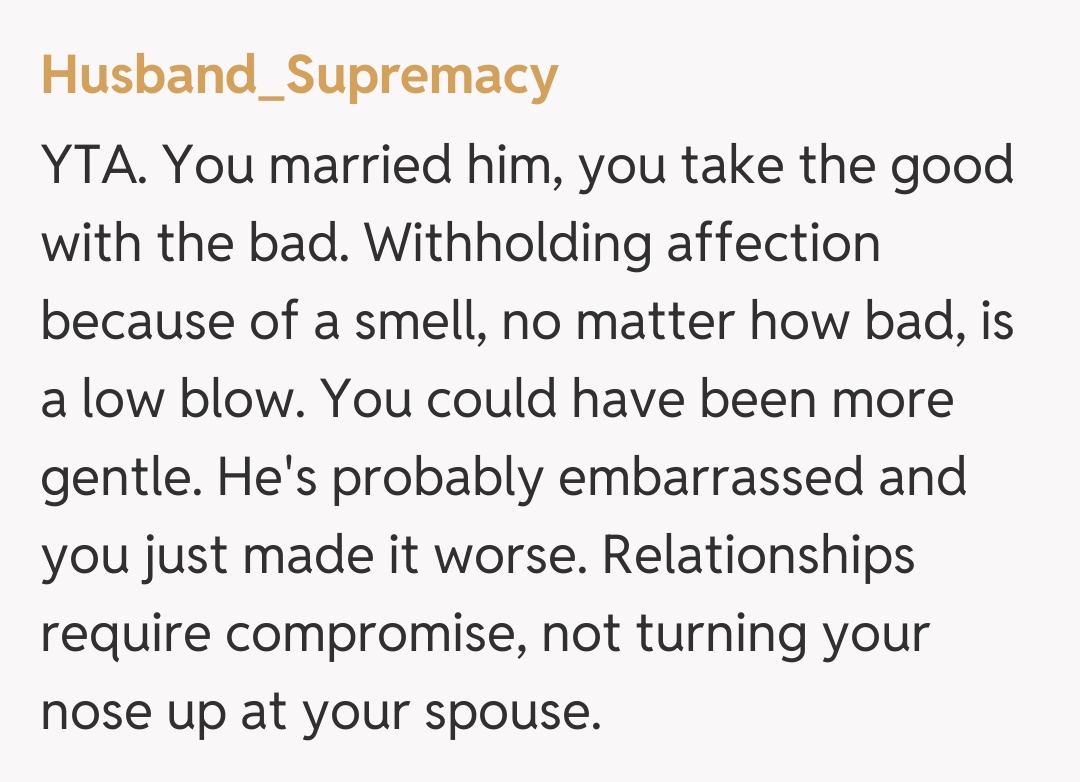
There will undoubtedly be some who empathize with the husband's hurt feelings, pointing out that calling someone's breath 'nauseating' is harsh, regardless of the truth. However, the majority will probably side with the OP, arguing that her health and comfort in the relationship also matter. The common sentiment will be that intimacy cannot thrive when basic physical comfort is compromised by an unaddressed health problem.
This difficult AITA post highlights the intricate balance between affection, personal boundaries, and health within a marriage. While the immediate refusal to kiss may seem harsh, it often serves as a desperate plea when all other avenues have been exhausted. The core issue here isn't just bad breath, but a potential medical problem coupled with a significant communication breakdown. We hope the husband heeds the collective advice and seeks professional help, not just for his wife's comfort, but for his own well-being. A healthy relationship truly requires both partners to address challenges, even the smelly ones, head-on.