AITA for refusing to hold hands with my husband because his palms are covered in calluses and feel like sandpaper?
Welcome back, dear readers, to another installment of "Am I The A**hole?" Today's story touches on a surprisingly common, yet often unacknowledged, aspect of relationships: physical intimacy and sensory preferences. What happens when a loving gesture becomes a source of discomfort for one partner? Is it ever okay to prioritize your own physical sensations over your partner's desire for affection? This week's post brings a unique twist to these delicate questions.
Our anonymous poster, let's call her "SoftHands," finds herself in a tricky situation with her husband. It's not about emotional distance or lack of love, but something far more tactile. Her husband's hands, a testament to his hard work, are causing a rift in their simple act of holding hands. It's a tale that prompts us to consider empathy, communication, and the often-overlooked nuances of physical touch in a long-term partnership.

"AITA for refusing to hold hands with my husband because his palms are covered in calluses and feel like sandpaper?"
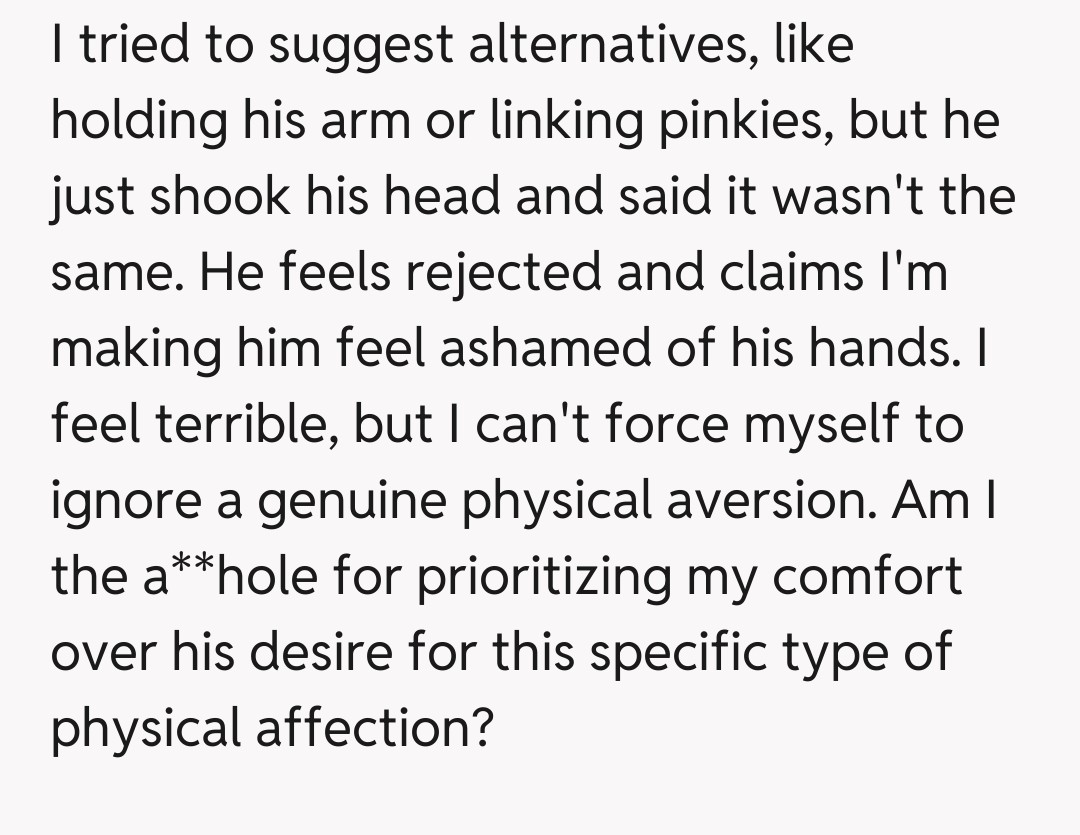
This is a nuanced situation where both parties have valid feelings, making it a classic AITA dilemma. On one hand, the wife's discomfort is a legitimate sensory experience. Physical touch, especially something as intimate as holding hands, should ideally be pleasant for both partners. It's unfair to dismiss someone's genuine physical aversion, even if it seems minor to an outside observer. She's not saying she doesn't love him, but rather that a specific type of touch causes her distress.
However, the husband's perspective is equally understandable. His callused hands are a direct result of his dedication and hard work, a physical manifestation of his commitment to his family. When his wife rejects a simple gesture like holding hands due to these calluses, it's easy for him to interpret it as a rejection of him, his efforts, and even his masculinity. This can lead to feelings of shame, hurt, and inadequacy.
The key here lies in communication and finding mutually agreeable solutions. The wife did attempt to offer alternatives, which is a good step. However, perhaps the initial explanation could have been framed with more empathy and less focus on the "discomfort" and more on finding a way to still connect physically. It’s about reassuring him that the love and affection are still there, just the method needs adjusting.
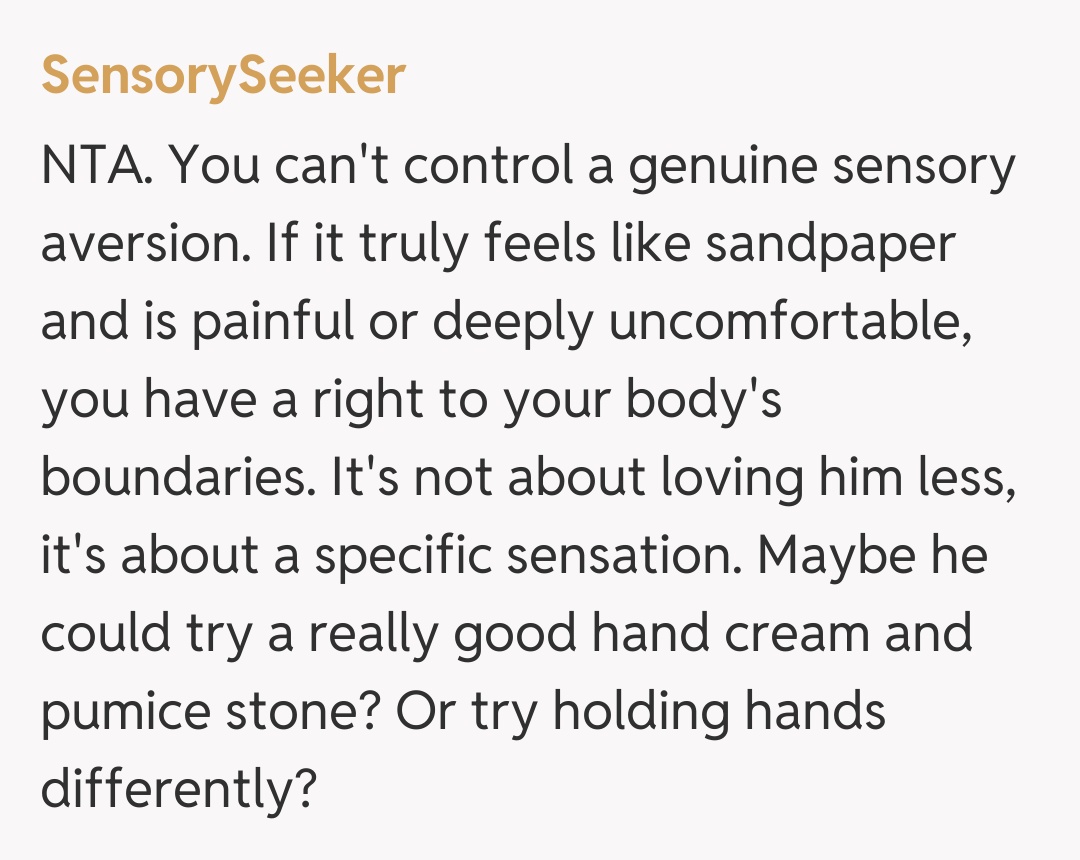
Perhaps exploring solutions like hand creams or pumice stones for his hands, or even suggesting different types of hand-holding that minimize direct palm-to-palm contact, could be beneficial. The goal isn't to change him completely, but to mitigate the specific sensation that causes discomfort while preserving the loving gesture. Both partners need to approach this with an open mind and a willingness to compromise.
The Internet Weighs In: Can Love Conquer Calluses?
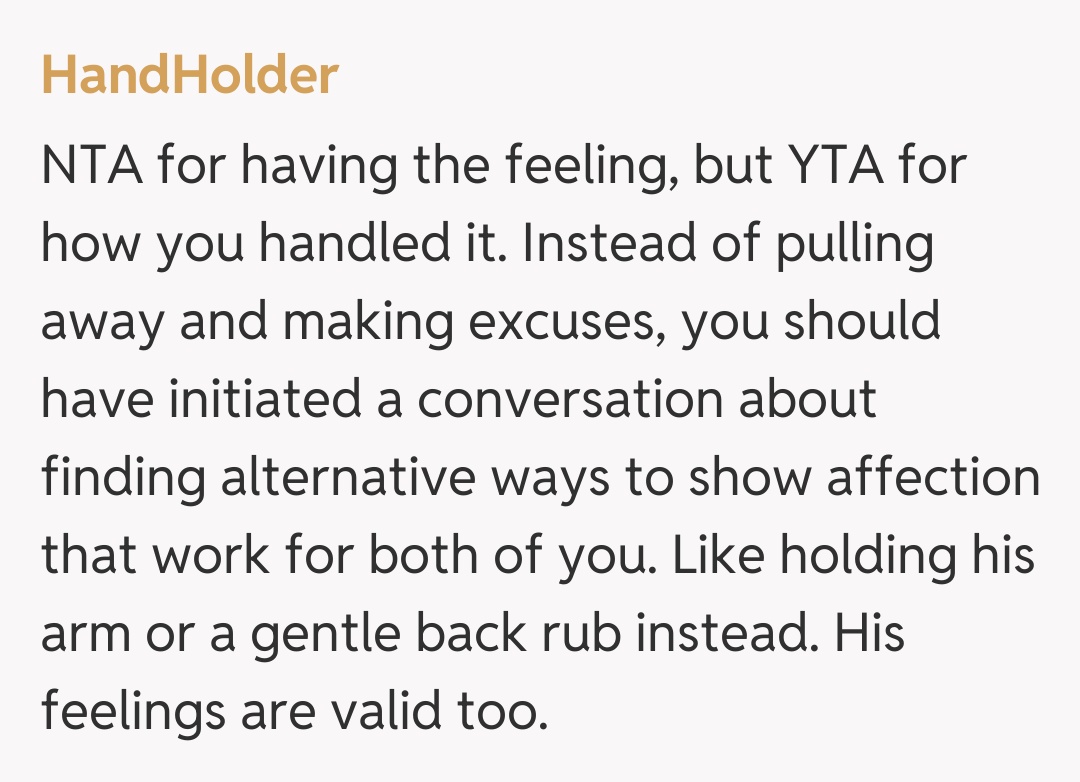
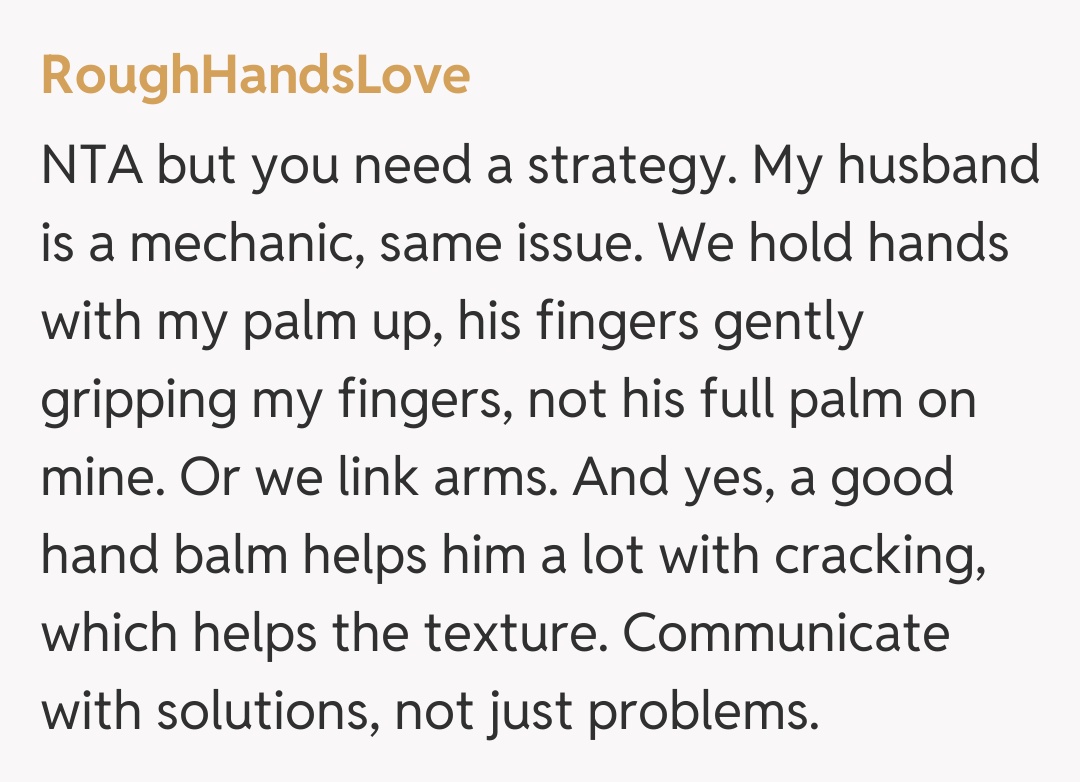
The comment section on this one is always a battleground of empathy versus practicality! Many users sympathize with the wife, arguing that sensory aversions are real and shouldn't be dismissed. They often highlight that genuine discomfort isn't something one can simply "get over" and that a partner should respect those boundaries. Some even share similar experiences with textures or specific touches, validating the poster's feelings.
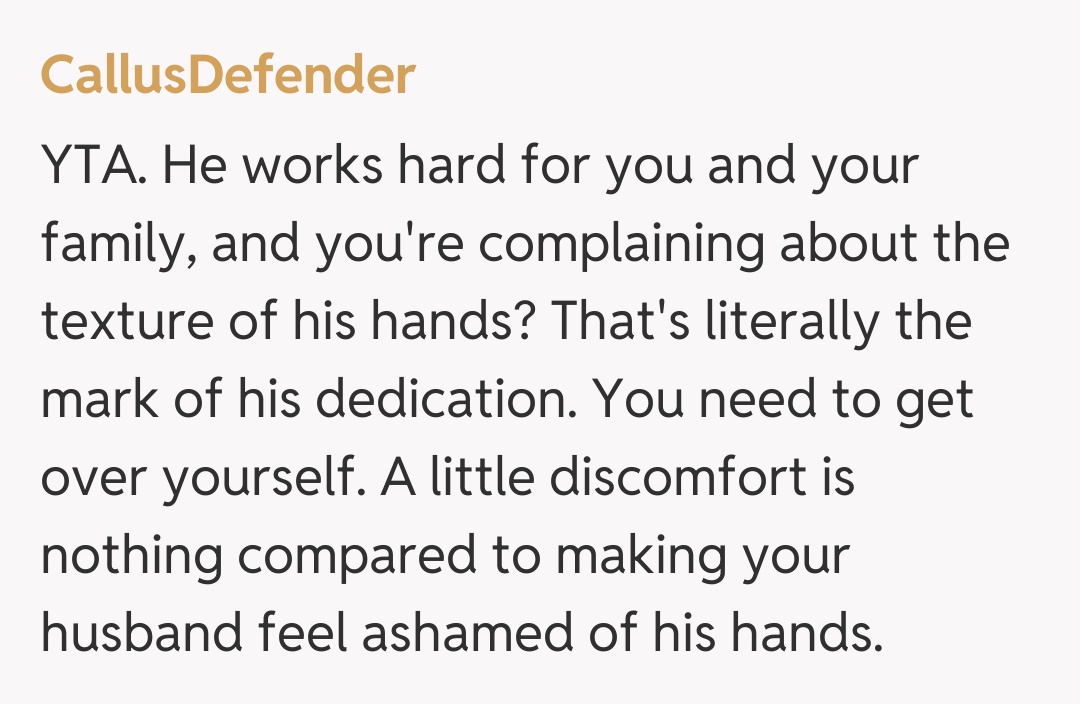
However, a significant portion of the community sides with the husband, emphasizing the symbolic nature of his hands. They argue that rejecting his touch feels like rejecting his hard work and commitment. Some suggest the wife is being superficial or needs to suck it up for the sake of her husband's feelings. Practical solutions like moisturizing routines or different holding techniques are also frequently proposed, showing a strong desire for a win-win resolution.
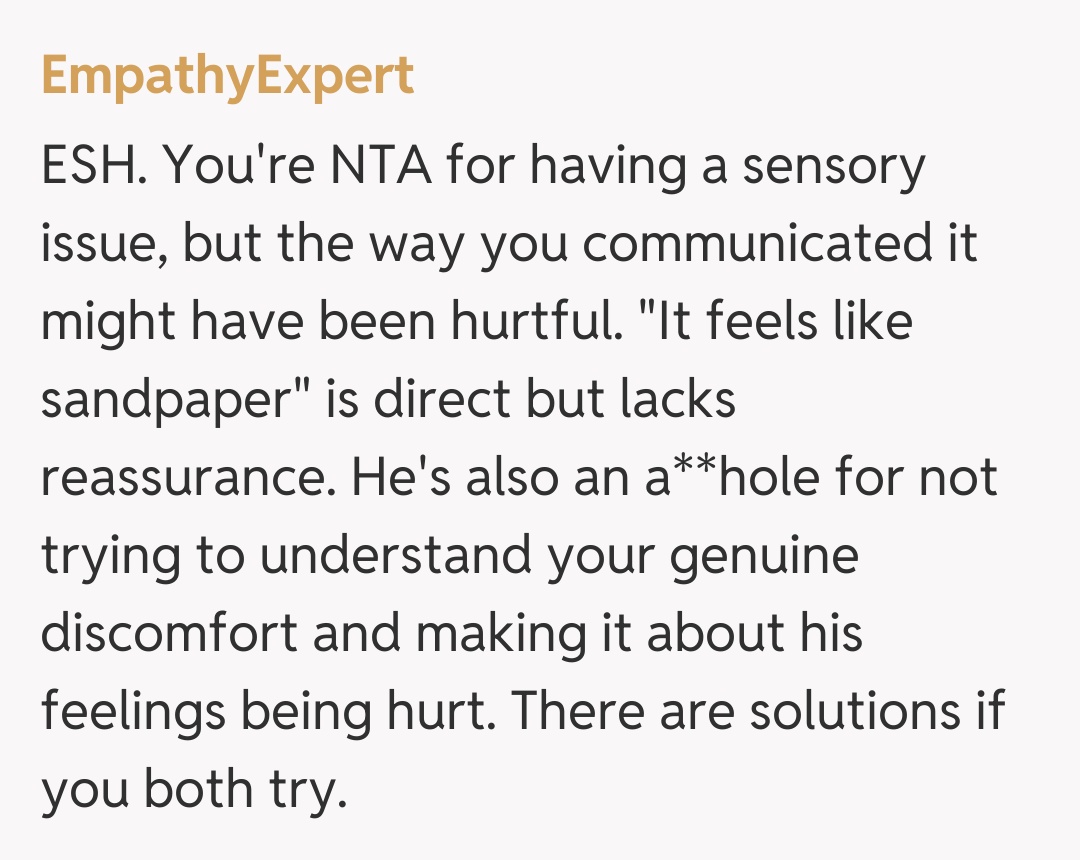
This story highlights the delicate balance between personal comfort and relational intimacy. While the wife's sensory aversion is valid, the husband's feelings of rejection are equally so. The path forward always lies in open, empathetic communication and a willingness from both sides to find compromises. It's a reminder that true love often means navigating these small, unexpected challenges with understanding and a commitment to maintaining connection, even if it means adjusting how that connection is physically expressed.