AITA for refusing to let my son play sports because he’s too clumsy and I don’t want to be embarrassed at games?

Parenting often throws us into the most unexpected and uncomfortable situations, doesn't it? We strive to be the best versions of ourselves for our children, to support their dreams and cheer them on. But what happens when our own insecurities, our very human desires to avoid embarrassment, clash with what our kids want to do? It's a tricky tightrope walk, and sometimes, those wires can snap.
Today, we're diving into a post that has sparked quite a debate. It touches on the sensitive subject of a parent's feelings versus a child's aspirations, especially when those aspirations involve public display. Our OP (Original Poster) is grappling with a dilemma many might silently understand but few would openly admit. Let's unwrap this story and see where the community landed on this delicate issue.

"AITA for refusing to let my son play sports because he's too clumsy and I don't want to be embarrassed at games?"


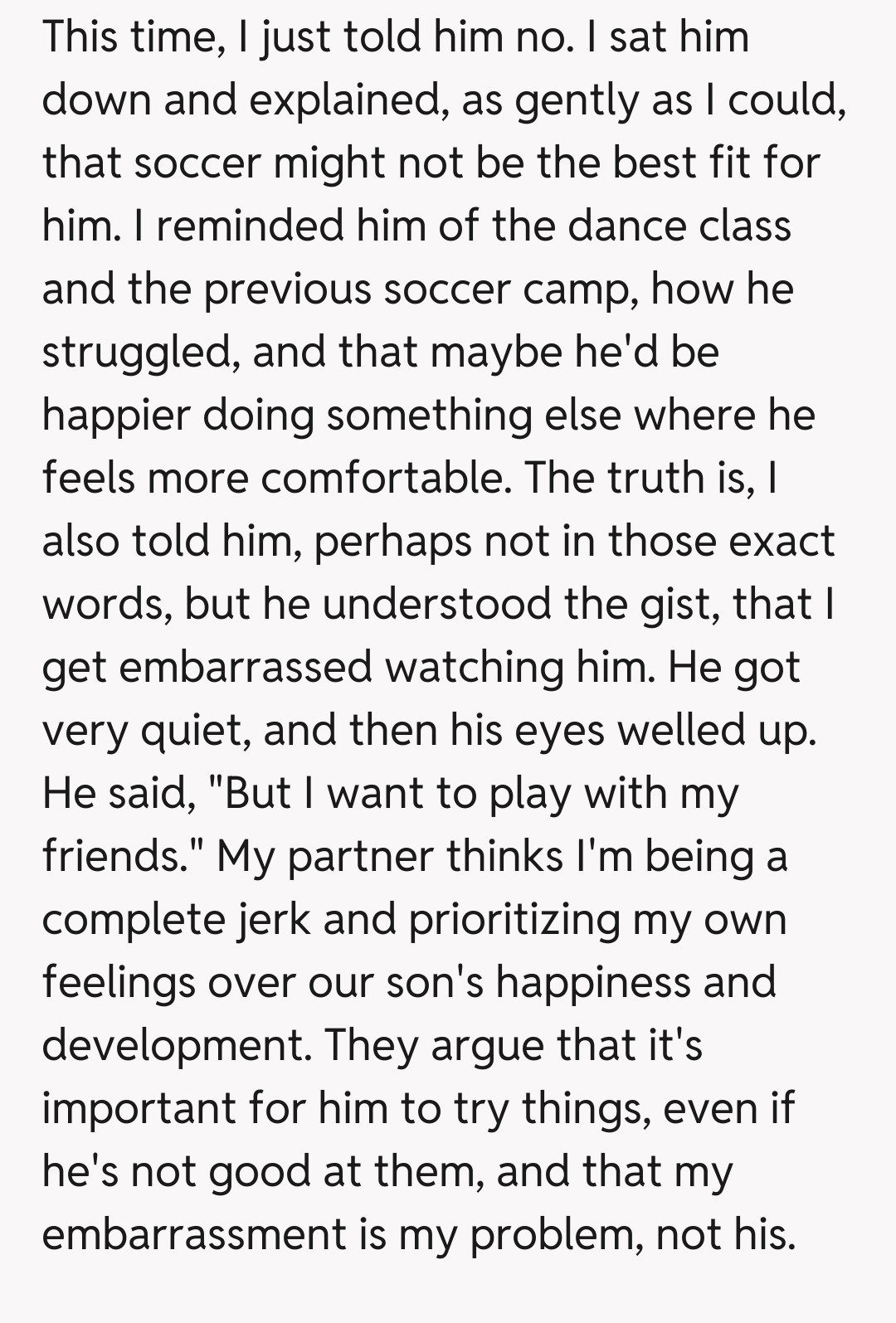

This AITA post dives straight into the uncomfortable reality that parents are human beings with their own emotions and vulnerabilities. The OP's feelings of embarrassment, while perhaps not ideal, are relatable. No one enjoys public discomfort, especially when it involves their child. It's a natural, albeit often unacknowledged, parental instinct to want our children to excel or at least perform competently in public settings.
However, the core of the dilemma lies in whose feelings take precedence here. The son, Leo, has expressed a genuine desire to participate and be with his friends. Denying him this opportunity, based primarily on the parent's discomfort, risks sending a powerful, negative message to the child about his self-worth and capabilities. Children learn resilience and self-acceptance by trying things, failing, and trying again, regardless of inherent talent.
It's crucial to consider the long-term impact on Leo's self-esteem. When a parent explicitly, or even implicitly, communicates that their child's perceived shortcomings are a source of embarrassment, it can be deeply damaging. This might lead Leo to believe that his value is tied to his performance or that he should avoid activities where he isn't naturally gifted, potentially stifling his willingness to explore and grow.
Perhaps a more supportive approach could have been found. Encouraging participation, even if it means acknowledging the challenges, while also exploring ways to support his development (e.g., individual coaching, less competitive leagues, or simply reframing expectations for what 'success' looks like) might have been beneficial. The goal isn't always about being the best, but about participation, teamwork, and enjoyment.
The Verdict Is In: A Parent's Shame vs. A Child's Dream
The comment section for this post was, as expected, a fiery battleground of opinions. Many commenters firmly landed on the 'YTA' side, expressing strong disapproval of the parent's actions. The overwhelming sentiment was that a parent's role is to support their child's interests, even if it means enduring personal discomfort. The focus was heavily on Leo's emotional well-being and the potential damage to his self-esteem by being told his clumsiness is a source of embarrassment.
Conversely, a smaller but vocal contingent of commenters offered a more nuanced perspective, leaning towards 'NTA' or 'ESH'. These users acknowledged the parent's valid feelings of embarrassment, suggesting that it's a difficult position to be in. Some proposed alternative solutions, like encouraging non-competitive activities, or focusing on the joy of participation rather than skill. However, even these comments often highlighted the need for the parent to re-evaluate their priorities.
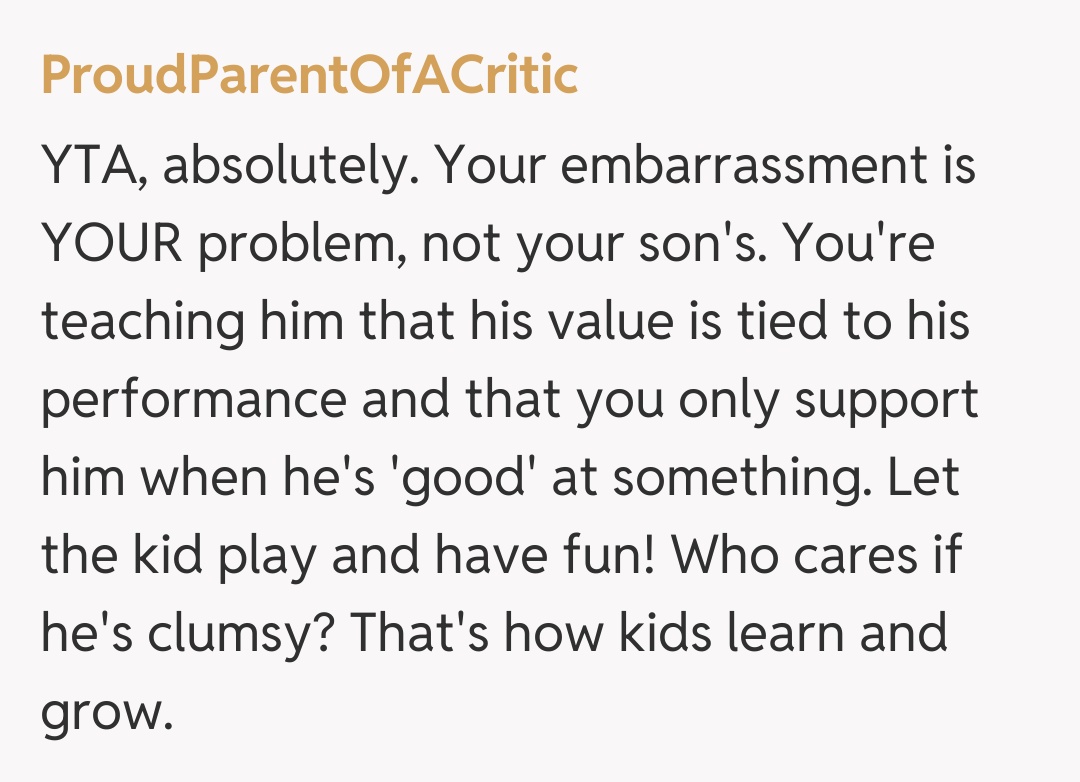
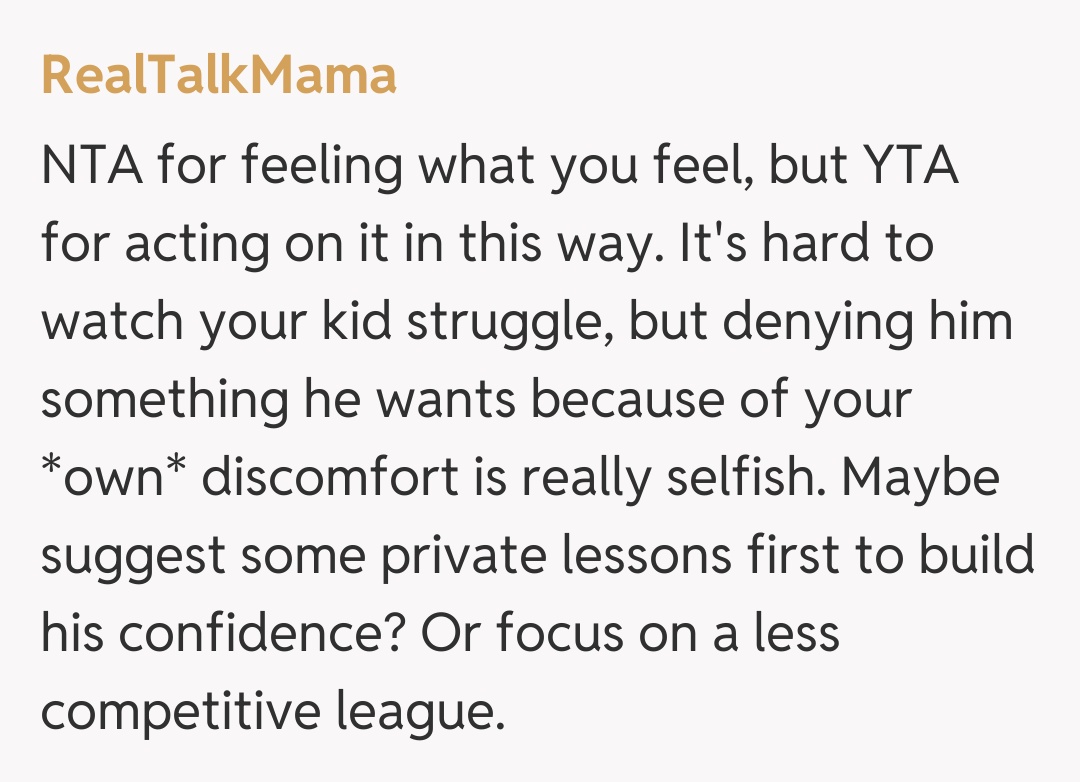

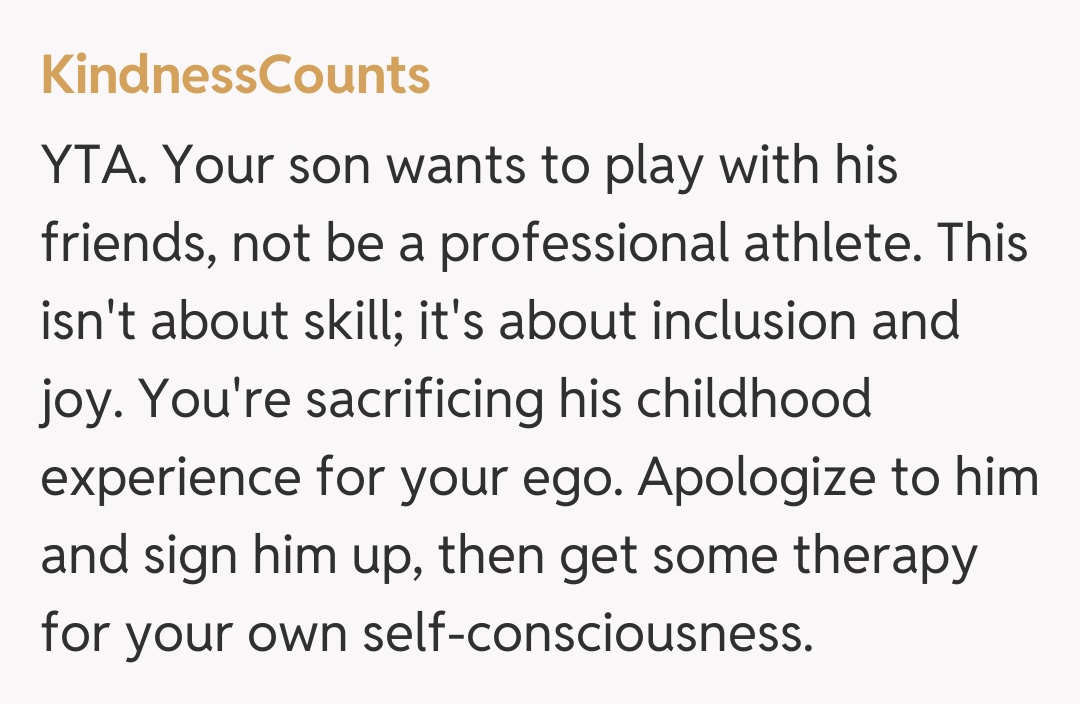
This post serves as a potent reminder of the delicate balance in parenting: our responsibility to nurture our children's growth and self-esteem, versus our own very human emotions and vulnerabilities. While a parent's feelings of embarrassment are valid, the greater consideration often lies in the lasting impact on the child. Fostering a child's love for trying new things, even when they struggle, is invaluable. Ultimately, supporting our children in their pursuits, regardless of their proficiency, builds resilience and shows them they are loved and valued, not just for their successes, but for who they are.