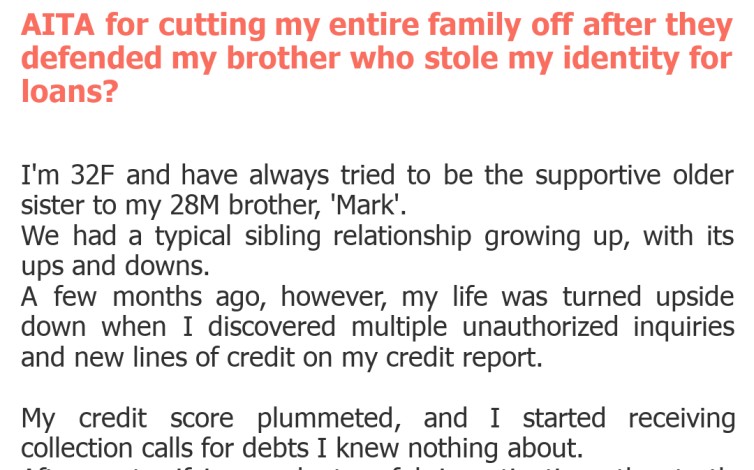
AITA for cutting my entire family off after they defended my brother who stole my identity for loans?
Family drama is often complicated, but what happens when it crosses the line into serious criminal behavior? Today, we're diving deep into a story that forces us to question the very definition of loyalty and accountability within a family unit. Our original poster, 'ThrowawayIDTheft', is grappling with a situation that would test anyone's resolve, facing not just betrayal from a sibling, but also a baffling lack of support from their entire family.
This isn't just about a sibling rivalry or a petty argument; it's about identity theft, a crime with devastating real-world consequences. When one family member's actions threaten another's financial future, and the rest of the family closes ranks to protect the perpetrator, where do you draw the line? Let's unpack this heavy narrative and see if our OP is indeed the A-hole for prioritizing their own well-being over a toxic family bond.

"AITA for cutting my entire family off after they defended my brother who stole my identity for loans?"
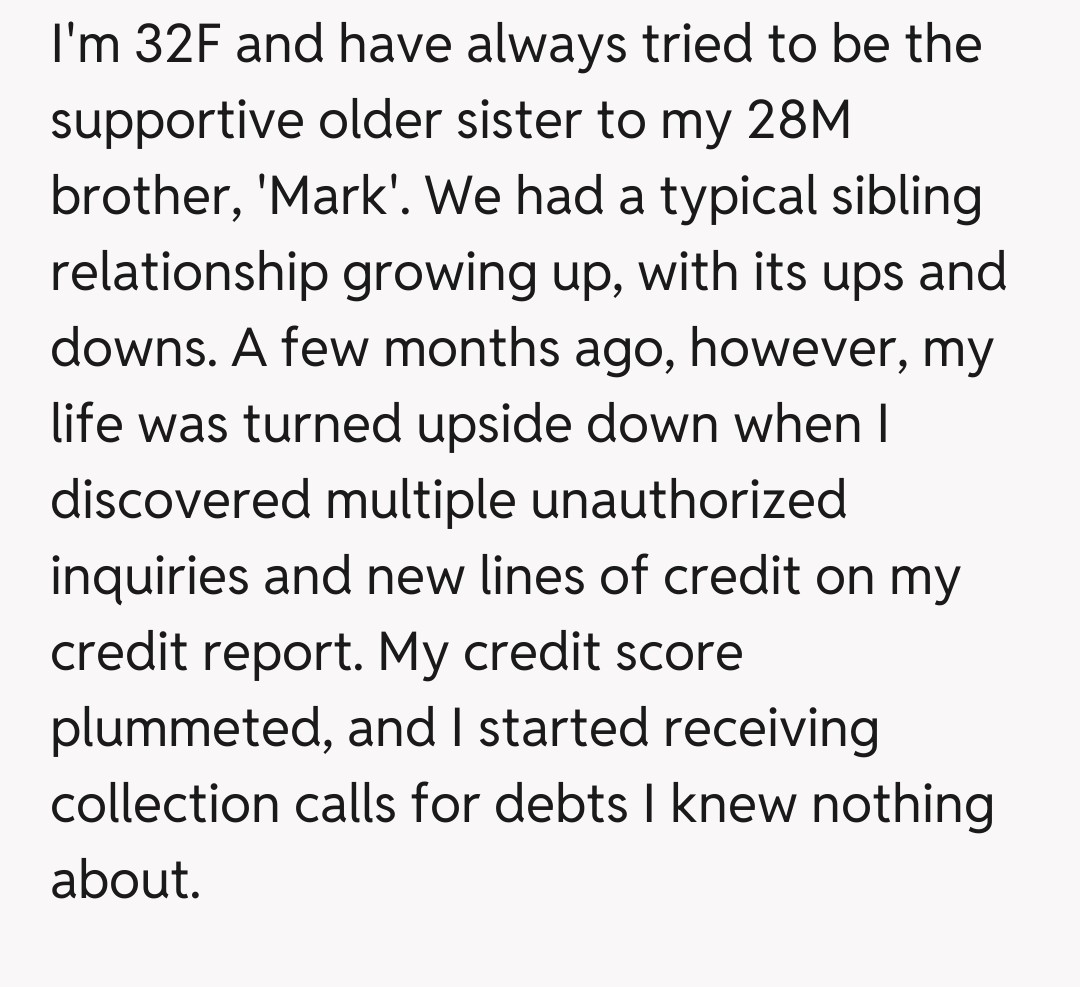
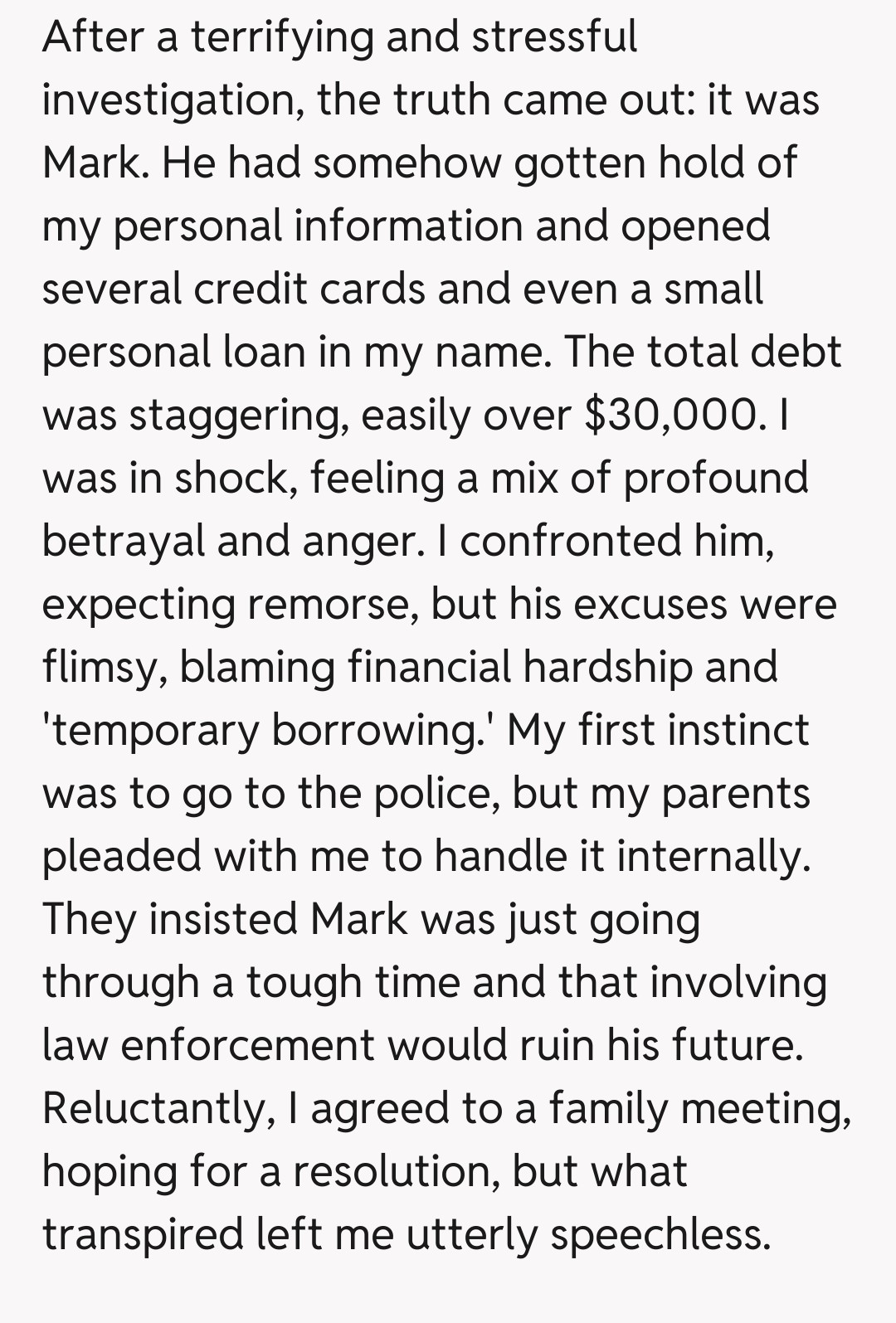
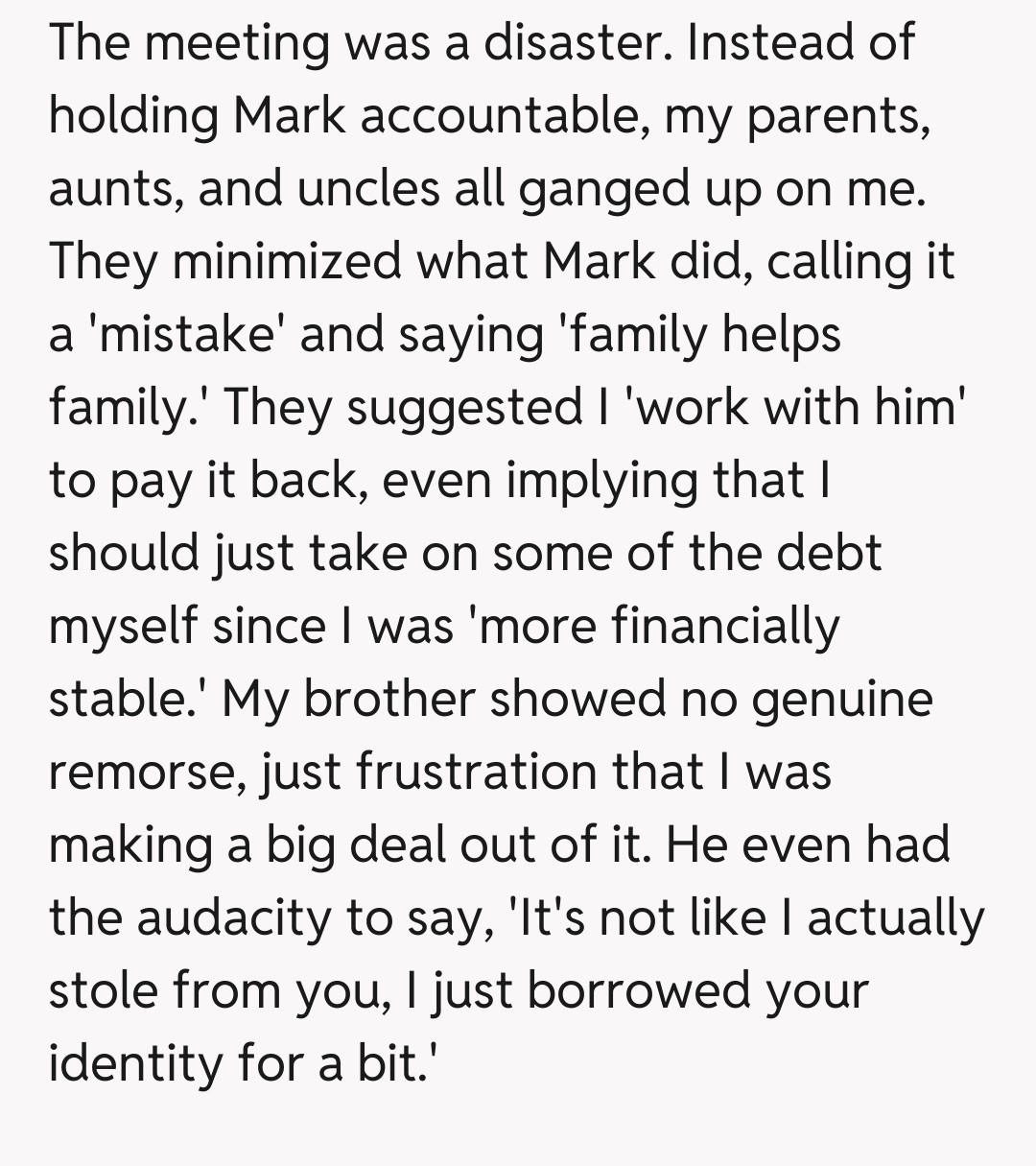
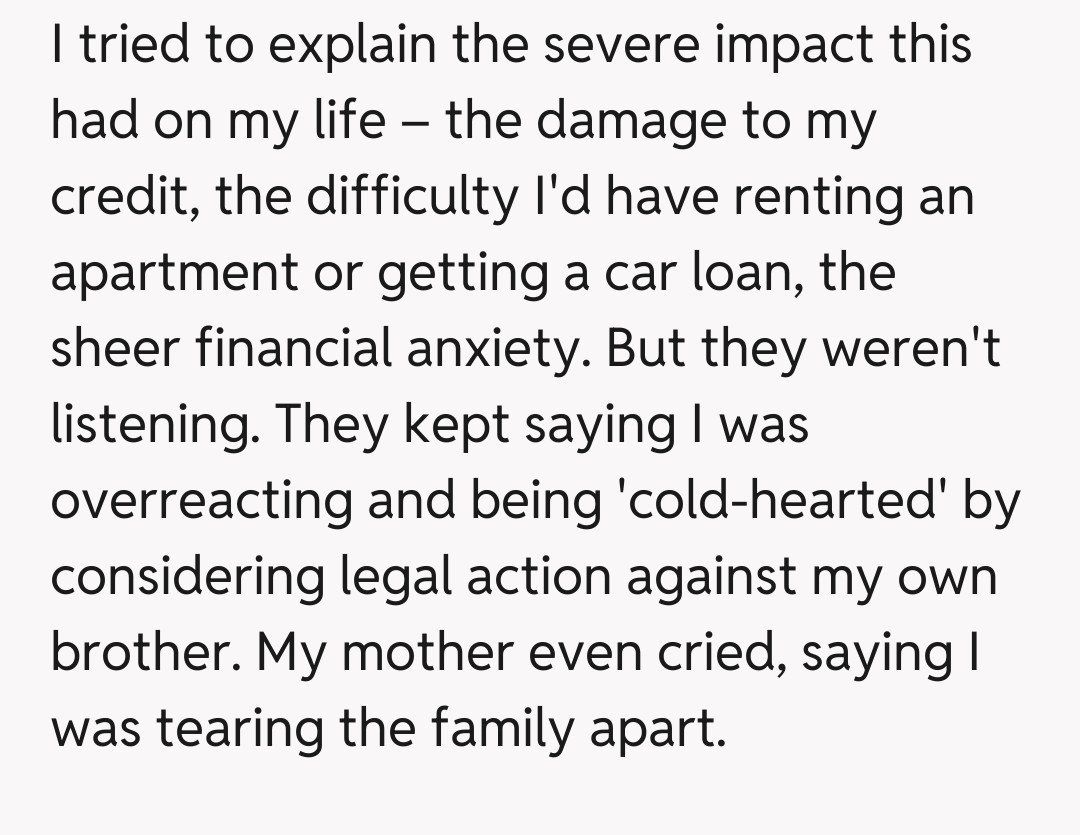
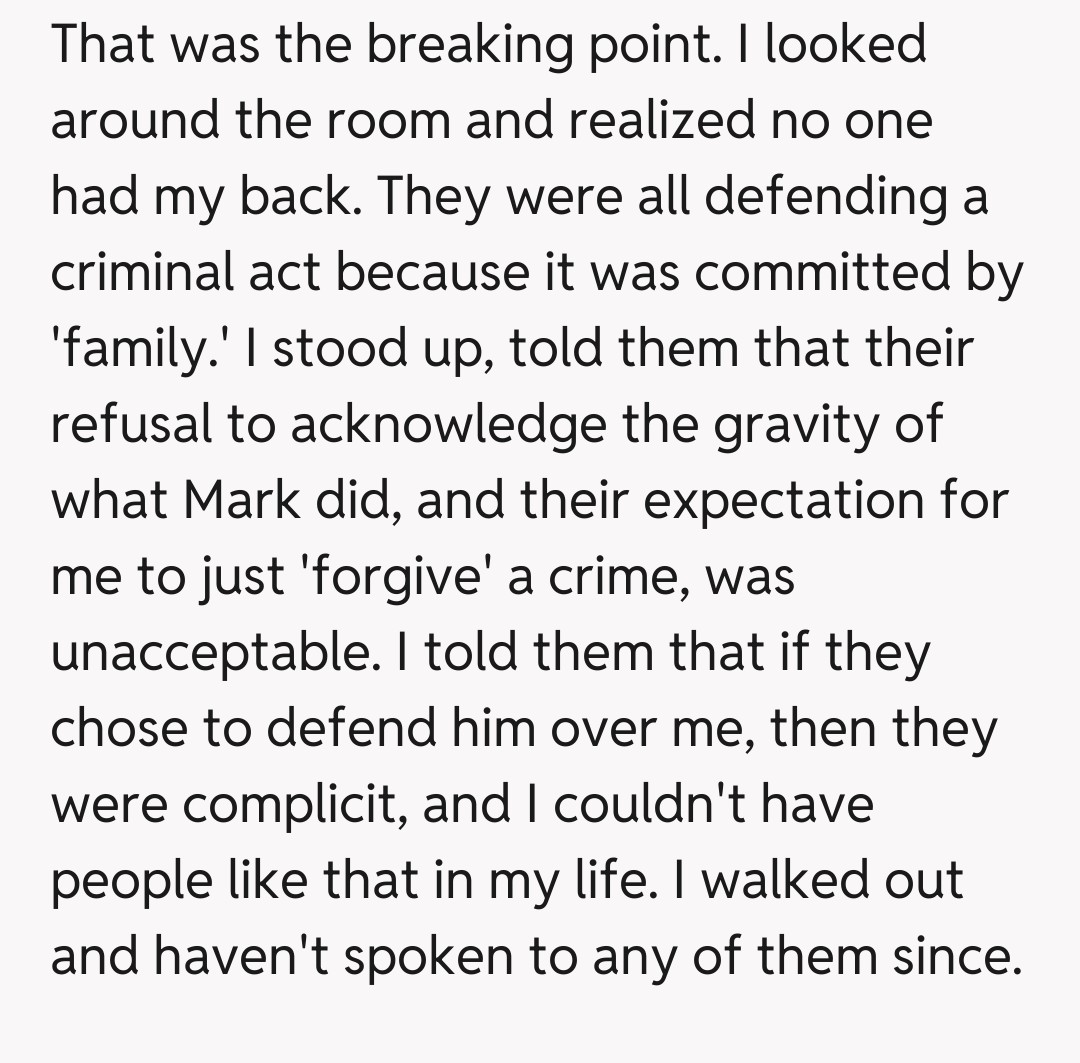
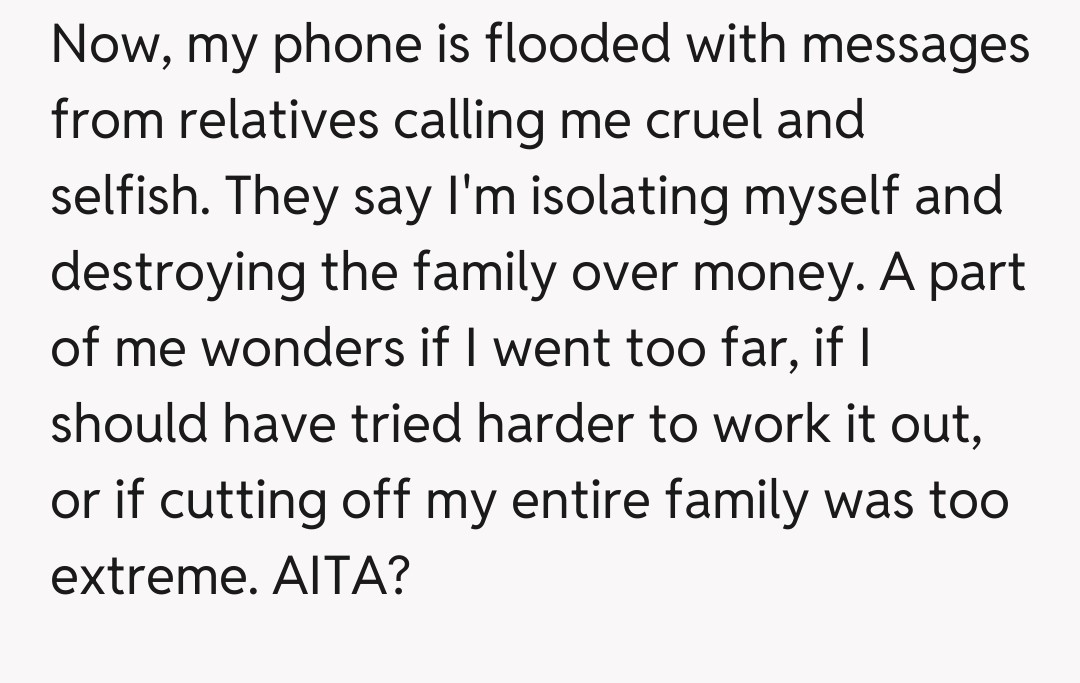
Identity theft is a deeply violating and serious crime, regardless of the relationship between the perpetrator and the victim. It's not just about money; it's about the erosion of trust, the immense stress of repairing credit, and the potential long-term damage to one's financial future. Our OP's brother, Mark, didn't just 'borrow' identity; he committed a felony that has significant consequences for his sister's life, far beyond the dollar amount.
The family's reaction in this scenario is incredibly concerning. By minimizing Mark's actions and attempting to guilt-trip OP into 'forgiving' the debt and avoiding legal action, they are essentially enabling criminal behavior. This creates a toxic environment where the victim is blamed and pressured to sacrifice their own well-being for the comfort and reputation of the perpetrator. This is a classic pattern of family dysfunction where healthy boundaries are completely absent.
OP's decision to cut off the family, while drastic, can be seen as an act of self-preservation. When your entire support system turns against you and defends the person who committed a crime against you, it signals a profound lack of respect for your autonomy and safety. Continuing to engage with such a dynamic would likely lead to further emotional distress and potentially leave OP vulnerable to future exploitation.
It's important to differentiate between family loyalty and enabling harmful behavior. True family loyalty would involve holding Mark accountable and supporting OP in rectifying the situation. Instead, the family chose to protect one of their own at the expense of another, demonstrating a profound misunderstanding of both justice and genuine care. OP is clearly within their rights to protect their financial and mental health.
The Verdict Is In: Family, Forgiveness, or Financial Freedom?
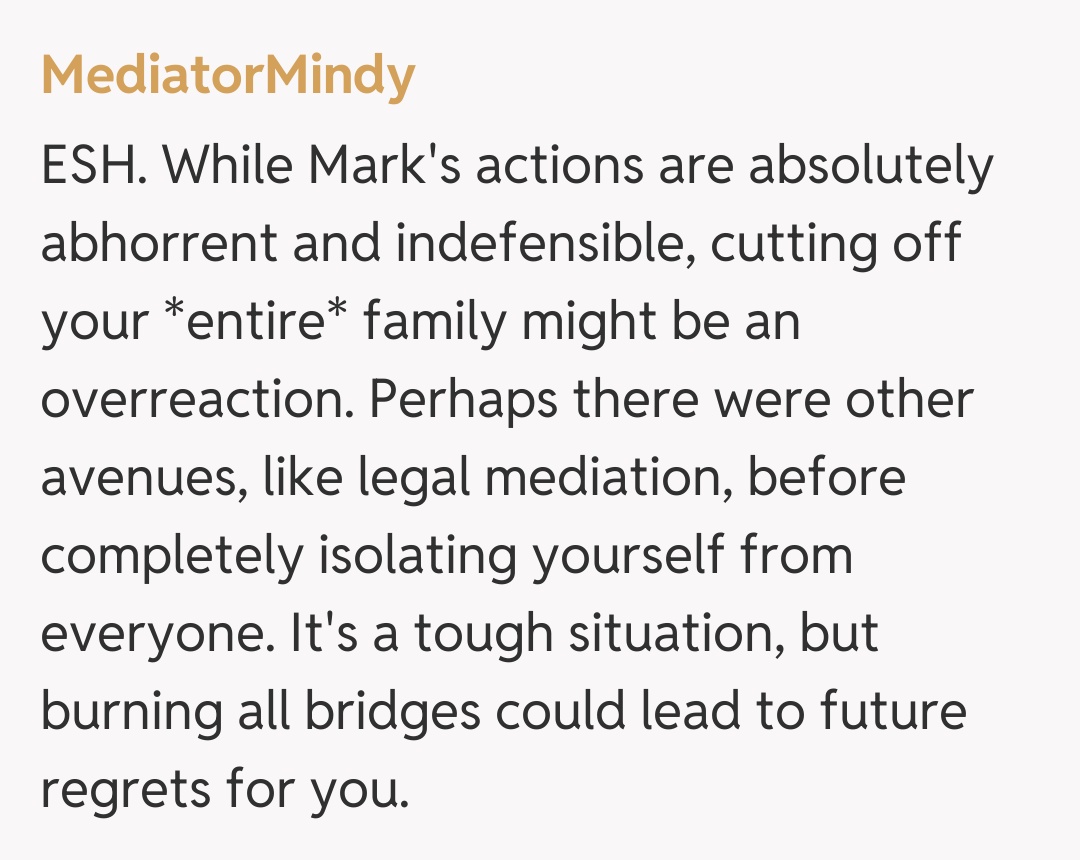
The comments section on this story was, as expected, a firestorm of opinions, though a clear consensus quickly emerged. Readers overwhelmingly sided with ThrowawayIDTheft, expressing outrage at the brother's actions and the family's appalling response. Many shared personal stories of identity theft, highlighting the long, arduous process of recovery and emphasizing that it's far from 'just a mistake.' The sentiment was strong: crime is crime, regardless of who commits it.
Commenters frequently pointed out the immense emotional and financial toll such a betrayal takes, stressing that the family's attempts to minimize the situation were not only unhelpful but actively harmful. The concept of 'family' was thoroughly dissected, with many arguing that true family doesn't enable criminal behavior or throw one of their own under the bus for a perpetrator. Boundaries, self-preservation, and the right to protect oneself were recurring themes.
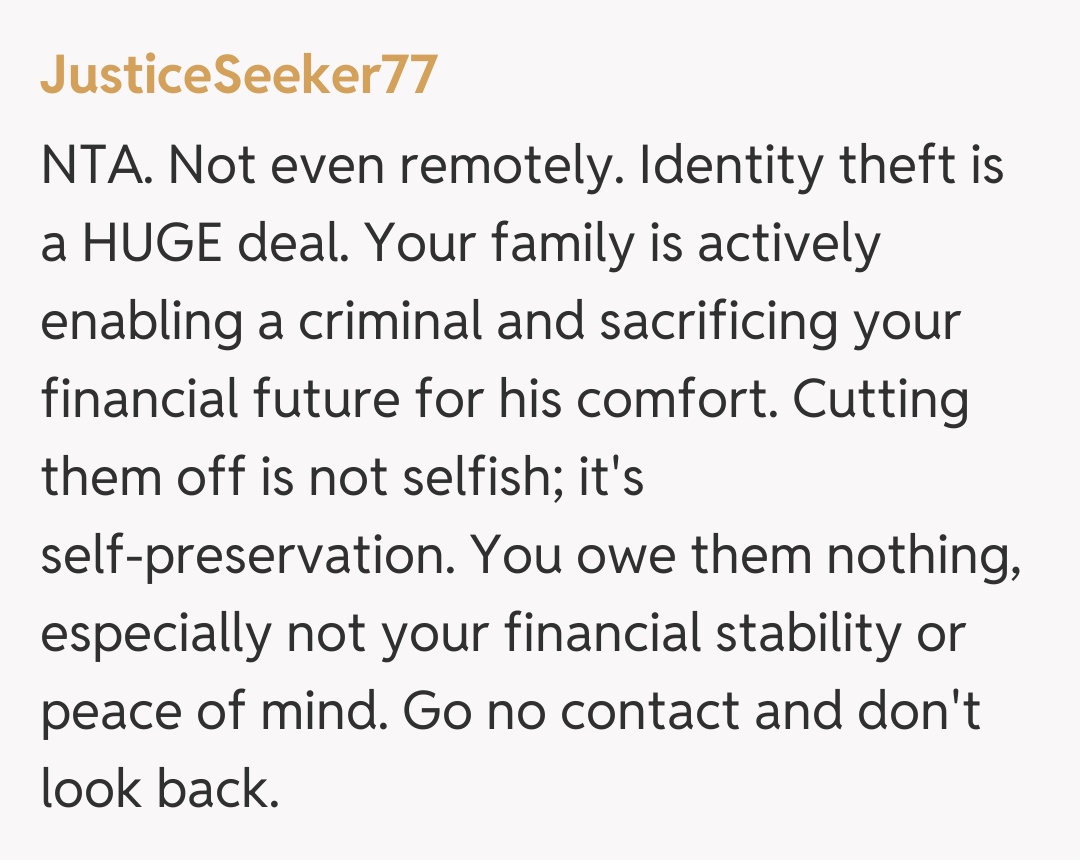
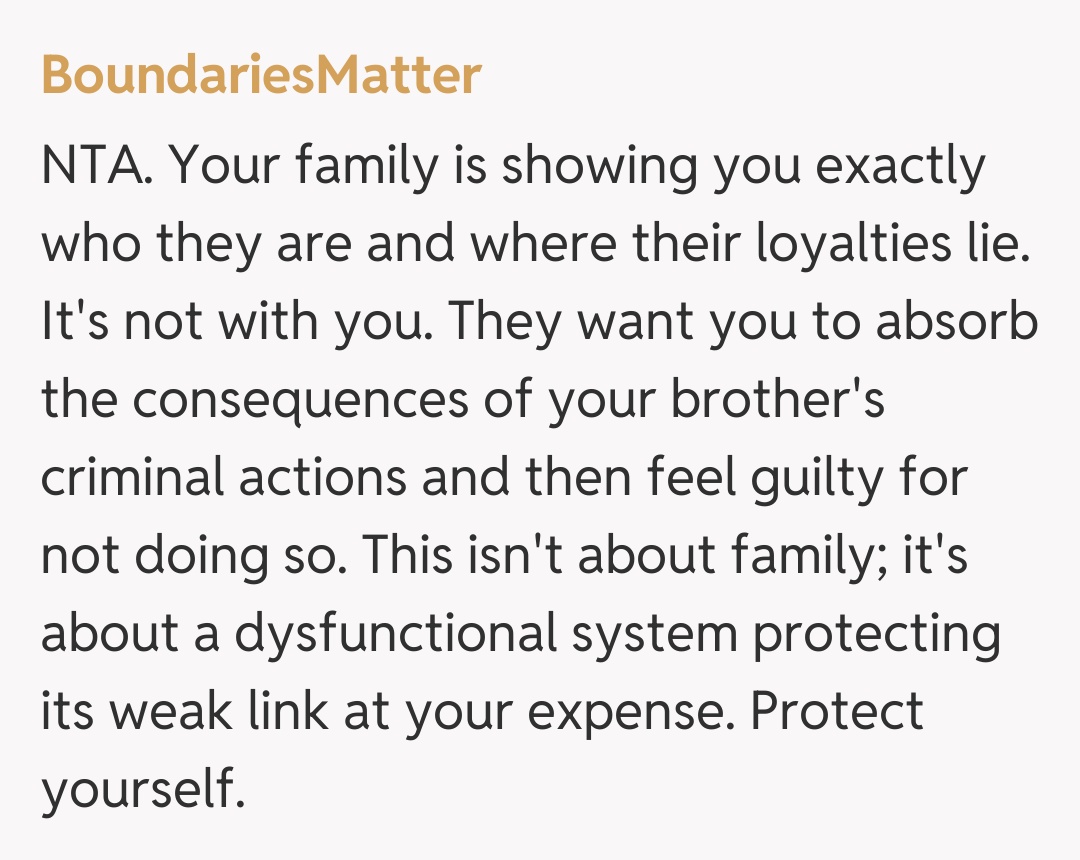
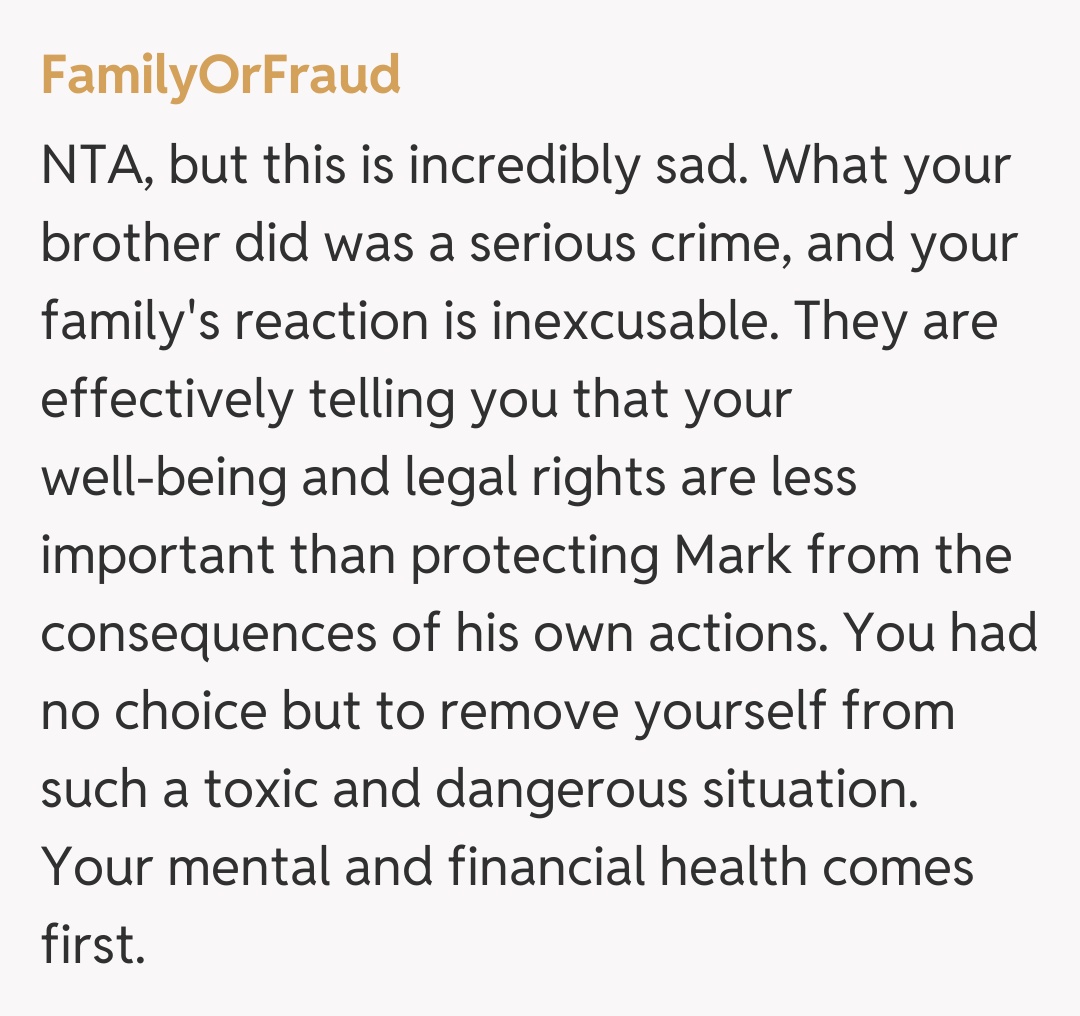
In the complex web of family dynamics, this story serves as a stark reminder that some lines simply cannot be crossed. Identity theft is a profound violation, and when a family unit chooses to defend the perpetrator over the victim, it exposes a deep-seated dysfunction. Our OP's decision, while undoubtedly painful, appears to be a necessary step towards self-protection and healing. Ultimately, drawing firm boundaries is crucial for maintaining one's well-being, even if it means stepping away from those who claim to love you but fail to respect your fundamental rights.