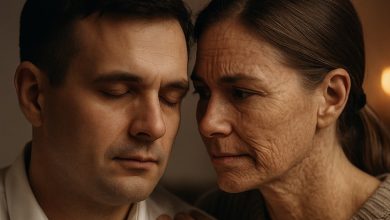
They Called Me “Ugly” and “Useless” While Protecting Raven—Until I Told the Detective the Truth
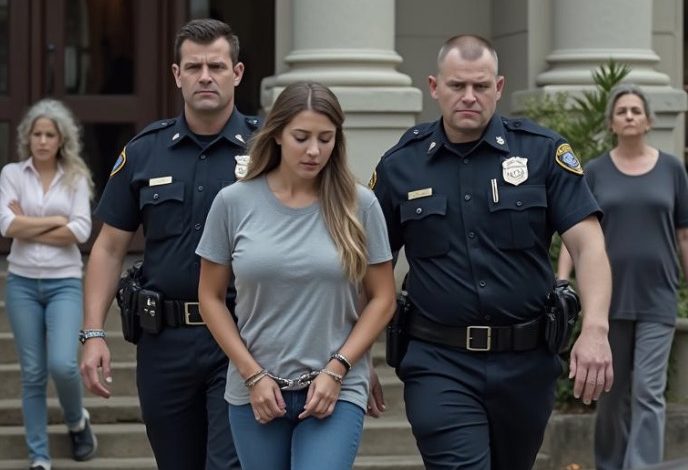
My parents made me the one who would “pay” for what my sister did. They pushed it like it was normal, like it was my job. Their words were sharp and cruel: “You’re trash. You’re ugly. Raven wouldn’t survive without us.” Then my father gave the final command, cold as ice: “Do your duty as the older sister.” In that moment, something in me went quiet and empty. I understood I didn’t have a real family. I only had myself. And for the first time in my life, I chose to live for me—and make sure they would never forget what they had done.
The police station smelled like burnt coffee and heavy stress. I sat across from Detective Morris, my hands shaking in my lap. Behind the glass, my parents stood close to Raven, like guards protecting someone important. Raven was crying hard, mascara running down her perfect cheekbones in dark streaks that somehow made her look even prettier in a tragic way.
My mother kept smoothing Raven’s hair, whispering soft comfort into her ear—words I’d never once heard aimed at me.
“Someone has to take responsibility for this,” Detective Morris said, looking between us. “The evidence shows one of you was driving during the hit-and-run. Mrs. Patterson is in critical condition.”
My father stepped forward and put on that business face—the one he used when he was making choices based on numbers, not hearts. “Officer,” he said smoothly, “both my daughters are here to cooperate. We just need a moment to talk as a family.”
But “talk as a family” wasn’t a discussion in our house. It was a decision already made, and the rest of us were expected to obey.
They pulled me into a side room. The fluorescent lights buzzed overhead, turning everything a sick yellow. Raven sank into a chair and cried into her hands. My mother rushed to her instantly, holding her like Raven was still a little kid instead of twenty-three. My father turned to me, and the look on his face is something I still see when I close my eyes.
“Morgan,” he said quietly, “we need you to tell them you were driving.”
It hit me like a punch. “What? No. Raven was driving. I wasn’t even in the car!”
“Your sister has her whole life ahead of her,” my mother added, not even looking at me. “She was accepted to graduate school. She’s engaged to James. She’s going to do something important with her life.”
The meaning was clear, even if she didn’t say it out loud: Unlike you.
“This is insane,” I said. “I wasn’t there. The truth will come out.”
I looked at Raven, waiting for her to finally speak up and say, Stop, this is wrong. She didn’t. She only cried harder, like I was the problem for not agreeing.
My father’s voice dropped into that low tone he used when closing deals that hurt someone. “You’re twenty-eight, Morgan. You work at a grocery store. You live in a studio apartment. You’ve never done anything remarkable with your chances.”
Then my mother finally met my eyes, and her look was hard. “Raven wouldn’t survive prison. Look at her. She’s delicate. She’s sensitive. But you… you’ve always been stronger.”
“The ugly one, you mean,” I said before I could stop myself.
My mother’s face flushed, but she didn’t deny it. She didn’t correct me. She simply went colder. “You’re being dramatic. This is about being practical. Raven has opportunities you’ll never have. Why should we ruin two futures when we only have to ruin one?”
That was the moment something in me turned solid. Not loud. Not emotional. Just clear. I looked at the woman who gave birth to me and realized she felt like a stranger. A person who had done the math and decided I was worth less than nothing.
“Do your duty as the older sister,” my father repeated. “For once in your life, be useful to this family.”
I walked out of that room without another word.
I sat down across from Detective Morris and told him the truth. All of it.
Raven had called me that night, screaming and panicking, begging me to come to the station. She hadn’t explained over the phone. She just kept saying she needed me and something horrible happened. I had thought she was in danger. I had thought someone hurt her. That was why I came.
But when I arrived, my parents were already there. And when I walked into the private room, my father started explaining their plan like it was already final. They didn’t want to figure out what was right. They wanted to protect Raven and sacrifice me.
My hands still shook as I answered questions. Detective Morris was calm and careful, writing everything down. Behind the glass, I could see my parents twisting with anger. My father paced like he couldn’t stand still. My mother held Raven tightly. Raven’s crying stopped at some point, and she stared at me with pure hate, like I had betrayed her by refusing to destroy myself.
Detective Morris looked down at his notes. “Let me confirm I understand,” he said. “Raven called you around 11:47 p.m. She asked you to meet her here. She didn’t explain why on the phone. And when you arrived, your parents were already here and immediately pressured you to take the blame.”
“Yes,” I said. My voice sounded strange to my own ears, but it was steady. “That’s exactly what happened.”
Detective Morris studied me for a long moment. “Morgan… what you’re doing takes courage. Family cases are the hardest.”
“They’re not my family anymore,” I heard myself say.
And the second I said it, it felt true.
Detective Morris left to speak with other officers. I sat alone for almost an hour, listening to the clock, watching my old life fall apart minute by minute. An officer stood near the door, clearly there so my parents couldn’t storm in.
When Detective Morris returned, he wasn’t alone. A woman with kind eyes came in and introduced herself as Sergeant Linda Hayes. She sat across from me and explained gently, “We need a formal statement. Everything you remember—details, timeline, exactly what your parents said. Can you do that?”
I nodded, throat tight. But my choice was locked in now. They had chosen who I was to them. Now I was choosing who I would be to myself.
The statement took hours. They asked the same things in different ways, checking for lies, checking for confusion, making sure I wasn’t making it up out of jealousy. Sergeant Hayes asked, “Have you had conflicts with your sister before?”
“There’s always been conflict,” I admitted. “Not screaming fights. More like… she lived in the spotlight, and I lived behind her. That was just our normal.”
“Can you explain that?” she asked.
So I did. I said Raven was always the special one—the pretty one, the talented one, the one with “potential.” And I was just… there. Better clothes for her. Bigger celebrations for her. Faster comfort for her tears. I learned to be quiet. Invisible. Easy to ignore.
Sergeant Hayes looked at me carefully. “Was tonight the first time they asked you to sacrifice something for her?”
That question opened a door in my mind, and everything came rushing out.
I told her about when I was fifteen and got my first job, saving for a school trip to Washington, D.C. I had saved $800 over months. Two weeks before the trip, Raven’s car broke down. My father said we couldn’t afford both the repair and my trip. He took my savings to fix Raven’s car. Raven went to prom in it. I watched the trip photos online.
I told them about the college money—how there had been a plan for both of us until Raven wanted an expensive private university. My portion got swallowed into hers. I got told community college was “good enough” for someone like me.
I told them about the art contest I won. My parents skipped the ceremony because it conflicted with Raven’s volleyball game. When I came home with a ribbon and a small prize, my mother barely looked up and asked me to set the table because Raven had practice. My ribbon went into a drawer. Raven’s trophies filled the house.
Sergeant Hayes asked softly, “Why didn’t you leave when you turned eighteen?”
I didn’t even know how to answer at first. Where would I go? I had no car. No money. No support. And part of me kept thinking if I just worked harder, if I just became “better,” they would finally notice me.
But that night, in that small room, I finally understood: they were never going to see me the way I needed. To them, I was disposable.
So I decided I would dispose of them instead.
After I finished, they had me wait while they questioned Raven. I sat drinking terrible vending machine coffee, watching the clock crawl. Past 3 a.m. A victim advocate checked on me and asked if I had somewhere safe to stay. I said I had my apartment, but the thought of my parents showing up there made my stomach turn.
Detective Morris found me around 4:30 a.m. He looked exhausted, but there was something firm in his face.
“Your sister confessed,” he said. “The evidence is strong. Traffic camera footage. Paint transfer. Her blood alcohol test. Her story kept changing, but she admitted it.”
Relief hit me so hard I felt dizzy. “What happens now?” I asked.
“She’ll be charged,” he said. “DUI, hit and run, leaving the scene. Given the severity, she’s looking at serious time. Your statement matters.”
“I’ll be there,” I said. “Whatever you need.”
He offered to escort me out the back, but I shook my head. “I’ll go out the front,” I said. “I’m done hiding.”
They were waiting in the lobby. My father stood with his arms crossed. My mother sat in a plastic chair, looking hollow. Raven wasn’t there anymore.
My father’s eyes locked onto me like a threat. “You destroyed this family,” he said.
“You destroyed it,” I replied calmly. “When you decided one daughter mattered and the other didn’t. I just refused to help you keep doing it.”
My mother looked up, voice shaking. “She’s your sister. How can you do this to her?”
“She drove drunk,” I said. “She hit Mrs. Patterson and ran. How can you defend that?”
My father stepped closer, voice low. “If you walk out that door, you’re dead to us. No family. No support. You’ll have nothing.”
I gave him a small smile, and it clearly unsettled him. “I already had nothing from you,” I said. “At least now I’m free.”
I walked out into the early morning dark, the sky just starting to lighten at the edges. I drove home through empty streets feeling lighter than I had in years.
After that, life became court dates, paperwork, and angry messages. My parents hired lawyers who tried to paint me as jealous and bitter. But the footage and evidence didn’t lie. Raven was convicted and sentenced to four years. My parents burned money trying to fight it, but they couldn’t erase facts.
Mrs. Patterson’s family asked to meet me. I agreed, nervous and ashamed. Mrs. Patterson was in a wheelchair when I saw her, with Patricia pushing her. Mrs. Patterson was small, silver-haired, hands trembling a little, but her eyes were sharp and kind.
“You’re Morgan,” she said. “You look like you haven’t slept.”
“Neither do you,” I said, then regretted how blunt it sounded, but she gave a small laugh and told me to sit.
We talked for a long time. She described the impact, the hospital, learning to move again, the fear, the pain, the bills. I kept saying I was sorry, even though I didn’t do it.
Mrs. Patterson stopped me. “You didn’t do this,” she said firmly. “And you were the only one in your family who tried to make it right.”
Then Patricia showed me a voicemail. My father’s voice, trying to buy a “settlement,” asking if they would push to reduce the charges because Raven had “a future.” Patricia said she told him no. No money could erase what happened.
Mrs. Patterson reached out and held my hand. “You chose truth,” she said. “That matters.”
That truth carried me through everything that followed—through my parents’ final messages, through being told I wasn’t their daughter anymore, through the silence that came after.
Raven eventually got out on parole and found a way to contact me, blaming me for her life falling apart. I responded once, clearly, stating what she did, what our parents asked me to do, and why I refused. Then I blocked her. I blocked them all.
Later, a letter came saying my mother was sick and asking me to come. I didn’t go. Another letter came with funeral details. I didn’t go to that either. I didn’t feel proud or cruel. I felt finished. Like I had closed a door that should have been closed a long time ago.
And then, life kept moving forward—my real life, the one I built without them.
One evening, an email arrived from Patricia Patterson. She wrote that her mother forgave Raven, but wanted me to know something else: that my honesty gave her faith in people again. That choosing truth over “family loyalty,” even when it cost me, helped her heal in a way medicine couldn’t.
I cried reading it. Not from rage or pain, but from something cleaner. Like closure. Like proof that my choice mattered.
That night, as I looked at my reflection, I understood something I should have known years ago: my face was never ugly. I was never trash. I was never worthless.
That was just the story they used to keep me small.
They wanted me to sacrifice everything for Raven because they believed I was worth less.
Instead, I walked away—and finally learned what I was worth when I was the one doing the measuring.