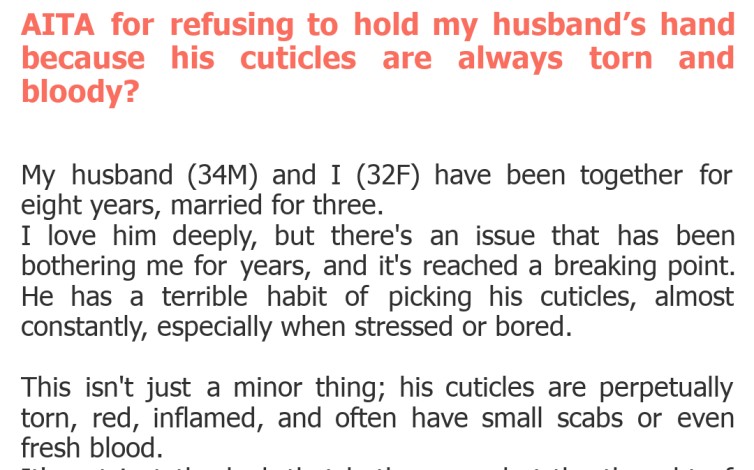
AITA for refusing to hold my husband’s hand because his cuticles are always torn and bloody?
Oh, the complexities of physical intimacy in relationships! Sometimes, it's not grand gestures or deep emotional divides that cause friction, but the tiny, seemingly insignificant habits that start to grate on your nerves. Today's AITA story delves into one such predicament, highlighting how personal grooming, or lack thereof, can become a surprising wedge between partners.
We've all been there, right? You adore your significant other, but there's just *that one thing* – a quirky habit, a hygiene oversight, or a physical characteristic that, over time, becomes a mental hurdle. Our letter writer's struggle is a poignant reminder that even the smallest physical details can impact how we connect, especially when it comes to something as simple and intimate as holding hands.

"AITA for refusing to hold my husband’s hand because his cuticles are always torn and bloody?"
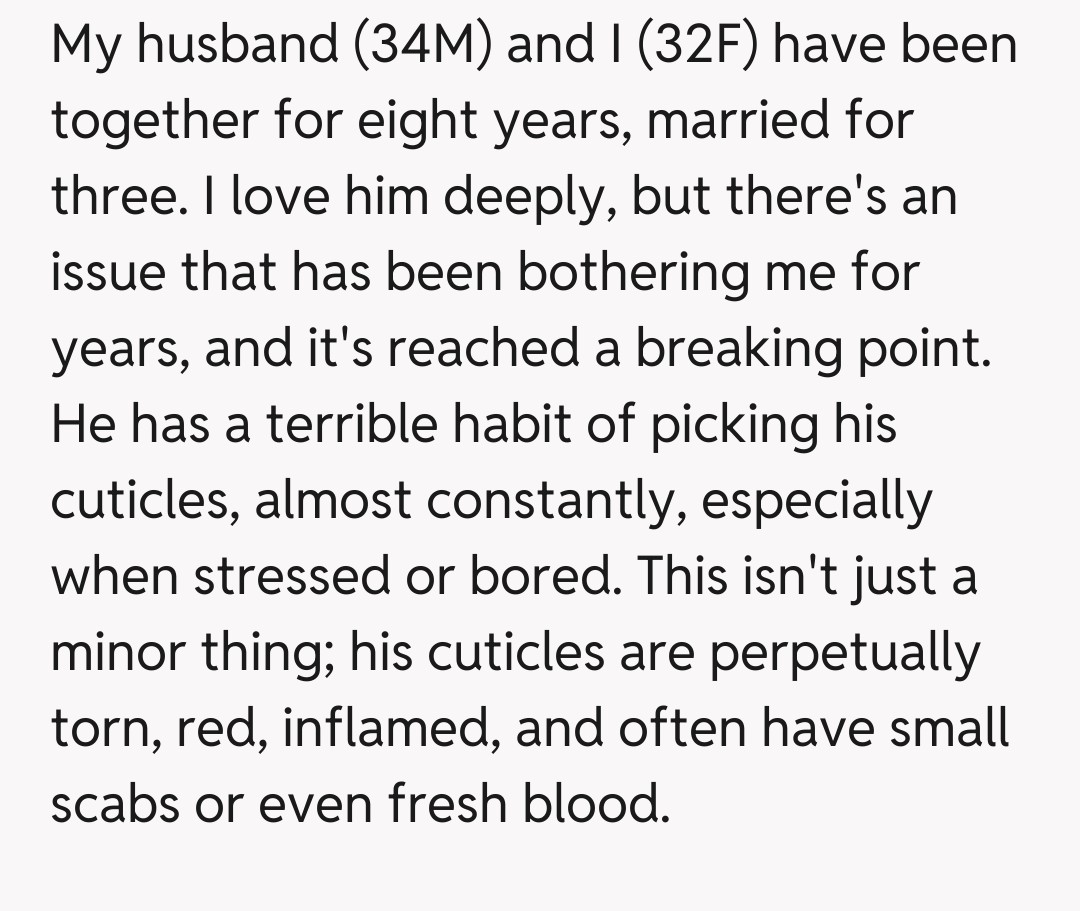
This story hits on a surprisingly common, yet often unaddressed, aspect of relationship dynamics: personal habits and physical boundaries. It’s easy to dismiss a torn cuticle as a minor aesthetic issue, but for the person experiencing discomfort, it can create a genuine barrier to intimacy. The OP's feelings of aversion are valid; hygiene and tactile preferences are deeply personal, and no one should be forced into uncomfortable physical contact.
However, we must also acknowledge the husband's perspective. For him, this isn't a deliberate act to annoy his wife, but likely an unconscious, stress-related habit. Being told that your physical presence, especially a part of you that feels out of your control, is 'unappealing' by your spouse can be profoundly hurtful and shaming. His reaction of feeling 'shallow' and 'disgusting' points to a significant emotional wound.
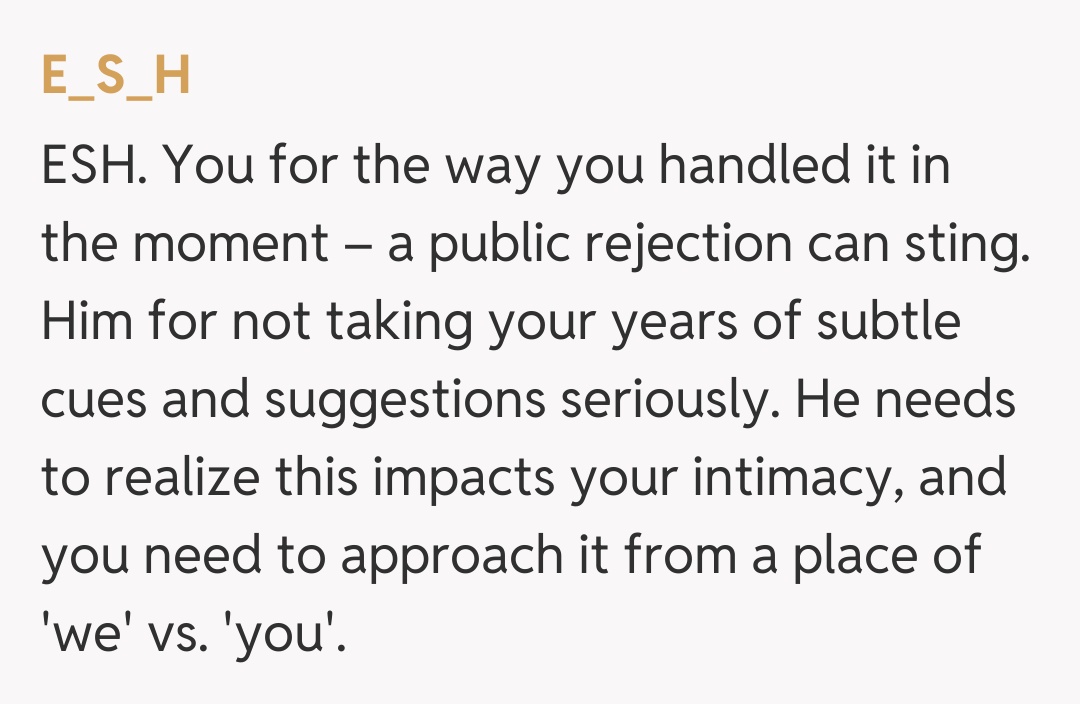
Communication is key here, but it seems to have broken down. While the OP states she's tried various gentle approaches, the specific incident where she flinched and then articulated her discomfort in that moment, even gently, could feel like a public rejection. This immediate, physical recoil followed by an explanation, while honest, might have amplified his feelings of embarrassment and inadequacy.
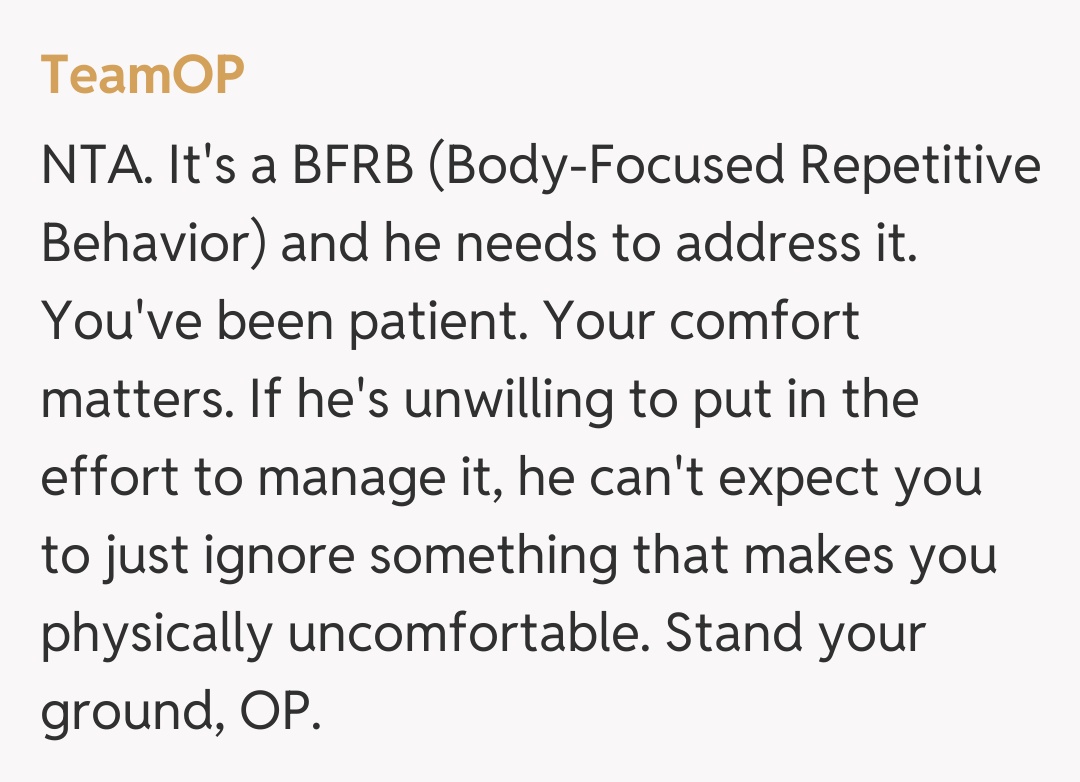
The core issue isn't just about cuticles; it's about unmet needs and ineffective communication. The husband needs support and potentially professional help for his habit, which could be a body-focused repetitive behavior (BFRB) linked to anxiety. The wife needs to feel heard and respected in her boundaries. Both partners need empathy and a strategy to address this, rather than letting it fester into a wedge.
Readers Weigh In: Is Hand-Holding a Dealbreaker for Bloody Cuticles?
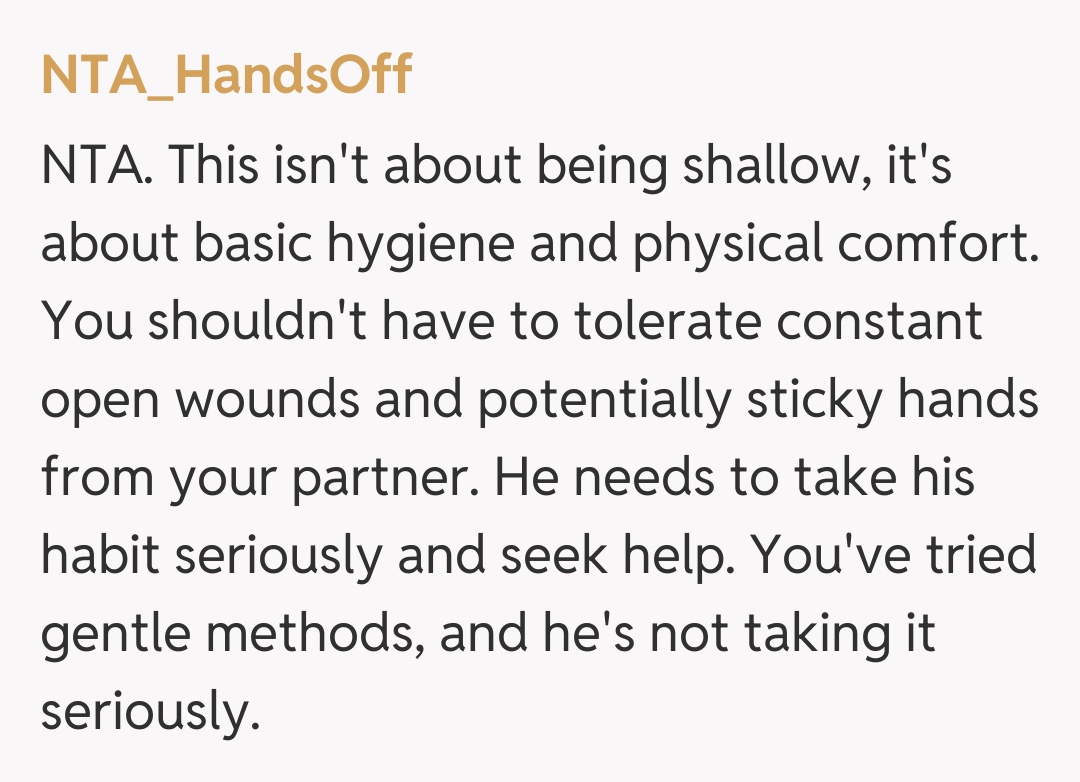
The comments section for this one was, as expected, a fascinating mix of empathy and firm boundaries! Many readers jumped to the OP's defense, highlighting that personal hygiene is a legitimate concern in any relationship. The consensus among these commenters was that while the habit might be involuntary, the impact on the partner's comfort is real and should be addressed by the husband, perhaps with professional help.
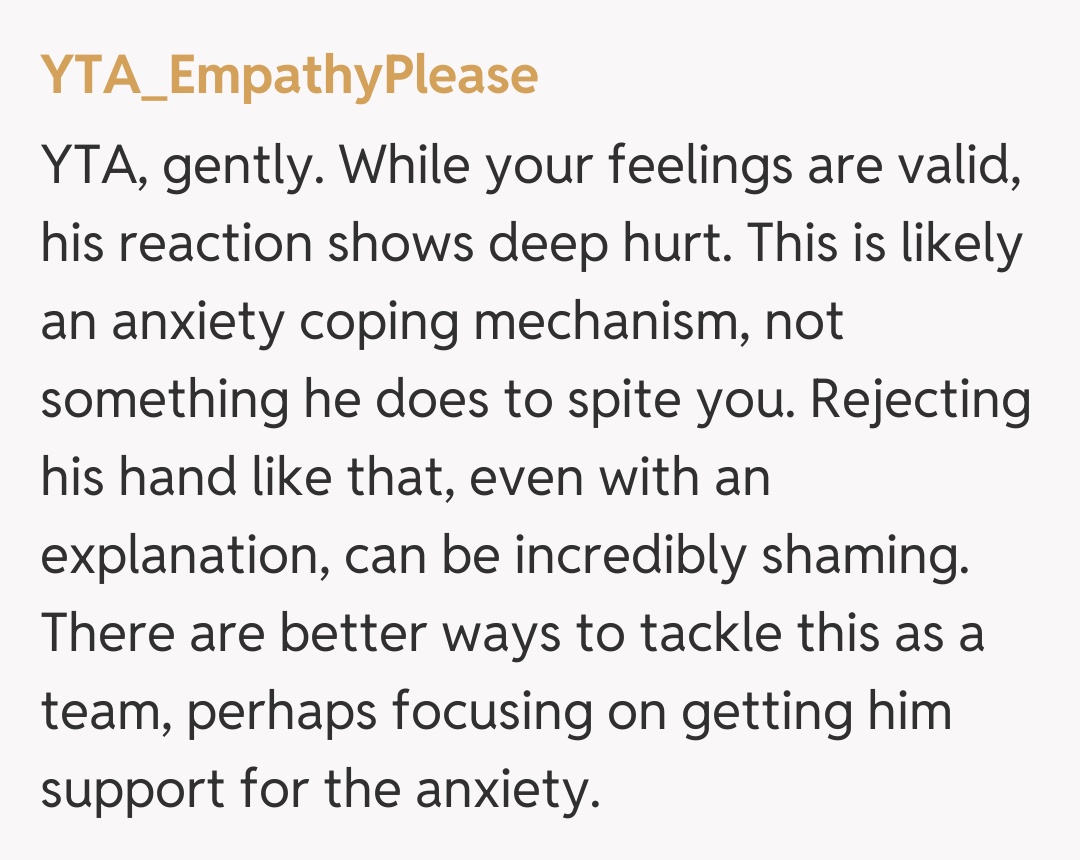
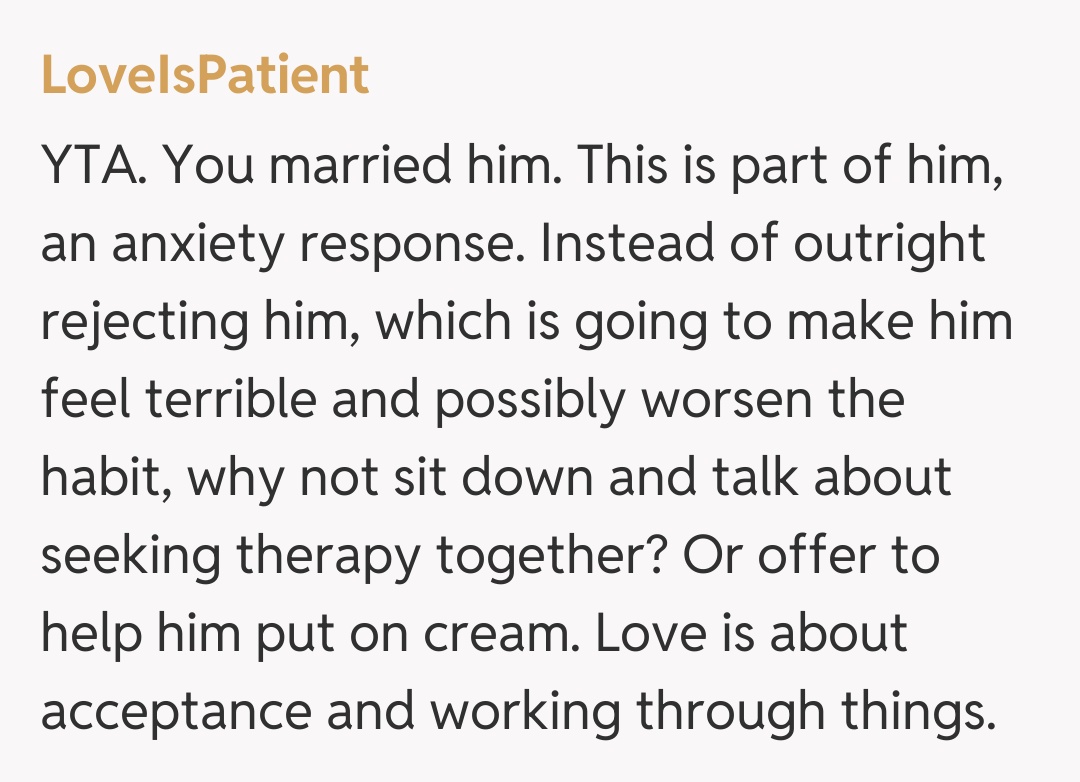
Conversely, a significant number of commenters expressed sympathy for the husband, emphasizing that habits like cuticle picking often stem from anxiety and can be difficult to control. They pointed out that while the OP's feelings are valid, the way she communicated her discomfort might have been hurtful, suggesting more gentle and proactive ways to tackle the issue together, rather than a moment of rejection.
This AITA post serves as a potent reminder that even the smallest perceived flaws or habits can create significant emotional and physical distance in a relationship. It highlights the delicate balance between personal boundaries, empathy, and effective communication. Ultimately, while both partners' feelings are valid, the path forward requires an honest conversation, a willingness from the husband to address his habit, and a compassionate approach from the wife. True intimacy flourishes when both individuals feel safe, heard, and respected in their vulnerabilities and discomforts alike.