AITA for refusing to let my girlfriend keep her nose strip packs in the bathroom?
Oh, the joys and challenges of cohabitation! Moving in with a partner often brings to light those little quirks and habits that can either make you smile or make you silently seethe. From toothpaste caps to toilet paper orientation, shared living spaces are fertile ground for minor disagreements that often mask deeper issues. Today's AITA entry tackles one such seemingly trivial conflict.
Our submitter, OP, found themselves in a sticky situation regarding bathroom decor – or, more accurately, a lack thereof when it came to his girlfriend's personal items. It's a classic tale: one partner's idea of organized convenience clashes head-on with the other's vision of a spotless sanctuary. Let's dive into the details and see if OP is a meticulous marvel or a control freak.

"AITA for refusing to let my girlfriend keep her nose strip packs in the bathroom?"
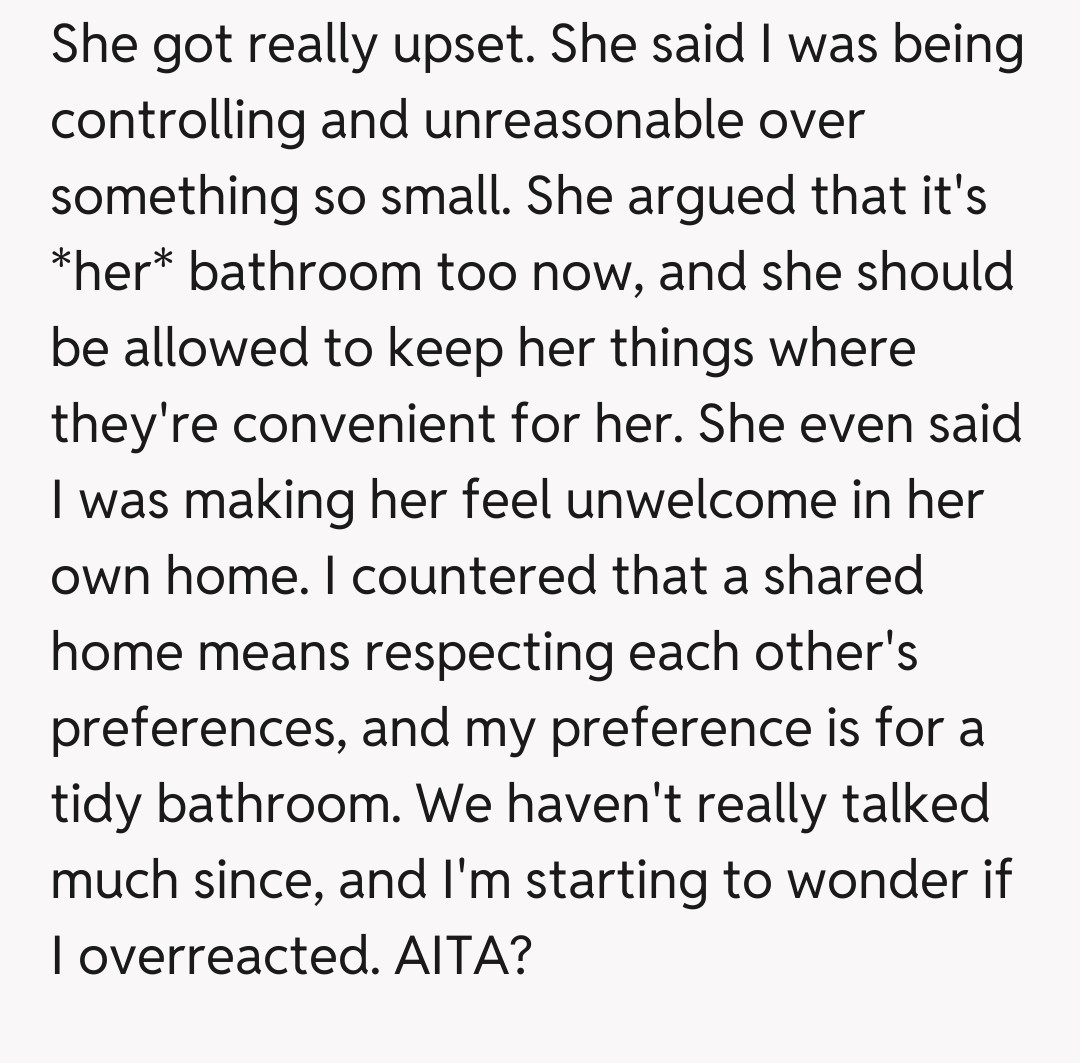
This story is a classic example of how minor domestic disagreements can quickly escalate into larger relationship issues. On one hand, OP has a clear desire for a minimalist and tidy bathroom, a preference he's communicated. It's understandable to want your living space to reflect your personal standards, especially in areas like the bathroom which often feel very personal and private. The expectation that personal items, particularly empty packaging, be put away seems reasonable to many.
However, Sarah's perspective also holds weight. When a partner moves in, the space transitions from 'my home' to 'our home.' While OP might have established the aesthetic, Sarah now has a right to feel comfortable and have her belongings integrated. Convenience is a valid consideration, and what might seem like clutter to one person could be a harmless, everyday item to another. Calling it 'ridiculous' and stating 'this is my home' could certainly feel dismissive.
The core issue here might not be the nose strips themselves, but rather a clash of expectations regarding shared space and individual autonomy. OP feels his boundaries are being ignored, while Sarah feels her presence and convenience are being undervalued. Effective communication is key, but the delivery of that communication can either build bridges or burn them. The escalation suggests a breakdown in how these preferences are being addressed.
Both parties seem to be digging their heels in, turning a small item into a symbol of control versus freedom. A truly shared space requires compromise from both sides. It's about finding a middle ground where both individuals feel respected and comfortable, rather than one person's preference always overriding the other's. The challenge is in moving past the item itself to understand the underlying feelings.
The Nose Strip Showdown: What the Internet Had to Say!
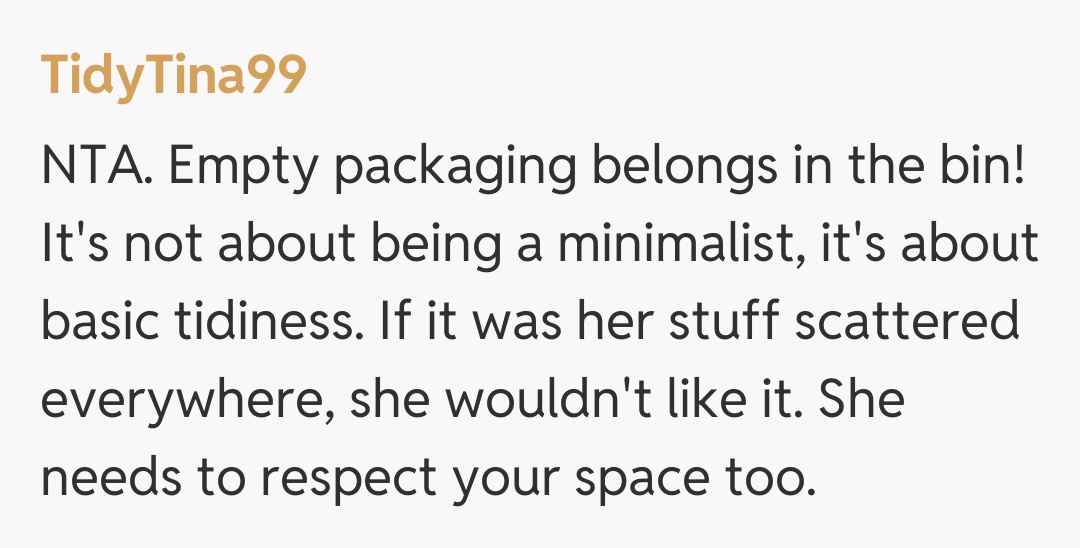
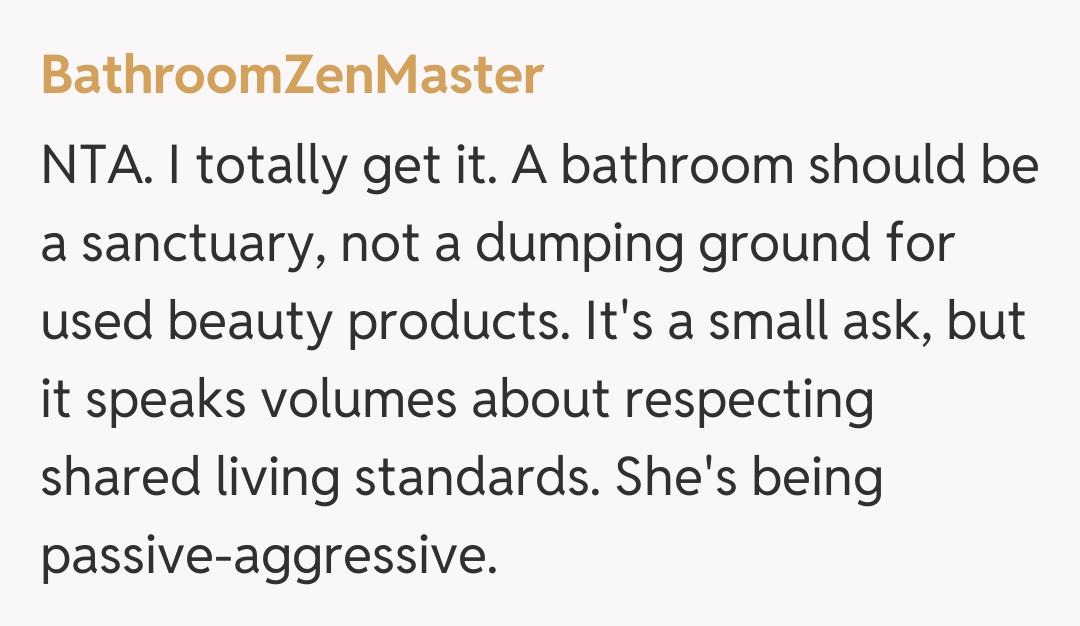
The comments section for this story was, as expected, a lively debate! Many users immediately sided with OP, emphasizing that empty packaging is indeed trash and should be discarded, regardless of minimalist preferences. They argued that expecting a tidy shared space, particularly a bathroom, is a fundamental expectation in adult cohabitation. The consensus among this group was that Sarah was being disrespectful by continuously ignoring a simple, reasonable request.
Conversely, a significant portion of commenters felt OP was indeed the A-hole for being overly controlling and nitpicking. They pointed out that calling the bathroom 'my home' after Sarah moved in was a major misstep, implying she isn't an equal partner. These users suggested that a few nose strip packs are hardly a major crime and that OP's reaction was disproportionate, making Sarah feel unwelcome over a truly minor detail.

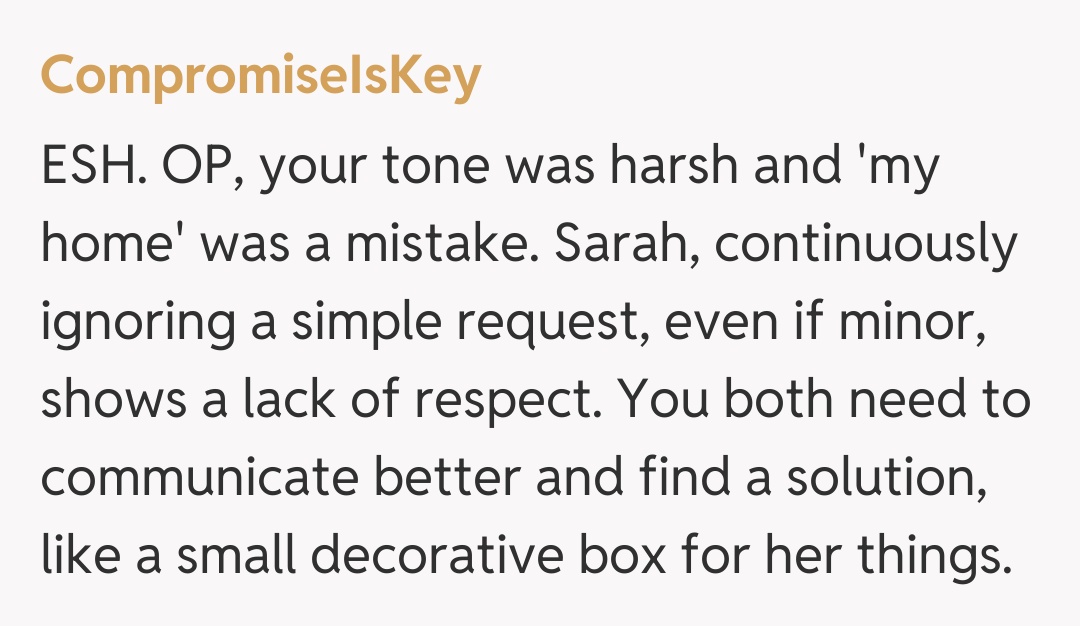
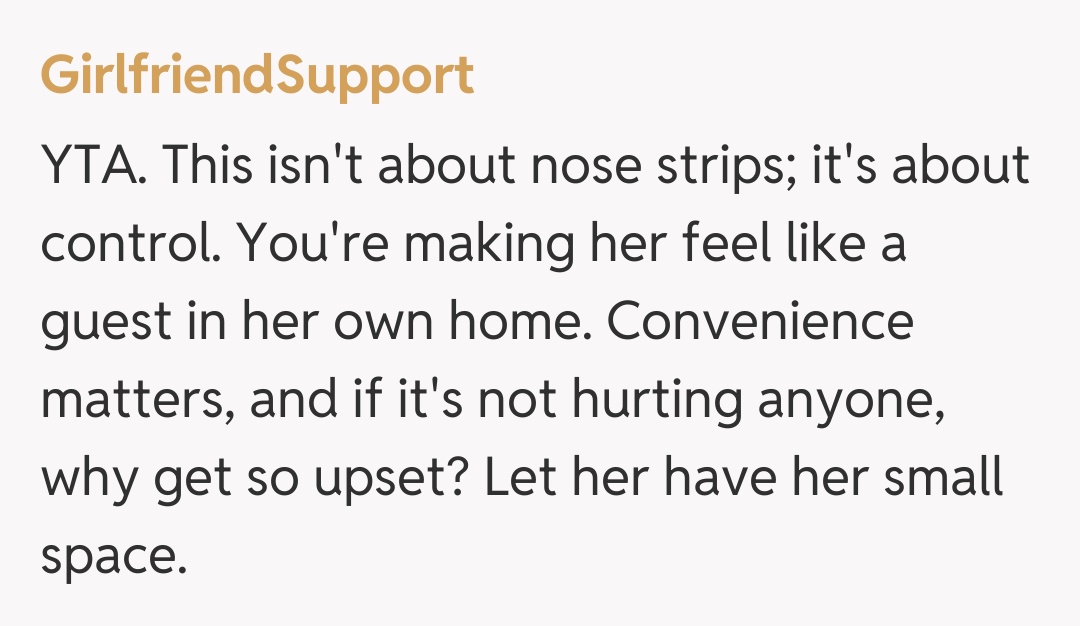
This scenario truly highlights that in relationships, sometimes the smallest objects can trigger the biggest arguments. It’s rarely about the nose strips, but rather about respect, shared ownership, and communication styles. Ultimately, both OP and Sarah need to step back and address the underlying feelings of being unheard or controlled. A healthy compromise, perhaps a designated drawer or a pretty container for Sarah's items, coupled with genuine empathy, could turn this conflict into a bridge towards a stronger relationship. Remember, an 'our home' mindset is crucial for harmony.