AITA for telling my daughter her knee dimples are unattractive and she should wear longer skirts?
Oh, the never-ending dance between parents and teenagers, especially when it comes to appearance! It's a tale as old as time: a parent offers advice, often well-intentioned, and a teenager hears criticism. Navigating these conversations can feel like walking a tightrope, trying to guide without crushing confidence. Today's AITA story perfectly encapsulates this delicate balance, or perhaps, imbalance.
This week, we're diving into a post from a mom who found herself in hot water after commenting on her daughter's 'knee dimples' and suggesting a wardrobe change. It raises so many questions about body image, parental influence, and the fine line between helpful guidance and outright body shaming. Get ready to have some strong opinions, because this one definitely stirs the pot!

"AITA for telling my daughter her knee dimples are unattractive and she should wear longer skirts?"
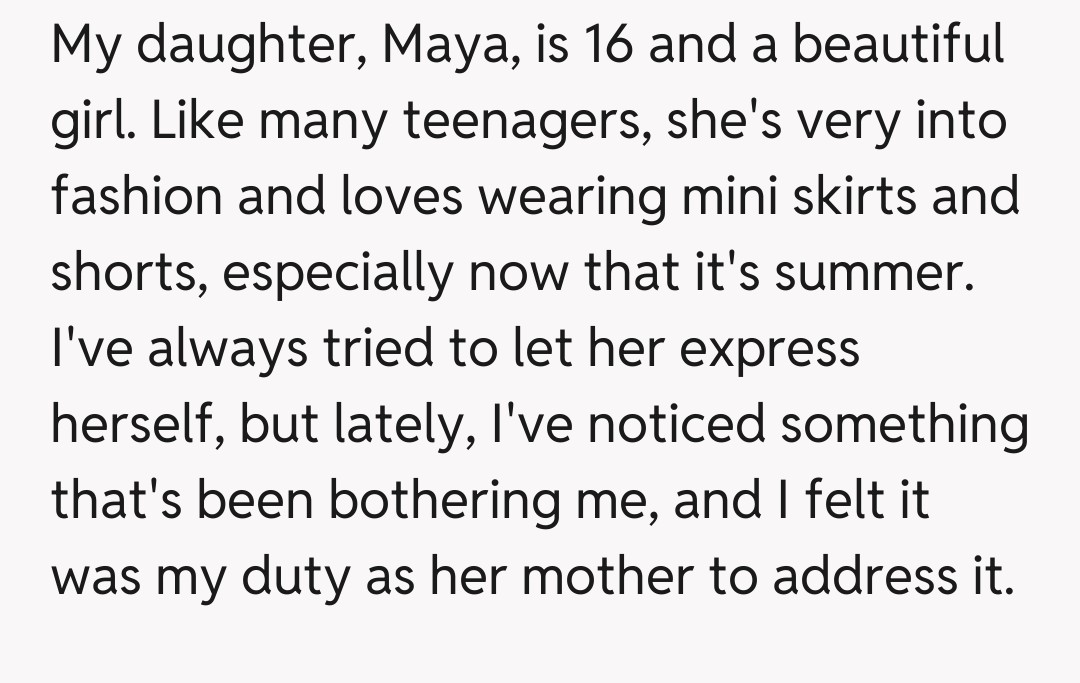
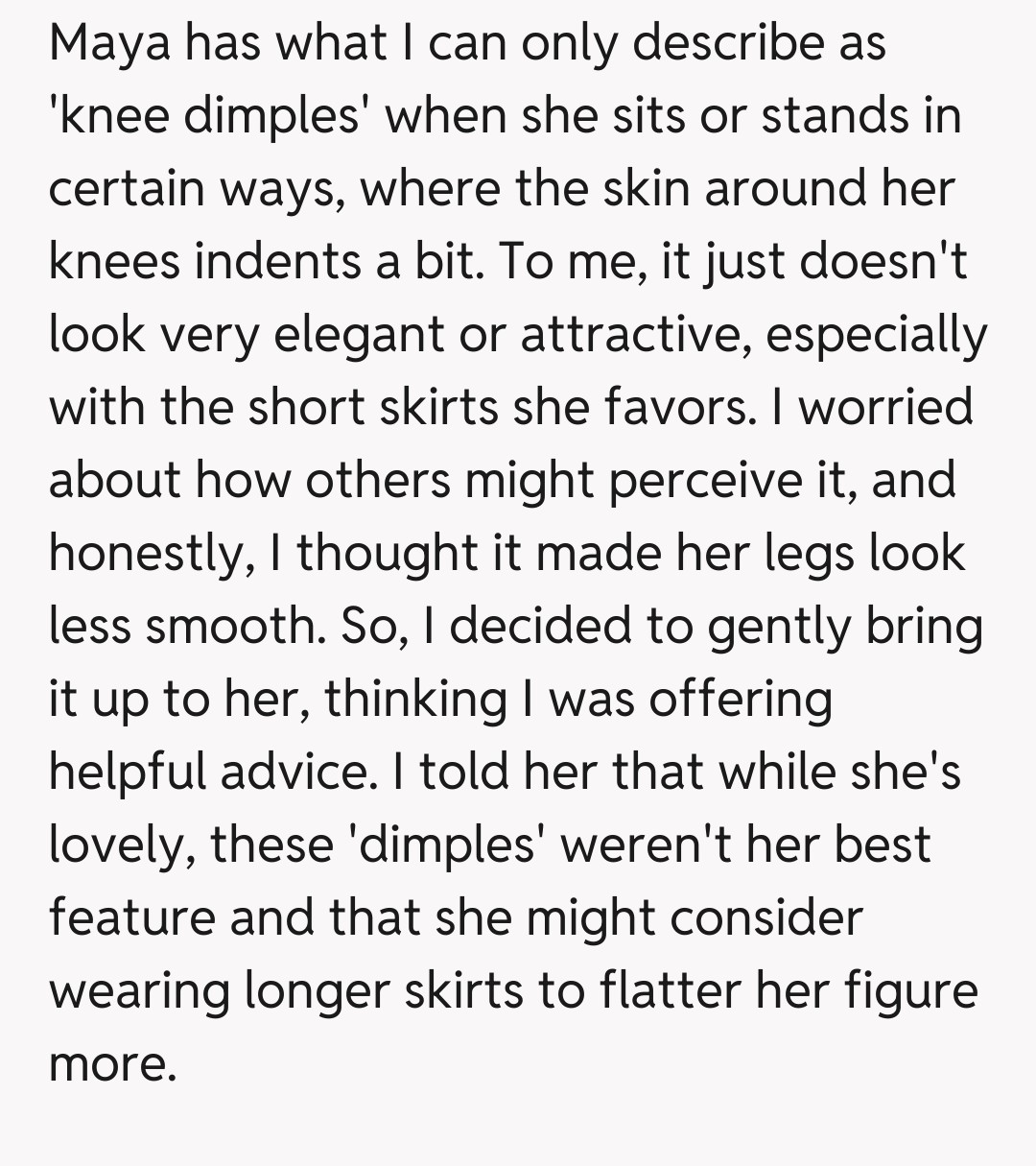
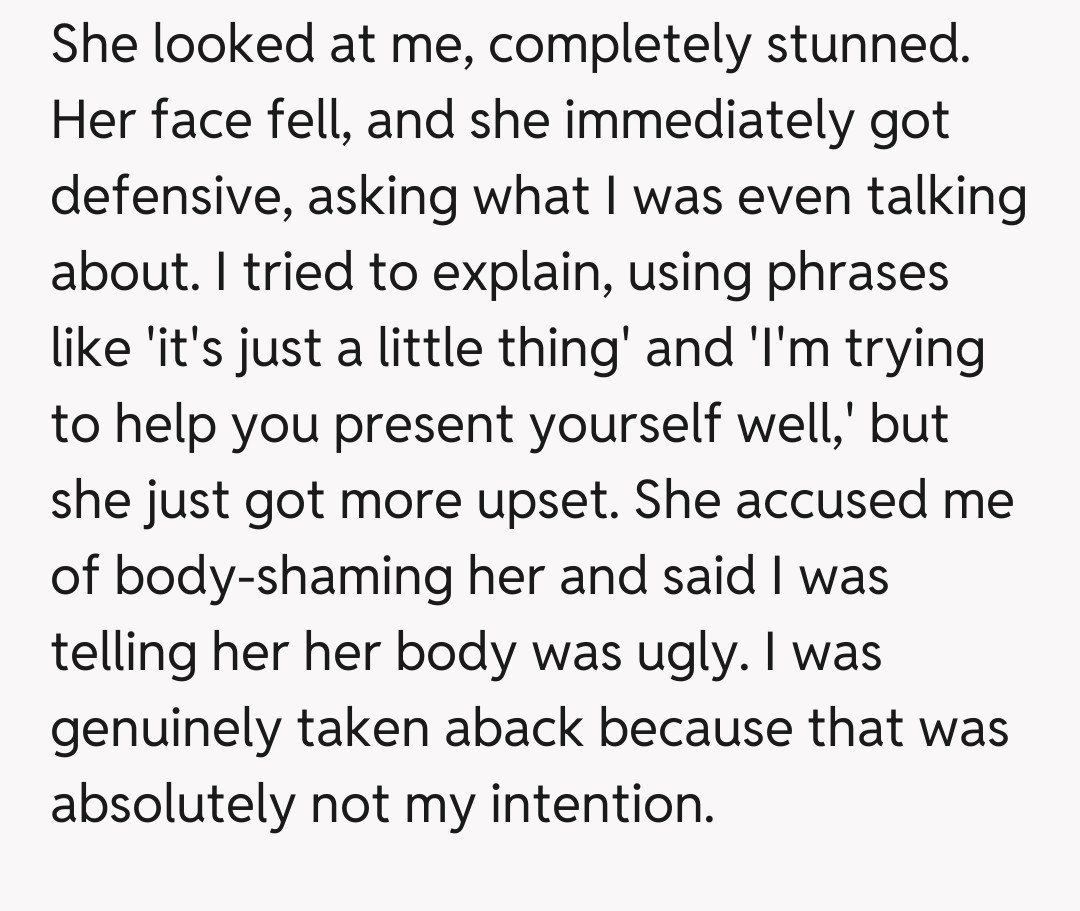
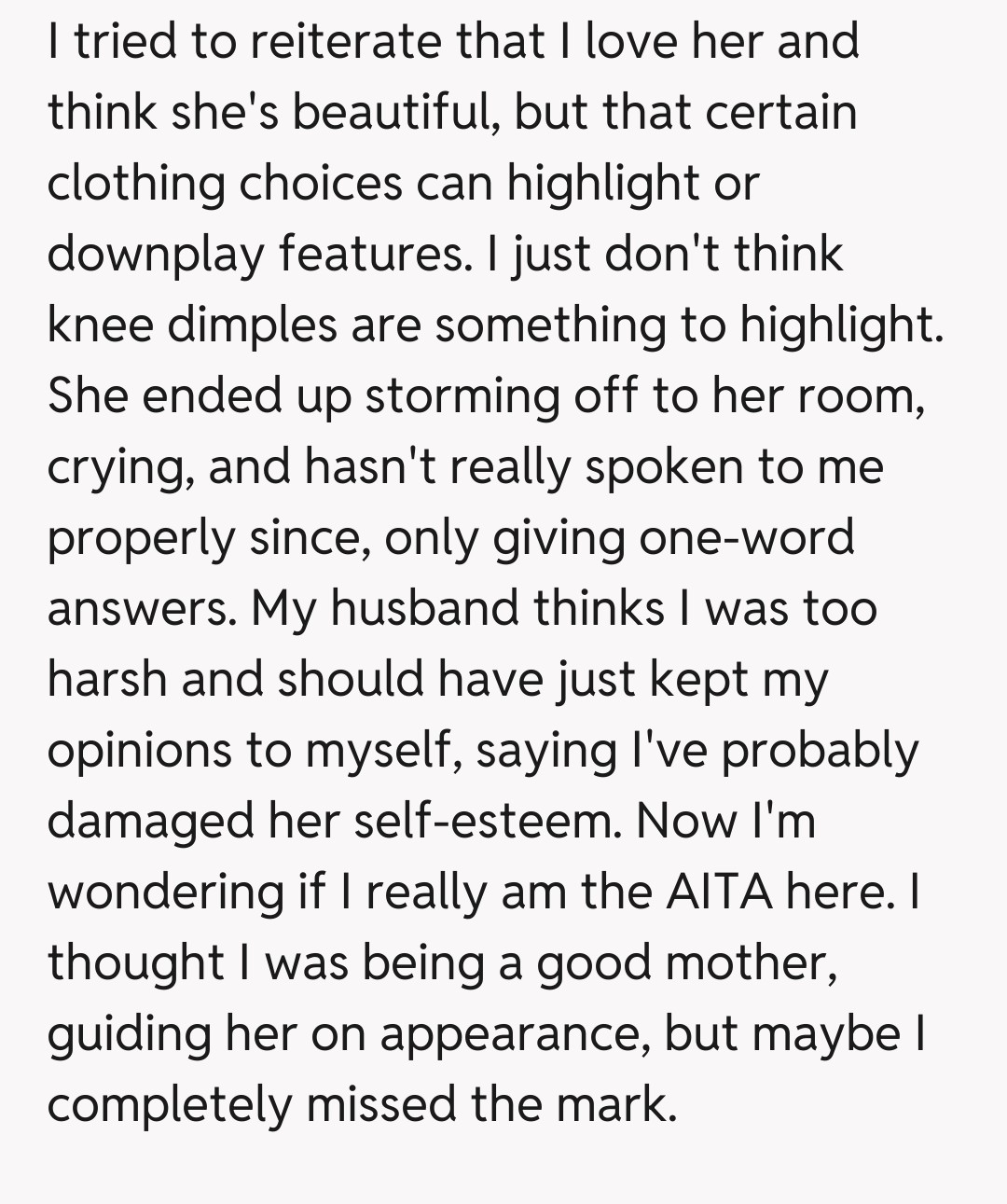
It's a common dilemma for parents: how do you guide your children on appearance and self-presentation without inadvertently harming their self-esteem? The poster's intentions, while perhaps misguided, seem to stem from a place of wanting her daughter to look her 'best' and potentially avoid perceived social judgment. However, the language used, specifically deeming a natural body feature 'unattractive,' is where the situation takes a sharp turn.
For a 16-year-old, whose body is still developing and whose self-image is incredibly fragile, hearing a parent call any part of their body 'unattractive' can be deeply damaging. Teenagers are constantly bombarded with idealized images, and parental validation is crucial. A comment like this, even if meant as constructive criticism about fashion, can easily be internalized as 'my body is flawed,' leading to long-lasting insecurities about a perfectly normal physical trait.
Parents often operate from a place of protecting their children from a critical world. However, sometimes that protection can manifest as projecting anxieties onto the child, rather than empowering them. Fostering a healthy body image means teaching self-acceptance and resilience, not pointing out 'flaws' that may not even be noticed by others, let alone considered genuinely unattractive.
The daughter's reaction—storming off and crying—is a clear indicator of the emotional impact. It highlights that regardless of the mother's intent, the message received was one of shame and criticism about her body. This scenario underscores the critical importance of mindful communication, particularly when discussing sensitive topics like appearance with adolescents, where a misstep can have profound emotional consequences.
Knee-Jerk Reactions or Valid Concerns? The Internet Weighs In!
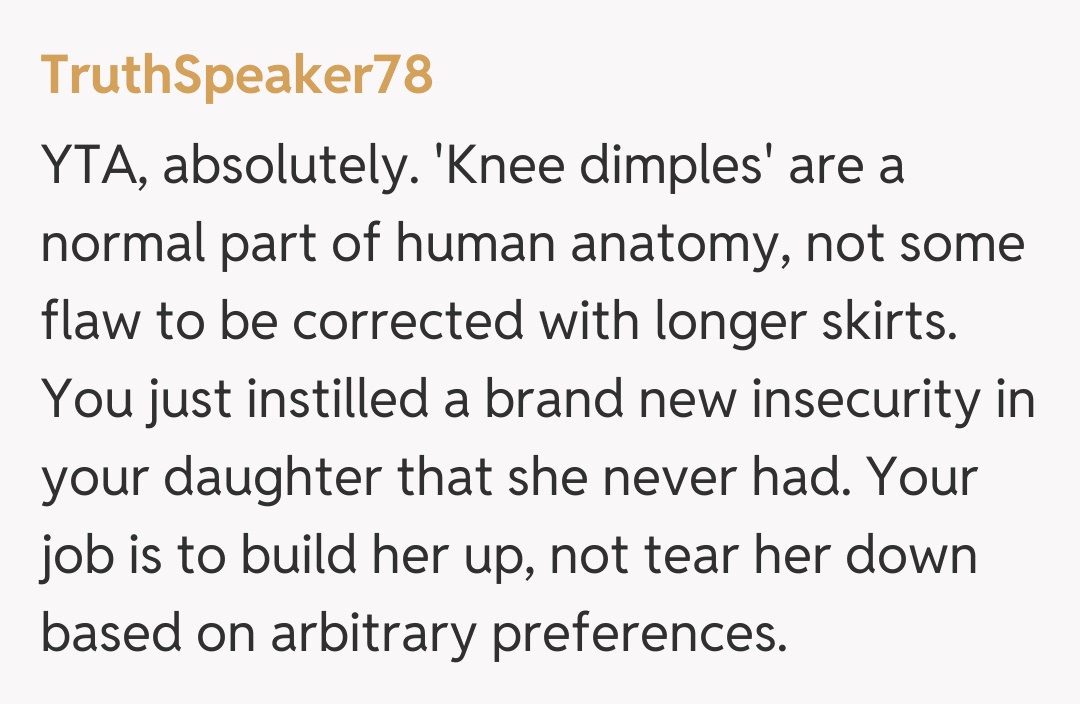
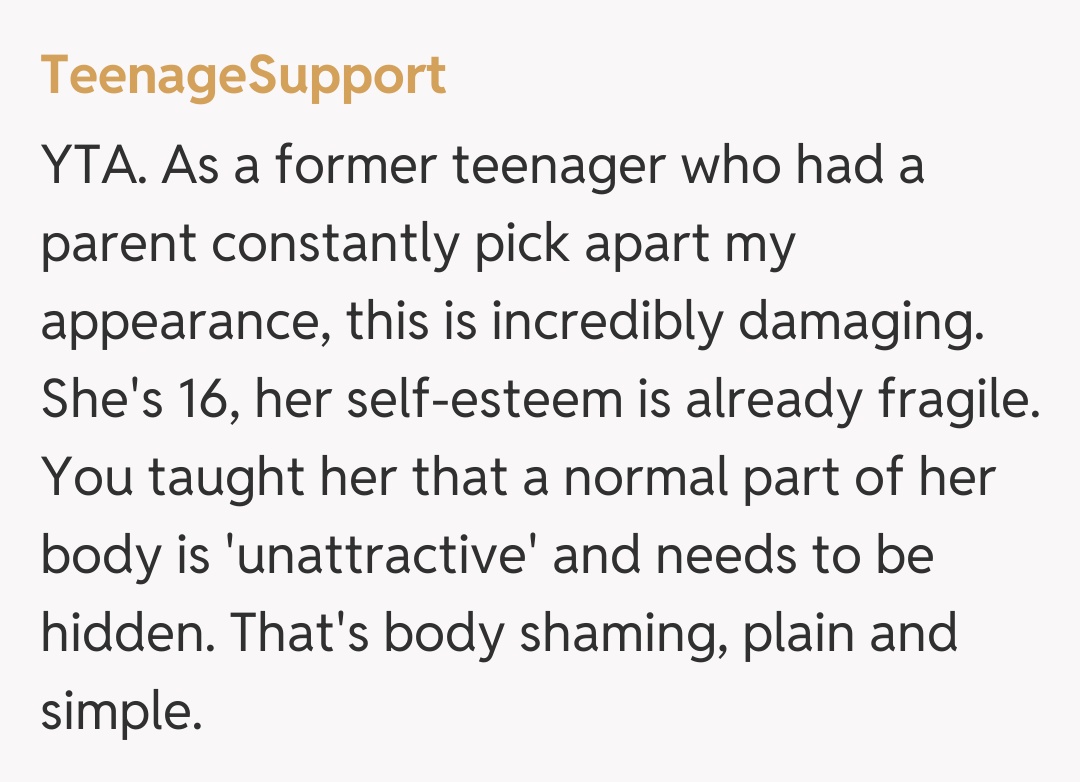
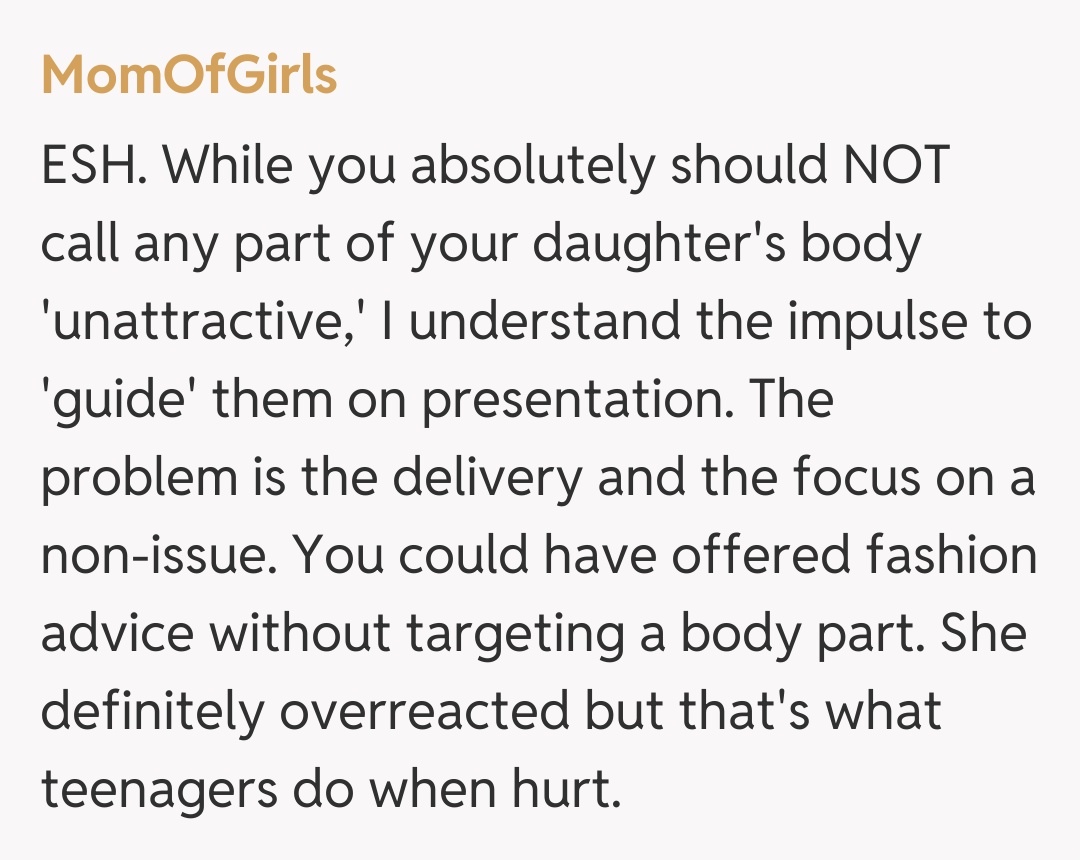
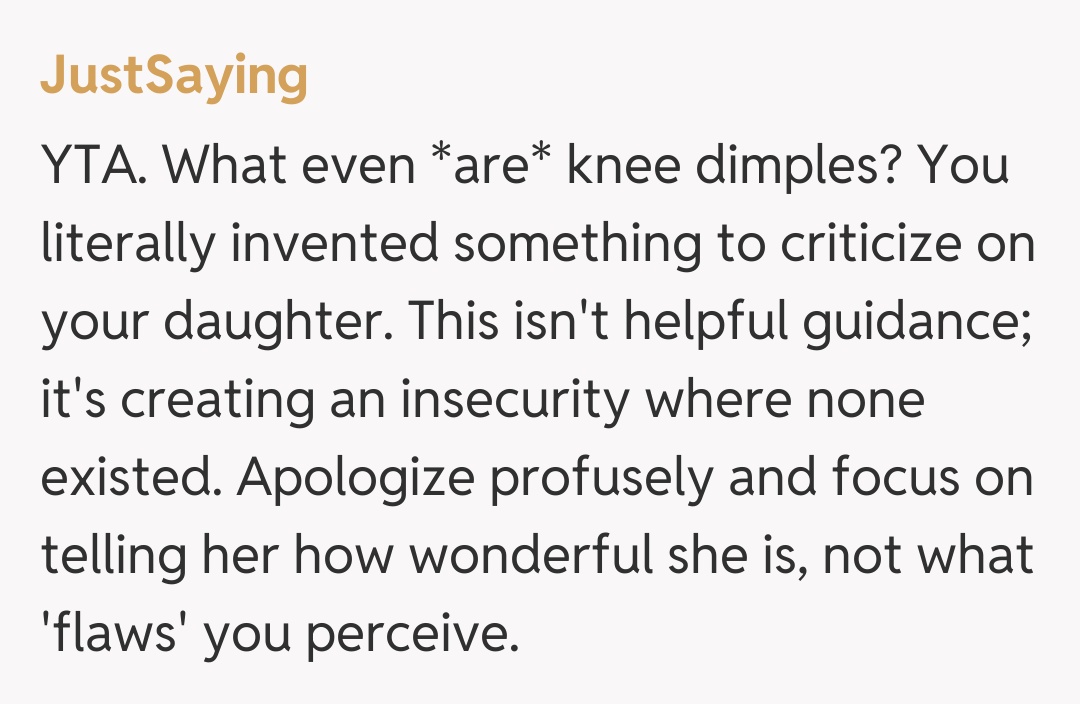
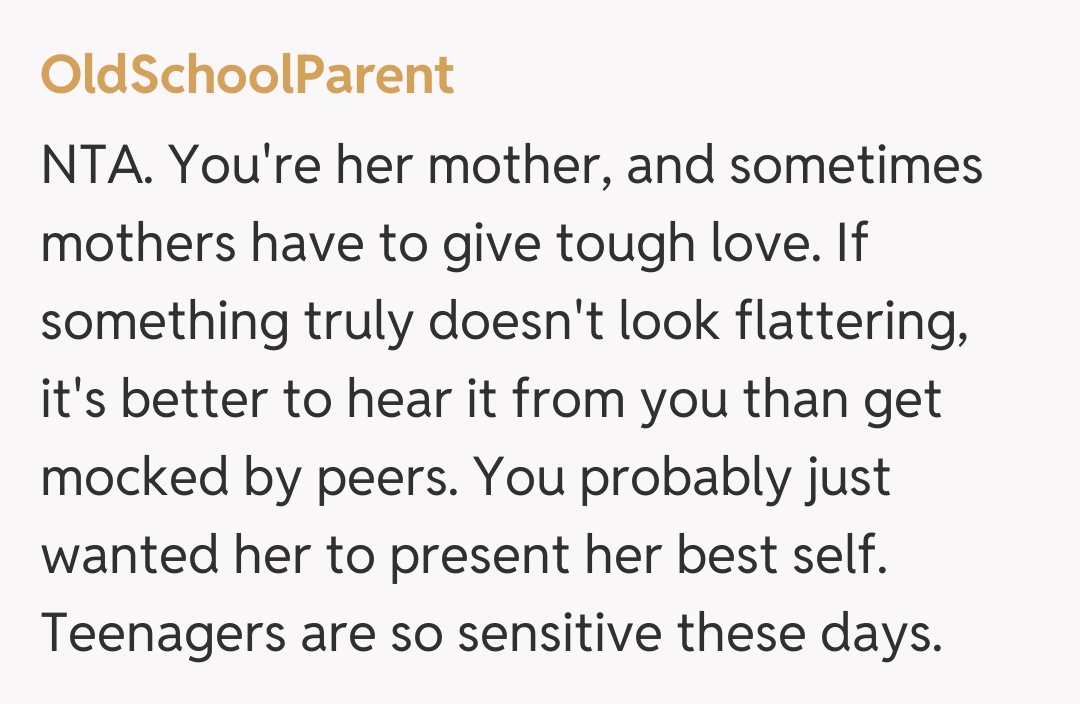
The comment section, as expected, was a whirlwind of strong opinions, with the vast majority leaning heavily towards 'You're The A-hole' for the original poster. Many users pointed out the severe impact of parental body-shaming, especially on a developing teenager. The consensus was that 'knee dimples' are a completely normal and often unnoticed feature, and the mother's comment was an unhelpful, self-created insecurity.
Several commentators emphasized that a parent's role is to build confidence, not dismantle it with subjective criticisms about natural body parts. There was a strong call for parents to promote body positivity and self-acceptance rather than imposing outdated or arbitrary beauty standards. The discussion highlighted the generational gap in understanding what constitutes 'attractive' and the damaging effects of nitpicking a child's appearance.
This story serves as a powerful reminder of the profound impact our words have, especially when directed at our children. While parental intentions are often good, the way advice is delivered can be the difference between guidance and harm. Fostering a positive self-image and open communication, where children feel safe rather than scrutinized, is paramount. Perhaps this mom can repair the damage by focusing on rebuilding her daughter's confidence and assuring her that her natural body is perfect as it is, 'knee dimples' and all.