AITA for telling my daughter her collarbone prominence looks “sickly”?
Oh, the delicate dance of parenting and body image! Today we're diving into a Reddit post that has sparked quite the debate, touching on how our words, even when well-intentioned, can land very differently than we expect. It's a classic tale of a parent expressing concern, only to find themselves in the hot seat for their choice of language. Get ready to unpack a situation that many parents and teenagers can likely relate to.
Our original poster, a concerned parent, found themselves in a bind after making a comment to their teenage daughter about her appearance. What started as a seemingly innocent observation, born from a place of worry, quickly escalated into an emotional confrontation. The AITA community is, as always, divided, offering perspectives that highlight the complexities of family dynamics, self-esteem, and the ever-present challenge of effective communication. Let's dig into the full story.

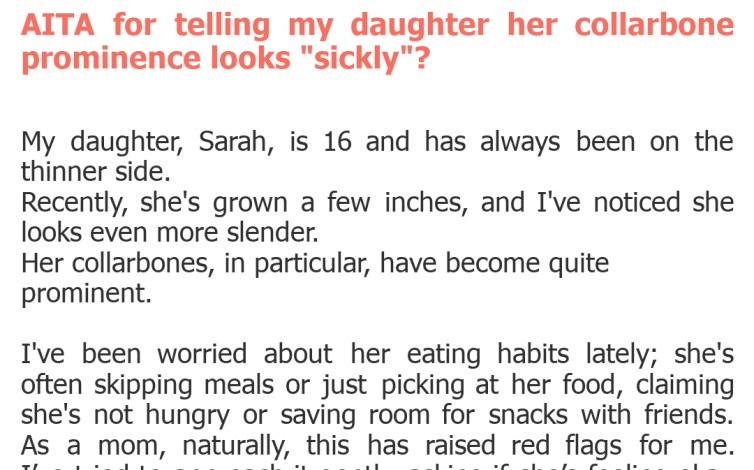
"AITA for telling my daughter her collarbone prominence looks "sickly"?"
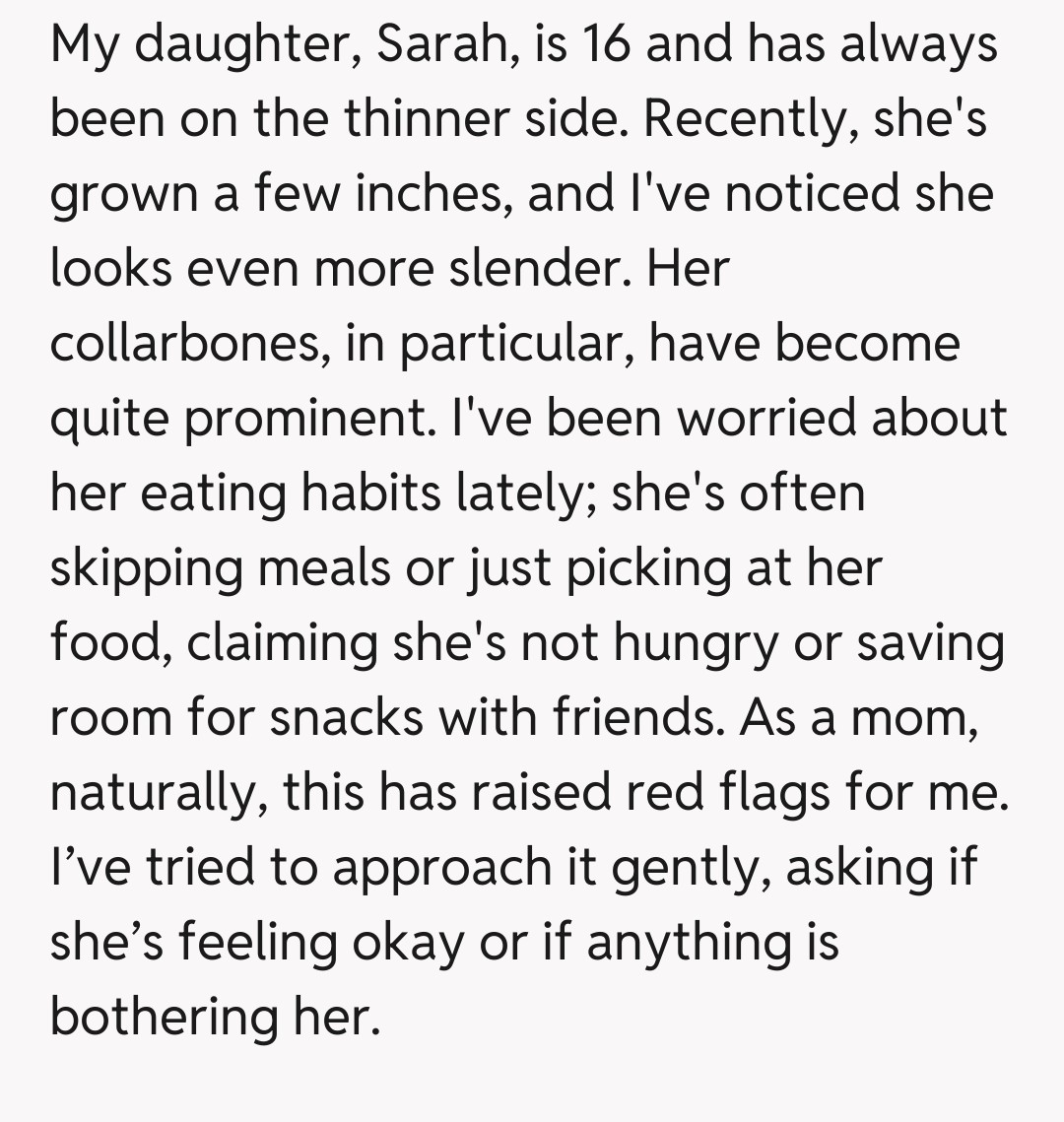
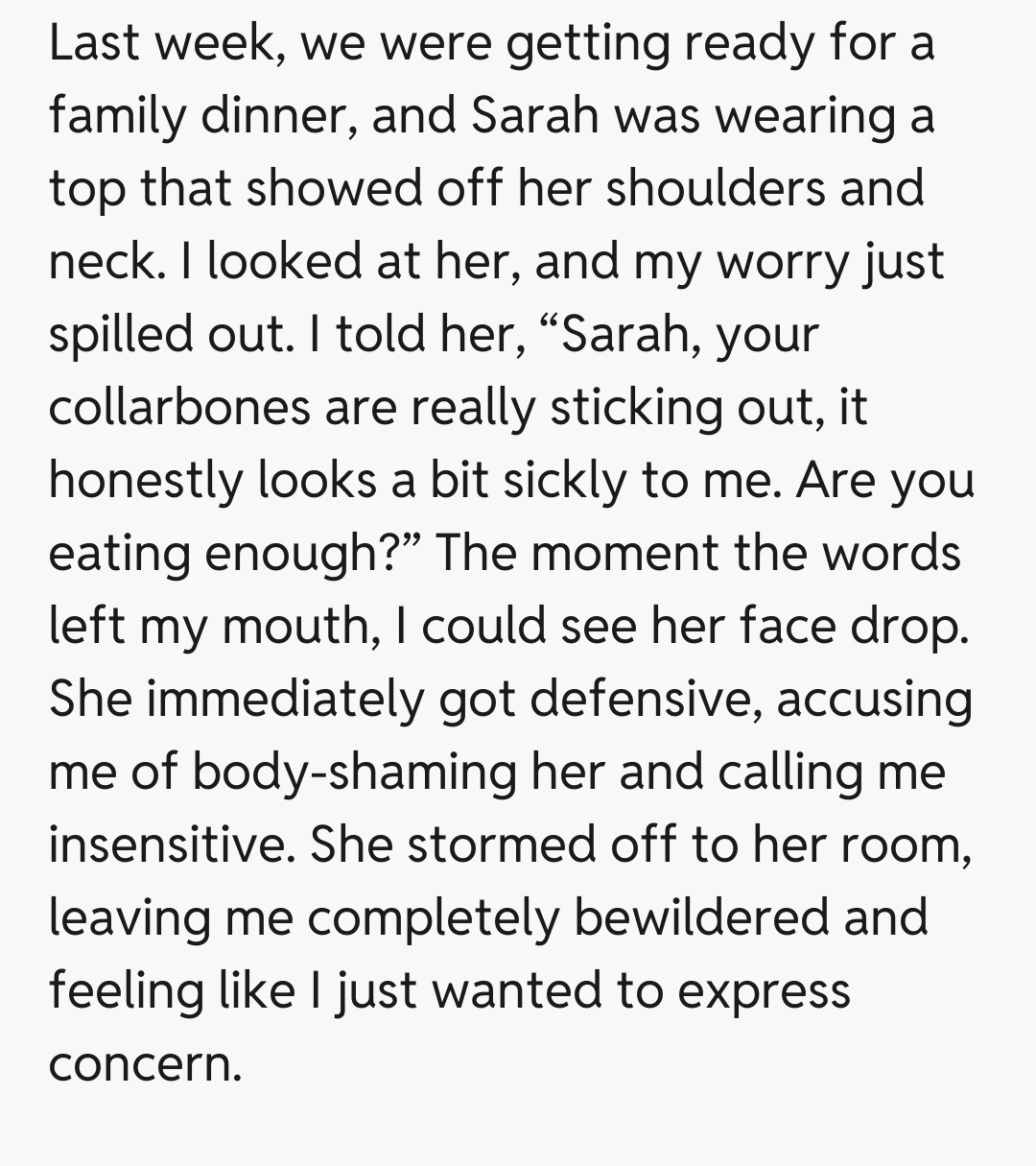
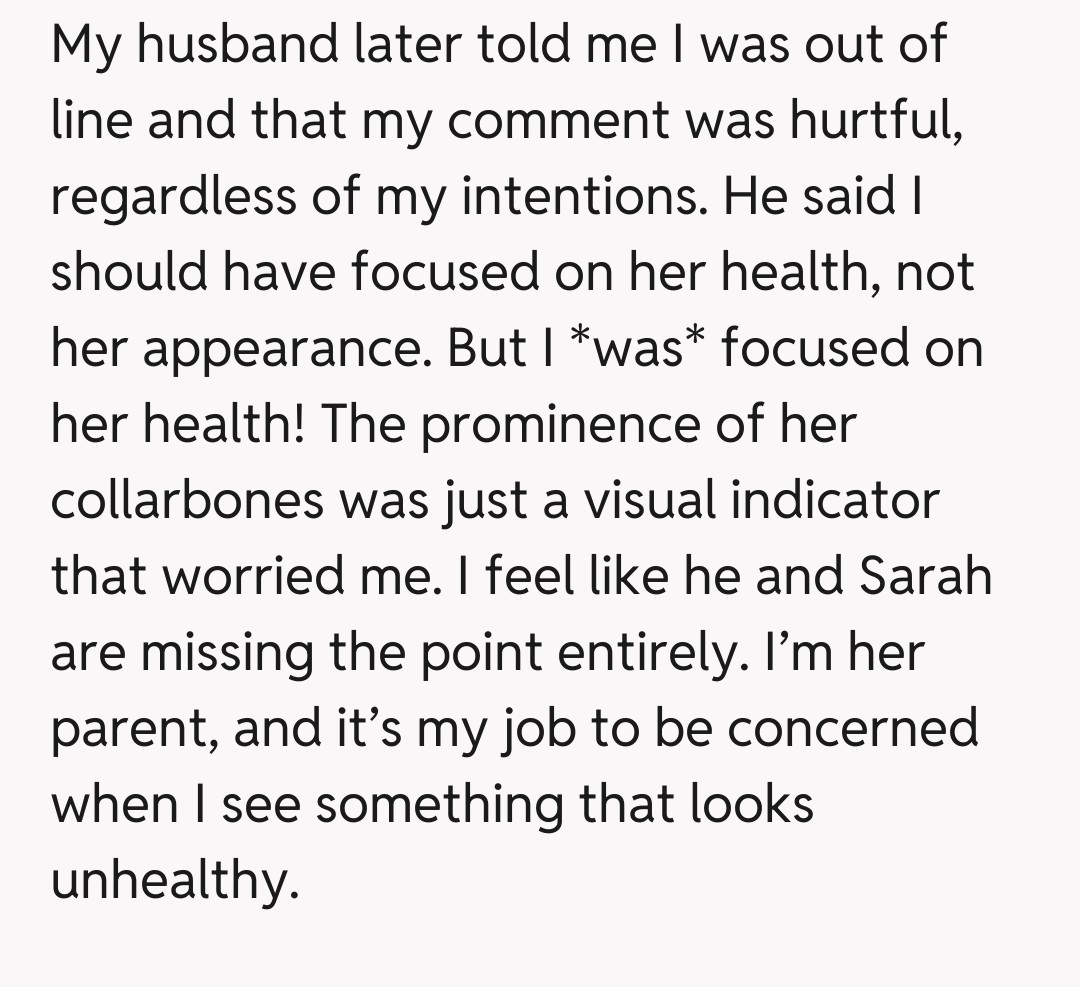
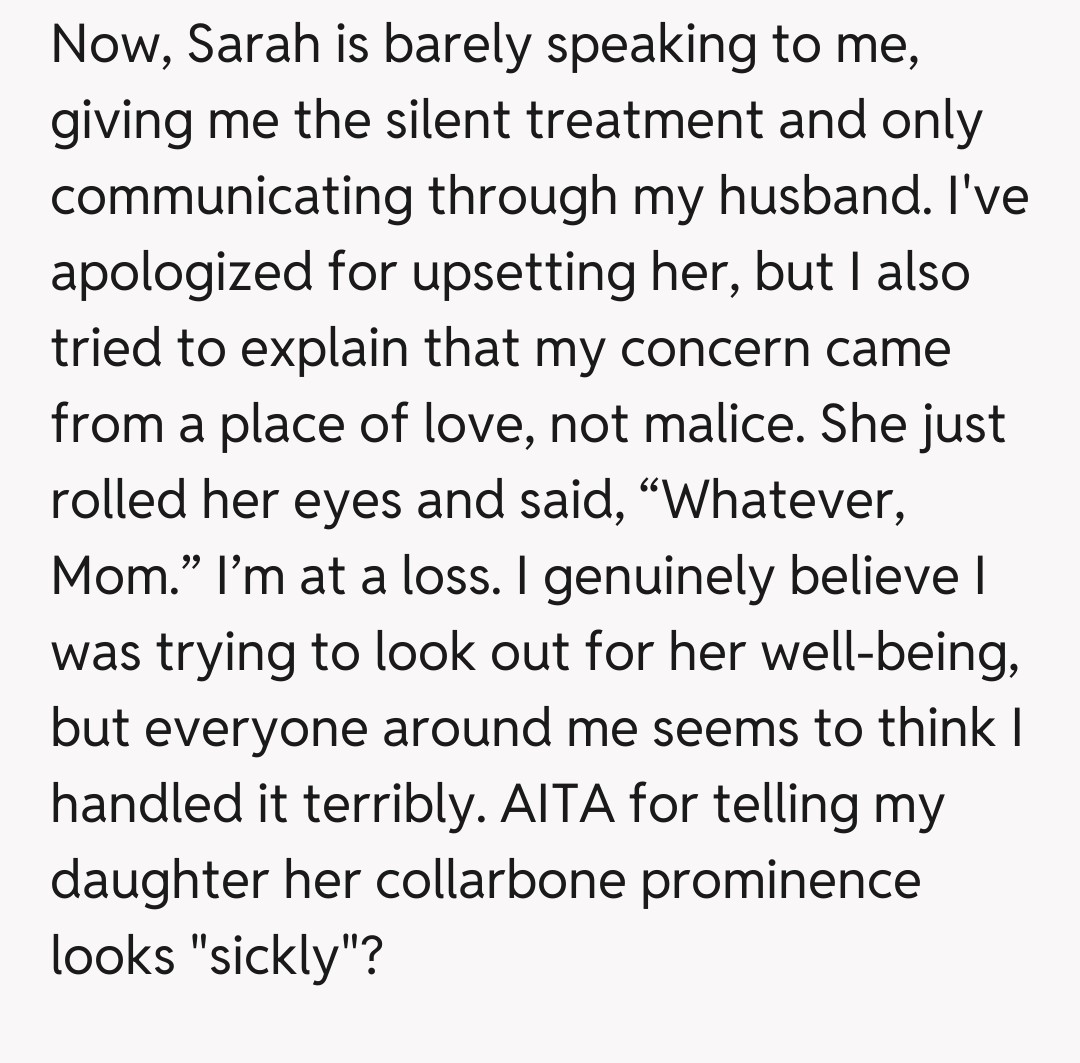
It’s a tale as old as time: parents wanting the best for their children, and sometimes, those intentions get lost in translation. In this scenario, the parent’s concern for their daughter's health is evident. It's natural for a parent to worry if they perceive changes in a child's eating habits or physical appearance that might suggest a health issue. The protective instinct is strong, and wanting to address potential problems is commendable.
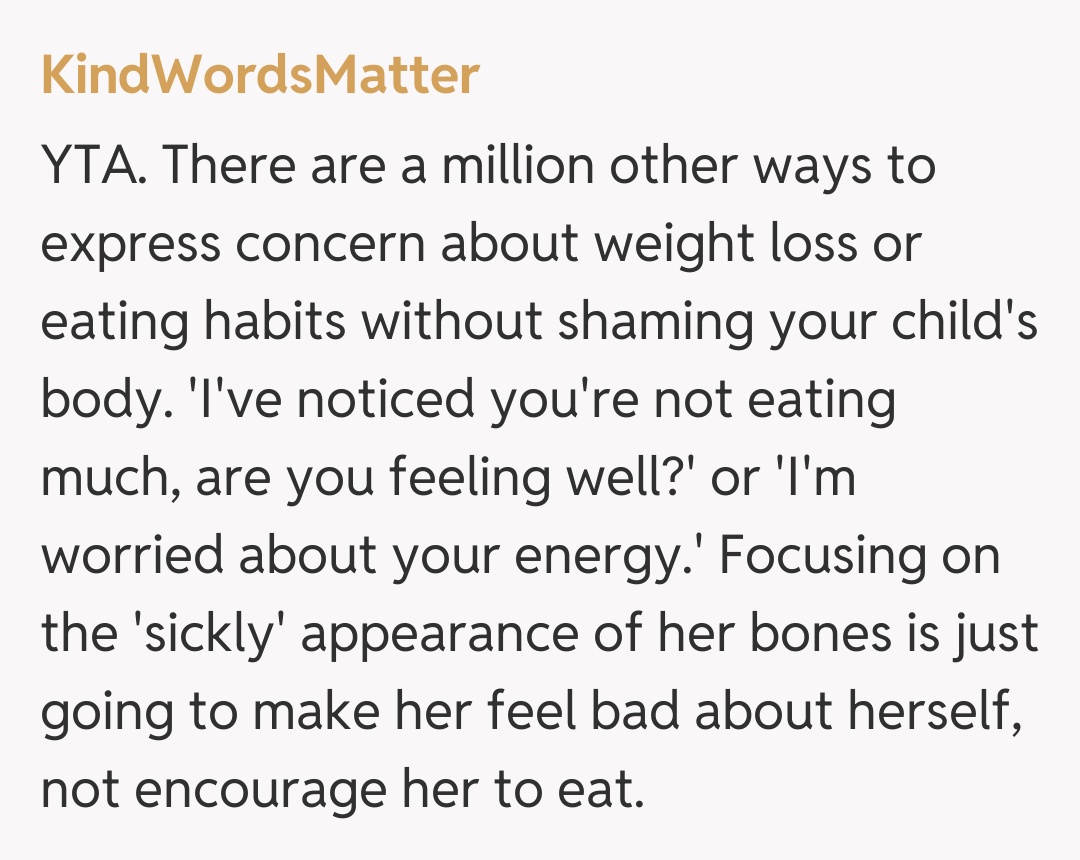
However, the choice of words is where the situation takes a turn. Describing a physical feature, especially one that might be considered part of a 'thin' aesthetic, as 'sickly' can be incredibly damaging to a teenager’s self-esteem. Adolescence is a vulnerable time when body image is often fragile, and comments about appearance, even veiled as health concerns, can be internalized as criticism of their very being.
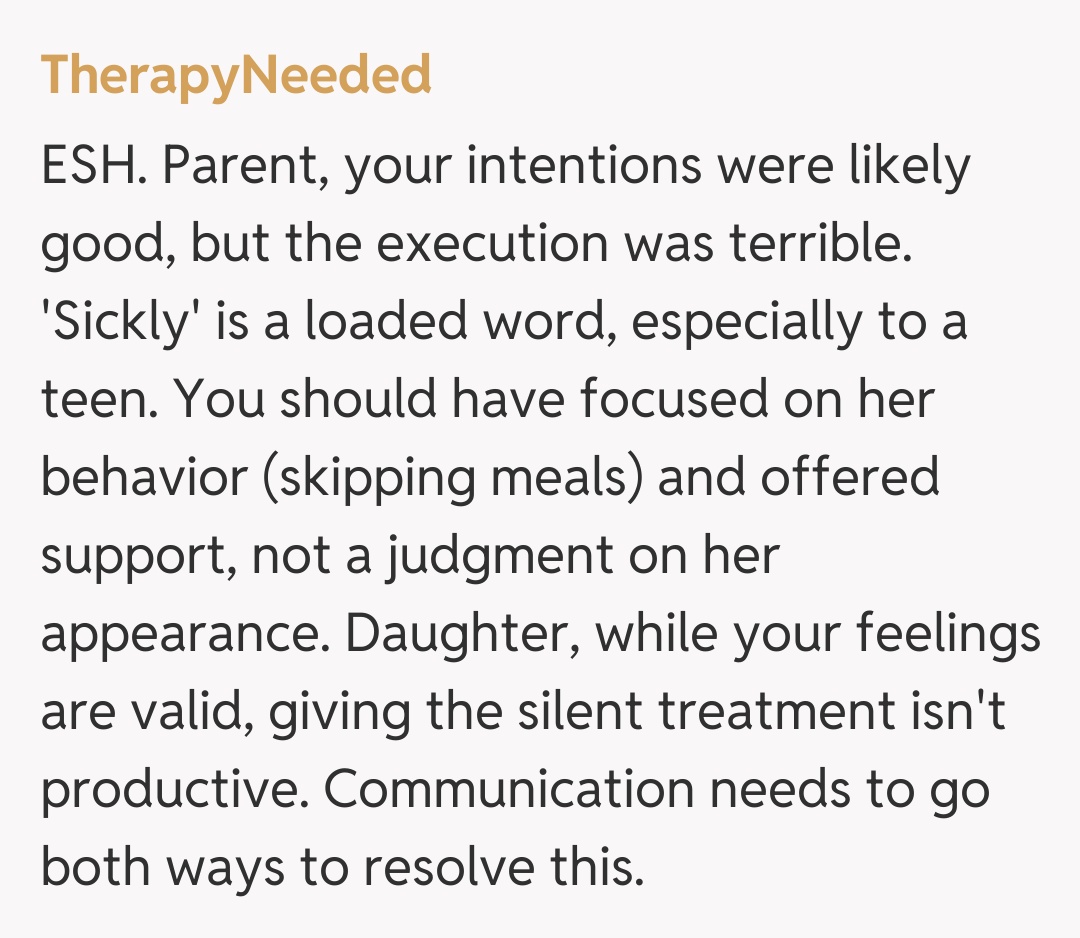
There's a crucial distinction between observing a behavior and commenting on a physical attribute. A parent could express concern by saying, "I've noticed you've been skipping meals, and I'm worried about your energy levels. Are you feeling okay?" This focuses on observable actions and feelings, which are less likely to be perceived as a direct attack on their body. The visual symptom, while part of the concern, should probably not be the leading point of conversation.
Ultimately, while the parent’s heart may have been in the right place, the impact of their words needs to be acknowledged. Communication in families, especially with teenagers, requires immense care and empathy. It’s about finding a way to convey concern for health without inadvertently fostering body negativity or making a child feel judged for their natural physique. The road to repair will likely involve more listening than lecturing.
The Internet Weighs In: Was it Concern or Criticism?
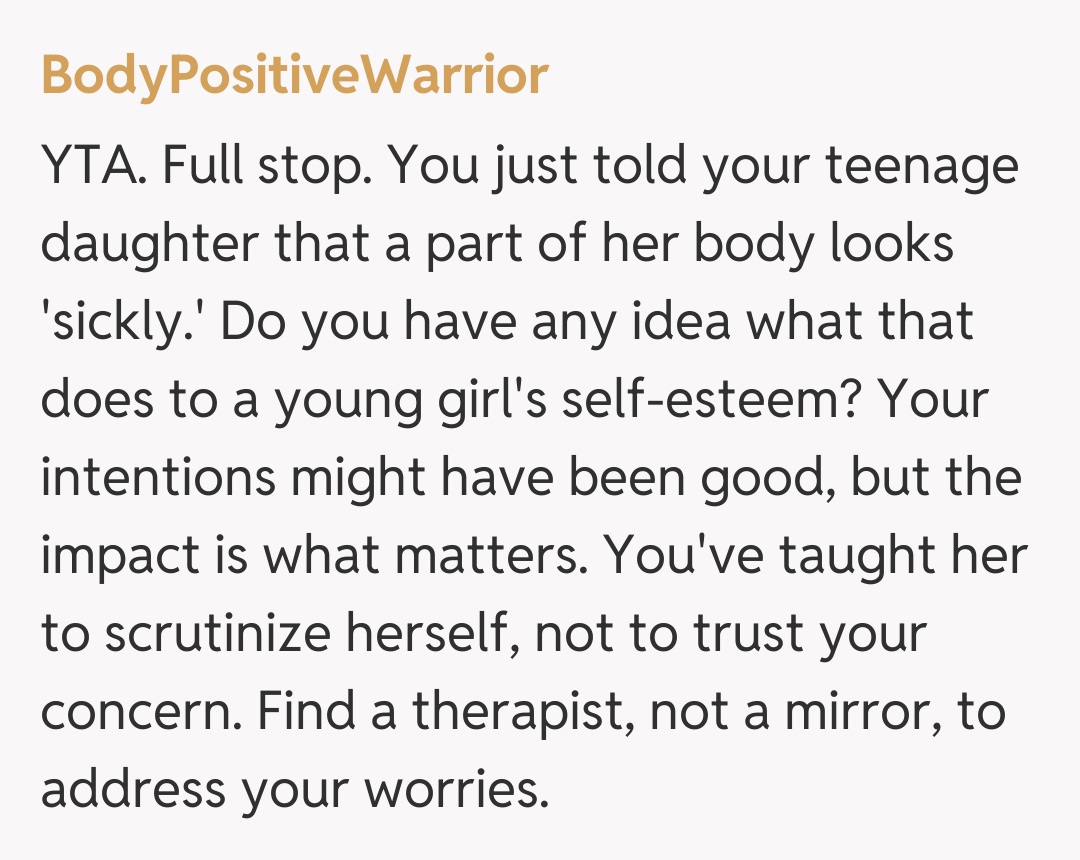
The comments section on this post was, as expected, a whirlwind of opinions! Many users immediately jumped to 'YTA,' pointing out the severe impact such comments can have on a teenager's body image. They emphasized that while concern for health is valid, the delivery was deeply flawed, potentially leading to lasting self-esteem issues. The consensus from this group was that a parent's words hold immense power, and 'sickly' is a word that should be avoided when discussing appearance.
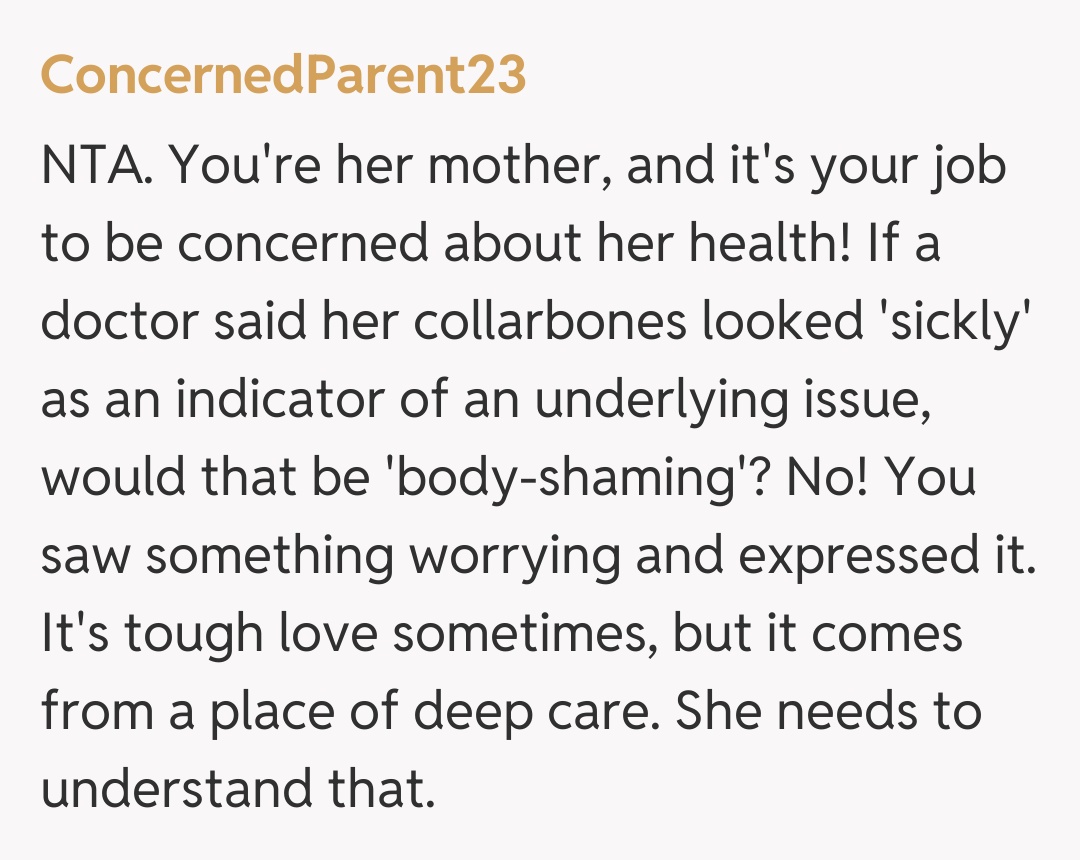
On the other hand, a vocal minority argued 'NTA,' or at least 'NTA with good intentions,' reasoning that the parent was clearly worried and simply spoke out of concern. They highlighted the difficulty parents face in addressing sensitive topics, suggesting that the daughter might be overly sensitive or that the husband was too critical. This group focused more on the parent's underlying worry, rather than the specific phrasing used.
This post serves as a powerful reminder of the delicate balance in parenting, especially when it comes to body image. While a parent’s concern for their child’s health is always paramount, the language we choose can significantly shape our children’s perceptions of themselves and our relationship with them. It highlights the need for empathy, careful phrasing, and focusing on observable behaviors and feelings rather than judgmental descriptions of appearance. Hopefully, this parent and daughter can find a path to open communication and understanding, fostering health and self-acceptance above all else.