AITA for telling my wife her pale skin makes her look sick without fake tan?
Welcome back to another edition of 'Am I The A**hole?' where we dissect relationship dilemmas that often leave us scratching our heads. Today, we're diving into a situation that might resonate with many, as it touches upon sensitive topics like body image, unsolicited advice, and the delicate art of communication within a partnership. It's a classic case of good intentions potentially paving the road to an emotional minefield.
Our poster, let's call him OP, finds himself in hot water after making a comment to his wife about her appearance. While he claims he was merely trying to be 'helpful,' his wife's reaction suggests he stepped over a significant line. Is he truly an insensitive clod, or did he just miss the mark trying to offer a well-meaning suggestion? Let's unpack this and see if the internet agrees on who's the real villain here.

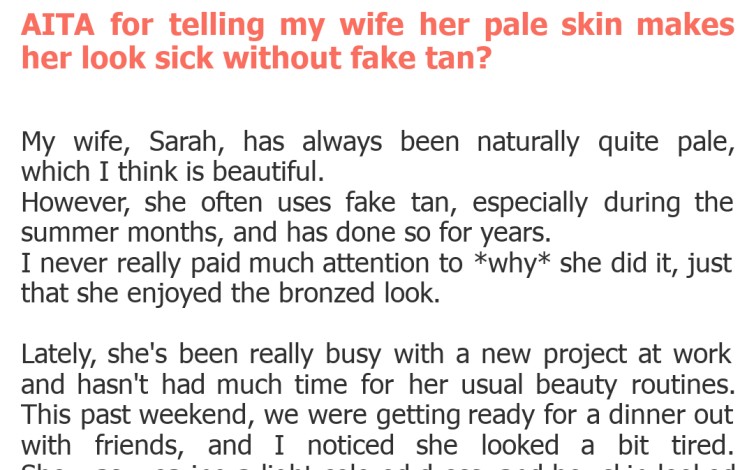
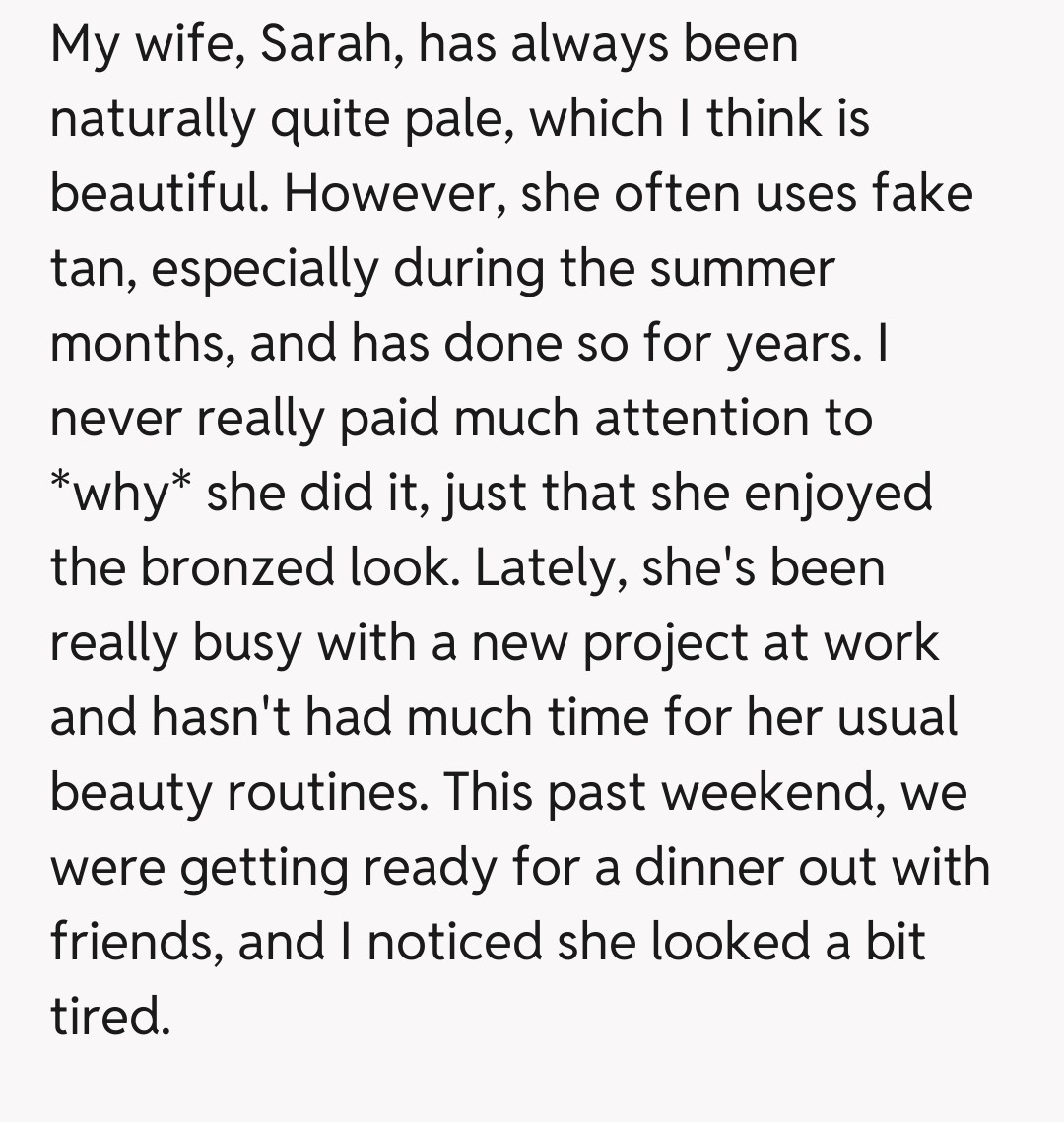
"AITA for telling my wife her pale skin makes her look sick without fake tan?"
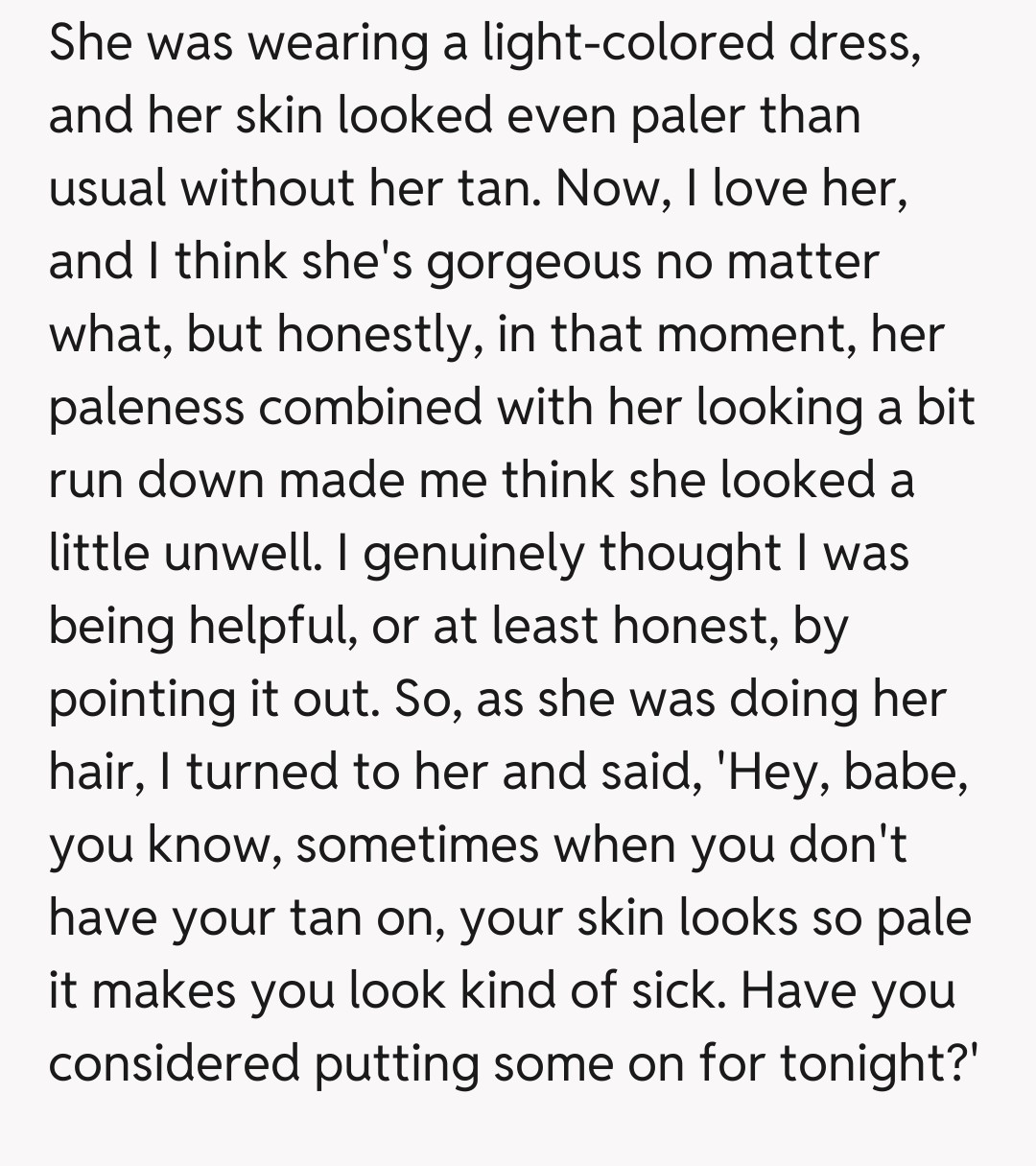
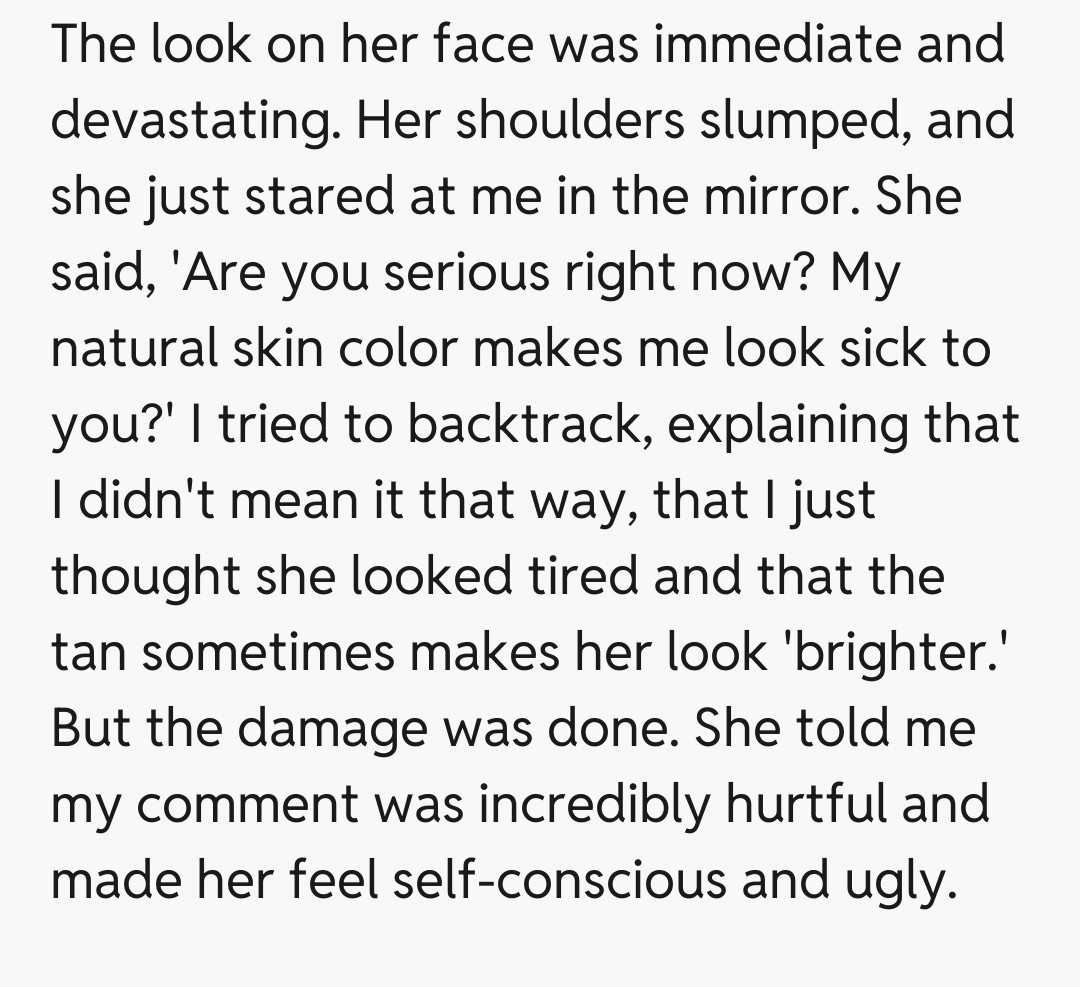
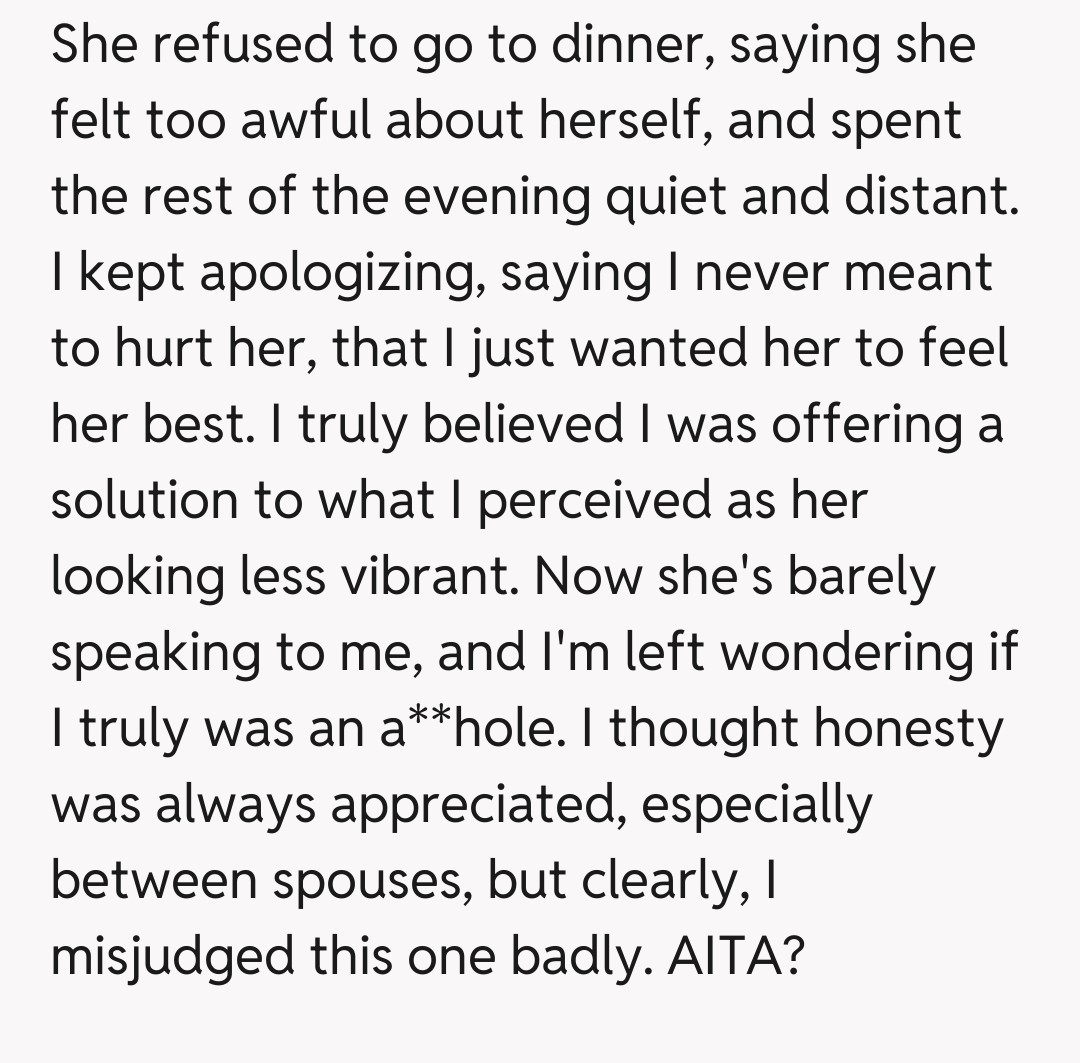
This is a classic example of where intent and impact diverge dramatically in a relationship. While the poster (OP) states his intention was to be 'helpful' or merely 'honest,' the words he chose had a deeply negative impact on his wife. Telling someone their natural appearance makes them look 'sick' is rarely going to be received well, regardless of how you try to frame it as concern.
Body image is an incredibly sensitive area for many people, and spouses are often the ones whose opinions matter most. When a partner points out a perceived 'flaw,' even innocently, it can deeply wound self-esteem. OP's wife might already have insecurities about her paleness, which is why she uses fake tan, and his comment likely reinforced those anxieties rather than alleviated them.
Unsolicited advice, especially concerning appearance, is almost always a risky endeavor. Unless your wife explicitly asks for your opinion on her skin tone or whether she looks unwell, it's generally best to refrain from comments that could be interpreted as critical. In a partnership, the goal should be to uplift and support, not to offer observations that might chip away at confidence.
Had OP wanted to express concern, a more gentle approach like, 'You seem a bit tired lately, is everything okay?' would have been far more appropriate and caring. Instead of suggesting a cosmetic fix, focusing on her well-being first would have demonstrated genuine empathy. Suggesting she needed to alter her natural appearance to look 'less sick' was a misstep, however unintentional.
The Internet Weighs In: Was His 'Honesty' Just Plain Cruelty?
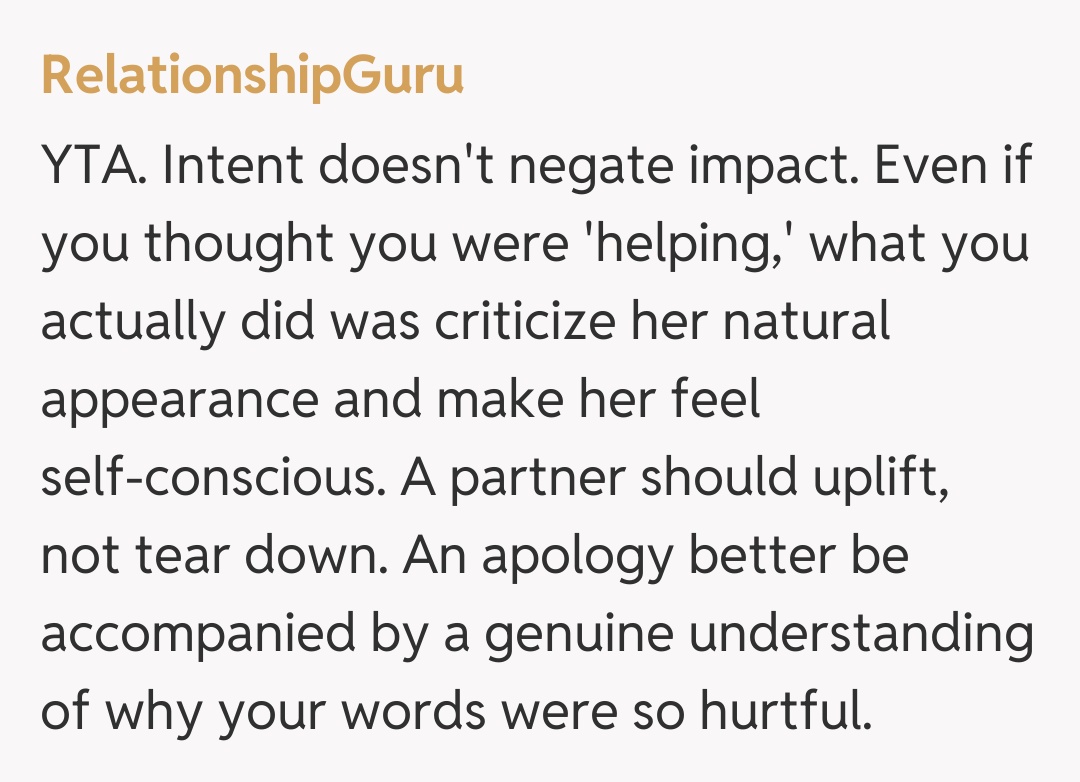
The comment section for this post was, as expected, a fiery battlefield of opinions, though a clear consensus quickly emerged. Many users were quick to label OP as the a**hole, emphasizing that his words, regardless of intent, were incredibly insensitive and damaging. The common thread was the shock that a partner would tell their significant other that their natural appearance made them look 'sick.'
A significant number of commenters highlighted the insidious nature of such remarks, explaining how they can erode a person's self-esteem over time. Several users shared personal anecdotes of partners making similar comments, leading to lasting body image issues. The general sentiment was that a partner's role is to make you feel beautiful, not to point out perceived imperfections or suggest cosmetic alterations.



This story serves as a stark reminder that even with the best intentions, our words can carry significant weight, especially with those we love most. What might seem like an innocent observation can easily be perceived as a harsh criticism, particularly when it touches on personal appearance. The lesson here is clear: always consider the potential impact of your words before you speak, and when in doubt, lean towards kindness and reassurance. Our partners deserve to feel cherished and beautiful just as they are, not to be made to feel 'sick' for their natural self.