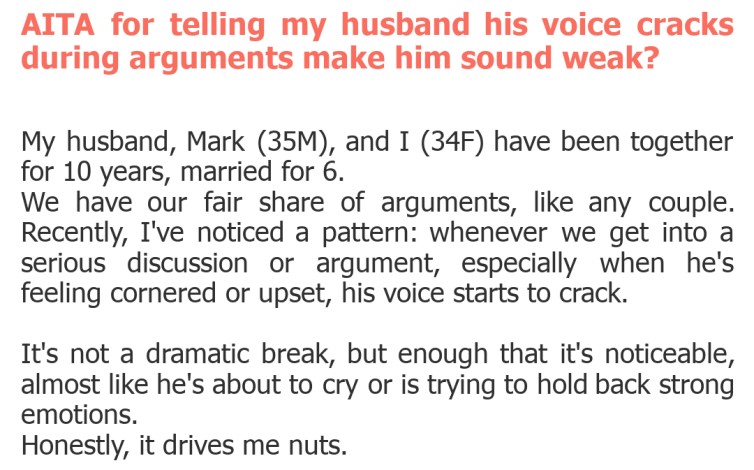
AITA for telling my husband his voice cracks during arguments make him sound weak?
Oh boy, here we go again with a classic AITA conundrum that dives deep into the murky waters of communication, honesty, and empathy within relationships. It's a tale as old as time: someone says something seemingly 'true' but undeniably hurtful during a heated moment. The internet, ever ready with its pitchforks and healing salves, is divided on whether truth trumps kindness, or if some truths are better left unsaid, especially when emotions are running high.
Today's story brings us a wife who, during an argument, delivered a verbal jab to her husband about his voice cracking. She claims it makes him sound 'weak,' and now she's wondering if she crossed a line. We're about to unpack the delicate balance between expressing frustration and inflicting pain, and whether her blunt assessment was a justifiable tactic or a regrettable low blow. Get ready, folks, because the takes are going to be hot!

"AITA for telling my husband his voice cracks during arguments make him sound weak?"
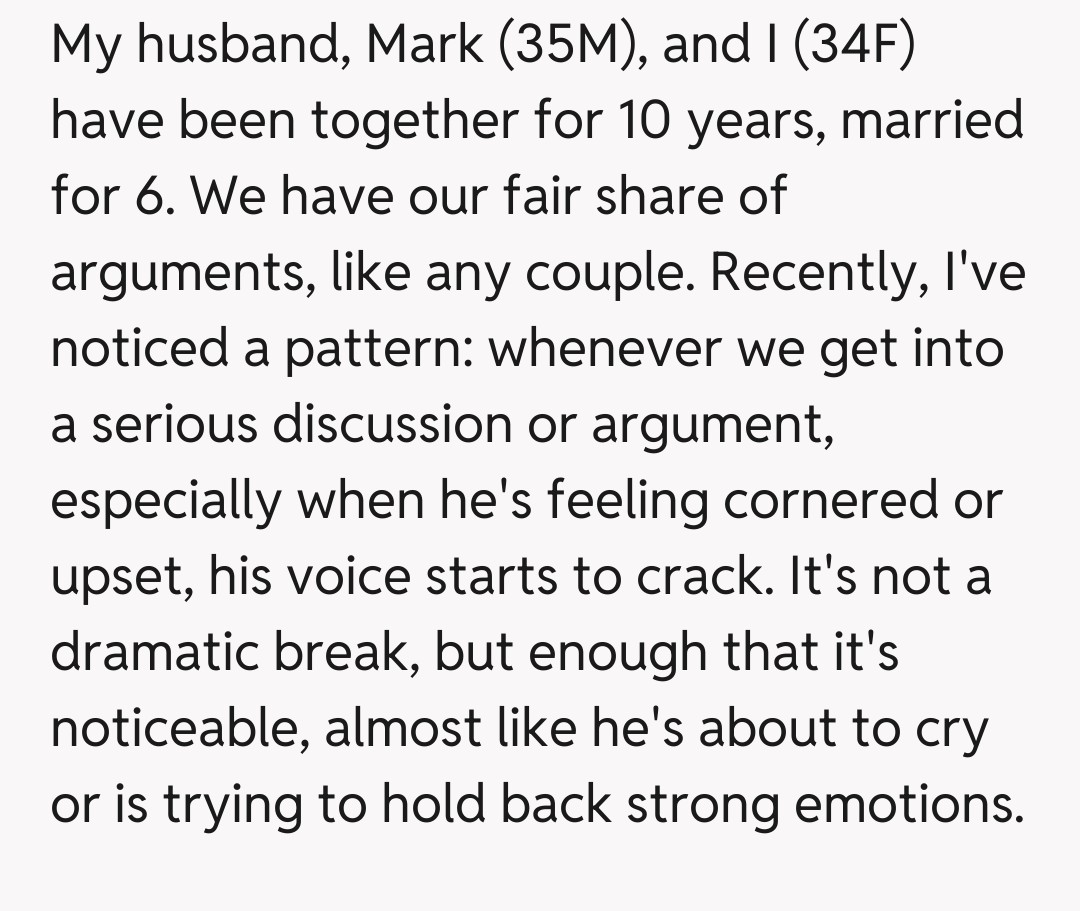
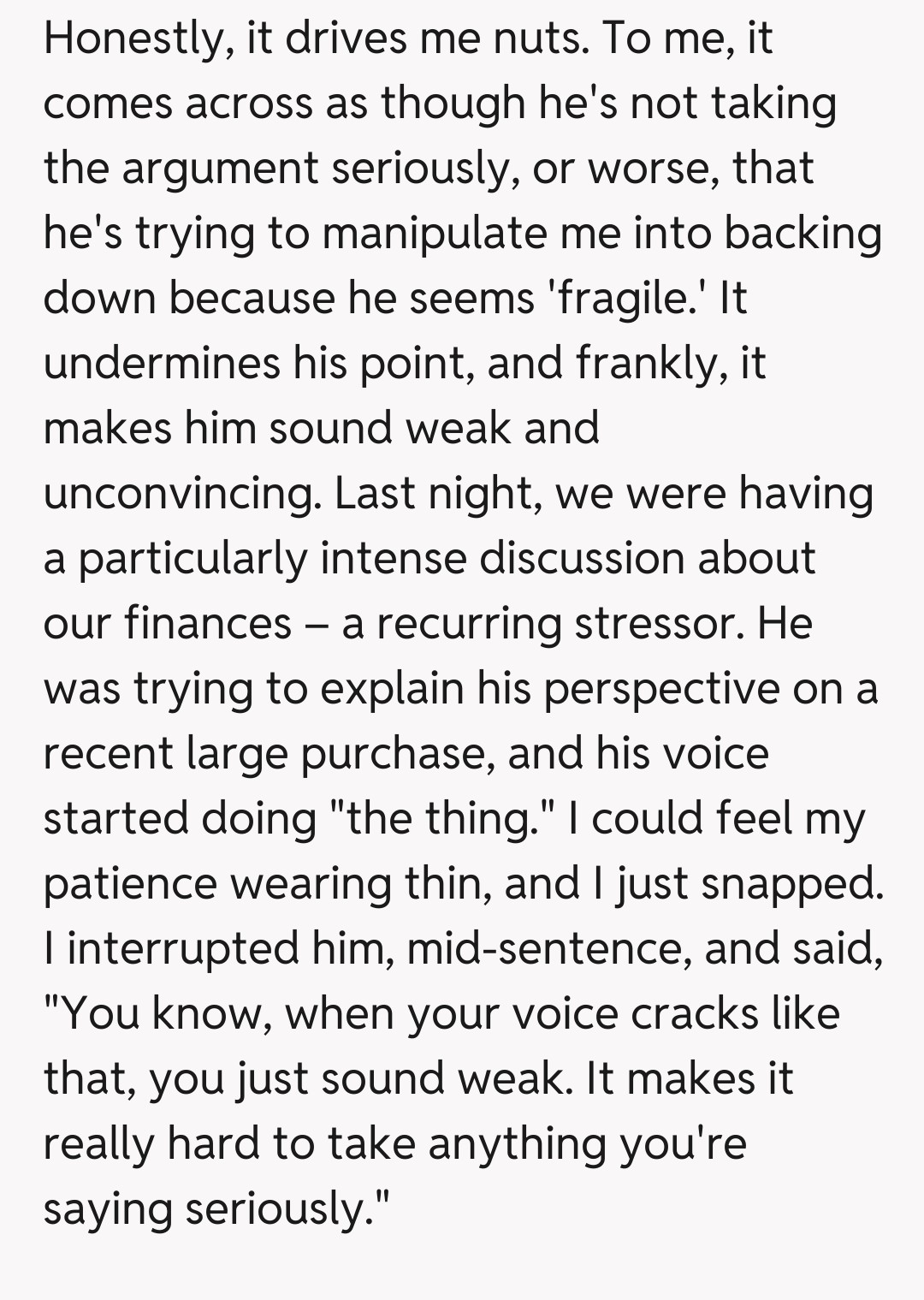
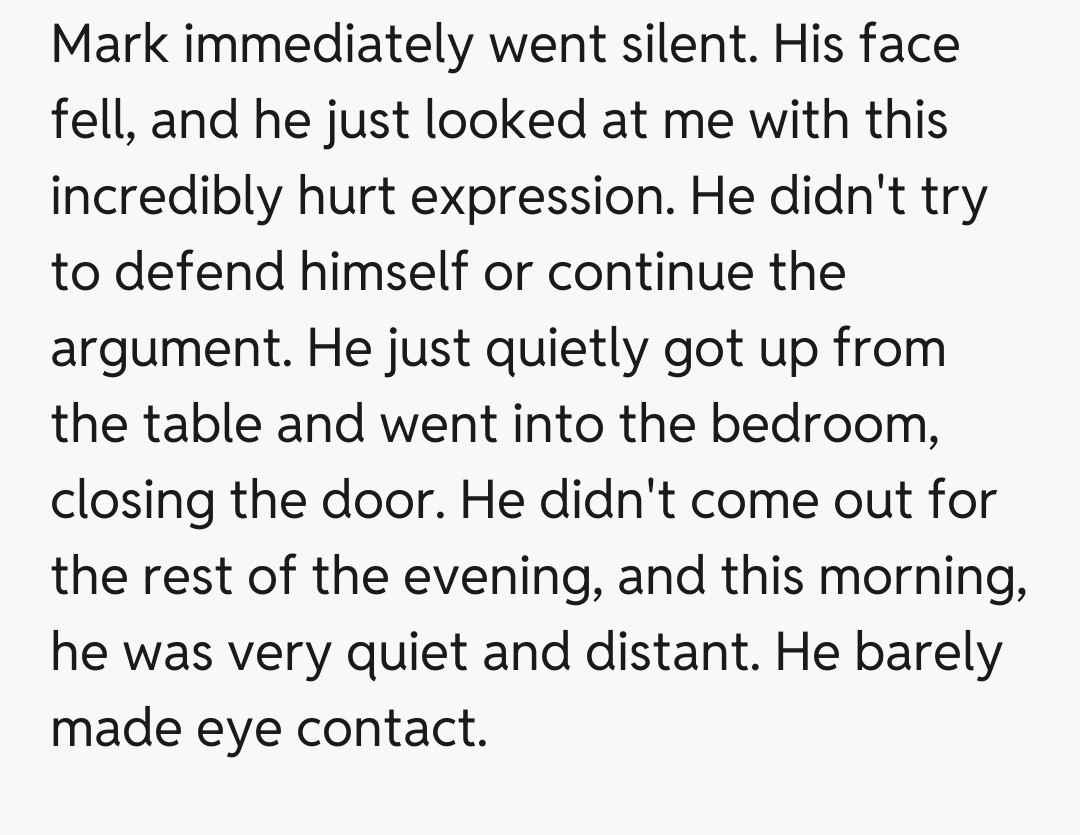
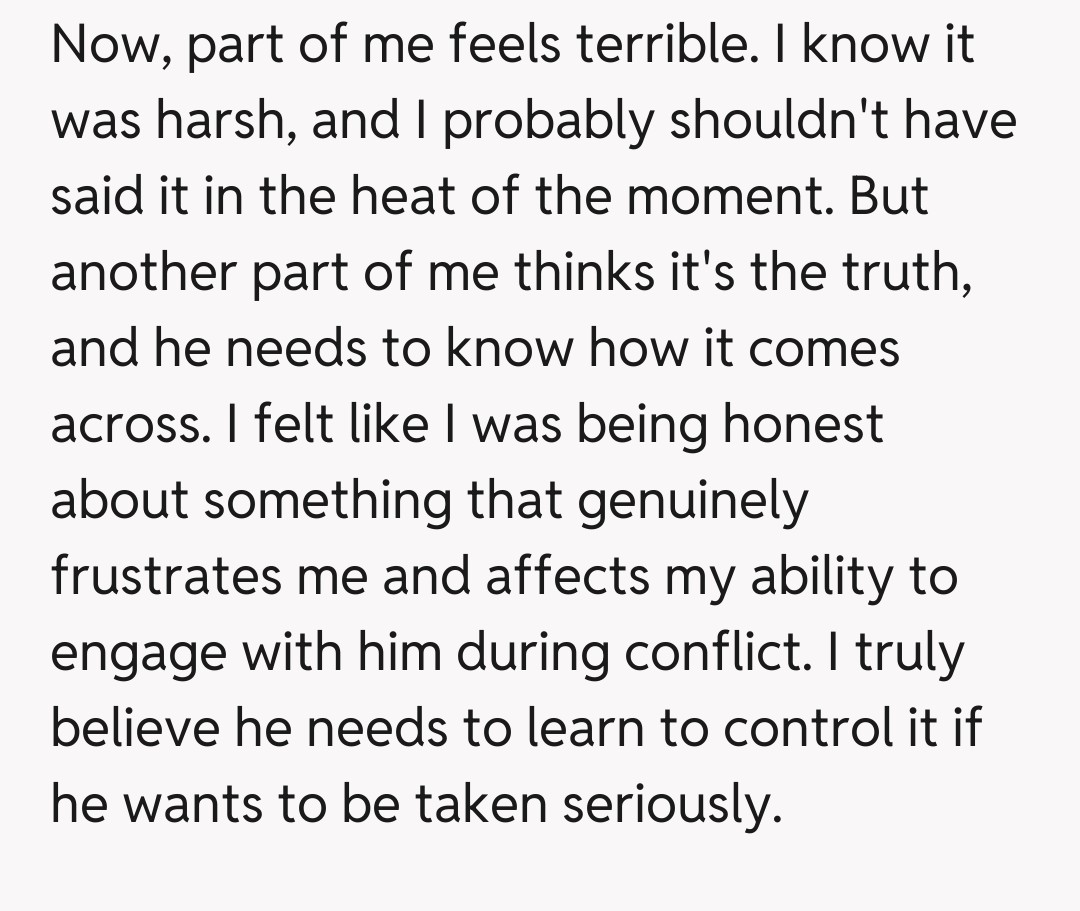
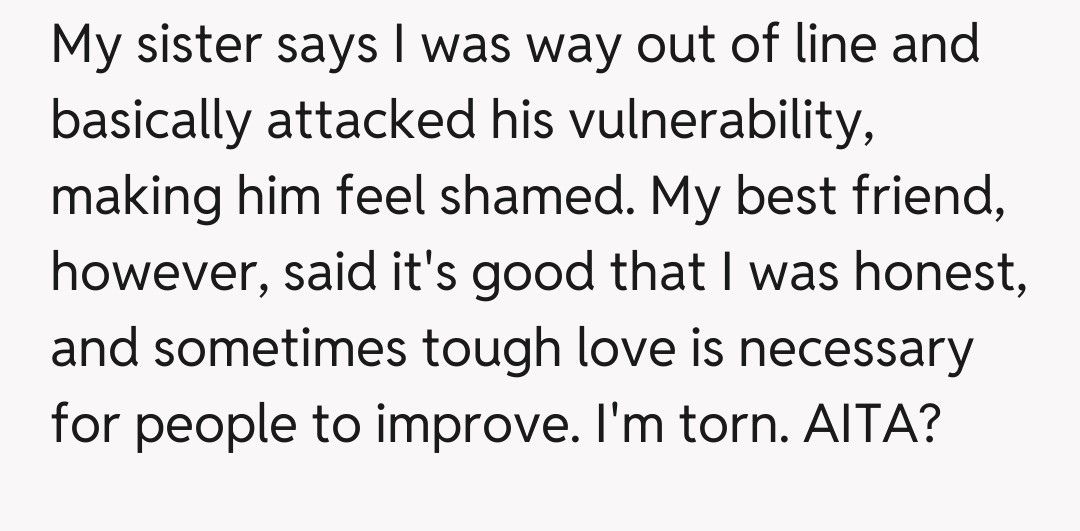
This story presents a classic dilemma: the line between honest communication and hurtful personal attacks during conflict. It's understandable that the OP felt frustrated by her husband's voice cracking. In the heat of an argument, involuntary reactions from a partner can indeed be perceived as disingenuous or distracting, especially when one is trying to make a serious point or resolve an issue. Her intention might have been to convey her difficulty in engaging.
However, the crucial element here is the choice of words and their impact. Labeling an involuntary physiological response like a voice crack as 'weak' is a deeply personal and shaming attack. Voice cracks often signify intense emotion, stress, or even genuine vulnerability, rather than a deliberate attempt to manipulate or a lack of seriousness. It's rarely something someone can simply 'control' on command, especially when upset.
Such a statement can have a profound, damaging effect on a relationship. By attacking this specific physical manifestation of his emotional state, the OP inadvertently created an unsafe space for her husband to express himself. He might now become self-conscious and withdrawn during future conflicts, making open and honest communication even harder, as he fears further judgment or ridicule for his natural reactions.
Instead of focusing on *how* his voice sounded, a more constructive approach would have been to address the *impact* his communication style had on her, without the personal judgment. For instance, she could have expressed her difficulty understanding him or feeling heard, without shaming his physical response. Empathy and understanding are paramount, especially when navigating the tricky terrain of emotional arguments.
The Internet Weighs In: Is Brutal Honesty Ever Justified?
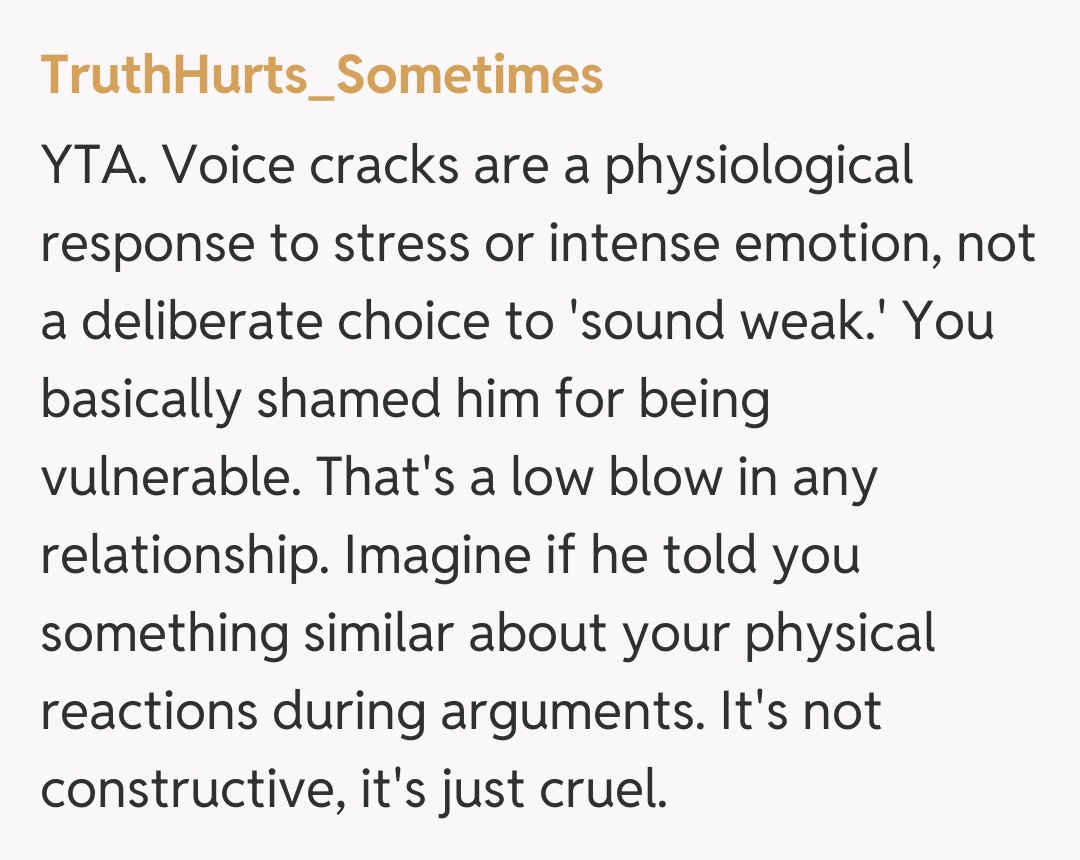
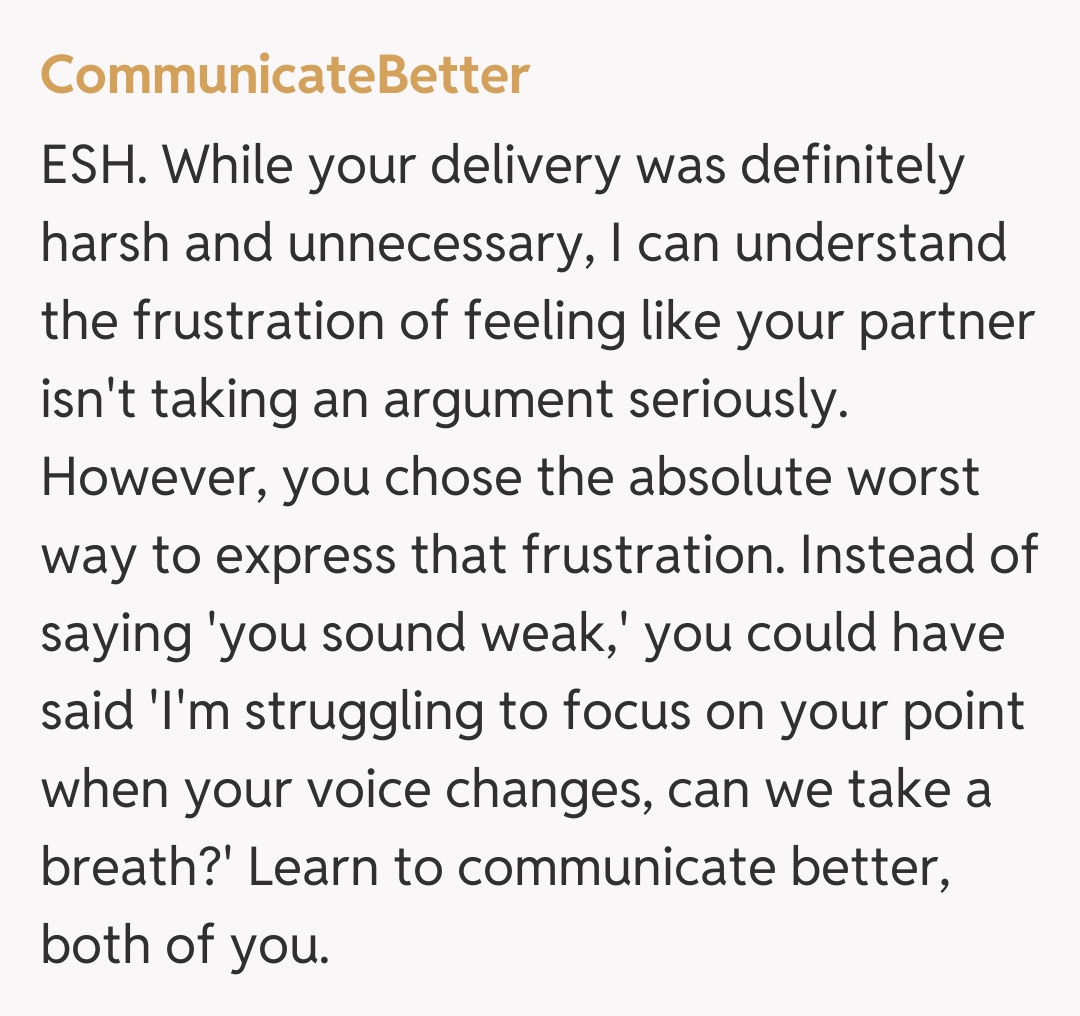
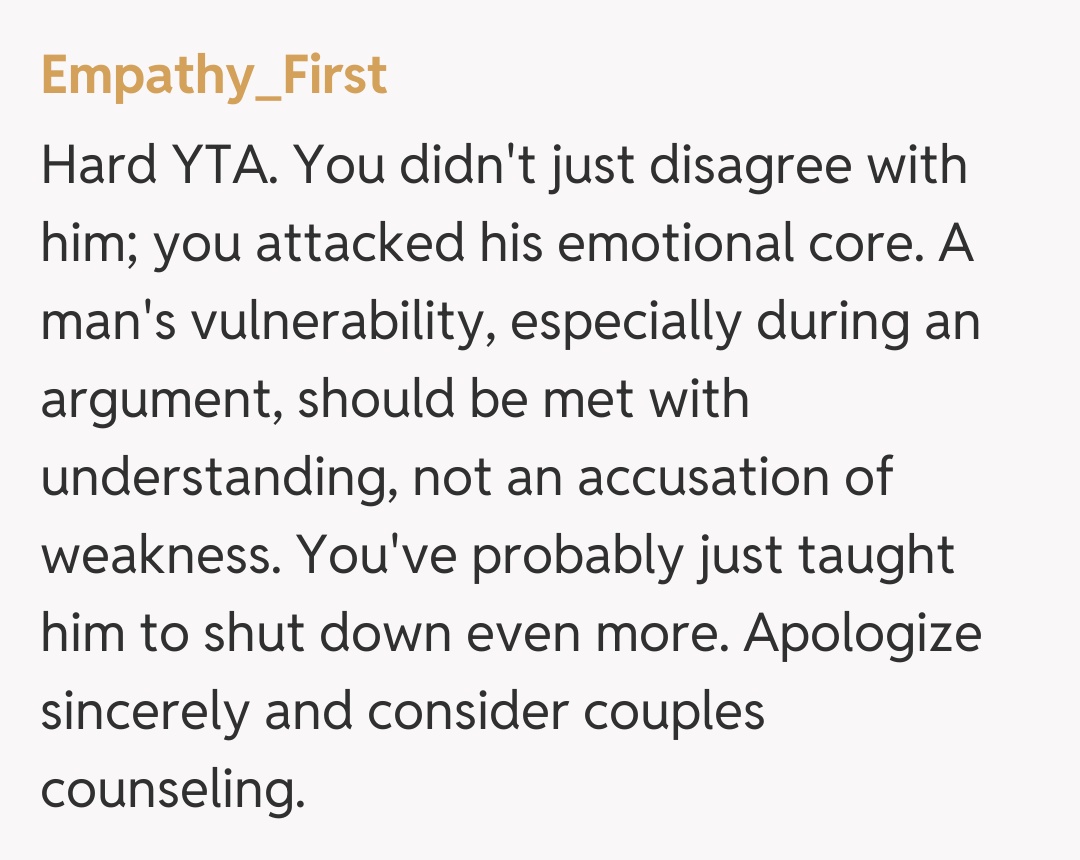
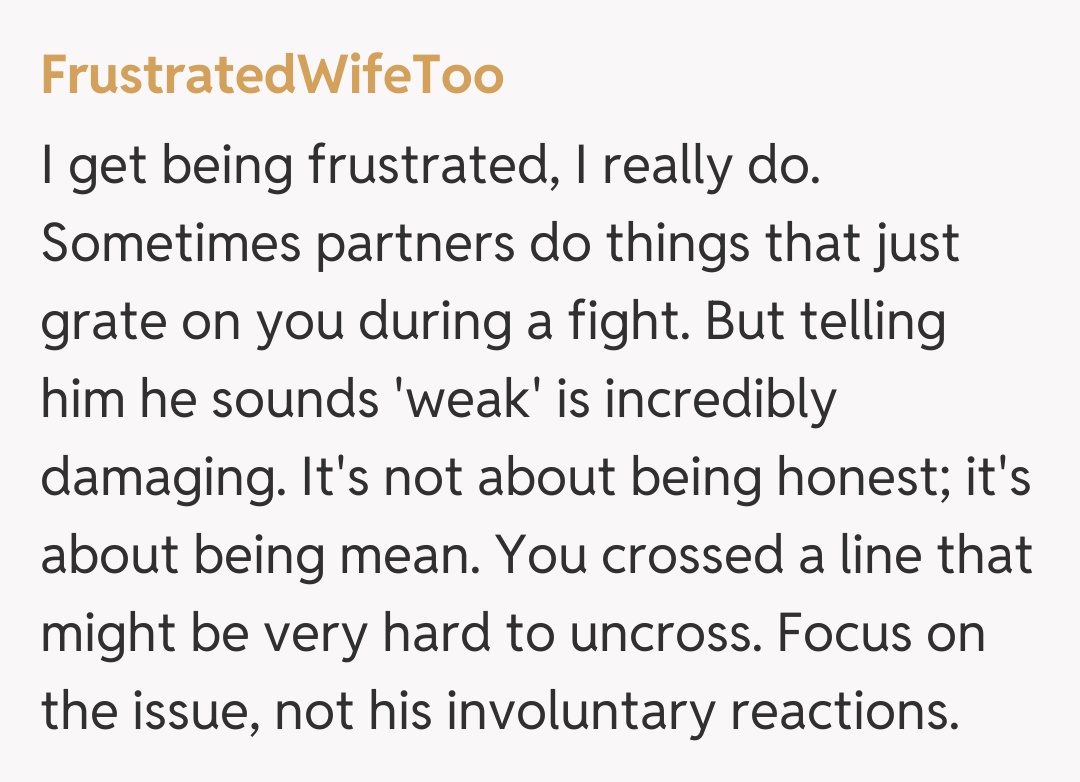
The comments section for this story, as expected, was a whirlwind of opinions, though a clear consensus quickly emerged. The vast majority of responders landed firmly on the side of YTA, emphasizing the cruelty and counterproductiveness of the wife's comment. Many pointed out that voice cracks are often involuntary and can be a sign of genuine distress or vulnerability, making the 'weak' label particularly harsh and uncalled for. Users highlighted the emotional damage such words can inflict.
A recurring theme in the comments was the idea that while honesty is important, it should never come at the expense of empathy and respect. Many advised the couple to seek communication counseling, focusing on active listening and expressing feelings without resorting to personal attacks. Several users also shared personal anecdotes about similar experiences, underscoring how deeply such comments can wound a partner and erode trust in a relationship.
This AITA story serves as a powerful reminder that while open and honest communication is vital in any relationship, the way we deliver our truths matters immensely. Attacking a partner's involuntary emotional responses, especially with shaming language, can cause lasting damage, eroding trust and psychological safety. Ultimately, the goal in conflict should be understanding and resolution, not to 'win' by cutting deep. Let's all strive for more empathy and thoughtful word choice in our toughest conversations.